

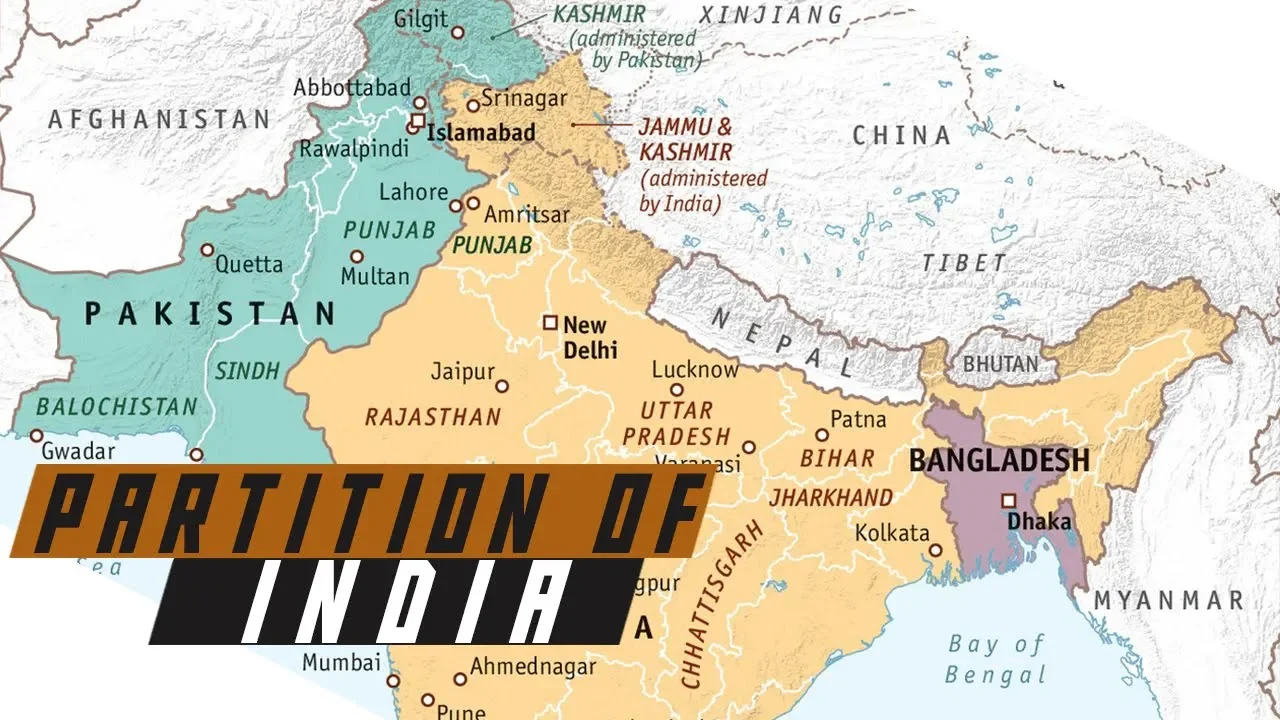












The partition of British India in 1947 resulted in the creation of two separate nations, India and Pakistan, along religious lines, causing one of the largest mass migrations in human history with approximately 15 million people displaced and at least 1 million deaths due to communal violence and religious cleansing.
India Partition 1947: A Documentary Analysis of the Tragedy
Added:The history of the British Raj, including the administrative and economic impact of British colonial rule in the Indian subcontinent.
The rise of the Indian Independence Movement, highlighting the roles of key organizations like the Indian National Congress and the All-India Muslim League.
The 'Divide and Rule' strategy employed by the British colonial administration to manage and exploit religious demographics.
The concept of the 'Two-Nation Theory' championed by Muhammad Ali Jinnah, which asserted that Hindus and Muslims were distinct nations requiring separate homelands.
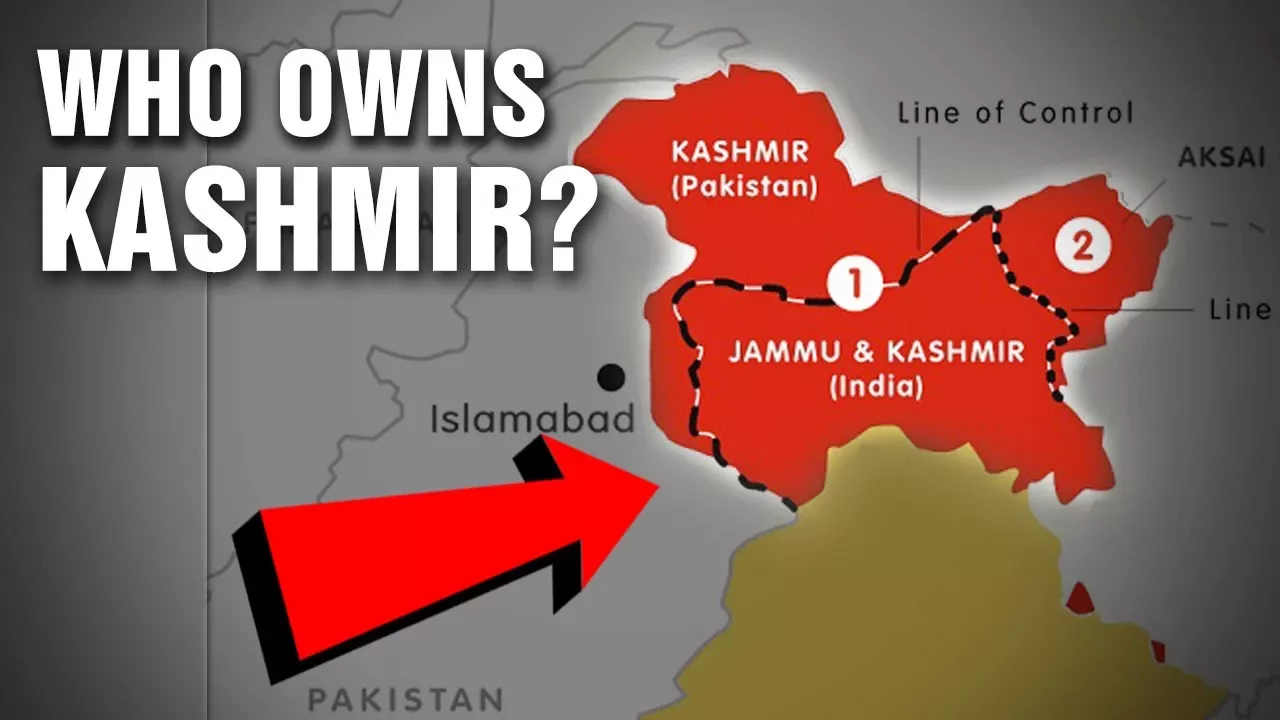
The geopolitical origins and ongoing history of the Kashmir conflict between India and Pakistan starting in late 1947.
The 1971 Bangladesh Liberation War, which led to the secession of East Pakistan and the creation of an independent Bangladesh.
The nuclear proliferation and military arms race in South Asia, analyzing how partition-era tensions eventually led both nations to acquire nuclear weapons.
The study of Partition literature and oral history archives, exploring the cultural memory, trauma, and human stories of the displacement.
1.3M views10.9Klikes1:29:15Original Release: 2013-01-29
[Music] August 1947 the British are quitting India nearly 200 years after they took [Applause] power one of the largest most ethnically diverse nations in the world has been divided one country will now become two India and Pakistan as a British Barrister draws a line on a map a once peaceful land implodes people are forced out of the villages they have lived in for Generations 15 million scramble to be on the right side of the new border at least 1 million die in the process and this huge mass of humanity just moving along barefooted no food thirsty but the terrible sight terrible sight communities that have lived together for centuries turn on each other in one of the worst communal massacres of the 20th century it was so senseless so utterly senseless and yet there's nothing you could do about it Britain the once great colonial power looks on as India Burns Hindus and Muslims were in the grip of Madness you know lunacy [Music] [Applause] lunacy [Music] in 1946 British India was largely at peace on the surface there was communal Harmony between Hindus Muslims and [Music] siks in the same part of the village I remember Hindus and SS living side by side you know living with us you know not far from where I lived you know and whenever there was any wedding in the family I remember Hindus and the SS bringing sweet meats you know to my father you know is see an offering and we live very happily very happily in British India the 255 million Hindus were in a majority India's 92 million Muslims were concentrated in the Northwest and Northeast of the country the 6 million siks lived mostly in the Punjab one of the richest and most diverse provinces in India laor was its ancient [Music] Capital laor was one of the most Cosmopolitan cities in the country a center for education and fashion roded Khan a Muslim had left his village to study law and history at Lor's Foreman Christian College lore took my breath away you know it was a different city you know and it was a different world [Applause] it was a very liberal very tolerant very Progressive [Music] institution at the same time sand a Hindu was in his final year of school in one of Lor's fashionable suburbs the fashions in lore became popular all over Punjab not only in Punjab but in Northern [Music] [Applause] India there was a famous sing in Punjabi that a person who has not seen Lor has not been born yet yet to be born in a few months time the Peace of this ancient city would be [Music] shattered for nearly 200 years Britain ruled over India's 380 million people India was the centerpiece of Britain's Empire a source of money and power for the British who were stationed there life had changed little in [Music] [Applause] decades John Moors an officer to a gerka regiment had been in India for a year we had a hunt and they' imported these hounds possibly in the 20s or somewhere like that and they used to hunt uh Jackal The tribesman would come in with a live Jackal and um release them eventually and then the hunt would take it up and uh try try chasing them but then you had to have a whole Brigade out defending the hunters they would be deployed all around over 70 [Music] miles [Music] for decades Indians had fought to rid themselves of British rule the independence movement had been kept in check by ruthless military force but by 1946 everything had changed World War II had left Britain [Applause] bankrupt Mr Moos and the other British troops knew that they would be the last we knew that having come through a very expensive world war that the cost of maintaining uh an Army in India following the the Far East War we realized that you know they couldn't this couldn't be paid for the taxpayer England was in a bad State particularly 46 47 [Music] financially but India's independence leaders were divided over what should happen when Britain left the Indian National Congress under its leaders Pandit neru and mahamad Gandhi demanded a single state where all religions would live side bys side but many Muslims feared living under a Hindu majority even in the middle class homes of laor ancient prejudices ran deep at one level they were they had very cordal relations our Muslim mlim neighbors were very good they helped us we helped them but see Hindus had a curious uh inhibitions my mother's attitude she didn't allow any Muslim to enter her kitchen any cook thing from a Muslim home was not allowed to enter the kitchen when she was eating she would not allow her Muslim neighbor lady to touch her so such inhibitions and Customs they they kept us apart in Lor's Old City Muslims were forbidden from drinking from the same Taps as [Music] Hindus zahur Odin a Muslim was a champion wrestler from The Old City the Muslims were not getting enough jobs education they were not so education they envied Hindus who had the best of jobs and they always wanted that's why the slogan of a Muslim Homeland became very popular among the [Music] Muslims Muslim fears that Hindus would dominate an independent India drove the demand for a separate Muslim [Music] Homeland it was championed principally by one man a 70-year-old British educated Barrister Muhammad Ali Jina his Muslim League demanded the division of India into two one country for the Hindus and siks and another for the Muslims once the British leave and there will be a democratic for of government you see you know but in a democratic form of government the Hindus will always be in a majority and the Muslim will always be in a minority we have no chance our minority will never be transformed into a majority you know and the Hindu majority will always remain a permanent majority therefore we have no chance Pandit neru the leader of Congress T the country arguing the case for a United [Music] India the whole idea that that India should be divided uh was based on a fantastic notion that religion constitutes uh nationality nant seal lived with her Uncle panted Nero while I was growing up the entire national movement which had cut across religion region cast class sex you know it had been a truly unifying experience so for a person like me it was it was an absurd idea that India should be divided made no sense of any [Music] kind clouds gather over similar for the opening of Lord W's conference with the Indian leaders in March 1946 a British government delegation the cabinet Mission arrived to negotiate between Congress and the League this was supposed to to be the Breakthrough conference where a deal would be struck leading to an independent India pitu who calls for an Indian Republic is Accused by the league of working for Domination over the Muslim minority J did compromise on his demand for a separate Muslim State he accepted a United India if it had weak central powers but neru a socialist and believer in a strong Central State refused any such concessions to the Muslim League Mr Jenner the Muslim leader holds fast to Pakistan and it reported that his maximum concessions were regarded by Congress as inadequate at any rate the Fateful conference at simler following the preliminary work in Delhi has ended in [Music] Failure Kolkata a stronghold of the Muslim League August the 16th 1946 [Music] with the collapse of negotiations Jina called for direct [Music] action thousands of Muslims gathered in the center of the city to demand a separate Homeland [Music] Pakistan as the crowds dispersed the more radical elements headed for the Hindu parts of the [Music] city I was thinking of going out for a stroll and then all of a sudden I found some Muslim hoodlums they came out shouted n Allah abbar Allah is the Great [Applause] [Music] Master local gangsters hijacked the demonstration they whipped up the mob and it turned violent but then I found that a neighbor who had come out to see what was happening his head was cracked and they bleeding so I thought that going out would be absolutely full Hardy then these boys they started hitting the doors and they said that we will not spare any Hindu as the city erupted in communal violence Muslim Slaughter of Hindus turned to Hindu Slaughter of Muslims shanag Goos was covering the riots for a Kolkata newspaper a jewelry shop was surrounded by a crowd armed with iron RS an elderly employee he was already half dead in fear he came with his folded hands like this but this Furious M they had no time to hear what he wanted to say so I think a boy of 14 or 15 just pulled his leg as he came out and the man fell down and someone hit him on the head with an iron Rod I think that one blow had finished [Music] him around 5,000 people were killed in 3 days of [Music] rioting but the British with one on leaving India and fearful of being overrun ordered the troops to stay in their Barracks until it was too [Music] late we had absolute faith in British Authority we had absolute faith in the peace that British had given us for 3 days there was no sign of authority on the streets and it was anybody could would murder [Music] anybody the Kolkata killings shattered the hope of the British that they could get out of India quietly and peacefully with religious hatred and suspicion growing the dream of United India seemed to be falling apart pran Chopra was a young reporter for all India radio at the time of the riots until then there was still the possibility that there could be an undivided India that impression evaporated In the Heat of what was what came to be known as the great Kolkata killings once that impact spread through the rest of the country the hope that India could remain undivided began to vanish after Kolkata the violence spread in Bihar Hindus largely massacred Muslims in norali in Bengal it was Hindus who were mostly under attack with British power waning India was in danger of falling apart in the chaos of communal violence one man thought he could bring the country together and maintain the dream of a United India Mahatma Gandhi ashuka Gupta was one of Gandhi's disciples after the r Gandhi G's attitude was that we are same people born in the same country brought up in the same country we have believed in the community living whether you follow this Faith or that Faith doesn't matter it the humanity which concerns Gandhi spent the first months of 1947 walking through the Villages of norali holding prayer meetings trying to bring Hindus and Muslims together Ashoka Gupta went with him Gandhi walked from one Village to another and while he walked he sang he rested in a Muslim house then heeded in the Hindu [Music] house but the great pacifist and campaigner for Independence was hardly the unifying figure he wanted to [Music] be gradually the prayer meetings the non non-hindus were absent shanka Goos reported the story for his Kolkata newspaper the Muslims were not keen to come to him noten to listen to him and before Gandhi went on his morning trip from one Village to another they used to define the path spread torns bones ET on this road an advanc party had to be sent because he was in Nali he was not wearing any shoes he was walking barefoot Gandhi had always opposed constitutional concessions to Muslims for many of them he represented Hindu [Music] Supremacy Mr Gandhi did not appeal to the Muslim you know he failed to win the hearts and minds of the Muslims of India you know the way he used to talk about politics and his language his his it was foreign it it did not appeal to Muslims at all you know but he he used to be practically you know naked he used to have one arm on the shoulder of one girl and he should have another arm on the shoulder of another and the Hindus thought he was a saint you know Gandhi's dream of a United India seemed to be collapsing [Music] he was a sad man I think nobody was listening to him he was considered to be an encourageable IDE idealist who has no connection with [Music] reality in February 1947 the British government made a dramatic declaration they would definitely leave India by June 1948 but there was still no agreement on how to give India to the Indians with chaos spreading they decided on a radical solution to appoint a new Viceroy the scene is North H hold Airfield the occasion the departure of Lord mount Batton of Burma who was leaving for India with his wife before the new Viceroy there lay the task of holding office for the brief but obviously difficult period of just over a year until the date when Indians are to take full control of India everyone in Britain I'm certain Wishes the vice Roy all possible success in India I was in school and they said you you'll miss the last term of school um and we're taking you out in the middle of this term because Dad has been appointed Vice Roy of India and so we're going out for probably a couple of years and uh you know thought we'd take you as well cuz you can be [Music] useful in March 1947 Mount baton arrived in India the former Supreme Allied Commander of Southeast Asia had a reputation for being a decisive leader a man who could knock heads together his brief was simple to get a deal and get written out before India imploded the swearing in uh of course was a very great ceremony in the darar hall and so trumpeters and all the uh staff in their full dress uniform my father in full dress uniform my mother in a long white dress and I think s of Laurel WS in her hair and they looked like th [Music] starles the Viceroy his wife edua the vicine and their daughter Pamela moved into viceroy's house in New Delhi with its staff of 5,000 in viceo house there were indoor gardeners now the indoor gardeners just arranged the flowers and the vases and changed the water and there were 25 of them as indor Gardens there was one man who spent his entire time with a seal that bore the British crown stamping the butter Pats and there was another unfortunate Man known as the chicken pluer who did nothing else so the scale was so amazing Narendra sing serila was to become Mount batton's Aid to Camp his personal [Music] assistant among other things his job was to assist on tiger hunts Lord M Bon was a very articulate man and uh he used to uh plan ahead what he's going to do and and he used to carry it through ruthlessly despite the formalities of Life at viceroy's House Mount baton seemed like a new breed of Vice [Applause] [Music] Roy first of all his background helped him because everybody knew that he was cousin of the king but still he was he acted without any hirs and I think that impressed Indians because otherwise Ro kept you know their sort of upper lip and uh that sort of say and and I think that helped to impress people well the first thing that was different with my father and mother was that when they were entertaining I mean they were in India they invited Indians which had never happened before I mean yes of course Indian princes um were were entertained but the ordinary um Indian um ministers and lawyers and doctors or whoever um had never been invited so then that was quite a new thing on the personal level Dicky was a very Charming very handsome uh very lovable person who met one uh very informally and you know when one was very young and rather nervous in front of important people he could put one at one's ease he was awfully sweet Mount batton's first task was to meet the Indian leaders Mahatma Gandhi and Pandit neru for Congress and Muhammad Ali Jen for the Muslim [Music] League he hoped his more informal style would give him greater success than his stuffier predecessors they they they sat away from the desks in armchairs and were off offered Refreshments of some kind and he would you know he would say well now before you put me in the picture politically and in the state of India do tell me a bit about yourself it was a technique that worked with neru the two would become lifelong friends but it totally failed with Jina he came out of the meeting afterwards and said to his AIDS my goodness he was cold cold as ice [Music] there were now constant negotiations as a divided India became a real possibility the political tensions at the center filtered down to the local level [Music] the Punjab was worst affected the province was one of the wealthiest in India Hindus Muslims and siks all claimed it as their [Music] own the Punjab was home to most of India's 6 million siks the of the most holy sight the golden temple the sik's great fear was that if India was divided the Punjab with its Muslim majority would end up in Pakistan for seeks it was Unthinkable that they would be ruled by the Muslims historically their [Music] enemies in many villages of the Punjab communal Harmony began to break down aedan sing Dylan was living in a mixed sik Muslim Village I had Muslim friends and we used to play together and there was nobody from our families put any obstacles between us but when The Strife began then I was pred from going out with my Muslim friends but we would sneak away and often we'll get caught and scalded uh my grandfather he noticed us going about uh playing around in the fields we try to hide but ultimately he found out and I was giving a good threshing that's called it sing as a young boy he watched local politicians stir up division between the communities for their own [Applause] ends they have to whip up the sentiments of the people and the easiest way to whip up the sentiments of the people are to tell them that their religion is in danger that is their Community is in danger what else would they tell to Hoodwink people to get votes out of them to get support out of them the people had to be Hood wined and politicians do that do this tension also increased in the punjab's capital laor students sand always had a lot of Muslim friends they now refus to SP to him a class fellow of mine raised the Congress flag on the school building the Muslims were very Furious why they also raised their their Muslim League flag on the on the school building so the tension increased the distrust was already there under the surface it was there for centuries but now it came above the surface John Moors and his band of gers were now sent to lore to help the local police keep the peace we arrived in lour around about the 23rd of April we already knew that there were Rumblings going on for intelligence that have been passed to us and we were briefed on that and our first job was to um get to know the city and to how to get around it we had orders that we were to stay armed and you'd have to go to a dance or have dinner out somewhere with a 845 revolver strapped on because there was already talk about um people having [Applause] reprisals in The Villages of the Punjab there were few British patrols the siks began forming jatas armed bands many siks had served in the British army during the war and still had their weapons these ex soldiers began to train their sik brothers to prevent a Muslim takeover of the Punjab Jad sing had recently been released from prison where he served time for assault he lived in a seek majority part of the Punjab for a number of Muslims from Village had come down to see my grandfather and told him that they have heard rumors that uh certain people are getting together in adjoining villages to attack our village and other villages to kill the Muslims aridan sing Dillon came from a long line of seek Warriors his ancestors had been imprisoned by the British his grandfather The Village head refused to join in the wave of communal violence a committee of sik Hindu and Muslim people were created and they were given uh uh small arms like lances and xes we had a couple of guns and the basic uh reason for doing this was to guard their own village against the people coming to loot the Muslims of that Village and to guard their Muslim friends and every night they would hold the uh patrolling throughout the village to guard the village and the Muslims seeing the seek preparations for war Muslim villagers decided to launch a first strike in March 1947 seek Villages around raval bindii came under attack [Music] the siks were heavily outnumbered by Muslims their biggest fear was that their women would be taken away converted and raped [Music] the women of the village went into hiding be bahadur sing father decided to act to save the honor of his village his teenage son looked on man s [Music] such scenes were repeated throughout the Western Punjab in March and April 1947 with the threat of allout conflict a deal became a matter of urgency the Congress leader Pandit Nero now had power within his grasp but to get the British out quickly he had to compromise he abandoned his dream of a United India and accepted partition a statement will be read to you tonight giving the final decision of his Majesty's government as to the method by which power will be transferred from British to Indian ha on the night of June 3rd 1947 Mount baton J and neru broadcast the news that they had finally struck a deal they would divide India in two I must honestly appeal to every community and particularly to Muslim India to maintain peace and B I couldn't believe it I couldn't believe it I I I I it was like a dream come true you know Mighty forces are at work in the world today and in India and I have no doubt that we are ushering in a period of greatness for India I remember I heaped a sigh of relief that there was partition because we did not want to live with the Muslims anymore but there can be no question of coercing any large areas in which one Community has a majority to live against their will under a government in which another Community has a majority the partition deal involved giving those provinces with a Muslim majority to Pakistan and those with a Hindu one to India but Mount baton and Nero insisted that the Punjab and Bengal would be treated differently despite their Muslim majorities Jen was forced to accept that both these provinces would be cut in half and divided between India and Pakistan the next day at a press conference Mount baton dropped a bum shell Brit would not be leaving in June 1948 as had been planned but on August 15th 1947 just 3 months away when asked why the date had been brought forward by nearly a year Mount baton replied why should we wait waiting would mean that I should be responsible ultimately for Law and Order it should have been possible for them to say that look there's no great hurry don't fix the timetable let the let it let it proceed in a more orderly manner but he was a a decisive man this is the job I have to do this is the date by which I'll do [Music] it this this was his uh personality ity that made the pace of the partition Furious impossible to moderate it it was no question of it being too soon it was much too late because in fact when he arrived he he saw the situation was so much more volcanic than he'd been led to believe in England and he had that diary that he had over everybody's desk saying however many days to Independence because it seemed so unbelievable and the next morning you went into your office it was one day less and it it certainly concentrated people's minds but with 3 months to go no decision had been made on one crucial matter where the border between Pakistan and India would lie a new boundary had to be urgently drawn up the man chosen for the task had never been east of Paris British Barrister Cal Radcliffe s radliff was a very remarkable man it was not just the quality of his mind uh though that was formidable perhaps the most formidable I ever encountered I think he had this une earring gift for going to the heart of anything he was discussing he he came very clearly to a rational conclusion he was a very rational man on July 8th Radcliffe arrived in India he moved into a bungalow on the vice Roy's estate with partition only 36 days away he met Mount baton the brilliant and serious Barrister did not quite hit it off with the flamboyant Viceroy I think he thought that he was a vain man um and not a man whose judgment was totally to be relied upon but he didn't uh he didn't dislike him and I think he respected the fact that mount baton was the last Vice warer and doing the best he could with a very difficult remit could you get me the figures please for the gisp district um I believe I'm right in saying that there is a a narrow Muslim majority but not a substantial one yes sir it's 50.66 with his private secretary Christopher Bowmont Radcliffe began his work his toughest job would be in the Punjab and Bengal which were being divided in two Radcliffe was being asked to draw a line through the middle of both provinces in doing so he would look at which religion was in a majority in each individual District but he would also take into account other factors such as the connection of Railways canals and irrigation channels in the streets of its great Capital lore there was uncertainty over which side of the city the Border would [Music] fall Satish goodal was an Arts student in laor from a politically influential Hindu family most of my Muslim friends also agreed that logically speaking there was more chance that will go to Indian side because seeing everything belong to Hindus education money Banks insurance [Music] building on the key side at Bombay by count Mount baton bids B Voyage to 1500 British Pho with tension increasing the British government decided this was the moment to bring most of the remaining troops home,000 [Music] more with just over a month to partition tension on the streets of laor began to turn to violence there was a date and everybody then knew that do whatever you can now because after this date you won't be able to do it whether it's looting Muslims or looting Hindus whatever it might be so therefore the the the date itself became a drive with the bord still to be decided Muslims siks and Hindus began to clear their neighborhoods of anyone not of their [Music] community despite violence erupting around the Punjab the British presence was now minimal John Moors and his small group of gers did what they could in laor you Tred to get in there quickly and say well what's happened with the police and they say well this shop's being set on fire and then the next thing which it would be someone would be killed or burnt um and so then you get a reprisal from the other side then picking on somebody else and gradually this is how it escalated it was like a bush fire and it was difficult to to control as lore tore itself apart Mount baton had other problems to solve partition was just a few weeks away but the future of large parts of India had yet to be decided that of the princely [Music] states ruled by princes these semi-autonomous states were dotted around India they had been allowed to run their own Affairs in return for their loyalty to the British Crow the princes assumed the British would allow them to decide their own fate after they left but man batan had done a secret deal with neru he would hand most of them over to India Narendra Singh serila then a young prince attended the meeting where M baton announced their future in July 47 my father said that the last chamber of princes meeting is going to take place in Delhi in which Mount Bon will address the princess it is an important meeting you go you deputize for me you know he was trying to build me up on July 25th the princes gathered to hear what Mount baton was offering them he came and stood in front on the podium and uh I remember that he looked left and right while pictures were taken it was it it was perfect Showmanship and then he started ing the princes your highnesses ladies and gentlemen and he said that we have no alternative but to sign the accession mount baton told the princes they had little Choice join the Indian Union or be swept away in a wave of democratic change and I think this made a great impression and many of the princes who had these ideas that they would they would become independent and do what they like just collapsed they realized that if they didn't sign uh most of the princes small ones they'll be most probably wiped out with the princes in the bag the partition settlement was nearly complete all that remained was the final border down to Cal Radcliffe I think it was the loneliness of the decision which uh I remember him talking about it wasn't a single decision it was a series of decisions about where the line should be drawn these decisions were going to be his and he had to take responsibility for them and I think he found that a lonely experience by comparison with some of the things he'd done soel had no time to see what was happening in the lands he was dissecting his approach to drawing up the boundary separating majority Hindu seek areas from majority Muslim ones almost certainly encouraged the religious cleansing of entire District there were areas where the margins were not very great therefore the majority in those areas wanted to make sure that the process didn't get fudged with small numbers so drive those the minority out whether it is Hindu or Muslim minority to make sure that this bit of territory doesn't slip out of your hands Mayhem now ensued in The Villages of the Punjab a few individuals took a stand Dylan's grandfather was threatened for trying to protect his Muslim [Music] neighbors some people had often sent messages to my grandfather that people who were going about looting and killing Muslims they wanted to eliminate our family because we were putting a obstacle in their way but my grandfather would not be deterred he would not be afraid he was that way [Music] I [Music] foree [Music] small contingents of british-led troops scoured the countryside trying to stop the violence but by then they were just too few to make a difference one had messages coming in all the time by hand written messages I can remember one it was rather sad pathetic note by some chap who could write a little bit of English and he had been in the Indian Navy and on a scrap of paper this came in one day saying I I'm home on leave at this particular Village and my name is so and so my number is so and so please can you come and help us we we are going to be attacked but by the time we located The Village we got there and the village had been attacked and I couldn't find this man a lot of people were killed uh so it was that sort of message it was sad you know people were desperate for help and knew where we were but when I say we were we were only 100 people and me the whole area was something like what 40 40 50,000 square miles one Village I went into where we knew there was something a foot I hadn't been told to go there I was coming back end of a patrol and I saw vultures circling and so that was usually a pretty good indicator and um got into the village and sure enough it had been completely decimated uh the well was full of bodies women by one woman had been pregnant and she'd been carved open completely and breasts had been cut off and an awful awful atrocities [Music] in laor Murder was now an everyday occurrence with Partition just 2 weeks away rumors circulated that the city would go to Pakistan Lor's richer Hindus took no [Music] chances there was tension they the Hindus started leaving much before the partition lore they knew that lore would go to Pakistan they started leaving the city but they pretended that they are not leaving they kept their dry rooms as as it was their all the sofas and all the all the furniture was there in the hearts there was a a hope lingered that Lor would be on this [Music] side s's father a bank manager in laor said if they could live under the British they could live under the [Music] Muslims I didn't want to leave my father also didn't want to leave he hoped and he said okay all these people who are leaving they are fools they'll come back tomorrow but that was not true when our neighbors started leaving one by one he still hoped uh our closest neighbors who we had very close relationship the Bas when they left my father wept that day as thousands fled Muslim gangs Set Fire to the sik and Hindu areas of the old city the old laor beautiful and historic was in Flames at night when I used to sleep on the Terrace I could see the Hindu shalmi area burning 5 miles away the Flames could be seen so high the Flames were sharmi was a thickly populated Hindu area it was burned down completely and I could see 5 miles away the Flames the light all that and we were so terrified that night all around my house people were running children wom when I someone he said Ms are coming and the area is on fire told me to run at once if you want to save your [Music] life the whole Horizon full of fire smokes and all red it was such a sad sad sad uh moment for my life seeing laor to such a beautiful city it was all burning I have done what I can in Drawing the Line to eliminate any avoidable cutting of Railway Communications and of river systems which on August 9th Radcliffe had finished drawing up the Border but man baton decided to keep the new boundary a secret until after Independence so the British wouldn't be blamed for any ensuing violence of this Interruption the delay prolonged the uncertainty and some believe it increased the loss of life signed C Radcliff I never for forgive him why he kept the decision to be a about La so late I feel much killing would have been saved if they had announced the fate of Lord 15 days before on the eve of Independence Radcliffe wrote to his stepson in London nobody in India will love me for my award about the Punjab and Bengal and there will be roughly 80 million people with a grievance who will begin looking for me I do not want them to find me I worked and traveled and sweated oh how I have sweated the whole [Music] time Radcliffe left India 4 days later never to return he was deeply conscious that his rulings or his recommendations would generate cont say conflict and the possibility of a lot loss of a lot of human life um I do remember him saying that any solution any drawing of the line would have done that on August 14th 1947 a new country was born on the subcontinent J's dream of a Muslim Homeland became a reality in [Music] Pakistan through karachi's streets drives the K aam Mohammad Ali J Pakistan's first governor general it's karachi's first day of independence and the crowds are out to greet him and Earl Mount baton Mount baton was in Karachi to declare independence for the newly created State bizarrely no one except he and Radcliffe knew where its borders were but this didn't stop the [Applause] celebrations it never occurred to us that the Muslims of India will ever see the emergence of his Sovereign independent country you know which they could call their own you see a country they could live for a country they could die for you see you it never occurred to us you know the next day it was the turn of India to [Music] celebrate hundreds of thousands throng the streets as neru Mount baton his wife uina and their daughter Pamela made their way to the constituent assembly unfortunately when my parents arrive they can't get in because the crowd is so thick but so thick that they can't open the doors so there's no way for them to get in so somebody has to crawl in some window and and go to the Prime Minister and say it's slse right I can't get in because the crowd is so vast will you come and sort it out so now we had to sort of scuttle on back and start hitting people and shouting of people and clearing away which he was always brilliant at and Lov doing and eventually my parents were allowed to make their state entrance considerably less um dignified than had been [Music] expected well you must remember that whatever the tragedy of partition there are other aspects to it I mean it was an exhilarating occasion there were you millions of people out on the street celebrating uh for my uncle and for his colleagues it was the realization though not in whole but in part uh of uh their lifelong dream the cause to which they had given their entire lives and here it was Indian independence [Applause] but not everyone was celebrating Gandhi who for decades had struggled for a United Independent India lay fasting in Kolkata his disciple Asoka Gupta was with him he was disappointed man he was a man in distress and he found that whoever people went with him to start with now I deserting him the desertion by other leaders I think hurt him very much he wanted to die his attitude was let me die with the celebrations over Mount baton finally announced the new border it sliced through the previously United provinces of Bengal and Punjab Lor was given to Pakistan a disaster for the city's few remaining Hindus we were dejected and we were so sorry because see those Hindus by that time Hindus had realized that it would not be possible for them to stay in [Music] Pakistan millions of people were now on the Move Muslims who found themselves on the Indian side of the border and Hindus and siks who were on the Pakistani side they packed their belongings onto bullet carts and left the villages they had lived in for Generations [Music] for [Music] the refugees formed human Caravans called [Music] carillas The Lucky Ones had military escorts to protect them from armed bands waiting on the roads the first major refugee movement the biggest concentration was about a 50 m long column of over uh 200,000 people was moved and I was escorting it from jalander onwards up to the Pakistan border wajahat Hussein was a young army officer he had been sent to the Punjab to deal with disturbances On the Border we had very few troops with us very few troops groups with us so here were these people there were no transport Arrangements there were no arrangements for the medical cover there was nothing except that we had collected these people in Open Spaces they were told to move and they were moving on foot some had Bullock cards and they put their belongings on the Bullock cards and their old people and children others were on the foot and we used to do about in initially we used to do about 15 to 20 miles in a day but as they got tired as the days passed by they br less and less throughout August and September The Columns of refugees grew and Grew From hundreds of thousands to Millions will you imagine 2 million people on one road virtually and it's just a seething mass of people trying to get water trying to call him Wells were poisoned um trying to find food trying to cope trying to cook women having children it's awful awful [Music] things and of course they often try to stop us and to ask for help and sometimes if depending what we were doing we'd stop and say what's the matter what you want and then they they'd say we know we have no food and say I'm sorry I can't I can't do anything for you because that wasn't our job we just didn't have any food to give [Music] them first they used to start uh throwing their baggage they were carrying everybody whatever little they had to carry after 3 4 days they used to gradually drop and then they were left with just the clothes shattered tattered and lastly the mothers leaving their small babies that was our biggest problem and there were these crawling babies and on the side of the road with these thousands and thousands of people just moving for a terrible s terrible side [Music] tens of thousands of people boarded special Refugee trains that made their way between India and Pakistan they were easy prey for the armed gangs that roam the countryside it was John Moore's job to escort a trainload of Muslim refugees to Pakistan it wasn't a train it was just a lot of coal wagons steel coal wagons and this of course is August which is pretty hot and we loaded up these these wretched refugees it was very distressing and the journey from umala to to ambrit by train normally would you could do it in about I suppose four five hours and um in this case it took four [Music] days there was no water very little water on the way we had our own supplies of water for the three platoons um but we had a job to do and we couldn't help him help them 3 days into their Journey they reached the seek stronghold of Amit just 14 M from the border they were forced to stop to pick up water the station had been taken over by hundreds of armed siks and Rich the station was crawling with it was packed it was like sardines uh right across not just the platforms but across the tracks They all had weapons of some sort or another some were old blunder buses some were fairly modern rifles Spears swords they were shoulder toh shoulder crowds and pushing and Shou outing and screaming and um you realize that you were just going into a hell and if you didn't look tough there was you were you were trouble because they would then have gone for us before the refugees and um I said the thing to do is um to get the grenades out let them see a lot of them are ex soldiers these people here the weapons they were carrying Let Them See You priming grenades Prime the grenades and that they'll know you mean business then and doing that they the crowd sort of melted back and away and left us clear and I suppose we must have been in the station for about 4 hours something like that and just as Dawn was breaking we managed to to pull away the engine to do the last 14 [Music] miles there had been very little planning for the movement of refugees or their protection most British troops had already been sent home whilst Indian and Pakistani forces were in total disarray they were totally inadequate forces the reason was very simple because the Indian army was being split at the same time don't forget that the the troops were also concerned about their families because wherever they came from the TR was going on in their homes also but they were very much concerned and most of them were on leave or they were on the process of joining their new unit or they already joined so very much very few bodies on the ground really speaking available to us to deal with the [Music] job most trains had no military escorts with inevitable consequences John Moors was called to umbala station to meet a train that had been attacked this was a train load of I don't know 5 600 700 people most of whom had been killed slaughtered um mainly elderly um people young children young women and they had been attacked and slaughtered shot I can remember seeing a young woman with there she was still alive her head open cut open and you could see her brains and knew there was nothing that we could do we hadn't got any surgical facilities or anything like that but it was it was a horrendous horrendous thing um and I still think about it very much art student Sati goodal helped organize the transportation of refugees in Amit he saw the hatred partition had brought the Muslim girl school nearby had been raed and all these girls had been brought out stripped then taken in procession to this this location where they were being systematically raped I have Rec in my life story that man watching it I looked at the face of those who were attending it in search of compassion I found none in the coming months around 15 million people made the journey from one side to the other at least 1 million were dead thousands more lay abandoned in makeshift refugee camps stuck on the wrong side of the [Music] border the vice rine now led the relief effort my mother was forever visiting the the Punjab she visited in five months she did 70 major tours of the Punjab uh into the camps and trying to organize organize the camps organize the hospitals get guards on the hospitals um get food and they soon learned that tell Lady M baton something or answer one of her questions and something will [Music] happen Pandit neru the new prime minister of India toward some of the camps with her finally he came face to face with the prices people had paid for partition Sati Goodra was in a refugee camp in laor when he [Music] arrived I recall everything graphically there the refugees wanted to kill him he was shocked a man who GRE up as the darling of the people was was going to be killed by the same [Applause] people had been in proar fell but that evening I did not feel because I thought for the leaders having been truly responsible for all this so I thought he was only harvesting what he had s so that first time that day I felt no rever toward [Music] him in laor there were now few Hindus left somand and his father were among the last in the weeks following partition they came under attack from Muslim gang seeking a religiously pure laor and it was free for all in the city there was no one to check them so they had come for that purpose and somebody had given them our address and all that and they came to kill us and to but fortunately we had a very narrow escape and I was with the neighbor with a Muslim neighbor and they looted they ransacked the house took away all the all the clothes which they could use all our shoes and uh when our Muslim neighbor raised he raised a hue and cry uh they said we'll shoot you if you if you support the cfers it was too much even for S and his father who throughout the violence had held out the hope that they could stay on in the city of their [Music] birth then we decided to go to Delhi straight away went to the airport and came to Delhi with our two clothes no nothing we left in a plane my father bought two tickets for da I saw the our houses when the plane went up and fed over Model Town I [Music] wept in Dylan's village where the Muslims had been protected by his grandfather the Indian army arrived arrived one day and ordered the Muslims out it was a sort of very heavy moment there were tearful uh departures and farewells the Muslims left most of their assets and properties with their neighbors thinking that they would be able to come again to pick those things [Music] up [Music] initially the people felt very remorse about their going but then in a couple of days sort of they they try to occupy their homes they they try to take away whatever they had left in only a few months India had been divided along religious lines the Indian part of the Punjab was cleared of nearly all its Muslims while Pakistan was emptied of most of its siks and Hindus laor once one of the most mixed cities in all of India was now home only to Muslims gone was the Cosmopolitan laor reion gone was liberal tolerant Progressive laor but I think culturally La suffer it was a great City in those days it was a great City in those days with the passage of time we became more conservative more backward more intolerant more pseudo Islamic you know pseudo Islamic I think the primary responsibility is of the Hindus who didn't treat the Muslims as their equals that was the root cause the Muslims and Hindus couldn't integrate despite living together for all these centuries with the partition over the job was done for the few British troops still left in India John Mo returned to Britain at the end of 1947 I think the worst thing was that we couldn't stop the violence the UN unnecessary cruelty is something which we didn't really know much about Mount baton stayed on in India until the end of 1948 as its governor general he returned to his career in the Navy becoming First Sea Lord he was killed by an IRA bomb in 1979 the whole problem was that mount baton tried to do this job in Too Short a time to expect a country to be partian a new country to be created and within 2 months move the portion of the uh government of India to Pakistan and to move the troops to Pakistan and from Pakistan to India was a tremendous job it cannot be done and that's exactly what happened everything went out of [Music] control Sati gal the Arts student from laor became one of India's greatest painters this experience sank in me so deep after partition and begin to paint without any consciously afid this woman suffering this brutality of Man to Man became my theme [Music] the Border created in 1947 would become the focus for three Wars and 60 years of animosity between the government of India and Pakistan but for the people of the two countries it was the tragedy of Separation that lingered [Music] on I miss my friends I couldn't understand why they had to go why were they pushed away the only thing was that they were being pushed away I knew they were not going happily so I couldn't understand [Music] why and I still think why what did the anybody get out of it [Music] [Applause] and on BBC 4 at 11: in Midnight's grandchildren three British teenagers travel to the Punjab to see how their families were affected by partition coming next here on BBC 2 News [Music] night [Music] yeah
Up Next

27:21
Partition of India 1947: Survivors' Stories of Violence and Migration
@WION
153.8K views•2021-08-14

93:30
Zola, Baudelaire, Maupassant & the Transformation of Paris, 1852-1900
@SylviaSagona
5.6K views•2015-05-31
91:57
The Geopolitics of the Ukraine War and the Rise of Global Autocracy
@JordanHarbingerShow
468K views•2025-04-19
17:05
Understanding the Cold War: Superpower Conflicts and the Road to Détente
@OverSimplified
46.1M views•2019-01-24
Related Study Plans & Knowledge Roadmaps
Structured learning paths in History
history
Byzantine Iconoclasm: Theology, Art & Politics
01Foundations of Byzantium and Early Christian Images
02The First Iconoclasm: Leo III and the Crisis of Images
03Empress Irene, Nicaea II, and the Second Iconoclasm
+ 2 more learning modules
9h5 modules
Explore Roadmap
history
Iranian Revolution (Causes, Events & Legacy)
01The Pahlavi Dynasty and the Roots of Discontent
02The Spark of Rebellion and the Rise of Khomeini
031979: The Fall of the Shah and the Climax of the Revolution
+ 2 more learning modules
8h5 modules
Explore Roadmap
history
Mali Empire: Mansa Musa, Trade & Timbuktu
01Foundations of the Mali Empire
02The Trans-Saharan Gold and Salt Trade
03The Reign and Pilgrimage of Mansa Musa
+ 1 more learning modules
6h4 modules
Explore Roadmap
history
1947 Partition: Politics, Borders & Legacies
01Foundations of British India and the Divide
02The Political Negotiations and the Mountbatten Plan
03Drawing the Boundary: The Radcliffe Line
+ 2 more learning modules
8h5 modules
Explore Roadmap