









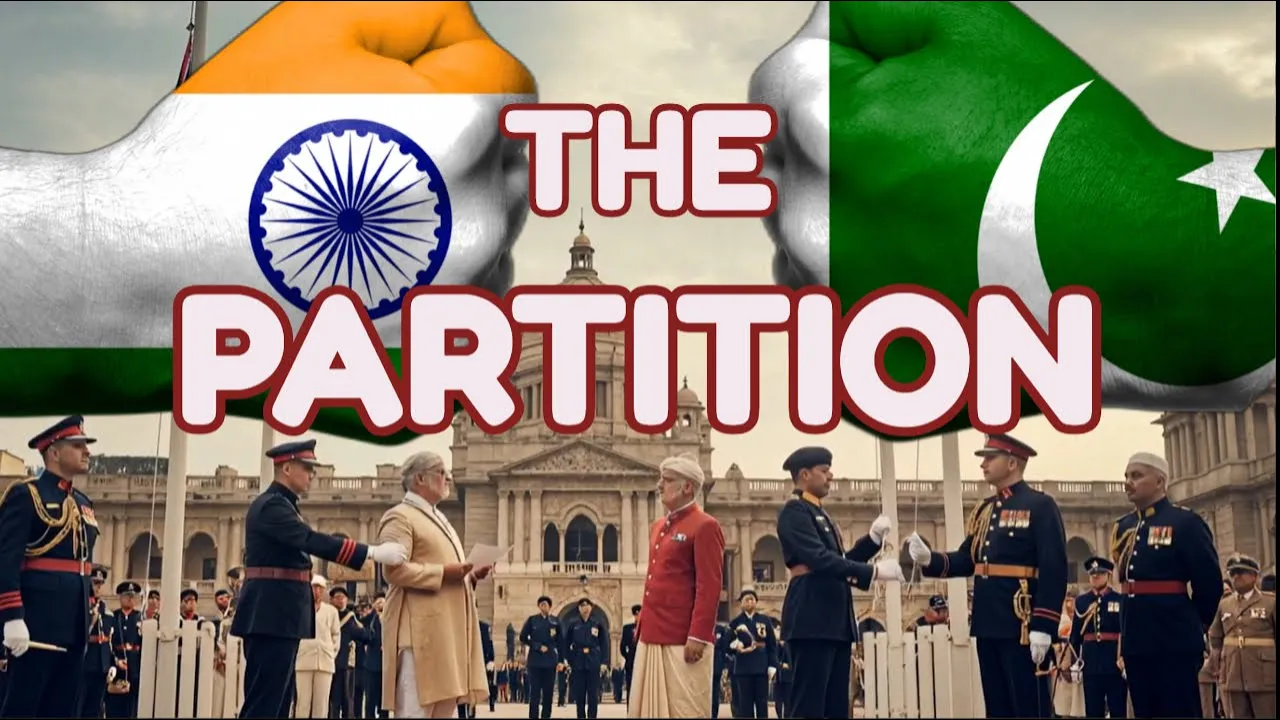










The partition of British India in 1947, driven by British 'divide and rule' policies and accelerated by Lord Mountbatten's rushed timeline, resulted in the greatest migration in human history, displacing nearly 15 million people and causing approximately one million deaths, with devastating personal stories of survivors like Tunisia Tanija, Illa Banerjee, Preetim Singh, and Pratap Kumar Hora revealing the profound human cost of political decisions made in haste.
Partition of India 1947: Survivors' Stories of Violence and Migration
Added:The history of British colonial rule (the British Raj) in the Indian subcontinent and the socioeconomic impacts of 'divide and rule' policies.
The major political players and factions of the Indian Independence Movement, specifically the Indian National Congress led by figures like Mahatma Gandhi and Jawaharlal Nehru, and the All-India Muslim League led by Muhammad Ali Jinnah.
The ideological basis of the 'Two-Nation Theory,' which argued that Hindus and Muslims in India represented two distinct nations that could not peacefully coexist in a single state.
The basic geography of South Asia, specifically the location and demographics of the Punjab and Bengal provinces, which were the primary sites of division and violence.
The long-term geopolitical consequences of Partition, including the ongoing Kashmir conflict, the creation of Bangladesh in 1971, and the nuclearization of India and Pakistan.
The study of oral history methodology, examining how personal testimonies, memories, and subjective narratives of survivors help construct alternative historical archives of trauma.
Comparative analysis of other modern geopolitical divisions and refugee crises, such as the partition of Palestine (1948) or the division of the Korean Peninsula.
The representation of Partition trauma in literature and cinema, such as the short stories of Saadat Hasan Manto or Khushwant Singh's novel 'Train to Pakistan'.
How modern-day politics and nationalism in India, Pakistan, and Bangladesh continue to shape—and sometimes weaponize—the collective memory of the 1947 Partition.
153.8K views2.8Klikes27:21Original Release: 2021-08-14
[Music] dj [Music] the partition of 1947 the single most defining event in the history of the indian subcontinent the memories which leave survivors teary-eyed to this day communal violence bloodshed abductions rapes suicides and looting the horrors of partition are far from forgotten [Music] in today's show we'll get you the voices of people who have witnessed the deadliest bloodshed in indian history as children but did it all begin in 1947 not exactly [Music] incited by the british divide and rule policy communal hostilities had been escalating in british india the calcutta riots of 1946 also known as the great calcutta killing were four days of massive hindu muslim riots in the capital of bengal india it left an estimated 5 000 dead on february 20th 1947 clement attel the then british prime minister declared that britain would quit india in june 1948.
to handle the exit the new viceroy arrived in delhi on march 1947 lord louis mountbatten the last viceroy of british india his task was to prepare a plan for the transfer of power and to expediate the process of british withdrawal initially he was given time until june 1948 not 1947 to complete his mission but he was in a hurry to get back to britain on june 3rd 1947 he announced his new plan the date of transfer of power was changed from june 1948 to august 15 1947.
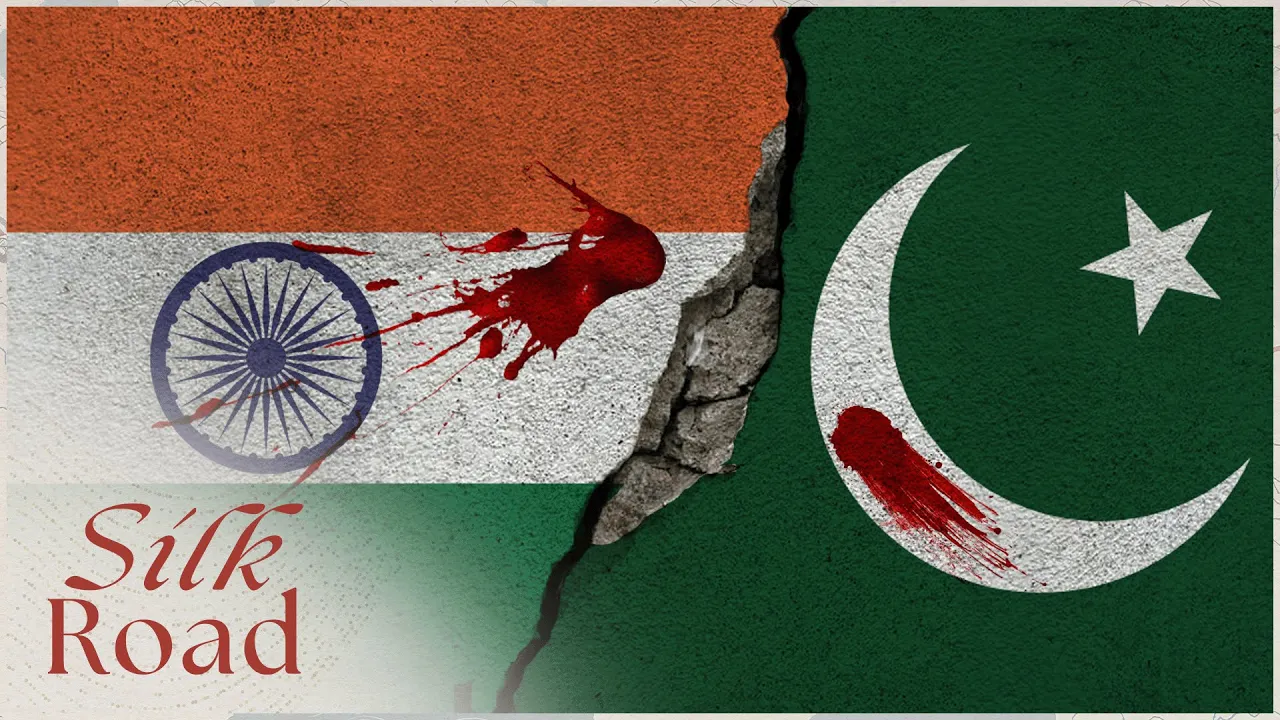
this had disastrous consequences the subcontinent was partitioned into two independent nation states hindu majority india and the muslim majority pakistan english barrister sir cyril radcliffe was given the task of drawing the boundary it is interesting to note that radcliffe had never visited the country prior to this visit he had five weeks to divide the then british colony into the new independent nations the fate of millions of people was sealed and a humanitarian crisis unfolded the new borders which split the key provinces of the punjab and bengal in two were officially approved on august 17 1947.
this was the beginning of the greatest migration in human history muslims left for west pakistan and east pakistan where millions of hindus and sikhs headed in the opposite direction nearly 15 million people were displaced approximately one million were killed around 83 000 girls and women were raped or abducted and then there was those who survived bhagwan das tanija was born in october 3rd 1939 in kaluchi a city in the dairy ishmael khan districts of the khyber pashtunkwa province tunisia grew up in a close-knit family of five he says his neighborhood hindus like himself muslims and sikhs lived in harmony until july he was eight years old when things changed seemingly overnight rioters from outside the city attacked residents looted their houses and set ablaze places of worship the terrified tunisia family decided to migrate to india foreign [Music] in august 14 1947 by rail his family was among the fortunate ones [Music] foreign [Music] they arrived in india on the eve of independence but the sorrow of leaving their home overshadowed the joy of attaining independents [Music] they [Music] as refugees in india the family was allotted a house in lashpat nagar in free india's but the struggle of finding a living was real including for the then eight-year-old child yeah growing up tunisia excelled in maths he went on to become a store owner just like his father he married pushpa and together they had four beautiful children but he still yearns for the good old days on the other side of the borders [Music] today [Music] having witnessed both the indian pakistan partition in the 1984 riots tunisia says his definition of religion has changed over the years [Music] hinduism [Music] while statistics give us some idea of the scale of migration that took place it does not reveal the deeply emotional effects the partition had on real people particularly women but partition like other conflicts and wars affected women differently a lot has been written about the women being raped kidnapped murdered and sexually assaulted during and after partition however it is limiting only to discuss women as victims of sexual violence it is critical to acknowledge stories of how it affected them in other ways meet illa banerjee a great-grandmother a foodie a woman full of life and a partitioned survivor born in 1936 in my mind singh in the eastern side of british india illa lived an ordinary life and attended school in the district till 1950.
east pakistan but her life took a 360 degree turn in 1950 when the riots erupted in her district the only option to live was to move to india fifties within days the family decided to move to jamshedpur india to a relative's house but in the midst of this illa lost her father he had gone to calcutta to arrange his family's migration m her mother did not change the plan made by her late husband and fourteen-year-old ila along with her sister and her newborn left for jamshidpur via air what 45 along with her siblings continued their education in india but there were some initial challenges [Music] 84 years old now illa lives with her daughter mukherjee in delhi my mother is the person with the least material expectations in life she is happy and satisfied with very little and has and she can adapt to any kind of circumstances she can leave live in one room or she can live in a palace and it makes no difference to her whatsoever soon after her marriage ilav returned to bangladesh with her husband it was a bittersweet experience one that she does not want to repeat again [Music] once a jammu kashmir resident preetim now lives in kathmandu nepal he was 12 years old when british india was divided in two 1947 japanese is [Music] in 1947 when the partition happened the princely state of jammu kashmir was neither part of india nor part of the newly formed pakistan maharaja hari singh of jammu kashmir along with his prime minister rama chandra decided not to accede to either dominion but everything changed in 1948.
look in 1948 mccain [Music] foreign this was the start of the first indu-pakistani war to escape the conflict many civilians vacated their villages prietam singh says his father helped the indian army in providing food and shelter after the war subsided his family migrated to nepal where they have been living for over six decades but he continues to visit his ancestral home in pakistan foreign [Music] nearly 90 pretend singh is enjoying his second innings in life reflecting on the tumultuous period of the 1940s he says he still wishes the lines were never drawn [Music] meet pratap kumar hora he migrated from pakistan to india born in 1937 in kashir a region south of lahore in the pakistani province of punjab pratap was the youngest of six siblings his father nand gopal hora was a successful lawyer while his mother rani bhaihora whom he lost at a very young age was a freedom fighter my father was a leading lawyer at kasur and we had our own house which was almost three three story house i was unlucky that my mother died when i was almost three and a half years old their lives changed in 1947 his older sisters who were studying in a boarding school in lahore were asked to go home their hostel had been attacked by rioters my sisters were studying at lahore and just end of july it was that hostel was cordoned off by bad elements they writers and it was planning of those writers to abduct the girls military police intervened and facilitated the girls to go along to their parents with their parents to their houses [Music] pratap's father decided to send his children to a relative's home in banaras on august 6th the siblings cut a train to india to be on the safer side that myself and my two sisters go to banaras to our uncle uncle so he sent us to banaras on 6th of august with my other uncle the following week their father on the advice of his muslim accountant left his home in kashur never to return 14th day his assistant main assistant which is called munshi came to him and informed him that muslims from lahore have come and planned that they will attack hindu homes on 14th night they will loot and murder the occupants so you please you leave otherwise i will not be able to save you so he he was hardly 200 meters stationed from our house so he took a train for abrasive with the help of their extended family the horror family relocated to bulan shar a city in uttar pradesh suddenly they had become refugees when my father settled down at buland shahad and the whole family went there to live there so it was a big contrast to what we were used to at kazoos we had a very big koti which had space for cows and their storage house for their father and this was small rooms four in a line bathroom did not have a door so we put a curtain our goals have to but we had to adjust what to do his wife lata hora says she treasures the family heirloom carried across the border during partitioning foreign their fight for survival in india was real but the family never quit slowly they managed to get back on their feet going from strength to strength i've struggled yes struggled but struggle and with the grace of god come out successful [Music] this is mansoor alam he was a child when his family migrated to east pakistan [Music] the partition shattered the dreams he had for his future seven and a half decades have passed perhaps the wounds of those who live through it will never fully heal this is the lasting legacy of partition so [Music] foreign
Up Next
57:55
Partition of India: Historians on 1947 and Mountbatten's Role
@JprLitFest
312 views•2018-07-08

33:02
The Great Schism of 1054: Causes and Consequences
@SacredCathedrals
113.5K views•2026-02-19
91:57
The Geopolitics of the Ukraine War and the Rise of Global Autocracy
@JordanHarbingerShow
468K views•2025-04-19
17:05
Understanding the Cold War: Superpower Conflicts and the Road to Détente
@OverSimplified
46.1M views•2019-01-24
Related Study Plans & Knowledge Roadmaps
Structured learning paths in History
history
Byzantine Iconoclasm: Theology, Art & Politics
01Foundations of Byzantium and Early Christian Images
02The First Iconoclasm: Leo III and the Crisis of Images
03Empress Irene, Nicaea II, and the Second Iconoclasm
+ 2 more learning modules
9h5 modules
Explore Roadmap
history
Iranian Revolution (Causes, Events & Legacy)
01The Pahlavi Dynasty and the Roots of Discontent
02The Spark of Rebellion and the Rise of Khomeini
031979: The Fall of the Shah and the Climax of the Revolution
+ 2 more learning modules
8h5 modules
Explore Roadmap
history
Mali Empire: Mansa Musa, Trade & Timbuktu
01Foundations of the Mali Empire
02The Trans-Saharan Gold and Salt Trade
03The Reign and Pilgrimage of Mansa Musa
+ 1 more learning modules
6h4 modules
Explore Roadmap
history
1947 Partition: Politics, Borders & Legacies
01Foundations of British India and the Divide
02The Political Negotiations and the Mountbatten Plan
03Drawing the Boundary: The Radcliffe Line
+ 2 more learning modules
8h5 modules
Explore Roadmap