
















A lightweight robot wrist mechanism can be created by decoupling motors from the wrist using Bowden tubes and fishing line, which reduces the overall weight at the end of the arm while maintaining three degrees of freedom (pitch, roll, and yaw) for manipulating payloads like cameras.
Designing a Lightweight 6DOF Robot Arm Wrist with Bowden Tubes
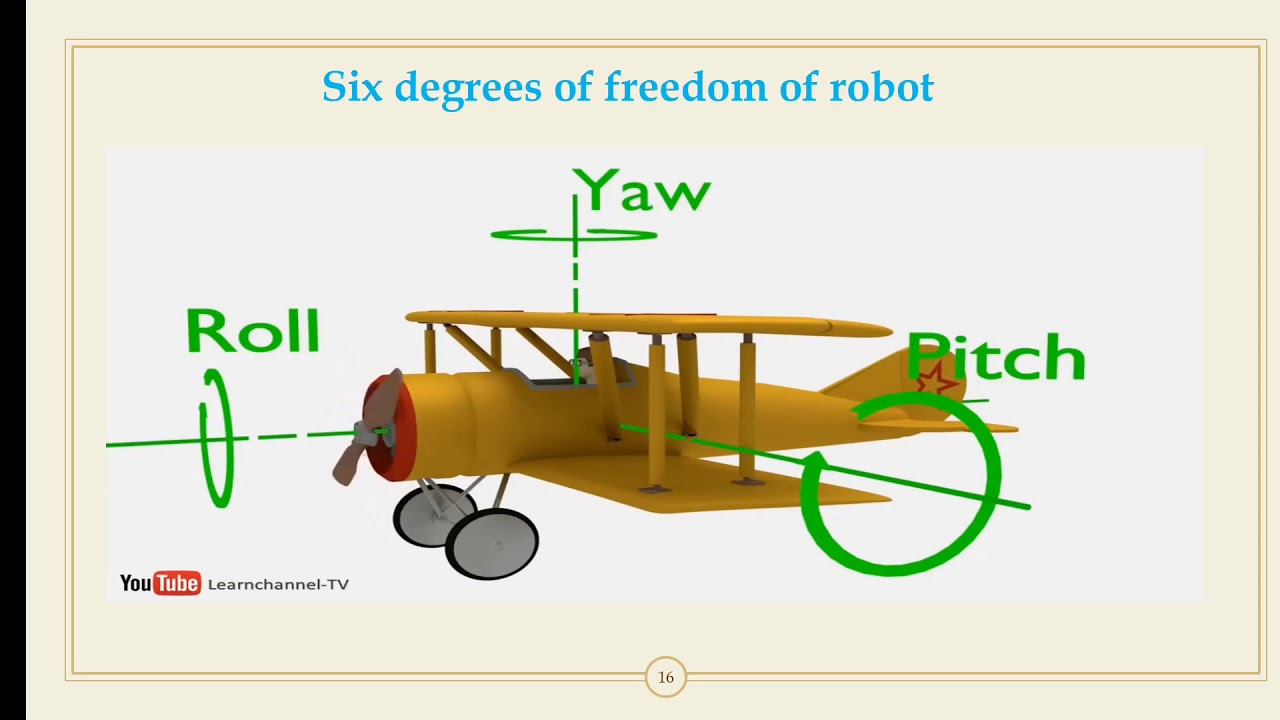
Added:Basic concepts of Degrees of Freedom (DOF) and robotic kinematics, particularly the role of a 3-axis robotic wrist in orientation.
Fundamentals of cable-driven (tendon-driven) actuation systems and how tension is used to transmit force.
The mechanical principles of Bowden tubes, including how they guide an inner tensile line while resisting compressive loads.
Core physics concepts of torque, moment of inertia, and the mechanical advantages of reducing end-effector mass in serial manipulators.
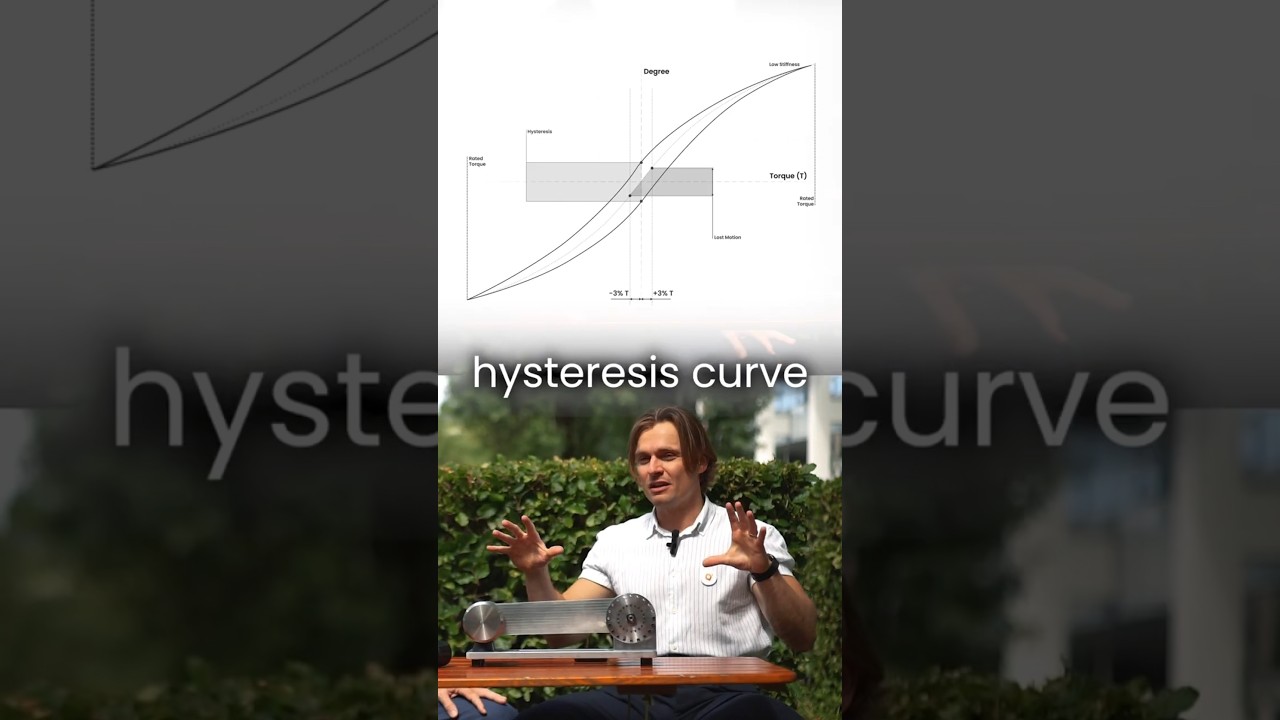
Compensation algorithms for hysteresis, elasticity, and backlash inherent in cable-driven robotic systems.
Implementing Inverse Kinematics (IK) solvers specifically adapted to handle the coupled joint motions of tendon-driven wrists.
Integration of closed-loop control systems using joint encoders or tension sensors to ensure precise positional accuracy.
Design and fabrication of continuum (snake-like) robots and soft actuators using advanced tendon routing configurations.
204.2K views7.7Klikes7:15Original Release: 2022-10-23
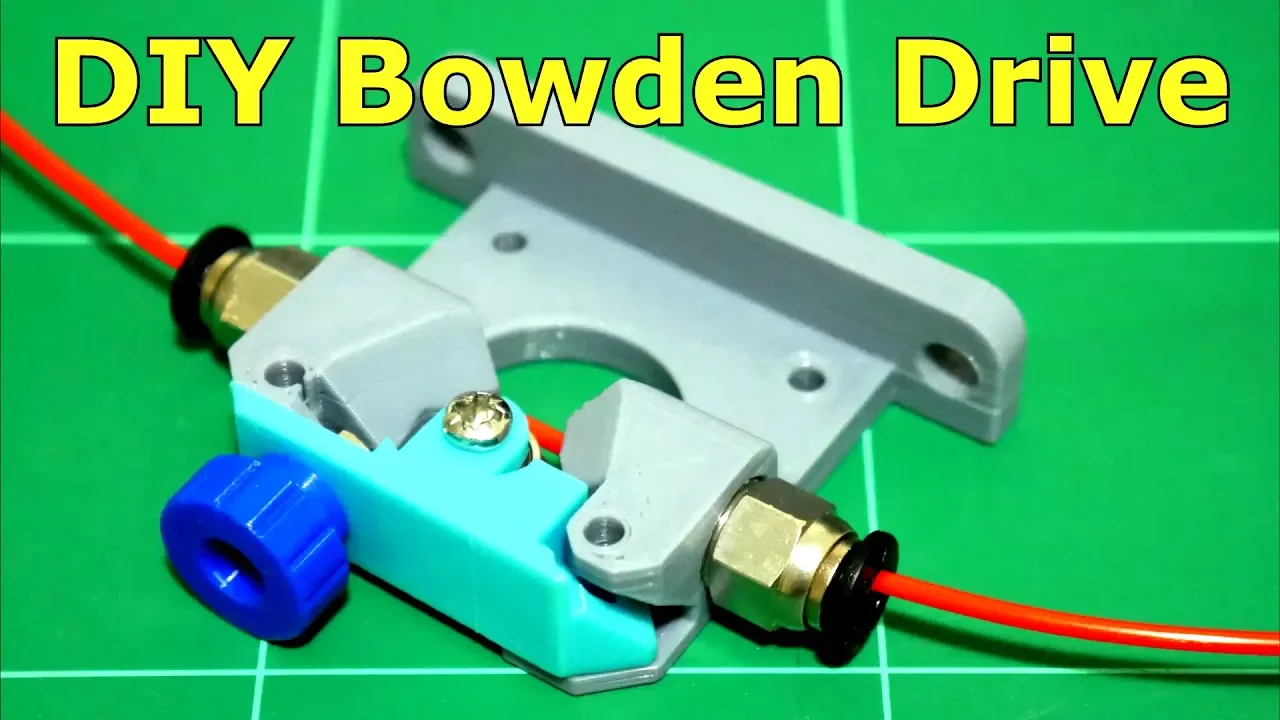
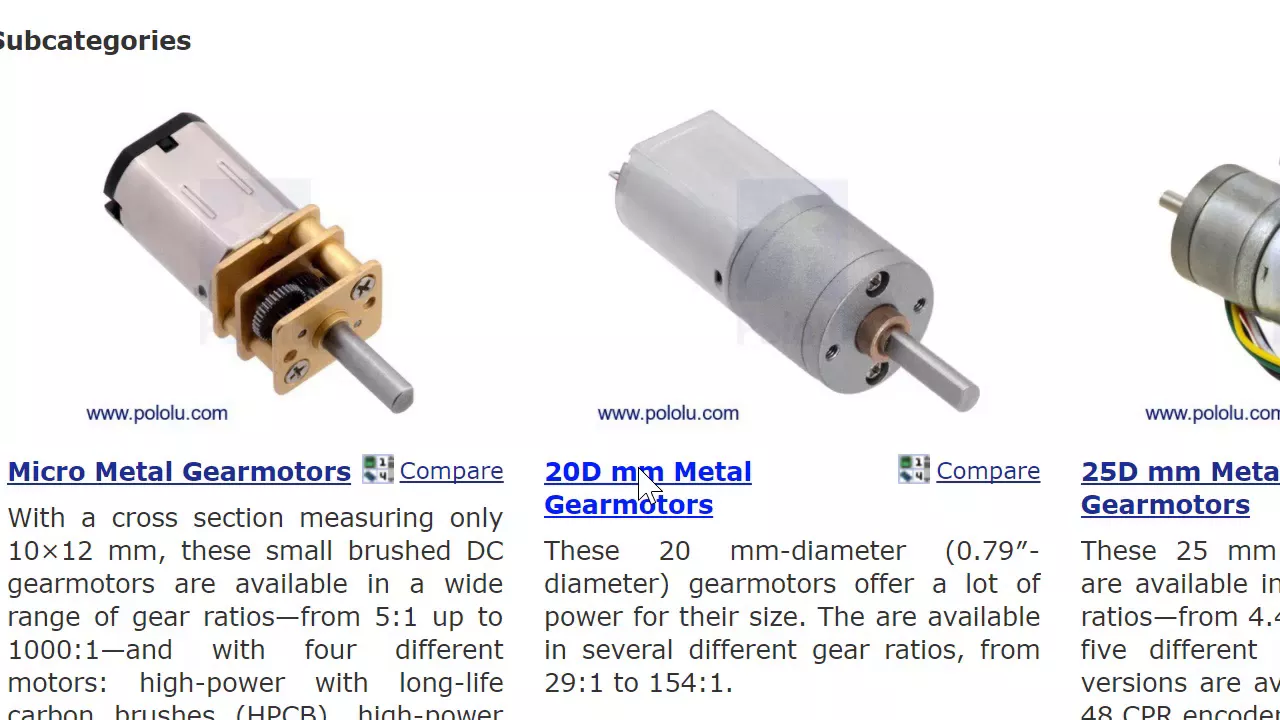
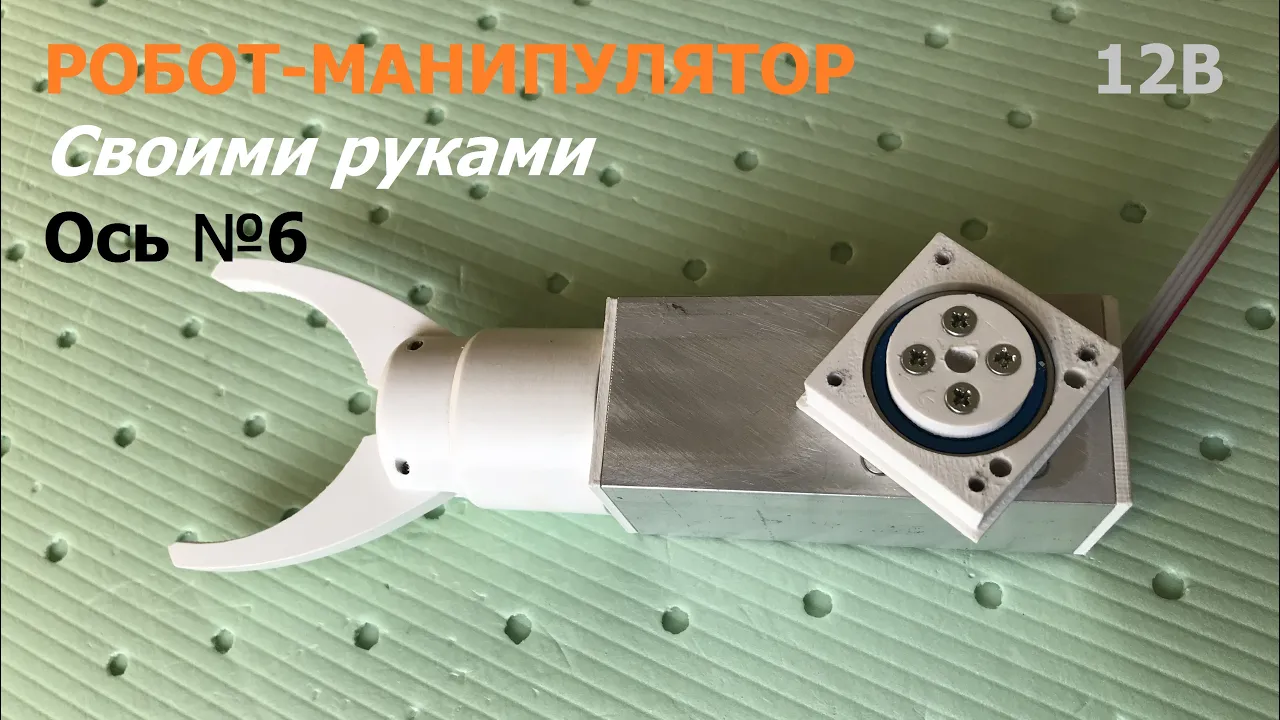
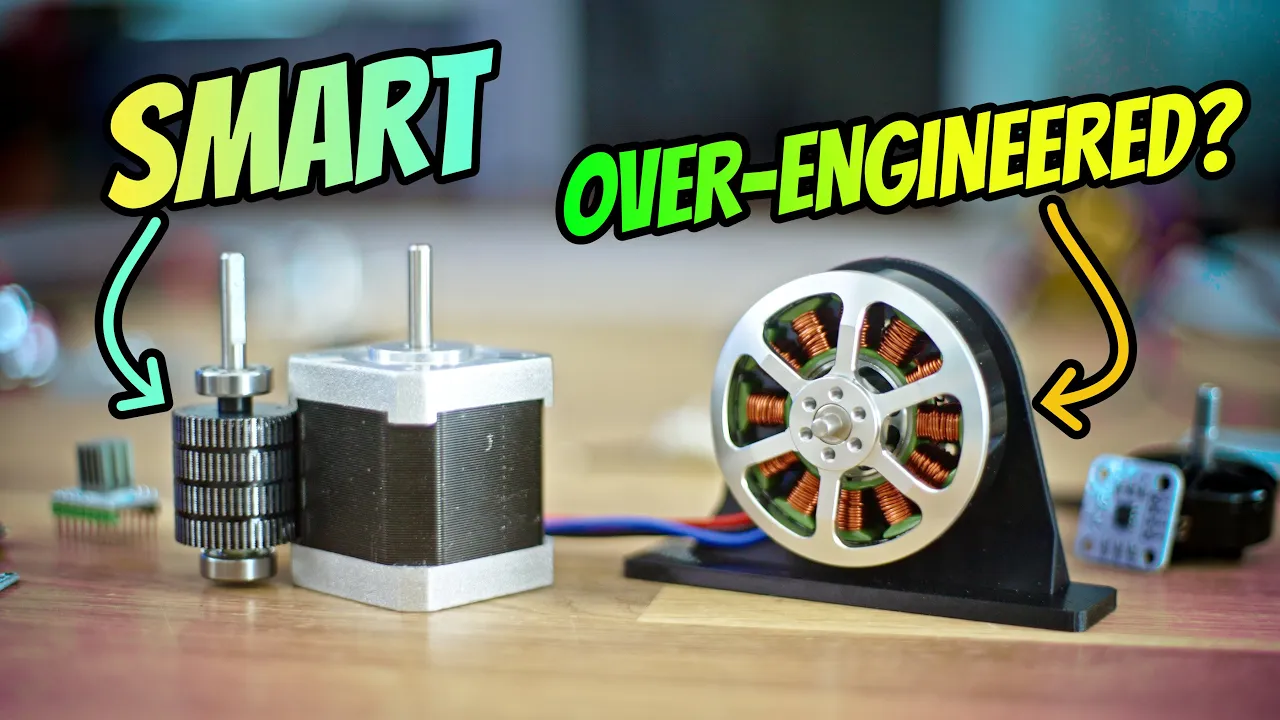
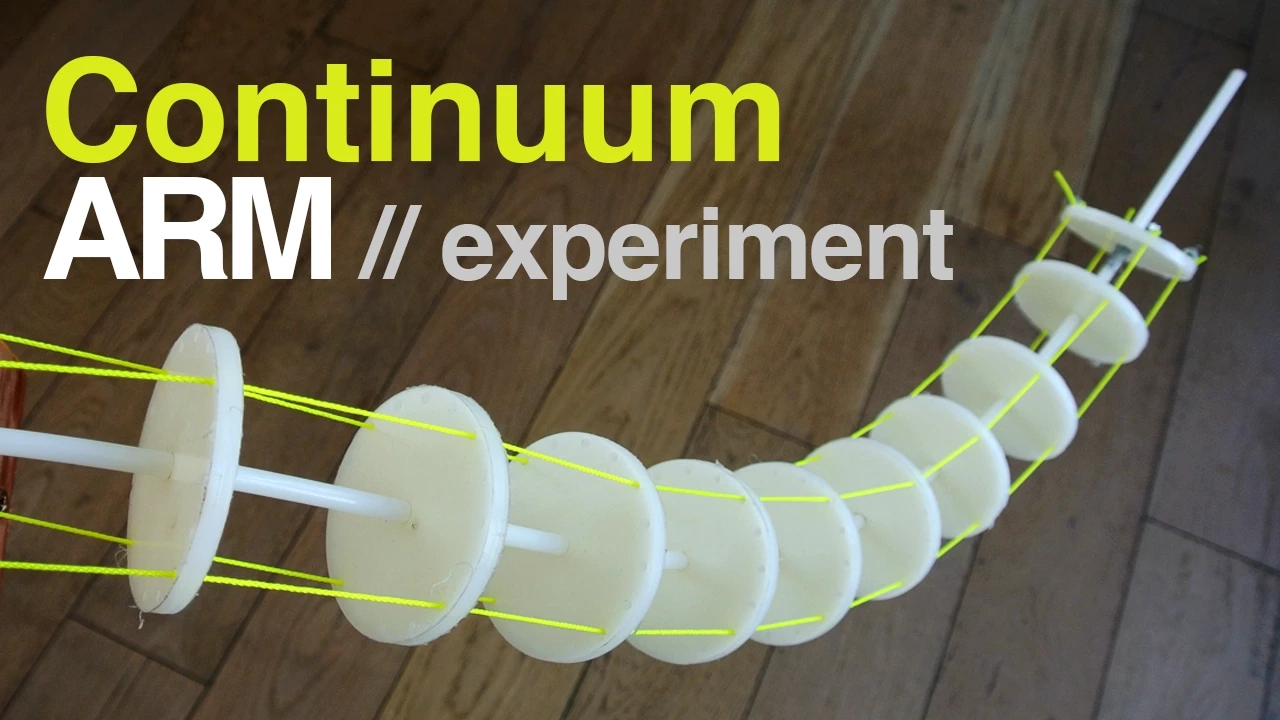
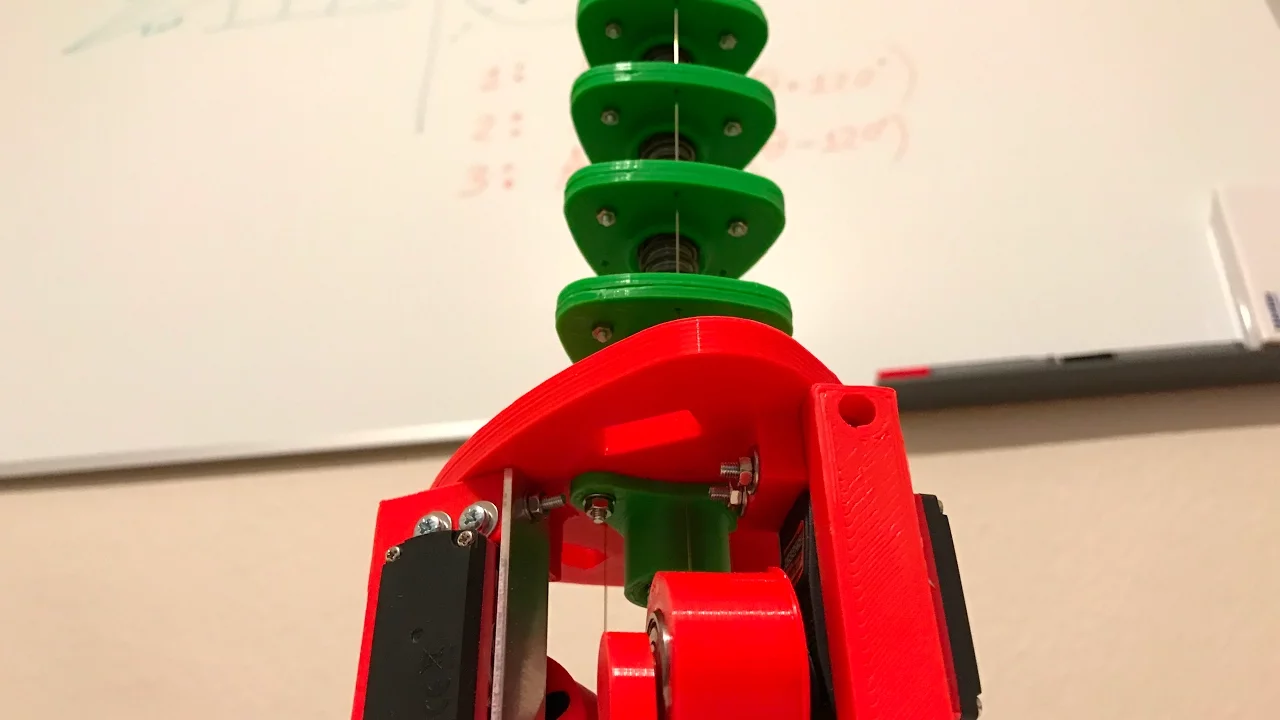
it's fairly easy to build a robot arm such as this that has three degrees of freedom and I've shown it quite a bit in previous videos but the problem really starts when you want to turn that simple arm into something useful say an arm with six degrees of freedom the main issue is Motors motors which are powerful enough to be able to move things around quickly and precisely are heavy and placing them at the end of the arm where we need them to be able to manipulate the payload just reduces the amount of weight that the arm itself can carry in my last video I looked at different ways of reducing the weight at the end of the arm and after a shed load of testing I decided to decouple the motor from the wrist mechanism using Belden tubes the idea was really simple we simply have two bearings and a pulley we can wrap two pieces of fishing line around the pulley going in different directions and if we pull this line it rotates one way if we pull this line it rotates the other so now I've got the general idea how do I turn it into a robot arm wrist I want my arm to carry a camera and in order to point it in any direction I want I'll need to be able to move it in three axes let's call them pitch roll and yaw we'll start by adding the roll mechanism we just need something which will rotate the camera on the end of the existing arm jumping into CAD we can simply rearrange the mechanism to have the pulley in between the bearings leaving us a nice little nubbing on top to mount the camera to a bit of casing around the bearings and a cylinder to mount into the existing arm and we're all done I've printed out the parts that we need so let's put it together we screw the nobody bits into the pulley click the bearings into place then the top and bottom can go on and we can screw the housing into place foreign so with our first wrist axis complete we can now mount it onto the arm we'll just take the old piece out of here and this should slide straight into place we can attach it more securely with a screw later but now we should be able to rotate something on the end of the arm and just what is that something you may be asking well it's the Tilt axis of course I've got the pieces here for it I'll just clip these into the bearings that'll go on there like that allowing this to move around and we'll put the pulley on the side of it to allow us to attach the lines okay I've screwed that onto the previous piece and now you can see we've got two degrees of freedom here the final piece goes in here in between this one and it's just basically a duplicate of the first axis I'll put that together now I've attached the last axis now you can see we've got three degrees of freedom it might be easy to see once we put something on the end I've got a quarter 20 mount for a camera on the end of the last axis and I'm just going to quickly attach a foam Mount to it so now you should be able to see we can move this to pretty much any angle that we want to the joints on the end of the arm are only half the problem though we still need something to be able to power them so we've come up with this this is just three stepper Motors bolted onto a piece of 3D printed plastic on top of the stepper Motors we can just put little pulleys and run line down the bottom and line down the top and then out through these little towers here they're moving and out in order to allow us to set the tension I'll pop on two more pulleys I'm going to put the lines on off camera as to be honest with you they're a complete pain in the ass okay so I've hooked up all the Belden tubes and fishing line cables and the motors here and you should be able to see if I turn these motors the corresponding joints move nicely I've also hooked up some electronics and put it onto a temporary baseboard for now for the electronics I'm just using a simple ramps board with tmc-2208 drivers and then for the shoulder joints it takes the most weight I'm using this large dm-542 driver we're going to need some software to drive this though so let's dive straight into the Arduino IDE the code itself is really simple we're just using the Excel stepper library to create a load of new stepper Motors these are the pins that the Ram Sport are used to control the stepper drivers we then add them all into a multi-stepper object so that we can control them all at the same time and then I'm reading from the serial line here I've got it set up so that I can just send a command the first character of that command is going to be addressing which stepper to do zero will be the first stepper which I've got set up as base and five will be the final step which I've got set up as the last part of the wrist once it receives a command it just calls move degrees which converts degrees into steps and then when you press enter at the end of the line it tells all the steppers to move there so now if we load up the serial monitor we should be able to send commands to our arm if we start off with zero which is the base stepper driver and then 20 we should be able to move the base by 20 degrees there we are we should be able to also send multiple commands so if we set 0 back to zero degrees and then the shoulder moving to 10 degrees of course the joy of accepting serial commands is we don't just have to type them in we can do it with programs here I've just written a bit of quick python code in Jupiter lab to make a very simple GUI for the robot I can just move each of these sliders around and the corresponding joint on the robot should move I've also got it set up so that I can move the joints to various positions click on ADD here and it'll add it to a list of commands which I can then choose to send to the robot in order well this has worked fantastically I'm really pleased with the way that we've reduced the weight on here I think I've still got a little bit of tuning to do maybe with the size of these tubes and the reduction of these motors and then I'm definitely going to have to add some sensors to the different parts of the arm here just so that we know exactly where the arm is at all times so hit those like And subscribe buttons and I'll see you next time
Up Next
47:10
Arduino Coordinated Stepper Motor Control with Acceleration
@iforce2d
367.7K views•2017-09-10
30:32
Ultrasonic Transducers: Resonant Frequency Measurement and Horn Design
@imajeenyus42
229.9K views•2017-02-22

54:16
Polymer Environmental Degradation: Mechanisms & Stabilization
@iit
1.8K views•2012-07-10
33:39
How a Student's Question Saved a NYC Skyscraper from Collapse
@veritasium
22.8M views•2025-04-26
Related Study Plans & Knowledge Roadmaps
Structured learning paths in Engineering
engineering
Building Acoustic Levitators: Physics & Arduino
01The Physics of Sound and Standing Waves
02Piezoelectric Transducers and H-Bridge Drivers
03Arduino Programming: Generating 40 kHz Signals
+ 2 more learning modules
14h5 modules
Explore Roadmap
engineering
Building Peltier Cloud Chambers: Particle Tracks
01Cosmic Rays & Cloud Chamber Physics
02Thermoelectric Cooling (TEC) Fundamentals
03Custom Liquid-Cooling Loop Design
+ 2 more learning modules
18h5 modules
Explore Roadmap
engineering
Yagi-Uda Antennas: Modeling, Build & VNA Test
01Introduction to RF and Antenna Fundamentals
02Yagi-Uda Antenna Design Principles
03Antenna Modeling and Simulation in 4NEC2
+ 2 more learning modules
18h5 modules
Explore Roadmap
engineering
ECG Monitor Design: Op-Amps, Filters & Noise
01Electronics & Breadboard Basics
02Op-Amps and Instrumentation Amplifiers
03Bioelectricity and ECG Fundamentals
+ 2 more learning modules
18h5 modules
Explore Roadmap