



![[s4 | 2024] Комплексный анализ, Екатерина Трифанова, лекция 4](https://i.ytimg.com/vi/5b2_NSjpd_E/maxresdefault.jpg)



![[s3 | 2025] Математический анализ, Трифанова Е. С., практика 10](https://i.ytimg.com/vi/7Q9WeIibjy4/maxresdefault.jpg)

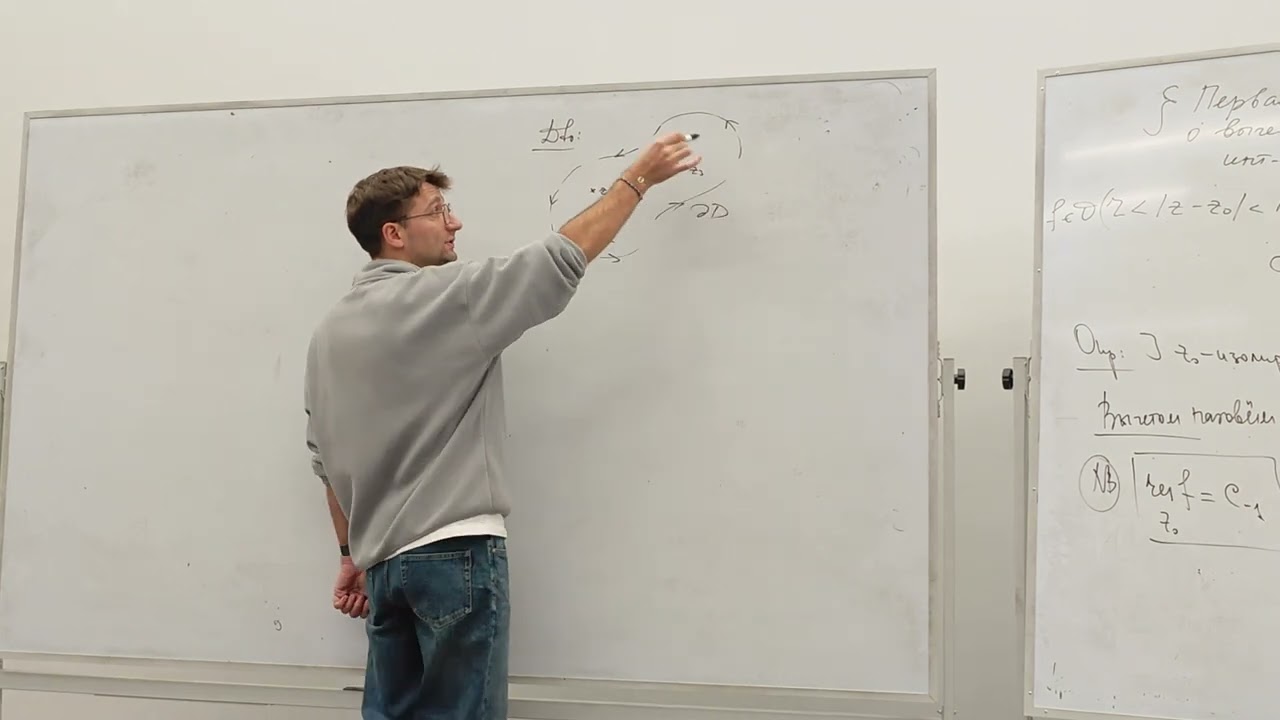





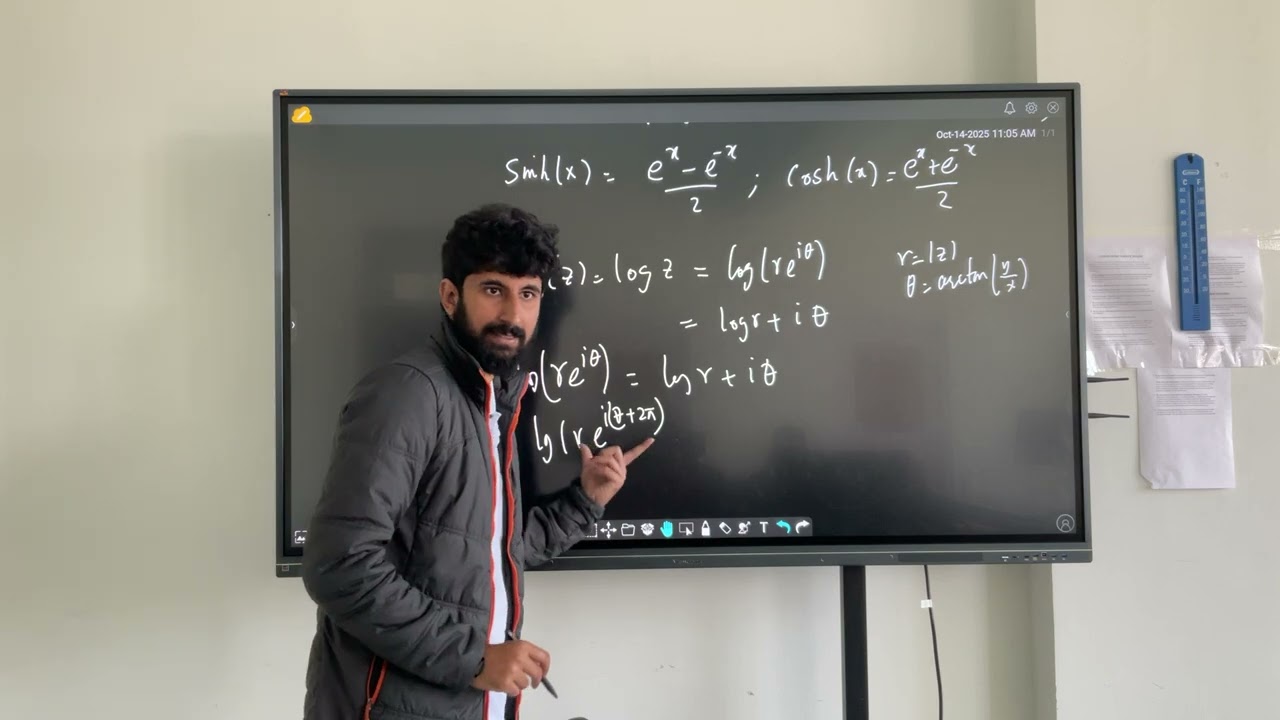

In complex analysis, singularities of a function f(z) are classified into three types based on the Laurent series expansion: (1) Removable singularities occur when the Laurent series contains only positive powers of (z - z₀), meaning the function can be redefined at that point to become analytic; (2) Poles occur when the Laurent series contains a finite number of negative powers, with the order of the pole equal to the highest negative exponent; (3) Essential singularities occur when the Laurent series contains an infinite number of negative powers, such as in the case of e^(1/z) at z = 0, which has an infinite series with terms like 1/z, 1/z², 1/z³, etc.
Complex Analysis: Singularities & Laurent Series | KTU Maths GYMAT301 Part 6
Added:Understanding of complex functions and the concept of analyticity, including the Cauchy-Riemann equations.
Familiarity with power series representations of complex functions, specifically Taylor series expansions.
Knowledge of complex line integration, including Cauchy's Integral Theorem and Cauchy's Integral Formula.
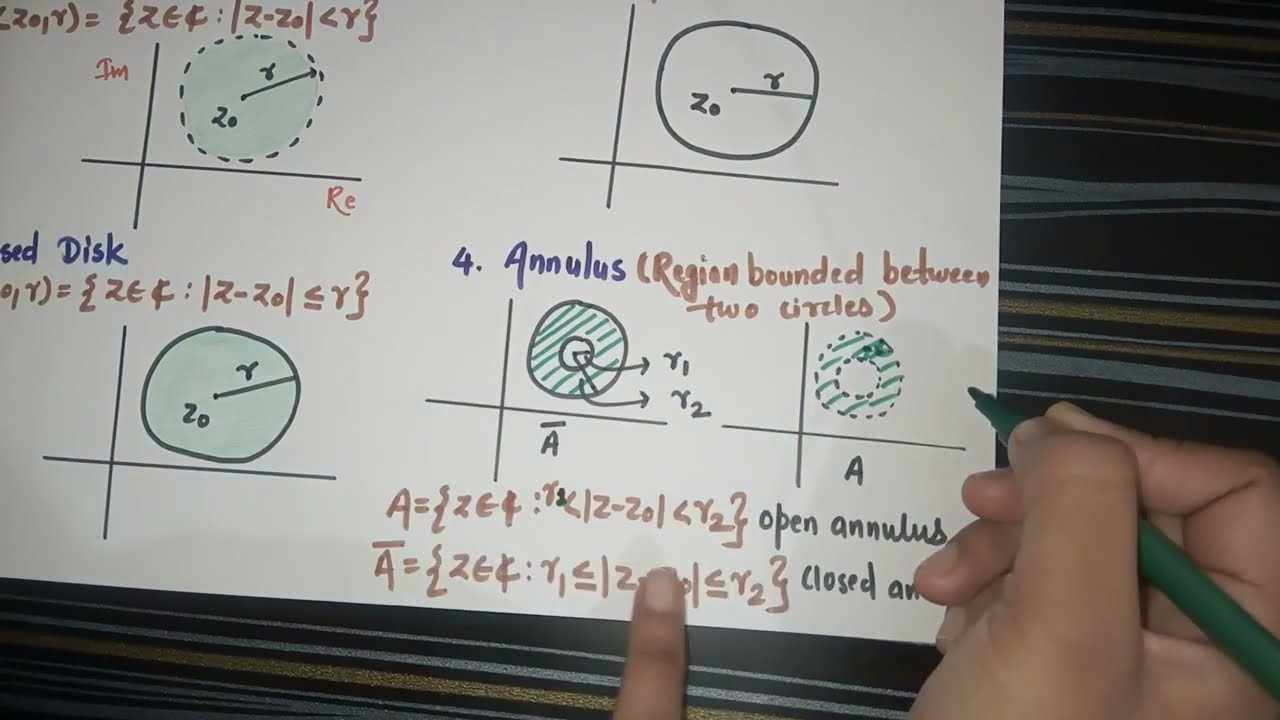
Basic topological concepts in the complex plane, such as open disks, domains, and deleted neighborhoods.
The Residue Theorem and the calculation of residues at different types of singularities.
Evaluating real definite integrals (improper and trigonometric) using contour integration and residue calculus.
Studying the Argument Principle and Rouché's Theorem to locate the roots of analytic functions.
Applying complex analysis to physical problems, such as conformal mapping in fluid dynamics and electrostatics.
142.1K views2.6Klikes32:43Original Release: 2020-12-30
[Music] [Music] foreign a point is that equal to z naught at which a function f opposite fails to be analytic is called singular points or singularity of f offices or function analytical at which a function f officer fails to be um analytic analytically in the singular point example define singularity with is okay summation n equal to 0 to infinity a n into is set minus a sub naught the whole power n so the positive power plus summation n is equal to 1 to infinity [Applause] of a removable seamless removable singularity first singularity removable singularity will series if we launch series about is it is equal to is it not what is it equal to is it not f off is it has no negative powers has no negative power x finally the kind of negative power in land redundant then it is known as then it is known as removable singularities [Music] number of negative powers then it is known as sports of a porno remote vehicle it has fine a number of negative bubbles lauren series expansion is foreign um is infinite number of negative powers infinite number of negative powers is foreign set by one factorial plus is it square by two factorial plus he said q by three factorial plus six running buttons human being factorial plus 1 by a set the whole square by 2 factorial plus one by is set the whole cube by three factorial let's take the triangular then in either window arrange either one by said plus one by you said the whole square into two factorial two is that square plus one by six into two foreign to 0 therefore is it equal to 0 is an essential singularity he said equal to 0 is an essential singularity equal to f4 is it is equal to e raised to 1 by a set minus 4 e raised to 1 by is it minus 4 without any question he question square by 2 factorial plus is a q by three factorial plus exponent of the formula and then since it expands one plus um one by a set minus four by one factorial plus 1 by a set minus 4 the whole square by 2 factorial plus 1 by a set minus 4 the whole cube by 3 factorial plus etcetera okay it says foreign foreign infinite number of negative powers infinite number of negative bubbles therefore it said equal to four on the market this is equal to zero one everybody said equal to four is an essential singularity you said equality four is an essential singularity okay sinusoidal expansion and learning sinusoidal null is set minus is said q by 3 factorial plus it said rise to 5 by 5 factorial minus is raised to 7 by 7 factorial plus five is minus is raised to seven by seven factorial plus etc etc foreign removable singularity is it has only positive power he said has only positive power he said nepocity powers it has only positive power therefore is set equal to 0 is and we say removable singularity you say removable factorial plus a set square by 2 factorial plus a sub cube by 3 factorial number of negative [Music] foreign one by is that minus sign is it one by is that minus sign is sinusoidal by a formula but only an area formula one by a set minus sinusoidal formula and is raised to 5 by 5 factorial minus is raised to 7 by 7 factorial plus etc this is equal to minus is that raised to 5 by 5 factorial plus is raised to 7 by 7 factorial six into seven now the term one daily they pull a minus excess okay denominator numerically so this is equal to one by e one by is a cube by three factorial one by four he said q by three chloride fraction three factorial denominator numerically into 7 minus x raised to minus 1 in the expansion and down minus 6 raised to minus 1 and now 1 plus x plus x square plus x cube plus etcetera then plus 5 uh this is equal to in divided by 3 factorial by minus is raised to 4 by 4 into 5 into 6 into 7 plus is that square is that square and is it square by 4 into 5 minus instead raised to 4 by four into five into six into seven the whole square plus etcetera the whole cube and the one plus x plus x square variables finished number of negative powers okay if it has finite number of minutes and power either it said equal to zero in the marine and then therefore it said equal to zero everybody they pulled difference okay you
Up Next
13:12
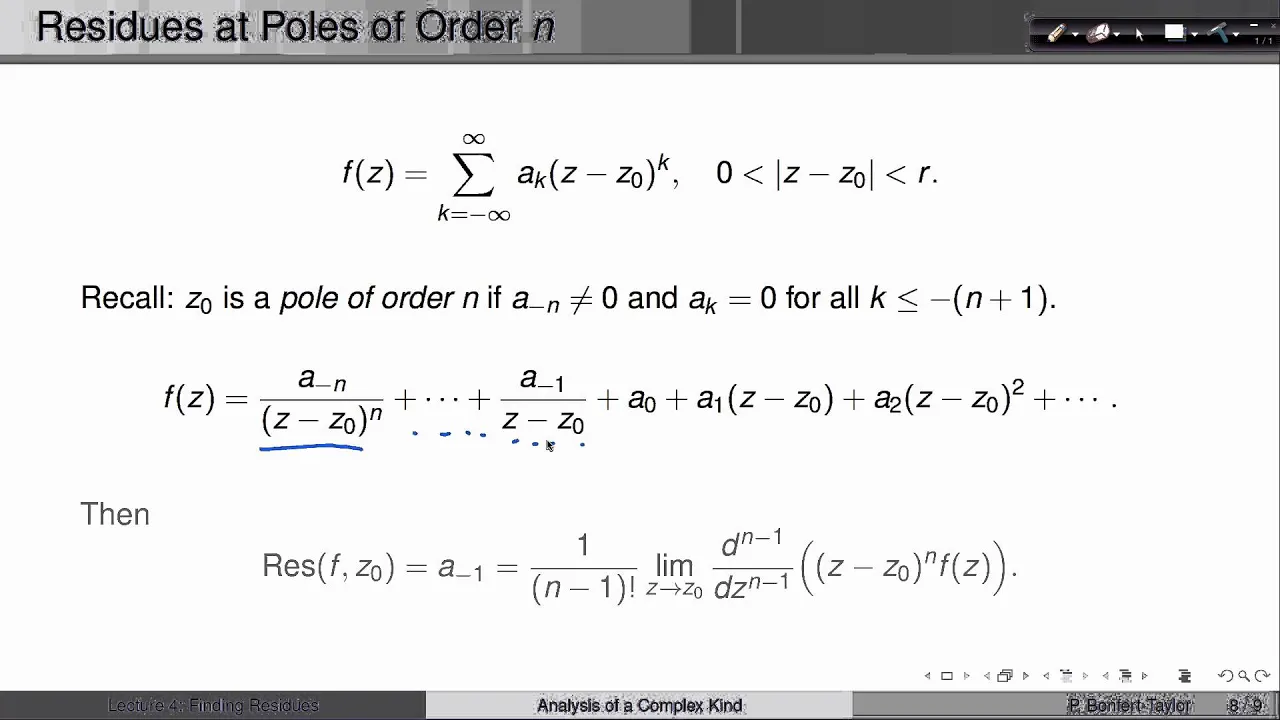
Finding Residues: Poles, Derivatives & Formulas | Complex Analysis
@PetraBonfertTaylor
6.5K views•2015-07-13

4:43
Elliptic Curve Cryptography Explained: ECC, ECDSA, ECDH
@PracticalNetworking
28.5K views•2024-10-21
38:06
Cauchy Integral Formula - Complex Integration | Engineering Math | KTU S3 Module 3
@RVSMathsAcademy
108.7K views•2020-12-01

6:00
The Mathematical Impossibility of Accurate World Maps
@Vox
23.3M views•2016-12-02
Related Study Plans & Knowledge Roadmaps
Structured learning paths in Mathematics
mathematics
Tensor Calculus: Vectors to Riemann Curvature
01Mathematical Foundations: Linear Algebra & Calculus
02Covectors, Dual Spaces, and Tensor Basics
03The Metric Tensor and Index Gymnastics
+ 2 more learning modules
40h5 modules
Explore Roadmap
mathematics
Gödel's Incompleteness: Logic, Proofs & Limits
01Introduction to Formal Systems & Hilbert's Dream
02Set Theory, Cardinality, and Cantor's Diagonal Argument
03Arithmetization and Gödel Numbering
+ 2 more learning modules
14h5 modules
Explore Roadmap
mathematics
Galois Theory: Fields, Groups & Solvability
01Foundations of Abstract Algebra: Groups & Fields
02Polynomials & Field Extensions
03Splitting Fields & Symmetries
+ 2 more learning modules
24h5 modules
Explore Roadmap
mathematics
Non-Euclidean Geometry: Models & Geodesics
01Euclid's Fifth Postulate and the Birth of New Geometries
02Hyperbolic Space and the Poincaré Disk Model
03Geodesics: Defining Straight Lines in Curved Spaces
+ 2 more learning modules
15h5 modules
Explore Roadmap