









![MEMENTO EXPLAINED [SUB ITA]](https://i.ytimg.com/vi_webp/rjP0IFz9m-s/maxresdefault.webp)
















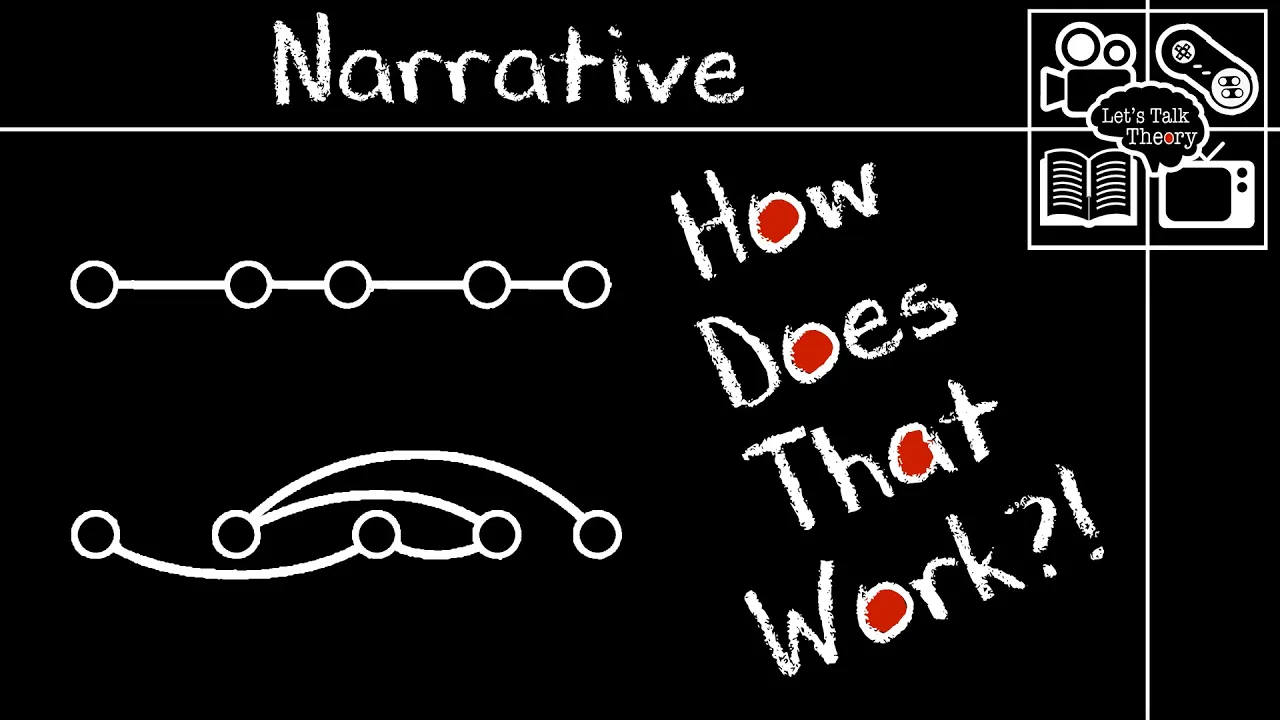
Memento uses a unique dual-timeline narrative structure (color in reverse chronological order, black-and-white in normal order) to explore the unreliability of memory, demonstrating how trauma and anterograde amnesia can distort perception and create an unreliable narrator, ultimately questioning whether we can truly trust our own memories.
Memento Ending Explained: A Detailed Analysis of Christopher Nolan's Film
Added:The concept of Unreliable Narration in literature and cinema, where the narrator's credibility is compromised.
The fundamentals of Non-Linear Narrative Structures, specifically reverse chronological storytelling.
Basic understanding of Anterograde Amnesia, the psychological condition involving the inability to form new long-term memories.
The tropes and themes of the Neo-Noir film genre, including moral ambiguity and subjective investigative journeys.
Thematic analysis of Christopher Nolan's broader filmography, focusing on his obsession with subjective time and reality (e.g., Inception, Tenet).
Epistemology in cinema: How films explore the philosophical boundary between objective truth and subjective perception.
The study of cognitive dissonance and psychological defense mechanisms like confabulation and self-deception in film characters.
Advanced film editing and structure techniques, examining how color coding and parallel editing can be used to represent differing states of consciousness.
887K views15.8Klikes10:39Original Release: 2018-08-31
I want you to hit me as hard as you can hi I'm Luke Ryan and welcome to movie endings explain where we'll be taking a look at some of the more ambiguous and discussed movie endings that have left audiences debating their true meaning long after the credits have rolled now where was I Christopher Nolan's memento was released in 2000 long before the days of his tentpole blockbusters and larger-than-life cinematic offerings a seemingly simple tale of a man living with anterograde amnesia seeking to avenge the murder of his wife Leonard played by Guy Pearce was attacked at home one night where his wife was raped and murdered he killed one of the attackers but the second threw him into a mirror giving him the amnesia he still retains all of the memories of his life prior to the incident but with anterograde amnesia he is unable to create new memories every 15 minutes or so sometimes less in stressful circumstances Leonard starts all over again in an effort to find the second attacker and to avenge his wife's murder Leonard has covered his body in tattoos all of them clues to help him remember everything he is picking up about the second man who he knows is called John G he also keeps polaroid photos to give him hints on his progress and the people he is met along the way interesting premise right well that's just the basic story how that story is told is what makes memento really interesting and unique based on the short story written by his brother Jonathan Christopher Nolan presents memento in two different timelines both distinct in their visual style one in color the other in black-and-white the color timeline is intercut throughout the entire film in reverse chronological order the black and white timeline is presented in normal chronological order taking place before the color sequences and the story begins to unravel in a very unconventional manner the film begins with the only literal River sequence in the movie with Leonard watching a Polaroid of a man he just shot dead undeveloped the man is Teddy a cop who have sympathized with Leonard and tried to help him find his wife's killer the black and white scenes depict Leonard in a motel narrating in a very film noir inspired style more on that later a key figure in the film story is Sammy Jenkins now Leonard used to be an insurance investigator and threw out the black-and-white timeline he recalls the story of Sammy Jenkins a man with anterograde amnesia just like Leonard it was Leonard's job to assess whether this condition was a physical or mental defect Sammy Jenkins was put through many tests but ultimately his diabetic wife who required assistance with her insulin shots decided to test her husband herself she kept asking Sammy to administer her shots hoping he would remember that he had already given her one but he didn't and she died partly it's a cruel twist of fate that a tragic story wrapped up in a condition that Leonard didn't fully believe in is exactly where Leonard finds himself trapped now with his wife dead and unable to create new memories but also it might be another clue of which there are many in the film as we reach the end of the movie but more like the middle of the story we're presented with the apparent truth comes out Leonard is sent to kill his wife's murderer by Teddy who has tracked him down Leonard strangles him takes a Polaroid of the body and the black-and-white slowly dissolves into color as the two timelines coalesce yet Leonard is disconcerted when the killer whispers Sammy and wonders how he knew about it and here teddy tells Leonard the truth the man he killed Jimmy wasn't his wife's killer Teddy helped Leonard track down the real killer a year ago and even has the pictures to prove it since then he's been manipulating Leonard into killing other potential John Gees feeding him clues and keeping his own hands clean look how happy you are I wanted to see that face again gee thanks [ __ ] you I gave you a reason to live and you were more than happy to help you don't want the truth Sammy was a con man a faker I never said that Sammy was faking exposed him for what he was a fraud but I was wrong that's the whole point see Sammy's wife came to me Sammy didn't have a wife it was your wife who had diabetes my wife wasn't diabetic you sure she wasn't diabetic I think I don't know my own wife at this point Teddy's truth really can't be taken literally after all Leonard's memory before the incident is still intact but maybe there are partial truths which is all you're really going to get from memento I think no one himself has said that if you watch the film closely the details are all there but certain elements just don't completely match up but that's what memory is it's imperfect and in the mind of a man who has gone through such horrific trauma that grip on reality is going to become so much more unhinged and unreliable back to the film noir comment one of the staples of the genre of film noir is the unreliable narrator a character who tells their story but has very clearly recalled it in their own bias Leonard could be seen as an unreliable narrator as well as Teddy who we eventually decode is quite the crooked cop after learning this revelation Leonard decides to leave teddy he notes down Teddy's license plate and notes it down for his next tattoo effectively marking Teddy for death as the next in a seemingly unending line of John G's and this is how the film concludes I have to believe in the world outside my own mind I have to believe that my actions still have meaning even if I can't remember them have to believe that when my eyes are closed the world still here do I believe the words to air [Music] is it still out there yeah we all need marys to remind ourselves who we are [Music] I'm no different [Music] [Applause] now where was I now there are other elements to the story that could play a key part into the bigger picture namely the character of Natalie and how she manipulates Leonard also but the real key is Leonard's past one of the more subtle clues is when Leonard is recalling the Sammy Jenkins story where after his wife's death from the insulin injections he ends up in an institution for a brief moment Leonard is in the same chair as Sammy [Music] now is it possible that Leonard was actually committed and escaped I think so but with the very nature of the fragmented memories presented from Leonard's point of view which we are shown can be easily and quickly manipulated by others I think memento is one of the greats unreliable in the rater films there's a million ways you can break down this movie and strip it down piece by piece but nothing can reconcile the fact that we cannot truly trust Leonard's mind when he confronts Jimmy at the end of the film just before the black and white gives way to the color he sees flashes of his wife she was apparently murdered by asphyxiation and as he chokes Jimmy to death we see flashes of his wife's face wrapped in plastic this is before Teddy tells Leonard that Sammy's story is his story so perhaps Leonard really did kill his own wife now at the very end of the film we see a flash of her lying on his chest with a tattoo that reads I've done it a tattoo we never see at any of the point in the film if his wife truly is still alive perhaps when he killed Teddy at the end of the story and the beginning of the movie he broke the chain of his condition and returned to a prototypical happy ending but far more likely than that is the bitter more realistic route that he is imagining a fantasy in which he does escape his eternal murderous purgatory one that he ultimately decides to stay in by marking Teddy as the next John G anyway ignorance is bliss he wants to find that happy ending but he knows that it's impossible so he continues on regardless of the truth stuck in an everlasting sense of rage and vengeance bound to be driven to avenge his wife's death forever whichever version of the truth you believe [Music] [Music] you
Up Next

21:19
Fight Club: An Analysis of the Twist Film Analysis
@whatisantilogic138
2M views•2023-02-04

23:14
Visual Analysis Essay: How to Analyze Graphic Novels in College Writing
@nataliepleimann5941
1K views•2020-10-14
4:55
Film Blocking Techniques for Directors: Space, Shapes, Lines
@StudioBinder
1.9M views•2018-07-23

4:00
Evolution of Darth Vader: Anakin Skywalker's Animated Journey Across Star Wars Films
@TellItAnimated
13.4M views•2019-03-30
Related Study Plans & Knowledge Roadmaps
Structured learning paths in Film Analysis
film-analysis
Sensory Cinema: Foley, Haptic Sound & Texture
01Introduction to Film Sound and Foley Artistry
02Micro-Sounds, Textures, and Extreme Amplification
03Haptic Audition and Film Phenomenology
+ 1 more learning modules
12h4 modules
Explore Roadmap
film-analysis
Breaking the Fourth Wall: Mockumentary & Satire
01The Invisible Wall: Basics of Cinematic Illusion
02Looking at the Lens: Direct Address & Character Glances
03The Mockumentary: Satire, Realism, and Complicity
+ 2 more learning modules
12h5 modules
Explore Roadmap
film-analysis
Analyzing the Long Take: Cinema, Space & Ethics
01Foundations of Film Grammar: Montage vs. The Long Take
02Choreography and Mechanics of the Simulated One-Shot
03Phenomenology of Film: Real-Time Spatial Continuity
+ 1 more learning modules
14h4 modules
Explore Roadmap
film-analysis
Anachronistic Music: Period Drama & Subversion
01Foundations of Film Sound and the 'Needle Drop'
02Traditional Authenticity vs. Revisionist History
03The Rise of the Anachronistic Soundtrack
+ 2 more learning modules
12h5 modules
Explore Roadmap