

![👉 MECÁNICA DE FLUIDOS. TUBO de VENTURI. [EJERCICIO EXCLUSIVO para TÍ]](https://i.ytimg.com/vi/KGaPSkf7150/maxresdefault.jpg)






















This lecture explains that airfoils experience three primary aerodynamic forces—lift (normal to airflow), drag (parallel to airflow), and pitching moment—which are analyzed using the pressure coefficient (CP = (P - P∞)/Q∞) and Mach number (V/a) to classify flow regimes as subsonic (M < 1), transonic (0.8-1.2), supersonic (M > 1), or hypersonic (M > 5); the aerodynamic center, located near the quarter-chord point (C/4) for subsonic airfoils, is the point about which moments remain constant regardless of angle of attack, enabling simplified force and moment calculations through dimensional analysis.
Airfoil Aerodynamics: Lift, Drag, and Pitching Moment | Lecture
Added:Basic fluid mechanics principles, including fluid density, pressure, viscosity, and velocity fields.
Bernoulli's Equation and its application to pressure variations in a moving fluid.
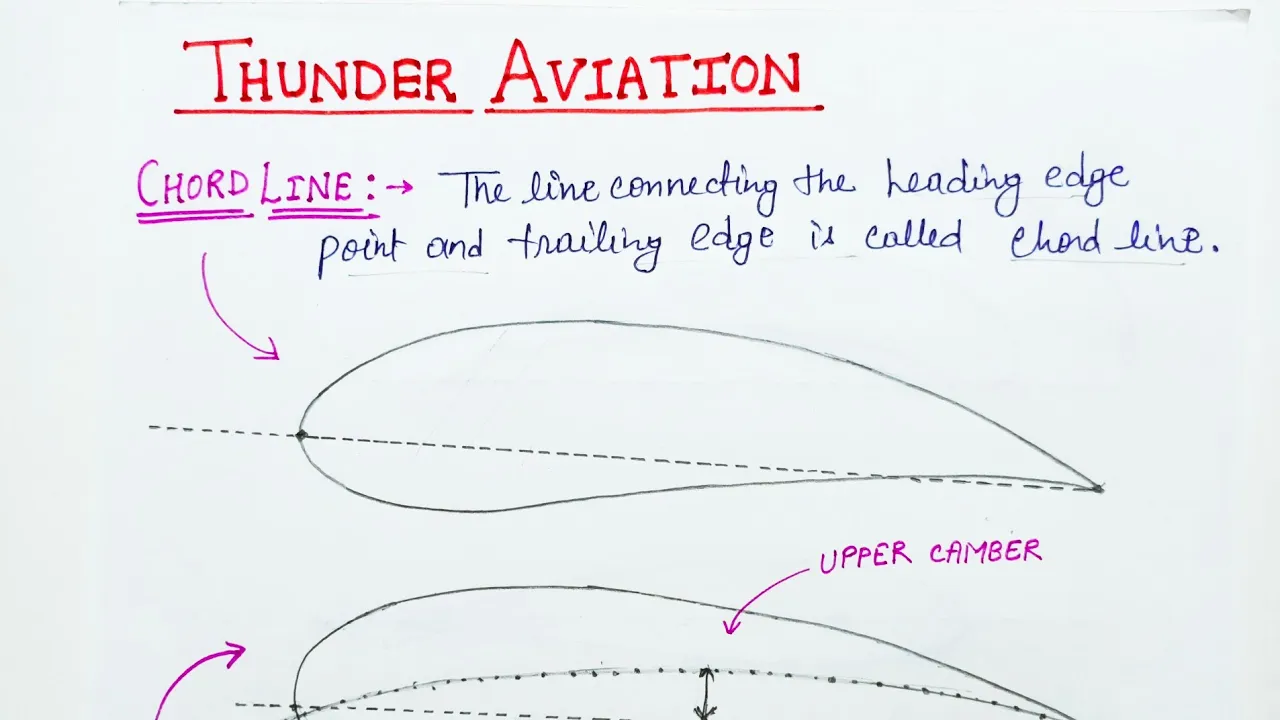
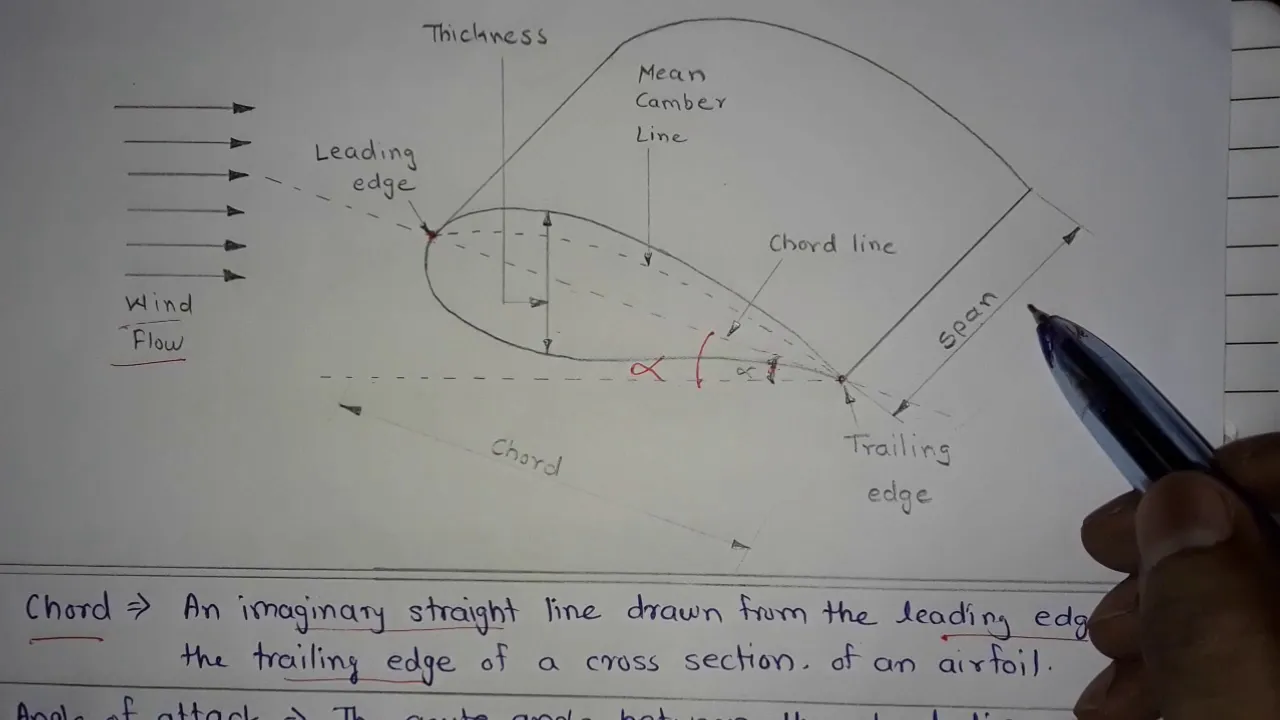
Fundamental airfoil geometry terminology, such as chord line, camber, thickness, and angle of attack.
Newton's Laws of Motion, particularly how they apply to conservation of momentum in fluid flows.
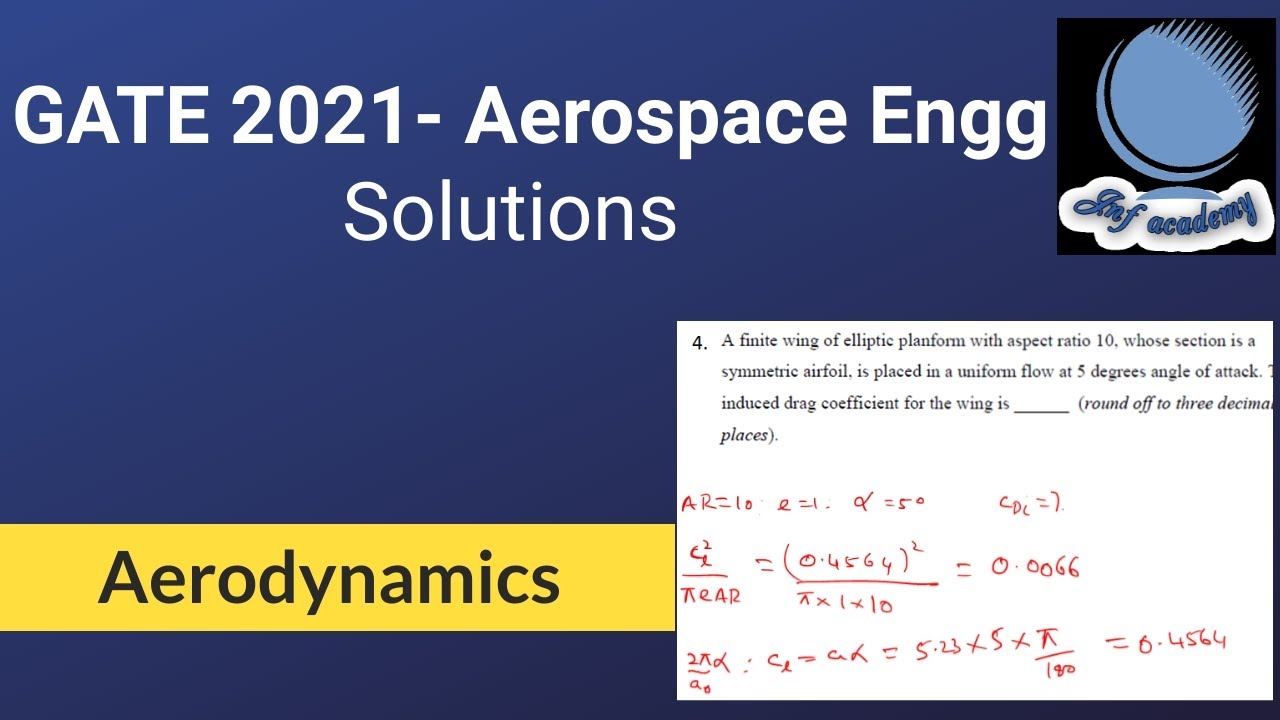
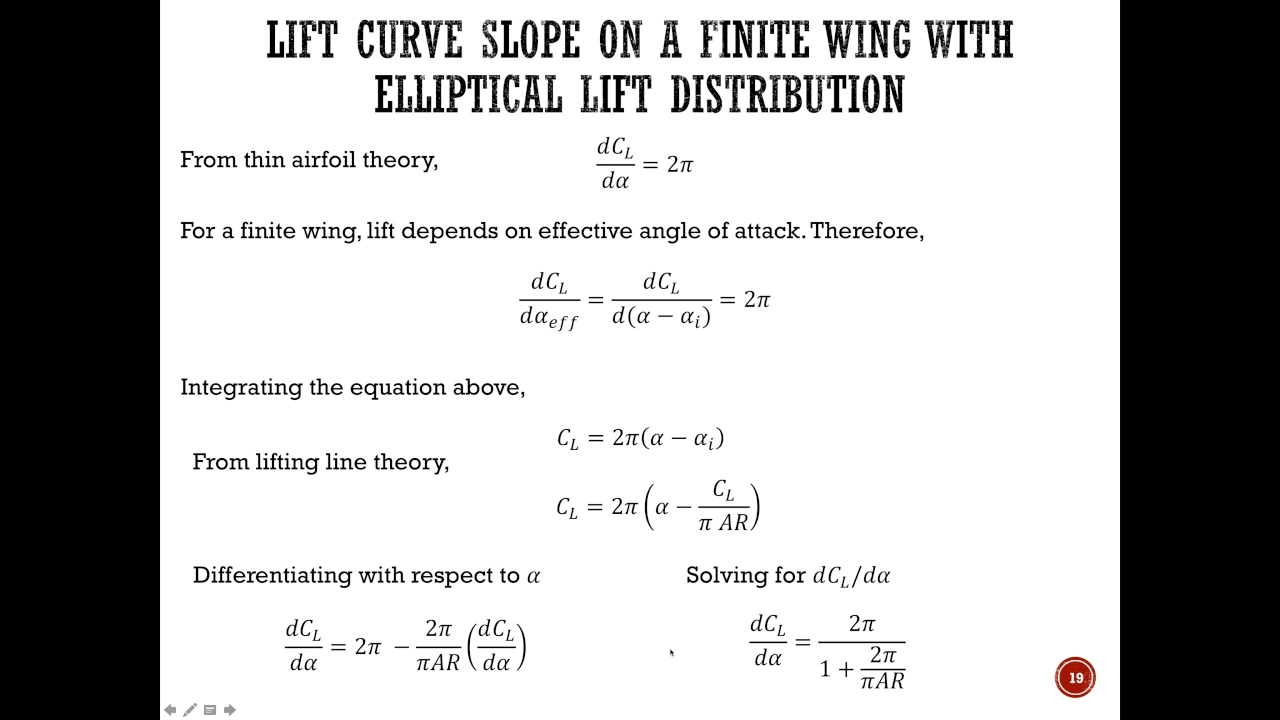
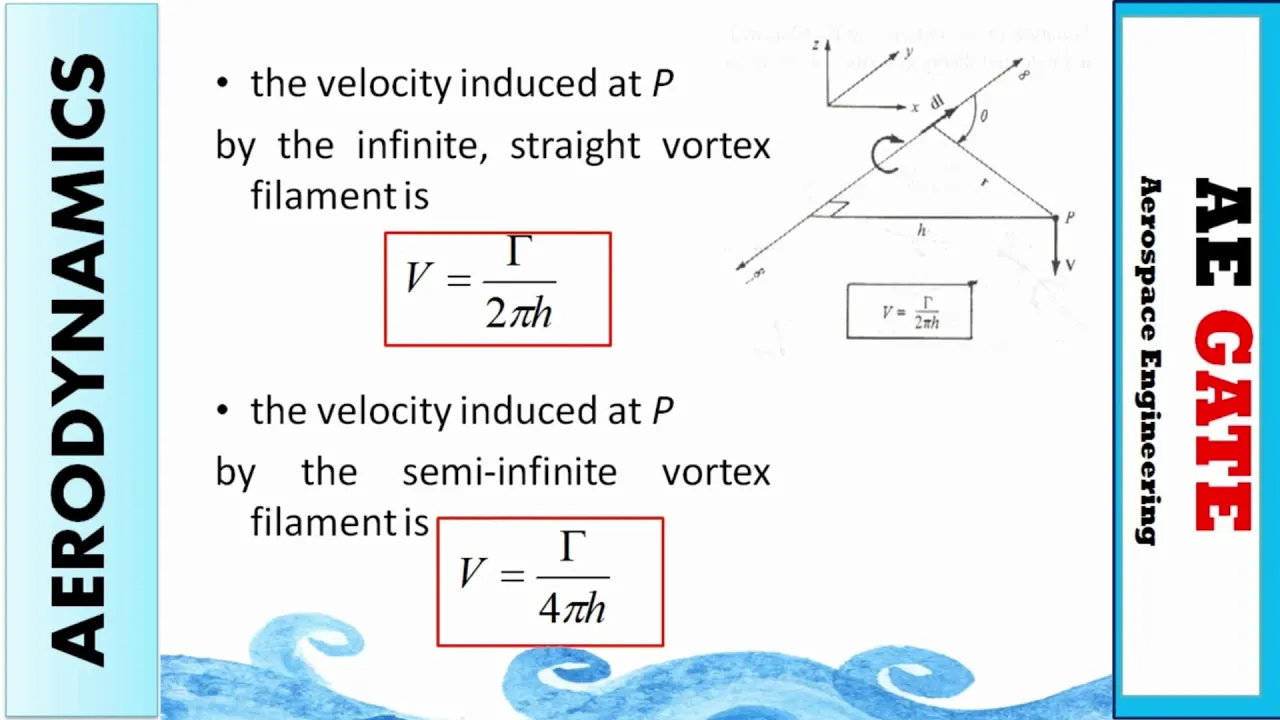
Finite Wing Theory (3D Aerodynamics), exploring how 2D airfoil characteristics translate to 3D wings with induced drag and wingtips.
Boundary Layer Theory and Flow Separation, investigating skin friction, transition from laminar to turbulent flow, and aerodynamic stall.
Compressible Flow and Shock Wave Dynamics, expanding on high-subsonic, transonic, and supersonic Mach number regimes.
Aircraft Static Stability and Control, applying pitching moment and aerodynamic center concepts to longitudinal trim and stability.
855 views10likes14:09Original Release: 2023-08-13
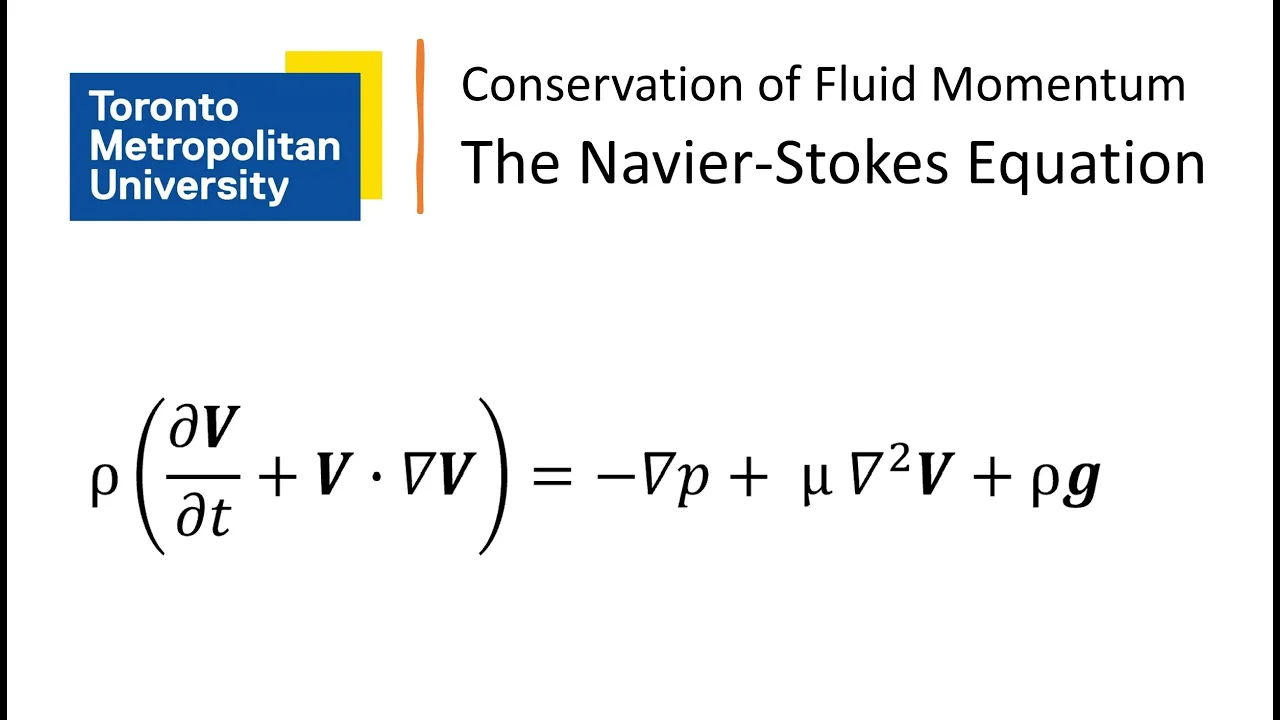
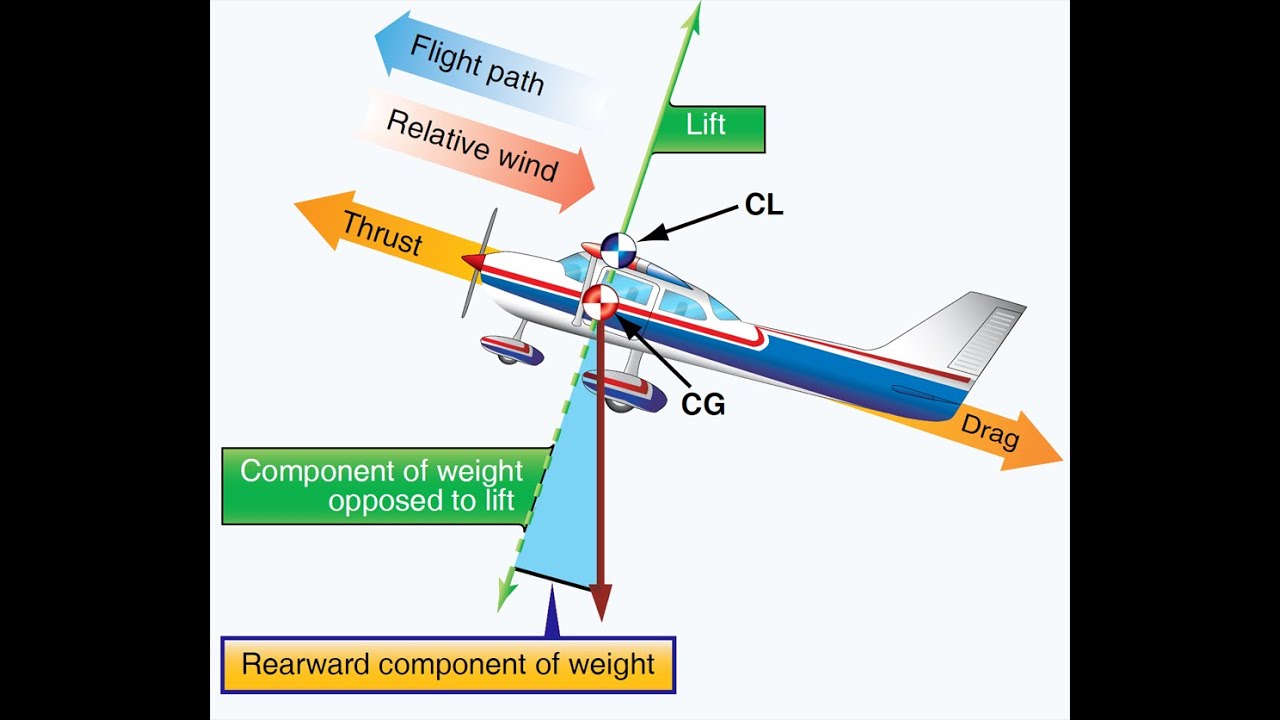
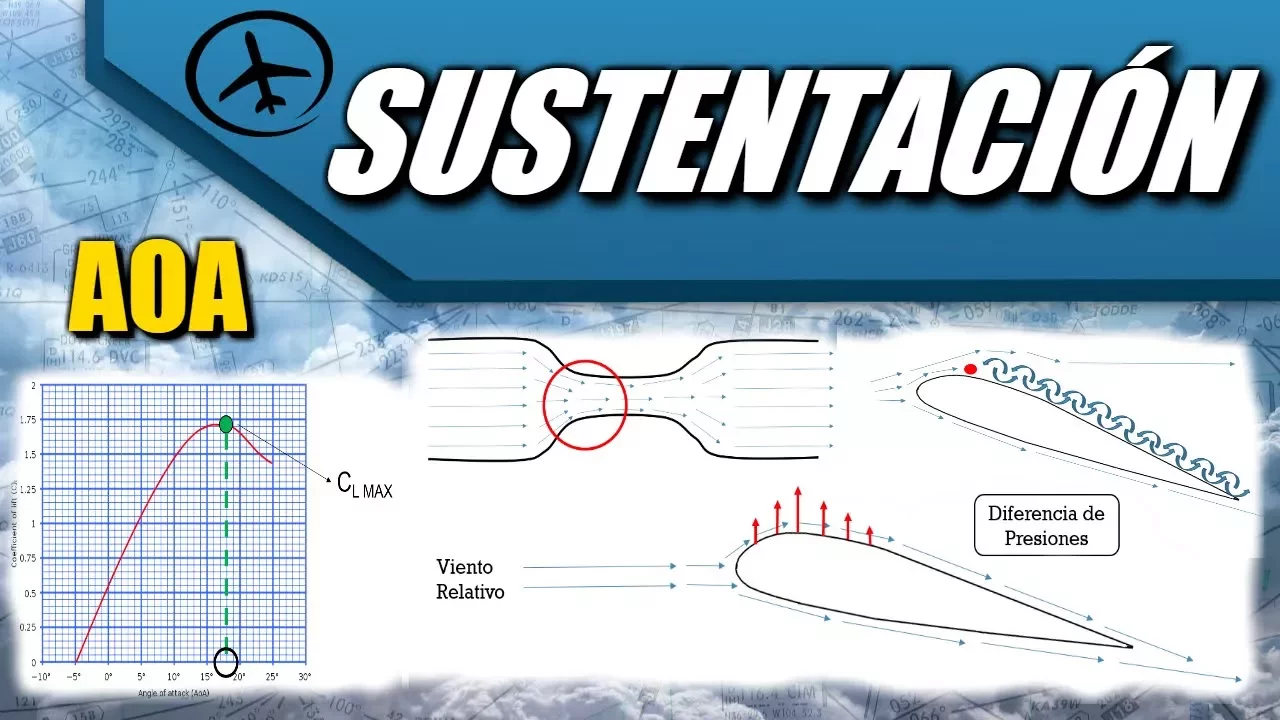
hi friends hope you are doing well I'm Dr Ganguly welcome to my channel so today we are going to discuss aerodynamics and today's lecture five in this series so before moving forward let us summarize some very important things we learned in the last class so the first thing was that when we are having a blunt body and essentially a blunt body could be something like a cylinder then the drag is mostly pressure drag and this is caused by flow separation so turbulent boundary layers are preferable in these cases also we saw that if we have a slender body such as an airfoil the drag is mostly going to be skin friction drag and so laminar boundary layer is preferable in these cases the total drag due to the viscous effects is also known as the profile drag and this is dependent on the profile of the body now a very important Concept in aerodynamics is the pressure coefficient which we are going to discuss next so we typically do not plot the actual pressure on air files and any surfaces as far as the aerodynamics science is concerned what we do is we plot the thing known as pressure coefficient so I have defined it here CP is equal to P minus P Infinity by Q Infinity so here the infinity subscripts essentially mean the values very far out in front of the airfall section which we have placed so they are simply being used as a reference here and dividing these two quantities essentially lets us create a non-dimensional quantity because Q is the dynamic pressure Q is half rho V square and as you can see the denominator and the numerator both have dimensions of pressure so CP is a non-dimensional coefficient so if we were to take an airfoil and plot the CP the CP on the upper surface would come out like this the CPU on the lower surface would come out like this so traditionally what is done is that CP is negative on the upper side of the y-axis and on the x axis we have X by C where remember X is the length from this point forward so this is 0 and this is going all the way to 1 and C is the card length of the airfoil now why CP is important is because you can quickly calculate the lift coefficient by using CP we are going to discuss lift coefficient later on in the course but essentially let us look at it right now what happens is that CL is approximately 1 by C integral 0 to C and then it is CP lower surface minus CP upper surface so this whole value into DX is essentially summed up across this entire region on the airfoil from 0 to C and then that gives us the left coefficient for the air file so the next thing we are going to look at is Mach number and Mark number is very important for determining the level of compressibility in the flow so essentially if the Mach number is high compressibility effects are more important and if the Mach number is low compressibility effects are less important so Mach number is a dimensional less number and that is defined as V by a where V is the velocity at a given point on the body and a is the speed of sound at that same point so essentially this also is a point property now the speed of sound of course varies with temperature and it's typically 332 meter per second at standard sea level but it's going to be different at different points in the flow so essentially Mach number is a very important number because it can be used to classify the type of flow you are dealing with and it's also used to define for example the speed of different aircraft so you will often hear of aircraft which are flying at Mach 2 or Mark 3 or certain spacecraft which are flying at even higher Mach number so the classifications are as follows so essentially if Mach number is less than one we have subsonic flow if it is greater than one we have supersonic flow if it is between 0.8 to 1.2 we have transonic flow and if it's greater than 5 we have Hypersonic flow now some of the small aircraft which you see flying around they have less than one for example the turbo props and so on the propeller aircraft very often they will be much lower than Mach number one greater than one would typically be mostly the fighter aircrafts and so on now most of the transport Airlines for passengers and so on typically fly a transonic regime so they will be somewhere below 1.7.8 and so on so this particular region between 0.8 and 1.2 is actually more complex in terms of the flow mathematics and physics and there's a lot of research on this and then when you go very fast you go greater than five you get Hypersonic flow and here thermodynamics becomes very important various effects in terms of chemical reactions can also start happening this regime is mostly there for missiles and such bodies so that's a different problem altogether now let's look at the aerodynamic forces and moments so when we put the airfoil in the wind or in air what we are going to get is we are going to get three forces which are going to act on it and let's say we take these forces at a point known as the quarter chord so quarter chord is a point which is at a distance C by 4 from the Leading Edge so C is the chord of the entire airfoil and so C by 4 from the Leading Edge we get this quarter card now add this quarter card we get the lift which acts normal to the air speed and we get the drag which acts parallel to the air speed now this is essentially a force is acting like this here shown by the red line and what we have done is we have resolved this into two components called DNL so this is simply what is done and these forces are called lift and drag respectively so always remember lift is normal to the flow Direction and drag is parallel to the flow direction also there is going to be a pitching moment here which is going to try to rotate this airfoil and this moment can be taken at any point so if we take it at this point here at the quarter chord it's called m c by 4 because we have taken it at the quarter Court point now we are going to look at a particular value of this moment where this becomes constant next few slides so we see that beside creating lift and drag the shear stress and surface pressure also rotate the wing and that is the pitching motion which we saw in the previous slide now for subsonic Air Force it is common to take moments at the quarter cut point so C by 4 from the Leading Edge and in general lift drag and pitching moment will change depending on the angle of attack of the airfoil or the value of alpha so there is a very important Point known as the aerodynamic Center and this point is essentially on the air file and about it moments do not vary so this is a very important concept as far as aerodynamics is concerned that there is a certain point called aerodynamic Center on the air file about which moments do not vary now the location of this aerodynamic Center for an airfoil can be found from experiments you can essentially find the point where the moments do not vary and for low speed subsonic airfoils the aerodynamic Center lies very close to the quarter card so we generally assume it to be at the quarter card that is C by 4 from the Leading Edge so now one of the basic things in aerodynamics is how to calculate Leaf track and moment and if we think about it we can look at the world around us we can do various experiments and we can come to certain conclusions so we can expect lift drag and movement to depend on free stream velocity which would be the velocity of the air which is coming on the flow so you know this very well that for example if you are going in a car and you put your hand out slightly and you get the breeze there then what happens is that depending on the velocity of the car this drag is going to be more or less so that depends on the free stream velocity the free stream density which is the altitude in case you are on the same planet the size of the aerodynamic surface so you obviously see this in the aircraft which carry lot of Passengers The Wing size is much larger than the small ones which carry say one passenger think about the Airbus A380 or the Boeing 747 versus the small Cessnas and some of the business Jets the angle which the air file sees with respect to the airflow the shape of the airfoil that's also very important and viscosity coefficient which is a property of air so we have two properties here density and viscosity and also compressibility of the air flow now if we fix certain things like the airfoil shape and the angle then we can write this as function of free stream velocity the density the area or the surface of the aerodynamic shape you have the viscosity coefficient and the speed of sound remember a is the speed of sound and all these values are essentially the free stream values which are coming at the airfoil section so essentially we can say Lift will have some functional relationship like that we as of yet do not know this relationship but that is something which we want to discover or we want to find out in aerodynamics so essentially if we wanted to find out this functional relationship we could do an extensive study of internal data for air files and then we could find out this function using some kind of curve fitting technique or even machine learning or something like that now one more approach which can be used to actually simplify this and get the whole thinking about lift coefficients would be to use dimensional analysis and in this we would essentially assume that lift can be written in this form so there is some number Z here or some value and then all these different parameters which we have such as velocity density area speed of sound and viscosity we raise it to the power of a b d e and f so essentially these are some undetermined coefficients which we want to calculate or find from the dimensional analysis and what we will try to is match the dimensions on the left side with the dimensions on the right side so again in this equations the dimensions must match remember that lift is essentially a force so we will have also a force Dimension here now the reason why C is skipped here is we are always using C for the card so people write a b d e and f so in the next class I am going to determine the values for cl which is the lift coefficient and how this dimensional analysis can be used to get an idea about what is the lift coefficient and similarly what is the drag coefficient and the pitching moment coefficient these coefficients are very important because once we have them we can essentially easily calculate lift track and pitching moment and if we calculate these three essentially know what are the forces which are acting on the body due to its movement through the fluid so that essentially is the most important practical problem as far as aerodynamics is concerned if you are going to fly any vehicle you want to make sure that its lift is sufficiently high for it to take off and then the remaining forces are such that it can fly through air so essentially if you are going to calculate a engine which is required that will be dependent on the drag it has to compensate for and so on so that was my video for today and I will see you in a video sometime soon see you then foreign
Up Next

3:45
How Wind Tunnels Work: Components & Design
@AirShaper
54.3K views•2020-12-01

30:32
Ultrasonic Transducers: Resonant Frequency Measurement and Horn Design
@imajeenyus42
229.9K views•2017-02-22

54:16
Polymer Environmental Degradation: Mechanisms & Stabilization
@iit
1.8K views•2012-07-10

33:39
How a Student's Question Saved a NYC Skyscraper from Collapse
@veritasium
22.8M views•2025-04-26
Related Study Plans & Knowledge Roadmaps
Structured learning paths in Engineering
engineering
Building Acoustic Levitators: Physics & Arduino
01The Physics of Sound and Standing Waves
02Piezoelectric Transducers and H-Bridge Drivers
03Arduino Programming: Generating 40 kHz Signals
+ 2 more learning modules
14h5 modules
Explore Roadmap
engineering
Building Peltier Cloud Chambers: Particle Tracks
01Cosmic Rays & Cloud Chamber Physics
02Thermoelectric Cooling (TEC) Fundamentals
03Custom Liquid-Cooling Loop Design
+ 2 more learning modules
18h5 modules
Explore Roadmap
engineering
Yagi-Uda Antennas: Modeling, Build & VNA Test
01Introduction to RF and Antenna Fundamentals
02Yagi-Uda Antenna Design Principles
03Antenna Modeling and Simulation in 4NEC2
+ 2 more learning modules
18h5 modules
Explore Roadmap
engineering
ECG Monitor Design: Op-Amps, Filters & Noise
01Electronics & Breadboard Basics
02Op-Amps and Instrumentation Amplifiers
03Bioelectricity and ECG Fundamentals
+ 2 more learning modules
18h5 modules
Explore Roadmap