











![Data Analytics [LIVE] - Priors pt. 1](https://i.ytimg.com/vi/kW7oRLai1Kg/maxresdefault.jpg)
![[7. Statistical Estimation] 7.5 Maximum a Posteriori Estimation](https://i.ytimg.com/vi/RVWfbOHCalM/sddefault.jpg)


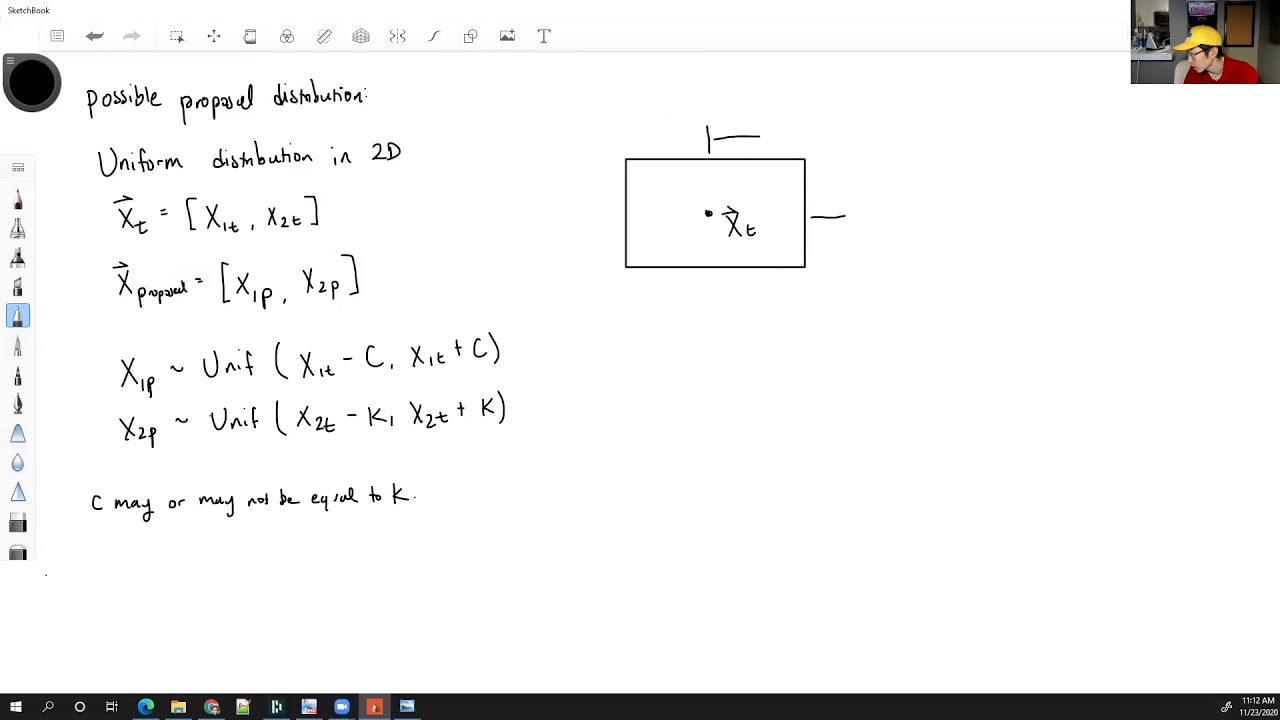


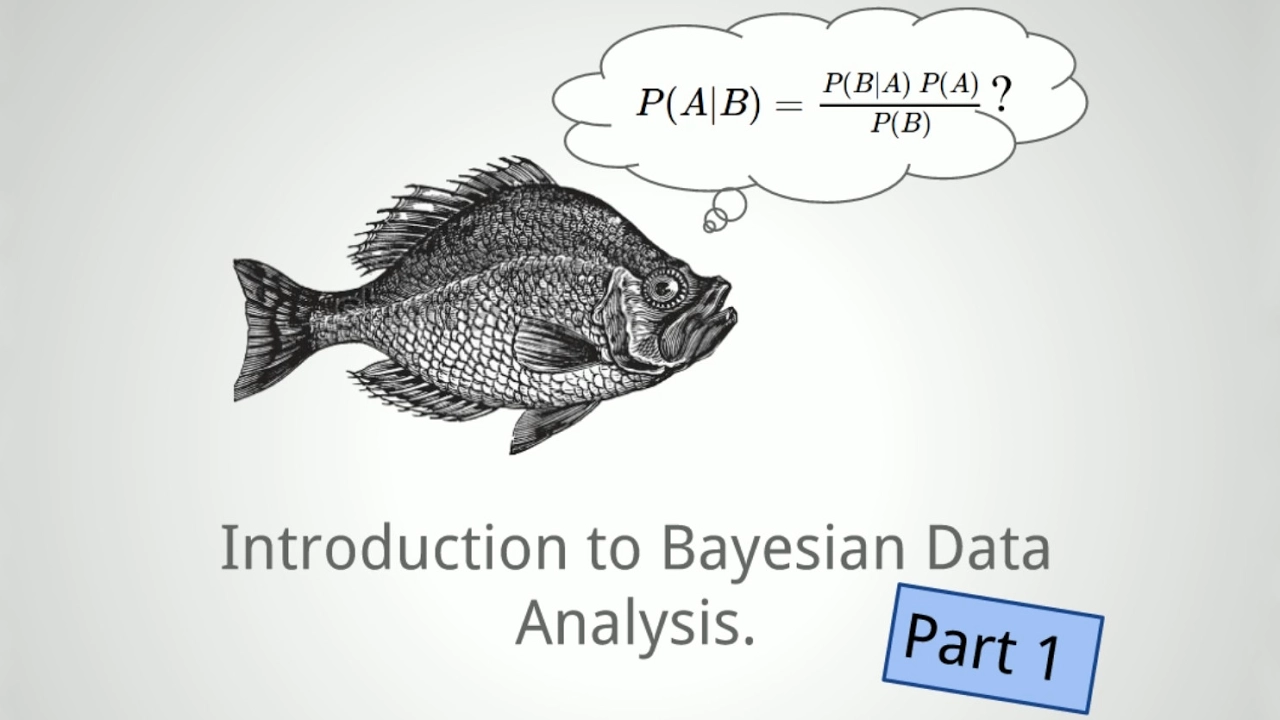




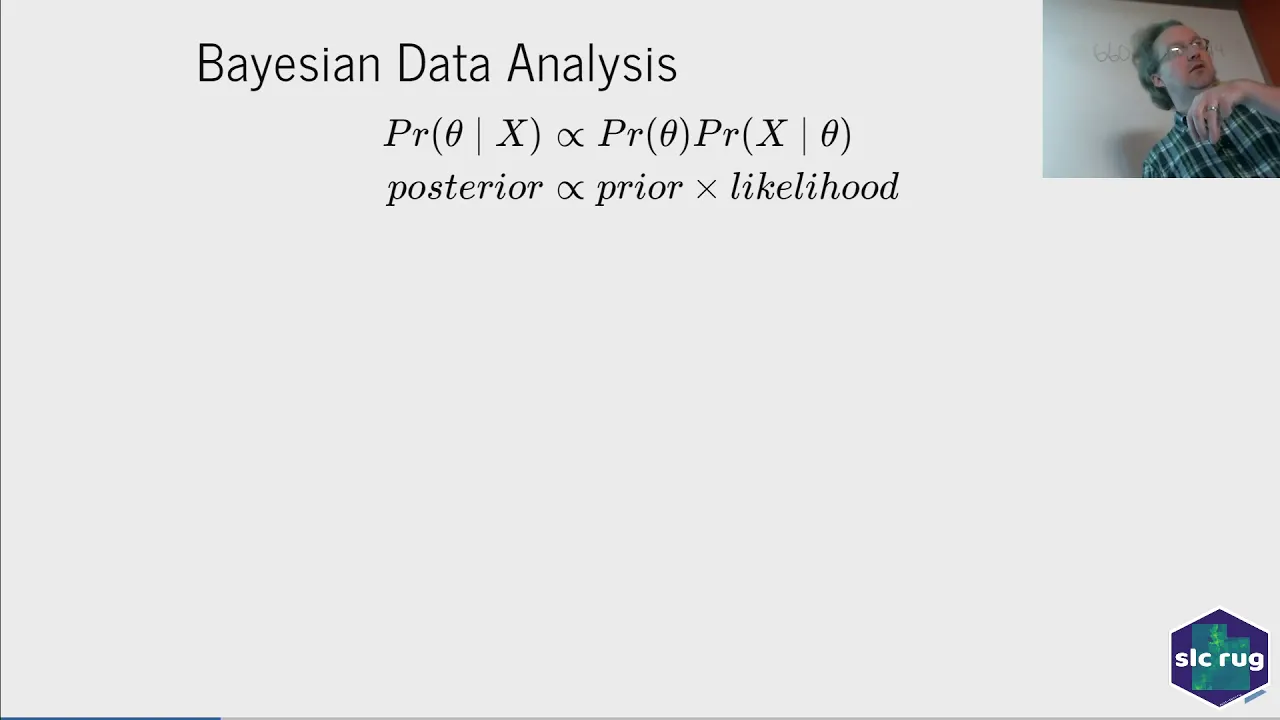
The Bayesian inference framework treats unknown quantities as random variables with prior distributions, and updates these beliefs using observed data through Bayes' rule to obtain posterior distributions; this complete solution can then be summarized using point estimators like Maximum A Posteriori (MAP) which finds the most probable value, or the conditional expectation estimator which provides the mean of the posterior distribution.
The Bayesian Inference Framework | Prior, Data & Posterior Distribution
Added:Fundamentals of probability theory, including conditional probability and the basic mathematical statement of Bayes' Theorem.
The concept of probability distributions, including probability density functions (PDFs) and cumulative distribution functions (CDFs) for both discrete and continuous random variables.
The definition and formulation of a likelihood function, representing the probability of observing data given specific parameter values.
The core conceptual distinction between frequentist statistics (parameters as fixed constants) and Bayesian statistics (parameters as random variables).
Conjugate priors and analytical updates, exploring how choosing specific mathematical pairs (like Beta-Binomial) simplifies posterior distribution calculations.
Markov Chain Monte Carlo (MCMC) algorithms, such as Metropolis-Hastings and Gibbs Sampling, used to numerically approximate complex, multi-dimensional posterior distributions.
Bayesian parameter estimation techniques, including calculating Credible Intervals and Maximum A Posteriori (MAP) estimates.
Bayesian hypothesis testing and model selection using Bayes Factors as an alternative to frequentist p-values.
83.7K views1.2Klikes9:48Original Release: 2018-04-24
we can finally go ahead and introduce the basic elements of the Bayesian inference framework there is an unknown quantity which we treat as a random variable and this is what's special and why we call this the Bayesian inference framework this is in contrast to other frameworks in which the unknown quantity theta is just treated as an unknown constant but here we treat it as a random variable and as such it has a distribution this is the prior distribution this is what we believe about theta before we obtain any data and then we obtain some data which are some observation that observation is a random variable but when the process gets realized we observe an actual value numerical value of this random variable the observation process is modeled again in terms of a probabilistic model we specify the distribution of X but we actually specify the conditional distribution of X we say how X will behave if theta happens to take on a specific value these two pieces the prior and the model of the observations are the two components of the model that we will be working with once we have obtained a specific value for the observations then we can use the Bayes rule to calculate the conditional distribution of theta either a conditional pmf if theta is discrete or a conditional PDF if theta is continuous and this will be a complete solution in some sense of the Bayesian inference problem there is one philosophical issue about this framework which is where does this prior distribution come from how do we choose it sometimes we can choose it using a symmetry argument if there is a number of possible choices for theta and there's reason to believe that they're all equally likely we have no to believe that one is more likely than the other then the symmetry consideration gives us a uniform prior we definitely take into account an information we have about the range of the parameter theta so we use that range and we assign zero prior probability for values of theta outside the range sometimes we have some knowledge about theta from previous studies of a certain problem that tell us a little bit about what theta might be and then when we obtain new observations we refine those results that were obtained from previous studies by applying the Bayes rule and in some cases finally the choice could be arbitrary or subjective just reflecting our beliefs about theta some plausible judgment about the relative likelihoods of different choices of theta now as we just discussed the complete solution or a complete answer to a Bayesian inference problem is just a specification of the posterior distribution of theta given the particular observation that we have obtained pictorially if theta is discrete a complete answer might be in the form of such a diagram that tells us that certain values of theta are possible with certain probabilities or if theta is continuous a complete solution might be in the form of a conditional PDF that again tells us the conditional distribution of theta to appreciate the idea here consider the problem of guessing the number of electoral votes that a candidate gets in the presidential election the electoral votes are a certain votes that the candidate gets from each one of the states in the United States and there's a certain number that the candidate needs to get in order to be elected president one possible prediction could be a statement that I predict that candidate a will win but actually a more complete presentation of the results of a poll could be a diagram of this kind which is essentially a PMF here a particular pollster collected all the data and gave the posterior probability distribution for the different possible numbers of electoral votes and this diagram is a lot more informative than a simple statement that we expect a certain candidate to get more than the required electoral votes so what is next as we just discussed the complete solution is in terms of a posterior distribution but sometimes you may want to summarize this posterior distribution in a single number or a single estimate and this could be a further stage of processing of the results so let us talk about this once you have in your hands the posterior distribution of theta either in a discrete or in a continuous setting and if you are asked to provide a single guess about what theta is how might you proceed in the discrete case you could argue as follows these values of theta all have some chance of occurring this value of theta is the one which is the most likely so I'm going to report this value as my best guess of what theta is and using a similar philosophy you could look at the continuous case and find the value of theta that which the PDF is largest and report that particular value this particular way of estimating theta is called the maximum a posteriori probability rule we already have in our hands a specific value of x and therefore we have determined the conditional distribution for theta what we then do is to find the value of theta that maximizes over all possible Thetas the conditional PMF of this random variable capital theta and similarly in the continuous case it's the value of theta that maximizes the conditional PDF random variable theta this is one way of coming up with an estimate one can think of other ways for example I might want to report instead the mean of the conditional distribution which in this diagram might be somewhere here and in this picture it might be somewhere here this way of estimating theta is the conditional expectation estimator it just reports the value of the conditional expectation the mean of this conditional distribution it is called the least mean squares estimator because it has a certain useful and important property it's the estimator that gives you the smallest mean squared error we will discuss this particular issue in much more depth a little later now let me make two comments about terminology what we have produced here is an estimate I gave you the conditional PDF or conditional pmf and you tell me a number this number the estimate is obtained by starting with the data doing some processing to the data and eventually coming up with a numerical value now G is the way that we process the data it's a certain rule now if we know the value of the data we know what the estimate is going to be but if I do not tell you the value of the data and you look at the situation more abstractly then the only thing you can tell me is that I will be seeing a random variable capital X I will do some processing to it and then I will obtain a certain quantity because capital X is random the quantity that I will obtain will also be random it's a random variable this random variable capital theta hat we call it an estimator sometimes we might also use the term estimator to the function G which is the way that we process the data in any case it's important to keep this distinction in mind the estimator is the rule that we use to process the data and it is equivalent to a certain random variable an estimate is the specific numerical value that we get when the data take a specific numerical value so if little X is the numerical value of capital X in that case little theta hard is the numerical value of the estimator capital theta hat so at this point we have a complete conceptual framework we know abstractly speaking what it takes to calculate conditional distributions and we have two specific estimators at hand all that's left for us to do now is to consider various examples in which we can discuss what it takes to go through these various steps
Up Next

14:52
Bayesian Inference Example: Univariate Gaussian with Gaussian Prior
@mathematicalmonk
130.6K views•2011-06-23

4:43
Elliptic Curve Cryptography Explained: ECC, ECDSA, ECDH
@PracticalNetworking
28.5K views•2024-10-21

20:22
Cantor's Theorem: Proof & Diagonal Argument | MIT 6.042J
@mitocw
33.1K views•2016-09-12

6:00
The Mathematical Impossibility of Accurate World Maps
@Vox
23.3M views•2016-12-02
Related Study Plans & Knowledge Roadmaps
Structured learning paths in Mathematics
mathematics
Tensor Calculus: Vectors to Riemann Curvature
01Mathematical Foundations: Linear Algebra & Calculus
02Covectors, Dual Spaces, and Tensor Basics
03The Metric Tensor and Index Gymnastics
+ 2 more learning modules
40h5 modules
Explore Roadmap
mathematics
Gödel's Incompleteness: Logic, Proofs & Limits
01Introduction to Formal Systems & Hilbert's Dream
02Set Theory, Cardinality, and Cantor's Diagonal Argument
03Arithmetization and Gödel Numbering
+ 2 more learning modules
14h5 modules
Explore Roadmap
mathematics
Galois Theory: Fields, Groups & Solvability
01Foundations of Abstract Algebra: Groups & Fields
02Polynomials & Field Extensions
03Splitting Fields & Symmetries
+ 2 more learning modules
24h5 modules
Explore Roadmap
mathematics
Non-Euclidean Geometry: Models & Geodesics
01Euclid's Fifth Postulate and the Birth of New Geometries
02Hyperbolic Space and the Poincaré Disk Model
03Geodesics: Defining Straight Lines in Curved Spaces
+ 2 more learning modules
15h5 modules
Explore Roadmap