













![Open Research Program 10 [Lecture Series] Tatsuo Majima “Series Title Under Consideration” (2)](https://i.ytimg.com/vi/MiuLI80LYpg/maxresdefault.jpg)







The phenomenon of Japonisme—the 19th-century Western fascination with Japanese art—was constructed through colonial frameworks that conflated images of Japan with the actual country, erasing Japanese agency and contributions. Western collectors and critics like Ernest Fenollosa and French figures including Philippe Burty created biased categories that privileged certain art forms (like woodblock prints) while marginalizing others, and that framed Japanese art as exotic rather than culturally sophisticated. Museums can reframe these narratives by actively engaging with Japanese artists and communities, challenging linear hierarchies of influence, and presenting works across traditional categorical boundaries to reveal the complex, bidirectional exchanges between Japanese and Western artistic traditions.
Reframing Japonisme: Rachel Saunders on Japanese Art at Harvard
Added:- [Susanne Ebbinghaus] Welcome.
My name is Susanne Ebbinghaus.
I'm the George M.A. Hanfmann Curator of Ancient Art and the Head of the Division of Asian Mediterranean Art and I will serve as the moderator for the Q and A later on.
Before we begin today's program, The Harvard Art Museums acknowledge that Harvard University is situated on the traditional and ancestral territory of the Massachusetts people and we strive to honor this relationship.
Thank you for joining this week's session of our 'Art Talks Live,' which often up-close look at works from our collection with our team of curators, conservators, fellows, and graduate students.
You can join us on Zoom every other Tuesday at 12:30 for these short interactive talks which investigate artists materials and techniques, reveal our latest discoveries, offer a fresh look at old favorites and explore big ideas using the collections of the habitat museums.
Some logistics before we begin, as you can see, we are using the webinar format in Zoom so we invite you to submit brief questions via the Q and A box at the bottom of your screen.
The presentation will last approximately 15 minutes and we will also dedicate 15 minutes to questions and answers at the end.
As they occur to you, please, feel free to type short questions into the chat, into the Q and A box, sorry.
We will conclude the presentation around 1:00 PM.
And now I'm pleased to introduce our speaker today.
Rachel Saunders is the Abby Aldrich Rockefeller Curator of Asian Art, a specialist in Medieval Narrative and Sacred Painting.
She's responsible for the museums Japanese collections.
She's organized the largest exhibitions at the Harvard Art Museums, so far: "Painting Edo: Japanese Art from the Feinberg Collection."
And in 2019, she curated "Prince Shōtoku: The Secrets Within."
And I'm sure many of you know, Rachel, from the many events that accompany "Painting Edo."
Rachel Saunders' talk is part of our series related to a museum-wide initiative and titled "Reframe," to reimagine the function role and future of the University art museum.
This series of talks which will run through early June will examine difficult histories, foreground untold stories, and experiment with new approaches to the collections of The Harvard Art Museums reflecting the concerns of our world today.
In her talk, Rachel Saunders will seek to reframe Japonisme by looking at a major acquisition.
Rachel?
- [Rachel Saunders] Hello and welcome.
It's great to be here with you this afternoon.
My name, as Susanne said, is Rachel Saunders and today I'd like to talk with you about the category of quote unquote Japanese art and the role that the phenomenon of 'Japonisme' which, for now, we can say is a particular kind of fascination in the west with art produced in Japan, has had in the constitution of that category of 'Japanese Art' in museums, in particular.
And museums by their very nature can be... Yeah, they can find it hard to be nimble.
They're almost always constructed as institutions concerned with the preservation of culture based in sanctioned dominant identities and memory.
And in the cultural west that can often result in a kind of one point perspective, both figuratively and literally.
And this is something that Alice Proctor has been at pains to point out over the last few years in her uncomfortable art tours which celebrated treasure of celebrated treasures in London that were in fact acquired through various means of colonial violence during Britain's age of empire.
And even if we can't go on her tours right now, her recent book offers a clear eyed view of how what we might read to be reflections of how things are in the world displayed in museum galleries or instead, of course, constructions presented to us in institutionalized settings as if they were natural reflections.
So, why in this context are we talking about Japan?
A country located in a region of the world, conventionally referred to as East Asia but which has not actually been colonized and, in fact, which colonized other parts of Asia?
Well, the reason is that art museums have played a particular role in the representation of Asia in the west.
And I say 'Asia' advisedly since there's a long history in the west of disrespectfully jumbling together distinct Asian cultures as if they were somehow one undifferentiated body.
This kind of jumbling plays an important role in facilitating the type of simultaneously, exoticizing and dehumanizing racial stereotyping that has perpetuated continuing inequities and racial violence in the west.
And in this country we could mention the Page Act of 1875, which banned Chinese women, specifically, from immigrating to the United States, to the killing of Vincent Chan in 1982, and the recent exponential rise in anti-Asian hate crimes in the wake of COVID.
Now, I'm not suggesting that we can resolve deep seated race-based violence and inequity with paintings in our galleries alone.
But what I do want to do is to explore what role the perception and treatment or the framing of objects from Asia, and in this case Japan, has historically done to perpetuate stereotypes that facilitate anti-Asian racism.
And in so doing explore some ways in which museums are equipped to trigger changes in the metabolism to begin to counter this ongoing harm.
In large part, this harm can be attributed to the confusion of images of Japan with Japan itself.
The confusion of an actual physical place with an image of a place, and furthermore, with a perception of a place that's based on that second hand image.
And this sort of slippage is especially prevalent when places and languages seem distant or unfamiliar, or when their interpreters have been uninformed about the cultural matrix in which images originate.
The mid 19th-century western discovery of Japan is characterized by fascination with displaced imagery, counterbalanced in the colonial mindset by literal and figurative ownership of Japan through ownership of Japanese objects, and the construction of persistent narratives about them.
Echoes of these entangled strands of alienation and fascination remain active today.
A point that's made, for example, in the work of the American born artist, Roger Shimomura, in dealing with his experience as a racially marked American in America.
Shimomura was interned as a toddler with the rest of his family in 1942 at the Minidoka Internment Camp in Idaho.
And this image which plays with the rhetoric of pop art and Japanese ukiyo-e woodblock prints of the floating world, actually, depicts his grandmother in the darkening days just ahead of internment with the shadow of the American superhero, superman looming either protectively or menacingly, depending on your point of view, just outside.
So, let's begin with 'Japonisme' because it's here that we find the beginnings of the invention in the west of this category, 'Japanese Art,' that's loosely used in English to describe a vast variety of objects that otherwise have little in common than that they were produced in the geographical location that we called Japan.
Japonisme, with a lowercase "j", is a term that seems to have been coined in the year 1872 by the French critic Phillipe Burty to describe a great enthusiasm for and supposed expertise in the unfamiliar objects, notably lacquers, ceramics, textiles, and woodblock prints, that were arriving in Europe from the distant, and until the 1850s and its encounter with the American gunships that forced it to open to trade, with this relatively hermetic archipelago.
There was a sense of discovery around these things that were new to Europe and an exotic and often eroticize fascination with their aesthetics.
And I'm juxtaposing lower case 'japonisme' here with uppercase 'Japonisme,' which we can define separately as the word that's used to describe cultural productions that have been inspired by work created in Japan.
And we'll come onto that in a moment.
So, lowercase 'japonisme' has its uses as a shorthand for the 19th century phenomenon.
However, it's continuing use today without qualification can leave us open to the danger of perpetuating some of its colonizing biases.
This includes the fact that, that discovery and mastery or expertise elements of japonisme were not quite true.
Lacking language abilities or the sense of the rich literary traditions of Japan, for example, a number of these self-named "experts" made their pronouncements on the basis of their own psychological sensitivities and their feelings for the jumbling and trans-temporalizing of Japan.
So, in the 19th century, japonisme confused misinterpretations of images of Japan with Japan itself, and even more broadly, with the notion of Asia.
And as Elizabeth Emory has shown us in her fantastic 2020 book titled "Reframing Japonisme," the term itself was coined as part of an effort in France by a group of men, including Philippe Burty Edmond de Goncourt, Louis Gonse and others who actually weaponized it to claim the cultural distinction it conferred while erasing the contributions of both French women and Japanese dealers, who would be in the earliest conduits in fact.
To distinguish themselves, these self-named "competent" men dissociated themselves from Japanese objects, things like ceramics and small sculptures or textiles that were used in gendered interior decoration, and focused instead on woodblock prints.
And this is how ultimately we come to the familiar, but skewed story, that's still often repeated today of the quote unquote "influence" of woodblock prints on European impressionists and post-impressionist painting.
A long with those familiar juxtapositions of Japanese prints with paintings by Van Gogh, Monet, Whistler, and also occasionally Mary Cassatt among others.
This is ultimately a story of how Western eyes stripped elements of Japan for improvement and incorporation into the orthodoxy of Western modernism.
But were conveniently and apparently cosmopolitan, it forecloses and radically oversimplifies and serves both images and objects produced in Japan and consumers, such as Degas and Whistler, for example, equally poorly.
In the practice of both museums arranged by geopolitical region and in our history where collaboration between area specialists also remains unusual.
This perception has remained at large in avatars that there is somewhat but it's been left pretty untroubled.
This is beginning to change and close to home, my colleague, Sophie Linford, for example, here in the Department of European and American Art, is doing groundbreaking collaborative research across disciplinary boundaries and specialisms and making some very surprising new findings.
Now in North America, the situation is further complicated as early collectors and institutions are coming a little bit later to the party, sought to distinguish themselves and establish their cultural superiority over Europeans.
This is especially so in turn of the 20th-century Boston, where Harvard educated Ernest Fenollosa had an outsized influence on defining what constituted this category of "Japanese art" in his establishment of the collections of the Museum of Fine Arts, Boston, which is still the home to the largest collection of Japanese painting in the world outside Japan.
Fenellosa, who worked in tandem with a complex figure of Okakura Kakuzō, places his emphasis on historical painting, painting rather than prints.
One upping the French with their emphasis on ephemeral prints of the floating world.
Fenellosa was emphatic and sometimes vicious in his position on painting and his supposed "expertise," even defaming the pioneering Japanese dealer, Hayashi Tadamasa, by declaring him a fraud when he found out he'd be already selling paintings in New York on his own return from Japan.
So, what can museums do to reframe the category of Japanese art so that we're not simply presenting works produced in Japan in the shadow of the persistent narratives of 19th-century japonisme?
Well, there are a number of things and many of these things are interrelated in our different areas of museum work.
And these, of course, include active work and programming with makers, artists, and our communities.
In terms of making the history of japonisme and its effects visible in our galleries, is to create a new conceptual ground or new conceptual place in which to work.
Another thing that we can do is to challenge it by nuancing its descendant, the category of quote unquote "Japanese art."
And this is something that we attempted in our special exhibition "Painting Edo," which as the title indicates is not about presenting Japan or Japanese painting, but about offering an immersive experience of early modern Japanese pictorial art, as far as possible, on its own terms.
The careful design of the installation was also key component here and its explicit attempts to attempt to find design solutions that accommodated the very different needs of Edo period paintings, as well as the needs of our 21st-century audience and a public building in North America.
Another thing that we can do is to work collaboratively across what might seem like fixed institutional structures and across areas specialisms and institutional divisions within the museums, for example, and with colleagues located around the world, especially in Japan.
And during this challenging period that we've been physically closed, we have begun working across divisional lines with special attention to our collections of Pre-Raphaelite paintings and Surimono woodblock prints, for example.
Another thing that we can do, is to evolve the collections.
And historically, collection of Japanese works in the Fogg Museum as it used to be, was focused largely on pre-modern works, reflecting the Japanese equation of Japan with an atemporal idealized past.
And where we have instances of these works whose genesis has geo-temporarily challenged the dominant narrative, these have often not fared well.
And, in fact, we have a separate video available about this topic with my colleagues, Ruby Awburn who you can see here, and Mary Schneider Enriquez our curator of contemporary art, featuring a 1960 painting by Kumi Sugaï, and the very real consequences of its compromised life in between conventional fixed categories here.
And recently we've been attempting to rebalance our collections by collecting new areas, including Nihonga painting from the late 19th and very early 20th-century.
Nihonga (日本画) can be translated as "Japan's painting" or "Japanese-style painting" and it might be described as contemporary neo-classical painting that was constituted at least to begin with in the late 19th-century in institutional structures to develop a self-consciously national painting style to represent Japan.
And it was charged with segregating and protecting so-called "authentic Japanese painting" from degradation by pervasive Western influences.
The central and ironic tension, though, is that without participation in the globalizing practice of painting at that moment, Nihonga would never come into being.
But the underlying subject of Nihonga painting that might be said to always already be the question of what is Nihonga or what is Japanese painting?
I'm showing you here the first new Nihonga painting that we purchased.
This is a pair of screens dating to 1918 and I'm not going to dwell here.
We could come back to it in the Q and A if you like.
But I'm going to move on to our most recent acquisition which is this pair of screens by the painter Watanabe Seitei.
Now Seitei is a figure who enjoyed some recognition during his lifetime, but after his death in 1918, fell into a grayish unknown zone until really very recently.
The first major exhibition of his work in Japan actually opened in March of this year, 2021.
Now, of the one or two things that are said of Seitei, one that's often repeated, is that his paintings are found more in overseas museum collections than in Japanese institutions.
And the other thing that is often brought up about him is the roughly two years he spent in Paris from 1878.
In the context of more general movements at the time when Japanese painters were also traveling to Europe to study with European painters and to learn Western style painting, it's usually assumed that in that year he picked up various European style perspectives, including great technical precision and a highly distinctive mimetic or naturalistic mode of depiction.
So what do we have here?
We have a pair of folding screens in the traditional oshiebari format in which a separate painting is mounted on each panel of the gold ground screens.
And together the screens are an updated iteration of the centuries old theme, birds and flowers of the 12 months in which sets of birds and flowers which the set state back to the 13th-century classical poetics.
I use these pairings, I use to depict each month of the year.
Now Seitei's bird and flower vocabulary is much updated and he introduces new pairings, further evolving the work of Edo Rinpa painter Sakai Hōitsu, who's birds and flowers of the 12 months produced... that I'm showing you here, are produced around 1820 or so, based on the new poetics of Edo haiku poetry, rather than classical poetry.
Now, if we take a close look, we can see that, Seitei, has paired in the first month here the chicken and the pine.
And if we go in a little bit closer, we can see that Seitei has used a very fine brush to create individual shafts and barbs of the rooster's feathers and this mimetic representational fidelity contrast with the stance and the arrangement of the actual tail feathers, and more notably with the "inky" pine tree behind, which speaks to the practice of ink painting.
Yet the bird is incredibly animated and the seed of that animation is in the face where Seitei has sort of invoked a nubby texture of a chicken's wattle and the tiny, tiny feathers around the open beak and intensely focused the compositional energy of the image on the tiny deep black reflective eye of the rooster, which looks straight back out of the painting at us.
The paintings of the snipe and the Iris in the fifth month and the night heron and the hemlock in the eights months do similar work.
In the case of the snipe, the downy texture of the birds feathers is virtuosically mimetic, framed by the flattened irises and the inky abstracted rocks in the water.
And, again, the birds intensity focused eye, looks right back out of the painting at us, as if challenging us to reconcile it's living feathery being with the exquisite artifice, the brushwork out of which it's constructed.
Now in the context of late 19th-century France, the combination of exquisite precision and the intensely focused animation located in the eyes might bring to work.
It might bring to mind the work of Félix Bracquemond who along with his wife, Marie, was a known japoniste.
And latest scholars have attributed some of the effects of Seitei's work to quote unquote "influences" he acquired in France.
We do know that Seitei and Bracquemond were aware of each other.
They may even have met.
And during this time... During his time in Paris, Seitei actually performed at several dinner parties hosted by noted japonistes, recorded in the diary of Edmond de Goncourt, who you can see here.
Now one of such party, Seitei amazed his fellow dinners with a demonstration of painting in which he produced a full-size painting, brandishing two brushes in one hand, two brushes in the same hand.
And he also produced small gifts, painting as gifts for the guests, including this one which has made for Degas, who wrote about how he found himself utterly unable to reproduce Seitei's technique when he tried.
So, this contact between a living contemporary painter from Japan and the Parisian japonisme was received with breathless excitement.
Yet the impact of a painter on these men has been regarded as more of an isolated aberration than an ongoing event in the evolution of japonisme/Japonisme.
And Seitei's position in Paris has continued to be subsumed into the dominant narrative of Japanese painters learning from Parisian ones.
But recent scholarship by our colleague, Kit Brooks at the National Museum of Asian Art has revealed that the distinctive features of Seitei's painting admired by Parisians in 1878.
This precision, brushwork, and the speed that he worked on this unforgiving silk ground.
These were already highly developed in his work before he went to Paris and they show no sign of alteration on his return.
Brooks says recent publication of his 1877 painting, "Pigeons at Sensōji" demonstrates this, the combination of mimetic fidelity in the birds, the artifice of his framing and the ground elements, and the location of intense encounter in the eyes of the pigeons, are all here in this finally finished painting, which Seitei actually took with him to Paris and sold to the impressionist painter, Giuseppe de Nittis, who records that he bought it intending to copy the techniques but gave up rather rapidly and granted his inability to do so.
But back in Japan, Seitei's work didn't sit easily in the Nihonga category either.
Though he was invited to teach painting at the Tokyo Fine Arts School (Tokyo Bijutsu Gakkō) by Okakura Kakuzō, he refused and he spent the rest of his life painting to commission.
And perhaps because he refused the commission of painting in the service of national identity either within the institutions of his home country or in catering to the japonistic gaze of Europe, he fell into relative obscurity.
But today, Seitei's work can trouble both of these narratives precisely because of his apparent rejection of both, a position that left him for many decades outside the quote unquote "canon" of "Japanese art."
His work is also highly temporally locatable, bridging the early modern to modern periods and in juxtaposition with japoniste works, can help us rebalance our gallery narratives so that we're showing both Japonisme and Nihonga.
Juxtaposing two sides of the modern signification of Japan also exposes the underlying museological boundaries that would otherwise separate these spheres and their intense oscillating experiments and otherring that in turn asked us today to actively examine our own modes of perception and othering.
Elements of our construction in identity and memory in which we engage on a daily basis.
Thank you.
- [Susanne] Thank you very much for this talk, Rachel, encouraging us to examine the baggage that we might bring along when we look at the Japanese work in a museum and encouraging us to look afresh.
There are already some questions in the Q and A box and, please, if you have a question please type it in.
There's a general question here.
How does one differentiate between "inspired" versus appropriating (Rachel laughs) that influence in different directions?
Yeah.
- [Rachel] Right, that's a really key question here.
And I think that the question itself reflects how we will sort of... We tend to in Western museological practice and Western-based art history to sort of nativeize this rather modern concept of originality, the avant-garde, the individual artist, and individual creation as being the things that we should hold at the top of the pinnacle here.
Whereas for most of human creative history, that really just hasn't been the case.
It's extremely modern idea.
And so the idea of assimilation and borrowing or influence.
Influence is a very problematic term because it sort of just removes any sense of agency from the individual people who are making things as if it's just in the ether.
It's a difficult one, I think to use the word influences is, it also... It does this sort of colonial... It makes this colonial move.
This doesn't mean that Karatani Kojin has written about.
In the case of Japan how you can sort of... In the colonial mindset, you can simultaneously aestheticize and supposedly raise up your say Japanese prints, for example.
While in that same move also be exploiting Japan as represented by these works.
And I think one thing that's really important here is that this word I'm using, Japan.
Japan isn't located in a place, it's located in these images.
And that's that sort of... That's where we get this real kind of intersection that gets very problematic.
I think that maybe if we move away, if we could do some work to move away from thinking about one way or the other way movements of art or art movements or aesthetics and instead start to think more about kind of really dynamically interactive, globally interactive networks of aesthetic movement and these oscillations rather than thinking about it as moving in one way.
We do have this tendency to think about sort of hierarchies and nice and simple.
We can draw temporal graphs of where things happen and when they happen but actually those are sort of the product of some really reductive, historicizing tendencies, Things that we need.
I mean we need some way to navigate all of this complexity.
But I think that it's time that we really do some work in museums to trouble those linear hierarchies and to just more explicitly complexify our approaches.
And one thing that we can do, and one thing they were talking about doing, is putting works of art that have been categorized in one way in galleries that are not categorized the same way.
And so we can cross those lines and reflect better at the intersectional identities of works produced out of these networks of globalizing movements that we... They're just very complex to get hold of and it's simpler to use a linear etiology.
And so, this is the type of work precisely at this moment where it becomes very explicit in Japanese painting.
It's actually the subject Nihonga painting, really.
But it's, of course, been going on for hundreds of years.
So, it's an enormous topic and it's one that it creates a struggle against categories that you might be tempted to ask, "why don't we tear the categories down?"
But I think actually the categories, I mean, they're historical, they exist.
They're part of our structure of knowledge.
But it's the work of struggling against those categories, that's where we can make this conceptual space for this complexity.
And so, difficult as they may be, I think we can use these things to our advantage.
- [Susanne] I think you've just answered another question, as well, which talks about... It uses the term "cross-pollination," which, again, it says, "Yes, anything but linear."
- [Rachel] Yes.
- [Susanne] We have a short practical question here about the new acquisition, about the screens.
How were they actually obtained by the museums, for works as stunning as these.
Are they donated or found in collections and then brought to the museum?
- [Rachel] So this one, these pair of screens spent most of its life in Japan.
And, I said in the talk, that there's not so many works by Seitei in Japanese museum collections, but there are a number in Japanese private collections.
And it's been 100 years since he passed away and those collectors are now beginning to... These works are coming out onto the market.
This pair of screens, actually, I said it spent most of his life in Japan and then it was... I found it, I mean, I kind of take the credit for it.
It was work that was done by a wonderful dealer in Japan who works in London.
And the this dealer had the screens in London and I visited at the end of... When was it?
I think it was the end of 2019 and saw the screens in person in London then.
And there is a kind of odd genesis to it because I hadn't met this dealer before.
She is Japanese, but works in London, and had actually trained with the person I studied with as an undergraduate.
And when we met, we realized this.
So, there was this kind of strange synergy going on between a Japanese dealer working in London and a former resident of the UK now working in America and meeting there over these paintings.
So, that was an odd sort of mark to that encounter.
But we acquired these paintings from this dealer in London.
And actually, because of COVID, it took us more than a year to actually complete the process.
But the dealer was willing to work with us on that.
In part, I think, because she herself has invested in this... the research that we can bring to bear on works like this.
And the work that they can do in a museum context, whether it's research, whether it's study in our Art Study Center, whether it's exhibition a whole range of ways.
And I think that, that was part of the reason that this particular dealer was willing to work with us in that way, a very special way to make this happen.
- [Susanne] Thank you, Rachel.
I'm impressed.
There's a lot of questions.
I think I'll summarize two of them, or combine two of them.
One asks, "Is japonisme defined "to a set art historical time period "or are they also contemporary works considered "to fall within the genre or concept?"
And there is the second question I think might be related which says, "Can you talk about..." Oops, no, it just disappeared.
"Can you talk about the adoption of these terms "like japonisme in Japan itself?"
- [Rachel] Right.
- [Susanne] Yeah, we've lost it.
Oh, yeah, and the meanings... And the meanings, for example, Nihonga and Japonisme?
And they're obviously different. But, yeah.
Can you address that as well.
- [Rachel] Oh, yeah, sure.
So, as for putting a time limit on japonisme, I was using this low case japonisme on the French word to sort of try, to try and get around that because there were a lot of words for this phenomenon and that is part of the trouble with it.
That's why it's been so slippery.
And this loose usage of this word "japonisme" with a small 'j', with a large "J," Japanism in English.
There are a variety of terms that were used and that still sort of slip around.
We sort of think we know what they mean, and actually there's some very... The need to define these words because these terminology has implications is part of the part of the work that we need to do in museums.
I mean, it's certainly done in our history and academic art history, but it's to define it in space.
In space where European paintings are really proximate to works from other parts of the world.
I think that introduces additional complexity into what we're doing and why work in this field and the museums is important.
And it is the place where we can really do it with impact.
I think that the lowercase japonisme I'm using, I'm really applying to the 19th-century and the early 20th-century. But, yes, for sure.
I mean that isn't a phenomenon that ends.
It has multiple reincarnations, avatars, whatever you'd like to call it.
And I certainly think it could be applied, but I do think that where it's applied we do have to be really careful about defining how we using which words.
I'm not necessarily saying that lowercase "japonisme" is the only way to talk about it.
But I am saying that if you're doing that, you need to qualify it when you do it.
And how was it using Japan itself?
Well, it was certainly Japanese government, Japanese artist, a whole range of people were very aware of this effect, of course.
And in some ways, it was manipulated and sold back to those who consider themselves Japanese.
And so, that is another complexifying factor in this story.
How the Japanese themselves may have capitalized upon this European gains that they were aware of.
So, it gets quite meta in there.
It always makes me think of Japanese artists who visited some of the expos, in particular the 1903... I think it was the 1903 Glasgow exhibition.
There were Japanese artists who visited there and they encountered art nouveau, which is incredibly reliant shall we say on certain types of Japanese painting, certain types of artistic production, and there was a great feeling of anger and that theft was occurring.
And that, in some cases, "shouldn't we be the ones "who are benefiting economically "from our own cultural production" rather than it being... rather than it happening in Europe.
So, there are certainly very big implications of japonisme, with a big or small "J," in Japan and then fed back again in continuing cycles into Europe and America.
Was there another question that I've forgotten?
- [Susanne] No, no, let me... In fact we only have... We're out of time essentially, but I suppose one question, if you could maybe answer that quickly because it brings in a different aspect.
Only that of technique.
Somebody writes, "I was intrigued by the notion "that Western painters attempted to replicate the techniques "of Japanese painters and failed.
"Why in particular did they fail?"
- [Rachel] Yes, that's a good question.
I think that's a question that perhaps other people who'd be better equipped to answer that.
But, in terms of what's written about it, I think the use of silk is very alien and these techniques where you're not able to... When you're painting with ink on silk or with the... particularly ink on silk actually, there is no space for an under drawing.
You make one mark and that's it.
The texture is so clear that you there's no correcting it.
So, you have to be very practiced and very ready and very present in painting.
It's not a sort of additive painting process like you might consider oil painting.
It's the mark that you make and that I think was perhaps part of the real challenge of it, and what surprised European painters when they encountered Seitei painting.
And he's painting very fast.
I mean, he's performing in a way.
And so I think that was a little bit shocking.
- [Susanne] Thank you, Rachel.
Yes, that sounds so sad.
That sounds daunting and really challenging.
And some of you are asking so are we developing plans for these new installations?
Yes, we are.
And so there's many good questions here and I say, do come with your questions when we reopened and they will be relevant installations there to see.
Thank you so much for joining us today.
After you leave this session you will receive a link to a short online survey.
We'd love your feedback and I also hope that you will join us in two weeks time on Tuesday, May 18th for an 'Art Talk Live' by Sarah Lawson, the Alan Dworsky associate curator of Chinese Art on the Tianlongshan Cave Temple Fragments.
And, of course, you can always look at our online calendar for more information on our programs.
Again, thank you for joining us and have a good day.
Up Next
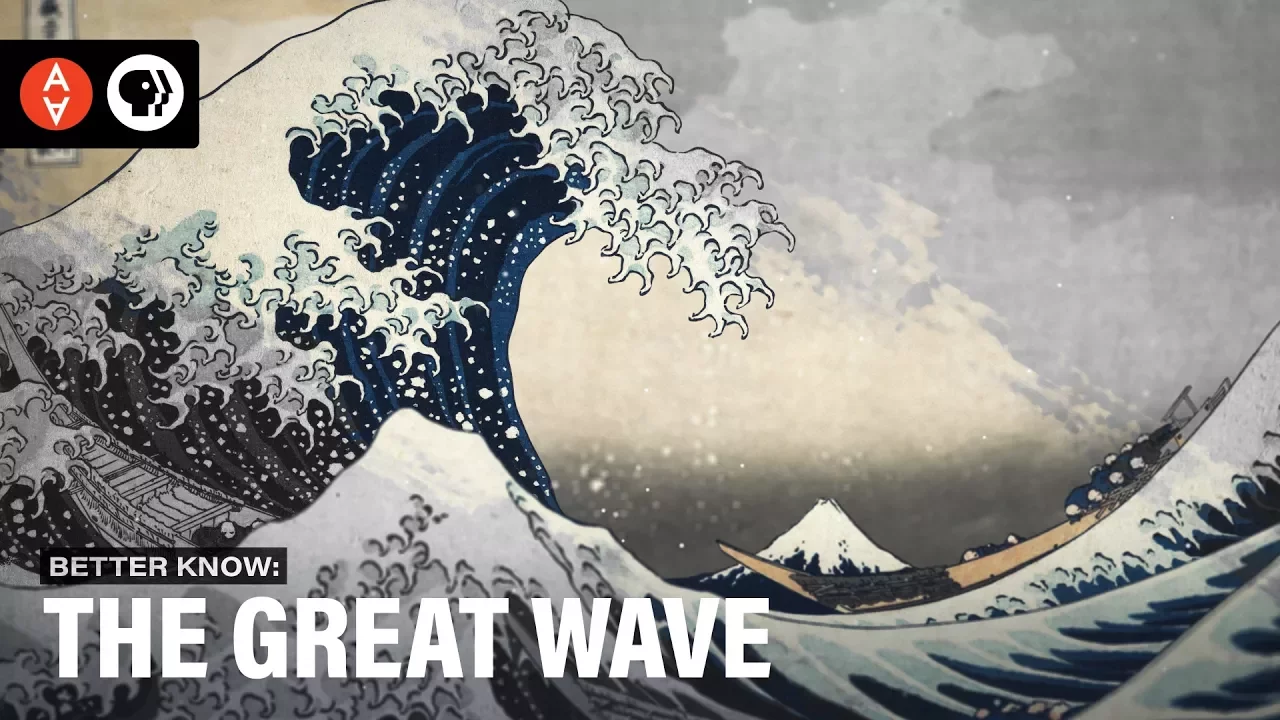
Hokusai's Great Wave: Art History and Symbolism Explained
@theartassignment
656.9K views•2017-05-19

Christian Iconography: History, Theology, and Meaning | Fr. Panayiotis Papageorgiou
@Trisagionfilms
58.8K views•2020-02-21
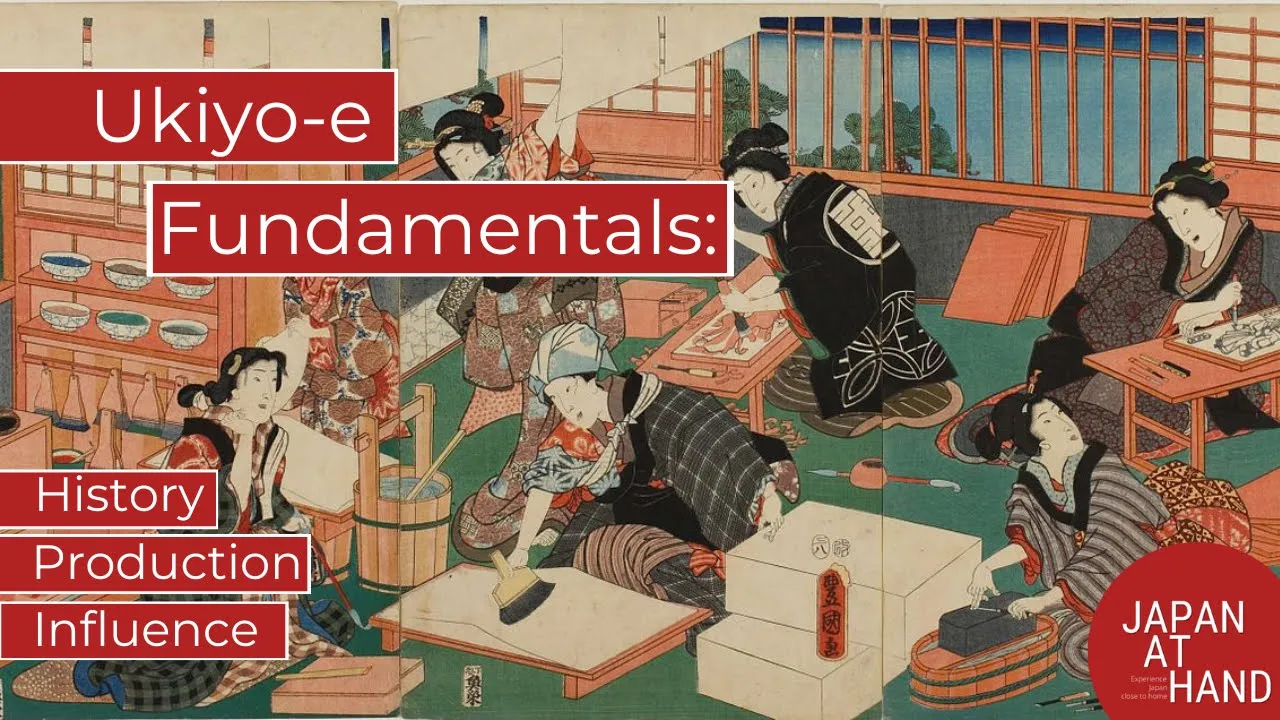
Ukiyo-e Art: History, Woodblock Printing & Influence
@japanathand
6.3K views•2023-06-08

Earliest Depictions of Jesus in Art: 10 Ancient Images Explained
@UsefulCharts
5.9M views•2022-06-03
Related Study Plans & Knowledge Roadmaps
Structured learning paths in Art History