



![3:- The p,d & f-Block Element [Previous Year's NEET (2013-2019) Inorganic CHEMISTRY Solution]](https://i.ytimg.com/vi/R8qsAYQLOPA/maxresdefault.jpg)















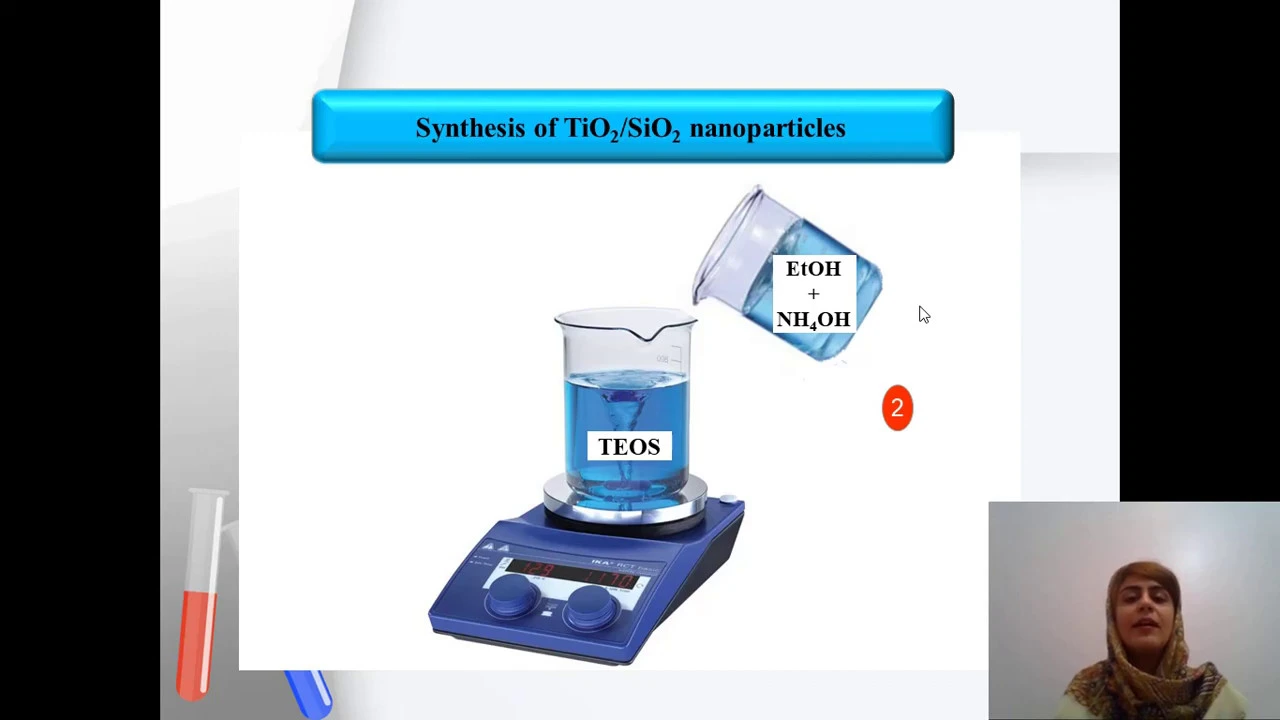


The sol-gel method is a wet chemistry technique for synthesizing nano metal oxides that involves three main steps: (1) hydrolysis of metal alkoxides in alcohol-water mixture to form metal hydroxide colloidal particles (sol), (2) aging of the sol to allow condensation/polymerization reactions forming a metal-oxygen-metal network (gel), and (3) drying and calcination to extract the final nano metal oxide material; water acts as a nucleophile in the hydrolysis reaction, replacing alkoxide groups with hydroxyl groups through nucleophilic substitution, and the final morphology can be controlled by adjusting parameters such as pH, aging time, and temperature.
Sol-Gel Method for Nano Metal Oxide Synthesis: Principle, Procedure & Mechanism
Added:Basic colloidal chemistry, including the definitions and properties of sols, gels, and suspensions.
Fundamentals of inorganic chemistry, specifically the structure and reactivity of metal alkoxides and metal salt precursors.
Core principles of nanotechnology, such as high surface-area-to-volume ratios and quantum confinement effects.
Basic chemical reaction mechanisms, particularly hydrolysis and condensation (polymerization) reactions.
Characterization techniques for synthesized nanomaterials, such as X-ray Diffraction (XRD), Transmission Electron Microscopy (TEM), and BET surface area analysis.
Advanced sol-gel processing methods, including the preparation of xerogels, aerogels, and thin-film coatings via spin or dip coating.
Real-world applications of synthesized metal oxides in photocatalysis, dye-sensitized solar cells (DSSCs), and gas sensors.
Doping and hybridization strategies in sol-gel synthesis to tune the optical, electrical, and magnetic properties of metal oxide nanoparticles.
109.7K views1.1Klikes13:02Original Release: 2017-12-08
hi everyone in this video I would like to discuss one more synthesis method used for the preparation of nano metal oxides that is soldier technique this altered technique subsea leaves event chemical since this is Road in which we convert some inorganic argument metallic compound or you know metal oxides in organic red block sites into a metal oxide this involves not going to pick a solution generally it is made up of metal salts or metal alkoxides may be a nanostructure inorganic sorry which involves inorganic polymerization reaction which is generally catalyzed by water in this method we use metal alkoxides as a precursor in combustion method we use metal matrix because of a middle because if you use metal alkoxides we use on alcohol for dissolving because metal alkoxides are not easily soluble in water and what is their one of the main reactant here it acts as a catalyst this method involves two reactions two steps the first step metal alkoxide the first it is converted to metal hydroxide in the presence of water if metal alkoxide is used as a precursor first it should be dissolved in the alcohol then it should be reacted with water okay this metal alkoxides in alcohol the putting water and the still for a long time and this we get metal hydroxide metal hydroxide is formed this reaction is called hydrolysis reaction with whoa our alkoxide is replaced by hydroxy and this is this involves a homogeneous solution this is a homogeneous solution is converted to progeny a solution we get soft so on is a colloidal suspension of metal hydroxide in water since metal hydroxide is not soluble in water to be in the form of oral suspension and it's a true genius and we call it as a song once the sol is from it should be kept as this because without disturbed me maybe some 10 hours 12 hours are when they are two days without disturbed me then during that period this metal uncocks an alkoxide and some part some percent of oxides there's no condensation reaction to form metal Alcott's metal oxide metal oxide metal oxygen no warning that is called polymerization it's also called condensation initially this is the one step transition then this metal again it forms a bond with another metal through oxygen and finally we get to network so we get gel after condensation and it is homogeneous initially we will have homogeneous solution then it keeps stirring we turn to go side releases to form kannada suspension we call this as a soft solid is a true genius medium when saw is kept without disturbing for some time some period of time then we get a homogeneous solution that is called gel gel is having the metal oxygen metal oxygen inorganic network that has to be extracted that is third step that is trying let us look at the process in one in the first step of a homogeneous solution either by dissolving the metal salt if you take metal salt we directly put it in water and if you take metal uncocks side we usually this all in alcohol and then that picture is still from law still vigorously and in magnetic stirrer okay then I Daleks reaction takes place we get so soul is a stable dispersion of Quran like particles in the solvent once that soil is formed then the soil is kept for aging without disturbing and we get a gel so gel is formed by condensation reaction soft metal ieldofs a little an oxy species leading to the formation of a Moya bonds and some finally we get in the organic curve we're moving networks this transition is called a true genius 200 genius sod to gel this is called Salton transition once we get the gel it's a transparent semi solid gel and from that nanometric nano material metal acid has grown in different shapes and that has to be extracted careful that is the third step that is called dry this involves three days of drying the first one is the gel medium is dry by removing the liquid solvent and the hypercritical conditions means without destroying the gel Network we get here is the solvent is evaporated under ambient conditions just by removing we get solution the gel Network is sintered at high temperature about more than 600 or 70 degrees centigrade we get an anaconda so three ways we can extract but if you heat if you go for high-temperature calcination then we are not going to get the option morphology then we the morphology will change because the temperature the same what I've discussed is poured in the form of flowchart first we take in a beaker we take metal a metal salt in water or if you take metal alkoxide first it should be dissolved in alcohol then that solution is transferred to water when it is visible then this beaker is the solution is made uniform by stealing first at disarming then keep it on a magnetic stirrer we were stealing leading to the formation of metal hydroxide this is called homogeneous to the true genius song formation this is due to hydrolysis reaction a metal which metal I toxic is farm then this all is kept for aging without disturbing in the furnace you know at normal temperature normal conditions room temperature without disturbing then the hydrolysis reaction takes place leading to the formation of polymerization of metal oxygen metal oxygen body so you can see this network is blown so this is homogeneous and it's clear and transparent semi liquid a semi solid this is a homogeneous chain this is formed by condensation reaction followed by an organic collaboration then the third step is drying three base when we extract this gel with the by without destroying the it's morphology the supercritical tryi we get erosion if you heat it slightly to more than slightly more than room temperature just to remove alcohol other things we get excellent then they slightly change in the morphology of cells when you heat it at high temperature we get nanoparticles but not with actual morphology these are actually super critical is very costly low cost we can prepare a lot more particles by this road so this is how we do in the weekly paper nanometric so it's exhaustion method that is look at the preparation of for ta would do is very good semiconductor material which is used in solar cells cosmetics law because it absorbs UV light this is largely prepared by sol-gel method for this preparation we take it anyway so prop oxide observed on coral water first we convert this metal oxide first we dissolve this even kahan then put in water we still that mixture we add some monies to four ratio nitric acid to adjust the pH help in hydrolysis process then the solution is vigorous is filled but 30 minutes we get saw that we straight on you my peroxide saw then it is kept for ageing for about 24 hours without disturbing during a hedging sol is transformed into the shell then we are going to extend the tio2 by heating at 121 centigrade we get tea I go to nanoparticles let us look at the mechanism and the role of water as I do the water play a very important role here so this is a titanium isopropoxide water here acts as a nucleophile titanium is a metal and it's a electrophile so this oxygen is having negative charge and it attacks this titanium this is called substitution reaction nucleophilic substitution reactions you might have studied once this voyage of our water is getting attached to right on you then there will be a cleavage of this size of prop oxide this will detach as alcohol and H is substituted this is called hydrolysis this alkoxide is replaced by hydroxy Rhea this is one step hydrolysis then this when you keep stirring this mixture most of the oxides are replaced by which this is complete hydrolysis one stage renal disease again stage two uncocks a sorry place via 3 alkoxide foreign car side you can also restrict the extent of hydrolysis if you want to stop at this stage you can stop by adjusting pH and other things and you can have only condensation only this these two side if you just continue with this go to second step with this the conditioned reaction takes place this direction and as well as in this direction this is the salt form I don't notice it's highly reacting then you keep it keep this song of a long time without disturb me we get titanium oxide titanium houses in the network which is grown in this direction in this direction this is actually clear a nice network because it's a tidal shape then the metal oxygen metal ofsome that polymerization takes place in all the possible direction and you get very nice off shape by restricting the the crystal growth in some of the sites we can also have different shapes of titanium oxide this is the gel network are performed by inorganic polymerization and the advantage of this techniques are draw it is very simple and economic technique because most of the other physical methods demand the sophisticated moves instrument it's not economic then it does not need expensive machinery or operators rougher side flexibility we are to produce materials with the wide range of stoichiometry and also we can easily drop in this method you lose the fabrication of high quality coatings for thin films about we use this sort of technique and the starting materials are easy to obtain on expensive and I never leave my purity and the verities of shapes can be repaired by controlling the parameters stealing weight pH and aging time and using some surfactants and all we can prepare nanomaterials with the varied assumption so this is about solder technique if you think this video is useful please like it if you've any issues comment it the same to your friends subscribe for more updates thank you very much
Up Next

25:03
Nanoparticle Synthesis via Chemical Reduction: Methods & Applications
@iarehyderabad
672 views•2024-02-12

34:36
Frances H. Arnold Nobel Lecture: Directed Evolution in Chemistry
@NobelPrize
109.5K views•2018-12-08
10:06
1H NMR: Determining Number of Peaks from Structure
@MSJChem
59.2K views•2017-04-06

17:31
Edible Water Bottles: A DIY Guide to Sodium Alginate Spherification
@ryan
10.5M views•2019-06-21
Related Study Plans & Knowledge Roadmaps
Structured learning paths in Chemistry
chemistry
Nanochemistry: Synthesis, Properties & Analysis
01Foundations of the Nanoscale
02Size-Dependent Physical & Optical Properties
03Synthesis Methods: Top-Down vs. Bottom-Up
+ 2 more learning modules
15h5 modules
Explore Roadmap
chemistry
Nuclear Chemistry: Decay, Meds & Fuel Cycle
01Introduction to Nuclear Structure and Radioactivity
02Decay Dynamics and Kinetics
03Radiation Interaction and Detection
+ 2 more learning modules
24h5 modules
Explore Roadmap
chemistry
Supramolecular Chemistry: Forces & Machines
01Foundations of Chemical Bonding and Intermolecular Forces
02Introduction to Host-Guest Chemistry
03Thermodynamics and Dynamics of Self-Assembly
+ 2 more learning modules
16h5 modules
Explore Roadmap
chemistry
Photochemistry: Excited States & Reactions
01Foundations of Light-Matter Interactions
02Molecular Orbitals and Electronic States
03Photophysical Processes and Jablonski Diagrams
+ 2 more learning modules
18h5 modules
Explore Roadmap