





















![[Defence24] 잠수함용 VLS에 AIP, 리튬이온전지까지! 첨단 KSS-3에 깜놀한 폴란드: 한국, 도대체 못 만드는 게 뭐야? (641화)](https://i.ytimg.com/vi/io0xFkKQjbo/maxresdefault.jpg)




![The Meme Spill of MGS2 [METAL GEAR SOLID 2 RETROSPECTIVE 2]](https://i.ytimg.com/vi/SaZ1cY787yA/maxresdefault.jpg)
The Toshiba-Kongsberg scandal demonstrates how the illegal transfer of precision manufacturing technology can fundamentally alter strategic military balances. In 1987, the Soviet Navy achieved acoustic stealth by acquiring Japanese nine-axis milling machines (Toshiba MBP-110) and Norwegian CNC control systems (Kongsberg), enabling them to machine submarine propellers with 0.01 millimeter precision compared to the Soviet standard of 0.4-0.6 millimeters. This eliminated cavitation noise at operational speeds, reducing submarine detectability from 42-48 decibels to 20-25 decibels—a 20-decibel reduction that made Soviet submarines effectively invisible to NATO's billion-dollar SOSUS acoustic surveillance network. The incident reveals that Cold War military advantage depended not only on weapons design but on industrial manufacturing capability, and that a single export control violation exploiting procedural loopholes can negate decades of strategic investment in surveillance infrastructure.
Soviet Submarine Silence 1987: Toshiba-Kongsberg Scandal
Added:March 1987.
Commander William Hayes stands in the SOSUS control room at Keflavik watching three Soviet Akula class submarines cross the GIUK gap without triggering a single hydrophone alarm.
Boats that should be screaming across his waterfall display at 45 decibels are generating less noise than background shipping traffic.
For 30 years, NATO's billion-dollar acoustic network has given the West two to three hours of warning before Soviet missile submarines reach launch positions off the American coast.
Now, those same submarines are slipping past hydrophones undetected, and Hayes has no idea why.
The gap between detection and launch position has collapsed from 100 miles to less than 15. Earlier that winter, Soviet Northern Fleet submarine K-211 departs Polyarny naval base. It's seven-blade bronze propeller spinning at 140 RPM.
The moment the boat clears the harbor, NATO hydrophones at Andøya pick up the signature at 85 nautical miles. Tracking the submarine across the Barents Sea before it even reaches open water.
This is not stealth.
At 42 decibels, K-211 broadcasts its position like a foghorn, detectable long before it can threaten any Western target.
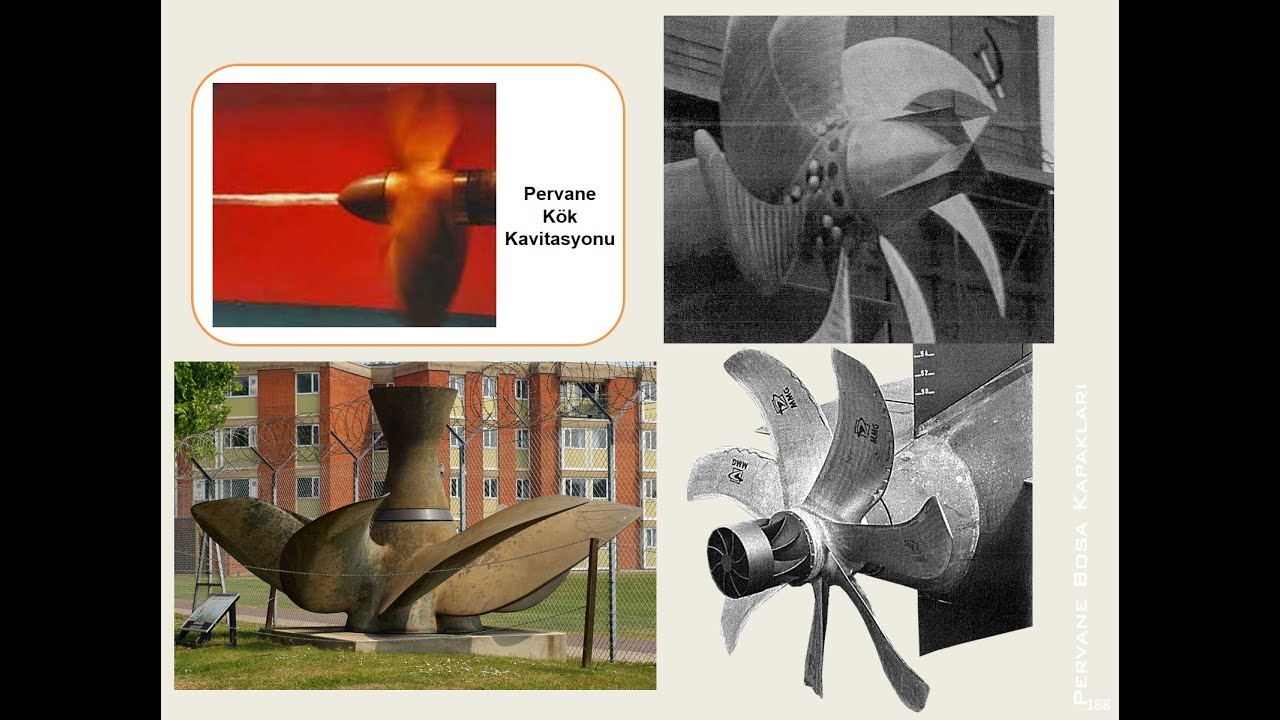
Every Soviet ballistic missile submarine faces the same problem. At 18 knots, microscopic imperfections on each propeller blade create low-pressure zones that collapse into cavitation bubbles.
The result is a continuous roar radiating through the water column, peaking in the frequency range where hydrophones are most sensitive.
NATO SOSUS arrays are designed to detect exactly this signature at 60 miles or more.
Soviet engineers know the source. Rough blade surfaces machined on outdated lathes that leave tool marks deep enough to seed thousands of cavitation sites every revolution. Baltic Shipyard chief engineer reviews acoustic test data in early 1983.
Every Soviet ballistic missile submarine radiates at 42 to 48 decibels, detectable at ranges exceeding 60 miles.
American Ohio class boats, by contrast, remain undetected at 15 miles under identical sea conditions.
Soviet hulls are quiet. Reactor cooling systems are adequate. But propeller noise alone gives away the entire fleet.
The gap is not design philosophy or funding. It is manufacturing precision.
Soviet Ministry of Defense sets the requirement in March 1983.
Reduce propeller noise by 20 decibels within 36 months or the entire SSBN fleet remains a first-strike target rather than a credible second-strike deterrent.
20 decibels would bring Soviet submarines within range of Western acoustic performance, making them survivable in a nuclear exchange.
The deadline is not negotiable, but the engineering path is unclear. The constraint is manufacturing.
Soviet three-axis lathes can hold only 0.4 to 0.6 mm tolerance on blade surfaces, leaving visible tool marks that seed cavitation at any operational speed.
Western manufacturers achieve 0.01 mm finish using multi-axis CNC mills, but those machines are explicitly banned from export to Warsaw Pact nations under CoCom controls.
The gap between what Soviet engineers need and what Soviet factories can produce is 50-fold. Western CoCom export controls specifically ban any milling machine above three axes or 0.1 mm precision from sale to the Soviet Union.
The restriction targets exactly the tools needed to machine silent propellers because NATO strategists understand that acoustic advantage depends on manufacturing capability as much as submarine design.
For Soviet naval engineers, the ban is absolute. Baltic Shipyard cannot build the machines domestically, and no Western manufacturer will risk violating export law.
Until someone does. March 1983.
A Toshiba Machine Company sales director meets a Soviet trade delegation at a Tokyo industrial expo.
The Soviets inquire about large-format CNC mills for turbine production, a plausible civilian application that requires high precision and multi-axis control.
Toshiba's MBP-110 mill offers nine-axis simultaneous control, 0.01 mm repeatability, and a 5-m gantry. Exactly the capability needed to machine submarine propellers in a single continuous setup.
The conversation remains polite, technical, and carefully vague about end use. Japanese export law requires MITI approval for CoCom-restricted machine tools, but Toshiba files paperwork listing the MBP-110 mills as three-axis units with optional rotary tables.
The distinction is semantic, but legal.
Each axis filed separately suggests modular components rather than an integrated system capable of synchronized multi-axis machining.
MITI clerks process the application without detailed inspection because the export category matches civilian turbine manufacturing, a permitted use.
The approval goes through in six weeks.
Kongsberg Våpenfabrikk in Norway supplies the CNC 30 control system, the only software capable of coordinating nine axes in real time within 10-ms update cycles.
Without synchronized control, each axis drifts independently, and the cutting tool destroys a $3 million propeller blank within 90 seconds.
The Kongsberg system samples position sensors at 100 Hz and adjusts motor commands continuously, holding all nine axes within 0.01 mm tolerance.
It is the brain that makes the Toshiba mills useful, and it is equally restricted under CoCom rules. Four Toshiba mills and Kongsberg control systems ship to Leningrad between May and August 1984, routed through third-party freight forwarders to avoid direct inspection.
Each machine is created as industrial turbine equipment, a classification that triggers minimal custom scrutiny.
The forwarders handle documentation in multiple jurisdictions, breaking the chain of custody so that no single customs agent sees both the origin and destination.
By the time the crates reach Baltic Shipyard, they have passed through five countries and four sets of export paperwork, none of which lists submarine propeller machining as the end use.
Baltic Shipyard installs the first Toshiba mill in October 1984.
The machine occupies a dedicated bay with climate control and vibration isolation because even a 0.02 mm shift in the foundation would ruin the precision advantage.
Soviet technicians spend three weeks calibrating the nine axes and integrating the Kongsberg control system with the mill's servo motors.
Initial test cuts on aluminum plate demonstrate 0.008 mm surface finish, 60 times smoother than the shipyard's existing lathes.
For the first time, Soviet engineers have the tool they need. Soviet engineers calculate that at 0.01 mm tolerance, cavitation inception speed increases from 18 knots to 26 knots or higher because the blade surface no longer provides nucleation sites for bubble formation at normal patrol speeds.
The acoustic signature should drop by 15 to 20 decibels, bringing Soviet submarines within the detection threshold of NATO SOSUS arrays only under ideal conditions.
In rough seas or high-traffic zones, the boats would be effectively invisible.
The projection is theoretical until they cut the first production propeller, but the math is sound. February 1985.
Baltic Shipyard completes the first production propeller, a seven-blade 5.2-m unit for an Akula class attack submarine.
Surface roughness measures 0.012 mm, 1/50 of the previous standard and well within the tolerance needed to suppress cavitation.
The blade's curved surface shows no visible tool marks under magnification, just a continuous mirror finish across 27 square meters of bronze.
The propeller weighs 11 tons and required 14 hours of continuous milling without repositioning the blank.
It is ready for sea trials. Sea trials on submarine K-284 in the Barents Sea confirm the projection.
At 20 knots, the new propeller generates 23 decibels compared to 44 for the boat's original equipment.
Soviet hydrophones positioned at 12 nautical miles lose contact entirely in moderate sea states.
The reduction is not incremental. It is transformational.
K-284 has gone from a detectable target to a ghost.
The tactical implication is immediate.
If NATO SOSUS arrays are calibrated for 40-decibel signals, they will miss this boat at any range beyond 15 miles.
Soviet Navy prioritizes ballistic missile submarines.
All Delta IV and Typhoon class boats receive new propellers first because they carry the strategic deterrent that must survive a first strike.
Attack submarines follow. Akula and Sierra class boats that screen the boomers and hunt NATO carrier groups.
Baltic Shipyard operates the Toshiba mills around the clock, producing one propeller every 3 weeks.
By mid-1985, eight submarines have been retrofitted.
By year's end, the count reaches 18.
NATO has no idea the campaign is underway. NATO SOSUS operators begin logging ghost contacts in late 1985.
Boats tracked on departure from Polyarny or Severomorsk vanish from hydrophone arrays within 40 mi of port, reappearing only on magnetic anomaly detectors near the GIUK gap choke points.
The operators assume equipment malfunction or seasonal thermocline shifts because the alternative, that Soviet submarines have become 20 decibels quieter, seems impossible without intelligence warning.
The pattern repeats across the North Atlantic and Norwegian Sea through the winter of 1986.
By mid-1986, SOSUS stations across the GIUK gap report a 60% drop in confident submarine classifications.
Boats that should generate 40 decibel signatures are producing 20 to 25 decibels, below ambient noise in rough seas or near commercial shipping lanes.
The technicians can sometimes detect faint tonals matching Soviet blade rates, but the broadband cavitation noise that makes classification reliable has disappeared.
Operators begin filing possible contact reports instead of confirmed tracks.
A bureaucratic admission that the network is no longer performing as designed. The pattern emerges only after 18 months of tracking.
Every Soviet submarine returning from extended overhaul after mid-1985 shows a 15 to 20 decibel noise reduction.
The change is not gradual or incremental. It is binary.
Boats that enter dry dock loud come out silent.
This points to a systematic retrofit, not progressive improvements in hull coatings or reactor quietening.
CIA acoustic analysts conclude that the USSR has acquired Western-level milling technology because nothing else explains the uniform acoustic transformation across multiple submarine classes. A CIA report in October 1986 confirms that the Soviet Union acquired advanced milling technology, but the machines were delivered at least 2 years earlier, meaning 25 to 30 Soviet submarines are already running silent.
The intelligence failure is strategic.
NATO spent 24 months tracking acoustic anomalies without connecting them to export control violations.
And by the time confirmation arrives, the retrofit campaign is nearly complete.
The Northern Fleet boomer force, the primary target of SOSUS surveillance, has already transitioned.
The detection network built over 30 years is now facing an adversary it was never designed to hear. A propeller blade moving through water at 20 knots creates a low-pressure zone on the back surface.
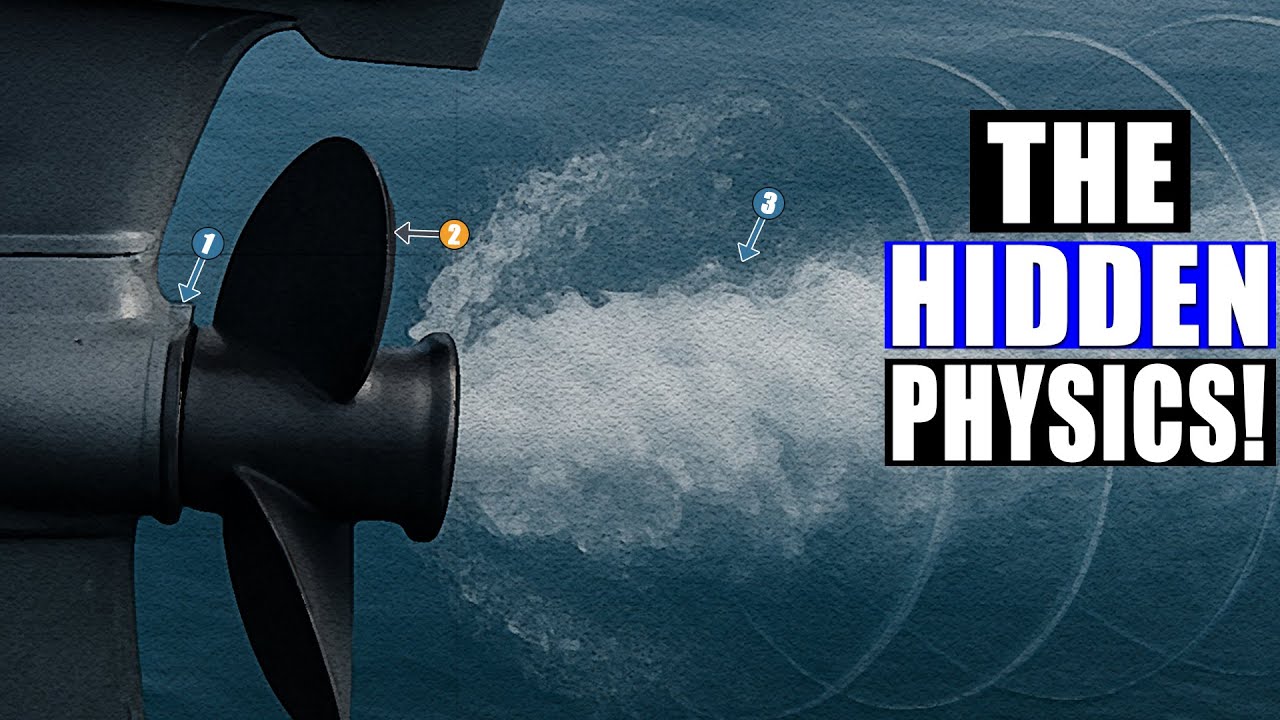
If the pressure drops below the vapor pressure of seawater, roughly 2.3 kilopascals at 10° C, dissolved gases form microscopic bubbles.
This is cavitation inception, the moment when the blade begins to generate noise.
The speed at which inception occurs depends entirely on how smooth the blade surface is because every imperfection acts as a nucleation site where bubbles form more easily.
A perfectly smooth blade delays inception. A rough blade guarantees it at any operational speed. These bubbles collapse violently when they move into higher pressure water behind the blade, releasing energy as shock waves.
Cavitation noise radiates at frequencies from 500 Hz to 50 kHz, peaking around 3 to 8 kHz where human hearing and hydrophones are most sensitive.
Each bubble collapse is tiny, but a propeller spinning at 140 RPM with seven blades produces 980 collapses per second, >> [music] >> creating a continuous roar that propagates hundreds of miles through the ocean.
The noise is not a byproduct. It is the direct acoustic signature of surface roughness translated into sound. Surface roughness determines cavitation inception speed. A 0.5 mm finish creates thousands of nucleation sites across a single blade.
A 0.01 mm finish creates nearly none.
The difference is not subtle.
At 0.5 mm roughness, cavitation begins at 16 to 18 knots.
At 0.01 mm, inception speed rises above 26 knots, well beyond the 18 to 22 knot patrol speeds of Soviet ballistic missile submarines.
Eliminating roughness does not reduce noise.
It eliminates the noise source entirely at operational speeds.
This is why the Toshiba mills matter.
Traditional three-axis lathes cut propeller blades by rotating the blank and moving a single tool along two linear axes.
The blade's complex curvature requires constant repositioning, leaving visible tool paths and 0.4 to 0.6 mm roughness.
Each reposition introduces a discontinuity where the tool enters and exits the material, creating steps and ridges that seed cavitation.
Soviet machinists can minimize these marks through skill and patience, but the physics of three-axis cutting imposes a hard limit.
The lathe simply cannot follow a curved surface continuously. A nine-axis mill adds six rotary axes, three for the blank and three for the cutting head.
This allows the tool to follow the blade's curved surface in a single continuous path without repositioning, eliminating tool path discontinuities.
The cutting head tilts, rotates, and translates simultaneously, maintaining constant contact angle with the blade surface across its entire 5-m span.
The result is a finish of 0.008 to 0.015 mm, achieved in one 14-hour pass instead of dozens of manual repositioning.
The machine does not work faster. It works without interruption, and that continuity is what creates the mirror surface. The Kongsberg CNC-30 control system samples position sensors at 100 Hz and updates motor commands at 10-ms intervals, keeping all nine axes synchronized within 0.01 mm.
Any drift beyond this tolerance causes tool chatter, where the cutting edge vibrates against the workpiece instead of shearing cleanly.
Chatter ruins the surface finish in seconds and can snap a carbide tool worth thousands of dollars.
Real-time synchronization requires the control system to predict each axis's position 10 ms ahead, compensating for servo lag and mechanical compliance, so that all nine axes arrive at the programmed coordinates simultaneously.
Without this software, the nine-axis mill is useless. Baltic Shipyard tests show that propellers machined to 0.01 mm finish do not cavitate until 26 knots, well above the 18 to 22 knot patrol speeds of Soviet ballistic missile submarines.
At operational speeds, radiated noise drops to 20 to 25 decibels, a reduction of 20 decibels compared to previous propellers.
This is the threshold where detection becomes conditional on sea state, ambient noise, and hydrophone range.
In calm water at short range, NATO can still hear these boats.
In rough seas or high-traffic zones, they vanish entirely. SOSUS hydrophones are calibrated to detect tonal signatures above 30 decibels at 50 nautical miles or more.
At 20 to 25 decibels, Soviet submarines are indistinguishable from merchant traffic and biologics unless within 15 mi of an array.
The detection network assumes every Soviet submarine radiates at least 40 decibels, a baseline set by acoustic data collected throughout the 1970s and early 1980s.
That assumption is now obsolete.
NATO's billion-dollar hydrophone network is listening for a signature that no longer exists.
And there is no quick fix because the physics of passive sonar has not changed, only the target. January 1987, SOSUS station Keflavik logs six Soviet submarine transits across the GIUK gap in 14 days.
Only two generate confident classifications. The other four are possible contacts that fade into ambient noise within 30 mi.
This is not a single anomaly or a seasonal shift.
>> [music] >> It is a collapse in detection capability across the most surveilled choke point in the North Atlantic.
Commander Hayes reviews the logs and realizes that NATO is no longer tracking the majority of Soviet submarine traffic through its primary strategic barrier.
Hayes reviews the waterfall displays.
The faint tonals match Soviet blade rates and reactor signatures, but the broadband noise is 15 to 20 decibels below what the same hull classes produced 18 months earlier.
The tonals confirm these are Soviet submarines, not neutral shipping.
But without the broadband cavitation signature, SOSUS cannot maintain track beyond visual range of the arrays.
The detection gap is not equipment failure.
It is an adversary that has become acoustically invisible to the sensors designed to find it. NATO anti-submarine warfare doctrine assumes 60 nautical miles of warning time between SOSUS detection and Soviet submarines reaching launch positions off the US East Coast.
That margin has collapsed to 10 to 15 miles, less than 30 minutes at patrol speed.
The doctrine was built on acoustic dominance.
Detect the submarine far from its target, vector in patrol aircraft or attack submarines, and maintain continuous track.
At 15 miles, there is no time to vector assets.
The submarine is already in launch range before NATO can respond. US Navy deploys P-3 Orion aircraft with magnetic anomaly detectors to cover SOSUS gaps.
MAD requires overflight within 1,000 ft of the submarine because it detects the distortion in Earth's magnetic field caused by a large steel hull.
It is far less efficient than passive sonar.
Patrol costs jump from $50,000 per SOSUS detection to $2 million per MAD sortie.
>> [music] >> The Navy cannot afford to patrol every square mile of the North Atlantic at low altitude, so coverage becomes selective, prioritized by intelligence estimates of Soviet patrol routes.
The hydrophone network that once provided comprehensive surveillance now offers only hints. Pentagon convenes an emergency review in February 1987.
The question is not whether the Soviets acquired Western milling technology, that is confirmed through intelligence channels, but whether NATO can adapt faster than the USSR can retrofit its remaining fleet.
Analysts project that 40 to 50 Soviet submarines will have silent propellers by 1989, including the entire Northern Fleet ballistic missile force.
The review concludes that passive acoustic detection can no longer serve as the foundation of NATO anti-submarine warfare. Sonar technicians at Keflavik begin cross-referencing SOSUS gaps with satellite imagery of Soviet shipyards, counting submarines in dry dock, and estimating retrofit timelines.
Each dry dock cycle takes 8 to 12 weeks, including propeller removal, installation, and sea trials.
Baltic Shipyard operates two dry docks simultaneously, and a second facility at Severodvinsk is now producing propellers using Toshiba machine tooling.
The analysis suggests the Soviets can retrofit their entire operational submarine fleet [music] within 30 months of the first delivery.
By mid-1987, they are already 2/3 complete. The strategic calculus inverts.
NATO's acoustic advantage, built over 30 years and $8 billion in SOSUS infrastructure, is now a liability.
Every dollar spent upgrading passive hydrophone arrays is a dollar not spent on active sonar, satellite surveillance, or undersea autonomous systems.
The Pentagon faces a choice.
Continue investing in a detection method the adversary has defeated, or accept the sunk cost and pivot to technologies that do not depend on the enemy radiating noise.
The decision is financial as much as tactical. By mid-1987, the US Navy redirects $4.2 billion from SOSUS upgrades to active sonar development and satellite radar programs.
Active sonar does not wait for the submarine to make noise. It transmits a pulse and listens for the echo, detecting the hull regardless of propeller acoustics.
The trade-off is that active sonar reveals the searching platform's position, turning every detection into a mutual engagement.
The era of passive hydrophone dominance, where NATO could track Soviet submarines without being detected in return, is over. March 1987, a whistleblower inside Toshiba Machine provides documents to the US government showing that the company falsified export paperwork for the MBP 110 mills, routing them through dummy companies to avoid media inspection.
The documents include shipping manifests, internal memos acknowledging COCOM restrictions, and payment records tracing the transaction to Soviet accounts.
The evidence is definitive.
Toshiba knowingly violated export controls, and Kongsberg Våpenfabrikk supplied the control systems with full awareness of the end use.
The scandal breaks publicly within days.
US Congress holds hearings in June 1987.
Testimony confirms that four Toshiba mills and Kongsberg control systems were delivered to Baltic Shipyard in 1984, enabling the Soviet Union to produce near-silent propellers for the first time.
Witnesses include intelligence analysts, COCOM officials, and representatives from both companies.
The hearings reveal gaps in export enforcement.
Toshiba exploited paperwork loopholes, and COCOM lacked the resources to inspect every high-tech shipment bound for neutral intermediaries.
The violation was preventable, but not detected until years after the damage was done. Toshiba Machine is fined $15 million and banned from US defense contracts for 3 years.
Kongsberg Våpenfabrikk executives face criminal charges in Norway, though most are later reduced to administrative penalties.
COCOM tightens export controls to include software and control systems, not just hardware, closing the loophole Toshiba exploited.
The penalties are symbolic, $15 million against the strategic cost of rendering NATO's acoustic surveillance obsolete.
The fine does not reverse the retrofit campaign or restore SOSUS effectiveness.
The immediate damage is irreversible.
By 1988, 45 Soviet submarines have silent propellers, including the entire Northern Fleet ballistic missile force and most first-line attack boats.
NATO's SOSUS network, designed to provide two to three hours of warning before missile launch, now offers less than 30 minutes in most scenarios.
The Soviets did not invent a new submarine.
They acquired the single manufacturing capability that NATO's detection strategy assumed they would never possess.
The retrofit campaign is complete before the West can respond. US Navy accelerates deployment of active sonar systems, including the AN/SQS-53C, along with satellite-based radar surveillance and autonomous underwater vehicles.
These technologies cost five to 10 times more than passive hydrophone arrays per detection because they require power transmission, complex signal processing, and platforms that can move to search areas rather than waiting at fixed locations.
The shift represents a fundamental change in anti-submarine warfare, from invisible listening to mutual detection, where finding the enemy also reveals your position. Soviet engineers at Baltic Shipyard continue refining the milling process through the late 1980s, achieving 0.005 mm surface finish by 1989.
This pushes cavitation inception speed above 28 knots, well beyond any operational requirement.
But the Soviets pursue the margin as insurance against future Western detection improvements.
CIA analysis later shows that Soviet propeller noise remained below 25 decibels until the USSR collapsed in 1991.
Even as the Cold War ended, the acoustic advantage persisted, undiminished. The long-term legacy is doctrinal.
The Toshiba-Kongsberg scandal exposed the fragility of technology export controls during the Cold War, and forced NATO to abandon 30 years of acoustic-centric anti-submarine warfare doctrine in favor of multi-sensor integrates passive sonar, active sonar, magnetic anomaly detection, satellite radar, and autonomous underwater vehicles into a single networked system.
No single sensor is sufficient.
Detection requires cross-referencing multiple data streams.
This approach defines submarine tracking today, and it originated as a response to four Japanese milling machines. The scandal demonstrated that export controls are only as strong as the enforcement mechanisms behind them.
Toshiba and Kongsberg exploited procedural gaps, filing paperwork that was technically accurate, but misleading, routing shipments through neutral intermediaries, and relying on the fact that customs inspectors lacked the technical expertise to recognize nine-axis milling capability disguised as modular components.
Post-1987 reforms required end-use verification, expanded controls to include software, and mandated technical inspections for high-precision machine tools.
The reforms came too late to prevent the Soviet retrofits, but they reshaped export policy for the remainder of the Cold War. The Toshiba scandal revealed that Cold War military balance depended as much on industrial capability as on weapons design.
Soviet submarines were well-engineered, but their acoustic signatures were determined by the precision of the lathes that machined their propellers.
The USSR could design a quiet submarine.
It could not manufacture one until it acquired Western milling technology.
NATO's advantage was not superior naval architecture, but superior machine tools.
And when that gap closed through illegal export, the strategic balance shifted overnight.
The Cold War, in this instance, was fought and nearly lost in machine shops, not at sea. The most dangerous aspect was not the technology transfer itself, but the 2-year intelligence lag between delivery and confirmation.
From mid-1984 to late 1986, NATO operated under the assumption that its SOSUS network provided comprehensive submarine surveillance.
While in reality, the Soviet Northern Fleet was systematically transitioning to silent running.
During those 24 months, Soviet ballistic missile submarines conducted patrols with near impunity.
And NATO had no awareness that its strategic warning time had collapsed.
The intelligence failure was not a lack of data, but a failure to interpret acoustic anomalies as evidence of a fundamental technology shift. The four milling machines cost Toshiba $3 million in sales and $15 million in fines.
They cost NATO an estimated $17 billion in SOSUS infrastructure rendered obsolete overnight.
Plus, the additional cost of developing and deploying alternative detection technologies.
The calculation is stark.
A single export control violation, exploiting a procedural loophole, negated three decades of investment in the West's primary strategic surveillance system.
The economic asymmetry is the scandal's most striking feature.
Toshiba's commercial transaction produced strategic consequences were thousands of times the sale price. The Toshiba-Kongsberg scandal came within 2 years of eliminating the West's ability to track Soviet missile submarines during the final, most dangerous phase of the Cold War.
Had the machines been delivered in 1982 instead of 1984, or had intelligence confirmation been delayed until 1988, the entire Soviet SSBN force would have operated undetected for years, fundamentally altering the strategic balance and undermining NATO's confidence in its second strike detection capability.
Four milling machines, a control system, and a procedural loophole brought the Cold War closer to a silent, undetectable Soviet advantage than any prior espionage success.
The submarine propeller, machined to a hundredth of a millimeter, nearly changed history.
Up Next

Understanding Navy Sonar's Impact on Marine Mammals
@EarthjusticeOrg
77.3K views•2007-11-19

Triumph of Orthodoxy Icon: Byzantine Art & History Explained
@BenCallan
2.1K views•2024-08-06

FastAPI vs Flask vs Django: Choosing the Right Python Web Framework
@TechWithTim
302.5K views•2024-05-26

Game of Thrones Opening Credits: A Cinematic Analysis
@gameofthrones
46.3M views•2011-04-18
Related Study Plans & Knowledge Roadmaps
Structured learning paths in General & Interdisciplinary Studies