

![AULA [AO VIVO] PARÂMETROS, LINGUÍSTICA E GRAMÁTICA! - FELIPE SABARÁ](https://i.ytimg.com/vi/Kd7aw5cXUlM/sddefault.jpg?sqp=-oaymwEmCIAFEOAD8quKqQMa8AEB-AHUBoAC3gOKAgwIABABGGUgZShlMA8=&rs=AOn4CLCD9Hfl9goN-s00w9XHimnhhWtaMw)




![SFU LING 323 [6-1] Inflections and Paradigms](https://i.ytimg.com/vi/tgODXGx5O2A/maxresdefault.jpg)
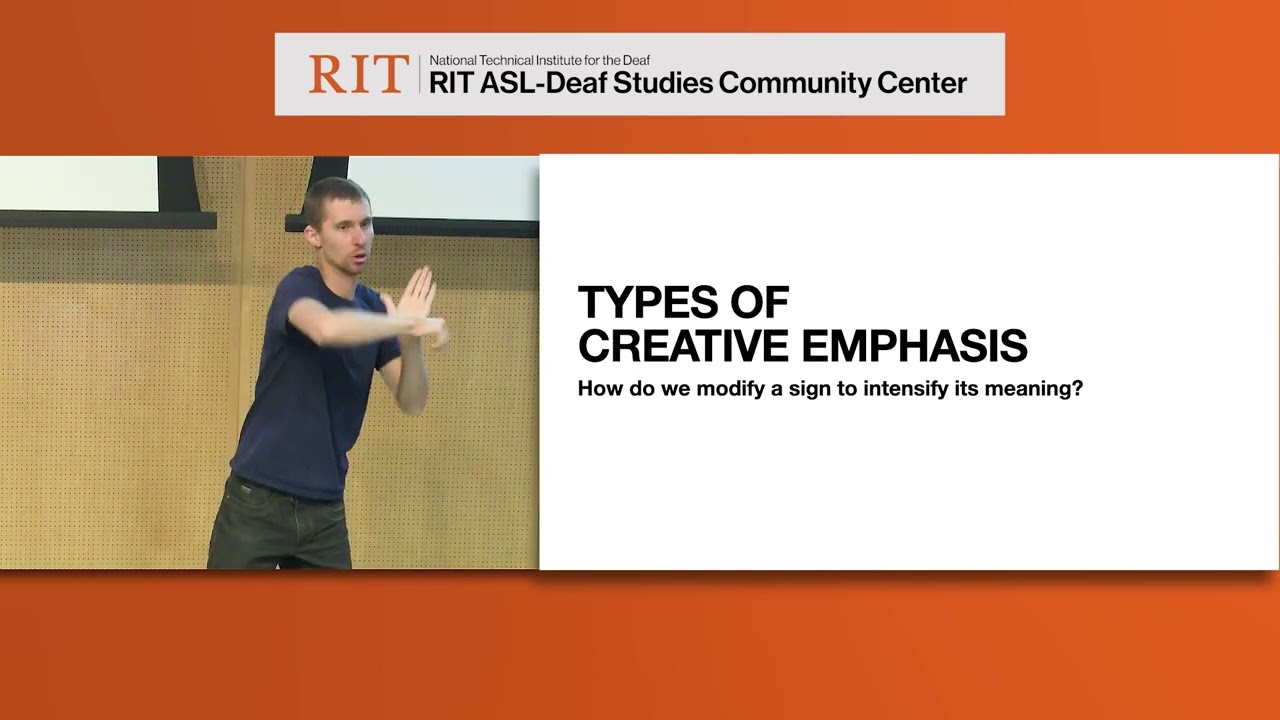



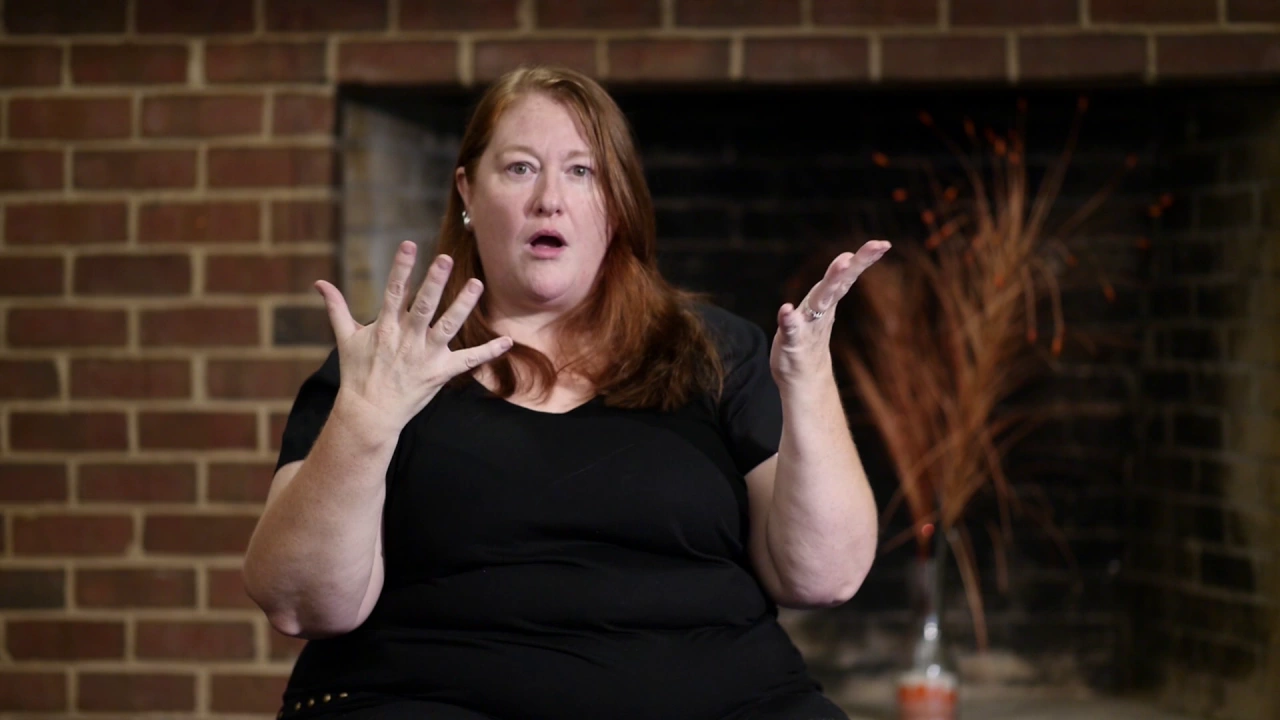




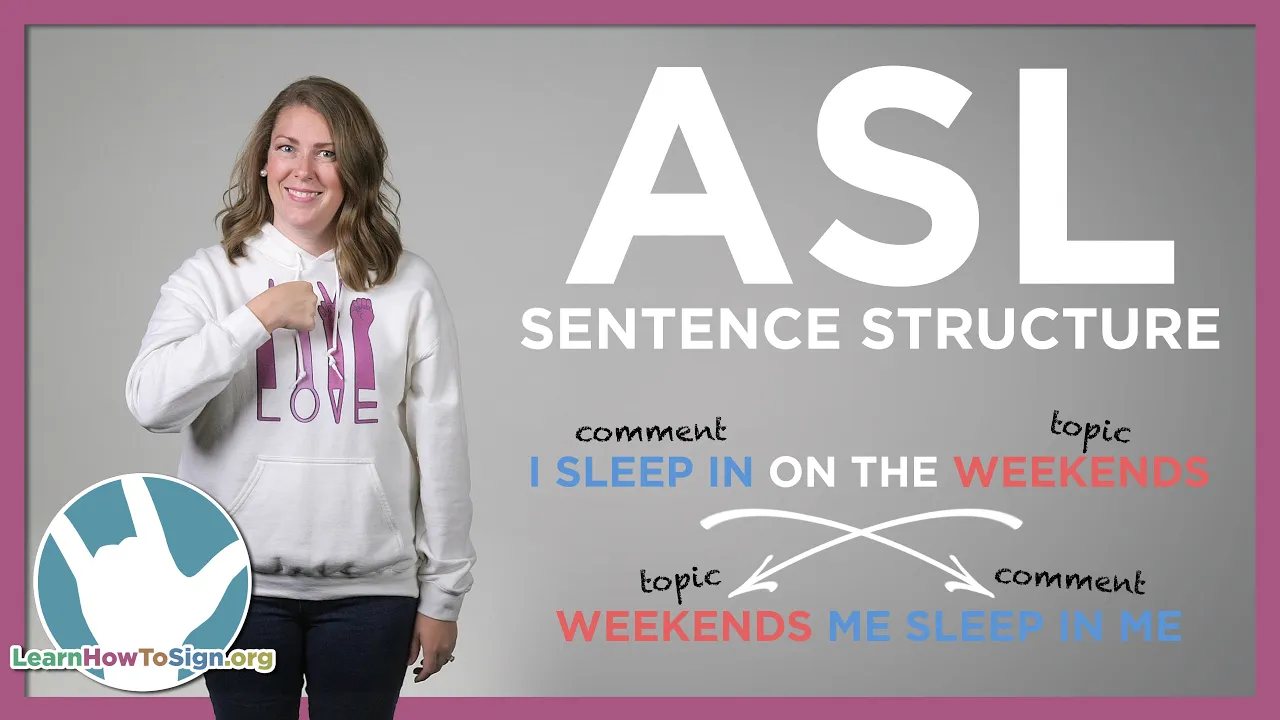


In American Sign Language, morphemes are the smallest meaningful units; free morphemes like individual signs (e.g., 'book', 'sit') can stand alone with complete meaning, while bound morphemes must attach to other morphemes to convey meaning. Bound morphemes in ASL include inflectional morphemes (movement changes and facial markers that modify verb meaning without changing part of speech, such as circular movements indicating duration or facial expressions showing intensity) and derivational morphemes (movement changes that transform part of speech, like quickening the movement of 'fly' to create the noun 'airplane' or modifying 'sit' to create the noun 'chair').
ASL Morphology: Free vs Bound Morphemes Explained
Added:Basic understanding of general linguistics and the definition of a morpheme as the smallest unit of meaning in a language.
Familiarity with the five phonological parameters of American Sign Language: handshape, location, movement, orientation, and non-manual signals.
An awareness of the fundamental differences between spoken (auditory-vocal) and signed (visual-spatial) language modalities.
A general grasp of grammatical inflection and derivation as concepts in English or general grammar.
Exploring ASL compounding, which details how free morphemes are combined and modified to form entirely new vocabulary signs.
Investigating numeral incorporation in ASL, where numerical concepts are bound directly to base signs such as age, time, or pronouns.
Analyzing ASL classifier predicates and the use of spatial or locative morphemes to show movement, size, shape, and spatial relationships.
Examining how ASL morphological variations influence syntax, sentence structure, and grammatical agreement in conversational signing.
Applying ASL morphological analysis to professional sign language translation and interpreting practices.
12.2K views100likes10:16Original Release: 2016-07-21
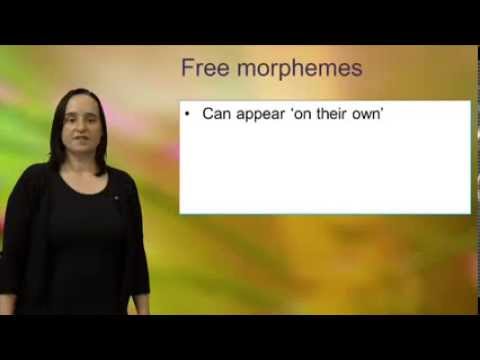
we're now going to move from the subject of phonology to the subject of morphology we're going to consider two types of morphemes bound morphemes and free morphemes now first we have to establish exactly what morphology is you remember that the phonemes were the smallest parts of speech the part of speech or of language i should say that on their own don't mean anything well now we're going to move to the meaningful parts so phonemes are put together in ways that predictably mean things that are used that are recognized that have recognizable meanings so when we think about, I don't know, the T sound in English it doesn't have a recognizable meaning but when we look at the ER sound the er sound in English then we say wait that does have a recognizable meaning because when it's put at the end of an adjective like pretty prettier or big bigger then we notice that that predictably means a comparison or when it's put at the end of a verb like dance dancer or a singer the singer then we notice that it means the person who does something so we say oh when those phonemes the building blocks are put together into meaningful patterns patterns that always represent these these same ideas then we say they are morphemes so more things can be considered into different categories free morphemes are morphemes that can be used on their own to have meaning we call these words are signs I don't need to say anything else other than book for you to have the idea of a book or other than sit for you to have the idea of sit by themselves they can occur book can be used alone but other morphemes can't be used alone you have to use them in a context they have to be attached to particular morphemes for instance the ER morpheme that we were talking about in English you can't just say er to mean more no it has to come be attached to another word has to be attached to pretty or too big then once it's attached together then you could use it prettier bigger these morphemes are what are called bound morphemes are more things that cannot be used alone they have to be bound to or attached to other morphemes and just as we have free and bound morphemes in spoken language we have free and bound morphemes in sign languages as well now we can further divide free morphemes and bound morphemes into categories free morphemes can be divided into different types of words that can be used since free morphemes are by in large words then we can say free morphemes can be nouns or adjectives or adverbs or verbs and bound morphemes can also be divided into particular types we have inflectional morphemes which are grammatical morphemes and derivational morphemes which are grammatical morphemes that change the part of speech inflectional morphemes don't change the part of speech whereas derivational morphemes do so we'll take a look at that in just a moment let's first go back to these free morphemes and consider different types of free morphemes now you might need to go back to your grammar book to re-familiarize yourself with with parts of speech we have nouns verbs adjectives adverbs conjunctions and interjections you're also going to learn about a few other types of parts of speech for example determiners which you probably have never heard of before because most English grammar classes don't cover them but remember these are just instances of free morphemes morphemes that can be used on their own and we call them words or signs bound morphemes in spoken language can either come before in the middle of or at the end of free morphemes so you can take the word arange which is a free morpheme and put a prefix to it rearranged or prearranged or you can put a suffix on it arrangement you can also put a sometimes an infix which is pretty rare in English we actually tend to only use curse words that we sort of put in the middle of other words we'll say something like oh pardon my language unfucking believable and you put that infix in the middle of a word this is different ways that bound morphemes can be used in spoken languages before in the middle of or at the end of now as I mentioned bound morphemes come in two types derivational morphemes change the part of speech so if you have a verb like relax then you can add the ending tion or sometimes ation and that will change the verb into a noun relax becomes relaxation create becomes creation and populate becomes population so by adding the tion or the ation at the end of a word you change it from a verb to a noun that's a derivational morpheme it changes the part of speech now inflectional morphemes don't change the part of speech but they assign some particular grammatical property to the word in English for instance we have the S ending that we use to make nouns plural we have the ing sound that we add to verbs to take run and change it to running for the ED sound that changes walk in to walked to make the past tense these are inflectional index if you ever took spanish you probably learned lots of inflectional endings as you are learning for the verb endings of i love you love he loves amo amas ama or in the past tense ame amaste amo endings that change the meaning of the word that change the particular grammatical property of the word these are inflectional morphemes so you might think well ASL doesn't have any of these things I understand how ASL has free morphemes it has individual signs that function like words but it wouldn't have any of these bound morphemes either derivational or inflectional I wouldn't know how to even recognize those but it turns out ASL does have bound for themes let's take a look at a few of them notice how in verbs you can change the movement of the verb so you can sign the sign TO GO or you can repeat that movement in a back-and-forth motion which means to go again and again or you can make a circular movement or add a circular movement to a verb you can take the verb TO WORK but if you sign it with a large circular movement it means to work for a long time so these movements that can be assigned to verbs are bound inflectional morphemes they're inflectional because they don't change the part of speech but they're bound because they have to be used as a part of the free morpheme WORK you can't just do the circular movement on its own to mean for a long time it has to be part of the verb TO WORK you can't just do the back-and-forth movement of GO to mean for a long time you have to sign GO with the back-and-forth movement as a part of it the movement is incorporated or bound into the sign and that's why we say that movement in verbs are inflectional another bound inflectional morphemes are facial markers that we can add to verbs so we can add the the tongue out or the bared teeth and each of these changes the the grammatical use of the verb without changing the part of speech similarly with adjectives we can change both the movement or the facial expression of the adjective so you can sign is to be SICK or if you do this with a tense movement that then goes quickly to be VERY SICK you can sign FAST or if you go from tense - quick VERY FAST similarly you can change the movement the meaning of adjectives for example you can sign BIG with the cha facial expression to be VERY BIG or with the the facial expression that shows just the lips pursed together which means the sort of big now these have all been inflectional morphemes but in ASL we also have derivational morphemes morphemes that change the part of speech for instance if you take a verb like the verb to SIT and make it with a smaller double movement then you've created the noun CHAIR if you take the verb FLY which is a big movement and you do it in a quick small movement then you you change FLY to AIRPLANE so by changing the movement you've added a bound morpheme to the sign FLY and you've changed the part of speech which is why we say it's a derivational morpheme you've made a verb fly into a noun airplane another derivational morpheme that we have is the person marker dance - dancer now up until recently this was a bound morpheme because no one used that sign that person marker alone it had to be bound you couldn't just sign it that way you have to sign it with Ps and if you signed it with Ps then it meant person but if you signed it with just the straight hands it had to be used with a verb dancer teacher learner but people have sort of revived an older use of that sign and so now they use that sign alone so I'm not sure that we can still consider it a bound morpheme because it can be used by itself to just mean person now even though 30 years ago it was never used on its own so we will still consider that a derivation bound morpheme but it's a little questionable because sometimes it's used alone now so maybe that person marker can be considered a free morpheme now that's ok languages change and the category of morphemes change as well as the language of evolves
Up Next

2:52
ASL Agreement Verbs | Signing Naturally Unit 8.3 Guide
@SignWithCourtney
10.8K views•2017-03-04
36:52
Constraint Interaction in Optimality Theory: Epenthesis & Deletion
@Vidyamitra
180 views•2018-08-20

5:02
ASL Compounds: Morphology, Phonological Rules, and New Meanings
@MrSsurrency
10.7K views•2016-07-21

21:32
Accent Expert Explains U.S. Regional Dialects | Part 1
@WIRED
9.3M views•2021-01-21
Related Study Plans & Knowledge Roadmaps
Structured learning paths in Linguistics
linguistics
Optimality Theory: Tableaux & Constraints
01Phonological Basics: Sounds, Syllables & Rules
02Foundations of Optimality Theory: GEN, CON, and EVAL
03The Constraint Inventory: Markedness vs. Faithfulness
+ 2 more learning modules
15h5 modules
Explore Roadmap
linguistics
Morphosyntactic Alignment: S, A & P Systems
01Foundations of Syntax: Transitivity and Arguments
02The Linguistic Variables: Mapping S, A, and P
03Nominative-Accusative Alignment
+ 3 more learning modules
12h6 modules
Explore Roadmap
linguistics
Analyzing Sign Language: Phonology & Syntax
01Foundations of Sign Language Linguistics
02Phonology: The Five Parameters of a Sign
03Morphology: Word Formation and Classifiers
+ 2 more learning modules
14h5 modules
Explore Roadmap
linguistics
Pragmatics: Speech Acts, Grice & Politeness
01Introduction to Pragmatics: Meaning in Context
02Grice’s Cooperative Principle & Implicature
03Speech Act Theory
+ 2 more learning modules
14h5 modules
Explore Roadmap