


![IDEAS that Justified IMPERIALISM [AP World History Review—Unit 6 Topic 1]](https://i.ytimg.com/vi_webp/DrjQ1dir1SI/maxresdefault.webp)







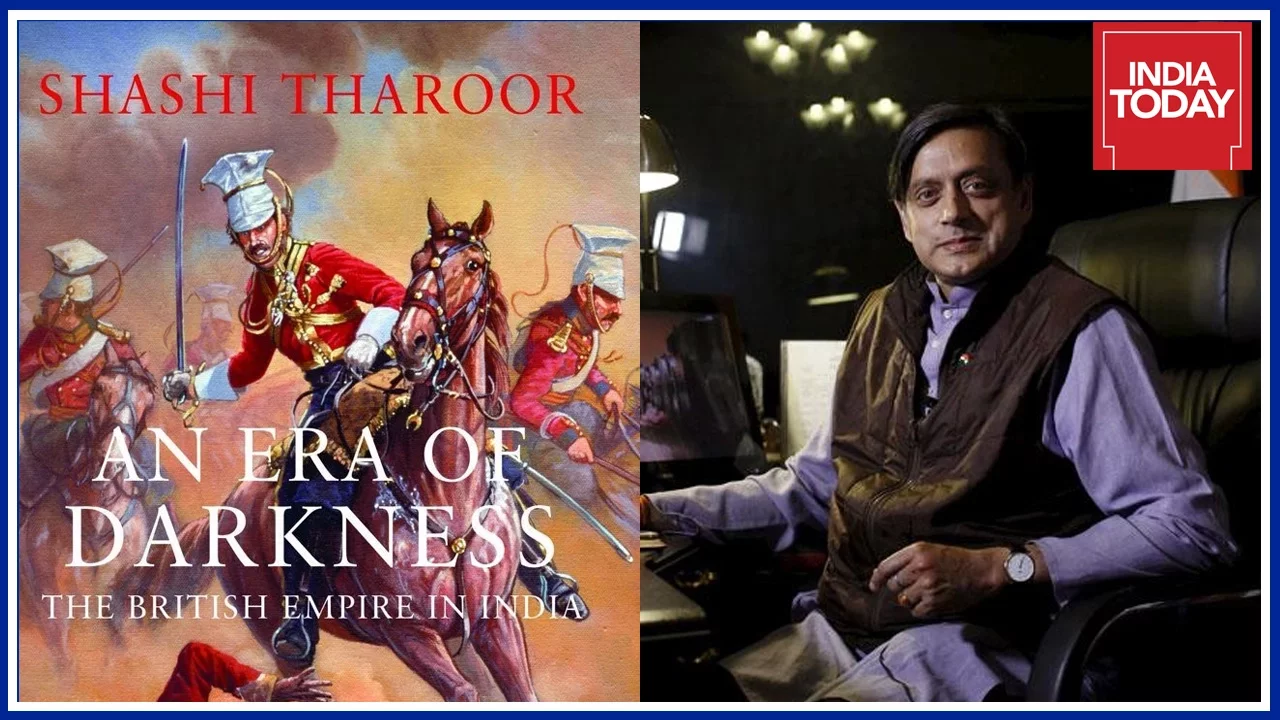




India's democracy was not a British gift but a hard-won achievement forged through decades of resistance; the British systematically denied Indians political rights, enforced racial hierarchies, and designed reforms to divide communities while keeping real power in colonial hands, with India's democratic institutions emerging from nationalist determination including Gandhi's mass movements, revolutionary actions from Bhagat Singh to Subhas Chandra Bose and the INA, and the naval mutiny, ultimately becoming independent when Britain was too exhausted after WWII to suppress a politically awakened India.
How India Forged Its Own Democracy: Dr. Shashi Tharoor on Empire's False Gift
Added:The history of the British Raj, including the administrative transition from the East India Company to direct British Crown rule after 1858.
The origins and evolution of the Indian National Movement, specifically the roles of the Indian National Congress, Mahatma Gandhi, and various grassroots resistance strategies.
The ideological concept of the 'Civilizing Mission' (or Whig history), which posits that Western imperial powers benevolently introduced modernity and governance to colonized nations.
Basic tenets of democratic governance, including national sovereignty, self-determination, franchise, and constitutionalism versus colonial extraction.
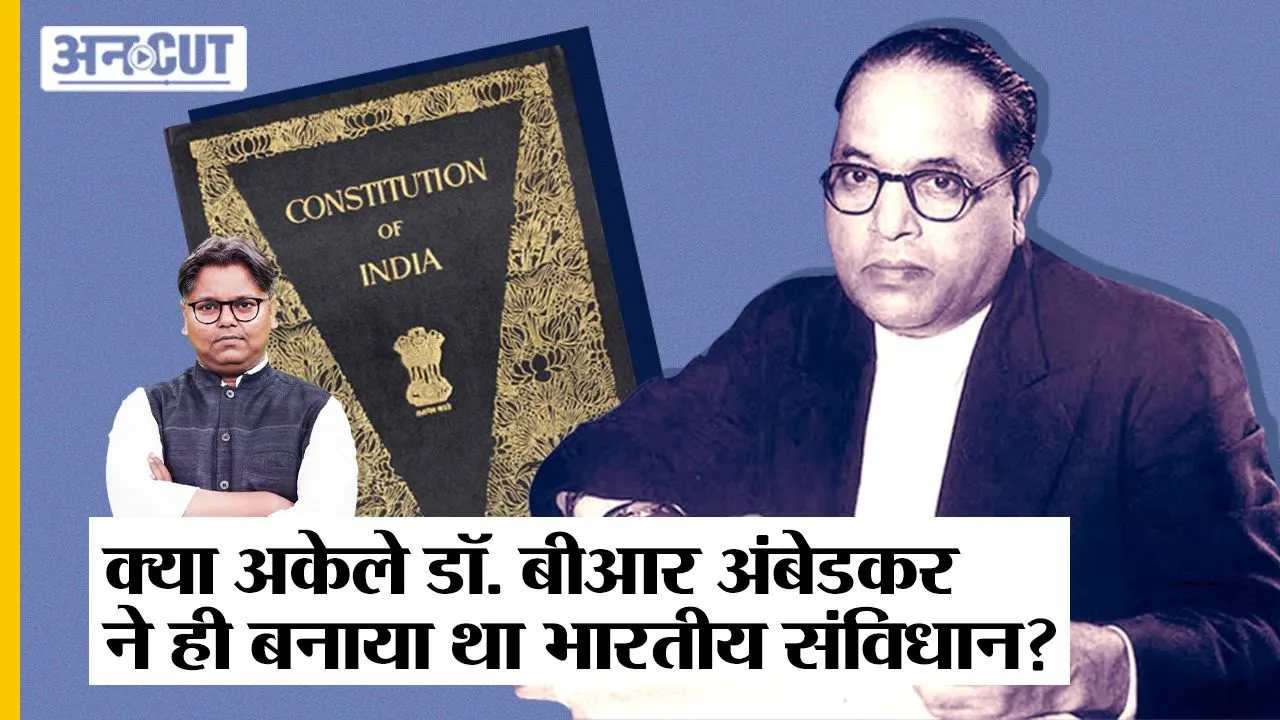
The drafting and adoption of the Indian Constitution, focusing on Dr. B.R. Ambedkar's role in institutionalizing democratic and social rights.
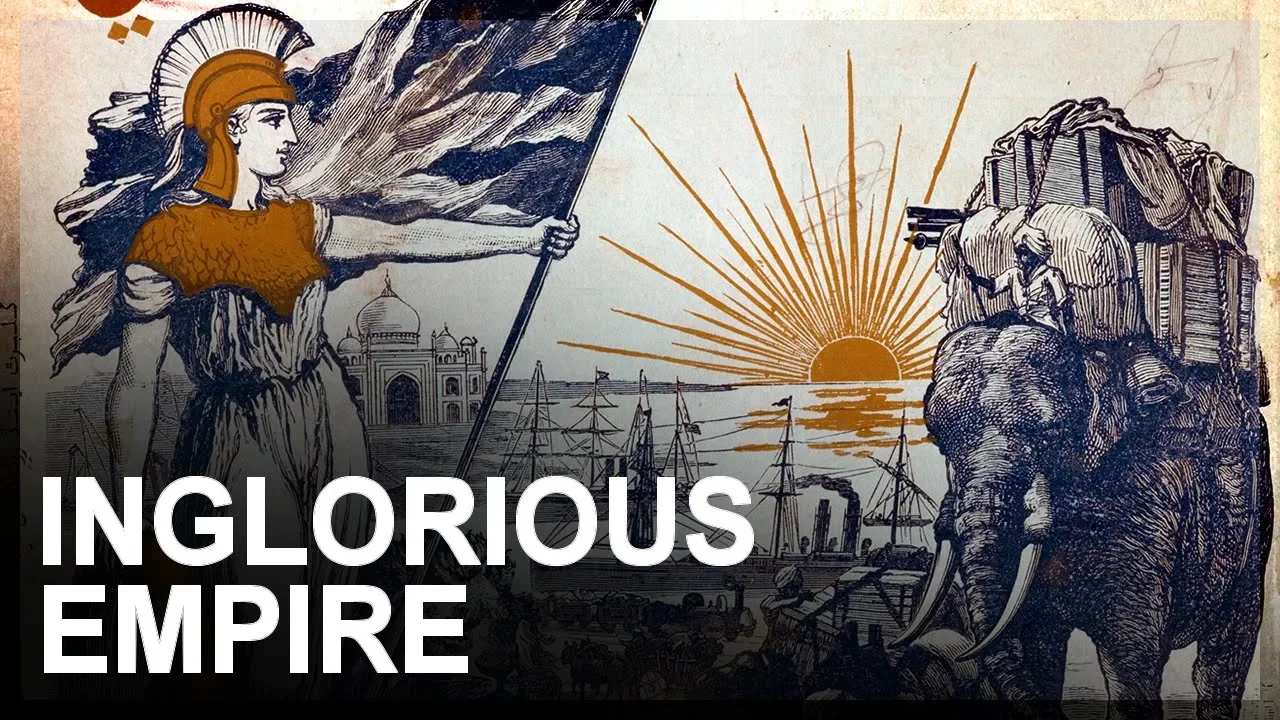
Shashi Tharoor’s broader historical arguments regarding the economic and social exploitation of India, as detailed in his book 'Inglorious Empire: What the British Did to India'.
A comparative political analysis of post-colonial state survival, examining why India maintained a resilient democratic framework while neighboring post-colonial nations faced military regimes or authoritarianism.
An exploration of contemporary challenges to Indian democracy, including ongoing debates over federalism, secularism, and institutional independence in the 21st century.
3.6K views93likes28:57Original Release: 2025-11-29
At the stroke of the midnight hour, when the world sleeps, India will awake to life and freedom. A moment comes which comes but rarely in history.
>> Is India's democracy made in England?
Heard that colonial [music] spin before?
The truth? No.
It was fought for and stolen back.
One salt march, one boycott, [music] one jail cell at a time, born from struggle, shaped by resistance.
This is democracy's untold story by the one and only.
[music] >> Hello Ranjun. How are you?
>> Very good. How are you Dr. Turu?
>> Not too bad. Not bad.
>> Has your phone stopped ringing? [music] >> The phone has not stopped ringing but it's on silent.
>> Okay, great.
action.
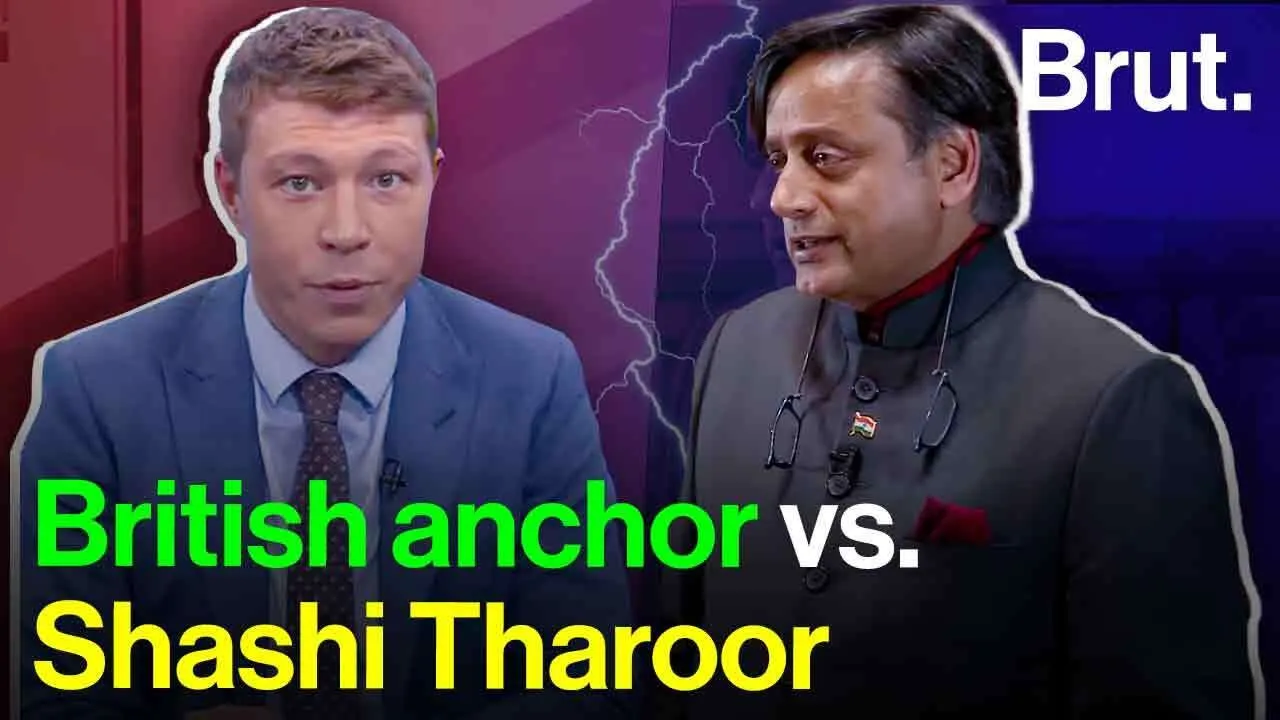
>> The man who redefined the global conversation on empire, Dr. Shashi Tarur.
>> That's very kind. Thank you, Ronjun.
Good to see you.
>> DIY democracy. That's what we're calling the episode today.
>> Sure. Now Shashi, it's wild how it's claimed that Britain gave India democracy. A New York Times piece, it basically quoted a NATO diplomat saying that it took Britain 250 years to build democracy in India. This was later retracted after a lot of public outrage.
>> I can imagine.
>> But do you think that such myths and lies really shaped the perception of how Indian democracy is seen globally?
>> Yeah. I mean the fact is the British denied democracy to India and it's something that is slightly absurd to suggest that a colonial power whose business is that of control, oppression, extraction and loot is actually going to be busy giving democracy to the people it's busy exploiting. It's it's uh I mean these are people who u not only used their structures of governance for their own benefit but structured everything in order to ensure the others were kept down that is Indians were kept down. The racism explicitly part of the system literally signed saying Indians and dogs not allowed clubs in which Indians were never given membership. the um residential segregation, the so-called civil lines where the whites lived and the black town where the Indians lived, the ways in which the administrative structure was so completely skewed, all authority in the hands of white people, all the subservience on the part of Browns to come as supplicants, please sir, can I have this? Can I do that? You know that they actually had to be for an Indian to sit down in front of an Englishman, he had to have a particular certificate given to very few exalted Indians. They had a permission to sit in a chair in front of an Englishman. I've seen these permissions. They existed right up to the 1920s and 30s. This is the kind of system the British had. They were no interest in being democracy. On the contrary, it was a denial of democracy at every stage. You're talking about a system that existed solely for the benefit of Britain and not in any way, shape or form intended to give democracy to India. Because of the demands for it, grudgingly limited amounts were conceded and it was conceded as much for appearance's sake as for substance.
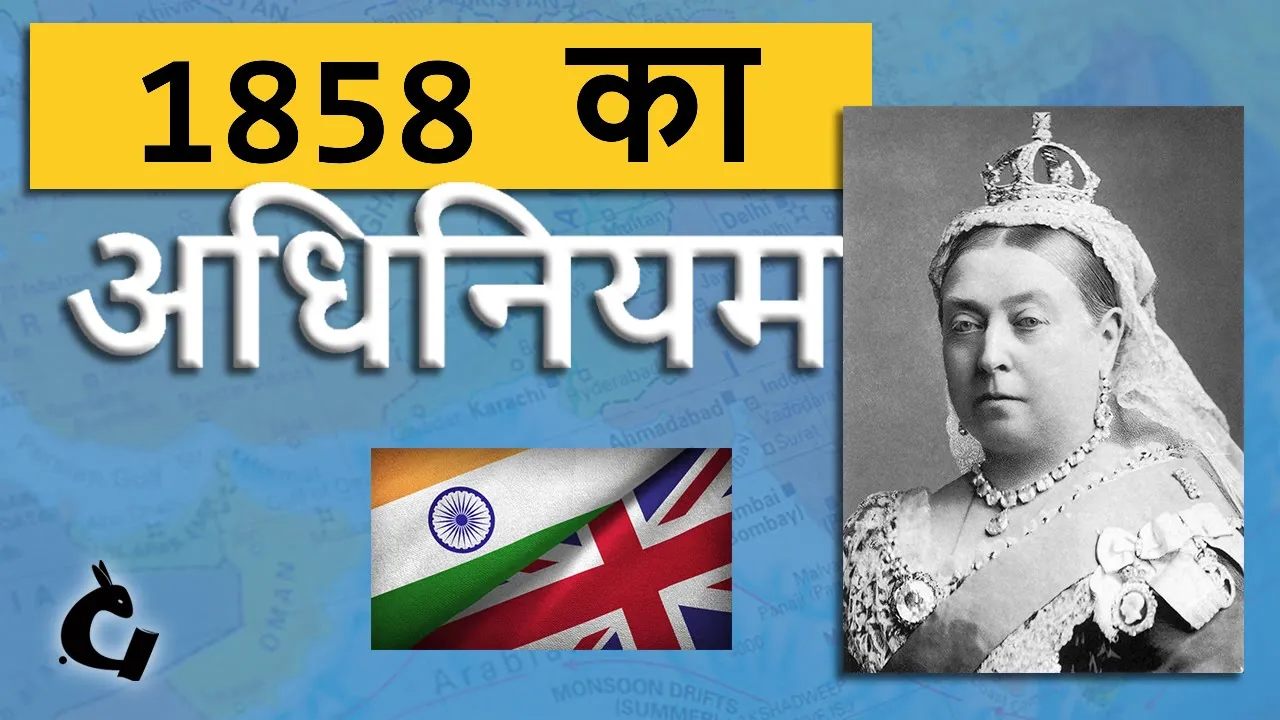
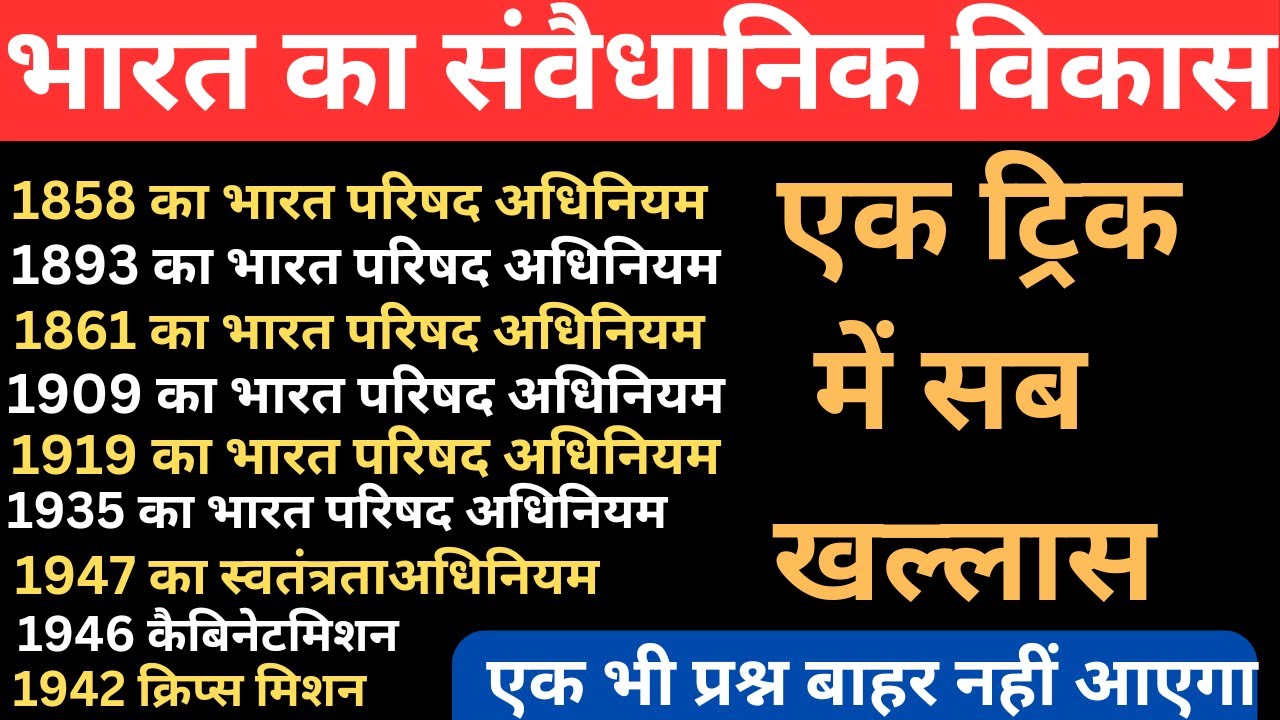
Substance was never real. For example, when Queen Victoria's proclamation declared that Indians would be admitted into the Indian civil service, it was explicitly minuteed we'd never give Indians any real role. We'd select very few of them and we'd give them minor positions in the districts where they would be interacting with other Indians and they would not get in our way or exercise any real control. That was explicit. In fact, Lord Littton wrote to Queen Victoria saying so. So you've got a system where even the appearance was only appearance. It was not real. Not only at the Indian civil service level but when there were three famous quote unquote reform movements. There was a Mentomori reforms of 1909, the Montigue Chamsford reforms of 1919 and the government of India act of 1935. Each of these were supposed to be milestones in granting Indians more self-governance.
In practice, they were used to divide Indians. Communal representation, separate electors. We talked about that.
Muslims and Hindus. But on top of that, they were also designed to give Indians no real power over anything the British cared about. At no stage, right up to independence, did India control Indians control law and order. Law and order, police, home affairs, intelligence, always in the hands of the white Brits.
Right. the the things you were given things like education and that too small level education with very minimal budgets. As late as 1930, the American historian Will Durant visiting India was shocked to discover that the entire education budget of the entire British Empire in India for 330 million people was less than the high school budget of the state of New York.
Okay, with with God knows 10 million people. It was just the whole exercise of the British was not about benefiting Indians in any shape or form or even genuinely preparing them for self-governance. So it is outrageous to suggest that the British have any reason to applaud themselves that India is a democracy at the end of 250 200 years of colonial oppression.
>> The internet is confused. How much of India's democracy and constitution is really a British leftover?
>> Look, we didn't want the disruption, right? The nationalist leaders didn't want a revolution knocking out everything because they had already got inherited a country with partition, with violence, with the flames blazing through the land with a million people killed, 17 people million, 17 million people displaced. You didn't want to turn the whole system upside down by abolishing everything. So yes, you picked up what was there and continued in the constituent assembly. Certainly they were guided to some degree by the institutions created under the government of India act but they were modified in very many ways in my book our living constitution. I've explained that the that the uh constituent assembly framers particularly the principal drafter Dr. Ambedka borrowed from a number of other constitutions the ideas of fundamental human rights were not there in the British rule. We got them in the the the whole notion of the way in which the governor's powers would be ceremonial and not executive. Whereas under the British the governor could overrule elected provincial governments.
The creation of a central government.
Remember the British never gave India central government till 1946.
The only people ruling in Delhi were the viceroy and his staff.
Indians even when they were elected in the elections of the government of India act 3637 1937 the results came out they were in the provinces of British India not in Delhi not in the center the first interim government of independ of of not independent yet but to be independent India 1946 the interim government so you're looking at a system where everything had to be invented from scratch and naturally we borrowed some of the existing institutions because the alternative that it would have been chaos.
>> There is a British member of parliament by the name of Robert Genrich who >> who says that former colonies should thank Britain for leaving behind a worldclass governance. Should we be thanking Britain?
>> Thank you for coming to my home, breaking the place, beating up my family, murdering some people, even pushing people into dark cellers and keeping them locked up, sending some away far away from my home. Thank you for coming and doing all of that. And then when you go behind being I should be grateful that you've at least rebuilt the roof and you've not completely smashed the door. Thank you very much.
What is this? We should be grateful to Britain after I've just described to you how they treated our people for two centuries. What should we be grateful to Britain for? I'm sorry. The fact is every country including Britain was not a democracy 200 years ago. Nor was India. But countries evolved by themselves into democracies and so would India have. There are very many countries that at different times in different ways became democratic without having to go through the great blessing of being oppressed, enslaved and colonized. I think we would have done fine. Thank you.
>> The British introduced the parliamentary system here. But was that really democracy? Only one in six adults could vote. Then there was also the communal seat reservation. Was that democracy or a watered down version of >> it was it was not democrat to begin with the sixth is only in the last election >> in the very first as I told you there were three sets of reforms. Mwali there was practically no electoral system.
There were just very very minimal token representations and they had no powers.
Montigue Chamsford was a kind of diarchy system where in the provinces they had some powers and they had no powers in the uh in the center and even in the provinces the British controlled all that mattered as I mentioned to you including law and order, police and all of that and the Indians were given some portfolios like education. Then you come to 35 government of India act which was a little more substantive where you did have an election in which you could allow Indians to actually run the provincial governments first time never happened earlier. Now this 1937 onwards lasted two years because in 1939 the Congress governments all resigned in protest against the British going to the second world war without consulting them. Now that has been essentially the entire experience of parliamentary governance by Indians in in in British rule. That's it.
>> Do you think that living under British oppression that made Indians ache for self-ruule even more?
>> Yes. I mean that look this is normal right? I mean, frankly, when you've got a bunch of people who don't look like you, sound like you, talk like you, eat like you, dress like you, speak like you, or care for you, ruling you, wouldn't you want to have some control over yourself? I mean, that's that's normal human nature. So, yes, the Indians began to demand self-ruule quite early. The most violent assertion of it was the revolt of 1857 when a number of people said, "Why are we tolerating these guys? Throw them out. kill them and it was a violent revolt and was equally violently suppressed. For example, in Delhi alone, the British butchered 150,000 men, women and children, including large numbers of women and children, civilians in the streets to teach them a lesson quote unquote. Okay, so it was ruthlessly violent. Thereafter, Indians said okay so these guys are too powerful, too strong, we can't overcome them this way.
So we gradually started trying to prepare ourselves to challenge them differently. In 1885, which is 32 years after the revolt, you have the founding of the Indian National Congress. And these were largely educated English-speaking angophone lawyers mainly and people like that who were participants in the colonial system but felt it unfair that they had so few rights. Certainly the British began to realize this had great potential because if you look at the first 20 years of the Indian National Congress pretty much every community can be found amongst the presidents, Christian presidents, Muslim presidents, parsei presidents, Hindu presidents from all over the country. It was really emerging as an incipient national movement even though it was still polite working within the British system writing petitions and so on passing resolutions that kind of thing.
That's why in 1905 the British created the Muslim League. They said, "How do we divide these guys? We can't afford to have a movement emerging where every community is serving together. Let's divide them." And then you start seeing the British say, "Okay, we better give them some things, some small token things, represent them in the viceroy legislative council where the viceroy and the whites control the majority.
Viceroy in any case makes all the decisions. give them gradually by 1919 some opportunities in the provinces. So this is kind of slow and gradual eking out of concessions only in order to stifle demands for more. This is where they encountered the challenge of Mahatma Gandhi who completely transformed the movement from one of these decorous writings of petitions and passing of resolutions into a mass mobilization. You mentioned how the Muslim League was in a sense created by the British. Internet asks, was it also Hindu Mahas Sabha and were they really British loyalists so to say and on the other hand was Congress communist and revolutionary the ones who were really fighting imperialism?
>> It's a more complicated saga than all of that. The Muslim League was started by the British but acquired a certain momentum of its own and at one point it cooperated with the Congress. In fact, there is a famous luckno pact of 1916 where Jina who was leading the Muslim League also came to the congress and in fact for many years he was in both organizations. Uh Srojin Naidu famously called him the ambassador of Hindu Muslim unity. Um and and right into the 1920s you will find examples of the same individual presiding over the Congress and presiding over the Muslim League. So it was not that there was a complete cleavage between the two. When Gandhi G's mass mobilization began to succeed, Jinda became very uncomfortable. First he was uncomfortable because he didn't like the method. He's a lawyer himself.
He preferred to do things through resolutions and petitions and speeches, votes in the legislative council. That was his preferred thing. He thought this kind of mass agitation was not right.
Would lead to anarchy. That was a a sort of method opposition. But his second worry which turned out to be in the end a more decisive worry was that he thought if you mobilize the masses then the majority will be Hindus and that majority will be the ones who claim the freedom for themselves and where does that leave me and my community. It's not that he was a particularly devout Muslim, but I think he probably felt that once the leadership passed into the hands of people like Mahatma Gandhi, there would be no space in the corridors of power for someone like him. In fact, his initial reaction was not to sit and protest. His initial reaction was to walk out. He went off to England and started a very successful flourishing law practice instead for a few years.
But it was the Aahan who went to London and said please come back and lead the Muslim League because without you the league is basically about to collapse and he comes back in the 30s and that's when the whole story changes once again and the league also begins demanding independence but demands independence for themselves not initially but after the 1937 elections um on the basis of the 1935 act what happened was the league didn't do that well in Muslim seats.
and it wanted nonetheless the Congress to acknowledge it as a representative of the Muslim people. Congress said no.
Congress said we're very happy to form a coalition government with you for example in UP even though we have a majority but you cannot be the only representative Muslims. We would also we have Congress Muslims who can be Muslim ministers. Think of someone like Rafael Kiddai for example who's a very famous Congress leader in UP who would also be elected. He should also be a Muslim Muslim minister. Why should you the league alone? It was on that issue that they split. League wanted to be recognized as the sole representatives of the Muslims of India and Jina as the sole spokesman. NU said you can have your role whatever votes and seats you get you're entitled to but we represent everybody including Muslims and that was unacceptable agenda. So that was where the partying politically came. It only came in the late 1930s.
But as I mentioned earlier, when the Congress resigned ministries in 1939, that's when suddenly the League got an opportunity they never dreamt of. They hadn't been elected, but they could form the governments. Now, now you asked about the Hindu Mahas Sabha. Hindu Mahasaba was also a very small party. 3 4% of the Hindu vote. The bulk of the Hindu vote was going to Congress or in Punjab to the unionists uh in Bengal to the Kishek Mazu Mazul Pa party and so on. But in um this particular situation, what you saw was that the Congress yielded place by going to jail in the quit India movement yielded place to governments the British could appoint who had not been elected. And because the British couldn't just have Muslims ruling, they offered the Hindu Mahas Sabha also an opportunity to participate in government. So to that degree, yes, you can say the Hindu Mahasabha collaborated. You can also argue that the Hindu Mahas Sabha was never very keen on um supporting the Indian National Congress as independence movement because they felt they would gain more for Hindus by collaborating with the British. And this is not an argument that um was was hidden away.
They made it quite openly. They said if we start opposing the British, we don't have the numbers that the Congress have, who will we be? if we cooperate with them, they'll give us positions. And so it turned out they gave them positions. In all fairness, Dr. Ambedka took a similar stand. He said, if we support the Indian National Congress's efforts, they will come to power. The upper cast Hindus will come to power. What will happen to the Dalits if we work with the Brits, we can perhaps shore up the position of the Dalits first before we so he he before we we we win independence. So he was actually a member of the vice choice legislative council. He was a very influential member for labor rights, women's rights and so on. He did a lot for the people he could help through collaboration with the British and and that is the story. There were people who worked with the British and within the British system as well. We can't honestly claim that every Indian was fighting for freedom. Many were working within the British rule system as well.
Shashi, there's this constant debate online about the armed resistance of Bhagat Singh versus Sata Grae, which is the nonviolence movement of Gandhi. Do you think that the British played both the sides just to keep Indians well distracted and divided?
>> I can't say they played both the sides.
They oppressed both the sides but in different ways. The people who committed violence, they actually hanged. They killed. So, so Bhagat Singh was hanged even though he was a bright young man of 22. he was killed. Uh whereas the ones who were nonviolent like Mahatma Gandhi were arrested, punished, beaten with lattes. Someone like Lala Lash Pratay were beaten so severely he died from from from the from the beating.
>> And would you say both sides Bhagat Singh and Gandhi they were both impactful because there's this constant debate of well who did better.
>> I see Bhagat Singh was a very young man.
He had a very short impact and he captured the imagination of the people and there was a lot of demands that he should not be hanged and so on. And one of the things that he was remarkable for was this quality of his intellect. The letters he wrote in prison which are by the way published and available. You should read them. They're very very impressive. Uh he he was a remarkable figure and in many ways given how short his life was he looms larger in the imagination today than almost anybody else from that revolutionary tendency.
But there was always a revolution tendency and in fact the most famous occurred after the death of Bhagat Singh because that was the Naji Subhas Chandra Bos's rebellion against the British during the war during World War II when the Congress leaders were going to jail.
Subhas Chandra Bus escaped from Kolkata.
In fact, he disguised himself got to Afghanistan from there traveled in a German submarine got to Germany. Why?
because he said right now is not a time to sit in jail. It's a time to fight the British by using their enemies. You know the old slogan that the enemy of my enemy is my friend. That was his principle. So he went to Germany and he actually enlisted the support of Hitler's government in order to oppose the British. Now in Western Europe, he didn't have that much of a role he could play. So the Germans transported him to Southeast Asia where the Japanese allies of Germany had been making major inroads by capturing large parts of Malaya and Singapore and in the process they had captured many Indian soldiers fighting in the British army and made them prisoners. So the idea was that Naji would go to these soldiers, speak to them with nationalist fervor and encourage them to enlist in an Indian national army that would physically fight for India's independence. And that he did and the Indian national army was a very inspiring movement. It was completely secular. It was for the first time a significant attempt to have armed rebellion against the British. Even at the end of the war, there was one celebrated incident. The so-called naval mutiny. Wasn't just a mutiny. Indian sailors on board some warships in Bombay port overthrew their officers and captured the ships and they turned the guns, the cannons on the ships towards the city and fired at British installations in the port. It revealed to the British that the task of suppressing the Indian nationalist movement was no longer going to be about ly charges on non-violent protesters.
>> They had now seen the Indian National Army raising guns. They had seen the Indian naval mutiny turning cannons on them. And the question was tomorrow, who else might pick up a weapon? And how long can we keep these guys down without augmenting our troops, our soldiers, and our weaponry to suppress them? But who are we at this point? Britain is a shattered country at the end of the Second World War. The country is lying in ruins from German bombing. The economy has taken up pulverizing. They have had to borrow money from the Americans and even from India in order to survive to fight the war. Where are they going to get the resources from to send say another million soldiers to India? They can't. They don't. And the people are exhausted. The soldiers are exhausted. They're looking forward to demobilization.
You are not going to be able to retain the army you've got rather than adding to it. So the British definitely had to ask themselves also this. If the price of continuing to rule India is that we need more soldiers, more weapons and more force, is it worth it? Can we manage it? This is a country exhausted by war. So they undoubtedly took that also into account when the labor government of Clementi said we will give India independence. It was Gandhi G's mass movement and the discontent of the public. It was [snorts] the Indian National Army and the the armed rebellion by them and it was also the naval mutiny and the perception that India could not be held without force.
All of these things came together in the British decision in their complete exhaustion at the end of the second world war to say okay you have your independence we're getting out of here.
>> It's also said that the quit India movement was the key to India's freedom.
Now now the British they were exhausted by the World War II. They were also broke and they had already sort of promised to decolonize. Do you think India's independence was more about the British just being too tired?
>> No, that was the Brit India movement as I mentioned to you in our conversation over partition. Uh in the end uh actually turned out to be the thing that made partition possible because all the Indian leaders went to jail. the ones who wanted a united India and the Muslim League had a free day free hand to be able to create the conditions that gave them a chance to increase their membership uh to win the next election and to demand partition successfully. So the quit India movement to my mind with all the benefit of hindsight is what made partition inevitable is not something that made freedom inevitable as such. Um now I know many will disagree with me. This is not a popular view but this is partly my view. I think what made freedom inevitable was all these factors that I mentioned to you.
Uh and certainly you're right at the exhaustion at the end of the war. This is a tired country, a broke country, uh a wounded, bleeding and and rubble strewn country with rationing going on in Britain. This is not a country with so much of extra money they could go and keep India oppressed.
>> There's one true or false here. Uh someone sent us the question. Hitler is the reason for India's independence. No, only because only to that extent that Hitler's war against Britain or Britain's war against Hitler resulted in colossal destruction, colossal expense, colossal debt and colossal economic failure for the British. So why do you think Churchill lost the election of 1945? Precisely because the British had been exhausted and ruined by the war.
They had won the war thanks to American involvement and help, but they were exhausted, weakened, and broke. So yes, I mean the fact is that um to that degree Hitler uh made it difficult for Britain to continue the way they had it.
Look at the end of the first world war Britain was just as rich and powerful as at the beginning. At the end of the second world war it was not that same story. It was the opposite. They were completely a shadow what they were in 1939.
>> So lots of factors in India's freedom.
Yeah. It could be you know the British getting broke after the World War II.
several freedom fighter movement within the country for you which one stands out >> I think they all come in together I I still believe that Gandhi G's role in capturing the imagination of the nation uh mobilizing ordinary people in villages streets people didn't have the vote because to have the vote under the British as I said to only 10% not even 16th 10% of Indians had the vote 30 million people could vote in a population of 330 million people in India And those 30 million all had property or income or educational qualifications. Nobody else. But people who didn't even have the right to vote were inspired by Gandhi G to come out in the streets to protest to conduct satiagraha to demand independence. That was one major factor. Second major factor was definitely the British exhaustion at the end of the war. Third major factor was the armed rebellions because it suddenly meant that it was not just a question of continuing the old system. It meant you had to have the resources and the will to redouble your military presence, put more people in, more weapons, more soldiers and that they were just not in a condition to do.
So I think all these factors came in together to give us our freedom.
>> Dr. Shashit Tarur, thank you very much for [music] your time.
>> Thank you.
India's democracy [music] wasn't a gift.
It was a hard one triumph forged in struggle and sacrifice.
It's messy, imperfect, but it's ours.
Not borrowed, not handed down.
Born from the will of the people.
>> [music]
Up Next
8:33
The Kashmir Conflict Explained | History, Politics & Geopolitics
@aljazeeraenglish
1.1M views•2018-06-27

24:30
BRICS Pay and de-dollarization: A New Financial Order Emerges? | 55 chars
@DannyHaiphongYT
164.6K views•2024-10-22

7:33
Government Surveillance Methods: 10 Ways You May Be Watched
@BeAmazed
1.6M views•2017-04-09
10:19
Explaining the Saudi-Iranian Proxy Conflict in the Middle East
@Vox
18.2M views•2017-07-17
Related Study Plans & Knowledge Roadmaps
Structured learning paths in Political Science
political-science
Economic Statecraft: Sanctions & Chokepoints
01Foundations of Geoeconomics and Economic Statecraft
02The Mechanics of Weaponized Interdependence
03International Sanctions: Types, Implementation, and Efficacy
+ 2 more learning modules
12h5 modules
Explore Roadmap
political-science
Central Bank Independence: Politics & Policy
01Foundations of Central Banking and Monetary Policy
02The Time Inconsistency Problem & Inflation Bias
03The Delegation Model and Designing Independence
+ 2 more learning modules
12h5 modules
Explore Roadmap
political-science
Consociationalism: Power-Sharing & Stability
01Democratic Dilemmas in Divided Societies
02Introduction to Consociational Democracy
03The Four Pillars of Consociational Design
+ 2 more learning modules
12h5 modules
Explore Roadmap
political-science
Rebel Governance: Legitimacy, Economy & State
01Foundations of Rebel Governance and Statehood
02Establishing Political Legitimacy and the Rebel Social Contract
03Wartime Economies and Rebel Resource Management
+ 2 more learning modules
14h5 modules
Explore Roadmap