




![인도-중국 전쟁: 친구보다 적의 적 [2020년 9월 14일]](https://i.ytimg.com/vi/KsTuZIrB3fc/sddefault.jpg)

![South, East & South-East Asia | Vision 1000 | Mission 100 [2.0]](https://i.ytimg.com/vi_webp/1w-mX72UVj8/maxresdefault.webp)







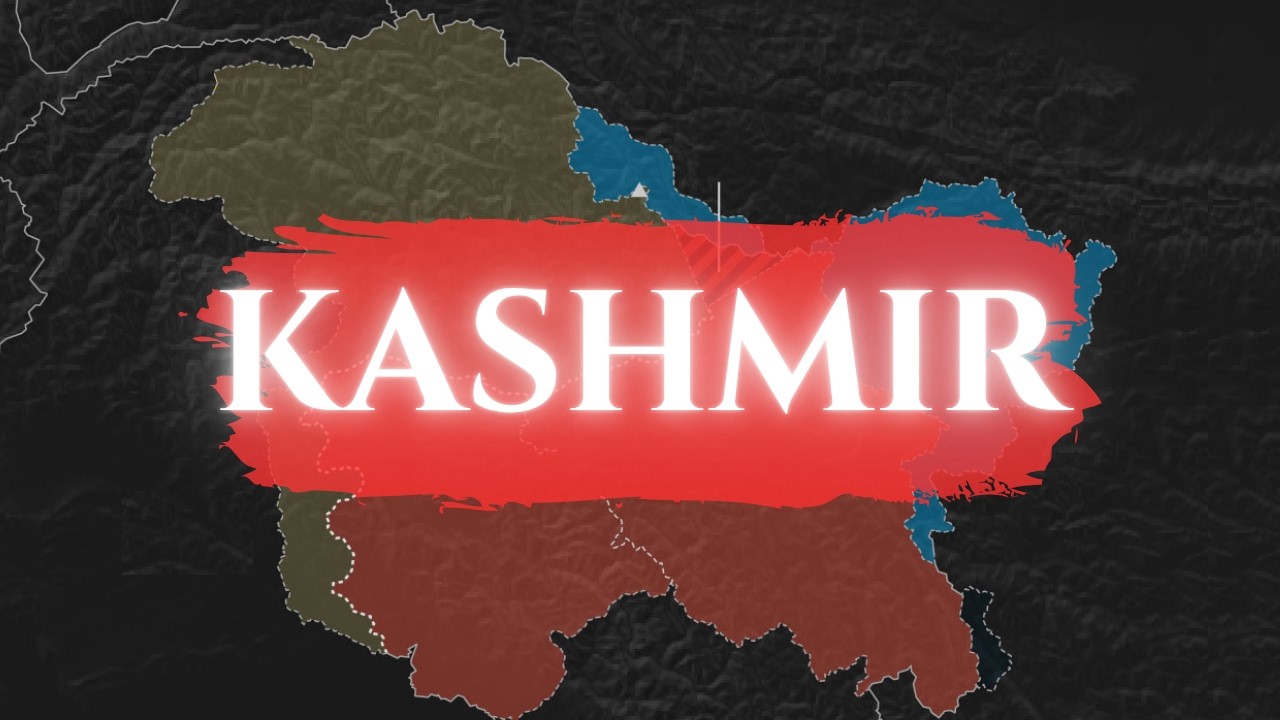



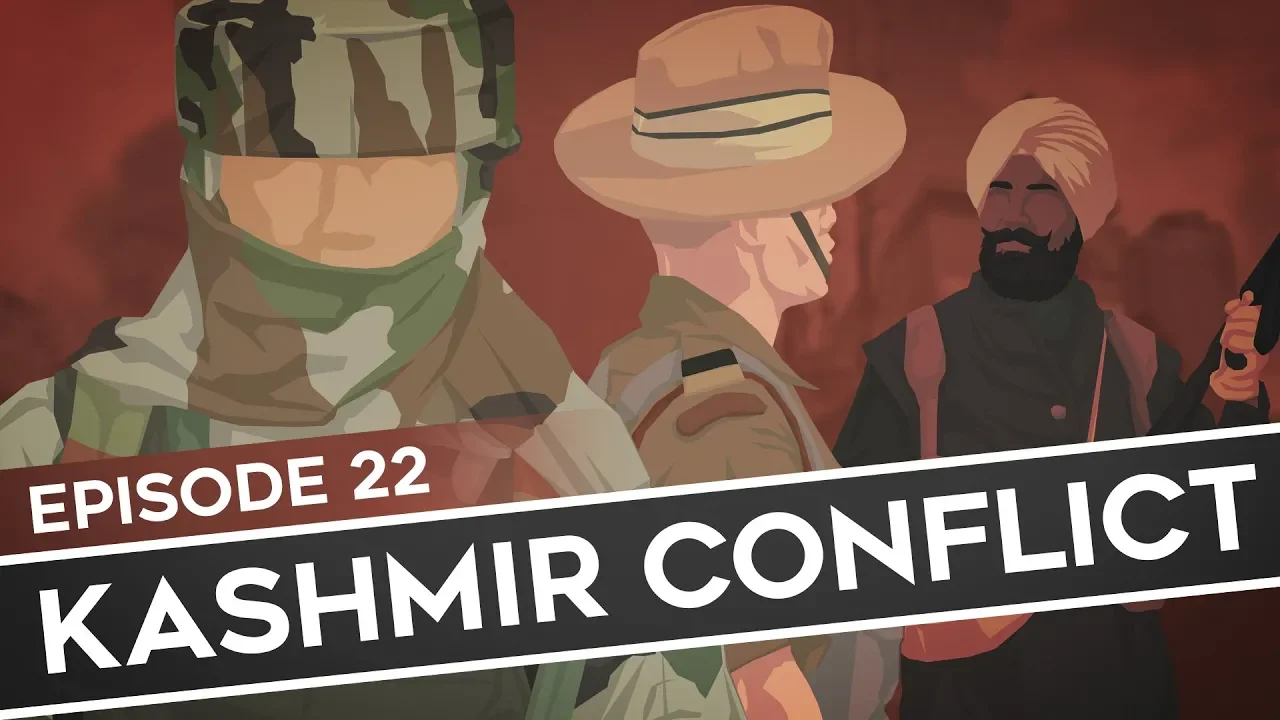

The Kashmir conflict is a territorial dispute between India and Pakistan that began after the partition of British India in 1947, when the Maharaja of Kashmir chose to join India following an invasion by Pakistani tribesmen, leading to three wars, ongoing human rights violations, and the region remaining divided with neither side achieving a permanent resolution; the conflict involves complex historical, religious, and strategic dimensions including water resource disputes and the involvement of approximately 700,000 Indian soldiers in the most militarized zone globally.
The Kashmir Conflict Explained | History, Politics & Geopolitics
Added:The 1947 Partition of British India and the creation of the independent dominions of India and Pakistan.
The political status of 'Princely States' under British suzerainty and the legal mechanism of the Instrument of Accession.
The ideological conflict between India's secular national identity and Pakistan's Two-Nation Theory.
Basic geography of South Asia, particularly the strategic significance of the Himalayan region bordering India, Pakistan, and China.
The progression of Indo-Pakistani military conflicts, specifically the wars of 1947, 1965, 1971, and the 1999 Kargil War.
The doctrine of nuclear deterrence in South Asia after both nations conducted nuclear tests in 1998.
The constitutional history of Article 370 of the Indian Constitution, its revocation in 2019, and the geopolitical fallout.
The trilateral dimension of the conflict, focusing on China's administration of Aksai Chin and its strategic investments like the China-Pakistan Economic Corridor (CPEC).
The rise of internal insurgency in the Kashmir Valley since 1989, domestic political aspirations, and the resulting human rights and counter-insurgency dynamics.
1.1M views17.7Klikes8:33Original Release: 2018-06-27
at least 60,000 dead over nearly seven decades three wars between two nuclear-armed States and countless human rights violations the colony maneuver this is the story of Kashmir let's go way back located in the Himalayan mountains Kashmir is rich in resources and diverse in history it was home to Hindus and Buddhists by the 9th century and in the 14th century Islam emerged as Kashmir's major religion under akbar Zine El Abidine Kashmir prospered through religious inclusivity and progressive policies Muslim rule ended in 1819 when the Sikh kingdom of Punjab captured the region from the oppressive Afghan Durrani Empire though the sea kingdom implemented its own form of oppression after the anglo-sikh war of 1845 the British East India Company annexed most of the land from the Sikhs as a British were hardly shy at distributing land that they seized without considering the indigenous people the Kashmir Valley was quickly sold to Hindu Dogra Raja gulab Singh on the condition that he acknowledged the British government's supremacy the Singh family's rule was cruel and greedy Kashmiri Muslims were subject to slave labor heavy tax and state violence demonstrated in 1931 when 22 protesters were shot and killed at the trial of an anti Maharajah activist the day is known as martyrs day Kashmiri struggle for freedom started long before the creation of India and Pakistan 1947 the great symbol of the British Empire came down for the last time when India gained independence from the British Empire in 1947 the country was ideologically split majority Muslim provinces became the newly created Pakistan and majority Hindu provinces remained as India the partition is one of the bloodiest in history almost 1 million people were killed in the sectarian violence that followed Kashmir's Maharaja Hari Singh was asked to join one or the other fearing they were joined India some Kashmiri Muslims rebelled the Maharaja tried to quell the uprising around 200,000 people died hearing reports of attacks on Muslims tribesmen from Pakistan's Northwest Frontier invaded Kashmir the Raja asked India for help India obliged but on one condition Kashmir joins them he signed the Instrument of Accession but it was agreed that a vote would be held once the fighting ended the proposed referendum would have no option of Independence though Kashmir's will join India or Pakistan when the war ended on January 1st 1949 the un-backed ceasefire line split push me between Pakistani and Indian administration but the Volt never happened to this day Kashmiri still haven't been able to decide their own future following the conflict the western portion of Kashmiri came under Pakistani administration Kashmiri seeking their rights here have been met with political repression and torture at the hands of Pakistani authorities but it's the largest portion which came on the Indian rule that suffers from the most violence and unrest it's majority Muslim with a number of Hindus Sikhs and Buddhists China controls the most uninhabited area called acts H in Pakistan and India fought over Kashmir again in 1965 and 1999 in the 1980s increased opposition to Indian rule led to armed resistance against Indian troops Pakistan provided weapons training and financial support to the separatists the region's insecurity forced 100,000 Kashmiri Hindus out of the valley by the early 2000s India had seemingly crushed the movement through mass arrests suppression of Rights counterinsurgency operations and political initiatives today India administered Kashmir is the most militarized zone in the world with over 700,000 Indian soldiers occupying the area and their presence only complicates Kashmir is already divided politics in 1957 India claimed Jammu and Kashmir as an autonomous Indian state absorbing it into their state assembly elections in 2014 resulted in a coalition between the Hindu nationalist Bharatiya Janata Party and the India leaning Peoples Democratic Party so Kashmir's current government is essentially pro India [Music] conviction not Konami and so on it's a hideous alliance they haven't done anything concrete to make any progress towards the resolution of Indian state believes that it has a democratic mechanisms on the ground in the form of an elected government and the Indian state believes that it has some kind of a legitimate framework through which can resolve this problems the pro focused on and independence groups generally fight for their rights outside the election process as faith in elections was lost in 1987 when a popular coalition of anti-indian parties gained only four seats this election was reportedly ready now many committees can't take election seriously they take turns to run fish meat for Delhi the raiding of polling stations and mistreatment of activists during the 1987 election is seen as the spark that ignited the armed rebellion against Indian influence so what's happening now although the Indian government says the armed resistance in Kashmir has reduced from 30,000 fighters during the 1990s for less than 100 today its army still maintains an authoritarian presence there hundreds of people have been killed every year since a wave of non-violent protests erupted in the Kashmir Valley in 2008 the killing of rebel commander bahamani in July 2016 sparked the biggest uprising in decades the 21 year old was seen as a symbol of Kashmir indigenous youth LED armed resistance tens of thousands came onto the streets calling for freedom but were met with force from Indian troops the protests were quelled immediately with mass arrests putting communication and region-wide curfews activists say Indian troops routinely get away with a multitude of human rights violations rape widespread use of torture mass grave thousands of unmarked graves in the mountains of people who are those people why were they killed there's no answer disappearances more than 8,000 people who we - Metis know as disappeared we don't know where they are extrajudicial killings fake encounters where they would take in Simca schmitty's to a forest murdered them faces mutilated dressed in fatigues to be passed off as presidents of lashkar-e-taiba the indian army denies most of these claims you have the UH nanami believed very strongly in the moment I think we have a very good human life but the Jammu Kashmir coalition of civil society has documented hundreds of cases of people being abused or killed most recently was the case of Farooq Modar who in 2017 was used as a human shield to protect an Indian Army Jeep from stone throwers and the use of iron pellets to disperse protesters continues to blanket Miri's despite condemnation from human rights groups Amnesty International says Indian government policy in the region gives its army legal immunity for their actions making conviction rates close to zero Pakistan regularly raises the Kashmir issue at the UN and India accuses Pakistan of exploiting the unrest in general Kashmir to further their goals in the region so why do both countries want control of the land India claims Kashmir maintains their secular status being the only majority Muslim region and Pakistan says a majority Muslim state should naturally be a part of a Muslim nation where it's more likely over water Pakistan's only water supply is the Indus River it happens to first flow through India administered Kashmir the Indus Water Treaty is signed by both countries in 1960 gave Pakistan control of 80% of the river but also gave India the power to utilize the remaining 20% in Jammu and Kashmir India uses the water for irrigation and has started multiple dam projects which could reduce the rivers flow through to Pakistan as the two nuclear power nations boom in population the need for both water and hydropower electricity continues to increase yet it's the Kashmiris who lose the most both in lives and resources and this only fuels their drive for independence
Up Next

57:38
The Kashmir Conflict: Why It Risks Nuclear War Between India and Pakistan
@RealLifeLore
1.5M views•2025-05-16

24:30
BRICS Pay and de-dollarization: A New Financial Order Emerges? | 55 chars
@DannyHaiphongYT
164.6K views•2024-10-22

27:35
Bosnia's Dayton Peace Accords Crisis: Silajdzic Interview | Analysis
@aljazeeraenglish
64.1K views•2025-03-16
10:19
Explaining the Saudi-Iranian Proxy Conflict in the Middle East
@Vox
18.2M views•2017-07-17
Related Study Plans & Knowledge Roadmaps
Structured learning paths in Political Science
political-science
Economic Statecraft: Sanctions & Chokepoints
01Foundations of Geoeconomics and Economic Statecraft
02The Mechanics of Weaponized Interdependence
03International Sanctions: Types, Implementation, and Efficacy
+ 2 more learning modules
12h5 modules
Explore Roadmap
political-science
Central Bank Independence: Politics & Policy
01Foundations of Central Banking and Monetary Policy
02The Time Inconsistency Problem & Inflation Bias
03The Delegation Model and Designing Independence
+ 2 more learning modules
12h5 modules
Explore Roadmap
political-science
Consociationalism: Power-Sharing & Stability
01Democratic Dilemmas in Divided Societies
02Introduction to Consociational Democracy
03The Four Pillars of Consociational Design
+ 2 more learning modules
12h5 modules
Explore Roadmap
political-science
Rebel Governance: Legitimacy, Economy & State
01Foundations of Rebel Governance and Statehood
02Establishing Political Legitimacy and the Rebel Social Contract
03Wartime Economies and Rebel Resource Management
+ 2 more learning modules
14h5 modules
Explore Roadmap