This video demonstrates the ancient Roman glassblowing technique used to create early glass vessels, where a tiny gather of molten glass is inflated on a blowpipe, reheated frequently due to its thinness, shaped using jacks to articulate the body from the tube, and finished with a folded lip and tubular neck without a punty mark, representing one of the earliest practical applications of glassblowing discovered in the Judean desert dating to 40-20 BC.
Ancient Glassblowing: The Earliest Vessels in the Corning Museum
Added:Deep Dive
The basic chemical composition of ancient glass (silica, soda, and lime) and how thermal energy alters its viscosity and malleability.
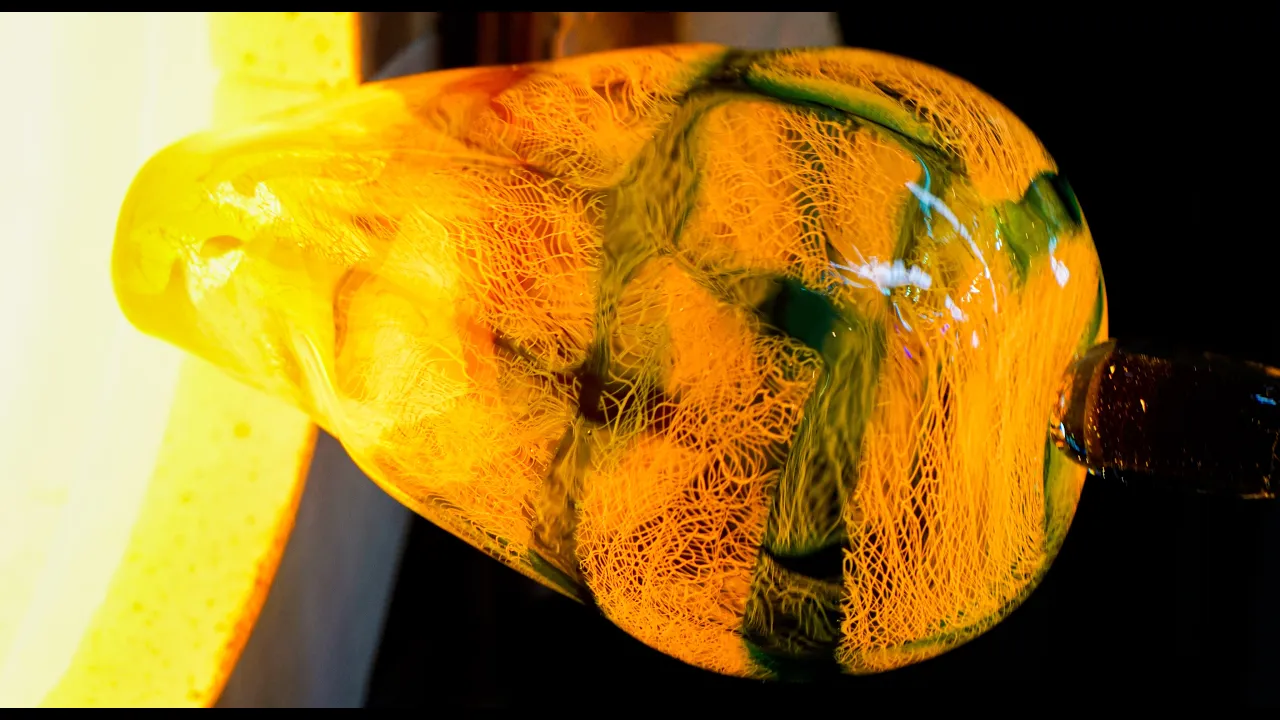
Past | Present Hot Glass Demo by Jeff Mack
24.8K
Soda lime glass is composed of silica sand, soda ash (which lowers melting temperature and increases malleability), and limestone (which provides water resistance). Different colored glasses have distinct thermal behaviors due to their chemical compositions—white glass is stiffer and requires more energy to soften, while blue glass containing copper compounds is softer and heats up faster. Dark colors absorb more heat energy than light colors, affecting how quickly they respond to manipulation. These thermal differences can be strategically utilized during the glassworking process to create specific effects.
Click to watch →

Tutorial: Reflecting into ancient glass technology (YRA5)
103
Soda-lime-silica glass (SLS glass) consists of three basic components: silica, soda, and lime. Silica serves as the network former, which is the fundamental substance that forms the glass structure. Soda and lime function as network modifiers that alter the silica network to achieve desired properties. The typical weight percentages are approximately 65-75% silica, 15-30% soda, and 5-10% lime. These proportions create the fundamental structure of most ancient and modern glass types.
Click to watch →

Viscosity-Temperature Dependence (Lecture 18, Glass Science)
520
Different glass compositions exhibit dramatically different temperature dependencies of viscosity. Adding network modifiers like sodium oxide and calcium oxide to silica converts bridging oxygens to non-bridging oxygens, lowering the network connectivity and thus reducing viscosity. For example, soda-lime silicate glass has a dramatically lower viscosity curve than pure fused silica. The viscosity changes by many orders of magnitude with both composition and temperature.
Click to watch →

Découverte fondamentale, invention technologique, innovation... (9) - Didier Roux (2016-2017)
166
Glass is made from three main components: (1) Silica (sand) - provides the basic structure; (2) Soda (sodium carbonate) - lowers the melting point of silica, making glass easier to manufacture; (3) Lime (calcium oxide) - improves water and chemical resistance. Without lime, glass would dissolve in water. These three common materials combine to create the versatile material we know as glass. The soda acts as a flux that facilitates the formation of liquid glass at lower temperatures.
Click to watch →
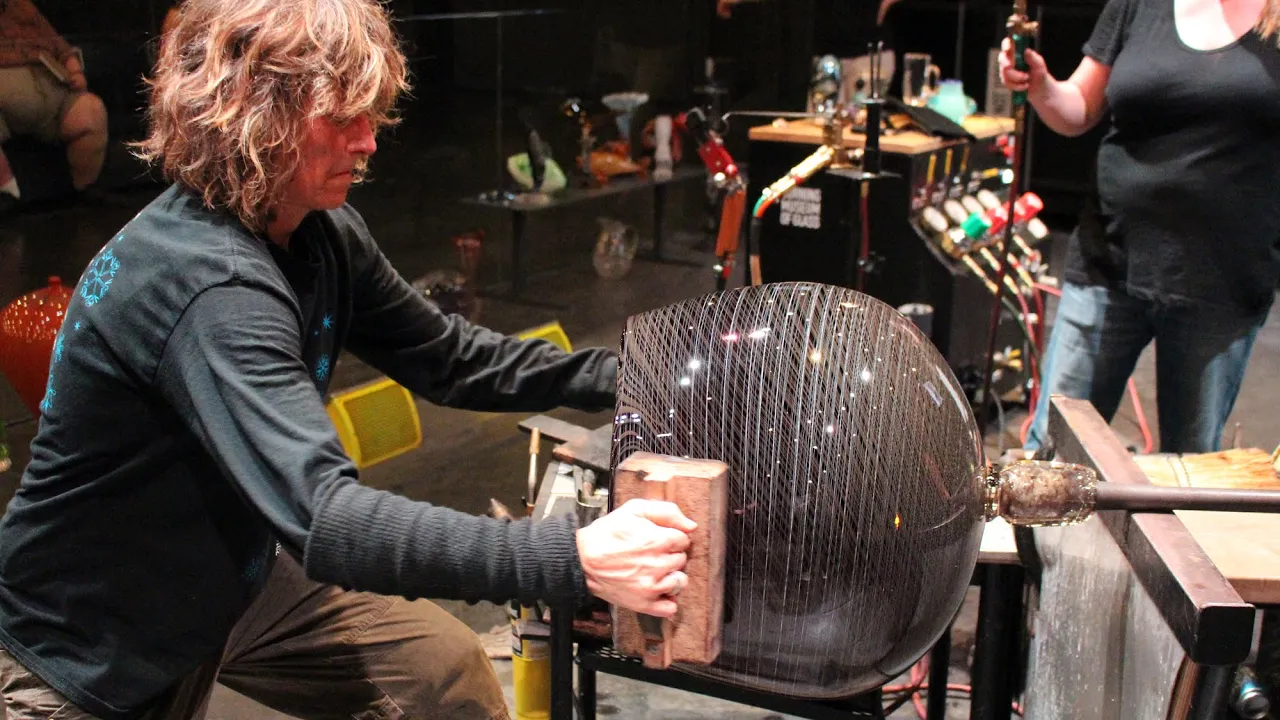
Guest Artist Demonstration: Mel Douglas
1.3M
Soda lime glass is the most common formula of glass in the world, composed primarily of silica (sand), soda (sodium oxide), and lime (calcium oxide). Pure silica requires an extremely high melting temperature around 4,000°F, but adding soda lowers this temperature significantly. Lime is then added to stabilize the glass and make it insoluble. This combination allows for practical glass manufacturing at more manageable temperatures.
Click to watch →
Deep Dive
Pre-glassblowing manufacturing techniques, specifically core-forming, casting, and mosaic glassmaking used in the ancient Near East.
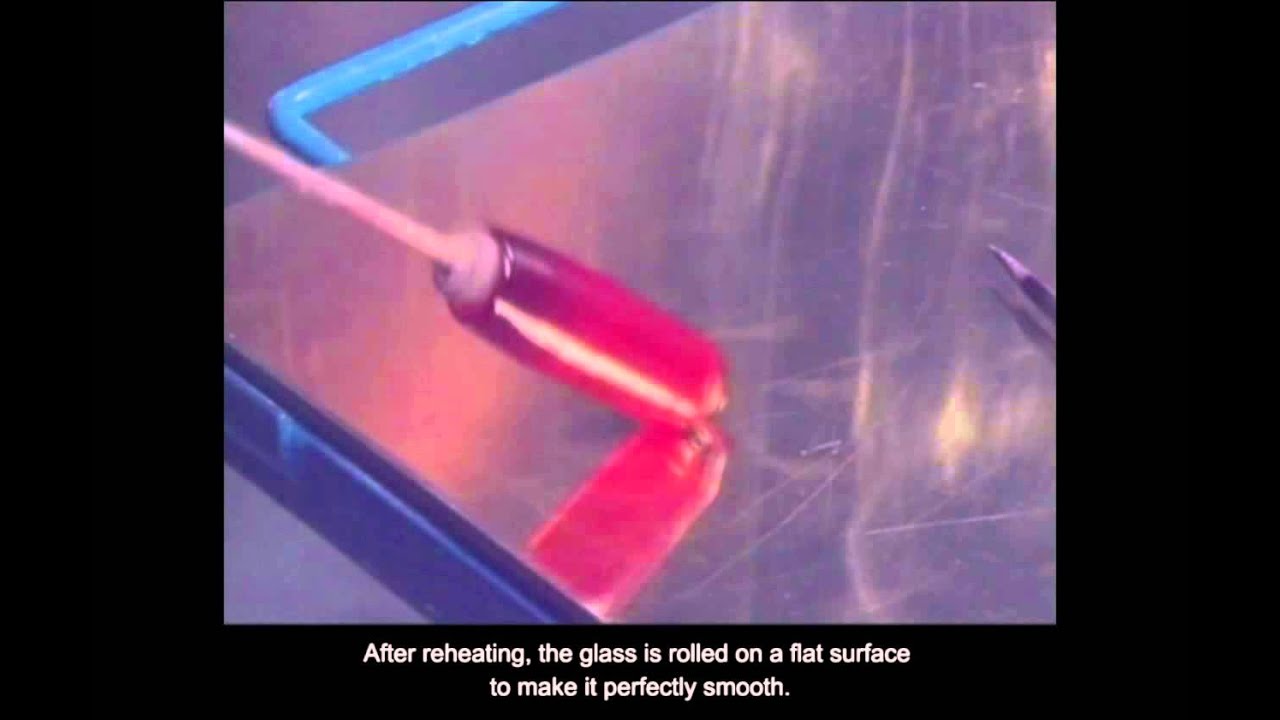
LaunchPad: Ancient Glassmaking—The Core-Formed Technique
14.4K
The core-formed technique, developed over 3,500 years ago in ancient Near Eastern and Egyptian cultures, involves creating a removable core from horse dung, sand, clay, and water, which is shaped, dried, and fired to remove organic material; molten glass is then applied by dipping or rolling, with decorative elements like contrasting colored threads added through wrapping and combing techniques before forming the rim and suspension loops, and finally removing the core to reveal a hollow vessel.
Click to watch →

Lampworking / Flameworking - 102.44 - Core Form Vessels - 104 Glass Demo
1.1K
Core-forming is an ancient glass vessel-making technique where a bundle of fine steel wool (or historically organic matter and clay) is wrapped around a metal mandrel, coated with bead release, allowed to dry for several months, then heated and wrapped with molten glass to create vessels; the core is later removed by crushing and scraping, leaving behind a hollow glass vessel with distinctive historical character.
Click to watch →

Meet the New Executive Director Karol Wight
611
Ancient glass manufacturing employed diverse techniques including casting, core-forming, mosaic glass, mold-blowing, and free-blowing, which are still practiced by modern studio glass artists; Carol Wight's book 'Molten Color: Glass Making in Antiquity' explores these historical techniques through the lens of the Oppenlander Collection, revealing how glass was used similarly to today—for drinking, eating, decoration, architecture, and commemoration—and how understanding ancient methods continues to inform contemporary glassmaking practices.
Click to watch →

Античное стекло.
2.9K
Ancient glassmaking originated in Mesopotamia and Egypt in the third millennium BCE, using a mixture of sand, soda, and lime heated to 1000°C, with metal oxides added for coloration (cobalt for blue, manganese for purple, lead for yellow). Early techniques included the core method (wrapping glass around clay cores on iron rods) and mosaic glass (assembling colored glass pieces and stretching them in a kiln). The invention of the glassblowing tube around the mid-first century BCE revolutionized production, enabling free blowing and mold techniques that allowed for varied shapes, handles, and colors. These ancient techniques, developed in European workshops, remain the foundation of modern glassmaking despite technological advances.
Click to watch →
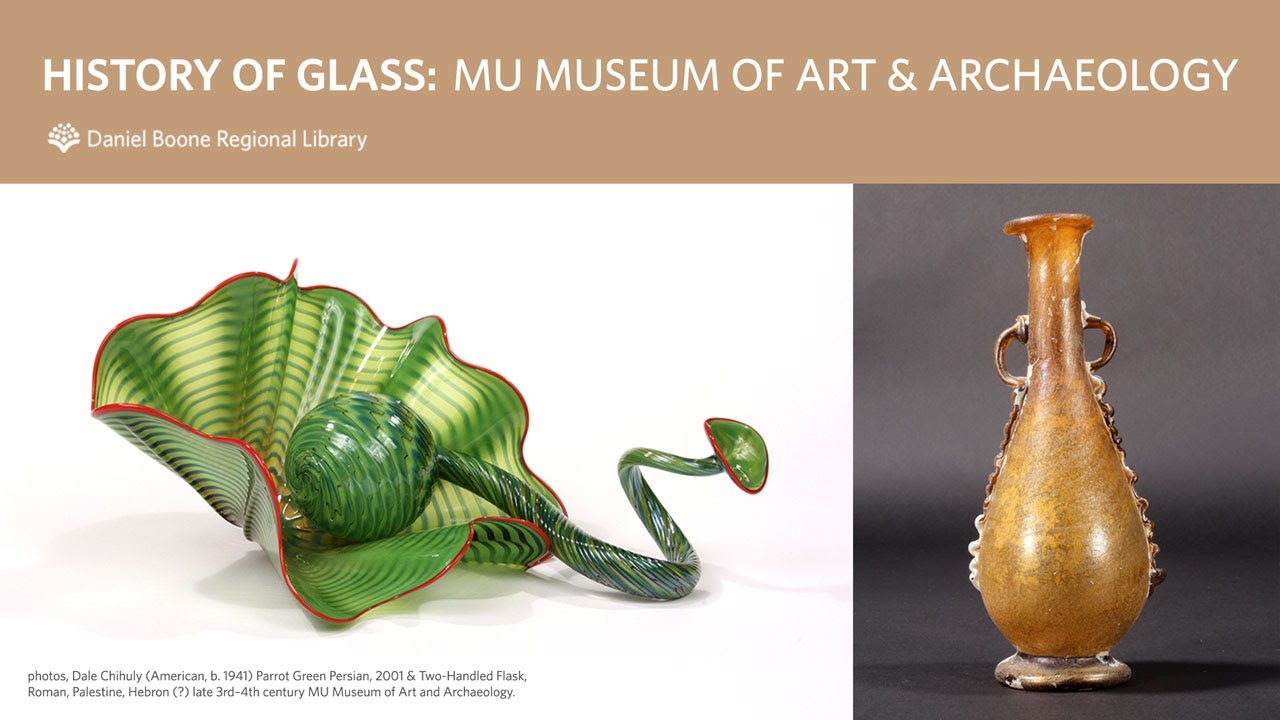
History of Glass: MU Museum of Art and Archaeology Presentation
300
Glassmaking originated in Mesopotamia, Syria, or Egypt around 8000 BCE, with glaze techniques developed by 2000 BCE. Early glass composition consists of silica (two-thirds), fluxes (soda/potash) as binding agents, and lime as hardener. Colors emerged through metal oxides: iron oxide for brown, cobalt oxide for blue, and sulfur compounds for amber. Core-forming (1500 BCE - glassblowing) wrapped colored glass trails around clay/dung cores shaped like vessels, producing small perfume/oil vessels only the wealthy could afford. Casting techniques developed in the 15th century BCE, becoming popular during the Hellenistic period for luxury goods like diadems. Glassblowing, invented by Syrianus in the first century BCE, revolutionized production by simplifying and cheapening it, enabling everyday vessels for common people.
Click to watch →
Deep Dive
The historical context of the transition from the Hellenistic period to the early Roman Empire, which facilitated trade and technological diffusion.

REVISÃO DE GRÉCIA E ROMA PARA O ENEM 2023
42.6K
The Hellenistic period (336-31 BC) was characterized by the spread of Greek culture throughout conquered territories. The term 'Hellenistic' means 'resembling Hellenes' (Greeks) rather than being Greeks themselves. The Macedonians adopted Greek culture and aesthetics, building cities like Alexandria in Egypt with Greek architectural styles. This period saw the fusion of Greek culture with local traditions in Egypt, Persia, and other conquered regions, creating a new cultural synthesis that influenced philosophy, science, and art. The Hellenistic period marked a fundamental shift in philosophical focus. While Classical Greek philosophy (Socrates, Plato, Aristotle) focused on politics, ethics, and the ideal state, Hellenistic philosophy shifted to focus on individual happiness and how to live a good life (eudaimonia). This shift occurred because the Greek city-states had lost their political independence under Macedonian rule, making political philosophy less relevant. The new focus was on personal well-being, which became the central concern of philosophers like Epicurus and the Stoics. Roman history is divided into three main periods: (1) Monarchy (753-509 BC) - ruled by kings, (2) Republic (509-27 BC) - ruled by elected officials and the Senate, (3) Empire (27 BC-476 AD) - ruled by emperors. The Monarchy period was relatively short and less important for ENEM purposes. The Republic period is crucial because it established many political institutions that influenced Western civilization.
Click to watch →

PSW 2359 From Fragments to Classical Form | Carol Mattusch
343
The Hellenistic period, from Alexander the Great's death in 323 BC to Roman takeover in 31 BC, transformed Mediterranean culture. Alexander united Greek city-states by conquering Persia and extending his empire to the Indus River. After his death, his generals divided the empire into kingdoms. German scholar Johan Gustaf Dyon coined 'Hellenistic' in the 1830s to describe this era. Greeks brought their world to new places and returned with new ideas, commercial opportunities, and technologies. The exhibition explores how Greeks and Romans reused each other's art, with Romans adapting Greek religious dedications for private use.
Click to watch →

GRECIA ANTICA, tutta la STORIA
297
Hellenistic kingdoms gradually disappeared starting in the 2nd century BC due to Roman expansion. Rome absorbed the kingdoms of Macedonia, Pergamon, and Pontus, as well as the Ptolemaic kingdom and parts of the Seleucid kingdom. The Parthians also conquered remaining Seleucid territories. The Hellenistic period marked the transition from city-state politics to imperial rule, spreading Greek culture across the Mediterranean and Near East. This period established foundations for Western civilization, including scientific inquiry, philosophical thought, and the spread of Greek language and culture.
Click to watch →

The Eight Ages of Greece - A Complete History
2.1M
Alexander's death triggered division among his generals into Successor Kingdoms. Despite his short reign, Greek culture spread across Near and Middle East, with Greek becoming common language. The New Testament was first written in Greek, and scientific advances flourished. The Seven Wonders of the Ancient World were compiled, with only the Great Pyramid surviving. The Hellenistic Age extended until Actium (31BC). Greek influence on Rome was profound: Roman nobles were educated by Greek tutors, and Greek became prestigious. The phrase 'Graecia capta ferum victorem cepit' ('Captive Greece captured her rude conqueror') captured this relationship. Greek culture dominated Eastern Mediterranean for a thousand years.
Click to watch →

History of the Entire World (Ancient, Medieval, Modern) | World History Documentary
2.9M
The end of The Classical period came when Philip of Macedon conquered Greece but was subsequently murdered. His son Alexander of Macedon would take the mantle of the Greek and Macedonian army and Lead it against the Persians, putting an end to the far-reaching Achaemenid Empire. With his untimely death in 323 BCE, the Hellenistic age began which saw Greek culture flourish within the Empire Alexander had forged from Macedon to India. This Hellenistic period would last for around 300 years. In 146 BCE the Roman Republic defeated Greece at the Battle of Corinth, beginning what would be over 1,500 years of Roman rule over Greece. With the Parthians expelling the Seleucids in the East only Egypt under the Ptolemies kept the Hellenistic period alive. That would end as well after the Battle of Actium in 31 BCE, when the Kingdom became a Republic to an Empire.
Click to watch →
Deep Dive
The role of metallic oxides (such as manganese for purple/amethyst hues) as colorants and decoloring agents in ancient metallurgy and glassmaking.

How to manufacture glass? How glass is made? || Manufacturing and Industrial Process
310
Ancient Romans and Egyptians used metallic oxides as colorizers in glass production. Different metallic oxides produced distinct colors: copper created green and ruby red glasses; iron produced black, brown, and green; antimony produced yellow; manganese produced purple and amethyst; tin produced opaque white glass. Very small differences in oxide content could drastically affect the final color of the glass. These colors were reproduced with remarkable consistency across different batches, demonstrating sophisticated understanding of glass chemistry in antiquity.
Click to watch →

Glass Insulators-History and Collecting
103
Manganese dioxide is used as a decolorizing agent in glass making. When added to the glass batch, it removes the natural green color that comes from iron impurities in the sand. The presenter explains that clear glass is actually translucent, meaning it passes almost as much light as the purple glass. The purple color in insulators comes from manganese dioxide, which is added to the glass batch during manufacturing.
Click to watch →

Tour of Dig Deeper: Discovering an Ancient Glass Workshop
382
The basic ingredients of sand and mineral soda create natural coloration in glass, producing blues and greens due to iron content reacting in the furnace. Brown hues appear in reducing environments with limited oxygen. To achieve colorless glass or more intensely colored glass, glassmakers added metallic oxides: copper produces rich darker blues, cobalt oxide creates deep blues, and manganese was particularly popular in the Roman world. Manganese could produce purplish colors or actually decolorize glass by counteracting iron effects, demonstrating sophisticated understanding of material chemistry.
Click to watch →
Inside Murano Glassworks 1291: From Quartz Sand to Venetian Crystal (Lost Technique)
197
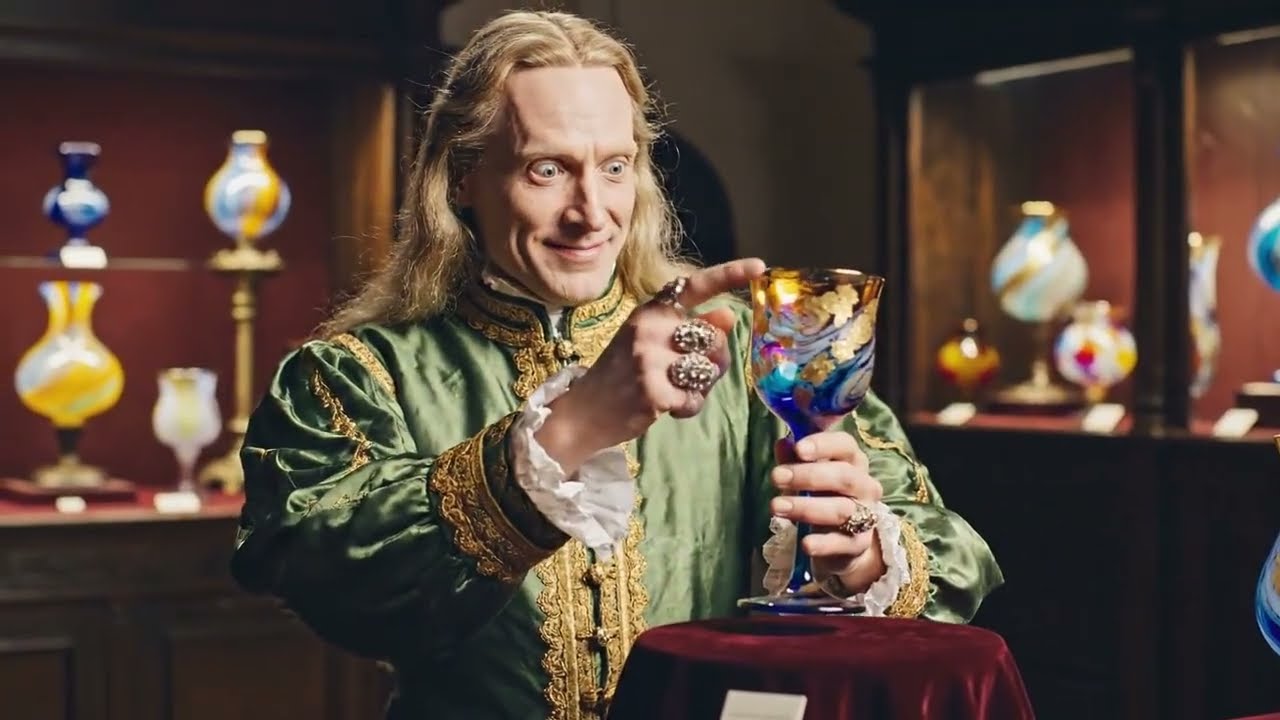
The coloring of glass represented another domain of closely guarded secrets. The basic Venetian glass had a slight greenish or grayish tint from impurities that the purification process could not entirely remove. But the masters had learned to add specific metallic compounds to create vivid colors that transformed their products into jewels of light. Cobalt oxide imported at great expense produced a brilliant blue that rivaled sapphires. Copper and iron could be combined in various proportions to create greens ranging from pale seafoam to deep emerald. The precise recipes for these colors, the exact amounts of each additive, the timing and temperature of their introduction, all of these remained secrets passed down within individual families and workshops. Perhaps no secret was more valuable than the formula for Cristallo. Though this particular innovation would not arrive until the mid-15th century, more than 150 years after the move to Murano, the glass maker Angelo Barovier would eventually develop a process for purifying the plant ash flux that resulted in glass of unprecedented clarity rivaling the transparency of rock crystal itself. But even in 1291, the Venetian masters were producing colorless glass of remarkable quality. The beers created during this era, examples of which have survived for over 700 years, demonstrate a level of clarity that seriously rivaled what later masters would achieve with cristallo. The production of this superior colorless glass required manganese dioxide, a compound that the glass makers called their soap. This material acquired from the Piamonte region some 250 mi west of Venice acted as a decolorizing agent. Iron impurities give glass a greenish tint. Manganese when added in the correct proportion counteracted this coloring neutralizing the green and leaving the glass remarkably clear. The use of manganese as a decolorizer in glass making was documented as early as 1290, just one year before the decree that moved the industry to Murano. The timing suggests that this innovation may have contributed to the government's decision to consolidate and protect the glass industry.
Click to watch →

When You Shine Deadly Radiation on Glass (and food)
178.2K
To counteract the blue tint from iron oxide, glassmakers historically added manganese dioxide. The manganese reduces Fe³⁺ back to Fe²⁺, while itself being reduced to Mn²⁺. Mn²⁺ is colorless, and Fe³⁺ produces a yellowish-green color, resulting in normal clear glass appearance.
Click to watch →
Prerequisite Knowledge
- Concept 01The basic chemical composition of ancient glass (silica, soda, and lime) and how thermal energy alters its viscosity and malleability.
- Concept 02Pre-glassblowing manufacturing techniques, specifically core-forming, casting, and mosaic glassmaking used in the ancient Near East.
- Concept 03The historical context of the transition from the Hellenistic period to the early Roman Empire, which facilitated trade and technological diffusion.
- Concept 04The role of metallic oxides (such as manganese for purple/amethyst hues) as colorants and decoloring agents in ancient metallurgy and glassmaking.
Subsequent Learning
- Step 01The evolution from free-blowing to mold-blowing techniques, which enabled the mass-production and standardization of Roman glass vessels.
- Step 02Archaeological forensic methods, specifically how scholars analyze tool-marks, wear patterns, and pontil scars to reconstruct ancient manufacturing steps.
- Step 03The socioeconomic impact of the glassblowing revolution, which transformed glass from an elite luxury item into a ubiquitous, utilitarian commodity throughout the Roman world.
- Step 04Experimental archaeology, focusing on modern efforts to replicate ancient glassmaking techniques using historically accurate wood-fired furnaces and tools.
Earliest blown glass
Final shaping steps
Earliest blown glass
0:01Playing Section
- 1
Identifies a bottle as an early glass-blowing artifact.
- 2
Comparisons made with a Judean desert cave find.
- 3
Describes initial steps of forming the bubble.
The Syro-Palestinian Invention Paradigm vs. Decentralized Evolutionary Theories
While traditional museum narratives, such as those accompanying early Roman vessels at the Corning Museum, often attribute the invention of glassblowing to a sudden technological breakthrough in the Syro-Palestinian region during the 1st century BCE, some archaeologists and glass historians challenge this 'revolutionary' model. They argue that glassblowing developed gradually from existing Hellenistic casting, sagging, and mold-pressing techniques rather than emerging as a singular, abrupt invention. Furthermore, critics point out that many of the 'earliest' attributed blown glass vessels lack secure, well-documented archaeological contexts (stratigraphy), making their precise dating and geographical origins highly conjectural. This alternative view suggests a multi-centric model where experimenting workshops across the Mediterranean simultaneously contributed to the transition from casting to blowing, questioning the definitive labeling of any single artifact as 'among the earliest' glassblown vessels.
Deep Dive
The evolution from free-blowing to mold-blowing techniques, which enabled the mass-production and standardization of Roman glass vessels.
Watch with the Artist: Bill Gudenrath Studio Demonstration
11.1K
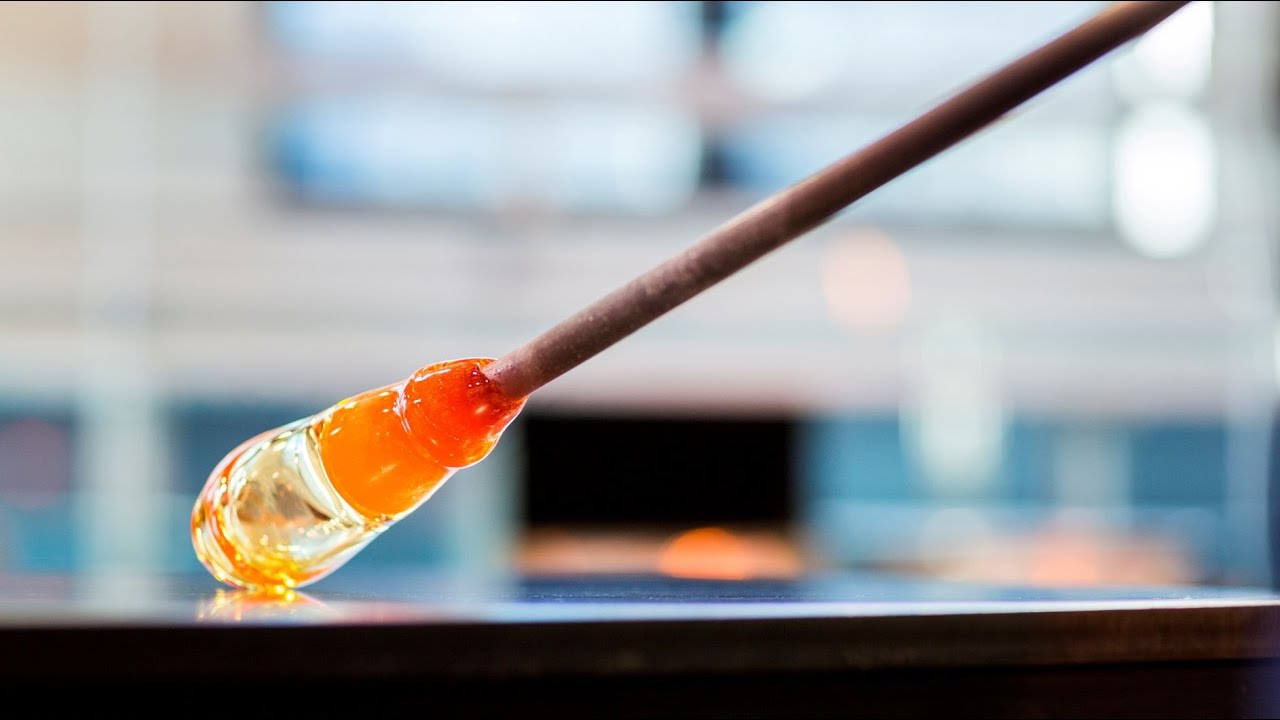
Glassblowing is divided into free blowing (no molds, relying on timing and centripetal force) and mold blowing (using various molds). A Roman bottle demonstrates free blowing technique. Full-size mold blowing began around 10-30 AD, with bubbles emerging in final shape. Dip molds (optic molds) are most common, including ribbed and pineapple varieties. Glass is a poor heat conductor, requiring multiple refeeds (heat treatment) to prevent collapse. When using thin fin molds, thicker points between ribs create decorative 'arcade effects' when spun quickly. This technique was common in late 16th and 17th century Venetian glass.
Click to watch →

Ancient Roman Mold-Blown Glassmaking: Art Institute of Chicago
60.5K
Beginning in the 1st century AD, Roman glassmakers developed the mold-blown technique, which allowed mass production of glass vessels by blowing molten glass into multi-piece clay or metal molds; this method enabled workshops to produce multiple identical designs efficiently, with visible seams marking where mold pieces joined, and required careful temperature control, reheating, and rapid shaping before the glass cooled and hardened.
Click to watch →

Studio Demonstration | William Gudenrath
6.4K
Roman glassblowing, which emerged around 40 BC and spread throughout the Roman Empire by the mid-first century AD, exploits the unique physical properties of glass: its gradual softening under heat (unlike metals' sudden phase change), infinite stretchability above 1100°F, and poor heat conductivity. The technique involves gathering molten glass on a blowpipe, blowing it into a bubble, elongating it into a tube, and using gravity and centripetal force to shape vessels. Two primary methods exist: free blowing (creating long-neck bottles and vessels by manipulating the bubble directly) and full-size mold blowing (using terracotta molds to define shape in about 45 seconds). Key innovations include creating a tubular neck between the blowpipe and vessel body to enable clean separation, and developing two rim-finishing techniques—furnace-finished rims requiring maximum skill and cracked-off rims requiring minimal skill. These techniques enabled mass production of affordable glassware for the first time in history.
Click to watch →

Engaging Roman Glass
12.1K
Roman glass manufacturing evolved significantly from pre-Roman core-forming techniques to revolutionary glass blowing discovered around 50 BCE, which allowed artisans to gather molten glass on blowpipes and inflate it by breath, creating vessels either free-blown or in molds; this innovation made glass more accessible and less expensive, leading to widespread production of mold-made vessels for household storage and personal toiletries like perfumes, oils, and cosmetics, with many surviving examples now displaying iridescent colors caused by chemical weathering during burial rather than original glass composition.
Click to watch →
Art Break: Molten and Molded: Roman Glass and Contemporary Connections
1.5K
Roman glassmakers pioneered mold-blown glass within the first century of glassblowing, discovering that this technique enabled rapid mass production (20 seconds versus 45 minutes for earlier methods), consistent quality, and the ability to combine vessel shaping with decorative elements simultaneously; this innovation democratized glass ownership to middle-class citizens and allowed for the creation of intricate designs like palm fronds and inscriptions that would have been labor-intensive to produce individually, a technique that remains fundamental in contemporary glassmaking today.
Click to watch →
Deep Dive
Archaeological forensic methods, specifically how scholars analyze tool-marks, wear patterns, and pontil scars to reconstruct ancient manufacturing steps.

Granit vs. Bronze: Dieses Rätsel der Antike stellt alles infrage!
3.9K
Forensic tool mark analysis can distinguish between different tool types: (1) Abrasive marks from soft metal with loose quartz sand show rounded groove profiles, non-sharp edges, irregular micro-fractures, and quartz grains pulled out in small depressions; (2) Marks from hardened steel chisels have clearer V-shaped cross-sections, sharper walls, and more stable edge geometry; (3) Modern diamond tool marks are extremely uniform with sharp-edged cross-sections and remarkably consistent spacing.
Click to watch →

Puma Punku's H Blocks Were Just 3D Scanned—The Results Shocked Researchers
112
What the scans also picked up was just as important as the precision numbers themselves: the actual tool marks preserved on the stone. Rather than showing the kind of smooth, featureless finish a machine tool leaves behind, close examination revealed repetitive abrasion patterns consistent with percussion followed by grinding. Exactly the signature you'd expect from patient stone on stone work, combined with a slurry-based polishing process using sand or a similar abrasive. That detail matters enormously because it means the precision at Puma Punku isn't evidence of some fundamentally different unexplained manufacturing process.
Click to watch →
Le Sarcophage inachevé du Caire - Outils manuels ou automatisés?
26.6K
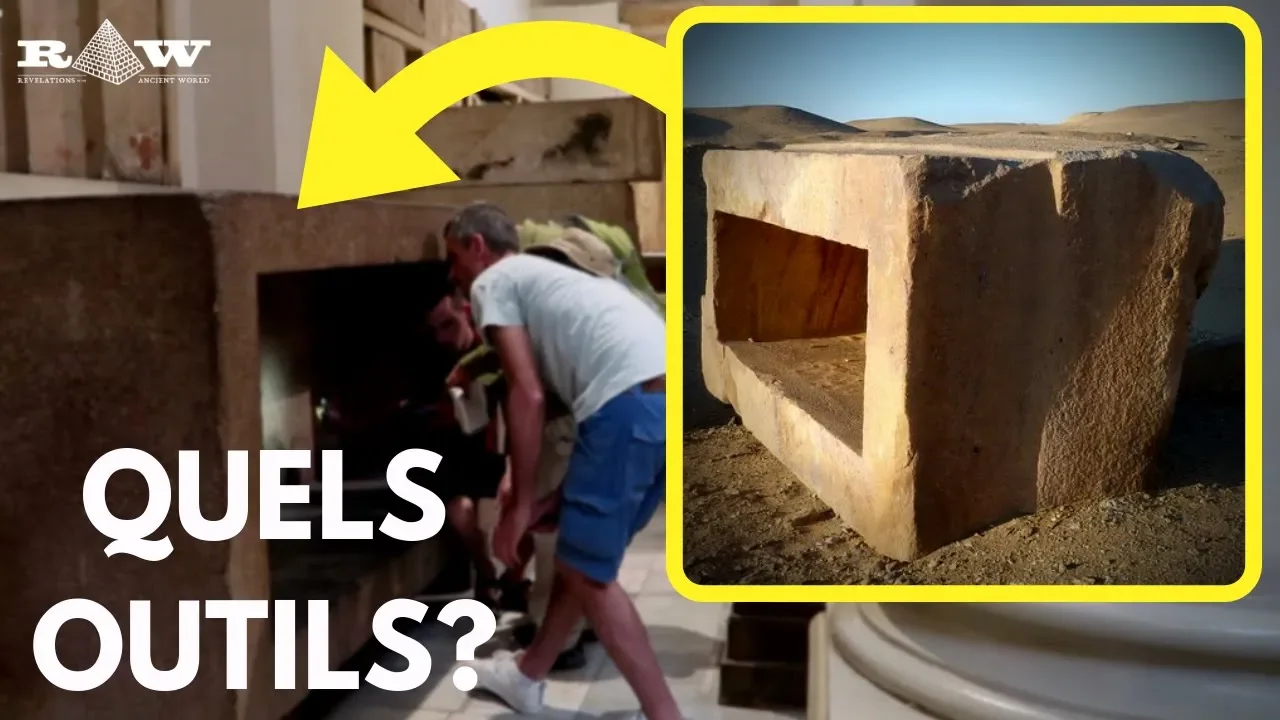
This extended segment demonstrates how archaeologists analyze tool marks to understand ancient manufacturing techniques. The presenter examines various marks on the sarcophagus, including copper tube marks, straight closely spaced striations, and grouped marks resembling failed cutting attempts. The analysis reveals that multiple tool types were used on the same areas, indicating a complex manufacturing process. The presenter explains that the sarcophagus was manufactured sequentially: the main block was carved first, then the cover was attempted by cutting from the base section. The incomplete cover carving and unusual surface alterations remain enigmatic, illustrating how physical evidence can both reveal and raise questions about ancient techniques.
Click to watch →

New Baalbek Discovery Shocked Archaeologists — and It’s Worse Than We Thought
135.7K
Every civilization leaves signatures in the materials they work. Bronze chisels create different patterns than iron tools, and hand percussion leaves different marks than abrasive grinding. By studying microscopic details of cut surfaces, researchers can usually identify techniques and approximate the era of construction. The team collected thousands of close-up scans and chemical readings from surfaces across the site.
Click to watch →

Ancient Technology in Iowa: How Did They Do That?
357
Experimental archaeology reveals that hard hammer strikes (using rocks or antler) create small scars and larger bulbs of percussion, while pressure flaking (using antler pressure tools) creates different marks. Archaeologists analyze these marks on flakes to determine what tools were used to make them. This experimental approach helps reconstruct ancient manufacturing techniques.
Click to watch →
Deep Dive
The socioeconomic impact of the glassblowing revolution, which transformed glass from an elite luxury item into a ubiquitous, utilitarian commodity throughout the Roman world.
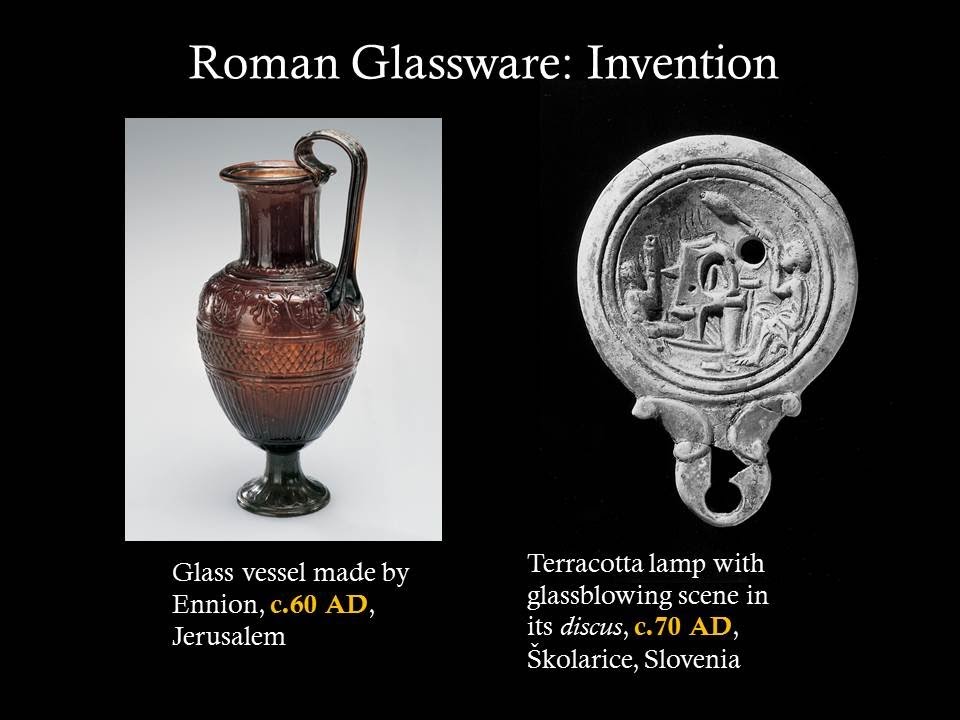
Roman Glassblowing
1.8K
Roman glassblowing, invented around 27-14 BC during Augustus's reign in the Eastern Mediterranean, revolutionized glass production by allowing artisans to blow air into molten glass through a tube, enabling rapid mass production of vessels. This innovation transformed glass from a luxury item to a common household commodity, with estimates suggesting 9,000 glassblowers produced over 100 million vessels annually by the early 2nd century AD. The technique spread rapidly across the Roman Empire, creating extensive trade networks that distributed glassware from Britain to India and Scandinavia. Roman glass was primarily chemically uniform, with vessels differentiated by color—naturally blue-green 'Judean' glass versus artificially decolorized 'Alexandria' glass—which commanded different prices in the market.
Click to watch →

El vidrio en el arte romano - Dra. Ana Minecan
4.4K
The introduction of glass blowing revolutionized glass production in ancient Rome, making the material much more accessible to middle-class Romans. This innovation enabled mass production of glass objects, significantly reducing costs and popularizing glass use throughout the entire Roman Empire. Before glass blowing, glass was primarily a luxury material reserved for the elite.
Click to watch →

El rincón oculto del MET: Joyas romanas en Nueva York
1K
The invention of glassblowing around the first century BCE revolutionized Roman glass production and made previously impossible shapes and forms achievable. Before this technological advancement, glass objects were crafted using core-forming or mold-blowing techniques that limited complexity. Glassblowing enabled the creation of delicate vessels, lamps, and containers with thin walls and intricate designs. The video highlights a rare example of a glass oil lamp (lucerna), noting that few such glass lamps survive today. This technological breakthrough transformed glass from a luxury material into a widely available commodity throughout the Roman Empire.
Click to watch →

The Oasis of Glass
8.9K
From the middle of the first century BC onward, a new technique called glass blowing spread throughout most towns of the Roman Empire. This revolutionary method transformed glass objects from luxury items into everyday commodities. The increased production of finished glass items required significantly more raw glass material, which led to the search for primary workshops producing this essential raw material.
Click to watch →
History of Glass: MU Museum of Art and Archaeology Presentation
300
Glassblowing, invented by Syrianus in the first century BCE, revolutionized glass production by simplifying and cheapening it. Initially blown into molds, then free-blown without molds, this enabled everyday vessels for common people. Roman glassmakers sometimes marked their work with names like 'Theodorus.' Cameo glass fused white opaque figures onto dark backgrounds, carved into intricate designs. Production occurred 30 BCE-60 CE, then briefly under Constantine, and wasn't perfected again until the 19th century. The Portland Vase exemplifies this luxury art form, surviving despite being shattered in 1845 and requiring multiple restorations.
Click to watch →
Deep Dive
Experimental archaeology, focusing on modern efforts to replicate ancient glassmaking techniques using historically accurate wood-fired furnaces and tools.
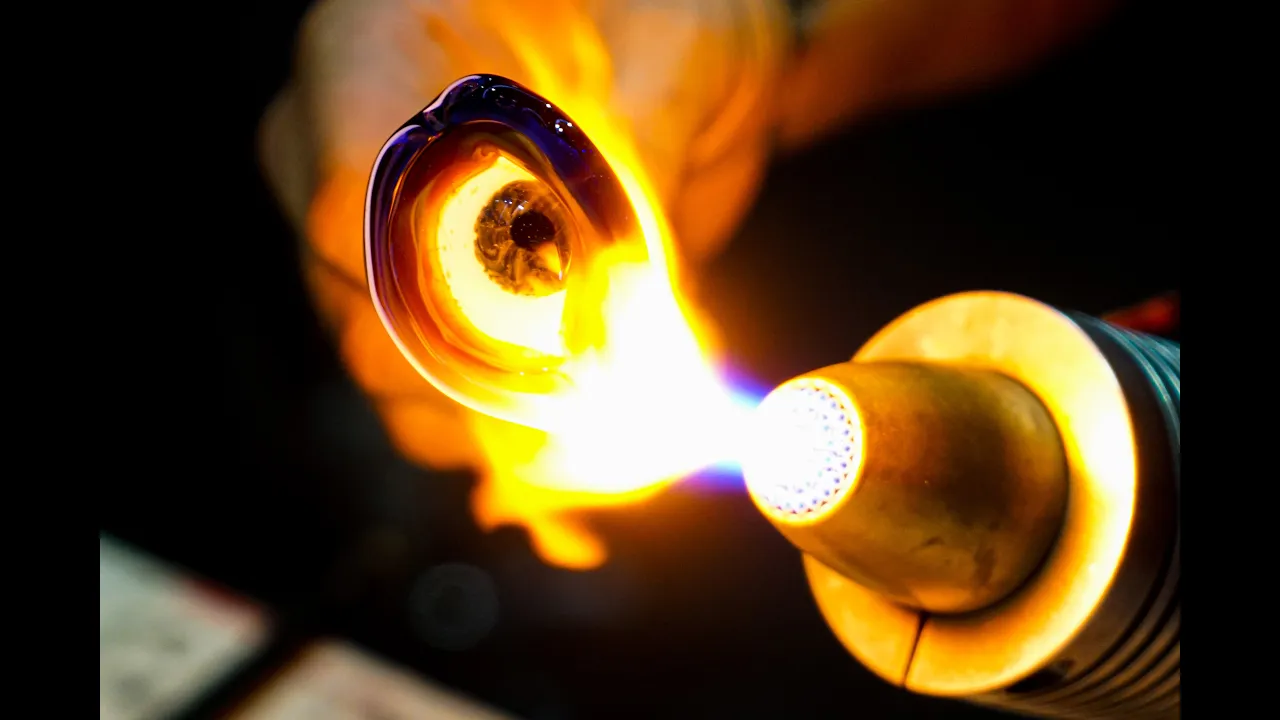
Past | Present Hot Glass Demonstration | Eric Goldschmidt and Caitlyn Hyde
5.7K
Ancient glass workers used wood-fired beehive-shaped furnaces, probably a few feet high, with small openings at the top. These furnaces produced temperatures hot enough to melt glass and make detailed beads. Experimental reconstructions in Europe have demonstrated their effectiveness. Modern glass makers use focused flame technologies including flameworking and lamp working that allow shaping glass while heating it simultaneously, unlike glass blowers who must constantly cycle glass in and out of reheating chambers. This different rhythm allows for different shapes and opportunities in glass making.
Click to watch →
Early medieval glass recycling: technology, change, and resourcefulness | Victoria Lucas
103
Experimental archaeology using wood-fueled furnaces provides the only means of directly testing assumptions about ancient glass recycling. In the research, a replica glass furnace was built based on previous designs. A baseline Roman composition glass was produced and then recycled within this furnace over five days, with samples taken each day for chemical analysis. A glass worker provided feedback on workability changes. Results showed minimal soda loss within normal archaeological variation, but clear increases in potassium and phosphates from furnace contamination.
Click to watch →
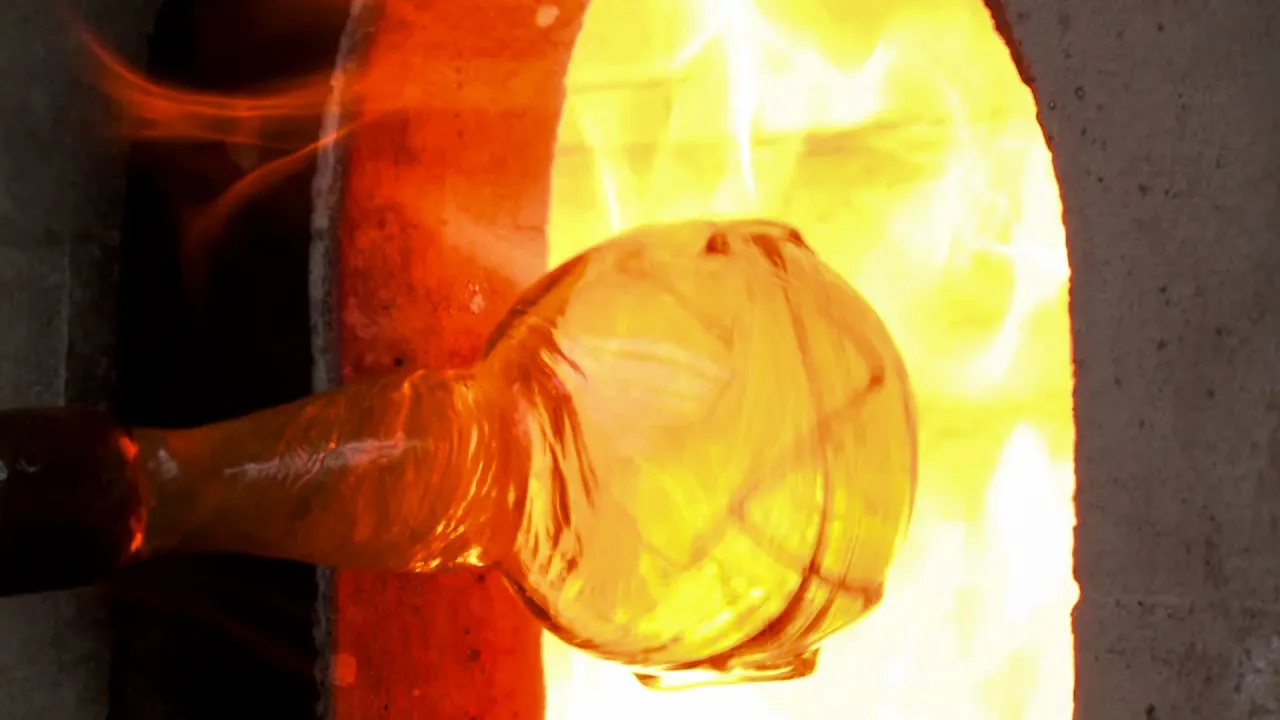
Wood-Fired Furnace Demonstration | Hot Glass Team
6.9K
Experimental archaeology recreates ancient technologies to understand historical practices. The Corning Museum team built a wood-fired furnace based on Jalame site evidence, collaborating with archaeologists and glass artists. Ancient glassblowers worked seated directly in front of furnaces, rolling blowpipes on their legs rather than using modern workbenches. They employed casting off techniques to create handles, exploiting hot glass's taffy-like properties. The furnace reached temperatures over 2000°F efficiently through high-calorie ash fuel. Reduction atmospheres created smoky conditions requiring coordination between stokers and glassblowers. Ancient glass achieved green coloration through iron addition from sand sources, with thermal radiation distorting freshly worked glass until it cooled. Soot deposits formed resists preventing proper fusing. Furnace setups drew inspiration from Roman oil lamp depictions, with modern reconstructions consulting historical glassmakers for authentic configurations.
Click to watch →

Did the Romans Recycle? Glass Talks with ArchaeoDuck | Archaeologists in Quarantine
716
Experimental archaeology can never definitively prove how ancient people made things. Researchers can only say that certain processes work better or don't work. Many assumptions are based on what modern glass artists do, who often use gas or electrified furnaces, whereas ancient people used wood. Experimental work can narrow down possibilities but cannot confirm ancient methods with certainty.
Click to watch →
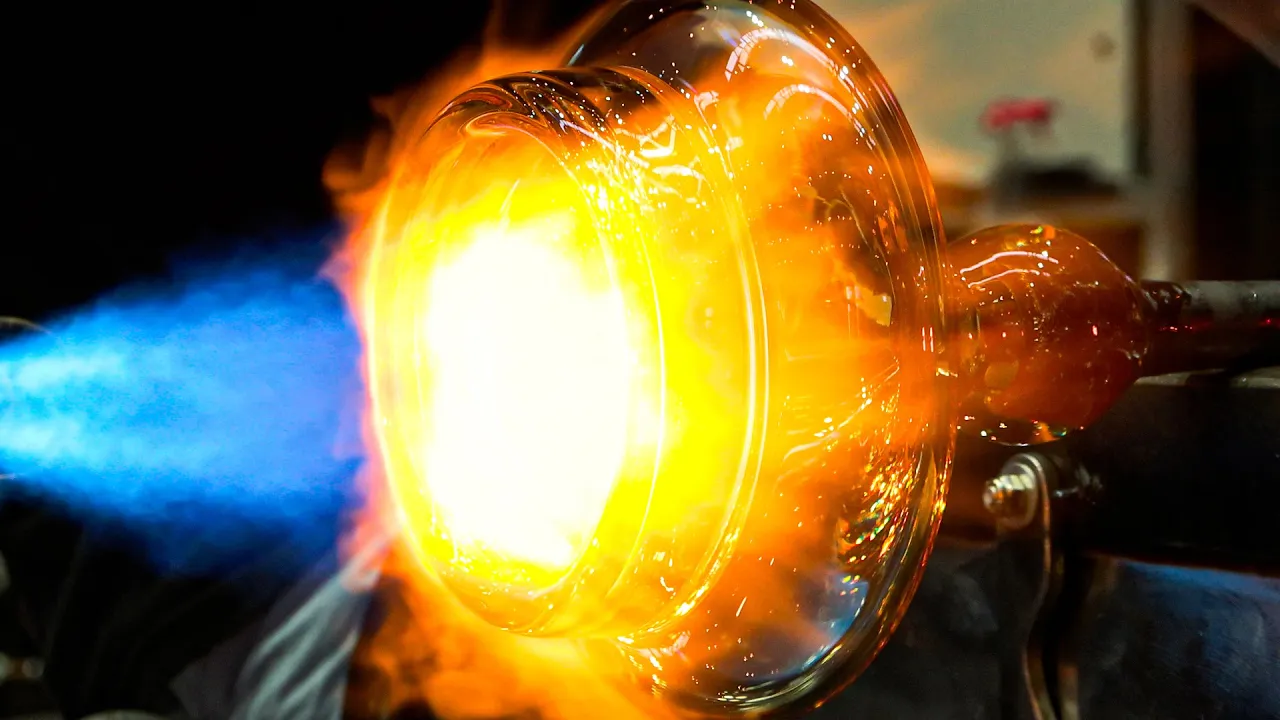
Dig Deeper Hot Glass Demonstration | Katherine Larson
5.6K
The Corning Museum of Glass demonstrates wood-fired furnace glassblowing on Thursday evenings from 3-6 PM in July and August. The wood-fired furnace is different from modern demonstrations because it uses wood instead of gas, showing that glass can be melted with wood and achieve temperatures over 2000°F. The demonstration includes brewery tastings with Scale House, making it family-friendly. Live streams are available on July 6th and July 20th from 5:30-6:30 PM for those who cannot attend in person.
Click to watch →
Earliest blown glass
Final shaping steps
Earliest blown glass
0:01- 1
Identifies a bottle as an early glass-blowing artifact.
- 2
Comparisons made with a Judean desert cave find.
- 3
Describes initial steps of forming the bubble.
The Syro-Palestinian Invention Paradigm vs. Decentralized Evolutionary Theories
While traditional museum narratives, such as those accompanying early Roman vessels at the Corning Museum, often attribute the invention of glassblowing to a sudden technological breakthrough in the Syro-Palestinian region during the 1st century BCE, some archaeologists and glass historians challenge this 'revolutionary' model. They argue that glassblowing developed gradually from existing Hellenistic casting, sagging, and mold-pressing techniques rather than emerging as a singular, abrupt invention. Furthermore, critics point out that many of the 'earliest' attributed blown glass vessels lack secure, well-documented archaeological contexts (stratigraphy), making their precise dating and geographical origins highly conjectural. This alternative view suggests a multi-centric model where experimenting workshops across the Mediterranean simultaneously contributed to the transition from casting to blowing, questioning the definitive labeling of any single artifact as 'among the earliest' glassblown vessels.
The basic chemical composition of ancient glass (silica, soda, and lime) and how thermal energy alters its viscosity and malleability.
Pre-glassblowing manufacturing techniques, specifically core-forming, casting, and mosaic glassmaking used in the ancient Near East.
The historical context of the transition from the Hellenistic period to the early Roman Empire, which facilitated trade and technological diffusion.
The role of metallic oxides (such as manganese for purple/amethyst hues) as colorants and decoloring agents in ancient metallurgy and glassmaking.
The evolution from free-blowing to mold-blowing techniques, which enabled the mass-production and standardization of Roman glass vessels.
Archaeological forensic methods, specifically how scholars analyze tool-marks, wear patterns, and pontil scars to reconstruct ancient manufacturing steps.
The socioeconomic impact of the glassblowing revolution, which transformed glass from an elite luxury item into a ubiquitous, utilitarian commodity throughout the Roman world.
Experimental archaeology, focusing on modern efforts to replicate ancient glassmaking techniques using historically accurate wood-fired furnaces and tools.
1.3K views39likes3:26@corningmuseumofglassOriginal Release: 2024-01-29
the bottle on the left in the Corning Museum of Glass is one I often describe as very possibly the earliest object made by glass blowing in our entire collection this is because it very closely resembles the object on the right found in a cave in the Judean desert in the town of enti and it was found in an excavation in the early 1960s and it's dated roughly 40 to 20 BC and that makes it among the very earliest of objects made by glass blowing using a tiny blowpipe a little bit of glass is gathered on its end and the blo hose the rubber tube you see replaces an assistant blowing one I might ask for air pressure gradually air is blown in there's the bubble forming the pipe is held down to elongate the bubble and the tool marks that we saw between the tube and the vessel body indicate that just about at this point the two bladed tool the Jacks were used to begin to articulate the body from the tube and it's that move that leaves those tiny tool marks we see in the original object the glass is very thin and has to be reheated very frequently the bottom is flattened there's no punty mark on these objects of this type so the clamp device is used and at the narrow constriction near the blowpipe the tube breaks easily and the end is placed just inside the furnace and when the glass gets to a temperature of about 13 or 14400 degrees Fahrenheit it's soft and a small conle tool is used to push the rim inward this is the beginning of the folded lip the small inner folded lip and the last step is to give the rim and the upper tubular neck its final shape the object can then be flashed in the furnace to make everything the same temperature and released from the clamp device folded Rim tubular neck slight articulation between the body and the vessel and no punty mark
Up Next

5:37
The Art of Murano Glass: Craftsmanship in Italy
@CBSSundayMorning
135.9K views•2017-06-25

12:54
Triumph of Orthodoxy Icon: Byzantine Art & History Explained
@BenCallan
2.1K views•2024-08-06

9:49
FastAPI vs Flask vs Django: Choosing the Right Python Web Framework
@TechWithTim
302.5K views•2024-05-26

1:42
Game of Thrones Opening Credits: A Cinematic Analysis
@gameofthrones
46.3M views•2011-04-18
Related Study Plans & Knowledge Roadmaps
Structured learning paths in General & Interdisciplinary Studies
general-studies
Elevator Engineering: History, Physics & Cities
01From Hoists to Safety Brakes: The Dawn of Vertical Lift
02Hydraulic vs. Traction: The Engineering Physics of Elevators
03Modern Speed, Safety, and Algorithms
+ 2 more learning modules
12h5 modules
Explore Roadmap
general-studies
Rubber: Material Science, History & Geopolitics
01Origins of Natural Rubber & Mesoamerican History
02The Chemistry of Natural Rubber & Vulcanization
03The Geopolitics of the Rubber Boom & Colonization
+ 2 more learning modules
12h5 modules
Explore Roadmap
general-studies
Containerization: Evolution, Logistics & Trade
01Ancient Trade & Bulk Cargo: Amphorae to Barrels
02The Industrial Revolution & Cardboard Packaging
03The Containerization Revolution: Malcom McLean
+ 2 more learning modules
12h5 modules
Explore Roadmap
general-studies
Textile Tech: Evolution, Labor & Global Impact
01Pre-Industrial Textiles: Handloom & Cottage Industry
02Mechanization: The Spinning Jenny to the Power Loom
03The Factory System & Global Labor Transformation
+ 2 more learning modules
10h5 modules
Explore Roadmap