


















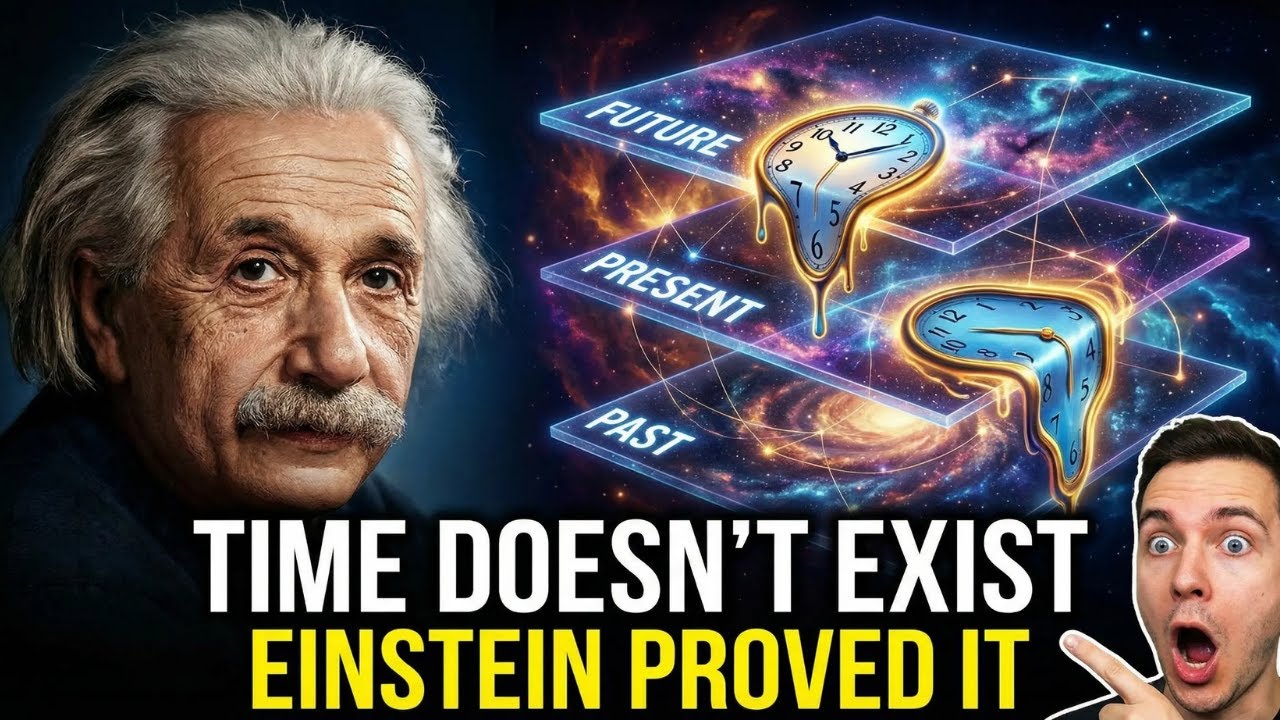


The relationship between God and time involves complex philosophical and theological debates about whether God is temporal (experiencing time) or atemporal (outside of time). Different theories of time (A-series, B-series, C-series) offer distinct frameworks for understanding this relationship, with implications for how we conceptualize divine omniscience, human free will, and the nature of creation. Modern physics, particularly relativity theory, challenges traditional views of absolute time and raises questions about how a timeless deity could interact with a temporal universe.
God and Time: Physics, Eschatology, and the Divine Nature
Added:Einstein's theories of Special and General Relativity, particularly the concept of spacetime and the relativity of simultaneity.
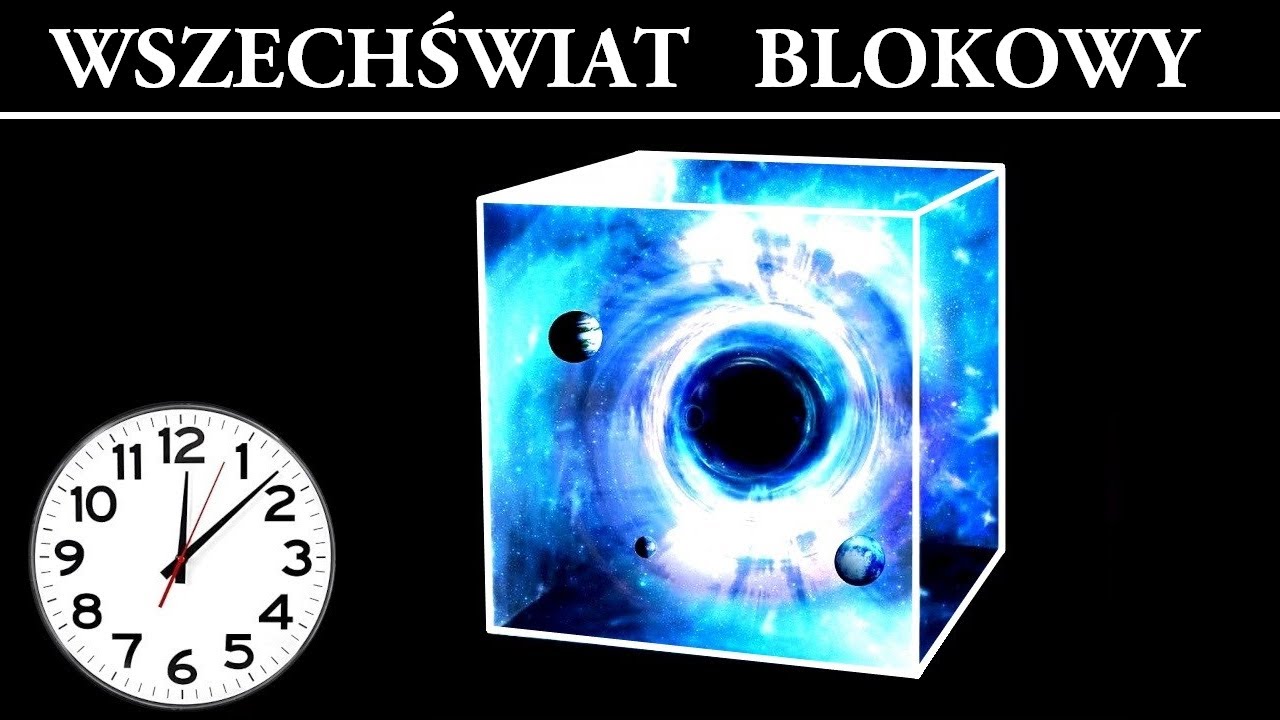
The philosophical debate between Presentism (the view that only the present exists) and Eternalism (the 'Block Universe' view that past, present, and future are equally real).
Classical theological attributes of God, specifically the distinction between divine timelessness (atemporality) and divine temporality (existing within time).
The basic definition of Christian eschatology, which deals with the ultimate destiny of humanity and the universe.
The theological and philosophical implications of a Block Universe on human free will, divine foreknowledge, and predestination.
The study of 'Physical Eschatology'—how the ultimate fate of the universe in cosmology (e.g., Heat Death, Big Rip) interacts with theological concepts of the end times.
Quantum theology and models of divine action, investigating how quantum mechanics might offer alternative ways to understand God's interaction with a temporal world.
Advanced studies in the 'Growing Block' view of time as a potential middle ground to reconcile the passage of time with relativistic physics.
222.2K views5.3Klikes1:02:42Original Release: 2025-10-12
Modern science gives us some indication that the universe, at least our universe, probably had some kind of beginning. Most people think that the Big Bang is at least the beginning of our universe and maybe the beginning of everything that materially exists.
When the Big Bang theory came onto the scene, um, a lot of people, including Pope Pius at the time, said, "Aha, well, here we found it. scientific proof of what the Bible said all along, which is that God created the universe in one big speech act.
Is that an accurate picture? Is the Bible predictive of a universe that began at a particular point in time?
>> So yes and no.
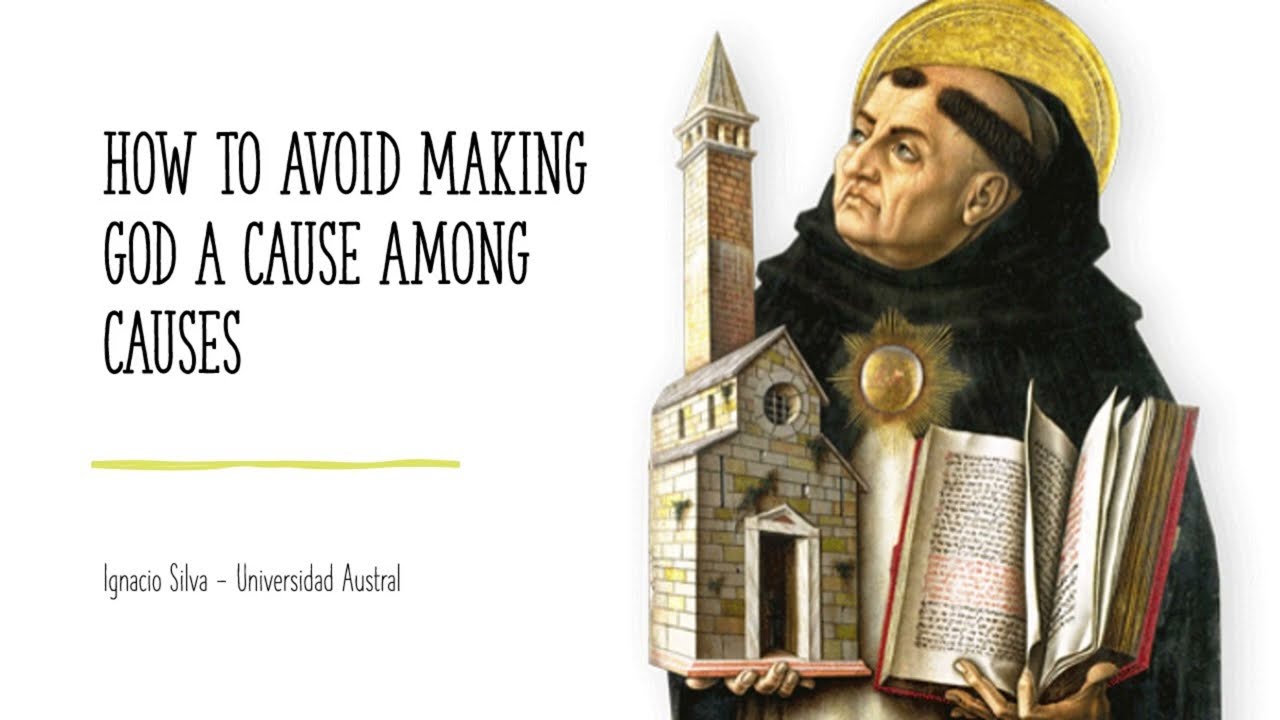
>> It depends who you ask. As with a lot of theological questions, questions about biblical interpretation, different people will have different opinions depending on whether they are more on the side of scriptural literalism or whether they're more willing to take a metaphorical approach. Generally, in academic theology, the doctrine of creation is understood to be more about a relation of absolute dependence between creation or the universe or the world and God who created it and sustains it. So if you take that view of the doctrine of creation then whether or not the big bang was the beginning of everything in existence and beginning of the universe in time doesn't matter so much. So this is something that um St. Thomas Aquinas said although he did believe that there was a beginning in time he said it's perfectly compatible with the doctrine of creation that the universe has always existed. But we do see in the history of the development of the big bang theory, theological and biblical questions come to the four because uh suddenly people were wrestling with the scientific possibility that what it seems like is being described in the Bible, let there be light, is something that can be substantiated by science. And that was something that yeah, Pope Pius was quite keen to uh to argue for.
>> Yeah. Well, indeed it was a Catholic priest who first sort of came up with the big bang, discovered the big bang. I don't quite know how to how to cash out that particular >> George Lmetra.
>> I never know how to pronounce it. I didn't even try. It's it's it's a lot of a lot of funny symbols and Rs and E. Um, but Catholic priest who himself was reluctant to take the Pope's interpretation that this should be >> read into theologically, right? If I understand >> that's right, >> correctly based on your forthcoming book, Decoding the Cosmos, which is a cool project. Um, science and religion are famous sort of enemies of each other, but also just as famously, perhaps illegitimately thought of as such. And I've spoken to all kinds of people about science and religion on the show. Most of the time I'm speaking to a scientist about what they think about religion or I'm talking to a theologian or Christian apologist about what they think of evolution and science. You are in a unique position being not a scientist and being a theologian but not a believer in God.
>> What's what's your skin in the game here? Why are you interested in this in this so-called conflict thesis of science and religion?
>> Such a big question. Uh I could give so many different answers. Um, I've always been fascinated by the way that humans try to understand their place in the world, try to understand their experience, try to understand why we're here. And I think that the two most significant ways that humanity has done that is science and religion. And yet, um, we see in popular discourse, although I think that that's been corrected now, this idea that science and religion are completely in conflict.
They can't ever exist together. one has to defeat the other. And that was actually my route into theology and philosophy which I studied as an undergrad. I really really loved Richard Dawkins.
>> Um so that was my my first taste of science and religion. And then when I got to university and realized that that was a very reductive and unhelpful way of viewing things. Um and discovered that there was a way to study science and religion together. Yeah. It just lit me on fire. I absolutely loved it. So it's it's an intellectual fascination like um somebody would be somebody who studies the Romans is fascinated >> uh by the Romans and doesn't have to believe in the existence of the Roman gods.
>> So I I see it very much from that perspective and that was fine when I was an undergraduate and then going into my master's degree. But every stage I've gone forward in academia, atheists have uh fallen away and so I'm surrounded by a lot of religious people now and I am in a a minority very much so. Yeah, I I'm in a similar position in that I'm really interested in particularly like New Testament studies. And a lot of people are sort of like I kind of I don't get it. You know, it's one thing to study religion as a sociological phenomenon or something, but you know, why do you care about whether the Gospel of John is PMIC if you're an atheist?
What's your what's your skin in the game? And I find it difficult to difficult to answer, but it is just interesting. And I've always said the same thing, which is that when I got to university and I walted in like, yo, I had like 100,000 subscribers and I thought, yeah, I've done debates on philosophy and theology and then I met these people who've been doing four years of a PhD in something so hyper specific and realized I knew nothing.
>> One thing I found is that people doing the stuff I was interested in, philosophy of religion for example, but almost always religious because atheists don't tend to have that motivation. But it's nice to meet another one. In other words, >> yeah, I had a I had this conversation with Richard Dawkins in a car park once um after I told him on on this podcast that I didn't think his treatment of Thomas Aquinas's five ways was particularly comprehensive being all the two pages. And he asked me at this event like what would you have had me do? And I said, well, you know, you you treated all kinds of causation as if they're as if they're one thing. And he said, well, do you think there are different kinds of causation? I said, "Yeah, I I think so." And he asked me to explain. So, as best I could, in about 30 seconds, tried to explain hierarchical and and and like linear causation. To which he interrupted the last sentence of of of my little speech by saying, I remember the exact words. What the [ __ ] has that got to do with anything interesting?
Thank god I'm not a theologian. And then he walked away. And those were the last words that he said that night. I actually tried to avoid him the next time I was at an event with him because I would have loved for those to be the last words he ever said to me. have since worked with him a few times. But yeah, there is this feeling that when we're doing theology, it's a bit sort of wishy-washy and the scientists are getting it well like like really matters as someone who doesn't have skin in the game ideologically speaking.
What do you see as like the difference the fundamental difference in approach?
Is it like empiricism versus like narrative or is it something else? Like what what is the difference between these approaches?
Firstly, that sentence by Dawkins sums up everything that's wrong with the conflict thesis or the idea that science and religion are fundamentally incompatible. Um, it's just reductive, unhelpful, but quite funny.
>> Yeah. Right.
>> Yeah.
>> Um, so I think the difference the fundamental difference between science and religion, um, it's an important question. I mean there's there's probably the main one is the difference in methodology, >> right?
>> Um I don't think there is a scientific method. We talk about the scientific method, but really we have scientific methods. Very little unites how we study the earth's geological history, um quantum mechanics and the behavior of tigers.
But something about empirical investigation that we're not really doing in theology in the same way. Um, and theological method is more about leaning on tradition, scriptural analysis, um, reasoned, argumentation. I think theologians and philosophers are willing to think a bit more deeply about what it is they're really doing, whereas scientists, uh, I hope they won't mind me saying, go to the lab, do what they have to do, and don't really ask any deeper questions. I mean, I the area of physics that I'm studying at the moment is quantum mechanics, and that's very much the case in quantum mechanics.
There's so many unanswered philosophical questions, but the scientists have this shut up and calculate approach where they just sort of go to the lab, do the physics, it works. Don't ask too many questions about why it works. Whereas I think we're more willing to sit in uncertainty and have these layers of inquiry and asking questions about the questions about the questions that we're asking. So yeah, maybe it's a it's a difference in approach and also of course there's a difference in the kind of questions that both are asking. So there is an overlap uh like what does it mean or what what is a human being? Where do we come from?
Those sorts of questions are covered in both science and religion. But science can't answer questions like what is it to live a good life? Um or questions about meaningful relationships you can have with each other. So there's a different there's a different register of questions that philosophy and theology can ask. I just spent an hour with Jim Alkalle just dismayed at the fact that so many quantum physicists don't seem to care about getting at like the correct interpretation. They just want the mathematical model that works and makes predictions whereas >> theology doesn't involve making predictions except maybe with the exception of prophecy. It seems to be a different kind of project. So does that lead us to this sort of non-over overlapping magisteria thing? Because one strategy to respond to this complex thesis is to say, well, they they both answer the same questions in in in different ways and they don't conflict with each other and they butress each other. One is to say that they're just doing completely separate things. Like how how on board are you with this utter separation of the disciplines?
>> I think it's better, but it's still uh not the right way to think about things.
So yes, there are areas of complete separation. questions about morality, for example, um are questions that religion or theology and philosophy can answer and science can't. But then there are boundary questions where philosophy, theology and science all kind of weigh in. And one of those is the question that we started with, the origin of the universe, >> also the origin of life on Earth. The kind of questions where we hit up against where science can take us and then philosophy and theology need to come in. Hm. Some people had this idea that science sort of came along, told us about how the universe actually began, and in response to this, religious people looking at the Bible, for example, have had to reinterpret the Bible in a nonliteral sense. Oh, okay.
Now, we'll accept that Genesis is not literally 7 days and the Earth isn't 6,000 years old.
But it's not right to say that an allegorical reading of the Bible is a response to the scientific revolution, right?
>> No. No. It goes back um far deeper into history than that. Actually, >> biblical literalism is a relatively modern invention. It came around after the Reformation.
>> Yeah. So, what were the motivations then behind this shift from I mean, it's kind of it's almost ironic and that you sort of have this original church fathers talking about, you know, the days of Genesis not being literal. Jesus's temptation in in the desert, of course, not being literal and all of this kind of stuff to this literalism that emerges and then science comes on the scene and we sort of have to go back into retreat into our metaphorical sort of reading.
>> What was the motivation for this literalist reading in the first place?
Where does it come from? So it comes from the reformation and this idea of trying to strip uh religion from religious authorities or or scripture and theological knowledge from religious authorities and give them back to the people. So translate translating the Bible into languages that people could read. So they didn't have to be mediated through priests through ecclesiastical authority. Um, and then it's a kind of um I don't know if democratization of of it is the right way to think about it, but it it brings what was shrouded in layers of interpretation, authority, and languages people couldn't understand. It strips all that away. And so, um, biblical literalism was seen as this way of bringing the individual back to their relationship with God. But the the historian Peter Harrison makes a really interesting argument that it was precisely this turn to biblical literalism that allowed science to flourish.
>> So you have previously you had the world. So there these two books this was the idea the two books metaphor book of scripture and the book of nature both authored by God. They're supposed to be read together. So you have an allegorical reading of scripture and you look at the world and you sort of make these comparisons between the two. But if you take all of this allegorical stuff away and you're just reading the words of scripture as literally true, according to Harrison, this freed up the natural world to be investigated on its own terms. And it was precisely this intellectual shift that allowed science to really flourish in the way that it it does today.
>> Interesting. Some people will listen to what you said at the beginning of this podcast where >> you know I asked if >> the Bible kind of describes a big bang as the pope sort of >> interpreted however you say his name's idea.
>> Um and you said that you know Genesis really is about creation's fundamental dependence on the creator. That's what it's mostly about. But isn't it the case that in the beginning God says, "Let there be light and then the universe is created." In the beginning, God created the heavens and the earth. There's this point of beginning into which God enters the universe. There there's our there's our big bang. Or is there >> another reading of of this Genesis 1 one story? I know the answer to this question, but I'm hoping you can walk us through it. Well, so there is a debate about exactly how that first sentence of the Bible should be translated.
>> Yeah.
>> So it's either in the beginning when God created the heavens and the earth, the earth was without form and void and darkness rolled over the face of the deep >> or in the beginning God created the heavens and the earth etc. So the difference is whether that word when is in there >> and one reading suggests that in the beginning God created the heavens and the earth from nothing. creation x nihilo is a technical term >> first created a void and then brought order and structure and life etc. The other reading says when God created the heavens and the earth, there was already a formless void there. And God drew coherent forms out of the kind of fog of this primordial swirling nothingness, but it wasn't true nothingness. There was something there before. So even even there we have a debate about whether God really did create everything at this particular moment or whether something had always existed but God was the one who drew um order from the chaos.
>> We'll get back to the show in just a moment. But first, do you struggle to focus? I know I do sometimes and especially given my line of work, it can be incredibly frustrating when I'm just seemingly unable to get on with whatever I'm trying to get on with. Luckily, people like me are exactly who today's sponsor, Brain FM, was created to help.
Brain FM is an app for professionals seeking productivity boosts. They create science-backed music which helps you to relax easier, sleep deeper, and focus better. Opening the app, I've got four options: focus, relax, sleep, and meditate. I tend to use it while I'm reading, so I'll usually pick focus and then either deep work or learning.
Whatever I choose, Brain FM will give me some music specifically designed for the task. And you can customize the music, too. either by selecting from different musical genres or by choosing the different natural sounds that will play alongside the music. You can even customize the level of neural effect of the music. So, you might want to pick low if you're sensitive to sound or easily get headaches or high if you suffer from attention difficulties like ADHD. And Brain FM is the only music company supported by the National Science Foundation to improve people's focus. Try it out for yourself free for 30 days at brain.fm/withinreason.
That's brain.fm/within. fm/withinreason for 30 days free. That said, back to the show. Yeah. And that leads to some, I suppose, quite interesting and varied metaphysical implications, right?
Because on this one translation, you sort of imagine God as just like popping things into creation. There's the earth, there are the waters, there are the animals, and they sort of pop into into being. on this other form you have this much more sort of um like you say this sense of drawing order this sense that you've got matter and God kind of gives it form and you know some people have a metaphysics that you know objects are all mind dependent nihilism is an idea I talk about all the time like distinctions between objects are essentially mental and they're all to do with labeling and that kind of stuff like that's quite in keeping with God forming the earth out of this material versus this popping into creation which is much more in line with uh objects really exist as as distinguishable objects and you can draw all of that out I think from just this just this like singular bit of bit of translation I think um maybe there's more to >> other philosophical traditions that think that like all is essentially one and we're all just sort of separated from this original material is is quite important and of course Adam's first job in Genesis that he's given by God is to give the animals names It's taxonomy.
It's a further sort of delineation rather than creation and maybe Adam is continuing the project of of God. Um, which is interesting to think about.
>> You open this forthcoming book decoding the cosmos with this issue of creation and then discuss a number of other important theological concepts and the relationship to >> to science. A lot of the time and you open by by talking about how a lot a lot of the time the the approach is to look at scientific ideas and see how theology fits in.
>> Yeah.
>> But you're looking at theological concepts like salvation for example or creation and looking at how science fits into that. Like why the priority there for of theology and seeing how science fits in rather than I suppose the more common reverse? Well, theology at its best is supposed to be a coherent system that contains these ideas that all fit together into an interlocking hole. So I think it makes most sense to look at the theological system as it's presented. So in the book I start with creation, then I go to design, providence, incarnation, and salvation.
It's moving through chronologically the uh if you like the salvation historical narrative of Christian theology >> and I want to take it as seriously as possible. I'm not a Christian. I'm not a religious believer. And I guess one of the motivators of the book is to see whether this system, this set of ideas fits with modern science, particularly physics.
>> And so rather than saying, well, here's this physical theory.
Where does theology fit in there? here's this physical theory. Where does theology fit in there? I wanted to start with the theology and say this is the system. Does modern science support it, contradict it? How does it fit in? And in the book, I argue that there are some areas where modern science fits really nicely with Christian theology. And then there are other areas where there are quite big problems that remain. And so I sort of don't really come down on either side. Um, and I I want the readers of the book to make the decisions for themselves. So I I try not to give too many really strong arguments in favor of my own position.
>> Sure. Okay. When people think about science versus religion, examples like evolution come to mind or or something like that a lot of the time.
>> Okay. Okay, there's been a lot of discussion inks spilled on that kind of stuff. What are some of the more like interesting ways or ways that people might not have thought about before that our scientific understanding of the world might come into conflict with specific aspects of Christian theology?
>> There's a there's a few good examples.
One of them that I do talk about in the book, it's not an idea that I've written on elsewhere, is this idea of um extraterrestrial life and what that might mean for the incarnation and for the moral status of human beings in the universe. Yeah.
>> So, it's really speculative. I mean, I think the best science and religion is speculative. I think if religion waits until science is completely certain or has made all the discoveries, then religion is going to be really on the back foot. So, I like the kind of science and religion that's willing to engage in speculative discourse. So, we haven't discovered extraterrestrial life yet, >> but we have good reason to think it's out there. There's billions and billions of other galaxies, each containing billions of stars, billions of planets.
I mean, it's like statistics I can't even conceptualize really, but the idea that we would be the only place that was suitable for life and that life has emerged seems wildly unlikely to me.
So if that's the case and there's other life, is that life spiritually intelligent? Is it rational? Does it have moral capabilities? If so, then according to Christianity, it's capable of sin and therefore uh open to the possibility of salvation.
So it then raises questions about how does salvation work? What um what is the purpose of the incarnation? You know, is it enough to say Jesus came down to earth 2,000 years ago, died for the sins of humanity, and somehow that ripples out and affects the entire universe, or do we want to say that there are multiple incarnations to the second person of the trinity becomes hypoatically united to different kinds of flesh. Um I think it was John Pulkinghorn maybe it may it was someone from science and religion hopefully John Pulking Horn who said um if there are little green men then Jesus will have taken on little green flesh or the sun will have taken on little green flesh.
>> Yeah. Yeah.
>> But is is the question of of extraterrestrial life and whether Jesus sort of solves a problem for them in the same way as us >> that different from the question of like non-human animals? I mean we already have a bunch of life at our fingertips who >> are kind of like us but also not like us and seem rational you know they can they can do certain things but they >> like is there something particular about this different life being so different or being on a different planet that would really like change the game there?
Why is it that them not coming from Earth would make such a significant uh problem? I think the argument, one of the arguments would be that um there's something about life that doesn't have doesn't share DNA with us.
>> Yeah.
>> So maybe the idea would be um Christ hypoatically uniting to human flesh is taking on DNA the structure of life on earth and that does something um that may that creates some kind of ontological shift that allows salvation to be possible. That might be one option. Uh, I think a more common option you'd find in Christianity is to just say, "Well, animals aren't the kind of beings for whom salvation is relevant."
>> I I think that's a bad argument.
>> Yeah. Yeah.
>> But they might just say, "Well, they don't have, as far as we can tell, spirituality >> and uh or moral sensibilities. I actually think it's false. I think we do see morality in animals." Um, but what what the theologians who are thinking about this are thinking of is more along the lines of life on other planets that is similar to humans. And maybe that's anthropocentric and not a good way to look at things.
>> Maybe. Maybe. Or maybe in the way that Jesus took on the the lowest form of the slave. And >> maybe there is life out there and we're just the worst of it. And that's why he chose to to become a human because in doing so, he he saved the rest of us, too. Um, one other interesting area that your work has drawn my attention to in this relation between science and religion is the implications of spaceime for certain aspects of of God's relationship to the universe in particular his nature as a timeless being interacting with a timed being. Um, you've done a lot of work on the relationship between between God and time. the philosophy of time and the philosophy of God are are complicated enough on their own, but why have you dedicated so much of your work to specifically their relation?
>> I think time is a fundamental incontrovertible fe feature of human experience >> and I think that it contains within it many of the most important theological questions we can ask. So it relates to questions about how the creator and creation relate to each other. It also raises questions about um human experience, human transformation. So there's lots of theological ideas that find their home in the context of God and time um and also just on a on a slightly less interesting level. I find the philosophy and physics of time absolutely fascinating.
>> Yeah.
>> Yeah. So I I wanted to spend a lot of my time thinking about that, diving into special and general relativity and Yeah.
What does it mean to say that God is a timeless being or an eternal being or an atmporal being? Do these kinds of terms mean the same thing? Are there different ways of interpreting what that means and what does it mean?
>> Yeah. So pretty much those mean the same thing.
>> So we generally in contemporary philosophy of time have this distinction between God as either a temporal being or an atmporal being.
>> The atmporal God is outside of time.
has no temporal parts, doesn't experience temporal passage or change or succession in that God's life at all.
And then the temporal god is within time or experiences change, passage, succession. And the atmporal god seems to be the version that's more popular throughout theological tradition, although they're not using quite the same categories that we use today. M >> and the temporal god is seeing a resurgence in the contemporary discourse.
>> So why the popularity of the atmporal god before and why the shift?
>> So there's a few arguments that we could give. Uh some of them are rooted in platonic philosophy.
>> So the idea that god is a perfect being means uh plato made this argument that something that's perfect doesn't change because if it changes it in some way degrades from perfection.
>> So if god is perfect then god doesn't change. And if we think of time and change as linked together, then uh God is outside of time. God isn't subject to the passage of time.
>> Why would change require degradation from perfection? This was something that jumped out at me from from reading your work.
>> I understand that in a sense. It sounds plausible, but it also seems plausible to me that there are ways of changing that don't improve or or detract. I mean, is there something necessary about change that would detract? Well, not necessarily. So, one of the objections is that from the temporalists is to say there's no change in God's perfection if his knowledge changes from the time is 2:00 to the time is 1 minute past 2.
>> Mh.
>> And that's the kind of change that's required for God to be a temporal being.
So, >> there's no challenge to his perfection.
>> I think the the perfection and change argument is one of the weaker ones for the atmporalists. But it had um it had a powerful sway over people in history.
>> Yeah. Can we make sense of the question, does God know what time it is right now?
I And do we require in order to say yes, do we require that God is temporal or can you have an amporal God who knows what time it is right now? Because I'm speaking in a temporal sense, I'm in the temporal world.
>> Yeah.
>> Could a timeless god know what time it is now?
>> Yes.
But if you're if you endorse the idea of a timeless god, you normally u in in contemporary discourse at least endorse a view of time that says there is no what time there is no time that it is now objectively.
>> So an atmporal god knows what time it is at all points in spaceime.
>> Mhm.
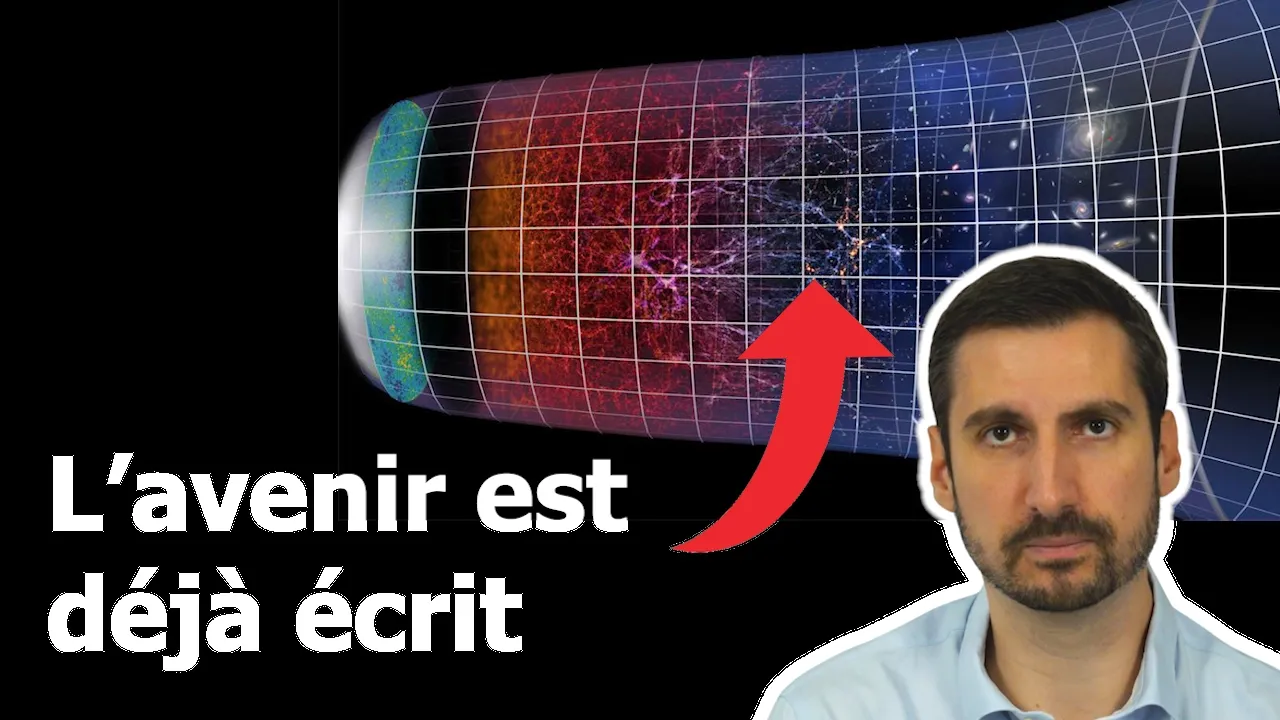
>> But there is no objective now >> on the it's called the block universe view. I can talk a bit more about what that is. Um and whereas a temporal god knows what time it is now because normally you would have this um marriage of a temporal god and a version or a theory of time where time does objectively pass and there is a now. So god knows what time it is now. Um and that knowledge is continuously changing as time passes in the future becomes present and goes to the past. M >> but if you uh endorse an atmporal god you think of the relationship generally between god and time as one a bit like an author holding their book or like a novel all the pages exist all of the events that happen to the characters each moment in the characterser's life is all there and God knows all of those things that happen and can look at any point >> and there is no objective oh it's objectively page 33 now that doesn't make sense >> when you think about a novel and So this is the version of time that goes with the timeless god and it's the version of time or theory of time that I think is best supported by modern physics.
>> Mhm. I mean the character in the novel could say like you know what page number am I on?
>> Yeah.
>> And there is no objective page number for the author but the author can know where they were when they said that and that might be you know God would know where I am on this >> on this time block. I think most people will be roughly familiar with the idea of the block universe versus, you know, the part where where the past and the future and the present all exist on this big block versus the idea that the past doesn't exist, the present is the only thing that exists and the future doesn't exist yet. Some people might even know that they are broadly referred to as respectively the B theory and the A theory or the B series and A series of time.
>> Um, but there is also a C series of time, isn't there? What is the C series of time?
>> So the A theory, B theory, C theory or A series, B series, C series come from a 1908 paper by Jamie McTagot called on the unreality of time or the unreality of time and he draws a distinction between three different ways that you can describe positions in time. We've already talked about the A series and B series so I don't need to go over that again. The C series uh can well maybe I will just so I can show the difference.
So the A series describes positions in time by virtue of their possessing objective properties of past, present or future. The B series says um time can be fundamentally accounted for by giving relations of before, after then and simultaneous. So you've got these two place relations. And the C series says all you need to describe time are these three place relations of temporal betweenness. So what that really means is that you have this series of time of moments in time and they they have a particular order with respect to how they're arranged but there's no objective direction.
>> So it's a bit like the colors of the spectrum. You can start with red and move to the blue end or you can start with the blue end and move to the red end. And so what that means the C theory of time is also committed to a block universe. It says all moments of time exist tenselessly.
But it doesn't you don't have to read the universe as it were from uh the big bang to the heat death. If the universe is going to end in a heat death, it makes just as much sense fundamentally to read the universe from the heat death to the big bang.
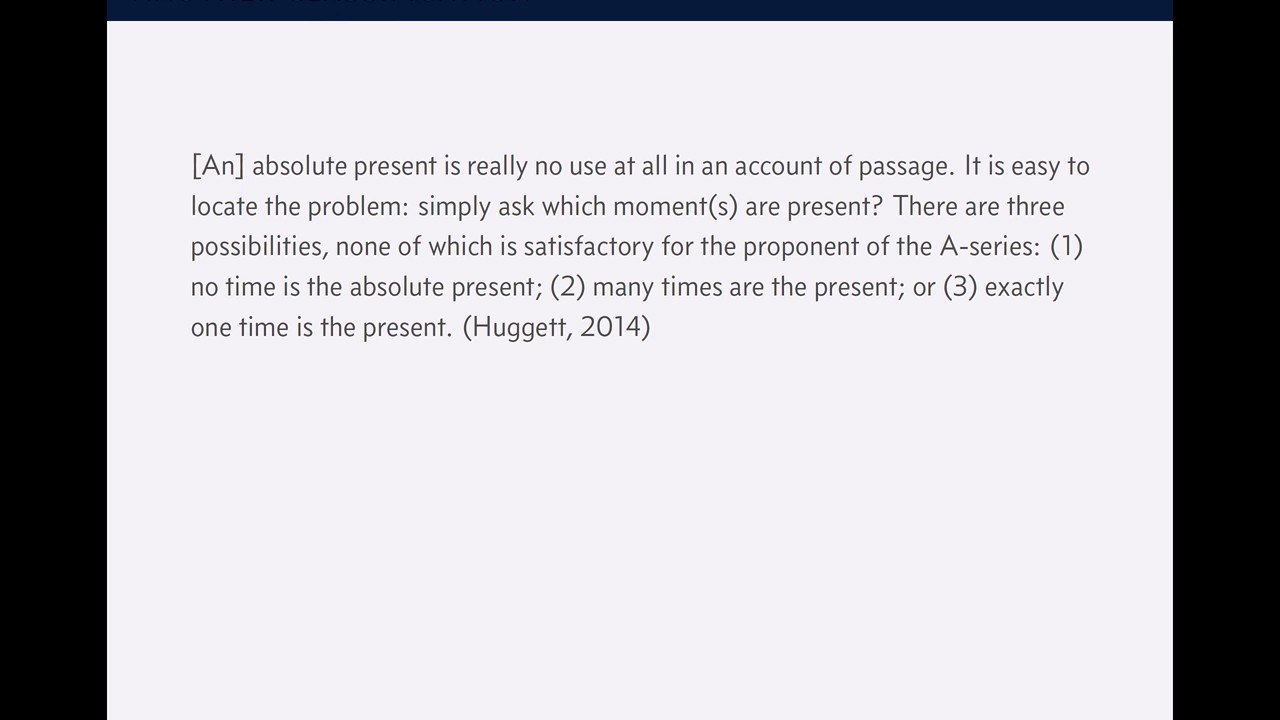
>> And even within those different theories, there are different interpretations of the theory. So I mean it's quite hard to wrap your head around exactly what we're talking about but we said the a series says that the present exists the past doesn't exist anymore the future is yet to come there is no block but there are more than one way there is more than one way of interpreting what that means what the a series is and there there are sort of three popular >> broad distinctions right within a a theory of time >> that's right I think the most the one that I see most often endorsed is presantism which is the aory you just described. So all that exists is the present. So you need an objective now and everything that's simultaneous to that now exists. Nothing else exists.
Then you have what's called the growing block theory which uh is committed to the existence of the present and says that the past exists. So as new slices of time that are the present come into existence they uh when they go when they become past sorry they are then added to a block like the block universe but that grows with ever more present moments the future is not real and then you have the moving spotlight which is also committed to a block universe like the B and C theory but says that there's something and I'm not really clear about what that's supposed to be that picks out objective nows a bit like if you had a street of houses and you have a spotlight that moves moves from one house to the other, there's something privileged about the house that's being lit up. And that's the idea with the moving spotlight view. So, it tries to have the best parts of the B theory uh and the best parts of the A theory. And in so doing, I think it comes up with something that basically no one endorses.
>> Yeah. But then I mean I like this idea of like privileging the present because there is something special about now. By which I mean, >> you know, there was when I said the word now. Um, but even for the B theorist who thinks that all time exists and the past and the present are just as real, you know, surely they still can't escape the idea that there is, for one of better terms, something privileged about what at least we consciously call the present. Like how do they make sense of the psychological experience of time if the present exists just as much as the past does?
Yeah, that's the biggest objection to the B theory and I guess the C theory as well is how do we account for our temporal experience?
>> Yeah, >> my response to that is always well our experience deceives us all the time.
>> I feel like I'm sitting on a solid chair.
>> I can feel the velvet underneath my fingers. But actually, this chair is made up of mostly empty space and it's the atoms in my body reacting or like repelling the atoms in this chair. And so our experience has evolved in the context of the environment of early evolutionary adaptation >> and hasn't evolved to be able to pick up things like the ontology of time in a way that's reliable enough in my view to go against what science tells us about time. So I think the B theory is best supported by science. Um and therefore I'm more skeptical of my experience. Of course, from my experiential perspective, now feels incredibly privileged. It's the only thing I can directly experience. But that doesn't mean that the other moments of time aren't real. I I can't directly experience India right now, but it doesn't mean India doesn't exist. It just means I'm not there.
>> Yeah. Yeah. And it seems like less of a mystery to explain. Probably just because you feel like if I wanted to, I could get up and go to India in a way that I can't like get up and go to the past. But that shouldn't change the the nature of what we're talking about. Um, okay. So, actually, I was going to say back to theology, but just before that, you said a couple of times now that you think the B theory is best supported by science. Is that because of like relativity or or is it something else?
>> Yeah. So, the A theory is committed to this absolute present moment as I've said a few times now. Um, and that requires there to be a universal plane of simultaneity.
>> Yeah. such that everything that exists could be simultaneous with the now.
According to special relativity and later general relativity, this isn't the case in the world or in the universe.
Um, we just don't realize because we never either accelerate to significant fractions of the speed of light or uh go to planets or much closer to the sun with big gravitational fields. If we did that, then we would realize that time passes at different rates depending on your speed and depending on your proximity to a gravitational field. So if um I mean we see this in like the film Interstellar when somebody goes onto a a massive planet and then goes back to the spaceship for the person on the spaceship 20 years has passed whereas for the people on the planet it was like an hour or something.
>> And that is that's not just science fiction that's solid relativistic physics. And therefore if that's the case then we don't have this universal simultaneity and we don't have this objective now.
>> Yeah. And without getting into it too deeply we should flag that there are people >> the so-called Lorenzian view of space neolorencian. I don't know what Lawrence refers to >> uh who do try to reconcile the a theory of time >> with the mathematics of special and general relativity. Right. Like they do exist. Yeah. Um, but you just don't place much plausibility into that. Like William Lane Craig as an example, right?
You write about him. I've spoken to him about this >> this I think years ago when I spoke to him and asked him about God's relationship to time >> and he just said, "Well, God was timeless." And then when he created the universe, he entered into time and became temporal. And I was sort of like, >> "Huh?" Like, what? Uh, and and I still quite sort of haven't quite wrapped my head around it. Maybe that's just me.
Um, but you think that >> that doesn't make sense to me either.
No, if you if God was timeless before creation, then God is in a temporal relation with creation even before creation has existed and therefore he's temporal.
>> Yeah.
>> So, and this is an objection that's been raised to Craig and he hasn't come up with a compelling response in my opinion, but he he's an atheist. I think it's one of the things that he believes most deeply about the world >> really >> and therefore has to come up with a way to explain relativistic physics. So he's devised this neolorentian interpretation. It's very much his baby. And >> sure, >> it's >> it's Lorenzian in that Lorent was committed as physicists in the early 20th century to the existence of a background structure that functions as an absolute frame of reference against which you can measure the absolute passage of time >> like an ether.
>> Yes, it was the luminiferous ether which was famously disproved by the Mickelson Molly experiment. So that's why it's neolorencianism because it's saying, well, we like this idea that Lorent had, but we're not going to commit to the ether. We know that's not that that doesn't exist. So we're going to try and find another background structure. But really, Craig's arguments are theological in nature. So he believes that God must be temporal and that there must be an a theory of time for theological reasons. And unfortunately for Craig, the Neolorencian interpretation of special relativity has not really taken off anywhere outside of the philosophy of religion. Scientists have reviewed it and not really taken it seriously.
>> I see. Okay. So now actually back to theology outside of the context of just William Lane Craig. Um most people have thought about an eternal God.
>> However, some problems start springing up when you think God is outside of time. For example, most uh religious traditions, certainly a religion like Christianity believe believes that God interacts with human beings. There are prophets who communicate with God. God sends a message and of course God sends Jesus to save us from our sins. There's this kind of interaction with with a temporal world. Like is it just a divine mystery how that happens? Am I mistaken to think that there's some kind of potential contradiction to be drawn out there? Is there something I'm missing?
Or is that a little bit weird?
>> Yeah, that is a little bit weird.
>> And this is one of the reasons why a temporal god has seen a resurgence in recent years because >> it seems quite difficult to understand how you could have a truly a temporal god that acts in time.
>> Mhm.
>> And I think there have been some responses, but none of them have been that convincing, I don't think. Um, and so there's a guy Ryan Mullins who's written a lot about this and he says because of this we it's not even plausible to be an amporalist about God and a Christian. You have to be a temporalist if you are a Christian. And actually he thinks you have to be a presentist.
>> Is Ryan Miller the guy who thinks that time is like a property of God or is like the same thing as God in the way that you know classical theologians think of power and love as sort part of God's nature. Time is sort of a similar thing.
>> Yeah. How what is what's that about? How does how does that work? What does it mean say time is like a a property of of God?
>> I'm not quite sure.
>> It's difficult to kind of cash out.
>> It's hard it's hard to understand. And it's a it's a response in part >> to this idea that a temporal god isn't truly sovereign. So God is believed to be all powerful, ruler of all. Yeah. And yet if he's subject to the passage of time, then it seems like there's something external to God um that is in some way has power over God or control over God. And so this is called the prisoner of time objection.
>> Yeah.
>> Yeah. And Mullins says that's a misunderstanding of the temporalist view. Actually, God isn't imprisoned by time because time is a property or common.
>> I see. So it's a strategy similar to how people respond to the ethro dilemma, right? You say, you know, is it good because God commands it or does God command it because it's good? And the Christians say ah you know hold your horses. God is good. It's like the same thing. It's it flows from his nature and time is the same thing to respond to this problem. Um there are other strategies like Richard Swimburn you write about. He sort of says that yeah God is temporal and in a way by becoming temporal he does you know enslave himself to time but he does so willingly in the same way that he you know willingly becomes a human and limits his power in that respect. as long as he does it willingly, it's not a not, you know, an indictment on his power. And that allows us to resolve problems of, you know, free will. For example, if if human beings are free, but God knows exactly what they're going to do with 100% accuracy, how are they really free?
Well, maybe God doesn't know what you're going to do. Not because he can't, but because he chose not to. That's a really interesting response to that problem. Is that a viable or the only viable response to this classic age-old problem of God's fornowledge, his omniscience is one of his important qualities with this existence of human free will, which is incredibly important to most religious traditions.
>> One other solution is to be an atmporalist about God and say God doesn't see what you're doing before you do it >> because he's not in any before relations with you. He just sees it as it happens, >> but he sees all moments of time.
>> Yeah. Yeah.
>> Another one is to say that God has middle knowledge.
>> So, he knows all of the potential things that you could do >> and what you are likely to do. Um, and knows all of the different paths that the world can take, but doesn't know for sure. I I think that's the view. I'm I'm not sure if I'm characterizing that exactly right.
>> It's complicated at best. And and I I mean, I'm fascinated in your by your work on on time and God. And I'd recommend people go, they can read the essays that you've written on it just for free online. They're like on your website.
>> Um the book's a bit broader in scope.
One other thing that you mentioned a little while ago now was Christian esquetology.
>> You you briefly mentioned the idea that the universe might be heading heading towards a heat death or a big freeze.
Like we're not entirely sure how the universe will end, but it seems like what's likely going to happen is that entropy increases. Atoms vibrate and bounce around and after a long enough time, they just become set in this state of equilibrium, complete darkness, atoms equally spread across the universe, and that's just like where it ends. Just remains like that for eternity. Maybe the universe is going to collapse back in on itself in a big crunch. Whatever.
Whatever the case, we're not going to be like, you know, running around holding hands on planet Earth for the next 100 billion years.
>> Yeah.
>> Even if, I stress for those who are already commenting about it, even if we build a spaceship and a wormhole and go to another planet, at some point the whole universe gone.
>> Yeah.
Christian esquetology suggests that at some point in the future, mankind will be, you know, like resurrected from the dead and there'll be like the new Jerusalem and all of this kind of stuff. In the popular imagination, people imagine like heaven as being this place you go to when you die that's in the spiritual realm. But Christian literature seems to suggest a quite physical embodied >> temporal resurrection of the dead.
Right.
>> Yeah.
>> And so if that's the case, firstly, why is it that if scripture talks about people being physically resurrected from the graves and walking around? Do people have this idea that when you die, you go to heaven and it's like somewhere way up there in the sky? And secondly, what is the new Jerusalem going to do to combat the heat death of the universe?
So this is a this is a big problem and science and religion scholars were thinking about it about 20 years ago and I don't think it sort of faded out of the discourse a little bit and I'm trying to bring the conversation back.
>> So Christianity is committed to two things which you just touched upon >> a new creation and bodily resurrection and both of those are supposed to be based upon or mirror or are foreshadowed by the resurrection of Christ. So Christ was killed according to the story, rose again, bore the scars of his crucifixion. It was the same physical body. He could be touched, but there were some changes. He could appear in rooms with locked doors. There was something about his body that was new, but it was the same body. And then the promise as well is that there'll be a new creation, which will be a physical, temporal creation in some sense, but spiritual in others. It's it's not exactly clear. Christians are happy to retreat into mystery for some of that.
But the issue with the heat death or the big crunch is that it seems to destroy all the stuff you need for both of those things. So to have a new creation, you need the stuff of creation to transform.
Otherwise, you're not transforming and redeeming this creation. You're just making a new one. And if you're just making a new perfect creation, why don't you do that in the first place? Why create this world at all?
>> And the same with bodily resurrection.
And the promise is that this physical body is going to be resurrected as Christ's was. But the problem is his was resurrected after 3 days. And I mean it's been we've had humans around for tens of thousands, hundreds of thousands of years. If the claim is that all of those are going to be bodily resurrected, most of the bodies have decayed.
>> Yeah.
>> So that even that's a problem on Earth.
And then when you get to the heat death of the universe, you have no physical stuff from which to resurrect these bodies. So, it's a theological problem.
And I think it's more of a problem if you're a presentist than a block theorist.
>> Huh? How come?
>> So, if you're a presentist, the past doesn't exist. But if you're a block theorist, the past does exist. So, okay, you've got the heat death over here, but over here, you've got my body that died a couple of days ago. You can raise that.
>> So, it seems like the material uh of the universe in presentism, when the final act of the universe happens, everything's finished. It's gone. is out of existence. Whereas on the with According to the Block universe, you just have the last page in the novel, but the rest of the novel still exist.
Yeah.
>> But there is this problem of like I mean >> I can't remember who it is that that writes about this, but there's all kinds of discussion about the nature of the resurrected body. And one interesting thing is the fact that physically speaking, our our atoms seem to replenish themselves. I mean, they they say that, you know, every atom changes every seven years. That's not quite accurate. There are some parts of us that seem to remain almost for all of our lives. But a lot of it changes, right? To the extent that it seems that I could take my 10-year-old self and my 80-year-old self and they'll be made out of completely different sets of atoms.
>> Okay? Like B theory of time, both of those times just exist. In theory, I could resurrect the 10-year-old version of me, put all of those atoms back together, and pull it up. And take the 80-year-old version of me and put all those atoms together and pull it up. and you'd have two me walking around and they would both be the resurrected version of me, which doesn't seem quite right, you know, like I'm not really sure how that works in Christian esquetology. So, I guess maybe the problems, the philosophical problems for material resurrection for Christianity are deeper and extend beyond like the heat death stuff. Because I suppose you could just posit that like it will all just be new, you know, there just going to be a new material universe and then why create this universe in the first place? Well, that's kind of a question for Christianity anyway, isn't it? Even absent the heat death, like why bother with the veil of tears? Why not why not heaven now? They they say is the is the objection. So maybe it's not particular to >> particular to time. Um the second topic that you cover in the book after doing creation which we've touched on is design.
>> Probably most famously connected to like the findings of science is the issue of design in religion. You know, be it because uh William Haley looks at the design of a complex animal and compares it to a watch and thinks it must have had a creator, or be it because design is the great argument that is undercut by evolution and natural selection. We spoke earlier about the conflict thesis not being particularly accurate. Science and religion don't really hate each other in the way that people think they do. But when it comes specifically to the idea that there must be design in the universe because of the complexity of life and then you get a scientific explanation for complexity of life, is that an instance where science and religion really are in conflict?
>> So I'm hesitant to say anything about science as a whole and religion as a whole.
>> But I definitely don't want to say that scientific ideas and religious ideas don't come into conflict. They absolutely do.
>> That's important. And that's a good example of a scientific idea coming in and basically refuting a religious argument. So William Paley thought that the intricate and harmonious natural world and the fact that predator and prey seem perfectly designed to this battle that they're always in.
>> Um and nature seems very balanced must be the evidence of a perfect design. Of course Darwin comes along and says well actually they evolved together over millions of years. um the the what's the phrase like the muscles of the gazelle were shaped on the tooth of the lion that kind of thing.
>> And so in that in that instance yeah that that particular argument from design was basically refuted by evolution. So there's a couple of options. One is to say well make more general claims about design and don't make anything that's too specifically scientific in case science comes along and refutes it. or to just say okay well maybe we don't find evidence of design in evolution but let's look at physics and we see cosmic fine-tuning and there it seems like the physical constants the initial conditions are perfectly suited to the emergence of life and there was a huge range of possible values those could have had and the life permitting value is like infinitesimally small in the broad range of possibilities and I just think what you're doing there is making the same mistake Paley did just because we don't know why those values have the values that they have or those constants have the values that they have now doesn't mean that we won't find out in the future. It's basically god of the gaps reasoning. It's the weakest form of science and religion interaction >> religious argument in my view.
>> I think there's good I don't know what your take broadly on the fine-tuning argument is I mean there's there's one sense in which you can treat it as a god of the gaps. You could say we have this problem I don't know how to solve it therefore god.
>> But you could try to take a non-gapy approach. You could say well there are things we do know about the universe that the constants are finely tuned. We also know that there are only you know three explanations design chance or necessity. We have reasons to rule out this and this and so we're left with design. So there's a version of this argument which might not be just a god of the gaps. But for me the interesting question has always been why are the like meta conditions set up in this way? My friend Phil Halper talks about this a lot where >> if we had a god who wanted to create the universe for human life.
>> Why would the meta conditions be such that it's like the most improbable thing that could possibly happen? You know like what like if he can do absolutely anything and we're talking about physical laws here like God is presumably not bound by the strong nuclear force for example or the strength of gravity or the expansion rate.
>> So why would he do that? And Phil's big take is that the the the Gnostic Christian uh theology that there's an evil demiurge creator of the material world and a good spiritual God explains it perfectly because the good God didn't want humans to come into existence materially. He didn't want the material world to exist because it's evil. So he made it as unlikely as as possible, but then the demi urge figured out how to do it anyway. And so like you can kind of take this in in any way, shape or form that you like, but what do you think about the thrust? Because having said all of that and having said, "Oh, science might explain it one day and maybe it's better in line with Gnostic theology, it is weird that these constants that are fundamental to the universe's existence, not the distance of the Earth from the sun because there are billions of planets, but the >> you know the the the strength of gravity that allows atoms to form is on a knife edge. Is that is that at least pro- theism or are you so sort of confident that it makes the the paley mistake that you know you think it it shouldn't even really count in favor of of theism?
>> I found it the most persuasive argument for theism when I first came into contact with it.
>> But then uh I thought a bit more about it and looked at the evidence that we might be living in a multiverse.
>> Yeah. And that seems to strip away all of the uh probabilistic weight to the fine-tuning argument. So if we are living in a multiverse where if it's an infinite multiverse then everything that can happen does happen in either distant bubbles of universe domains or expanding contracting universes for all of time or however the universe is configured then of course there would be a universe that's conducive to life and that's why we happen to be in it because everything that can happen does happen. And I think if the universe, a similar point to the point that your friend made, if the universe was designed with life in mind, we've looked at a lot of other planets now in our vicinity and we've not found anything yet. I said earlier, I think we're going to find it at some point. I think it's very unlikely that life isn't out there. But if the universe was designed for life, why don't we see life in abundance? Would you think if if we could somehow prove that there were no life in the universe, I don't know how, but in principle, and it really did just evolve on Earth, >> would you take that as evidence for theism?
>> Given that it seems, all other things being equal, if life can evolve on a planet, it should be able to do it in loads of places, but it only happened here once. Because the universe wasn't designed for life, but for human life in particular. And for whatever reason, these other universes are created. And a lot of people say, "Well, that's a bit wasteful. Why why create Jupiter if if you know, no one's going to live there?"
But then I could say, you know, why create the Atlantic Ocean if if no one's going to if no one's going to live there? Maybe there's some reason that we don't understand. But do you take that as evidence for theism? Or would you think it sort of wouldn't wouldn't really change your change your mind?
>> If it's evidence for theism, it's evidence for a strange kind of God >> in my view. Why would I I know you've already made this point already, but why would God create a potentially infinitely expansive universe just for humans? just create the solar system or even just create one galaxy. If there's aesthetic value in all of the different iterations of different planets, different >> values uh sorry like different compositions of minerals on the planet and the atmosphere and all of that. If there's beauty in that >> for God's sake that God can enjoy, then fine. But why such an expansive universe if it's just for humans? And why would the Earth be 4.5 billion years old if humans have only been alive for 200,000 years? If the point was humans, why not put us there from the beginning?
>> Yeah, that that's a difficult thing to square, I suppose. And maybe that's part of the motivation for a resurgence in biblical literalism, young earth creationism, because >> it's not so much like I don't know, it's not so much that science comes along and disproves something that the Bible said.
>> So science comes along and says the universe is 4.5 billion years or the earth is 4.5 billion years old. people start to think, what was the point in that?
>> Why why did why did he bother with all of that? Why why were there billions of years of evolution species suffering and dying so that eventually we could come about and maybe that's more the motivation for biblical literalism rather than people who just naturally think that's how the how the text should be read.
>> Um do you think there is any plausibility in the literalist reading of the Bible?
Not in terms of its truth, but in terms of reading the Bible and thinking, "This is how we're supposed to be reading this." You know, Earth is 6,000 years old. The seven days are literal. I mean, some people have pointed to the fact that when the Bible's talking metaphorically, it tends to make it quite clear, you know, or it might literally use poetry, for example, but the language of Genesis might be more comparable to the language of, you know, Exodus, which also didn't happen probably, but at least we we read it as though the Bible's trying to tell us that it did. So, do you think there's any legitimacy in a fundamentalist reading of the Bible as the intention of the authors? Well, the only way that's the case is if the author of Genesis 1 is different from and unaware of the authorship of Genesis 2 and the content of Genesis 2 because the order in which things are created in Genesis 1 and Genesis 2 is not the same.
So, uh, humanity is created last in Genesis 1 and first in Genesis 2 and in Genesis 2, Adam names all the animals as we talked about earlier.
>> Yeah. So if biblical literalism is the way to go, why is there a contradiction, a flatout contradiction between book one and book two of the Bible? Surely the biblical authors were aware of that. I mean that might be in and of itself an indication that maybe we should be reading this metaphorically.
>> Yeah. I mean you you're kind of left with the biblical literalist is left with two problems there which is >> like either the Bible literally just contradicts each itself intentionally cuz no one could do that by accident >> or the author of Genesis 1 and Genesis 2 weren't aware of each other >> for some reason. That seems like a insoluble problem although someone's probably solving it in the comment section right now. Um suppose one question in closing then is just because we've sort of touched on areas where there might be some conflict might be some harmony and you said earlier importantly I like to make this distinction as well that it's not that science conflicts with religion but certain scientific findings conflict with certain religious doctrines given that and the answer might just simply be like no do you think there are any findings of science and you can count anything from the beginning of the scientific method with like Galileo onwards anything that science has sort of discovered that we now widely accept is true that does conflict with or or challenge significantly a specific doctrine of Christianity but one that is quite fundamental or important. Is there anything that science conflicts with doctrinally that Christians kind of just can't let go of or can they just coast through the history of science with with ease?
It's difficult to answer because for some versions of Christianity there'll be loads of things that science contradicts like um creation of the universe, creation of humanity. But I do think by and large what Christianity is about for what is in my view the more sophisticated version of Christianity is about this broad relationship of dependence between is where we started between a creator and creation and the creatures within it. And so I think that the empirical claims that Christianity makes are less important than the moral spiritual ones. However, >> if science could demonstraably prove I don't know how it ever could, if it could prove that there was no resurrection, that seems to pull that's a thread that if pulled, I think causes everything to unravel.
>> Interesting. So it might be the so-called historical science that is the >> only true refuge for the for the militant atheist who really wants to use science to disprove religion. I mean Christians have always quite openly said that's the test case. It's like just find the bones of Jesus and we'll we'll we'll hang up our hats. Although >> I wonder if they actually would. I wonder what would really happen there.
Um if that came to be. Speaking of which, just out of interest of people, I mean you've already mentioned that you don't believe in in God, that you're not a a theist. Um, but obviously you've you've studied theology in depth and you have a great understanding of science as well. Are you uh I don't know if you use the word atheist, non-believer or whatever, but are you so inclined just because you're sort of uncompelled by the kind of arguments we've been talking about or is it because there are like positive atheism arguments that also you find a bit convincing?
>> Ultimately, it's not about arguments for me that factors in. I mean, if we if we're going to talk about arguments, the biggest one for me is the problem of evil. I can't see evidence of a good God in the world. Um, but I don't think we get to choose what we believe. Sometimes I think it'd be really nice to believe in God. You get a community through a church comfort when people die.
>> Um, >> not to mention eternal life.
>> Exactly. It's great. But I I've been a I grew up with my grandparents are Christian. My granddad was a priest.
>> And I went to Sunday school a lot. I I grew up in church environments. And then I went on to study theology and and now I'm a phil philosopher/ theologian. I've exposed myself to the most convincing versions of these arguments and the most sophisticated versions of religion in my view. And I just can't bring myself to think that it's true. And I I don't think I have any choice in that really.
>> Well, Emily Crashy Hurst, the articles, the books, the links will all be in the description for people to to go and follow up on. I would particularly recommend that people I mean the book isn't out yet, but the the stuff on time and God is is is fascinating and I think you're the you're the go-to person when it comes to that particular issue. So, I'll make sure that's all linked down in the description for people to listen to.
But, thanks so much for taking the time.
It's been fun.
>> Thank you so much for having me. It's been great.
>> If you enjoyed that conversation, you might like my previous episode with John Lennox on the relationship between science and faith. You can watch it by clicking the link that's on your screen.
To support my work and get early adree access to episodes, subscribe to my Substack at alexoconor.com.
Up Next

54:43
Can We Change the Past? Time Travel Paradoxes (Philosophy Lecture)
@balliolcollegeoxford5752
2.9K views•2020-05-19

131:21
The Arcades of Paris: Walter Benjamin on Urban Politics & Philosophy
@internationalcentreforcont7204
2.3K views•2013-06-19

80:03
Meta-Ethics: Simon Blackburn on Quasi-Realism and Emotivism
@CosmicSkeptic
178.3K views•2025-07-28
4:57
The Myth of Sisyphus: A Greek Legend of Eternal Punishment
@TEDEd
8.6M views•2018-11-13
Related Study Plans & Knowledge Roadmaps
Structured learning paths in Philosophy
philosophy
Philosophy of Death (Metaphysics, Harm & Grief)
01Introduction to the Metaphysics of Death
02Is Death Bad? Epicureanism vs. The Deprivation Account
03Lucretius's Symmetry Puzzle
+ 2 more learning modules
15h5 modules
Explore Roadmap
philosophy
Frankfurt School: Critical Theory & Culture
01Foundations of the Frankfurt School and Critical Theory
02Horkheimer & Adorno: The Critique of Instrumental Reason
03The Culture Industry and Mass Deception
+ 2 more learning modules
12h5 modules
Explore Roadmap
philosophy
Philosophy of Language: From Frege to Austin
01The Linguistic Turn: An Introduction to Language in Philosophy
02Gottlob Frege: Sense and Reference
03Early Wittgenstein: The Picture Theory of Meaning
+ 3 more learning modules
15h6 modules
Explore Roadmap
philosophy
Feminist Epistemology: Standpoint & Injustice
01Introduction to Epistemology and Feminist Critiques
02Sandra Harding and Standpoint Theory
03Donna Haraway and Situated Knowledges
+ 2 more learning modules
12h5 modules
Explore Roadmap