






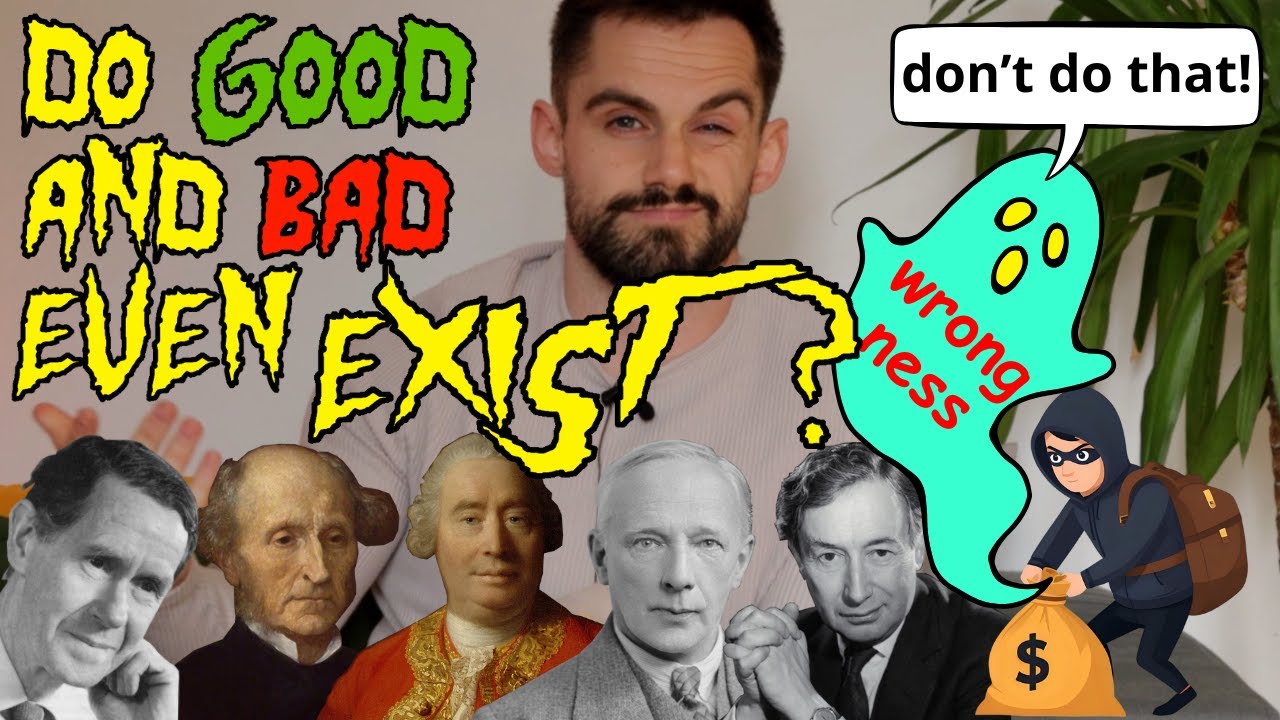












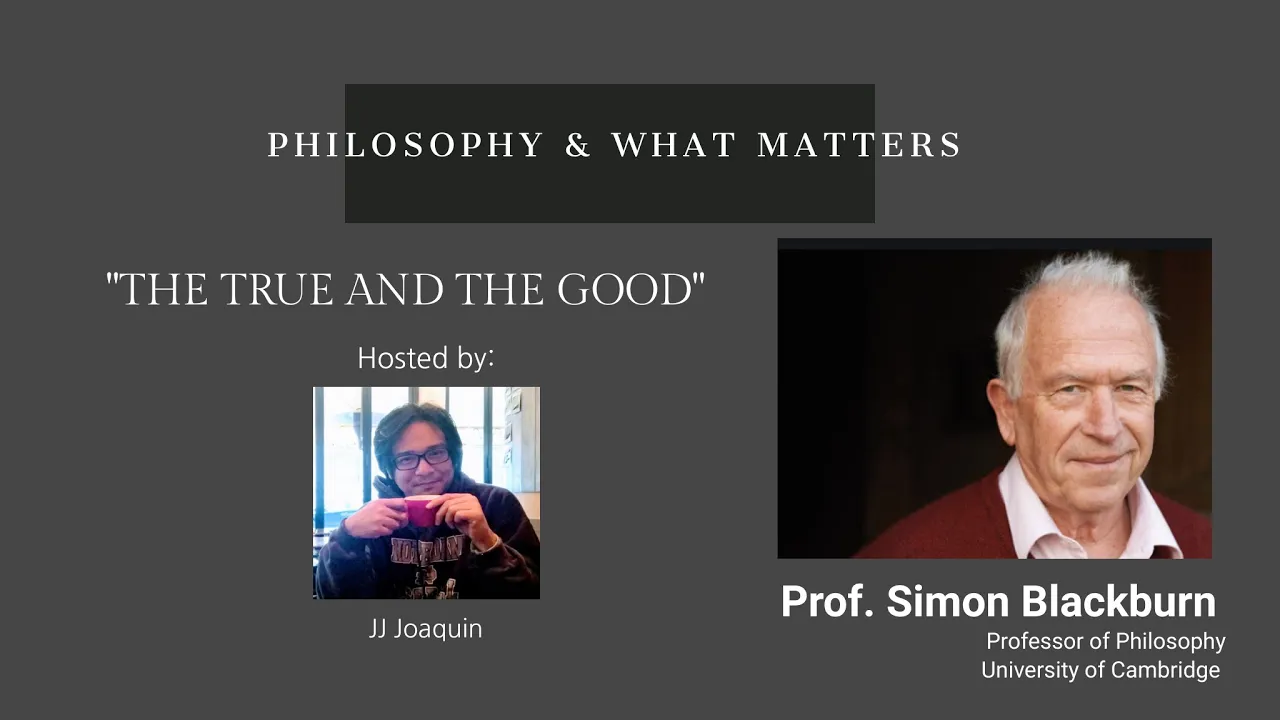
Simon Blackburn, a prominent philosopher who coined the term 'quasi-realism,' argues that ethical statements primarily express attitudes or sentiments rather than truth claims about abstract moral properties. While acknowledging that ethical discourse can be embedded in logical structures (like conditionals), Blackburn proposes that we understand ethical statements through a deflationary lens—similar to how we understand truth in general—where saying something is true merely reinforces or 'projects' the underlying attitude. This approach allows for meaningful ethical discourse without committing to mysterious non-natural moral properties, addressing the famous Frege-Geach problem by recognizing that ethical statements function as 'inference tickets' that license reasoning about attitudes.
Meta-Ethics: Simon Blackburn on Quasi-Realism and Emotivism
Added:Simon Blackburn, welcome to the show.
>> Thank you very much. Thank you for having me.
>> Most people who think about ethics know that there are kind of two ways of thinking about it. You've got realism on the one side. Ethics is a real thing.
There are real truths to know about facts like murder is wrong >> and anti-realism on the other side. That ethics is not real, that it's made up, a matter of opinion, that kind of thing.
Right? Most people are familiar with that distinction and maybe we can dig into it. But there's this other distinction which sometimes crops up >> between cognitivism >> and non-cognitivism in ethics which is not the same thing. So could you tell us what cognitivism and non-cognitivism in ethics is? Well, of course, the route for cognitivism is knowledge, cognition, >> and the um battleground is or used to be uh between the realists who say we have knowledge. It's not only that the there are real truths out there, it's also we know which they are. That's cogn cognitivism.
>> Mhm.
>> And non-cognitivists who said no, it is made up. It's not a question of knowing anything. It's a question of liking things or approving of things or choosing things and uh it's a matter of foisting our sentiments on onto other people. So that is as you rightly say the the battleground. Cognitivism then is not readily distinguishable from anti from a generalized anti-realism >> um >> or non-cognitivism.
>> Non-cognitive I'm sorry. Yes.
Non-cognitivism is not readily distinguishable from a generalized anti-realism. and cognitivism not readily distinguished from realism. In fact, I think the terms have been used quite interchangeably in the literature.
Interesting. So, I was under the impression that in at least to at least some degree, cognitivism was about truth value in that >> if an if somebody thinks that ethics is is cognitive, it means that it's the kind of thing that can be true or false.
>> Yes.
>> And the non-cognitivist thinks not. So when I think of say a an ethical subjectivist or a moral relativist who says well murder is is wrong is true for me but false for you.
>> It's cognitive and that it's got truth value but it's not realist.
>> Well um that subject that kind of subjectivism is not a very popular option for reasons we could certainly >> come to. Um so it's not I don't think I don't think the terminology has been tailored to take account of that.
>> Mhm.
>> Um there there you are right though that cognitive is is always associated with the presence of a truth value.
>> Yeah.
>> Uh that's why it's associated with realism. Um well it doesn't really have to be because if you think of knowledge um then there's knowledge of things that are true certainly but there's also knowing how >> knowing how to do things >> and so um uh people who who are called non-cognitivists might uh allow themselves a camouflage a piece of camouflage saying actually I I I'm quite cool about cognition it's just the cognition allow and pieces of knowing how to do something.
>> Uh after all, Socrates starting the ethical debate all those years ago um tended to think that um it's a question of knowing how to live and that's why it was so important. Um it so he didn't deny that there was knowledge in the area. Um it was just a question of knowing how rather than knowing that.
>> Sure. H how much of our moral terminology do you think is useful and accurate? Like we talk about realism, anti-realism and cognitivism and non-cognitivism and knowledge and stuff.
>> Yeah.
>> Is that sort of the state of the language? Is it is it suitable for for you?
>> Uh no. Um I mean I've uh spent an awful lot of my career >> Yeah. um trying to dismantle the way those oppositions are framed and the arguments that are used against one side or another.
>> And I think by now they've become very stale.
>> Um there are still people who call themselves realists.
Um but they're um as it were a diminishing tribe. Um there are people who call themselves anti-realists and they're probably a diminishing tribe as well. So curiously, the battleground has started to occupy fewer philosophers than it did say 50 years ago when I started writing about it.
>> So what are people using now if if they're not tending to call themselves realists and anti-realists? There are still people who believe there is truth in ethics and not truth in ethics. What what kind of language is being used? um the language of truth partly um the um but that that too has its failures um for reasons we might come to. One of the most popular contemporary theories of truth is called deflationary deflation deflationary theories of truth >> and those permit talk about truth almost everywhere that you've got an indicative sentence like there are cameras in this room or that's red or you're wearing a jacket and so on. So um if you say those things you can say that they're true >> um or of course false as you >> yes >> find them.
>> Okay so let's dig into this then. So there is this idea that a lot of people want truth in ethics when you say that murder is wrong.
>> You want to be able to say that that's that's that's true in the sense that it's true that the earth orbits the sun.
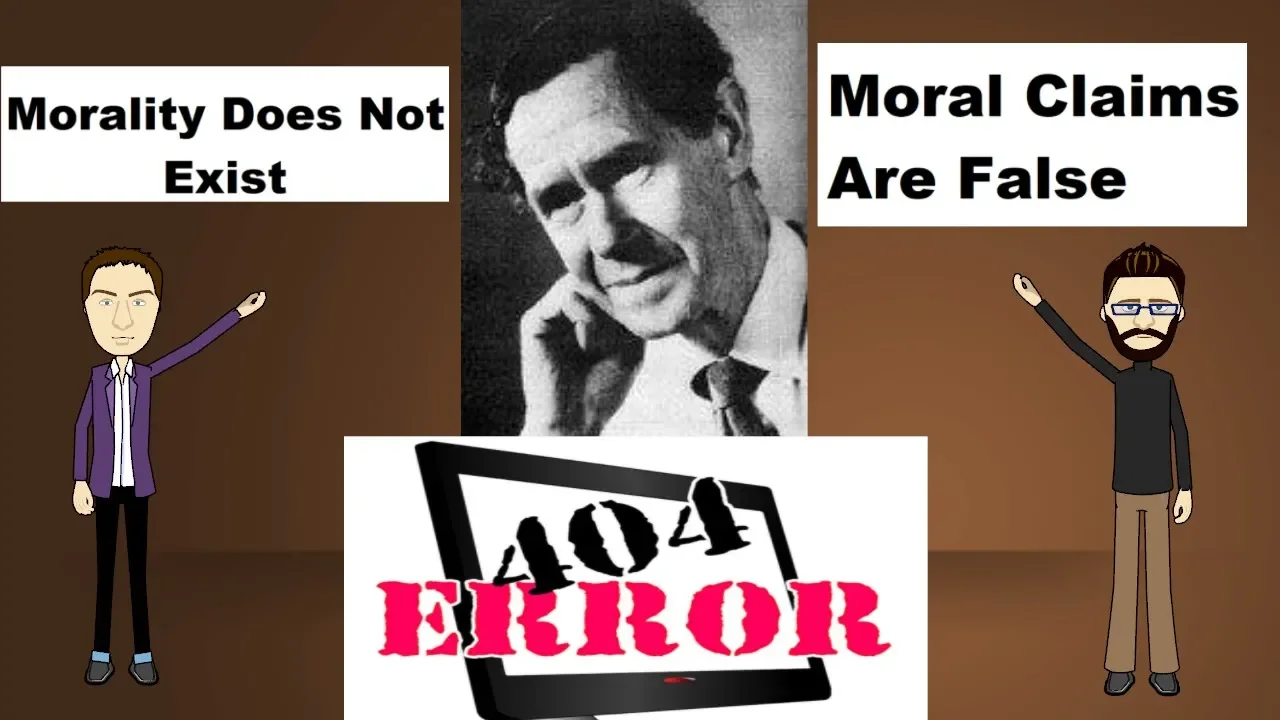
And the great trouble with this is a lot of people say, well, in order for that to be true, there'd have to be this sort of weird element to our reality that there is this property of of wrongness which Mackey famously describes as queer, as like totally unlike anything else. And if it does exist, it seems impossible to know how we'd even apprehend it.
>> And yet, we have this burning desire to say that there is real truth in in ethics.
I think you could probably call this the like the the realist appearance, the appearance of realism intuitively for people.
>> Yes, I think you could. And I think it's seduced a lot of people. I think the the rot started um this is very treacherous of me to say this because I was brought up in a a college which was Moore G.
Moore's College.
>> Yeah.
>> In Cambridge. and Moore was still a very important figure to people in Cambridge, including especially my own supervisor.
So, so I do feel very um nervous about saying what I'm about to say. But I think the rot started with Moore >> really >> in his 1903 book.
Moore um decided that um there was a property of well he talked about goodness more than rightness but for our purposes we can take them what was equal to the other. There was such a property it belonged to some things and it was a non-natural property >> that is it wasn't like the properties of things which are full within sense experience. So, it required a special mode of knowing and then you're off to the races because where are well where are you? Um because you've got a supernatural or non-natural property and you've got a non natural way of knowing about it.
>> Um and that known as intuitionism was christened intuition.
>> Yes.
>> Um sort of set the scene for 20th century discussion of these things.
Um I think it I think it led people up a garden path. Um if you look at great classics of ethics uh for example the Scottish sentimental tradition Hume Adam Smith but even as late as John Stewart Mill um Bradley's doubtful but um most of those people certainly the ones I mentioned um didn't um trouble their pretty heads about non-natural property ies and the fugitive nature of ethical knowledge. Um they either were unabashed sentimentalists like the Scotsman like Hume what Shaftsbury the English but um then then Hume Robertson Hume and uh no not Robertson I shouldn't have mentioned him but um Shsbury Hume and Smith Adam Smith um and you can read say Hume and Smith without ever finding worries about subjectivism, worries about naturalism, worried about non-naturalism.
They just go ahead and tell you how ethics works >> and this I admire them for and I think they were on the right track.
>> Yeah.
>> And I think we were deluded by Moore into thinking there was another question. The question of the nature of the moral property >> might be called like moral ontology.
>> Exactly. Yeah.
>> It's interesting. You know, I've spoken to a few physicists on the show recently, and we've been talking about functionalism.
>> Mhm.
>> As a as a view of what science does. So, there's this great debate as to whether science >> really explains anything about the nature of the world, or whether it just tells us what stuff does.
>> Yes.
>> So, famously, Newton describes gravity.
>> Yes.
>> Discovers all of its laws.
>> Yeah.
>> But has no idea what gravity actually is. And I suppose there's an extent to which I'm thinking now that that could be mirrored in ethics. You know, are we when we do ethics just talking about what ethics does and what people do when they make moral claims >> or are we talking about what the good is? And it sounds like you're more in line with the former idea.
>> Oh, I'm very much on board with the former idea. Um if we look back in history, let's go let's look at David Hume >> um writing in the middle roughly of the 18th century. Um he says an awful lot about what counts as a virtue. He's a virtue theorist. He puts virtue front and center of his discussion of ethics.
He tells you about the properties that are involved. Um, qualities of mind, useful or agreeable to yourself or others. Um, or actually there's an and there qualities of mind useful and agreeable to yourself and others.
>> Um, so that's the properties we're talking about. What do they do? Well, they excite admiration in us, >> right?
>> What do we then do? We express that admiration and that's it.
>> But there's no question of of what what is >> not beyond not beyond what the qualities are that excite us.
>> That's really interesting because when I've spoken to physicists about this in the scientific context, I sort of am a bit dismayed. I'm like, but you know, >> you're not telling me what this what an what an atom or a subatomic particle actually is. You're just telling me what it does. It's negatively charged, whatever. and they sort of look at me and say, "But that's it, you know, that's what explanation is in science."
And maybe the same thing's true in in ethics.
>> Well, I think it's true. Yes. Um >> I think Hume was absolutely right to stop where he did.
>> Um that is there should be no final question about the nature of the ethical property, the property of rightness, the property of goodness.
>> That's a metaphysical question. We don't have to go there.
>> Mhm. What all we have to do is to say what excites us, how we react to it, uh and the way we express that reaction.
>> Does this approach rule out the idea that there is this property called goodness that has a nature or does it just remain agnostic on that question?
>> It's a that's a very good question. Um I think it um it invites you not to answer not to ask it, >> right? and not to expect an answer for of it.
>> As you're finding talking to your physicists, >> Yeah.
>> Um they're not ready to give an answer.
>> Yeah.
>> Um of course there have been people I think Emanuel Kant was one.
>> Mhm.
>> Who thought that that's shows that we're confined to the world of phenomena.
>> That is we've got the phenomena of physics.
>> Yeah. Um but we can't really find out that what are the properties of things in themselves and that's as so what you're voicing or what what people who dislike the physicists functionalism are voicing is basically sympathy with Kant that there is an extra potential um object of knowledge the things in themselves.
>> Yes.
>> Now you get exactly the same when Hume talks about causation.
um that was arguably his other great contribution to metaphysics.
Um there's the properties that set us off and these are just regular successions in nature. We find that when one thing happens, another happens. When we've got a regularity like that and we're confident of it, um that makes us expect the second um on the occurrence of the first. That expectation is very um uh it's a it's ir removable. It's not something we've got control over.
>> And so we express that by saying the second must happen.
>> We use the modal language. It must happen if the first happens. If you ask where's the must, do we see the must?
>> Yeah. Where is this causal connection?
>> We don't.
>> And Hume wonderfully sort of looks. He takes the magnifying glass to you knock one billyard ball into the other billiard ball and one causes the other to to roll. And he's like, well, I can't see this this causal connection. I can't see it in the first ball anywhere. I can't see it in the second ball. It's not floating around in the air somewhere.
>> So So where is it? and and he sort of says, "Well, I I I don't really know."
And so it restricts our ability to meaningfully talk >> uh to what's happening. And the reason I think that's so exciting is because in the scientific context, people are quite willing, I find, in talking to them to sort of say, "Yeah, okay, fair enough.
We we can't really get at what stuff like fundamentally is, but you know, that's enough. like science is is a good enough enterprise just telling us what things do, but when it comes to ethics, they demand something more.
>> Well, I'm sorry for them because I think they won't find anything more.
>> Uh, as I say, if they go down the the rabbit hole that Moore opened up, they'll just find themselves in darkness. M >> um there is no nobody's ever said anything intelligent about in what how we intuitit non-natural properties.
>> Yeah. Well, I I kind of think that another good word for intuition might be feeling.
>> Ah well now you're on Hume's side. Yeah.
Because um if it's a question of how we feel about things, Hume's your man.
>> Yeah.
>> Um or Adam Smith who's actually a wonderful psychologist.
>> Yeah. Um so you know this this is this is you coming down on the side of what were traditionally known as anti-realists.
>> Mhm.
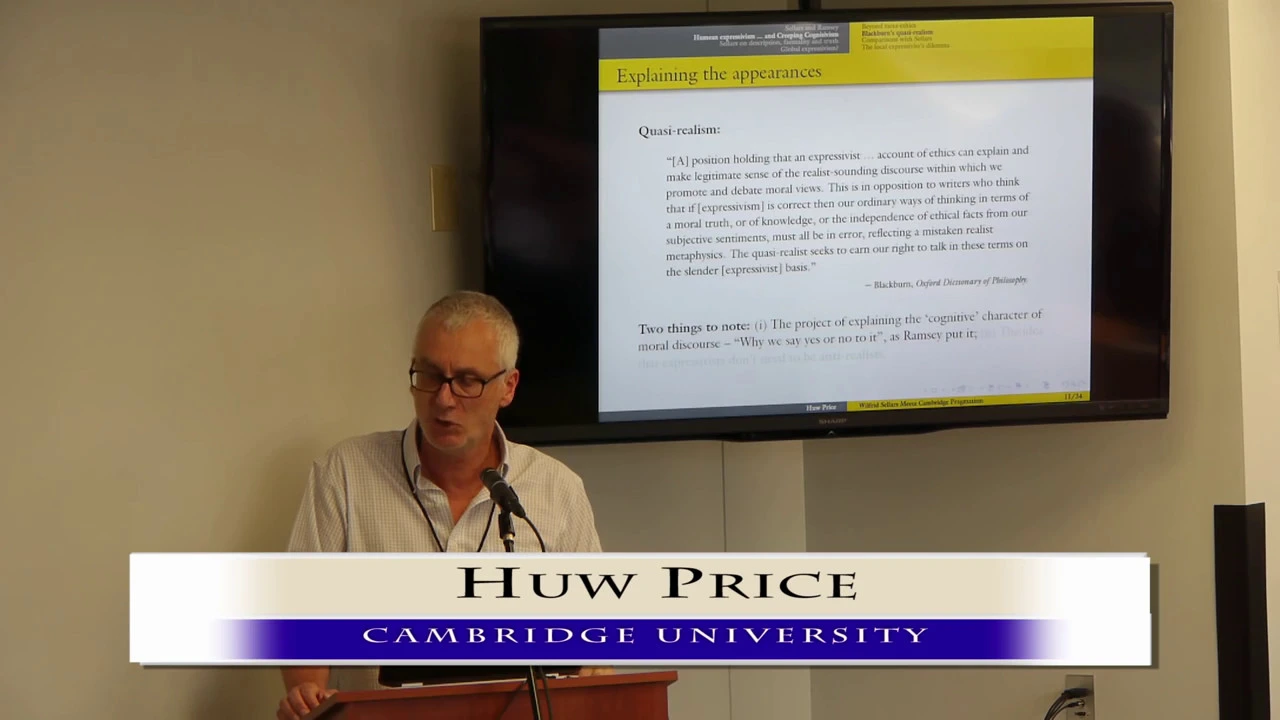
>> Um a lot of my own works which goes out which go under the title of quasi realism >> which I now regret but I'm responsible for it. um that was endeavoring to show that the um uh the feeling side, the sentimental view, the Scottish sentimentalism wasn't as bad as people thought. I think there was a reaction against it partly probably due to the Second World War um after people discovered the full horror of the Nazi atrocities.
um they they weren't content with existentialism, with the view that you sort of make it up for yourself or you mold yourself as you choose.
>> Um they wanted constraints. They wanted they wanted to be able to thump the table and say the Nazis were really bad and if you don't believe that you're wrong. Mhm.
>> Um and my endeavor was to show that express expressivists or people on the sentiment side could say that that is this these these certainties as it were shouldn't be the private property of realists.
>> Mhm.
>> In fact, if anything, I think the boots on the other foot, it's easier to explain the certainties in an expressivist or sentimental tradition than it is Um, if you're a realist, after all, if you're more, how do you know you're entitled to thump the table about how bad the Nazis are?
>> By intuiting something.
>> Mhm.
>> It didn't take intuition for the people who went into Bellson and Ashitz to understand that something terrible had happened there. Um, they didn't need to intuit it that there was badness in the air. They just needed to feel revulsion um >> and feel ashamed almost to belong to the same species as the people who did this.
And it was that kind of revulsion, indignation, a shame >> uh which got voiced in all the table thumping.
And good for them. I'm on their side. I think those were the appropriate sentiments to have >> in the light of those horrors.
>> Well, this this quasi realism which you're famous for. Um I I'm interested in why you regret the term and >> and maybe we can talk about that. But but my understanding is you're sort of taking this non-cognitive understanding of ethics that when people make ethical statements, they're essentially expressing something that that probably doesn't have truth value. Um it might be something like an emotion or a command >> or a plan. Um but that in saying so they're somehow projecting onto the world >> a realist language.
>> Yes. Well, I used to call myself a projectivist, but the metaphor of projection is very dangerous.
>> Okay.
>> Because it does have a a connotation of um as it were um illusion or something which is isn't quite as it appears to be >> and I wanted to get rid of that. Well, that's what it will sound like to to somebody who for the first time comes across this idea that oh yeah, ethics is just an expression of emotion. But I'm not a I'm not an anti-realist. I'm a quasi realist because although I think it's all just expressions of of say emotion, take one example.
>> There's something somehow real about the way I'm talking about it. Like how is that different from No, I mean the >> from that >> the the the um the the way I thought of it was that the realists the people on the real in the realist camp >> Mhm.
>> felt that they could say things which the anti-realists couldn't.
>> Right.
>> So they could talk of truth and fact and reality and so on.
Um, I want to say, well, wait a second.
What does that talk add to just saying that the Nazis were dreadful?
>> Um, and I was abetted in this uh by a book that came out in 1990 by man called Paul Horidge, very good philosopher in Cambridge. Um, just on truth.
>> Mhm. And Paul um championed the deflationist view which I meant ear I mentioned earlier.
>> Now of course if you've got a deflationary theory of truth there's no difference between saying the Nazis were bad and it's true that the Nazis were bad. Same thing.
>> Mhm.
>> It's really true that the Nazis were bad. Same thing. It's really true that it's a fact that the Nazis were bad.
>> It's true that it's true that the Nazis are bad.
I uh in one of my works I called that Ramsay's ladder after Frank Ramsey and um my use of the metaphor was to say that the Ramsay's ladder is lying on the ground. It's horizontal.
>> It doesn't carry you any high any higher or anywhere different.
>> That's brilliant. um >> talking about this regression of of true that because because people for for for people listening >> it might be helpful to think about this in terms of truth in the popular imagination at least for a long time and I think probably amongst most normal people as it were today >> what does it mean to say something is true well it means that what I'm saying somehow accords with reality the so-called correspondence theory of truth right when I say chair is red. There is a fact about reality. There is this chair and it has this property of redness and the words that I'm saying correspond to the truth of that real thing in the real world.
>> And so to say that something's true is is to say that it corresponds with reality. The deflation the the deflationary theory of truth doesn't so much offer an account of what it means to say something is true as to just say that it's just adding nothing.
Like like you just said >> the difference between the chair is red and the chair is red is true >> doesn't exist.
>> Doesn't exist >> for for the correspondence theory there is a difference there because to say the chair is red is just to express that as as a view. To say that the chair is red is true is to say that that statement corresponds with reality. But for the deflationist >> it's just to sort of express the same thing twice in a row basically.
>> Yeah that's right. Um, now there's a utility to the word true which we can go into, >> but it's a very different utility than anything that the correspondence theorist theorist gets hold of.
>> Yeah.
>> Um, I think the thing to say about correspondence is it's perfectly harmless. Of course, it's okay to say that if something's true, it corresponds with facts.
>> That's because facts are made for that role. fact is something we invent for a true sentence to correspond to a true proposition. The um it's the the mistake is to think of the facts as something separate and apart from um the um beliefs that we hold and the beliefs we cling to and the beliefs that have stood the test of time.
um and which we therefore um um want to express and want other people to believe. The um uh the epistemology is not one of now I've got a belief.
Let's say I believe that you're wearing a jacket.
>> Mhm.
>> Um now let me see what the fact is. Oh yes, the fact is that you're wearing a jacket. That second process wasn't different from the first process. Mhm.
>> All I was doing was reassuring myself perhaps that you're wearing a jacket.
>> Mhm.
>> Which is sometimes a perfectly good thing to do because you do need reassuring.
Um if you think but you think you're not very certain that there are eggs in the fridge.
>> Yeah.
>> Um then of course you reassure yourself by going and looking. And going and looking is certainly a process which puts you in a better position to assert that there are eggs in the fridge.
>> Yeah.
>> Um >> and it's it's helpful to think I in in terms of these um partial beliefs like you might say I'm not sure if there are eggs in the fridge and therefore you would say I'm not sure if it's true that there are eggs in the fridge.
>> That's right.
>> That makes sense for the deflationist.
But if they if you really can separate if you really can separate this this idea of the the statement of the fact there are eggs in the in the fridge to the truth of it then I should be able to say something like >> um >> you know there are eggs in the fridge >> but I don't know if it's true that there are eggs in the fridge.
>> Yes. And that's very awkward.
>> Doesn't make very much sense. And this ladder that you were referring to also, >> if I'm not mistaken you, would refer to the fact that for the correspondence theory of truth, to say something is true means there's a reality it accords with. Okay. So this chair exists.
>> That's the reality.
>> Yeah.
>> And so I can say it's true >> that the chair is red because that accords with reality.
>> Well, I've just created a new fact.
>> Yes, that's right.
>> And that new fact is it's true that the chair is red >> allegedly. So, I can now say, well, it's true that it's true that the chair is red.
>> And that creates a new fact.
>> I can say it's true that it's true that it's true that the chair is red.
>> And that can go on forever.
>> Yeah. And yet there aren't that many facts.
>> Exactly. Exactly. And so >> when you think of it in those terms, when I start saying to somebody, but but that means it's it's true that it's true that it's true. And and that means it's true that it's true that they would probably stop me and say, you're not adding anything.
>> That's right. every time you say that it's true.
>> That's the idea behind the metaphor, the ladders lying, >> this ladder that goes sideways, >> not go any higher.
>> Um the the first uh philosopher to use that argument you've just used, which is very powerful argument, >> uh was Frager.
>> Yes.
>> And um an argument that's good enough for Frager and Ramsay and Vickenstein and Strawson is and Quine is good enough for me.
>> Oh yeah. Yeah. And I think um this might also have some interesting implications for believers in God because of course God is omnisient which means he knows all true facts. Yes.
>> And if you have this problem of regress that every time you >> say something is true, you create a new fact >> and that sort of gives you this infinite regress that would mean that God needs to know an >> actually infinite number of things which almost seems a bit redundant like most of God's cognition is taken up and it's true that it's true that it's true that it's true.
>> Yes.
>> And so maybe this isn't a good way to think about truth.
>> Well, exactly.
>> And if it doesn't add anything to say it's true that like for the 15th time >> Yeah. Maybe it also doesn't add anything to say it for the first time. Indeed.
And so we have this idea of deflationary theories of truth that >> to say the chair is red is true is just to say the chair is red.
>> And one of the reasons this is so popular amongst non-cognitivist ethicists >> is because in the moral environment >> what the realist says to to criticize someone like me for example, they'll come along and they'll say, "Well, Alex, I know you think that murder is wrong, but can you say that it's true? M >> I just did.
>> Yeah, >> I already did say that it's true. It doesn't add anything to say that it's true. And so it fits in quite nicely with a with an expressivist.
>> Got it exactly. You got it exactly.
That's right. And from about um 1990 onwards I mentioned Paul Horitch wrote then >> um that's become gradually much more accepted >> which is why I think the old labels of cognitivist non-cognitivists and so on >> are less popular today than they used to be. Those battleground those battle lines are not quite as um as as solid as people used to think.
For a long time now on this show, I've been telling people that broadly speaking, I'm an ethical emotivist.
>> Um, I never like to commit myself to it just because >> I'm agnostic about most things, as I like to say, >> but I do try to make sense of of what's going on when I when I see somebody kick a homeless person and I feel something more than just the descriptive fact that a person's been kicked.
>> What's this extra thing that I that I'm aware of in my mind? It's >> it feel it seems like it's a feeling.
It's it's something like stop or don't or boo or something like that, right?
>> And so I think okay it might make sense to say that the ethical component of these statements is an expression of emotion. You yourself are not an emot.
Well, um, emotion, you know, if you if you study emotion, you start to get, >> um, very tied up with things like anger and fear. Um, things which have a very pronounced phenomenology. Yeah. You know, your skin breaks into a sweat and this sort of thing. And that's what people uh, associate with the idea of emotion.
>> Yeah. I prefer to work with the term attitude. I think it has the same >> um it's got the same uh um force and it's got the same seat in our sentiments.
Um but an attitude can be u it doesn't necessarily make you hot under the collar.
>> I mean, I've got the attitude that uh Donald Trump's No, I won't take that because that does make me hot under the collar.
But um suppose I have the attitude that um uh uh it was a pity that Cromwell won the Civil War, >> right?
>> Um I regret that. I think it's such a shame. That doesn't make me hot under the collar. It's a perfectly as it were inert attitude. It doesn't it doesn't by itself give me much of a motive to do anything.
It would give me a motive to descend from somebody who thought the Cromwell was a thoroughly good thing. Um, but that's about all because it's not part of my practical life. Um, but uh, emotions I think are essentially episodes in your practical life. And um, so that's why I don't entirely recommend the term emotivist.
>> Yeah.
>> But of course there's no term attitudalist which is a >> pity. Well, perhaps we can start a start a trend. People are watching. Let's let's get that let's get that going.
>> I I don't know though because, you know, >> I I think that's interesting what you're saying that you can have attitudes towards something ethically speaking >> without, as you say, getting hot under the collar. But even the way you just said then, >> you know, cuz you know, it's such a shame that that that that that didn't happen.
I I I feel like >> maybe you have to pick something which in order to find something which isn't that emotionally moving, you also have to pick something which >> you wouldn't actually find that >> morally important like genuinely of something you would express.
>> Um yes, I mean it's unusual. It's not it's not that unusual. Um I mean consider people talking about fiction.
>> Yeah. you know, but we talk, you know, um was Emma just a silly little girl or was she a heroine?
>> Um and you can imagine a couple of literary critics getting the pros and cons of that, bringing it up, >> um knowing the text, knowing the episodes, what what Jane Austin told us, what she didn't tell us, and so on. And they do it far better than I can do it um off the top of my head. But um it's it's not going to be something I mean in any profession as it were. If they're professionally arguing it, they can probably get hot under the collar.
>> Mhm.
>> But in in itself, it's not being hot under the collar about Emma's behavior.
It's being hot under the collar about what's said about Emma's behavior.
>> Yeah.
>> And that's a a different object of um of uh criticism. Mhm.
>> Um I think there you know there are um obviously history and fiction are two cases where you don't have episodes of emotion in the same way that you do if you as it were walked into Ashvitz. You then you'd feel the horror.
Um but nevertheless it's the it's the uh case where you walk into Ashvitz which gives you your your moral basis your moral bearings that's where you start I think >> do you think it would be possible in principle this is just a question about motivation and ethics I suppose would it be possible in principle for somebody to walk into Ashitz feel absolutely nothing like nothing about their emotional disposition changes and yet they truthfully express this is wrong.
>> I don't think so. No. I I think that um they might mouth the sentence it's wrong, but if they feel nothing, I think they're misusing it. I think they're they're not expressing uh a feeling that they've got. They're not expressing revulsion or >> uh sense of shame or sense of horror. um any of the things that you'd expect.
>> And um I think in so far as they're absolutely cold, then they may be mimicking moral disapproval perhaps to show that they're part of the gang or something, >> but they're mimicking it.
>> We said that it's difficult to define what like wrongness is. We just talk about like what it does. When somebody looks at Ashvitz and they say that's that's wrong, and I'm not talking about someone who's steeped in ethical literature here, just someone you meet on the street, >> I say, "What do you mean by that?"
>> And they'd probably say, "Well, I struggle to define this thing wrongness or badness."
>> But they still mean that like there is this thing about something like Ashvitz that that that is wrong. And that's and that's true. True. And if if I tried to offer an account of saying, "Well, I think you're essentially just expressing an attitude there," >> they would say, "No, no, no. It's more than that. Like, I'm I'm saying something I'm saying something true about this thing called wrongness."
Like, at the very least, if we can't define wrong or bad in terms of what it is, can we at least get to grips with what people think they mean by those terms?
>> Could I pick you up on something? You you did this before as well. Um you when when you talk about expressing an attitude you tend to insert the word just of just expressing an attitude or you're merely expressing an attitude >> and I think that has to be resisted. I mean attitudes are extremely important.
>> Yeah.
>> It's far more important to me if your attitude towards me is that I ought to be shot.
>> Mhm. than it is if your attitude towards me is the belief that you know I was uh at university in Oxford >> which I wasn't. I was at university in Cambridge.
>> Um that's you've got that wrong but it's unimportant.
>> Um whereas if you think that I ought to be shot, that's not a mere attitude.
It's, you know, potentially very dangerous attitude.
>> But some people would say that they're different kinds of statements like that.
But the idea that you know you you studied at Oxford >> is not an attitude. It's a >> it's a belief.
>> It's a belief. It's a truth claim that's that's false.
>> And I think that the person I'm embodying here would say that >> in the same way when I say that, you know, the Nazis were wrong.
>> I'm making a a truth claim. I'm stating a belief. This is something that I believe to be true about the world. And yet here we are saying that you know what will sound to them as like it's just an expression. But >> I think that the contrast between attitude and belief >> is not straightforward.
>> Me too.
>> Um so I think that we're have to go down another rabbit hole there. Um the um uh we've already established that if you use the indicative form you can use it it's true that without blushing.
>> Um I think it's it's important to put on top of that and this is this takes us on to the notorious frager problem.
>> Yes. Thank goodness. Um that um the difference between expressing an attitude by means of an indicative sentence and expressing it in some other way is not cast iron.
Language is very flexible at this point.
So to take a f favorite example of mine, um Kato allegedly said that Carthage was to be destroyed.
uh Carthage Deenderst uh and Latin has the gerand there um now he could just have said let's go and destroy Carthage that would have been an actually an um an imperative form but expressing an attitude of you know um dislike of the existence of Carthage wishing to do wishing to abolish did.
Um, he could have expressed his wish that way or he could have said Carthage is to be destroyed.
I think the second has a slightly more public face. It makes it plain that Kato doesn't think that he's out of line or idiosyncratic about this. Um, he thinks that, you know, all right thinking people are going to agree with me or I'm going to try and get them to agree with me. Carthage is to be destroyed.
But the difference then I mean is a difference that Peter Gech did emphasize.
If you just say um boo to Carthage or boo to the existence of Carthage, let's do away with Carthage, you can't say if let's do away from with Carthage, then one thing or another.
>> Mhm. If you say Carthage is to be destroyed, you can say >> if Carthage is to be destroyed, then is Ty and our Ty and Siden to be destroyed with it?
>> Yeah.
>> Um or if Carthage is to be destroyed, we'll need a bigger navy than we've got at present.
>> Interesting. That's a great example.
Yeah. Um so the advantage of giving the attitude or the injunction in this case the plan um an indictive form is that it renders inference and discussion >> possible.
>> Mhm. Now, Gech famously said, "Ah, this is a um an abbby that nothing can cross.
Either it's on the side of Boohare.
It can't enter into these um uh inferences or it's on the other side. It's propositioned and then it can. But never the twain shall meet." And that's emotivism's problem.
>> Yes.
>> And a lot of ink's been spilt about this. this impressed philosophers and worried them. I tend to nowadays to reverse it to say no the the exact reason that we have these interchanging forms is that when we use the indicative form we know about making inferences and we need to make inferences. the um the uh commander of the army needs to say things like if Carthage is to be destroyed then we're going to need a lot more ships. Um if Carthage is to be destroyed we can't do it with the army we've got we're going to have to employ some Spaniards and so on.
So, anybody um intent on serious planning is going to have to take the um the fruition of a plan as something he can um make hypotheses about he can embed into these conditions.
Yeah.
>> But there's a reason for that and the reason is the one I mentioned there namely that it enables inference.
>> Mhm. And inference is important. Yeah.
If you just go around saying Buddha Gthage, you haven't yet as it were given the commanderin-chief his marching orders.
>> Yes.
>> You've just expressed >> you've just expressed a feeling or an >> Yes. Exactly.
So it may be right to say that in ethics or in some of the forms in which ethics takes, we go beyond just expressing feeling and attitude. You see I use the word just there >> just expressing feeling attitude.
>> I think we and this was first pointed out by man called Charles Stevenson in the 1940s in the book ethics and language.
We offer um ethical discourse to each other partly as a matter of persuading people.
Not just we're not just content to say this is how it is for me. We're also saying this is how I want it to be for you.
>> I want you to share this attitude.
So, it's a persuasive um exercise as much as anything else or a reassuring exercise if I think you do share it, but I'd like to just hear that you you share it. Um but having um thought of it as shared, we then can also switch to the jurand and think of it as something to be done.
>> Mhm. So there's something to be done.
Carthage is to be destroyed.
Let's build the army if it's build the navy.
>> Yeah. I mean, you can't make inferences from expressions of emotion. Like logically speaking, no, >> you can't say if boo Carthage then open a window.
>> No, that's right.
>> That that just isn't it it's like saying if three then go and open a window. It just doesn't make sense.
>> Grammatically not sensible. And so, as far as I understand it, the so-called Frager Geach problem, named after Frager and Geachch, >> um, also known as the embedding problem, >> yes, indeed, >> is a problem for, I'll use the term emotivism because with the caveat that we've said it might describe attitudes.
>> Emotivism basically says that when I say murder is wrong, I'm just expressing an emotion about murder. Yeah, I that's that's that's what I'm doing. And to be clear, one confusion. I'm not reporting what I feel.
>> Like murder is wrong doesn't mean >> I don't like murder.
>> It's not made true by your like or dislike.
>> Yeah. Cuz that could it could be true that I don't like murder. That's not an expression. That's a fact about my brain. Instead, murder is wrong is the expression of that of that dislike. So it's as a famously had it something like boo murder, right? Or murder and then an angry emoji next to it, right? with a bunch of exclamation marks. Okay, that's what is wrong adds.
>> Okay, so it's just an expression.
>> The embedding problem is about what happens when we use those phrases embedded in other contexts. So if I say something like >> I wonder if murder is wrong, >> those words murder is wrong can't mean I'm expressing boo murder because I'm saying well I wonder if murder is wrong.
But I can't say >> I wonder if boo murder if in order to say boo murder I have to express something.
>> No.
>> And so you have this soal embedding problem that either the emotivist is right that this is what ethical statements mean but as soon as they show up in you know if then statements or you know I wonder if suddenly it changes >> or that's not what was meant all all along. And what I want to focus in on here because I want to take this somewhere is specifically the context of um syllogisms. So a syllogism for our listeners is an argument that takes that has two premises and a conclusion.
Uh all men are mortal. Socrates is a man.
>> So >> therefore Socrates is mortal for example. Now here's one syllogism.
If murder is wrong then murdering Simon is wrong. Premise two, murder is wrong.
>> Conclusion, therefore, murdering Simon is wrong. That seems valid.
>> Absolutely.
>> And everybody would look at that and go that that the conclusion follows from those premises. The problem is for an argument to be valid means that the conclusion can't be false if the premises are true.
>> Mhm.
>> But if premise two, murder is wrong, >> is just an expression of emotion. I'm just going boo murder, then it can't be true. It can't be false. that can't be true any more than saying stand up can be true or false.
>> It's an expression of emotion in the indicative form.
>> Yeah. So, so in this particular context, it helps understand what this means.
>> Most people think of logical validity as requiring true and false statements with true statements following from true statements.
>> And yet the emotivist says that that premise two there >> is an expression of emotion. Yeah, >> which most people think expressions don't have truth value. So, how do you get a logical a logically valid syllogism >> from non-truth sentences?
>> Well, that's a a beautiful exposition of exactly Ge's problem.
>> He took the example if lying is wrong, then getting your little brother to lie for you is wrong.
>> Yeah.
>> Um lying is wrong. So, getting your little brother to lie for you is wrong.
It's exactly the same problem.
Um. Yes. Well, it uh it's um it it means there's got to be a complication.
>> Yes.
>> Now, the complication that I think does the job is the transition to the indicative form because that we've already established I think as we talked about deflationism that truth isn't going to be the problem. Mhm.
>> It's just if you've got the indicative form, you've got the possibility of inference.
And my counter ge is to say we've got the indicative form because it gives us the possibility of inference.
>> Mhm.
>> Now, of course, you can give a functional account of why you want inference when you're expressing your attitude.
Um I mean one example was um if you approve of um giving money to the homeless then you approve of giving money to um you know female homeless.
>> Mhm.
>> Um you need to be as it were able to be taken to account >> Mhm. for your attitudes. If your attitudes are all in pieces, so you think that lying is wrong. Uh if lying is wrong, then letting your little brother getting your little brother to lie for you is wrong. So, and then you don't say, "No, no, but but getting your little brother to lie for you isn't wrong."
>> Mhm. Well, you may be about to do a modus tolen saying since not the conclusion, not the premises, not one of the premises, but um but otherwise you're contrad if you try and hold everything there, you're going to be in contradiction.
>> But can you have a contradiction if there's no I do do you mean to say that when we put these ethical expressions into their indicative form, >> they do now have truth value, they are now the kind of thing that can be true or false.
>> Yeah, absolutely.
And that's because truth and falsity kind of is just an expression because to say it's true is just to express it.
>> Yes.
>> In that case then >> when I look at a statement like >> if murder is wrong then murdering Simon is wrong.
>> I might say okay so maybe when I say that that's that's a true conditional that that's just an an expression of the same thing. But what is the thing that I'm expressing in a conditional? Because I I'm not when I say if if murder is wrong, then murdering Simon is wrong. If I say that conditional is true, I'm not expressing either of those component parts. I could think murder is fine. But I could say if murder is wrong, then murdering Simon's wrong, but I think murder is fine. So what am I expressing when I say that the conditional claim is true?
>> Well, there are various ways of putting it. I mean, one thing, this is going to sound more complicated than it is, would be you're expressing disapproval of holding the one attitude without holding the other.
>> Right?
>> Um, so you're you're actually amongst your objects of concern is the latis of implications >> um in your approvals and disapprovals because approvals and disapprovals don't stand by themselves. we feel the need to defend them, feel the need to say what they involved. Um supposing you know, uh Karma says I approve of um I don't know um industry or something.
>> Um you know, you might say, do you approve of all industry? If you approve industry, do you approve of unpaid housework? um you know so on. Um we want to know what the implications of his approval are.
>> Um similarly for ourselves we we may not have realized that our attitudes carry an implication which we may not be all that happy with.
>> Yeah.
>> Um and teasing that out is part of the stuff and substance of ethical debate.
>> Yeah. Um I mean take for example the you know what what do they call themselves resolute kind of uh u benevolent people who think you ought to give away all your surplus income above um whatever the minimum >> that you settle on is.
>> Um have they worked it out? Well, if you do that, if everyone does that, then what will the consequences be for consumption and therefore for production and therefore for wages and um economy in general? I mean, if everybody does that, are you sure that the world as you know it will go on the same as you always expected it to?
>> Be very nice for people who get richer, but it may be very nasty for everyone else. and it may in turn become very nasty for the people you thought you were helping. So unless you've sorted all that out, it's not a very sensible policy to go around advocating.
Similarly, poor just stop oil. Have you any idea about the number of things oil is used in?
>> You know, would you any longer be able to buy your fruit drinks in um the cartons that you're used to?
Would you anymore be able to wear your fleece? Would you any more be able to wear your trainers? Um, the answer to all those questions is no.
But seeing that implication is something which >> I think you've got a duty to do.
>> Yeah, it's really important to be able to talk about the implications of ethical claims.
But the problem for the emotivist is that if it's just an expression, it seems tricky to get these logical uh corolleries of ethical expressions.
But the strategy I really like and and a strategy that I I that that sent me down a a path of all kinds of thinking when I first read it was was this particular strategy you just referred to in response to the freight gig each problem. Let's take that conditional statement which I just asked you about.
If murder is wrong, then murdering Simon is wrong. And we want to say that conditional is true without expressing either of those individual components.
And you said, well, okay, what you're expressing there is a disapproval >> of holding one of those beliefs without the other.
>> Yeah.
>> And there's this wonderful sort of language you can construct around this.
So if we adopt the boo yay language of a >> murder is wrong means >> boo murder.
>> Mhm.
>> And murdering Simon is wrong means >> boo murdering Simon.
>> So how can we make sense of if boo Simon then uh if boo murder then boo murdering Simon because that that's not just like true. You don't necessarily hold those both. Well, suppose I mean it's temp let's just say for simplicity uh sake that the opposite of boo is huray.
>> Y >> so hurray would cover just tolerating something. It doesn't mean you actively approve of it but you don't disapprove of it. Um well um boo to boo Simon without boo to boo murder without >> boo m murder >> um you could put that in a in a parenthesis at a jacket.
>> Booing murder without booing murdering Simon. That seems really weird. We don't I can't get on all fours with somebody who says that it's seems as it were illogical the strictest sense.
>> Okay. So boo to that to that whole thing that whole thing.
>> So we end up with something like >> boo.
>> Yeah.
>> Brackets.
>> Yes.
>> Boo murder at the same time as yay murdering Simon.
>> Yeah.
>> Boo to all of that at the same time. And that's what we mean when we say >> if murder is wrong then murdering Simon is wrong. Because what we're saying is boo to boo murder and yet yay murdering Simon.
>> Yes. Exactly.
>> So, and you have to do it in this annoying negative ne negative way.
>> Yes. And and and that itself um gives us a motive for going over to the form we're all familiar with the indicative form.
>> So, let's take a look at this syllogism that we've got which is if murder is wrong then murdering Simon is wrong.
Murdering Simon is murder is wrong.
Conclusion therefore murdering Simon is wrong. So the emotivist says something like premise one boo >> towards bracket. So we're booing brackets boo murder and yay murdering Simon.
>> Right. Premise two is boo murder.
>> Mhm.
>> And because we've previously expressed boo towards boo murdering Simon and >> not >> uh towards boo murder and harab murdering Simon. If we do express boo murder, then we've kind of committed ourselves to >> Boo murdering Simon.
>> That's right.
>> And that's what the conclusion is. It's like this emotional corollery.
>> Yes.
>> Of expressing your discontent with these two simultaneous things >> and saying one of those things and therefore having to say the second thing.
>> Yeah. I developed a logic like that in a long long time ago. This was in spreading the word.
>> That's right. Yeah.
>> Um >> and it's um it's got its wrinkles. I mean, I I still think it was very important to do it.
>> Um because um it it showed that we're not as it were um founding things on sand.
>> It showed that we need our attitudes to have uh the kind of structure and the kind of integrity um as a whole >> that we also want through our beliefs.
Um and that was I I thought an important step in answering GE Frager GE.
>> Um it's it attracted a lot of discussion, >> some of it rather silly, some of it not.
>> Um the most acute critic was probably a man called Bob Hail.
>> Mhm.
>> Um who worked at St. Andrews and he was a legician and he had uh some quite interesting things about the recursions involved about the the increases in complexity.
>> Mhm.
>> Um I think now I've sort of lost interest in the actual complexities of the 1984. It was 1984 construction.
Um I haven't defended those in recent years because I think the um the nerve of my current answer to GE is that um it's precisely because we want the inferential simplicity of that we're used to in syllogistic reasoning um that we transfer to the indicative form.
Can I ask you then and I I know as you say this is a language that was concocted a while ago and it might not best represent how you think about things now but the thought that this caused to arise in me let's say >> is that I thought wow this is a really interesting way to emotivize >> if then statements right because I've got this problem that I think morals are emotive >> but what about if it's a conditional oh well I can just emotivize the conditional There we go. Problem solved.
Now I suddenly thought, well, couldn't we also then in principle emotivize all conditionals? So, so outside of just the moral like boo murder and yay murder, >> let's take a non-moral claim like >> if it's raining outside, then I'll get wet.
>> Could I not also sort of say that what I'm doing there? If if if a deflationary theory of truth is correct and by saying something is true I'm just sort of expressing it in some sense what I'm saying is boo brackets yay it will rain >> at the same time as boo >> I will get wet and so I've sort of emotivized non moral syllogisms as well >> well I wouldn't use the term emotivized but um the same kind of theory was given for conditionals. Um, in fact, it's implicit in Hume. If we go back to Hume on causation, >> he's going to give the same sort of story about if the bill if Billy ball A hits billyard ball, billy ball must >> go. He's he's going to give the same story about the if then. Mhm.
>> You're dafted if you um think that Billy Bull A hits bill B without also expecting Billy B to to go. But uh Gilbert Riyle wrote a famous paper if so because um back in about 1950 and um he said that uh by issuing an implication um you're issuing an inference ticket um that is your uh permitting or allowing or maybe insisting um I mean somebody who gives you a ticket doesn't usually insist that you go to the concert but >> it maybe that if you issue the inference ticket, you're entitled to go from A to B. If A then B.
Um he's also it's also as it were an injunction that you've got to go from A to B that you're at fault if you don't.
>> Um so he he he talked about inference tickets, the licensing of inference tickets.
>> Well, of course, licensing something is like expressing an attitude. It's not in itself saying something.
>> Yeah.
>> But it becomes saying something if saying something is the way to issue the license.
>> Yeah.
>> Which was exactly how Ral thought of it.
>> Interesting. Because for me, I've hinted at this a few times and careful listeners to the show might have picked up on it. I'm really interested in the extent to which the way the emotivist looks at ethics >> and says, "I know you're you think you're being all propositional and truth claims and correspondence, but actually you're just expressing emotions.
>> I wonder the extent to which we can apply that same thinking >> outside of ethics. So, we've just done something like that to conditionals, >> right? But like the emotivist wants to say that just even the statement murder is wrong is some kind of expression or attitude. And I'm interested to the extent that we might be able to apply that to statements like the table is brown >> or you are wearing a jacket.
>> And I I don't know if that's something that I don't know how much that has been explored in this context before and where you know I could begin to look to find interesting thinking on that.
I think you could find it probably at its most richest. I mentioned Riyle.
>> Mhm.
>> Um Riyle unfor unfortunately I think um worked in the n in 1950s in Oxford and of course ordinary language was the uh the sort of be all and end all under JL Austin. Um but Ry had some roots in the pragmatist tradition that is the Americans pur and >> Mhm. uh James and perhaps to some extent Dwey. Um and the pragmatists rather like I mentioned the Scottish sentimentalists having told you about the the tripartite story what the properties are in ordinary natural terms uh what they do the excite an admiration in us what we express the admiration just as they had that three-part story and then stopped.
>> Mhm. Um so the pragmatists were very keen that um you didn't look at abstractions didn't look at things like truth or logic um uh pur has a wonderful saying um we we we must not start with pure ideas vagabond thoughts which the h public highways with no human habitation >> but with men and their conversation.
>> So what you have to do is look at what people are up to or doing.
>> Yeah.
>> Um to that extent this is a link with the ordinary language movement of Oxford.
>> Um you don't you don't immediately go for the big abstract terms.
So, as I So, as I put it in one of my books, when Pontcious Pilot says, "What is truth?"
Um, the right answer for a deflationist especially, is to say, "You tell me what you're interested in."
>> If you're interested in whether this guy is guilty, then the truth consists in him being guilty.
>> Mhm. If you're interested in showing that um you know uh Barabus is right about everything, then the truth is Barabus been right about everything.
>> Yeah.
>> But you can't say in general what truth is because I don't know what you're interested in.
>> Yeah. Um it's like what is >> Well, you I guess you could say truth is well it's not even right to say that truth is affirmation.
>> No, but it's you can affirm false. I I agree that the important thing to do is to look at what people are actually doing, right? And I'll I'll run this by you just to to round things up here because I I wanted to see what you think of this >> because it's kind of fun to think about, but some people think I'm losing my mind when I start going down this this train of thought. Like, let's take a the most non-emotive statement we could think of, like, you know, the table exists, right?
And then I ask myself, okay, what am I doing >> when I say when I affirm the table exists? Well, well, why do I think the table exists?
>> Because I can see it.
>> Okay. Why do I believe that? Because I can see it, it's there. Well, because I believe that my sense data is accurate.
Okay. Why do I believe that my sense data is accurate? Well, because if I didn't, I'd be in some kind of, you know, cartisian skeptical hellop, right?
>> Okay. Why not just do that?
>> Mhm. and I have to say something like I just >> I just boo, >> you know, >> and so if what I'm kind of expressing at least to some degree by saying the table exists >> is my discontent with the negation of this fundamental premise, you know, sense data accurate.
>> If I say it's it's false that my sense data is accurate and I'm sort of like no, no, boo. like I I sort of ex and when I say that my sensator is accurate the motivation for saying that what I'm doing is I'm reacting badly >> to the opposite >> if that's like an expression like a boo to that >> then when I express that the table exists if that's what I'm fundamentally expressing then is it not in some sense >> is it not sensible to say that when I say the table exists >> I'm to some degree expressing an emotion Well, I think you expressing confidence in your own um the deliverance of your own senses, but of course we're often not aware of the um interconnectedness and therefore the complexity of what we're expressing. M >> I mean I thought you were going to sort of get not so much onto um you know a general anti-carteesian view of your own sense experience that it can't be just the there's a matrix reality.
>> Um but to point out that to say that the table exists is to have a huge variety of commitments.
>> Yes. If you try and occupy that space, you'll fail.
>> Yeah.
>> Um if you um try to um um uh do all sorts of things, you'll meet resistance from the table. Um if you put your glass down, it'll be held up.
>> Mhm.
>> If if if if then. Um and so you know in so far as conditionals have um an expressive side to them >> they're inference tickets you've handed yourself a great sheath of inference tickets >> and just by saying the table exists you're committed and ex your expectations spread across you know far more than you might have thought. Yes.
>> And and that I think is fine. It it reminds us of the as to use a word I've used quite often, the interconnectedness of things. That is that >> um you know uh philosophy likes to split up into you know there's lectures on epistemology and then there lectures on metaphysics and then there lectures on ethics and so on. And it maybe that's not a fact of the curriculum. Nothing to do with the way things come together in our minds.
>> That certainly seems seems plausible to me. Um but when I say to people like there is some degree to which I think when I say the table exists what as I say what I'm doing >> is expressing an attitude indirectly because I'm expressing an attitude towards my sense data and it might not be your sense data. It's just wherever it happen wherever it happens to bottom out for you whatever you're doing. So suppose that somehow I broke down my belief that the table exists and I kept breaking it down and why and why and I got down to the laws of logic themselves. I said well >> because something can't be true and false at the same time. And then you said why not?
>> I would then still have to say it. It just has to be that way. It says okay well just just consider for a moment that P is true and false at the same time.
>> What does your brain do? It kind of goes no kind of goes boo I'm not I and it doesn't reason it. It's almost pre-rational. It doesn't justify it. It just >> feels it.
>> Yes. You can't play the game if you >> exactly >> and see the truth and false.
>> But if that foundational thing that you are see people call it an intuition.
It's just intuitively or maybe self-evidently true.
>> Again, as I mentioned before, I think another good word for that might just be like really strong feeling.
Well, it's um possible to um expand feeling to all all the dispositions of our minds. I think that's >> Yeah. Yeah. I I suppose that's what I'm interested in in >> the legitimacy, not even so much of doing that, but but of of conceiving of of it in that way of of >> widening our scope of of of emotive understanding to >> Well, I think it's I think it's a it's a good line to follow because um it gets us away from what Wilfried Cellers called the myth of the given. Mhm.
>> Um I mean sellers thought that one of the um great mistakes of modern philosophy mistake which um was basically the split between the analytical movement Russell and Moore and the preceding Oxford idealists or Hegel or Kant um was that they thought in in atomistic terms. They thought that you know the table being there is an an a datim. It's an item of um experience which is given.
It's a given to you. Then what was given might only be sense data but it might be the table.
>> Mhm. if you're more um you know less uh less of an indirect realist >> um uh and you know Cellar's thought and um and of course the idealist thought that um this was a mistake a wonderful metaphor Russell mentions is that Bradley and this is the Oxford idealists of the 19th century >> thought that the world was a pot of trial whereas Mor and he think that it's a heap of shot.
>> Now the heap of shot has these sort of atomistic individual shot is you know there's nothing nothing much to relate them. They're just if you pour them out they're just a heap.
>> Mhm.
>> Whereas pot of tree color you can't separate anything out.
>> Yeah. Um and the idea that um I mean the idea of so-called holism came back into philosophy in the middle of the 20th century after it had been exiled by the original analytical philosophers.
And with holism comes the the kind of view that you've been sympathetic to >> that um you know you can't just have one inference. You're going to you're going to a piece of datim.
>> Mhm.
>> Is going to be a a cornucopia of many inferences and many >> quite ripples throughout your whole web of belief.
>> Okay. Then one more thing then to round out which is just one more strategy a bit of a novel one let's say to emotivize propositions or or things which are generally not thought to be emotional like like simple propositions like the table exists whatever here's one strategy we might say okay let's suppose that we're like materialists let's suppose that all that exists is matter there's no god there's no ultimate mind right what What is a proposition? Well, a proposition is a declarative statement. You know, it it says that something is the case. Something like that. Okay. So, where and in what way and and when do propositions exist?
Well, for the materialist, propositions only exist when they're being thought or when they're being spoken. Otherwise, propositions don't exist. The things they refer to, like chairs, might exist, but the proposition the chair is read only exists when someone's thinking it or speaking it. Can I can I just inter interrupt >> please?
>> It seems to me that you're trespassing against P's dictim um but proposition >> Mhm.
>> is an abstraction.
>> Yeah.
>> Asking what it is.
>> Uhhuh.
>> Is already trespassing against the dictim. We must not start with pure ideas.
>> Yeah.
>> Vagabond thoughts that the public highways with no human habitation >> but with men and their conversations.
Now in how do we use the idea of a proposition in a conversation?
Well, we talk about what you said, what you think.
>> Okay, >> those are propositions.
>> Okay, >> and they're used to locate items of information or misinformation that we want to tell each other about.
Um that is they they have their home in the conversations of people.
>> Mhm. And I think it's a mistake to ask what they are as it were. It's it's um uh it's obviously it's like asking you know whether the the tree falling alone in the forest makes a sound.
>> Um I think um they are whether or not anybody's talking.
>> They are what they will be saying if they were talking.
>> Yeah. But okay. Okay. So, is it fair to say then that if a proposition exists when it's being spoken or when it's being thought, given that speaking and thinking are both things that people do, >> they're actions.
>> Does that mean I could sort of say that a proposition is an action?
>> No, I don't think so.
>> A thing that's thought or a thing that's spoken.
>> Actions make it salient to talk about them.
>> Interesting.
>> You don't want to talk about them if there's no action. Yeah, because of course the the the rounding up of that of that argument might be that well if propositions are in some sense actions or things that people do, actions or things that people do don't have truth value and therefore propositions wouldn't have truth value which seems a little bit strange. So I wanted to I guess probe how you understand what a proposition is. But I I I guess just like with the ethical question from earlier, >> yeah, >> feel like that's trespassing somewhere that philosophers dare not tread.
>> Well, I I think we've learned the wisdom of not treading there.
>> Right. I see. Yeah, that's that's an interesting way of thinking about that problem, too. Or whatever the case. Um, it's it's something that I, as I said earlier, I think has a surprising connection to what listeners of this show might have heard recently and some of my discussions with physicists about the nature of what science does. In other words, I think if anybody's a little bit dissatisfied with the ethicist sort of saying, well, we just don't do that. We just don't talk about that. We don't go there. You say, well, why not? We could ask the same thing for the scientist who doesn't go there when it comes to, you know, the metaphysics of what stuff is actually made of.
>> Yes. Well, there is a wisdom in pairing down the number of things that there are to trouble one's pretty head about.
>> I think that that's that's >> enough to trouble oneself about in the world as we have it. Not uh not only in the in the flights of metaphysics. Yeah, I think it's another great example of uh of of why so many people could ridicule philosophy because you could sit here for four hours and discuss what a proposition is >> and then go out and not change anything about the way that you actually use them in practice.
>> Yes, that's right.
>> But one proposition that that I can >> I think philosophers need to shake off that unreal kind of image.
>> Yeah.
>> Um by not not dealing with questions which we don't have to deal with.
>> Yeah. Well, an interesting message and and injunction and I'm genuinely interested to see what people will make of it. Simon Blackburn, thank you so much for taking the time.
>> Thank you for giving me the time.
>> If you enjoyed that conversation, you might like my previous episode with Sabina Hosenfelder on the explanatory limits of the scientific method. You can watch it by clicking the link that's on your screen. To support my work and get early adree access to episodes, subscribe to my Substack at alexoconor.com.
Thanks for watching.
Up Next
What Is Art? Aesthetic Appreciation in Philosophy
@crashcourse
1.1M views•2016-10-03

John of Damascus on Holy Images: A Theological Defense
@BannedBooks
139 views•2026-04-25
Debating the Foundations of Morality | Philosophy Panel
@CosmicSkeptic
354.6K views•2025-07-14
The Myth of Sisyphus: A Greek Legend of Eternal Punishment
@TEDEd
8.6M views•2018-11-13
Related Study Plans & Knowledge Roadmaps
Structured learning paths in Philosophy