

















The Frege-Geach Problem demonstrates that non-cognitivism in ethics cannot adequately explain the logical properties of moral language, as it fails to account for how the meaning of complex moral sentences (like conditionals) can be derived from the meaning of their simpler components, thereby undermining the entire class of non-cognitivist views on moral language.
The Frege-Geach Problem: Non-Cognitivism in Metaethics
Added:The fundamental distinction between cognitivism and non-cognitivism in metaethics.
Basic tenets of moral expressivism and emotivism (the view that moral claims express attitudes rather than factual beliefs).
Elementary formal logic, particularly the structure of valid deductive arguments such as Modus Ponens.
The philosophical concept of truth-conditions and how declarative sentences traditionally convey propositional meaning.
Simon Blackburn’s Quasi-Realism and his projective explanation of moral logic.
Allan Gibbard’s Norm-Expressivism and Plan-Expressivism as structural solutions to the embedding problem.
Hybrid Expressivism (or Ecumenical Expressivism), which merges cognitive and non-cognitive elements of moral language.
Minimalist and Deflationary theories of truth, and how they are utilized by contemporary non-cognitivists.
178.1K views3.5Klikes10:12Original Release: 2014-12-12
[Chiptune Music] The Frege-Geach Problem is one of the most famous and important issues in ethics of the last century.
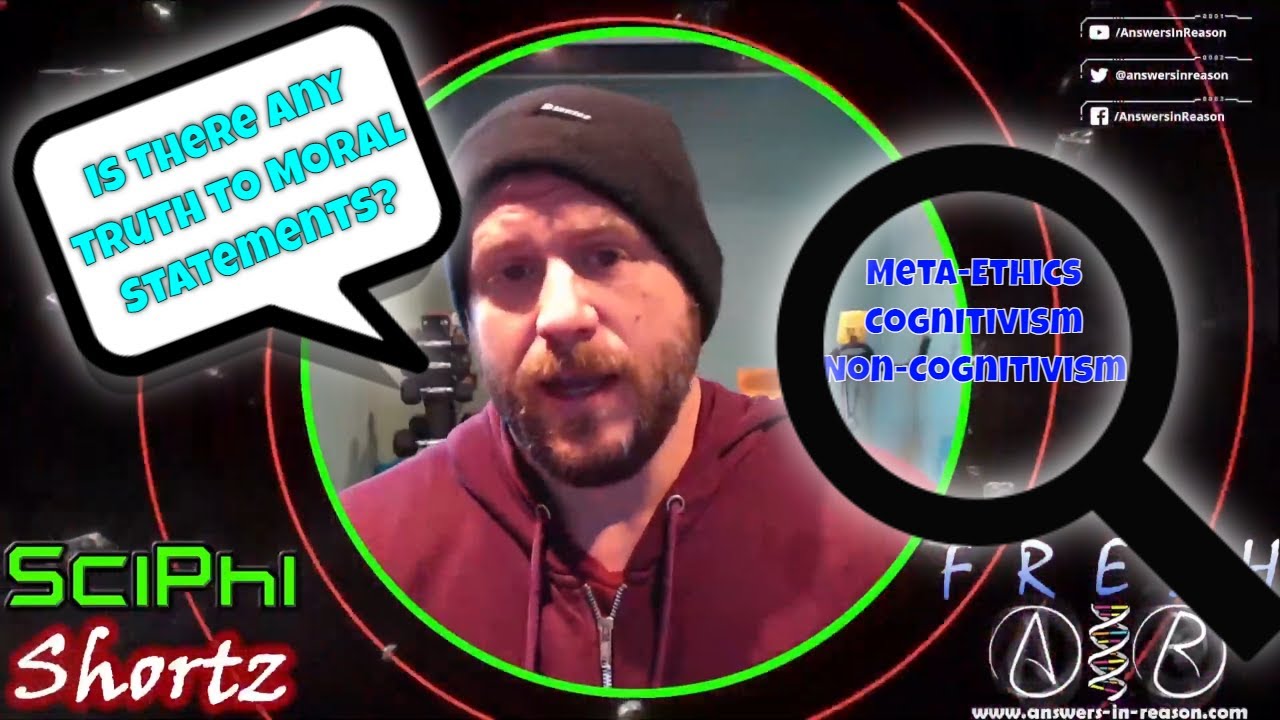
Specifically, it is a problem with the entire class of views called "Non-cognitivism."
So before we learn about it, we need to know what non-cognitivism is.
So! The 20th century was a very active time for the field of metaethics.
Metaethics is a branch of ethics.
Ethics tries to find out what the "good" is; metaethics tries to find out what the heck "good" even means.
One class of views that arose in 20th century metaethics was noncognitivism and it incorporated a lot of different philosophers like A.J. Ayer, C.L. Stevenson, and R.M. Hare.
They all had their own different versions of the theory, but the unifying thread of noncognitivism was that moral talk is not about *anything.
The sentence "Grass is green" is about grass, and it having the property of greenness.
"Murder is bad" seems to be similar.
It sounds like we're talking about murder, and ascribing some property of "badness" to it.
And metaethics wonders what sort of property that "badness" must be?
But! The noncognitivists said that *that is not the case.* Moral language does not try to describe anything, and therefore it has no truth conditions.
There is nothing that can make it true or false.
"Murder is bad" is neither true nor false.
It looks like it's talking about murder, but it's actually not that sort of thing.
To go over some of the views very quickly: Ayer thought that "stealing is bad" was like "Stealing! Booooo" and Stevenson thought it was "I disapprove of stealing; do likewise."
And Hare thought it was similar to "Don't steal."
Now those are oversimplifications, and we can go back to those theories another time, but the important thing to take away is that the noncognitivists thought that the key aspect of moral language wasn't what it *means,* it's what it *does.* Okay, why would anybody think that?
Well, thinking about moral language in terms of what does make it true or false raises issues.
For instance, what *does* make it true or false??
How do we get to know about that?
What kind of property is "wrongness" or "goodness" exactly?
Noncognitivism cuts straight past all of that and says: If you wanna know what's going on when someone uses moral language, forget about what it means; focus on what act the speaker is performing.
So now that we have a handle on what noncognitivism is, we can look at it's infamous flaw: The Frege-Geach Problem. Also sometimes called the "embedding problem."
Personally, I think Frege-Geach is a lot cooler because it makes it sound like the title of a bad Robert Ludlum novel.
[cartoon boing and explosion sfx] (Gritty voice-over) You've read The Bourne Identity... You've read the Holcroft Covenant Now read... The Frege-Geach Problem [more explosion sfx and also electric guitar] The first thing you need to notice is that moral language has logical properties.
For instance: "Stealing is bad" is inconsistent with "Stealing is not bad" "Murder is bad" is entailed by "Stealing is bad and murder is bad."
And you can for valid arguments out of moral language too.
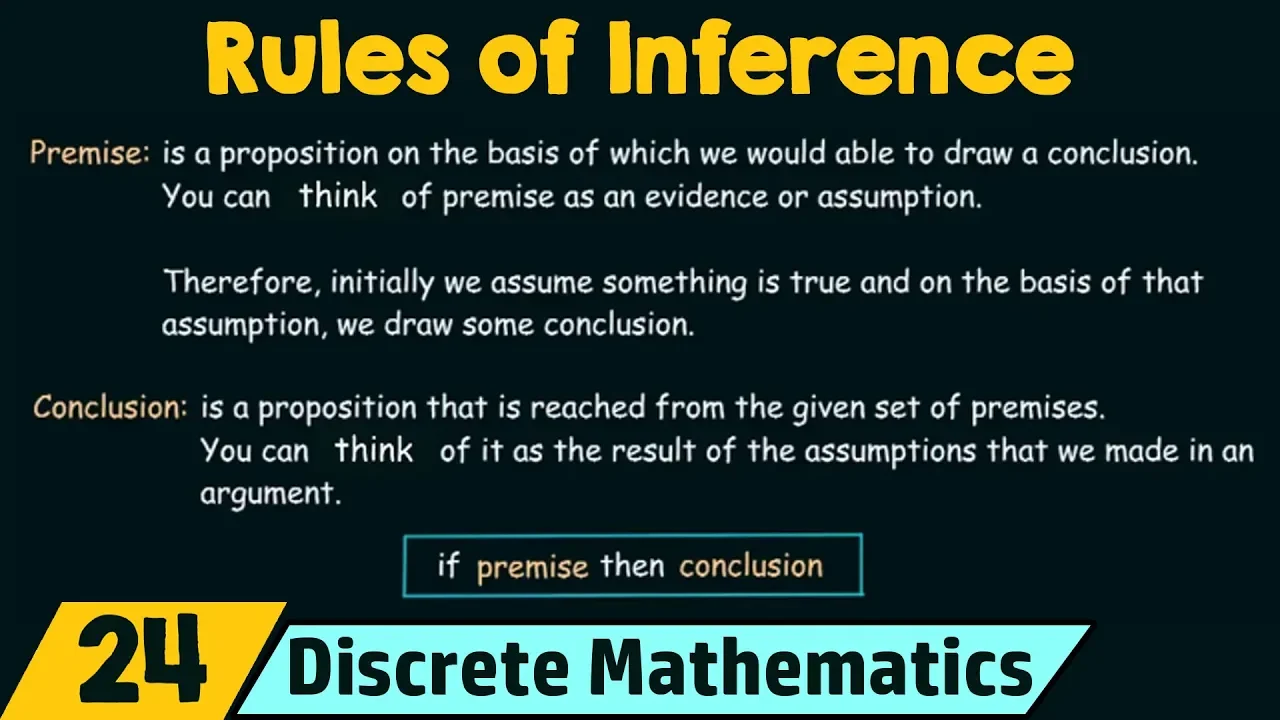
For instance: "If stealing is bad, then murder is bad" "Stealing is bad, therefore murder is bad If you analyze moral language in terms of what makes it true or false, then you can explain this.
Take "Stealing is bad." If that is true, then "stealing is not bad" cannot also be true.
If "stealing is bad murder is bad" is true, then "murder is bad" *must* be true.
Truth conditional semantics can explain the logical properties of moral language.
But the noncognitivists rejected truth conditional meaning.
They thought that moral language *shouldn't* be explained in terms of what makes it true.
So they can't explain this.
Take Ayer as an example. Remember he thought that moral language expressed emotions.
So "stealing is bad" is like "stealing!? Boo!"
What happens if we put that into a conditional?
"If stealing is bad, then murder is bad." What the heck does that mean according to Ayer??
This is a big problem because any theory of language needs to explain the compositionality constraint.
We can think of infinite different sentences--some of which have never been said before-- but we can always try and figure out what they mean because the meaning of a big sentence follows from the meaning of its smaller parts.
If I know what "cat," "sat," "on," and "mat" mean, I know what "the cat sat on the mat" means.
But Ayer cannot do that. Because the meaning of this--whatever it is according to him-- cannot follow from the meaning of this.
And I'm just using Ayer as an example here; *none* of the noncognitivists manage to do this.
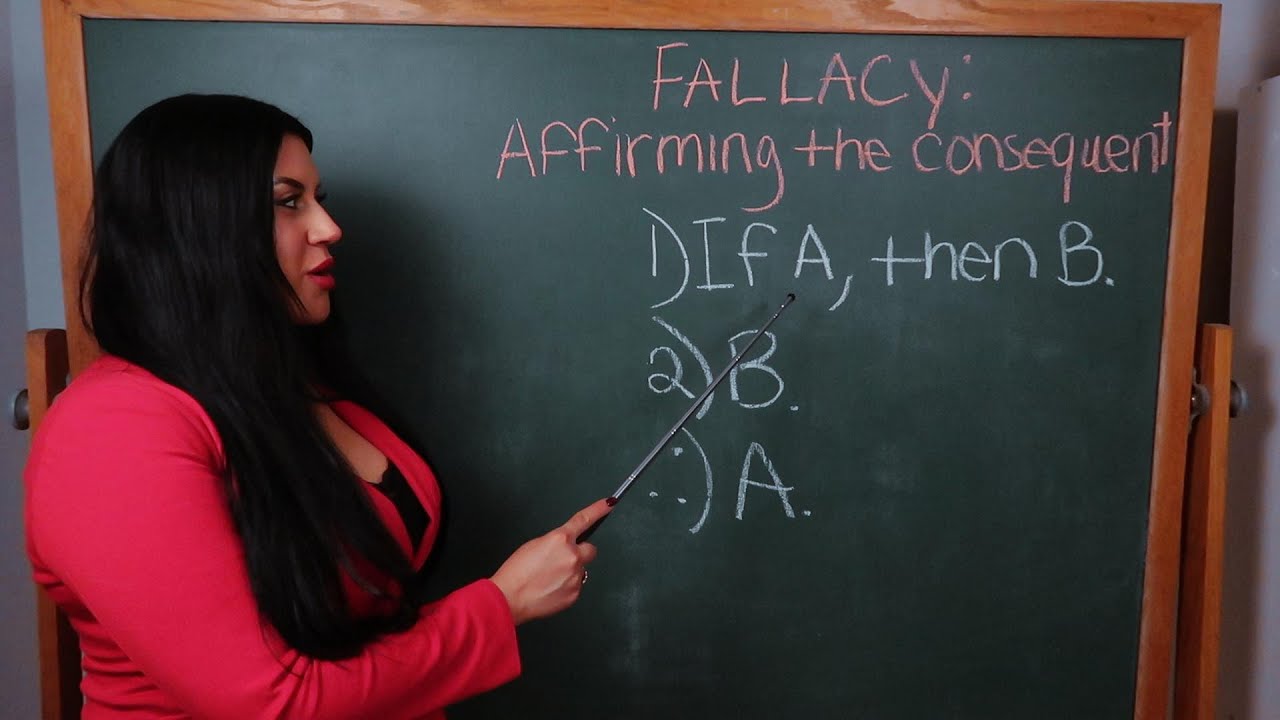
And this is just the beginning. Watch this: If stealing is bad then murder is bad. Stealing is bad, therefore murder is bad This argument is valid; if the premises are true, then the conclusion must be true.
But watch what happens when we translate premise 2 to a noncognitivist paraphrase: The argument doesn't look valid anymore.
Because when we say "stealing is bad" as premise 2, we're saying something different from when we say "stealing is bad" as *part of* premise 1.
We've equivocated on the meaning of one of our key terms!
So the conclusion doesn't follow.
And *this* is the central problem with noncognitivism: It cannot take a simple moral sentence, embed it in a complex one and explain how the meaning of the complex follows from the meaning of the simple.
And aaaall the while, the truth-conditional semanticist is grinning like a cheshire cat.
Because that is the one thing they can do *very well.* And that is the Frege-Geach Problem.
One of the most famous and important bits of ethics ever.
Noncognitivism was pretty much destroyed by this.
It did come back later in another form called expressivism, but that's another story for another time.
This is, I think, the hardest script I have ever written. So if you're a little bit lost, don't worry.
The next full-length episode will be on the 9th of January.
We could either do "what is imagination?" or we could do "Descartes' argument for the existence of God" Next week there's gonna be something a little bit different, it's new, I hope you like it.
Still educational and intellectual but with a little bit different flavor to it.
I'm quite excited. All will be revealed and explained next week!
So be sure to check back and find out what that is.
And if you haven't already subscribed to Philosophy Tube, then you should probably go ahead and do that.
This episode was sponsored by some of the fans!
Rich Clarke, D.j., and a bunch of other people whose names are in the description so if you'd like to sponsor this show you can find me on Patreon.
Last time we were talking about Schopenhauer and art, so let's see what you guys had to say: First and foremost Artem Kaznatcheev and Sticky Drosera let me know some bits of Schopenhauer that I glossed over, and some bits that I actually got wrong. Especially with the pessimism thing.
So thank you to both of you guys for pointing that out.
I'm sorry that I made those mistakes, it is always embarassing.
I mean I am gonna make mistakes on the show those sorts of things do happen.
What I told you guys was a faithful translation of what I was taught about Schopenhauer, but obviously it contained some errors.
But it's really cool that there are people who watch the show who not only know that and can point it out but who do it in a nice, constructive way. So thank you to both of you for pointing out those mistakes.
I'm sorry that I made them, and if you wanna know the bits of Schopenhauer that I glossed over particularly in my criticisms of him, you can go back and read those comments.
Jake Hollman asks: Assuming videogames are art, where would they fit into Schopenhauer's aesthetics?
I don't see why a videogame couldn't embody one of the ideas, these transcendent objects that Schopenhauer thought art should embody.
Although maybe if you lose your individuality partially or wholly when watching it that it might make it difficult to play?
So maybe you could have a particularly beautiful cutscene or maybe one of those sliding sequences in Journey would do the trick, actually.
Minutepoetry and Max Schneider pointed out that different people enjoy different works of art but if the art is supposed to embody the ideas--which Schopenhauer thought it did-- and looking at the ideas reduces suffering, then surely everybody should enjoy the same works of art.
I'm not really sure what he would say to that.
Maybe he would say that different people are imperfect embodiments of the will in different ways.
So maybe people gravitate towards works of art that contain the ideas they most lack in themselves.
Or maybe he could point to certain works of art and say that they *are* universally appreciated.
For instance, not everyone enjoys Shakespeare but everybody who actually looks at it can tell it's certainly very technically good.
And Michaelangelo's David and the Sistine Chapel. Not everyone enjoys them but we can all appreciate that they are very impressive works of art.
Christina Ger brought up an interesting problem: If artists are supposed to create art that embodies the ideas, and you can only experience the ideas by looking at art, then how do they ever experience the ideas in order to get them into their art.
Uhh obviously the problem that you're brushing up against there is one of infinite regress.
I'm not sure that Schopenhauer says that art is the only way we can experience the ideas maybe artists can experience them some other way and then embody them in their art?
But yeah. A very interesting problem.
Helloeagainistme who studies art history pointed out that since Schopenhauer's time, there's been quite a few developments in the fields of film and photography which can capture the world in a very very accurate way.
So art doesn't have to try and mimic the natural world and the ideas there anymore it can go off and be more abstract.
I'm not really sure what Schopenhauer would therefore say about modern art.
He could say that "It's just not art" which would seem to be a little bit short-sighted of him.
Or maybe he could say that although art isn't capturing ideas that are in the natural world --say, in a landscape-- anymore, it's capturing more abstract ideas like uh love or rage or protest or maybe something about the art world itself, like in Duchamp's famous Fountain case.
I'm not really sure what angle he'd go for there.
He'd be a very interesting person to go around the Museum of Modern Art with.
That's all the time we've got this week! Be sure to come back next week to find out what the new exciting thing is.
If you celebrate Christmas, have a very very merry Christmas, if you don't celebrate Christmas I hope you have a lovely December, January, New Year period anyway!
Thanks very much for watching, bye!!
Important thing to take away from this, is that the noncognitivists thought that moral language... I don't know my lines.
Specifically, it is a problem with the entire bollocks.
Up Next

18:46
Mackie's Queerness Argument & Error Theory Explained
@adrianbrocklessphilosophy7366
492 views•2022-08-01

164:01
John of Damascus on Holy Images: A Theological Defense
@BannedBooks
139 views•2026-04-25

36:39
Queer Theory Explained: History, Language, and Identity in Philosophy
@PhilosophyTube
1.6M views•2019-10-28
4:57
The Myth of Sisyphus: A Greek Legend of Eternal Punishment
@TEDEd
8.6M views•2018-11-13
Related Study Plans & Knowledge Roadmaps
Structured learning paths in Philosophy
philosophy
Frankfurt School: Critical Theory & Culture
01Foundations of the Frankfurt School and Critical Theory
02Horkheimer & Adorno: The Critique of Instrumental Reason
03The Culture Industry and Mass Deception
+ 2 more learning modules
12h5 modules
Explore Roadmap
philosophy
Philosophy of Language: From Frege to Austin
01The Linguistic Turn: An Introduction to Language in Philosophy
02Gottlob Frege: Sense and Reference
03Early Wittgenstein: The Picture Theory of Meaning
+ 3 more learning modules
15h6 modules
Explore Roadmap
philosophy
Feminist Epistemology: Standpoint & Injustice
01Introduction to Epistemology and Feminist Critiques
02Sandra Harding and Standpoint Theory
03Donna Haraway and Situated Knowledges
+ 2 more learning modules
12h5 modules
Explore Roadmap
philosophy
Environmental Philosophy: Ethics & Deep Ecology
01Foundations of Environmental Ethics & Anthropocentrism
02Biocentric Individualism and Animal Liberation
03Ecocentric Holism and Deep Ecology
+ 1 more learning modules
10h4 modules
Explore Roadmap