










![JEE Main 2025 | Sure Shot 20 Questions [ January Attempt ] Chemistry | Pahul Sir IIT Bombay](https://i.ytimg.com/vi/FAHv4HZDOLU/maxresdefault.jpg)





Collision theory states that for a chemical reaction to occur, molecules must collide with sufficient energy (at least equal to the activation energy) and in the proper orientation; the activation energy represents the minimum energy required to initiate a reaction, and energy diagrams illustrate how reactants transform into products through a transition state (activated complex), with exothermic reactions releasing energy (products lower than reactants) and endothermic reactions absorbing energy (products higher than reactants).
Collision Theory: Orientation & Activation Energy | AP Chem
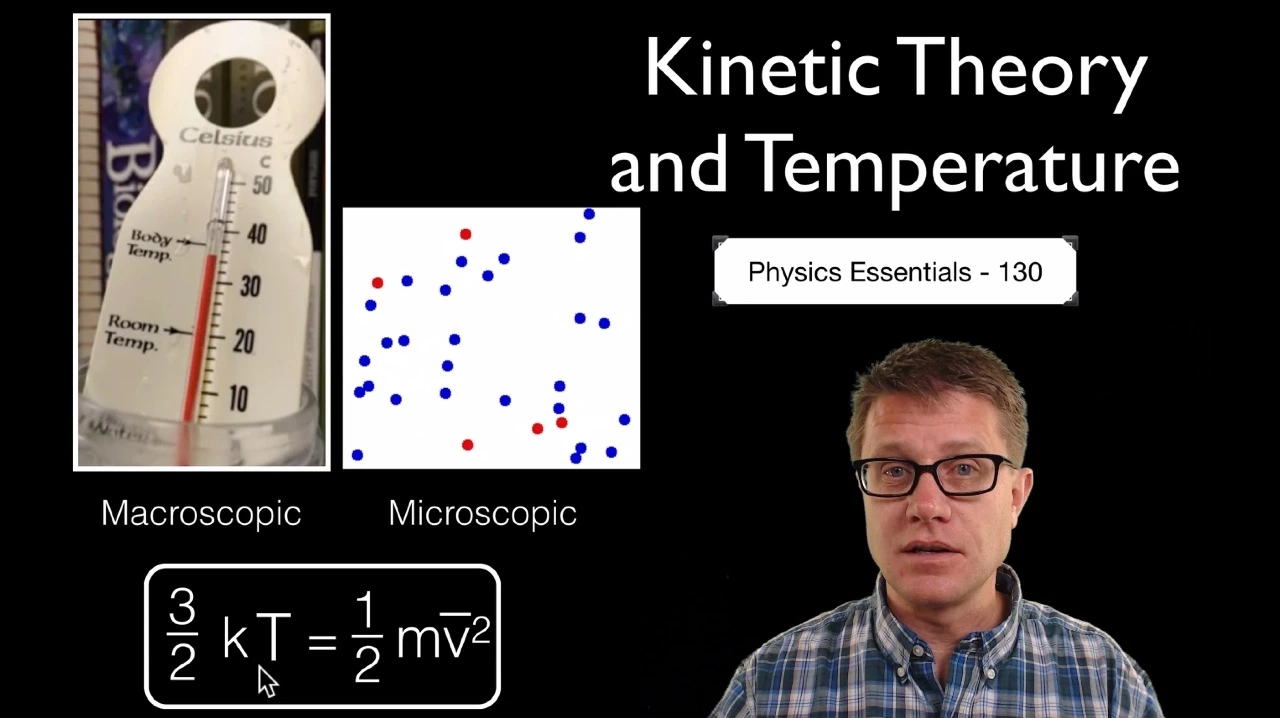
Added:The Kinetic Molecular Theory of matter, specifically how temperature relates to the average kinetic energy and velocity of molecules.
The nature of chemical bonding, including the concept that breaking bonds requires an input of energy while forming bonds releases energy.
An introductory understanding of chemical kinetics and how the overall rate of a chemical reaction is defined.
Interpreting Reaction Coordinate Diagrams (Potential Energy Profiles) to visualize activation energy and transition states.
The Arrhenius Equation, which mathematically connects reaction rate constants, temperature, and activation energy.
Reaction mechanisms, including multi-step pathways, elementary reactions, and identifying intermediates.
The mechanisms of catalysis, explaining how catalysts increase reaction rates by lowering the activation energy.
333.3K views2Klikes8:48Original Release: 2014-11-08
- To think about collision theory, let's consider the following reaction.
Here we have atom A reacting with a diatomic molecule B C to form a new diatomic molecule A B and C.
According to collision theory, molecules must collide to react.
So for this example, atom A has to collide with molecule B C, in order for the reaction to occur.
Next, the collisions must have the correct orientation in space to be an effective collision.
For example, let's say for this reaction, we have our molecule B-C.
Our molecule B-C approaches A in this orientation, and since we're forming a bond between A and B, let's say this is the proper orientation.
So this is the way our collision has to occur in order for the reaction to occur.
If the diatomic molecule B-C approaches in the opposite direction, so let's say we have our atom A here, and then we have C-B, so the atom C approaches the atom A, here this is not the proper orientation for the reaction to occur.
So this would be no.
So, there has to be a collision, but the collision has to be in the proper orientation.
And finally, collisions must have enough energy.
So, if the collision doesn't have enough energy, the molecules, or in this case the atom and the molecule, will just bounce off of each other.
If you do have enough energy, the colliding molecules will vibrate strongly enough to break bonds.
So let's go ahead and draw this in.
We're starting with a certain energy for our reactants.
So right here we're going to draw in the energy for our reactants.
So we have our atom A, and we have our molecule B-C at this point, and let's say our total energy is 20 kilojoules per mol.
When the atom and the molecule collides, they need enough energy.
They need enough energy to break this bond between B and C.
So we're trying to break this bond in here.
And so, we can find that energy on our diagram here.
So we're starting with 20 kilojoules per mol, and we need to get up to here, to 60.
So this is how much energy we need for the reaction to occur.
And we call this the activation energy, which is symbolized by E sub-a here.
So this is the activation energy.
And the activation energy is important, because this is the minimum amount of energy that's required to initiate a chemical reaction, and for this reaction, we can see we need to get to 60 kilojoules per mol.
So this point right here is at 60 kilojoules per mol.
We're starting out with 20.
So 60 minus 20 would, of course, be 40.
So the activation energy for this reaction, so Ea, according to our diagram, is positive 40 kilojoules per mol.
So the energy of the collision must be greater than or equal to the activation energy, and at the top right here, we're going to get a transitional structure.
So let me go ahead and draw in a possible transitional structure for this reaction.
So we have a bond forming between A and B.
At the same time, we have a bond breaking between B and C, and we call this transitional structure right here, we call this the transition state.
So our structure right here is called the transition state.
You might also see this called the activated complex.
So, the transition state or the activated complex.
And you can see I've drawn in partial bonds here.
So the bond between B and C is breaking.
At the same time, we have the bond forming between A and B.
And so, let's think about an analogy here.
Let's say we have a hill.
So here's my hill right here, and if we have a ball.
Let's say we have a ball right here at this end of the hill.
Well, it takes energy to push the ball up the hill.
And let's say we have enough energy to get the ball to right here.
Well, in that case, it's not enough for the ball to roll down the other side of the hill.
Here the ball's going to roll back to the starting position.
So that's like thinking about having not enough energy and the molecules just bouncing off of each other.
But if you have enough energy, so if you're starting out with the ball right here, and you have enough energy to bring the ball to the top of the hill, so just barely to the top here, the ball can now roll down.
And so, the ball's going to end up at the bottom of the hill right here.
And that's thinking about formation of your products.
So for our example, our products would be our new diatomic molecule A-B.
So let me draw that in here.
So here we have A-B, and we also have plus C at this point.
So this would be our products, and this represents the energy of our products.
So let's go here to find that on our diagram.
So we have our products here.
So what energy is that?
So we go over to here, and we find the energy, and let's say that's at 10.
Let's say this is 10 right here.
So the energy of our products is equal to 10 kilojoules per mol, and the energy of our products for this example is lower than the energy of our reactants.
We started out with 20 kilojoules per mol, and we ended up with 10 kilojoules per mol.
So to find that difference in energy, to find that change in energy, that would be the energy of the products minus the energy of the reactants, and for this example, the energy of the products is 10 kilojoules per mol, so we have 10, minus the energy of the reactants.
We started out with 20 kilojoules per mol.
So 10 minus 20 gives us a change in energy equal to negative 10 kilojoules per mol.
So on our diagram, we can see this change in energy right here.
So it's the change in energy.
This right here is a negative change in energy.
So I'm writing delta E is equal to, is negative.
So this is an exothermic reaction.
So heat is given off here.
Remember, it takes energy to break bonds, and energy is given off when bonds form, and for this reaction, we're giving off heat.
So this represents an energy diagram for an exothermic reaction.
Now let's think about another reaction.
So down here we have reaction progress.
So we're starting out with the energy of our reactants right here.
So this is the energy of our reactants at 20 kilojoules per mol, let's say.
And we know that to get to this point right here, this represents the energy of the activated complex.
So right there will be our activated complex, and that's at 80 kilojoules per mol.
So this difference in energy, this is our activation energy.
So this is Ea.
That represents our activation energy, which for this reaction would be 80 minus 20, which would be equal to 60 kilojoules per mol.
So we get to here.
We get to the transition state or the activated complex, and then this would represent the energy of our products.
So this our energy of our products here, which for this reaction, you can see the energy of our products is greater than the energy of our reactants.
And so, if we go over to here, let's say it's at 40.
So let's say this level is at 40 kilojoules per mol.
So what's the change in energy here?
So the change in energy for this reaction, once again, is the energy of the products minus the energy of the reactants, so that would be 40 kilojoules per mol.
So, 40 kilojoules per mol minus we started out with 20.
So, 40 minus 20 gives us a change in energy equal to positive 20 kilojoules per mol.
So, positive 20 kilojoules per mol.
So that would be this difference right here.
So, our change in energy for this reaction is positive.
And so, this represents an endothermic reaction.
So the previous example was an exothermic reaction, where heat is given off, and this is an endothermic reaction.
This represents an endothermic reaction, where heat is absorbed.
Up Next
15:51
Chemical Kinetics 12: Average & Instantaneous Rate of Reaction
@LearnoHubClass1112
87.5K views•2013-12-28
83:56
Biocatalysis and Catalysis in Islatravir Synthesis | Merck Webinar
@SCIwheresciencemeetsbusiness
675 views•2020-10-08

10:10
Properties of Ethers and Crown Ethers | Organic Chemistry
@readysetorgo
57.9K views•2012-09-19

17:31
Edible Water Bottles: A DIY Guide to Sodium Alginate Spherification
@ryan
10.5M views•2019-06-21
Related Study Plans & Knowledge Roadmaps
Structured learning paths in Chemistry
chemistry
Nuclear Chemistry: Decay, Meds & Fuel Cycle
01Introduction to Nuclear Structure and Radioactivity
02Decay Dynamics and Kinetics
03Radiation Interaction and Detection
+ 2 more learning modules
24h5 modules
Explore Roadmap
chemistry
Supramolecular Chemistry: Forces & Machines
01Foundations of Chemical Bonding and Intermolecular Forces
02Introduction to Host-Guest Chemistry
03Thermodynamics and Dynamics of Self-Assembly
+ 2 more learning modules
16h5 modules
Explore Roadmap
chemistry
Photochemistry: Excited States & Reactions
01Foundations of Light-Matter Interactions
02Molecular Orbitals and Electronic States
03Photophysical Processes and Jablonski Diagrams
+ 2 more learning modules
18h5 modules
Explore Roadmap
chemistry
Coordination Chemistry: Bonding & Properties
01Introduction to Transition Metals and Ligands
02Crystal Field Theory (CFT) and Geometry
03Magnetic Behavior and Spin States
+ 2 more learning modules
14h5 modules
Explore Roadmap