
















![[등산과GPS] 화대종주 거리가 다른 이유가 있다 ? 순토,가민,코로스,트랭글](https://i.ytimg.com/vi_webp/fzxcntks8R8/maxresdefault.webp)


The fundamental principle that knowing your location requires knowing the time was discovered through humanity's 400-year quest to solve the longitude problem, culminating in John Harrison's invention of the marine chronometer, which enabled precise navigation at sea and later became the basis for modern GPS technology.
The Astronomical Quest for Longitude: How Time Solved Navigation
Added:Understanding the geographic coordinate system, specifically the conceptual differences between latitude (parallels) and longitude (meridians).
The mathematical relationship between Earth's rotation and time, specifically how 360 degrees of rotation equates to 24 hours, meaning 15 degrees of longitude equals one hour of time.
The basics of early celestial navigation, including how sailors used the altitude of Polaris (the North Star) or the midday sun to determine latitude.
The concept of 'dead reckoning' and the historical hazards of maritime navigation prior to accurate instrument-based tracking.
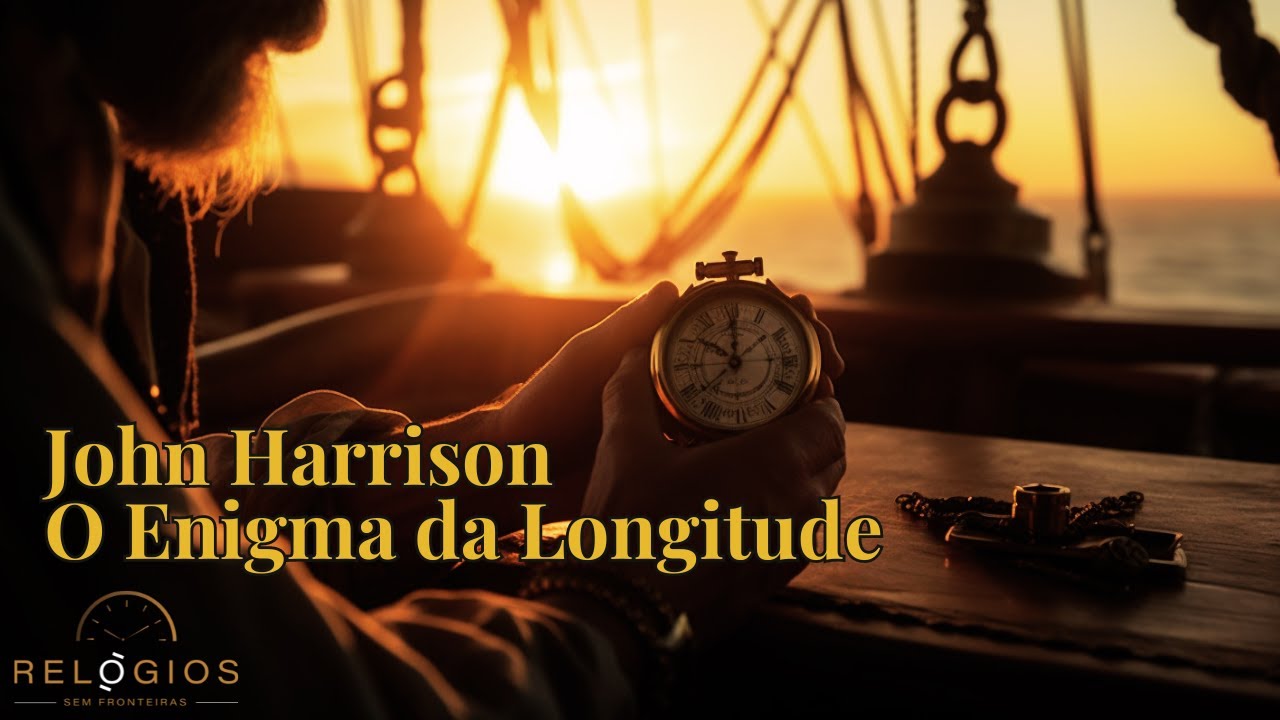
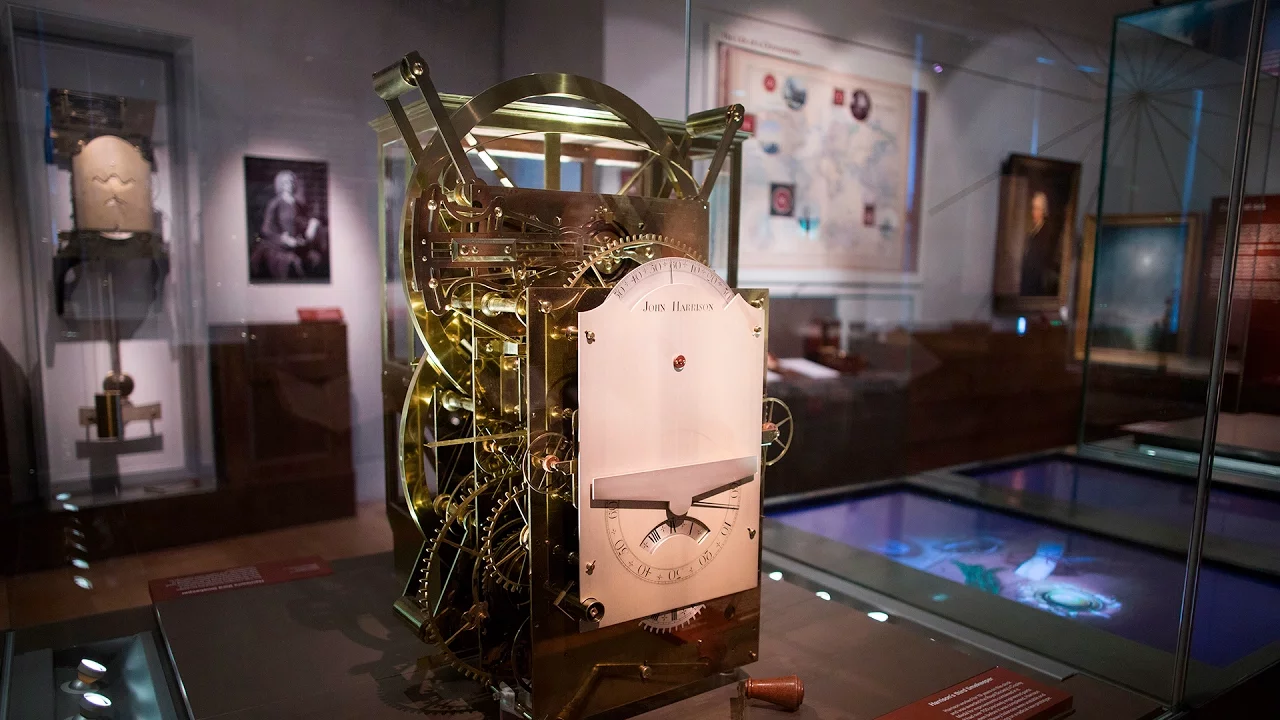
The horological innovations of John Harrison and the development of the marine chronometers (H1 through H4) that solved the longitude problem.
The 'Lunar Distance Method' as the primary astronomical rival to Harrison's mechanical clock, and the role of the Royal Observatory at Greenwich.
How modern Global Navigation Satellite Systems (GNSS), such as GPS, utilize the exact same principle of precise time-distance calculation.
The necessity of correcting for Einstein's theories of Special and General Relativity in satellite-based atomic clocks to maintain GPS accuracy.
962.2K views36.4Klikes14:16Original Release: 2022-11-08
Ever since we figured out that we live on a world bigger than what we could see, our species has been exploring.
But the moment you leave home, there's this one really crucial thing you have to figure out: Where am I now?
To modern eyes, it's a simple question because, you know.
But figuring out how to figure that out has been one of the ultimate quests of human knowledge, like ever.
In the end, it took more than 400 years of experimenting and even inventing whole new branches of science in order to answer that question accurately.
And the most surprising connection to come out of this epic scientific quest, a discovery that all of us still rely on today is that knowing where you are depends on knowing when you are.
(gentle music) Hey, smart people, Joe here.
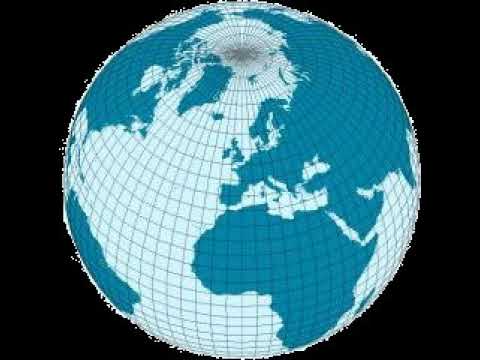
So back in like fourth grade geography, you probably learned about these lines that crisscrossed the globe, right?
Hold on.
This whole time, this globe hasn't had latitude and longitude on it.
No.
(gentle music) I always keep a backup globe around.
Okay, the horizontal ones are latitude, they tell you how far north or south you are from the equator, which happens to be zero degrees latitude.
These vertical ones are longitude which tell you how far east or west you are from this line at zero degrees longitude, which slices right through a little burrow of London called Greenwich.
There's a reason why that is zero over all of these other lines, because of a very particular scientific revolution that took place right there.
(globe crushing) This is a story that connects clock makers, astronomers, sailors, mathematicians, kings and queens, space satellites, and even smart bombs.
The discovery at the center of all of this enabled the creation of the colonial empires that shaped our modern world by giving ships a more precise and reliable way to navigate the open seas.
Speaking of navigation, how did people used to do that?
Latitude is actually pretty easy to find 'cause you can do it using the sun or other stars, which humans have been doing for thousands of years.
Here's just one way to do that so you can see how simple it is.
The north star is basically at a fixed point in the sky over the North Pole.
You can figure your latitude by measuring how high it is in the sky.
At the equator, zero degrees, it's basically at the horizon in France, it's at about 45 degrees.
And at the North Pole, it's 90 degrees up above your head.
Congratulations, you can latitude.
People from the Phoenicians to the Polynesians to early Hindu astronomers developed their own tools to interpret the position and movement of stars and figure out how far north or south they were.
That may even be how ancient aliens Egyptians align the pyramids.
Who put that in the prompter?
That did not happen.
It wasn't aliens.
But figuring out longitude is much more difficult for a really obvious but kind of weird reason because all of those reference points in the sky that you want to use for measuring, they're moving to as the earth rotates.
The earth is spinning, which means the sun and the stars move across the sky every day, so you can't just use their position to find how far you've moved in the same direction.
But going back to ancient Greeks, like Ptolemy, people figured out this pretty neat connection: To find out how much you've moved east or west, you just have to know how far in time you've moved.
Let me explain.
Our planet takes 24 hours to complete one full 360 degree revolution, which means each hour or 1/24th of a spin represents 15 degrees of longitude.
If it's 3:00 AM in London, and where I am the clock says it's only midnight, I know that I'm three earth rotation hours away from London and that means 45 degrees of longitude.
And since I'm earlier, that means I'm west.
That's it.
If you know the time in two places, you can figure out longitude.
It sounds simple because today knowing exactly what time it is in two places at once is simple.
But getting accurate time 400 years ago was anything but simple.
And trying to figure out a way that you could do that on a moving ship in the middle of the ocean stumped the brightest minds in the world for centuries.
The search for longitude was like searching for the fountain of youth or a way to turn lead to gold, It was this almost mythical quest.
And then in the 1700's, it got real.
So it's 1707, and this British admiral named Sir Cloudesley Shovell is leading his fleet home after a little skirmish with the French.
Wait, is that his real name?
That sounds like the name you'd make up to make fun of a pompous British admiral guy.
Okay, it's real?
Okay, Sir Cloudesley Shovell, he'd won the fight and were on their way home to celebrate when it got really foggy.
And since back then to navigate out of sight of shore, you needed to be able to see the sky, this basically meant they had no idea where they were.
After 12 days in bad weather, Shovell's best navigators put their heads together to try and figure out the fleet's position.
Really the only option they had was to rely on something called dead reckoning, basically figuring out where you are by estimating your speed and compass heading to plot your journey.
But winds and currents, they make this pretty imprecise, and they got it wrong.
One by one, four very expensive warships crashed on the rocky coast of the Scilly Isles.
Wait, that's their real name?
That sounds like islands you'd make up to make fun of British islands.
So on the rocks of the Scilly Islands, like 2,000 sailors died, making Shovell's error one of the biggest screw ups in the history of ocean navigation.
For early sailors, mistakes like this could be deadly in more ways than one, even if you didn't crash unnecessarily long journeys meant your crew might starve or get scurvy, and nobody likes scurvy.
Plus because ships had to follow established routes, that increased your chances of running into pirates or your enemies.
So in 1714, these misadventures had proven just too much for the monarchy and the British government set up a prize, 20,000 pounds to anyone who figured out how to accurately find longitude at sea.
And you're like, "Ooh, big deal, 20,000 pounds?"
Well, factoring in inflation, the Longitude prize would be worth around 6 million today, that's like six times what you'd get for a Nobel Prize.
Figuring this out would save lives and money but these Imperial Navys definitely also realized that whoever was first to figure this out would open up the world.
Now remember, people had been trying to solve this riddle for a long time.
The biggest science brains of history had tried and failed because no one could figure out how you could accurately know what time it is in some far off place.
Everyone trying to win the prize basically settled on one of two strategies: The first one, let's call them Team Almanac, realized if you and someone else could both observe some astronomical event at the same moment, and you knew exactly when that event should happen, you could figure out the time difference between the two locations.
Let's just say hypothetically every day at a specific moment, this one star turns purple for exactly one second.
In London, we know that happens at 3:00 AM, this is fake and doesn't happen, but it gets the idea across.
I'm sailing on a ship and wherever I am, I look up and I see that star blink purple, I check my local clock and it's only 12 midnight.
Now I know that I'm three hours of earth rotation from London, and like I said before, that means I'm 45 degrees west of London.
So that is a completely made up example, but thanks to astronomers watching the sky and writing stuff down, and thanks to all that math that people like Newton invented, people had gotten pretty good at predicting the movements of stars and stuff on future dates.
There were literal books full of where different sky objects would be at different times and dates.
But this was not easy.
Assembling all of that astronomical information took literal decades of observations and very complex calculations by hand and your location was only as good as the information in your little almanac.
All this precision astronomy was really new back then.
So if your little book was wrong, your longitude calculation would be off too.
So the second team, let's call them Team Clock, said, "What if we could just make this easier, cut out all that astronomical math stuff and just carry an accurate clock that always tells us what time it is back at zero degrees longitude?
Then just compare that with your local time and bam, you know your longitude."
The thing is, keeping time on a ship wasn't easy either.
You could figure out local time, wherever you were by marking noon each day by waiting for the sun to reach its highest point, but knowing what time it was back in Greenwich, no way, because clocks that kind of stunk.
Pendulum clocks, they don't keep very good time at sea because motion on the ocean messed with their swings and their metal parts were sensitive to changes in temperature and pressure.
They'd slow down, speed up, or sometimes just stop running entirely.
Mechanical clocks, the ones with springs and stuff weren't much better at the time, a few weeks at sea with a bad mechanical watch and your Greenwich time is wrong.
What they needed was to build a better clock than anyone had ever built.
And the person who finally did that was a carpenter from Nowheresville, England.
John "Longitude" Harrison.
I have no idea if they actually called him that, but they probably should have, he really has a nice ring to it.
No one really knows how John Harrison got so good at making clocks, but he was a self-taught timekeeping genius.
You could say he was the first big TikTok-er.
(crickets chirping) After like 40 years of tinkering and prototyping, Harrison built a clock based around a spring made from this new kind of steel and these low friction bearings made from literal jewels and gems.
When it was tested at sea, it didn't lose more than a second over a whole month.
Even the most expensive Swiss watches today can drift by seconds every 24 hours.
So Harrison's marine chronometers were some of the most precise machines ever built.
And ultimately he ended up winning the Longitude Prize.
Their new longitudinal prowess gave British sailors an advantage when it came to navigation and was not a small reason their flag came to dominate the globe.
And meanwhile, all the cutting edge astronomical work happening at the Royal Observatory and the fact that they were in charge of the Longitude Prize put Greenwich on the map for all of history when that meridian was officially named Zero Degrees Longitude.
I mean, think about it, unlike the equator for latitude, zero degrees longitude could technically be anywhere, right?
But because of all of this history, this line is where longitude is measured from today.
Most people don't think about longitude much today but it unlocked this really strange idea that had been floating around since the ancient Greeks.
Knowing when you are can tell you where you are.
And this same idea is why every time you open your phone up and look at a map, you know precisely where you are.
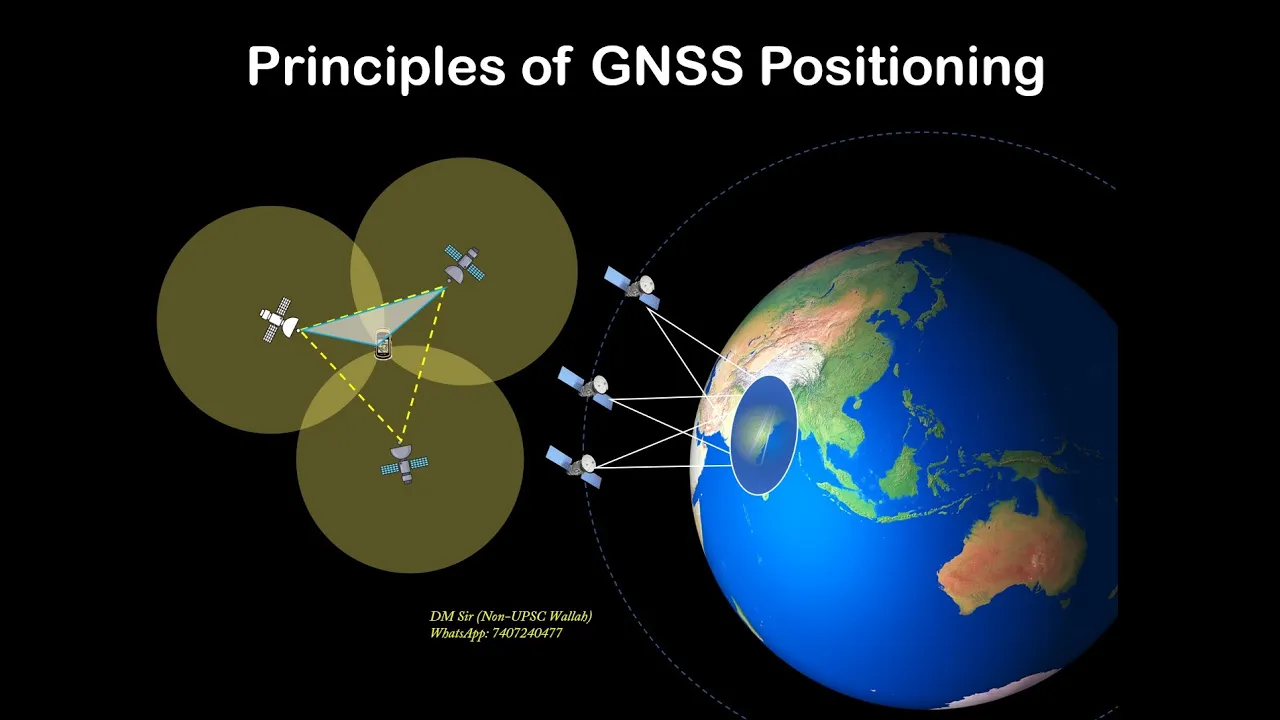
The GPS satellites orbiting our planet send out time coded messages.
When one reaches a GPS receiver, it compares its local time to the time that message was sent.
And since it traveled at the speed of light, it can calculate you are somewhere on a sphere a certain distance from that satellite.
Do that with three or four satellites, it's enough to pinpoint your position to one particular spot on the globe.
This key connection between time and location underlies so much of our modern life, from mighty military machines to simply meeting your mom for a mocha.
Those clocks today might be atomic rather than run on gears and springs, but it relies on that same key connection, knowing when you are, can tell you where you are.
Thanks for watching, and I'll see you next time, wherever that is.
Stay curious.
Thank you so much for watching this video and hanging out with us.
We hope you learned something.
And make sure that you like, subscribe, maybe leave a comment down below, hit that bell icon so you can find out when we upload new videos before anyone else.
All of this helps people find our videos, new curious learners, thank you very much.
And we also wanna make sure you know that we have a Patreon page where you can help us make more videos like this one by supporting the show directly.
No ads, no algorithms.
There's a link down in description.
See you later, phew, phew.
You know one cool Patreon perk we have is the ability to send in a dad joke for me to read.
Like why am I always sitting on my watch?
So that I'm on time, from meeting a friend for coffee to, well, dropping smart bombs.
See you next time, wherever that is.
Up Next
11:43
The Forgotten History of Time Zones and Standardized Time
@TheHistoryGuyChannel
232.8K views•2020-06-03

12:54
Triumph of Orthodoxy Icon: Byzantine Art & History Explained
@BenCallan
2.1K views•2024-08-06

9:49
FastAPI vs Flask vs Django: Choosing the Right Python Web Framework
@TechWithTim
302.5K views•2024-05-26

1:42
Game of Thrones Opening Credits: A Cinematic Analysis
@gameofthrones
46.3M views•2011-04-18
Related Study Plans & Knowledge Roadmaps
Structured learning paths in General & Interdisciplinary Studies
general-studies
Elevator Engineering: History, Physics & Cities
01From Hoists to Safety Brakes: The Dawn of Vertical Lift
02Hydraulic vs. Traction: The Engineering Physics of Elevators
03Modern Speed, Safety, and Algorithms
+ 2 more learning modules
12h5 modules
Explore Roadmap
general-studies
Rubber: Material Science, History & Geopolitics
01Origins of Natural Rubber & Mesoamerican History
02The Chemistry of Natural Rubber & Vulcanization
03The Geopolitics of the Rubber Boom & Colonization
+ 2 more learning modules
12h5 modules
Explore Roadmap
general-studies
Containerization: Evolution, Logistics & Trade
01Ancient Trade & Bulk Cargo: Amphorae to Barrels
02The Industrial Revolution & Cardboard Packaging
03The Containerization Revolution: Malcom McLean
+ 2 more learning modules
12h5 modules
Explore Roadmap
general-studies
Textile Tech: Evolution, Labor & Global Impact
01Pre-Industrial Textiles: Handloom & Cottage Industry
02Mechanization: The Spinning Jenny to the Power Loom
03The Factory System & Global Labor Transformation
+ 2 more learning modules
10h5 modules
Explore Roadmap