









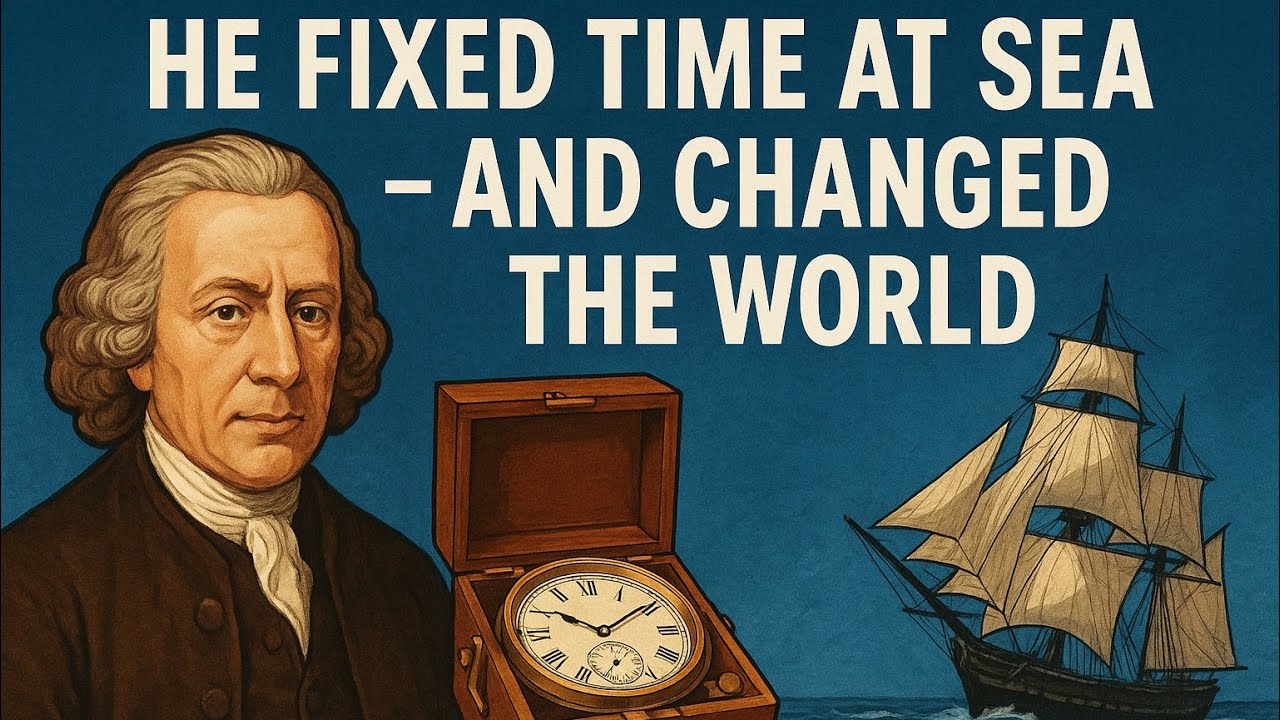


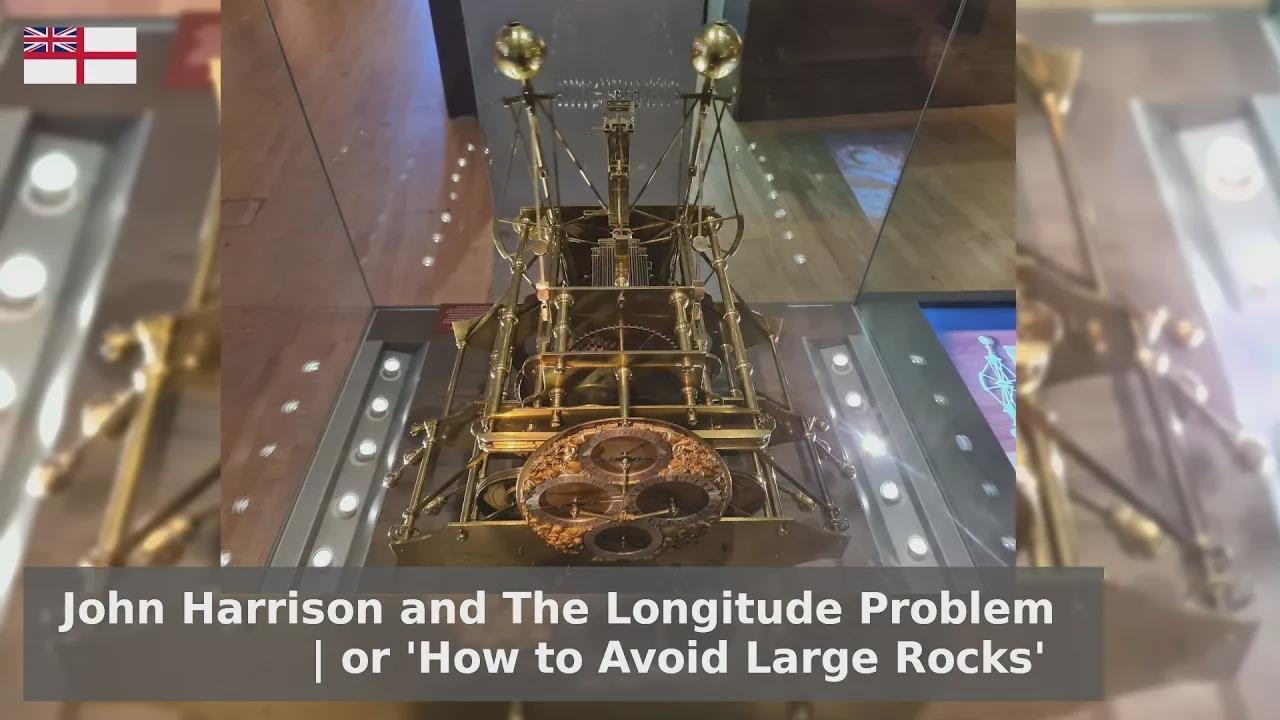

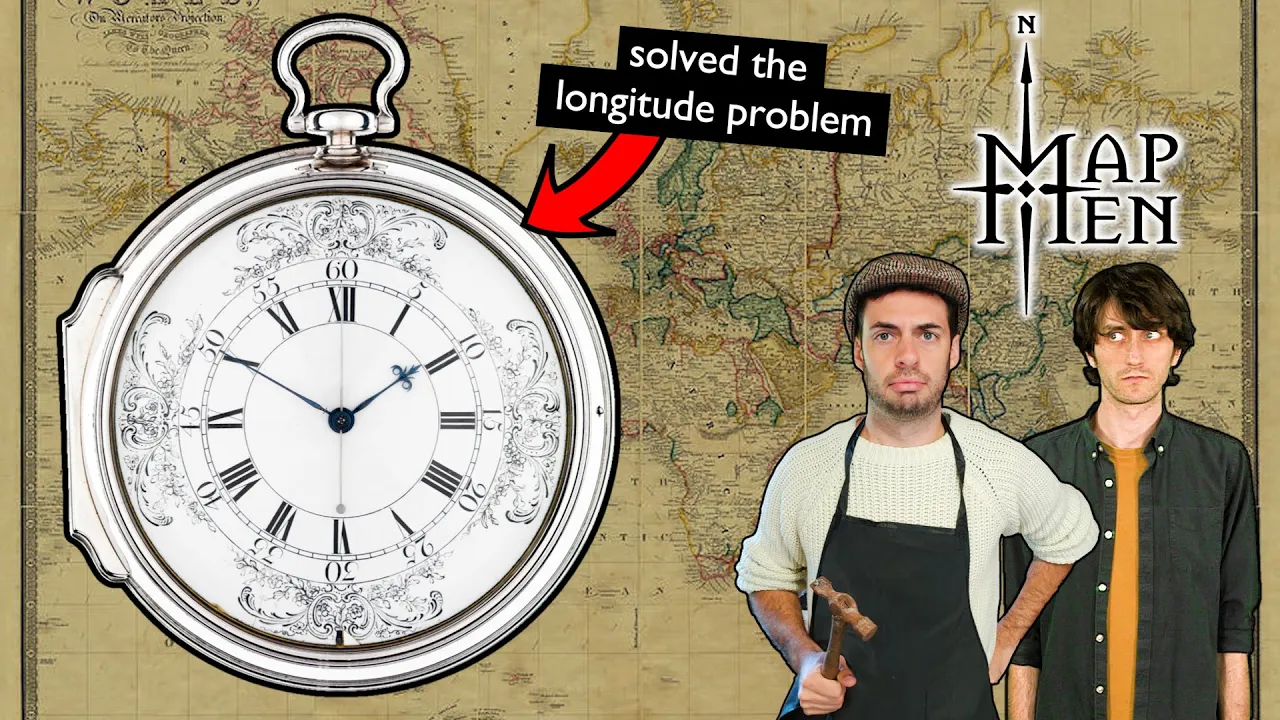



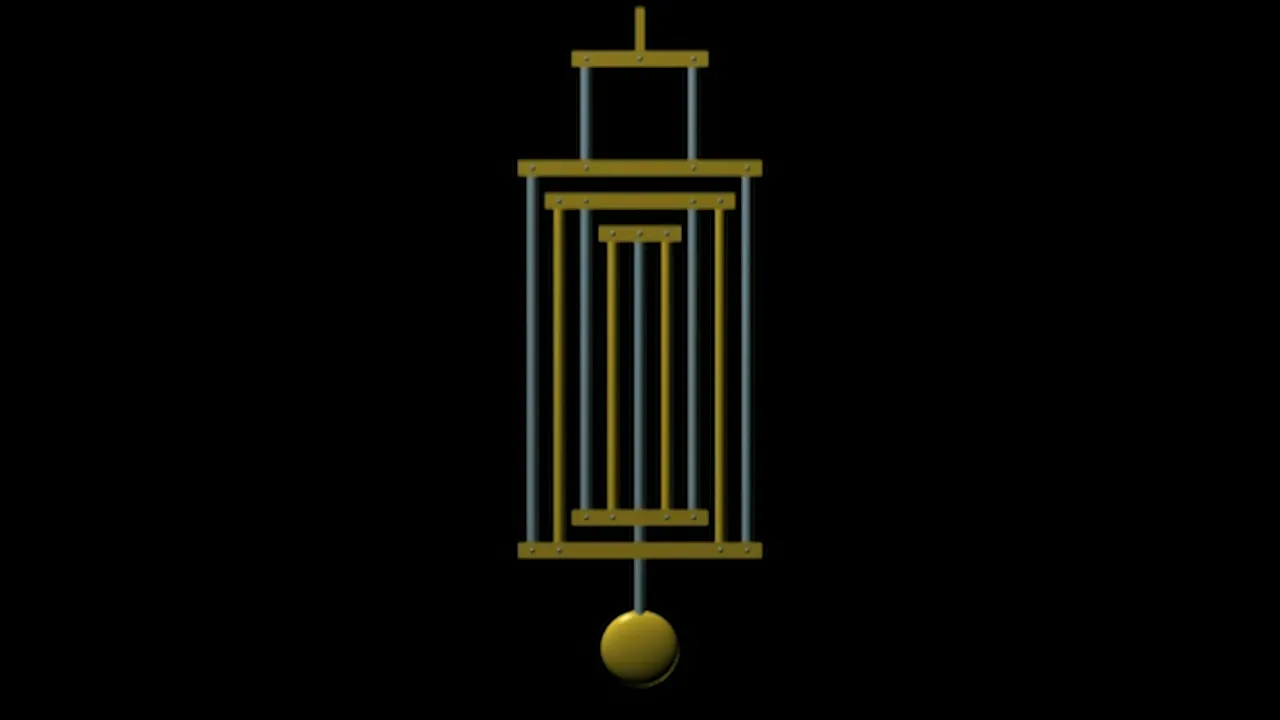





John Harrison, a humble joiner from Barrow-upon-Humber, solved the longitude problem by developing incredibly accurate wooden clocks that kept time to within one second per month, enabling sailors to determine their east-west position at sea by comparing local noon with the clock's time set to English time; his innovative designs, including the grasshopper escapement and temperature-compensated wooden gears, eliminated the lubrication problems that plagued contemporary clocks and ultimately influenced modern satellite navigation systems.
John Harrison's Precision Pendulum Clock and the Longitude Problem
Added:Basic understanding of the geographic coordinate system, specifically the definitions of and differences between latitude and longitude.
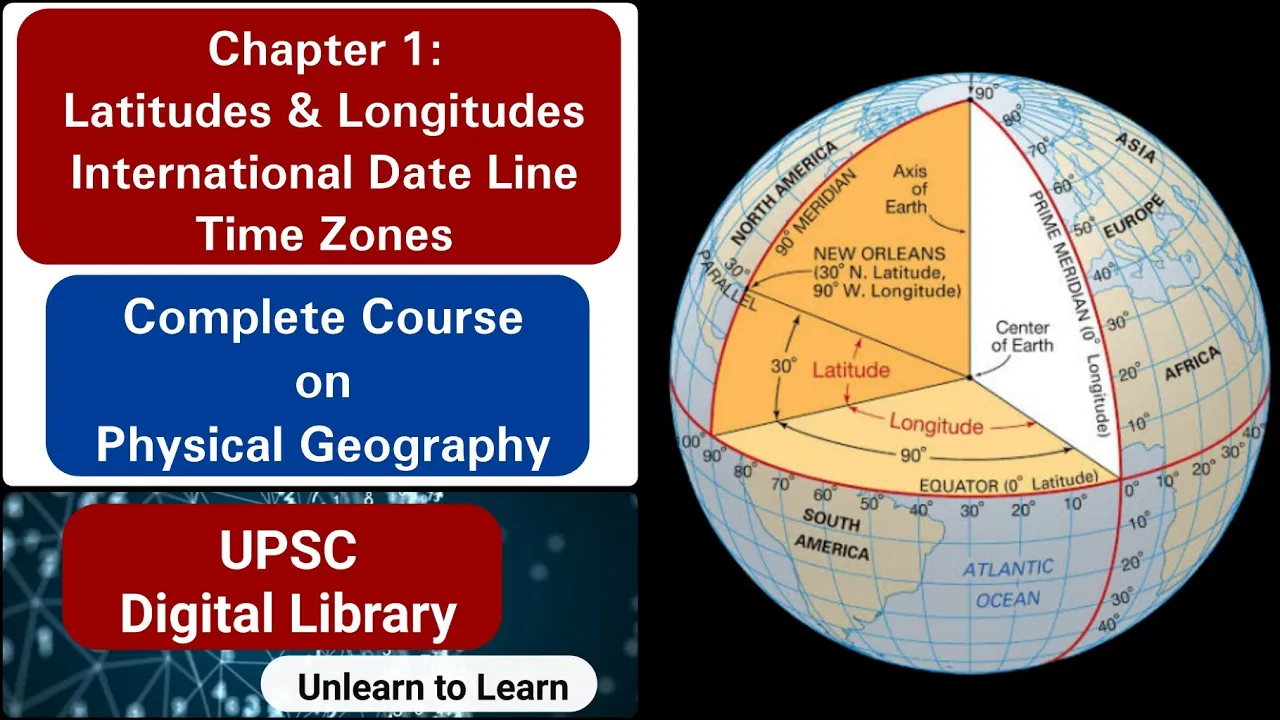
The physical and mathematical relationship between Earth's rotation and time, specifically how 15 degrees of longitude corresponds to a one-hour time difference.
The limitations of 18th-century maritime navigation, including the inaccuracies of dead reckoning and the difficulties of using astronomical observations at sea.
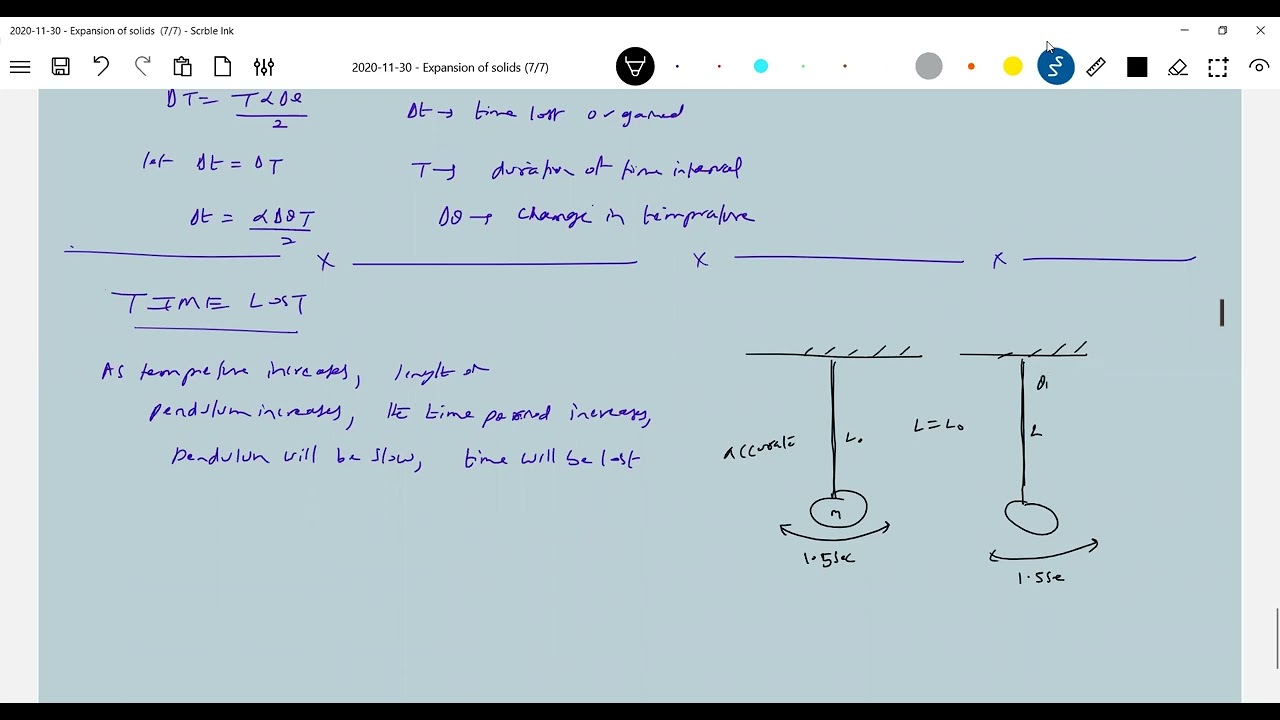
Fundamental physics of pendulums, including how temperature fluctuations and motion affect their oscillation period and accuracy.
The engineering evolution of John Harrison's marine chronometers, tracing the progression from the bulky wooden H1 to the highly compact and revolutionary H4.
The political and scientific history of the Longitude Act of 1714, including the rivalry between Harrison's mechanical clock method and Nevil Maskelyne's Lunar Distance Method.
Advanced horological mechanisms introduced by Harrison, such as the grasshopper escapement, gridiron pendulum, and the use of bimetallic strips for temperature compensation.
How modern satellite-based global positioning systems (GPS) rely on the same core principle of ultra-precise timekeeping (using atomic clocks) to determine location.
1.6M views16.2Klikes29:01Original Release: 2012-08-22
this story is about a moment when the world changed forever it involves disaster at Sea and amazing feats of exploration it all started with one man just over there in North Lincolnshire but eventually it drew in the Royal Navy the greatest mines in the land and the King himself and at the center of it all was the clock [Music] in this film I'm going to discover how an amazing clock from North Lincolnshire changed the world and how it's still changing the world and like any modern driver I'm using one of these to find it after 300 y turn left and there's a direct link between satnav and the clock I'm about to visit I'm incredibly excited by this this clock was made by one of my all-time Heroes John Harrison there are only two others like it in the whole world and they're worth well over a million pounds each you have reached your destination just here this is um oh Precision pendulum clock number two by John and James Harrison that is wonderful this is our object Precision pendulum clock number two made by the Harrison Brothers John and James in 1727 the clocks signed by James who may have made the case but the brains was older brother John they made it in Barrow on HBA Harrison made just three of these clocks they were incredibly accurate to within a second a month that's the accuracy that they he achieved with the Precision pendulum clocks one second a month one second a month was unprecedented accuracy they would have been the most accurate clocks in the world he must have lay a work at night must dreaming about how to improve things yeah I think he probably had a very one tracked mind the most shocking thing about this clock is that the working bit the movement is made mainly from wood not what you'd expect from the most accurate clock in the world this is a big day for precision pendulum number two we're going to make it tick John Harrison became obsessed with incredibly accurate clocks to keep time not on land but at Sea he lived close to the mighty River humba where he must have been aware of the storage the sailors brought back this was the beginning of a great seafaring age the British were pushing out across the oceans the trouble was they had a real technical problem with navigation once they were out of sight of land they had no idea where they were and they didn't have the technology to find out Sailors learned to navigate by measuring the height of the sun above the Horizon using a seant not that easy despite the patient instruction of liutenant Johnny banister of the royal Navy so you look at the sun to start off with and then slowly move your right right hand down um and move your left hand as well till the sun touches the Horizon I've lost it no it's there it's not easy this is it it's not no if you're in the boat rocking around but even when you've got it right measuring the height of the sun doesn't tell you where you are only how far north of the equator what use was it I mean you know your latitude but you don't know where you are um that's all you could work out to find out how far east or west they were Sailors used used dead reckoning first they had to measure their speed today I'm on the Humber Lifeboat and when they aren't saving lives at Sea Dave Steen and his crew are pretty handy with a log line so Dave what youve got a baked bean tin are you going fishing we're we're going fishing for Speed okay every 47 ft and 3 in we've got a mark on the line which is one knot right we're going to time it for 28 seconds okay and at the 28 seconds we'll know how many knots have actually gone out by the boat and that represents the speed of the vessel I believe it when I see it Steve's going to throw it over yeah and get it all played out ready to its first M so where you go Steve okay and it'll stop that's the that's the start okay so it's now stable in the water on my mark Steve are you ready one two three go so she's going out freely now right and if you watch the max Steve will count the max one two this might look a bit basic three but before John Harrison thousands of sailors lives depended on getting this dead right five stop just less than six what was the real answer 54 5.4 that is amazing really amazing it's so simple it works really works irly must be the quality of your baked beans it's got to be like Sailors in Harrison's time Johnny is now get to plot our position from the log he knows our speed and from the compass our Direction Johnny's plotted our position by dead reckoning but it's not where we are out here in the river Humber uh we've got lots of wind and lots of Tide um they actually affect us right and we should have been there so we should have been there there we measured our speed through the water right but unfortunately the water itself was moving thanks to the tide erors like this build up on a long Voyage they can add up to a ship or even a whole Fleet being way off course navigation at Sea had always been a problem but it came to public attention after a terrible disaster on the night of the 22nd of October 177 a fleet of five ships of the line was coming back from jalter under the command of the admiral of the fleet this splendidly named sir cloudsley shovel Unfortunately they made a navigational error and they sailed absolutely smack into the silly Islands Four ships went down including the Admiral's Flagship the association 2,000 men drowned and the Admiral himself was thrown up on the beach half alive and murdered for the ring on his finger this was a truly National disaster and people realized that something had got to be done so in 1714 the government launched the longitude act with a prize of up to 20,000 that's several million in today's money for anyone who could come up with a way to find a ship's position at Sea John Harrison thought he could do it with a clock imagine you were a sailor in John Harrison's day sailing from England West towards America now you've been gone for a week or something you're somewhere out in the the middle of the Atlantic and you can tell what time it is where you are because you watch until the sun is at its highest point in the sky and that's noon 12:00 noon but you don't know where you are however suppose you've taken a clock with you and the clock is set to English time and it says 3 in the afternoon then it's quite clear that you're 3 hours behind England the Earth takes 24 hours to turn all the way around and so clearly 3 hours behind puts you exact L there so you can pinpoint your position using a clock set to English time but there was a problem to be more accurate than the old ways this would need a clock 50 times more precise than any previous clock Matthew Reed is a clock expert who knows all about John Harrison's wooden clocks he's come along to get Precision pendulum number two ticking again but he's got to be careful that's our striking weight on it's over 280 years old and the weights that drive the clock could cause severe damage once it's going it's absolutely beautiful John Harrison seems to have made this clock in direct response to the longitude challenge the design is unique but very complicated was he being over clever well considering that the a contemporary clock Maybe by George gra would have kept time to within a handful seconds a week and Harrison was claiming a second a month then you could argue that in fact he wasn't being overly right again going back to the longitude problem the Achilles heel of all clocks especially in the 18th century was a lubrication and Harrison knew that if you wanted a clock to run reliably and consistently at Sea if you could make something that had no added lubrication then you would have solved that problem John Harrison was clearly an unusual man I decided that the only way to get into his mind was to follow in his footsteps and to make my own wooden [Music] clock I have to confess I've become a bit obsessed with bodging making things from freshly cut wood using very basic tools this is my shave horse [Music] and here is my wonderful homemade pole La powered by a bent sapling okay I admit I've cheated slightly here but then I haven't got quite as much time as John Harrison had [Music] a clock has basically three components the first is a wheel which is got a spin R like this one the second is a power source and I'm going to hang on a piece of string this weight which will pull the wheel around as it falls and then we need a Time regulator and I'm going to use a pendulum and that's going to swing on this nail the top is a bit of Oak and then there's this long piece of Ash and a weight on the end and because it's 1 meter long it will take one second to go from one side of the swing to the other so that's going to be my time regulator now I'm going to move that back until the pallets these points here are just between the cogs of my Escape wheel it should allow one Cog to escape on each swing of the pendulum let's just try it and see fantastic this is how John Harrison's clocks worked now I also need to measure how much time has gone by so I'll just stop it for a sec and I'll add this extra wheel here so if I connect the two with a rubber band like this this big wheel with its hand on it should turn around in exactly a minute [Music] Harrison's Clocks Were amazingly accurate something like 1 second a day mine well I need a little bit more practice I think but I have made a clock out of wood John Harrison was certainly a better Craftsman than I am but his early clocks had a rather similar design and after all if you were making a clock for a stately home it probably didn't matter whether it was all that accurate but something changed in John Harrison he decided that it did matter how accurate his Clocks Were and thought he knew how to make them much much better he got his chance probably about 1720 when he was commissioned to make a clock for the brocklesby park estate in North lincolshire the big house here was owned by the Earl of yabra who wanted a clock for his stable the building's still used as a staple and the clock is still there wow this is it that is a beautiful clock just look at the carving of the minutes on the dial now this is Oak this is brass but almost the whole thing is made of wood and the extraordinary thing is that it's been running practically continuously for almost 300 years now you're the CH who winds this yes I am that yeah how often we do it once a week can we take the case off and get a better look we can that do right how do we do that helping me get inside the clock is Richard Johnson the brockelsby state Joiner I thought he looked a bit familiar then I realized that when I visited the clock 20 years ago I'd met Richard dad when he used to look after the clock you need to take all this off to Wi it 40 odd years then 40 years and how long have you been doing it um I've doing it about 5 years now you got somewhere to go then yeah you said you wind it once a week could I have a go winding it now you can right when he first built it this was a completely conventional clock and like most clocks of the time it didn't work very well he was always coming back to fix it things kept sticking he oiled them but in the bitter Lincolnshire climate the oil thickened and gummed everything up so he threw out the sticky parts and came up with entirely new designs the most obvious Innovation is this beautiful thing the grasshopper escapement instead of the wood rubbing against the brass it releases it cleanly and where things did have to rub he used an amazing new material a dark wood from Africa called lignum v lignum v is a very oily wood and uh it's done really to self lubricate you mean you don't need toilet no there's no lubrication on this needed never no in 300 years that is extraordinary but there was a surprising twist to the tail Not only was the new clock maintenance free it was incredibly accurate no longer losing a minute a day it now lost much less than a minute a week what an amazing clock no oil no friction and no problems for 300 years the extraordinary claim made for John Harrison is that he built the most accurate clock in the world and then used it to help Mariners find their position at Sea which was one of the great problems of the age this would have been pretty extraordinary if he'd been a grand scientist living in London and armed with all the latest Precision equipment but in fact he was a humble Joiner who lived and worked here in the village of Barrow on HBA John was born in West Yorkshire but the family moved here when he was a young lad and it was here in Barrow that he and his younger brother James set up their business there aren't many relics of the Harrisons left in Barrow but one of them is this Sundial and if you look at it it says 1732 something Church it might be holy trinity church and they made it and presented it to the church and look at the time the shadow points to 1x 9:00 it's absolutely spot on perfect timekeeping there really isn't much more of John Harrison in Barrow local knowledge says that this Pub car park wall was once John's Workshop if that's right I'm standing ing in the very spot where he built not only the lead's clock but the first of his great Marine timekeepers later he moved into a combined house and workshop up the road you have reached sadly the house itself is now gone but there is a much older house opposite and John said he set his Clocks by timing when particular Stars disappeared behind his neighbor's chimney Matthew you've been having fun here haven't you you've taken the whole thing to bits I have yeah great fun really yeah was it easy uh yes it was it follows the pattern of any 18th century long case clock in the vast majority of parts right and and putting it back together yeah just a question of time really it can only fit together in one order it's all even I couldn't get even you could fit together um give enough time yeah I might take some now million dooll question why did he build this clock well by the mid 1720s um he was actively seeking the longitude prize the a cash prize to find longitude at Sea and um in these clocks uh he tried to develop systems that could be used later in his marine timekeepers and there were temperature compensation and the ability to run without lubrication he'd solved the lubrication problem in the brelby park clock but to make clocks that would work in all temperatures he turned the house in Barrow into a lab so you mean he actually put one in a hot room and one in a cold room he did yes yeah absolutely would build up the fire in one room and have the other one maybe I don't know in a North facing room or something and then swap them round right so what was he testing there what was he trying temperature compensation okay a marine timekeeper any timekeeper in fact uh before Harrison would run slow in heat and fast in cold and uh he wanted to eliminate that problem in order to win the longitud prize Matthew hasn't taken the clock AP Park just for fun they want to find out how John Harrison made his amazing wooden Gear wheels so they brought them to the Royal armories in leads where they can take a look inside the Great Wheel from the leads clock is actually made of many separate pieces of oak of different sorts and an x-ray May reveal what John Harrison was up to the X-ray shows a master at work mixing fast growing and slow growing Oak and lining up the grain for maximum strength Matthew has also brought along a new toy it looks like a ray gun and that's pretty much what it is firing X-rays at the surface decoration on the clock to find out what it's made of it's faded now but the case may have been decorated with Gold and Silver Leaf at one time this sort of testing used to mean sending the piece away now you get a result in seconds we were obviously on a piece that was originally Silver Leaf and we're picking up areas of gold which would have been Gold Leaf it was probably decorated to make it more sailable once he' used it John sold Precision pendulum number two to raise funds for further research the longitude prize was to be awarded by a board of longitude which included the astronomer Royal here is where Harrison had to present his clock this is the Royal Observatory at grenage built in 1675 and one of its main functions is the accurate measurement of time today the time Galleries at grenage are a shrine to the amazing clocks John Harrison made to attack the longitude problem even though Precision pendulum number two was the best clock in the world it was not going to win the prize no matter how good his clock was a swinging pendulum was never going to work on a sh ship at Sea working away in Barrow and HBA this is what he came up with and you can see that the pendulum has gone completely it's been replaced by these arms that swing out and in and this motion was designed to cope with the awful rocking of a ship at Sea the board agreed to a SE trial Harrison and the clock were sent on a return trip to Lisbon he got horribly seasick his clock was a bit eratic on the way out but easily beat the ship's Navigators on the way home it was good but not conclusive he moved to London eventually here to Red Lion Square in hoben where he spent the rest of his life pursuing the prize in London he made a second and then a third great Marine time keeper it was a radical new design unfortunately he could not get it quite right and he went on fiddling and tinkering with it for 19 years but in the 1750s Harrison now a professional clock maker got interested in watches they were not great timekeepers losing a minute a day was considered good but being John Harrison he went back to basics and radically rethought the way watches were made finally aged 67 he presented the board of longitude with this his solution to the problem H4 H4 was the result of Harrison's life work and a brilliant timekeeper but the board of longitude said that it did not meet the conditions for the prize they insisted that copies of H4 should be made and tested so that there would be timekeepers for the entire Navy in 1772 a copy of H4 was given to Captain James Cook who took it on his second and third great voyages cook was one over calling the watch our never failing friend but the board wouldn't agree that the trial was over luckily the King George III was a great fan of these Marine Tim Keepers and even had them tested in his own Observatory he heard that Harrison and the board of long ude had fallen out and he personally intervened and said that enough was enough and Harrison should get the money well eventually they did pay him some when he was 80 years old and he died 3 years later at the end of the road turn right John Harrison solved the longitude problem over 200 years ago but his idea of using time to find where you are lives on I've been using my satellite navigation system to find my way around and there's a direct link between John Harrison and satnav it also uses incredibly precise clocks to pinpoint your position on Earth you have reached your destination to show you how it works I need some nautical help so I've recruited the boys at Hull Trinity house school which has been preparing Lads to go to Sea since the 18th century satellite navigation involves clocks into space those clocks are accurate to within 1 second in a million years I wonder if even John Harrison would have believed such a thing was possible I've set up my own sap nve [Music] system I want to find out my position in this vast ocean I've set up three satellites manned by students from Hull Trinity they're slightly low Tech each one has a loud speaker and a mobile phone connected to the speaking clock now what I'm doing is watching my clock here which is synchronized with the speaking clock and when it comes up to a particular time at 10 seconds I press my stopwatch and I listen for the speaking clock over there and when I hear the third pip I press it again and look for the difference between the two the sound from each station takes a while to reach me the further away the longer it takes now from station a over there the difference was 64 of a second and from station B over there the difference was 1.68 of a second so it's obviously much further away now what we now is station C in real satav the signal travels at the speed of light but I don't think I could work my stopwatch quite quickly enough for that 1.36 for C so I've now got the delays from all three stations for a it's 0.64 of a second and that means I should have been somewhere on that Arc there station B was 1.68 and so I must have been somewhere in this Arc here so probably I was where these points cross but as a check I can do station C and they were about here so I'll take the third Arc and the result is I must have been somewhere within that triangle there so that gives me a small area in which I know I am but that's how GPS works by taking the time from three different satellites they can pinpoint your position in your car and I can do it on a boat Frozen in the middle of a lake John Harrison started his quest to build the most accurate clock in the world because it would help to save lives at [Music] Sea today clocks are still saving lives at Sea so Dave tell me how you know where we are and where we're going well straight away I know where we are because we've got the GPS oh this is GPS that's GPS our position Down to What a millimeter well you can see it's to 1,000 of a mile and and it's updating all the time it's constantly updating amazing GPS is then putting us on the chat you can see the boat on the chat so this is an electronic chart electronic chart and it's live everything on it LO that's that's us live before John Harrison navigation was so inaccurate that ships frequently hit rocks and many lives were lost today thanks to Harrison's ideas Dave and his crew have a permanent readout of exactly where they are I love this machine it may look just like an old grandfather clock but I've had the privilege of getting under its skin seeing how it ticks and unraveling the stories both of precision pendulum number two and of its maker John longitude Harrison what's really amazing is that Harrison's Big Ideas are still making waves today Precision pendulum number two made in Barrow on humba in North Lincolnshire really did change the world if you have an object which shows what the people and places in the UK have given the world then you can add it to our digital Museum to find out more go to bbc.co.uk ahistory of the world [Music]
Up Next

29:11
How the Industrial Revolution Standardized Global Timekeeping
@BedtimeHistoryDocs
302 views•2026-03-07

33:02
The Great Schism of 1054: Causes and Consequences
@SacredCathedrals
113.5K views•2026-02-19

91:57
The Geopolitics of the Ukraine War and the Rise of Global Autocracy
@JordanHarbingerShow
468K views•2025-04-19

17:05
Understanding the Cold War: Superpower Conflicts and the Road to Détente
@OverSimplified
46.1M views•2019-01-24
Related Study Plans & Knowledge Roadmaps
Structured learning paths in History
history
Byzantine Iconoclasm: Theology, Art & Politics
01Foundations of Byzantium and Early Christian Images
02The First Iconoclasm: Leo III and the Crisis of Images
03Empress Irene, Nicaea II, and the Second Iconoclasm
+ 2 more learning modules
9h5 modules
Explore Roadmap
history
Iranian Revolution (Causes, Events & Legacy)
01The Pahlavi Dynasty and the Roots of Discontent
02The Spark of Rebellion and the Rise of Khomeini
031979: The Fall of the Shah and the Climax of the Revolution
+ 2 more learning modules
8h5 modules
Explore Roadmap
history
Mali Empire: Mansa Musa, Trade & Timbuktu
01Foundations of the Mali Empire
02The Trans-Saharan Gold and Salt Trade
03The Reign and Pilgrimage of Mansa Musa
+ 1 more learning modules
6h4 modules
Explore Roadmap
history
1947 Partition: Politics, Borders & Legacies
01Foundations of British India and the Divide
02The Political Negotiations and the Mountbatten Plan
03Drawing the Boundary: The Radcliffe Line
+ 2 more learning modules
8h5 modules
Explore Roadmap