






















In the mid-19th century, railroads standardized time by replacing local solar time with railway time, which was synchronized across all stations using telegraph signals from a central observatory. This technological innovation, first implemented by the Great Western Railway in 1840 and fully adopted across America on November 18, 1883, fundamentally transformed human consciousness by replacing nature's organic time with machine-based standardized time. This shift from local, solar-determined time to uniform global time zones created the modern sense of urgency, punctuality, and the perception of time as a commodity to be measured and controlled, marking the beginning of our contemporary relationship with time as something external and artificial rather than natural and intuitive.
How the Industrial Revolution Standardized Global Timekeeping
Added:If you had walked into a jewelry shop in London in the year 1830 and asked for the exact time, the watchmaker would have looked at a sile or a regulator clock set to the sun's peak over the local meridian. He would have given you a time that was true for London and London alone.
If you then traveled 60 mi west to the city of Bristol, you would find that their clocks were roughly 10 minutes behind yours. And if you kept going, every town and every village would have its own unique time, a local solar time dictated by the slow, majestic rotation of the earth. In this world, time was a soft, organic thing. It belonged to the rhythm of the place where you stood. It was tied to the dirt beneath your feet and the light above your head. Then came the steam engine. In the mid 19th century, the railroads began to lace across the continents like an iron nervous system. And the railroads had a problem. They moved faster than the sun.
A train leaving London at noon would arrive in Bristol only to find it was 11:50 a.m. This wasn't just a curiosity.
It was a catastrophe. It caused head-on collisions, missed connections, and a logistical nightmare that threatened the very progress the industrial age promised. To solve this, the railroad companies did something that would have seemed like an act of God just a generation prior. They reached out and standardized the ticking of the world.
They abolished local time and replaced it with railway time. They took the thousands of individual solar rhythms of humanity and crushed them into a single artificial grid. This is not just a story about clocks and schedules. It is a story about how technology restructured human consciousness. It is about the moment we stopped living in nature's time and started living in machine time. It is the origin of the rushed modern world. The reason we feel the constant pressure of the minute hand. The reason we feel the anxiety of the late arrival and the reason we have lost our connection to the planetary rhythms that governed our ancestors for millennia.
Before we begin this journey into the destruction of natural time, a gentle note. If these calm explorations of history help you unwind, please consider liking and subscribing. It helps other curious minds find these stories. And we're always curious for your reflections. Let us know in the comments if you've ever felt the tyranny of the clock in your own life or which other invisible shifts in history you'd like us to explore.
Now, as the day releases its hold and the quieter hours approach, let us travel back to a world of shadows and sun, to the moment the first iron rails were laid, and to the great time war that remade the human mind. We will witness the chaos of the local meridians, the violence of the time standardization, and the profound silence that was lost when the world began to tick in unison.
This is the bedtime history of how railroads destroyed time itself and how we became prisoners of the schedule. But first, we must understand the world as it was. A world where time was a local secret whispered by the sun. Imagine a world where punctuality was a vague and poetic concept. In the early 1800s, if you agreed to meet a friend at midday, you both understood that you were referring to the moment the sun reached its highest point in the sky above your specific town. This was solar time. It was honest. It was direct. It was the time of the plants, the animals, and the tides. Because the Earth is a sphere, the sun hits different longitudes at different moments. As the planet turns, the noon line sweeps across the landscape like a silent wave. In this world, time was a local resource. Every community was its own temporal island.
In the United States alone, there were over 300 different local times. When it was 12 in Washington DC, it was 1212 in New York and 12:24 in Boston. This didn't bother anyone. If you were traveling by horse or by foot, you moved so slowly that your internal clock adjusted naturally to the shifting light. Time flowed like water, variable, local, and tied to the geography of the journey. Clocks existed, of course, but they were secondary to the sky. Most people lived by the bells, the church bell or the town square clock that was calibrated once a week by a local official using a sextant or a sund dial.
If the town clock was off by a few minutes from the neighboring village, it didn't matter. You couldn't get to the neighboring village fast enough for those minutes to mean anything. This was a world of thick time. People spoke of the time it takes to boil an egg or the time it takes to walk a mile.
Measurement was human- centric. It was messy, imprecise, and profoundly relaxed. There was no global now. There was only here and now, and they were the same thing. But in the 1830s, the silence of the countryside was broken by a new sound. the rhythmic mechanical chuffing of the steam locomotive. The railroad was the first technology to decouple human movement from animal endurance. A horse gets tired. A steam engine does not. For the first time, humans could travel hundreds of miles in a single day. And as the trains began to move between the temporal islands of the towns, the islands began to crash into each other. A station master in London would set his watch to London time. The conductor would board the train and head west. By the time he reached Reading, his watch was 4 minutes ahead of the local clock. By the time he reached Sirencester, he was 7 minutes ahead. By Bristol, he was 10 minutes ahead. For the passengers, this was merely confusing, but for the engineers, it was deadly. Early railroads often operated on single tracks. To avoid collisions, trains had to pull into sightings at specific times to let oncoming traffic pass. But whose time? If the northbound train was running on Manchester time and the southbound train was running on Birmingham time and those times differed by 5 minutes, the safe window disappeared. In the 1840s, a series of gruesome headon collisions occurred across England and America. Twisted metal, scalding steam, and loss of life.
All because two men looking at two perfectly accurate clocks could not agree on what time it was. The railroads realized that if they were to survive, they had to do the unthinkable. They had to kill the sun. They had to invent a time that didn't exist in nature. A time that was the same everywhere regardless of where the sun actually sat in the sky. As you settle towards sleep tonight, consider how much of your life is dictated by that decision. You wake up not when the sun hits your window, but when a mechanical or digital device signals that a specific arbitrary coordinate in time has been reached. We take for granted that 9:00 a.m. is a universal fact, but for most of human history, that would have been a nonsensical statement. 9:00 a.m. where?
For whom? The railroads were the first to insist that the map of time was more important than the territory of the day.
They were the first to demand that humans ignore their senses and trust the machine. In our next chapter, we will see the birth of railway time. We will meet the men who fought to protect the local meridians and the companies that forced the world to sink its heartbeat to the ticking of a master clock in London. We will discover that the first step toward the modern digital world was the day we decided that the sun was no longer qualified to tell us when it was noon.
Rest now. The sun is setting in your part of the world, and for a few hours at least, you can return to the soft, dark time of your own rhythm. Sleep well. The iron rails are silent in the night. Tomorrow, the war for the minutes. In November 1840, the directors of the Great Western Railway in England issued a memo that would change the world. It stated with bureaucratic coldness that from that day forward every station on their line would ignore the local sun and instead set its clocks to the time kept at the Royal Observatory in Greenwich. They called it railway time. For the first time in human history, an artificial man-made coordinate was declared superior to the natural movement of the heavens.
The reaction from the public was one of visceral, almost religious horror. To the Victorian mind, the sun was the primary clock of God. To suggest that a private corporation could declare it was noon, when the sun was still 10 minutes from its peak felt like an act of supreme arrogance, a mechanical tower of babel.
Town councils across England erupted in protest. The city of exit, which sat 14 minutes behind London, refused to change its cathedral clock. For years, the city lived in a state of temporal schizophrenia. The station kept railway time, while the town kept extor. If you were a traveler, you had to perform constant mental arithmetic. If your train arrived at 400 p.m. railway time, you stepped out onto the platform to find it was only 3:46 p.m. in the streets.
To bridge this gap, watch makers began creating dual dial watches. These intricate devices featured two minute hands, one gold for the sun, one blue for the tracks. It was a physical manifestation of a divided human soul.
One hand remained tied to the ancient local rhythm of the earth. The other was a slave to the iron schedule. But the railroads were relentless. They understood that standardization was the fuel of the industrial machine. They began distributing time signals via the newly invented electric telegraph. Every morning at 10:00 a.m., a pulse of electricity would travel down the wires from London, triggering a bell or a visual signal at every station across the country. This was the firstworked moment in history. It was the ancestor of the digital sync. For the first time, thousands of people across hundreds of miles experienced the exact same now.
Simultaneously, the local meridian was being strangled by the copper wire.
The resistance wasn't just about stubbornness. It was about sovereignty.
People felt that their time was being stolen. In many towns, laborers worked from sunrise to sunset. If the railroad moved noon forward by 15 minutes, it effectively lengthened the morning and shortened the afternoon. It messed with the internal biological clocks of an entire population. In America, the chaos was even more profound. Because the United States was so vast, the time differences were measured in hours, not minutes. By the 1870s, there were nearly 80 different railroad times competing with hundreds of local times. A traveler going from Maine to California had to reset their watch over 20 times. The time war reached its peak in the courts.
In 1883, a man in Iowa was sued for being late to a hearing. He argued that he arrived at 9:00 a.m. according to his local suntime, but the court had already started at 9:00 a.m. according to the railroad time. The judge eventually ruled in favor of the railroad. The message was clear. The machine's time was now the law of the land.
As you settle deeper into your pillow, consider the blue hand and the gold hand of those Victorian watches. Today, the gold hand, nature's hand, has been completely removed. We no longer have local time. We live entirely in the railway time of the 19th century, scaled up into global time zones. When you look at your phone, you are looking at a descendant of that first telegraph pulse from 1840. You are synced to a global grid that ignores the sun entirely. This standardization was necessary for safety in commerce, but it cost us our sense of place. We no longer belong to the time of our specific patch of earth. We belong to the time of the network.
In our next chapter, we will witness the final dramatic death of solar time, the day of two noons. We will see how on a single Sunday in November 1883, the American railroads executed over 600 local times in a single afternoon, and how the world woke up on Monday morning to find that the sun had been permanently fired from its job as the world's timekeeper.
Rest. Now the master clock is ticking.
But for tonight, your time belongs only to you.
Sleep well. The wires are quiet in the dark. Tomorrow, the day the clocks stood still.
Sunday, November 18th, 1883, was a day unlike any other in human history. It was a clear, quiet morning in the United States, a day of rest for millions. But inside the telegraph offices and railroad stations of the nation, men stood with their hands on brass levers, their eyes fixed on master regulators. They were waiting for a signal that would perform a surgical strike on the concept of reality itself.
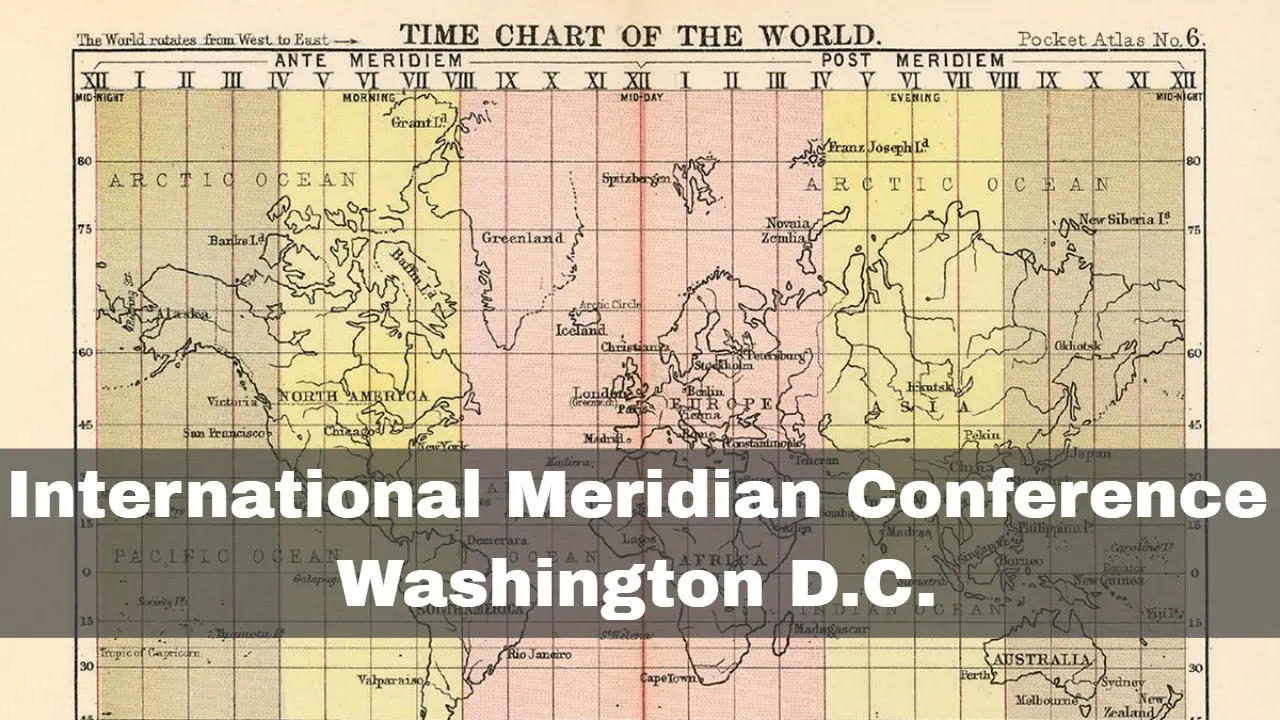
They called it the day of two noons. At exactly 12 p.m. on the 75th meridian, a pulse of electricity traveled out from the Naval Observatory in Washington. As it reached each city, time was literally hijacked. In New York, the clocks were set back 4 minutes. In Baltimore, they were moved forward 6 minutes. In Chicago, clocks were suddenly paused for 9 minutes and 32 seconds, waiting for the new standard time to catch up. By the time the sun set that evening, over 600 local times had been executed. The American continent, which had lived for centuries by the slow shifting light of the sun, woke up on Monday morning to find itself divided into four neat vertical slices: eastern, central, mountain, and Pacific. The transition was jarring, almost hallucinatory. In many cities, the town clock reached 12, rang its bell, and then was manually wound back or stopped until the standard noon arrived. People gathered in town squares to watch the minute hands jump backward. It felt as if the railroads had reached into the sky and physically tugged the sun across the horizon. The legal and social push back was immense.
Ministers preached sermons from the pulpit accusing the railroads of altering the laws of God. One editorial in the Indianapolis Sentinel raged, "The sun is no longer the boss of Indianapolis. The railroad commissioners now say when the sun shall rise and set.
People will now have to eat, sleep, and work by railroad time." But the railroads didn't care about the theology of the sun. They cared about the efficiency of the rail. They had created a world where a train could travel 500 miles in a day. And in that world, the old solar logic was a friction that had to be smoothed away. Standard time was the first great victory of the virtual over the physical. We didn't change the Earth's rotation. We just decided that the Earth's rotation was no longer the primary standard for human life. We chose the map of the four time zones over the territory of the actual sun.
This standardization had a profound psychological effect that we still carry today. Before 1883, time was a flow.
After 1883, time became a grid. In the old world, if you were 10 minutes late, it was a subjective measurement. Late compared to what? The sun dial in the next garden, the shadow of the church spire. But in the world of standard time, late became an objective scientific fact. The railroads introduced the concept of the fixed schedule. For the first time, the late arrival was not just a nuisance. It was a failure of character. The punctuality we obsess over today, the anxiety of the 9:00 a.m. meeting, the frantic glance at the digital watch was born on the day of two noons. We stopped asking, "Is it light outside?" and started asking, "What does the network say?" As you settle into the final quiet of this evening, think about that 9-minute pause in Chicago. For 9 minutes, the people of that city lived in a gap between the old world and the new. They stood in a temporal no man's land, waiting for the machine to tell them that the day could continue. Today, we live entirely in that gap. We never experience solar noon. We live in a permanent standardized approximation. We have gained safety. We have gained commerce.
And we have gained the ability to coordinate across oceans. But we have lost the now that belongs only to the place where we are. In our next chapter, we will see how this new machine time moved from the tracks into the soul. We will explore how the railroads paved the way for the factory whistle, the punch card, and the commute. The moment time stopped being a gift of nature and started being a commodity that we sell to our employers by the hour. Rest now.
The grids of the day are dissolving into the soft dark time of the night. Sleep well. The sun is still turning, even if we no longer listen to its ticking.
Tomorrow, the invention of the working hour. Once the railroads had conquered the sky, they turned their attention to the human heart. Before the 19th century, most people worked by the task.
A blacksmith worked until the horseshoe was finished. A farmer worked until the light failed or the harvest was in. Time was a container for the work, but it wasn't the work itself.
But machine time, standard time, changed the very definition of a human life. If time was now a universal, precise grid, then time could be measured. And if it could be measured, it could be bought.
The railroads didn't just carry cargo.
They carried the working hour into every corner of the world. They paved the way for the factory whistle, a sound that became the new church bell of the industrial age. The whistle didn't care if you were tired or if the sun was particularly beautiful that morning. It signaled that you had entered company time.
This was the birth of the commute, a word that actually comes from the commutation tickets sold by railroad companies to people living in the new suburbs. For the first time, a person's life was divided into two distinct geographical hemispheres, work and home.
And the bridge between them was a high-speed iron schedule. In this new world, your value as a human being was increasingly tied to your productivity per hour. The railroads had standardized the tracks, and now the factory owners standardized the movements of the body.
They introduced the punch card, the mechanical record of exactly when your soul was checked into the machine and when it was checked out. Humanity began to feel a new kind of sickness, hurry sickness. The anxiety of the late train moved from the platform into the office, the kitchen, and the bedroom. We began to optimize ourselves. We started eating fast food to save time for the machine.
We started drinking coffee, the black fuel of the clock, to keep our biological rhythms from rebelling against the artificial 24-hour cycle.
The most profound shift, however, was the loss of the season. Before the railroads, life was seasonal. You ate what grew in summer. You rested in the dark of winter. But the railroads brought strawberries to London in January and coal to the tropics in July.
They flattened the year just as they had flattened the day. We became standardized. We started wearing the same mass-roduced clothes, reading the same morning newspapers, and thinking the same thoughts at the same minute.
The railroad didn't just move people. It moved the now.
This is the origin of the modern burnout. We are the descendants of the first generation that tried to live at the speed of a steam engine. We are the first species to feel guilty for wasting a minute, as if a minute were a coin that had been stolen from our pockets.
As you drift toward sleep tonight, notice the silence of your room. In the medieval world, this silence was deep and rhythmic. In our world, the silence is often just a pause between notifications.
We have become so used to the ticking of the machine time that we find nature's time, the slow, unpredictable growth of a tree or the gradual shifting of a shadow to be boring. We have been trained to crave the instant. But right now, the machines are quiet, the punch cards are empty. For these few hours of sleep, you are returning to the task time of your ancestors. Your body has its own schedule, the rhythm of your heart, the cycle of your dreams that no railroad can ever standardize.
In our final chapter, we will look at the world today, the 24/7 hallucination of the internet age. We will see how we are finally trying to reclaim deep time, the time that belongs to the earth and the stars, and how to find a moment of stillness in a world that never stops ticking. Rest now. The factory whistle is silent in the night. Sleep well. You are more than an hour on a ledger.
Tomorrow, the search for the unclocked life. If the railroads began the war on time, the internet has completed the annexation. Today, we live in what sociologists call the 24/7 hallucination. It is a world where the sun never truly sets on our productivity, our consumption, or our notifications.
We carry the master clock of the 19th century telegraph in our pockets, shrunk down into a glowing rectangle of glass and silicon. We have moved beyond railway time and into network time. In the era of the railroad, you had to go to the station to enter the machine schedule. In our era, the station is everywhere. We check our emails at the dinner table. We scroll through global news in the middle of the night. The iron rails have been replaced by fiber optic cables, but the result is the same. The total collapse of the local and the natural into the global and the mechanical.
Standardization has become so total that we now struggle to remember what nature's time even felt like. We feel a phantom anxiety if we are not in sync with the global feed. We have optimized our bodies with sleep trackers and productivity apps trying to squeeze every last drop of value from our minutes as if we were locomotives needing to maintain a constant head of steam.
But in the cracks of this high-speed world, a new movement is growing. People are beginning to search for deep time.
Deep time is the time of the mountains, the glaciers, and the stars. It is the time that the railroads tried to destroy. The time that doesn't care about punctuality or schedules. When you stand on a beach and watch the tide, you are experiencing a rhythm that existed billions of years before the first locomotive was built. When you look at the stars, you are seeing light that has traveled for centuries to reach your eyes. This is the unclocked life. It is the realization that while the machine's time is useful for coordination, it is not the truth of your existence. You are not a component in a global engine. You are a biological being tied to a turning planet. We see this reclamation in the slow movements. Slow food, slow travel, the return to gardening and handcrafts.
These are acts of temporal rebellion.
They are ways of saying this task will take as long as it takes. It is a return to the task time of our ancestors where meaning is found in the doing, not in the finishing. The railroads gave us the modern world. They gave us the ability to see our loved ones across great distances, to trade goods across oceans, and to build a global civilization. But they also gave us the time crisis. They taught us that a minute is a resource to be spent rather than a moment to be inhabited. Standardization was a trade.
We traded the local for the global, the solar for the mechanical, and the quiet for the ticking. But tonight, as you drift into the deepest part of the evening, you can let the trade go. For the next few hours, the global grid has no claim on you. Your dreams do not follow a schedule. Your heart does not beat by a master regulator in Greenwich.
In the darkness of sleep, you are returning to the thick time of the old world. You are a temporal island again, quiet and sovereign.
As we end our journey through the history of the clock, take one last look at that dual dial watch from the 1840s, the blue hand of the machine, and the gold hand of the sun. In your life tomorrow, you will likely have to follow the blue hand. You will have meetings to attend, deadlines to meet, and trains to catch. But try to remember that the gold hand is still there. It's in the way the light shifts across your floor in the afternoon. It's in the slow ripening of a piece of fruit. It's in the rhythm of your own breath. The railroads destroyed the map of natural time, but they couldn't touch the territory of your soul. You are allowed to be slow. You are allowed to be late to the machine if it means being on time for your own life. Rest now. The iron wheels have stopped turning. The cables are silent.
The master clock has been put away. The night is vast. The planet is turning.
And you have all the time in the world.
Sleep well. The sun will rise when it is ready. Good night.
Up Next

How Trains Standardized Time in the United States | Educational History
@TEDEd
252.4K views•2013-02-05

The Great Schism of 1054: Causes and Consequences
@SacredCathedrals
113.5K views•2026-02-19

The Geopolitics of the Ukraine War and the Rise of Global Autocracy
@JordanHarbingerShow
468K views•2025-04-19

Understanding the Cold War: Superpower Conflicts and the Road to Détente
@OverSimplified
46.1M views•2019-01-24
Related Study Plans & Knowledge Roadmaps
Structured learning paths in History