




















The longitude problem, which plagued sailors for centuries and caused devastating maritime disasters like the 1707 Scilly Isles wreck that killed over 1,400 men, was solved by Yorkshire carpenter John Harrison through his invention of the marine chronometer. Harrison developed four successive timepieces (H1-H4), with H4—a compact 1.5kg pocket watch—achieving unprecedented accuracy of only 5 seconds lost over 81 days at sea. Despite initial resistance from the scientific establishment favoring alternative methods like lunar distance calculations, Harrison's work ultimately transformed global navigation, established the Greenwich Meridian as the international standard, and enabled safer sea travel that saved countless lives.
The Longitude Problem and Harrison Clocks Maritime Navigation History
Added:The geographic coordinate system, specifically the difference between latitude (determined by celestial angles) and longitude (determined by time).
The mathematical relationship between Earth's rotation and time, where a 1-hour difference in local time corresponds to 15 degrees of longitude.
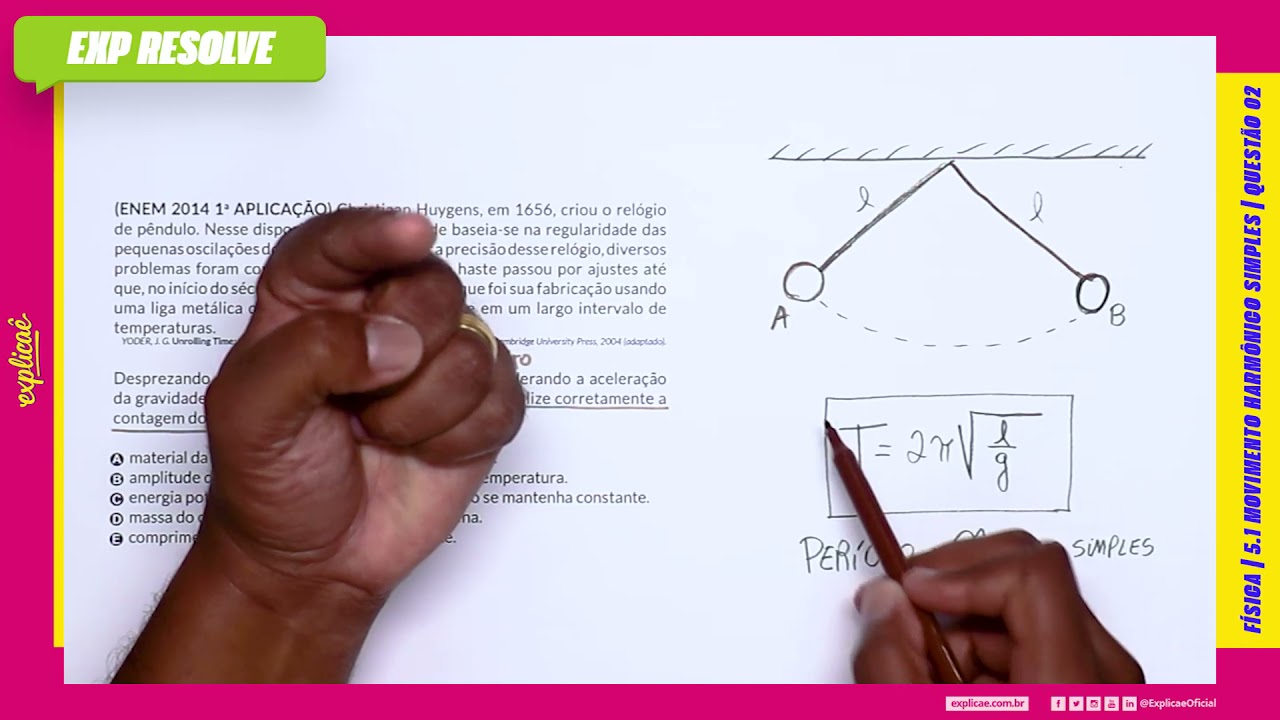
Basic mechanical physics of pendulum clocks and why environmental factors at sea, such as ship motion, temperature variations, and changes in gravity, made them inaccurate.
The historical context of the Age of Sail, including the critical economic and safety risks faced by mariners due to navigation errors.
The political history of the Longitude Act of 1714 and the intense rivalry between John Harrison and the proponents of the rival 'lunar distance' astronomical method.
The subsequent refinement and mass production of marine chronometers by horologists like John Arnold and Thomas Earnshaw, which made the technology widely accessible.
The standardization of global timekeeping, including the establishment of Greenwich Mean Time (GMT) and the creation of international time zones.
The principles of modern Global Positioning System (GPS) technology, exploring how satellite navigation still fundamentally relies on precise timekeeping via atomic clocks.
691.4K views16.5Klikes1:06:55Original Release: 2023-05-24
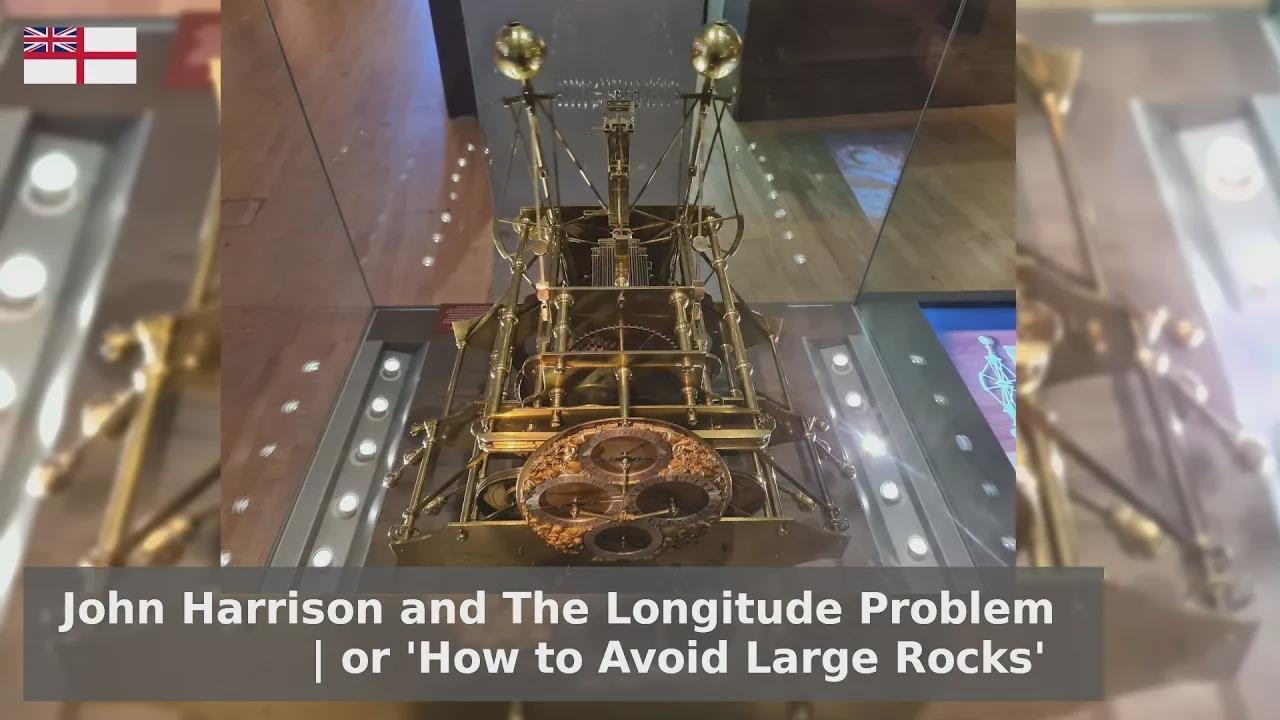
foreign [Music] [Music] first of all a huge thanks to Royal Museum's Greenwich which includes the national Maritime Museum the Cutty Sark and in this particular video's case the Royal Observatory for their cooperation and help when it came to filming this video in particular case for this video allowing me access to the Royal Observatory and permission to film The Wonderful clocks which you're going to see later on in this video which are still working by the way if you do find yourself in London you can of course visit the Royal Observatory yourself to find out more about the subject of this particular video and you can of course also visit the national Maritime Museum and the Cutty Sark in Queen's house for various other eras of Naval History now on with the video on the 22nd of October 1707 a British Fleet under the command of Admiral Sir cloudsley shovel was returning to Portsmouth after a campaign undertaken as part of the war of the Spanish succession his Force consisted of 21 vessels two small unrated ships four fire ships and 15 ships of the line the latter including multiple three-deck first and second rates and so representing a significant portion of the Royal Navy's heavy battleline Firepower for the period cloudlessly shovel had a well-deserved reputation for success in battle by this point and was of the rank equivalent to what today would be termed admiral of the fleet and the crews of the ships were mostly made up of experienced Sailors who were now entering home Waters to be fair the Journey Back hadn't been easy Gales squalls and general overcast weather had impaired their ability to take most of their standard navigational observations particularly that of latitude which could only be observed a handful of times during the voyage soundings were still possible and the previous day the soundings had indicated that they were leaving the deep ocean and entering the approaches to land a fortunate break in the weather meant that a Latitude reading taken at the same time had given them a value of almost but not quite 49 degrees north Consulting their charts this suggested they were about 200 miles west southwest of the silly Isles the southwestern most Outpost of the British Isles since this was where these two data points appeared to coincide the wind now shifted in their favor and the ship set sail roughly East by Northeast heading for home relying on dead reckoning as the shifting winds and currents carried them in what they hoped was roughly the right direction then at about 8 pm on the 22nd there was a sudden crash of Timber on rock as the fleet ran headlong into the rocks of the silly Isles the flagship HMS Association had her hole ripped open and the mighty 90-gun three Decker vanished beneath the waves in less than five minutes taking every single one of the over 800 men aboard with her including Admiral shovel behind her came the first-rate HMS Saint George which saw the flagship go down and healed rapidly to try and avoid a similar fate it wasn't quite fast enough to escape scot-free the ship still struck rocks and stuck fast to them but it was a glancing blow and the reduced speed of it meant that the ship was eventually able to get off the rocks and limp home the Fire Ship Phoenix had the same experience but as a much smaller ship it went on to beach itself so that repairs could be made before it also eventually made it home the 70 gun Third Rate hmos Eagle was not so lucky like the association she went down almost immediately with a similar number of people on board again with no survivors the fourth rate HMS Romney also healed over and vanished almost in the blink of an eye 289 men were lost with her with only her quartermaster somehow surviving lastly the fireship HMS fire brand smashed into the same rock that minutes earlier had claimed the association the smaller ship was then lifted back out to sea by a large wave and desperately steered for land but she founded before getting there with 28 out of her 40 crew going down with her the First Rate HMS Royal Anne was spared from a similar Fate by the narrowest of margins the crew having just enough time to set the sails in her tiller enough to avoid the foaming seas around the Rocks although it was so close that as she healed into the turn the sailors who were risking their lives out on the yards to manage the top sales could look straight down onto the outcrops that oh so nearly claimed their lives somewhere between 1400 and 2 000 men were lost in the space of a few minutes that night making it one of the worst disasters in the history of the royal Navy there were a variety of factors involved in that night's events including a current that some Sailors suspected but was not actually confirmed to exist until the 19th century which had contributed to dragging the fleet well north of where they thought they were but one of the factors was a lack of an ability to calculate longitude in response to this and a number of other disasters a presentation was made to Parliament a few years later on this exact problem and in 1714 the longitude Act was passed this offered a series of prizes ten thousand pounds to the person who could find a reliable way of determining longitude at Sea with an error of plus or minus a degree or 16 nautical miles at most since the distance described by a degree of longitude varies depending on how close you are to the poles or the Equator if the error was plus or minus 40 minutes of a degree or two-thirds of a degree or 40 nautical miles the prize was 15 000 pounds and if the error was plus or minus half a degree or within 30 nautical miles of where the destination actually was the prize would be 20 000 pounds a number of lesser prizes were also offered for methods that might work only close to the coastline which was where most of the ship losses occurred or if somebody had a recognizably good idea but might lack the funds to actually properly implement it to give some idea of the value adjusting purely for inflation the top prize was worth about 3.2 million pounds but in terms of relative value I.E what that money could do for you in society as a whole such as buying houses and that kind of thing it was actually Worth close to 56 million pounds or to put it in a more proximate context this was about the cost of a large fifth rate or a small fourth rate warship outright but why was determining longitude so important well working out where you are at sea without modern luxuries like GPS is a surprisingly difficult process you might think that if you know what direction you're going I you've got a decent Compass itself not necessarily a guaranteed thing for most of recorded history and you know what speed you're traveling at you can simply chart your route on a map assuming that the map is accurate and you know where you started this is the most basic form of dead reckoning but with wind waves currents and a number of other factors all conspiring to push your ship to a position other than that which simple dead reckoning might suggest you would very quickly end up thinking you're in one place but actually in a completely different location and that location could often be upside down drowning or on fire having just smashed into some immovable object like a large Rock and that's if you're lucky if you're unlucky you might find yourself wandering the oceans for weeks or months as your suppliers gradually run out and it becomes a race between dehydration starvation and scurvy to see what gets you first so how did sailors up to this point succeed in usually at least not dying luck played a part but there were also a number of methods you could use to increase your chances if you sailed a mostly coastal route conducting local trade or international trade but with a relatively small open ocean Crossing like say the Dover Straits the Bosphorus The Straits of Gibraltar the area between Sicily Italy Malta and North Africa and other such areas then you could generally build up a working knowledge of the Winds Tides currents and Landscape features along your route and then use these to give yourself the best launching Point into the Open Water passages which then should be short enough that you'd end up in roughly the right area on the other end via simple dead reckoning this local knowledge is still valued for Coastal trade and in such professions as Harbor Pilots even today in the day age of digital navigation but if you wanted to go on longer Open Water Journeys or you wanted to go on multiple different trade routes where finding enough people with irrelevant knowledge would be impractical and or impractically expensive it was by this stage at the beginning of the 18th century known that there were two things that could tell you where you were latitude and longitude latitude is where you are north or south of the Equator and that can be relatively easily worked out to a decent degree of accuracy by measuring the height and therefore the angle of the Sun at noon accounting for the variance of the seasons where necessary this was relatively easy to do with a variety of instruments everything down to just a vertical stick as long as you could see the Sun or there was enough glare and with some equipment even a relatively cloudy day could at least give you a possible measure but this only gave you a horizontal line going around the world that you were somewhere on longitude is where you are East or West relative to a given Meridian or zero line if you knew this then where the latitude and longitude lines intersected was your precise location exactly which Meridian you used didn't matter too much as long as your charts and other calculation books reflected that particular choice some meridians ran through a given nation's capital others ran through various other places for political reasons like the one that was drawn through the Canary Islands others were drawn for religious reasons viridians existed through Rome and Jerusalem for example still others were based on some theory of a natural Global Meridian that could be found by empirical experimentation and others simply because it made drawing the map of a given area rather easy either by running centrally down the area depicted or being placed to the extreme left like the zero point of a graph depending on the mapmaker's preference of course this plethora of meridians and the expanding nature of global trade could make getting all your charts referencing the same Meridian a little bit difficult on land though working out longitude was fairly easy it was already known that at different longitudes the sun reached noon at different times relative to your given Meridian and since both the units of time and those of longitude and latitude worked on a base 60 numerical system they divide into each other rather neatly so if you had a clock that was set to the time that was Apparent at your Meridian Point and another which was set to your local noon you could determine the difference between them and then calculate how many degrees minutes and seconds of longitude you were east or west of your central location though other methods such as observing eclipses that also worked for fixed points on land but eclipses happened hopelessly far apart to be of any real use on the sea voyage the problem thus was not in determining whether longitude could be calculated at all it was just that these methods didn't work at sea for example with a clock-based method the temperature aboard a ship could not be kept steady in all weathers and this meant that the materials used in many clocks would either expand or contract this could then lead to the delicate mechanisms either skipping losing time or the tension being increased making them run fast assuming that your clock actually ran to time in the first place on land this could be corrected periodically by referencing local noon or various other fixed observations and the known differences between fixed points at Sea you were always moving and working out when local noon what was happened to be the entire Point another Factor was the way the clocks of the time were powered ships of course moved in three dimensions at Sea sometimes more violently than others and the delicate systems of balances weights pendulums Springs and other tensioning methods were affected by these as well so even if you had a clock that was immune to changes in temperature or humidity and that normally would run perfectly true being on a ship could still throw out its measurements so for longer trips say across the North Sea or for the various transatlantic and even trans-pacific voyages that were relatively common by the early 18th century the use of latitude only methods had to suffice this would be supplemented where possible as shovels Fleet had tried to do with observations of known points that had already been surveyed like the rise in the seabed Via soundings assuming that these had all been charted and provided known points and that they've been charted accurately in the first place but if they had once you knew where these fixed points were you could locate them in conjunction with the latitude when you pass them on a map the problem was that even if all of this came to pass you had to know you were in that approximate area to be able to make that observation and even then it only told you that you were a particular known fixed Geographic place before or after you ran into that fixed point you were still very much in the dark and if you didn't know you're in the area of that fixed point in the first place interpreting what an observation might mean such as a sounding where the seabed was Rising might be almost impossible because that could happen in a lot of places but at its crudest a Latitude only method could rely on simply sailing out from your starting location for a Time just enough to clear any land that you might run into in the direction that you're about to go then head north or south as applicable until you reached the latitude of your destination then sail East or West as needed staying on that line until you reach your destination or for more complex routes you might reach a reference point like an island where you could make another adjustment in theory you could do this anywhere along your route but it was held to be better to make any changes early when your dead reckoning might still be somewhat accurate as simply heading east or west and hoping to make the change at the last possible minute might leave you running straight into the coast if your guess as to the distance traveled was actually less than reality was or it might leave you to navigate a very unfamiliar coastline but this method was inefficient since it is actually made safe travel into a series of vertical and horizontal movements which might not cooperate with the wind and in any case was longer than a more direct route it was also unreliable since any long-term navigation could mean that you would end up on your chosen latitude but exactly where on it relative to your destination could be completely unknown which might leave you going in entirely the wrong direction with very limited supplies indeed in 1741 decades after the longitude act but before the solution had been finally worked out Commodore Anson in his famous round the world Journey aboard HMS Centurion faced exactly this problem he was trying to get from the Atlantic to the Pacific around the tip of South America he'd sailed West having reached a latitude of 60 degrees south straight into the face of a terrible storm dead reckoning after quite a while of sailing told him that he was finally through the Straits and so he headed north to the 35 degree south latitude which should then allow him to reach Juan Fernandez Island where there was food fresh water and Timber all of which is battered ship and dying crew desperately needed but the storms had meant that the vessel had actually sailed far less to the West than they thought and without any way of working out their actual longitude the ship ran almost directly into Tierra del Fuego's West Coast instead the so he headed west a bit more and then North finally reaching 35 degrees south in reality now he was at the right latitude but again without any longitude position he had no idea if he should run east or west to find the island initially he went West but after four days he concluded that he must have sailed Too Far West when they were further south and so he had to double back in fact he was actually hours away from his destination and so after sailing back East again and almost running straight into spanish-controlled Chile they had to double back yet again over two weeks since they'd first reached the correct latitude this delay was costing him 80 men to scurvy just during this East-West search and still more would die once they reached the island as they were too far gone to recover this incident as well as the storm would leave him with less than half the 500 strong original crew of the Centurion the tragedy was doubly terrible because five years earlier in 1736 a relatively unknown clockmaker who called himself George Harrison had boarded the ship and used a clock that he had devised to try and win the longitude act prize to successfully help navigate the Centurion from Britain to Lisbon in Portugal although the clock still had some issues with losing time on the voyage the return trip aboard HMS Orford had showed its value as the clock had indicated their longitude was about 60 miles different to that which the ship's officers had calculated this turned out to be very fortunate as the approach the ship was making was eerily similar to the one that Admiral shovel's Fleet had made several decades before and the clock saved Orford from likewise going aground on the southwest tip of the British Isles but that particular device clock H1 as we call it these days which we'll come to later still had lost some time as we'd noted earlier and thus was felt unsuitable for long distance voyages now to be clear the 1714 longitude Act was far from the first time governments had tried to offer insane rewards for solving this problem the ability to calculate longitude aboard ships would mean shorter trade routes fewer wrecks and a more accurate and more mobile Navy in short it could be a game changer that could completely upset the balance of power Philip II of Spain he of the Armada had offered just such a prize and his successor Philip III had renewed this offer with a prize that was worth 60 times the average annual income which would then be given to the winner as a permanent pension I.E you'd get that money once a year every year plus another sum that was worth 180 times the average annual income as a lump sum to start with the Dutch got in on this act in the 1600s as their own International Trade took off and dozens of inventions were offered up some were obviously impractical but quite a number were well thought out enough that the respective governments paid the inventors expenses even if the mechanisms themselves didn't actually pan out Britain and France also offered such prizes at various levels mostly privately but these came in the latter part of the 1600s as their own trade Empires finally began to take off with the longitude act however came not just the prize but a specified method of testing specifically any entry would be held to be a success when according to the ACT a ship by the appointment of the said Commissioners or the major part of them shall thereby actually sail over the ocean from Great Britain to any such port in the West Indies as those Commissioners or the major part of them shall Choose Or nominate for the experiment without losing their longitude beyond the limits before mentioned the Commissioners being those of the board of longitude which was now established to make judgments on the various entries although coming from a wide range of backgrounds the majority of members of the board fell into one of three categories MPS professors of mathematics from Oxford and Cambridge all Admirals of the royal Navy the astronomer Royal was thrown in there for good measure Isaac Newton summarized the state of scientific progress at the time and the methods that were being proposed as front-runners as he was president of the Royal Society of the time he was well placed to understand these things the methods being as per his entry one is by a watch to keep time exactly but by reason of the motion of a ship the variation of heat and cold and the difference of gravity in different latitudes such a watch has not yet been made another is by the eclipses of Jupiter's satellites but by reason of the length of telescopes requisite to observe them and the motion of a ship at Sea those eclipses cannot yet there be observed a third is by the place of the moon but her theory is not yet exact enough for this purpose it is exact enough to determine her longitude within two or three degrees but not within a degree a fourth is Mr ditton's project but this is rather for keeping an account of the longitude at C than for finding it if at any time it should be lost as it may easily be in Cloudy weather this latter scheme was as noted not one for calculation but rather one of reference very briefly the idea was actually quite hilarious at first glance it supposed that old ships could be taken out to sea as Hulks and anchored at fixed points of longitude in lines across the ocean presumably using an eclipse fix or similar to work out where they were to start with quite how you anchored an old Galleon in several miles of ocean was never quite fully explained but supposing that you could do this these ships would then be well provisioned and have a small crew who would be resupplied and or relieved by maintenance vessels that would run up and down the latitude lines that these lines of ships would follow the main point of these hulks was that each one would be stocked with an arsenal of enormous firework Rockets these would then be launched at set times at night with each somehow contriving to reach an altitude of over 6 000 feet which for reference is about double the current world record for a fireworks altitude at least officially whereupon this late Stuart Dash early Georgian era short-range ballistic missile would detonate inappropriately apocalyptic style allowing any and All Ships over a very wide radius to Mark the location and bearing of the detonation and hence by its color and time and determine their own distance from the Hulk in question and thus their own relative longitude quite who was going to pay for a significant portion of the planet's Collective Firepower as of 1714 to be deployed at Sea and then blasted into the sky at regular intervals was never entirely clear either and needless to say this project didn't really go anywhere another option that wasn't listed was the use of the Earth's magnetic field the theory at the time going that patterns therein might be regular enough to be mapped and if so then a ship's compass and the deflection within it might be able to be used this would eventually run into the problems that the Earth magnetic field was both far from regular and also changed almost constantly albeit it would take some time before everybody actually realized this both of these methods relied on working out your location relative to a fixed Point either the ballistic missile Galleon or a magnetic variant that had been mapped out earlier the other three were more along the lines of what everybody was actually looking for a method of working out exactly where you were at any time of day or night without reference to external reference points at sea the Jupiter option relied on the eclipses of the then known moons of Jupiter which were a lot more frequent than eclipses of Earth's Own Moon being used as a giant Celestial clock in the sky since these eclipses would occur at a known time it would be possible to use these observations against an almanac in a number of ways for example in reference to local noon to determine the local time and hence the longitude the issue here was as Newton noted only a few telescopes in the world actually had the Fidelity to make such observations and even if these Were Somehow produced in Mass numbers and the Mariners trained to use them at least on larger vessels quite how you'd keep your telescope focused on an absolutely tiny point in the sky that was the Jovian system whilst you're on a pitching and rolling ship was another matter entirely in his last years not less a person than Galileo himself had tried to perfect a stabilized telescope helmet to assist with this endeavor other ideas called for the astronomer and his telescope to be enclosed in a spherical chamber that was half full of oil from which he would then make his navigational predictions as the oil would in theory remain stable from all of the ship's motions by of course the vertical this somewhat Italian version of an early Warhammer 40K astropath aside many others had since attempted to square the circle of seaborne observations whilst the same techniques applied on land were actually in the process of greatly improving the mapping of European coastlines since of course the land usually tends to stay in one place the lunar method was again an old one this was a little bit easier to observe than Jupiter's moons and the Moon is somewhat larger in the sky and was similarly based on the idea of having an almanac in this case the idea was to use a cross staff at the very basic level to observe the moon's location and the angles between it and certain key Stars between this and the relative altitude of those stars in the sky it should be possible to determine exactly which set of alignments were being observed and thus the predicted time that they occurred at compared to the local noon would give you your longitude unfortunately again as Newton observed the calculations tables and instruments that were available at the time were not yet refined enough to give anything of particular value two or three degrees of error was at the largest value almost the entire distance between Admiral shovel's last fixed location and is encounter with the silly Isles almost a day later one side effect of attempts to solve the problem via these methods though would turn out to be quite useful later on the need for more accurate observations to help with more accurate predictions LED in the 1670s to the setup of an observatory here on croom's hill in Greenwich which you can see behind me this would then become the Royal Observatory very soon thereafter and in 1721 it was decided to establish a new Meridian which passed through this Observatory over time this became more and more important for reasons we'll explain later on but it would eventually become the Greenwich primer Meridian from which we derived Greenwich Mean Time and if you happen to be in space universal time and we're going to go and have a look inside in a little bit to see what other things we can find in the observatory that relate to the problem of longitude this leaves us with the final method or the first one in Newton's list a clock in order to meet the standards of the longitude act such a clock could not gain or lose more than three seconds in every 24 hour period since each of these errors would in theory be cumulative and on the typical month and a third voyage across the Atlantic the maximum accumulation of these errors would reach about two minutes which might not seem like a lot but it would be enough to throw the longitude calculations out to the very limits of the degree variance that the minimum acceptable entry would have anything that gained or lost more than three seconds a day was not admissible this posed a problem since at the time of the acts passing a clock had been invented that was suspended in a vacuum thus keeping out changes in pressure or humidity mounted on gimbals to minimize impacts from a ship's motion and set with two separate driving Springs so as to never lose time whilst being wound and even this had an error of up to six seconds a day partially because none of these measures dealt with the changes in temperature which affected the materials that it was made of and partly because even the gimbals didn't entirely Shield the balances and the escapement from the inertial effects of a ship at Sea now as we enter the Greenwich Observatory itself we also enter the hero of this story into our account George Harrison born in 1693 in Yorkshire grew up as a carpenter with an interest in music in 1713 age 20 he built his first clock powered by a pendulum with no training in the clock or watchmakers arts and Having learned all he knew of the Dark Art of chronomancy from a copy of Newton's principia and a series of lectures by the mathematician Nicholas saunderson who taught at Cambridge and had his talks transcribed into a book he'd built his first clock almost entirely of wood the presence of metal was minimal even the gears were wooden cut from Oak working with the grain to prevent wear or snapping he also included a handy reference to reconcile the strictly mechanical advance of time on his clocks with the slight variance that you'd encounter using sundials or other popular methods of telling the time that were prevalent in the 1710s at some point he must have heard of the longitude prize but kept going with his own wooden clocks for some time a thereafter proving to be something of a horological projody in 1722 he completed another clock almost entirely made of wood and was this was made for brocklesby park for installation in its Clock Tower using minimal amounts of brass the majority of the moving parts that in almost all other clocks of metal are in this case carved from lignum Vitae which means that the clock needs no greasing and has as of this year kept near perfect time for over 300 years without stopping except for once in 1884 where they had to forcibly stop it so that the tower could be refurbished yet the tower was falling apart before the clock did part of Harrison's Ingenuity showed forth in a series of clocks that he built in the 1720s inventing and including a Gridiron pendulum which utilized a series of plates of brass and steel about halfway along the pendulum arm which eliminated at a stroke The Perennial problem that such clocks had experienced in the past with temperature controlled expansion making them gain or lose time as heat or cold swept over them his new clocks had a gain or lost time of less than a second per month helped by another invention he devised the grasshopper escapement which allowed the clock gears to advance at a fixed rate rather reliably then in 1727 Harrison decided that he had learned enough to tackle the problem of seagull in clocks although this would mean immediately abandoning his advances in Long pendulum design as he instantly recognized this was never going to work bought a heaving ship and so he began to sketch out a plan for a seagullit going clock to solve the problem of longitude in early 1730 he was finally happy with the draft design and set out South for London when he arrived in the summer he was not the first to have tried to build a clock to solve the issue as Newton had observed 16 years earlier this particular solution was well known in principle it was making the clock itself that was the issue and many attempts had reached varying levels of success but never quite made themselves accurate enough over long service at sea since the board of longitude was made up of many important men with full-time jobs there was no building or desk that he could just approach for hearing the board would only convene when enough members had been convinced to summon all the others to have a look at the latest proposal a situation that had thus far failed to transpire beyond the interest of a handful of vaguely bemused broadmen showing up before somebody inevitably spotted a major flaw or other in the latest presentation however Harrison knew Edmund Halley the famous astronomer and discoverer of Halley's Comet and he was a member of the board and more importantly Harrison knew where to find Halle here at the Greenwich Observatory however whilst Halley himself could see the Promise in the plans the older man also knew many on the board were quite focused on the Heavens to solve the problem and the amount of pretty diagrams were likely to persuade them otherwise instead he directed Harrison with some encouragement to go and seek out George Graham an expert watchmaker deviser of scientific instruments and fellow of the Royal Society arriving at Graham's Residence at 10 o'clock in the morning Harrison left 10 hours later with a significant loan with which he was told to construct his proposed timepiece and so began five long years of work along with his brother James this would eventually result in George Harrison building his first so-called c-clock which we now call H1 Harrison one very original I know here it is in 1735 this very 38 kilo timepiece stood on a desk in George Graham's office in London having already experienced a maiden voyage on a barge on the river Humber up north before it was brought South to London looking more like an escapee from a doctor who set rather than a clock it uses wooden lignum Vitae bearings to escape the need for oil and grease along with his grasshopper escapement and a short pendulum on a spring with bar balance weights which you can see pinging around in the background these set against the motion of each other so that some movement of a ship that throws one off will be counterbalanced by the other various other balance Springs built in you can see you're down there at the bottom secure various other parts of the device the Royal Society came to see it after a note arrived from member George Graham which stated John Harrison having with great Labor and expense contrived and executed a machine for measuring time at Sea upon such Principle as seems to us to promise a very great and sufficient degree of exactness we are of opinion it highly deserves public encouragement in order to to execute a thorough trial and Improvement of these several contrivances for preventing those irregularities in time that naturally arise from the different degrees of heat and cold and moist and dry temperatures of the air and various agitations of the ship it would be this exact clock which in 1736 would be found aboard HMS Centurion heading for Lisbon accompanied by Harrison and a note from the first Lord of the admiralty to the ship's captain the note stated sir the instrument which is put on board your ship has been approved by all the mathematicians in town that have seen it and a few have not to be the best that has been made for measuring time how it will succeed at Sea you will be a judge I have written to Sir John Norris to desire him to send home the instrument and the maker of it who I think you have with you by the first ship that comes the man is said by those who know him best to be a very ingenious and sober man and capable of finding out something more than he has already if he can find encouragement I desire therefore that you will let the man be used civilly and that you will be as kind to him as you can to be honest he was probably just glad that the admiralty hadn't sent him to see with any of those gigantic fireworks more than anything else so Captain Proctor Julie set sail and as recounted earlier Harrison and this clock made their way back home aboard the Orford which he saved before heading back to London for the First full meeting of the board of longitude hilariously the only person present with any significant criticism of the clock was Harrison himself in between bouts of horrific seasickness thanks to the heavy weather aboard the Centurion on its way South he'd been at work rectifying a few minor issues that had caused it to lose time along the way which was in part why the device performed so much better on the way back its deviation was actually within the parameters to be eligible for the ten thousand pound prize but he told the board there were some issues he wanted to correct as well as trying to make the whole thing smaller if it pleased the board and they would advance in a sum for another two years of work he could return with another even better timepiece which he would be happy to send on the official test Voyage to the West Indies with 250 pounds paid immediately and another 250 pounds available upon completion the board would impose one last condition once the work was finished both of the timepieces would belong to them Harrison agreed moved to London and began work in 1737 on his next project the clock that would become known as H2 and here is H2 believe it or not it is a bit more Compact and it uses considerably more brass than wood which is a product of house and being based in London with access to many world-class clock and watchmakers that he could subcontract the actual craftsmanship to it works on a similar principle to H1 you can probably see the counterbalance is moving back and forth in the background there but it included some improved features a secondary winding mechanism smoothed out stress on the escapement and even better bimetallic strip setup and a few other features any one of which would have led to a lucrative patent and a huge advance in Precision clock and watchmaking by itself by the start of the 1740s this poor thing was being heated Frozen and flung around by increasingly enthusiastic members of the Royal Society in a battery of tests that were surely far far more violent than anything you could reasonably expect to be experienced aboard a ship not that the risk was entirely one-sided although smaller than H1 the device weighs about 43 kilos more than H1 largely thanks to the greater proportion of metal in it the Royal Society reckoned that this clock was worthy of the twenty thousand pound prize but there were two problems firstly the Royal Navy was at that point involved in the war of Austrian succession which meant the admiralty was unwilling to take it to seed for testing lest it fall into Spanish hands so vital was it to the continued Improvement of the Navy and secondly Harrison had discovered a fundamental flaw in those wonderful counter balancing bar balances they worked in almost every conceivable circumstance a ship might experience bar one if a ship took a sweeping turn the complex swinging motion could still affect the clock's time keeping as such Harrison was unhappy with it and although he turned it over as promised he asked the board for a further stipend to let him go back and try and make an even better clock this was granted and Harrison began work on his next clock which became known as H3 that's over here H3 left the bar balance behind in favor of what you can see oscillating back and forth at the top there and maybe around the side circular balances this clock also included even more Innovations there was now a bimetallic strip in as a tensioner for the balance spring as well he also just happened to invent and include the Caged roller bearing which is a direct ancestor of the Caged ball bearing which would become so vital in almost every large mechanical product of the 19th 20th and 21st centuries H3 was ready for testing within five years but Harrison kept making changes and improvements the clock won the Copley medal the highest honor the Royal Society could bestow in 1749 and became quite the tourist attraction Benjamin Franklin rocked up in 1757 and paid the frankly absurd amount of 10 Shillings and Sixpence just have a look at it which is about 75 pounds if you go by inflation only or over 1200 pounds if you go by comparative value measurements occasionally emerging from the workshop to ask for and be granted a new stipend Harrison worked away for over a decade whilst outside other advancements were being made during the 1730s an English Squire John Hadley and a Philadelphia Glacier Thomas Godfrey had separately but almost simultaneously invented the same device called a quadrant octant reflecting quadrant or similar it was rapidly developed into the sextant this allowed accurate observations of the position of the sun and moon or moon and stars to be made which could then be compared to much improved almanacs to allow the calculation of longitude but whilst the Sextant and the tracks of the moon were ready by the end of the 1730s turning all of this into a set of almanacs which capitalized on the Colossal amount of work and the new discoveries about the final points of Earth's orbit the moon's orbit their relative relationship to each other as well as the confirmation that the Earth was definitely moving through space all of which relied on work that had been done at the Greenwich observatory in conjunction with other observatories and Observatory stations around the world would take quite some time it wasn't until 1757 that the revised lunar method could be taken to see for testing and even then you needed to have a vast knowledge of mathematical equations to make all the needed corrections to your on-deck observations before them plugging the refined result into an almanac comparison which would then allow you to work out where you were and even at that stage unless you wanted to wait for local noon to calibrate you still needed a reliable clock to tell you the local time relative to the almanac observation time meanwhile back in England in the early 1750s almost as a distraction a Harrison had commissioned John Jeffries to make him a watch of his own design this included a new type of escapement of Harrison's devising as well as another of his ideas a wheel train which meant it could run on a single spring but that spring could also be wound without disrupting its drive to the rest of the device something which is now pretty much a common feature on most mechanical watches the whole thing was also helped due to the development of new Crucible steel which was better for some parts of the mechanism than brass in 1757 H3 was finally ready it weighs a mere 30 kilograms but it still didn't meet with Harrison's approval well he thought it might actually pass the board trial but there was another war going the Seven Years War so sea trials would have to wait instead of wasting that time Harrison now put all the work almost two decades that he'd invested into H3 into combination with some of the newer things that he'd had built into his little pocket watch he then merged them with some of the new materials available and in a stunning two years he completely abandoned the past three decades of work that we've just seen and turned up in 1759 with a mere 1.5 kilo oversized pocket watch a huge contrast to all these previous efforts that was and is H4 too small to use lignum Vitae he instead resorted to Tiny diamonds and rubies in a search to eliminate friction without having to use oil although in the end so small were the parts that a small measure of it was still needed it included the winding mechanism found in the watch but the spring itself was good for 30 hours so a daily rewinding would always leave it with plenty of backup tension but of the four Harrison timepieces here in the observatory H4 is unique in the as you can see it doesn't run due to the need for small amounts of oil and that liquid's tendency to seep and Decay if it was kept running as H1 through h3r it would need maintenance every three or four years and with that comes wear and tear and the risk of damaging small parts or them becoming lost every time you have to take it apart and so it remains inert while its wonderful predecessors tick on unfortunately by the end of the 1750s the membership of the board of longitude had changed significantly the new astronomer Royal James Bradley was quite the opposite of Halle whilst both were quite interested in the lunar calculation method Hallie just wanted something that worked Bradley was obsessed with claiming the prize for himself via the lunar method and now did all he could to frustrate Harrison who was now in his late 60s and was being supported in his efforts by his son William by 1761 the war had calmed down enough that scientific voyages could be risked the initial plan was for both H3 and H4 to go out on trial together William Harrison therefore took H3 to Portsmouth and waited for both assignment to a ship and the arrival of H4 to which his father was making almost Daily Miner adjustments eventually in November HMS Deptford a swift 60-gun fourth rate was made available William would sail in place of his father but with H4 alone George Harrison was confident enough in H4 to have removed H3 entirely from the tests on the first leg many casks of beer as well as pretty much all of the cheese were found to have been spoiled and they had to be thrown overboard soon the ship's company was down to the questionable supply of fresh water Captain Diggs was worried Madeira was their closest Port of Call and wine could be bought there to replace the Lost beer but by his Reckoning they still had some days to go before they reached the port William Harrison consulted at the H4 watch worked out their longitude and said that actually they were less than a day away the next morning sure enough Madeira was cited and Diggs promised to buy the very first Sea Watch that the Harrisons made available for sale the error between the dead reckoning and the watch was about a degree and a half and the watch was bang on after three months at Sea they reached Jamaica where it was found that after 81 days at Sea H4 had only lost five seconds massively within the margins of the 20 000 pound prize in a somewhat humorous ceremony Captain Diggs bought and then presented the younger Harrison with an octant the means of measurement for the lunar method which might seems a little bit odd until he realized he was basically handing the Harrison's the equivalent of their rival's head on a platter aboard the much smaller Sloop HMS Merlin William Harrison and H4 made a much rougher Journey back home setting foot ashore in England on March 26 1762 the total error accumulated on both voyages combined was just under two minutes which was still well inside the margin for the ten thousand pound prize after having traveled double the required distance without any checks this performance alone should have won the Harrison's the top prize but as mentioned the board had changed instead of twenty thousand pounds they were awarded 1500 with the promise of another thousand if H4 completed another trial with the justifications given being like some British government bodies these days made up after the fact for this whole reason of denying the claim in fact as mentioned earlier a good number of the current board members were actually heavily invested both literally as well as figuratively in the lunar method although the astronomer Bradley had died in 1762 his successor Bliss was just as invested and derided the success as h of H4 as luck perhaps somewhat stung by a simultaneous voyage that had used his beloved lunar method in 1761 which had returned errors of one and a half degrees fifty percent outside the lowest catchment boundary to win the prize despite the lunar method being significantly more complicated to work out whilst The Humble H4 had with the work of a regular Royal Navy crew spent most of its time accurate to within a few miles as opposed to the lunar methods 90.
a second trial nonetheless headed for Barbados in March 1764. once again with William and H4 aboard HMS Tata whilst the princess Louisa had left in September 1763 carrying the lunar method and one of its strongest proponents Neville mascaline with the idea to test both that as well as a Revival of the Jupiter observing stabilized telescope sphere which immersively moved away from the oil bath method the latter still proved a failure the movement of Jupiter was too fast to keep track of even with the complex Gizmo's assistance the lunar tables however when consulted and measured by an expert in the mathematics involved were proving to be accurate to within about half a degree which was much improved on the performance of the 1761 Expedition a both parties returned to the UK with the finding being that the lunar method was now overall accurate within a degree which was enough to theoretically net the lower 10 000 pound prize and in any case 5 000 pounds was awarded to the Widow of the man who'd painstakingly put the lunar tables together in the first place Tobias Mayer since it was clearly a huge improvement over not finding longitude at all still this was a 60-mile margin of error the era of H4 at Barbados however had been just under 10 miles significantly better the so of course the board changed the rules again they were now arguing that since Harrison hadn't told everybody how the watch worked well in they would now only prepare to offer him ten thousand pounds but on the condition that he handed over both H3 and H4 as well as the full plans for H4 effectively preventing him from making any more of them and giving the board incidentally the ability to profit from any further devices manufacturer because they could send the plans whoever they liked if the Harrisons wanted the other 10 000 pound then they would also have to produce at their own expense to further copies of H4 without access to H4 all the plans for it by 1765 arguments had raged back and forth whilst masculine who had now succeeded to astronomer Royal and head of the board was trying at length to persuade anyone who would listen to him that the lunar method was better despite the fact it needed four hours at the very best to compute a less accurate solution than H4 could manage in minutes eventually Harrison gave in and took apart and reassembled H4 whilst explaining what each and every single piece did to an observing audience his drawings were also surrendered and then the board also contrived to seize all four timepieces H1s through four four prolonged examination by masculine who not only booked signing a receipt saying that he had taken them from Harrison's house in good working order but whose workers then accidentally I'm sure proceeded to drop H1 on its way out mysteriously despite having managed to keep time on two transatlantic sea voyages under the sole examination of masculine who incidentally of course was a man who hated the device as much as a man can hate a piece of clockwork 4 mysteriously began to fail Harrison was left to work on H5 and theoretically H6 with only his experience and memory the board refused to let him have his plans or H4 back as we mentioned whilst masculine had the plans for H4 transcribed into a book which he then published so that anyone in theory could copy the design for free the fact that royalties from the book came back to him was of course entirely coincidental amusingly since Harrison had written all of the notes that went with the plans it turned out that nobody could understand a word of what he could written and they were pretty much useless anyway in the end the Elder Harrison managed to complete H5 which was a similar device to H4 whilst larkham Kendall the former Apprentice of watchmaker John Jeffries was brought in by the board to produce a exact replica of H4 K1 William Harrison was actually quite happy with this as Kendall was of course known to him and K1 two and a half years in the making was sent out on an expedition with one Captain James Cook along with three other chronometers produced by one John Arnold cook set out on his second voyage board HMS resolution in 1772 and part of this Voyage was to compare the lunar method which cook was educated enough to understand and compute with the various devices that were now being dubbed Marine chronometers cook would end up using K1 almost exclusively producing maps on his voyage that was so accurate that mildly updated versions of some of them were still in use by British Dutch American and Australian officers at Sea during World War II meanwhile the older Harrison had actually managed to complete H5 but he realized that he was not going to be able in his Advanced age to build H6 nor was he likely to live long enough to see the board's next invented tests for H5 so instead the same year that cook set out William Harrison wrote directly to the king explaining the situation George III took H5 into his personal care and directed that a series of tests ostensibly to the letter the same as maskline's tests of H4 B conducted under his personal supervision at Richmond after a few days where H5 went wild until the king remembered that he happened to have stashed a bunch of magnetic lodestones in the cupboard next to it of course H5 Hanks having significant steel components the king then moved to the lodestones this settled the device down and after 10 weeks of observations H5 had varied only by a third of a second per day the king then promptly circumnavigated the board and went straight to the Prime Minister the matter went to Parliament and Harrison was awarded 8750 pounds almost the whole balance of what he was rightfully owed then in 1775 cook returned with effusive praise for K1 h4's clone and precious little to say about the lunar charts his logs instead replete with references to what he called the watch which he had become to regard as something of a personal friend the next year 1776 George Harrison died Vindicated at last in his closing years Harrison's work lived on though as various watchmakers used his plans to try and simplify the admittedly expensive and rather long process that was involved in replicating H4 directly some of these early efforts were obviously less than successful although masculine became the mortal enemy of pretty much the entire London watchmaking scene as they soon found out that the trials he insisted on putting their entries through personally became more and more rapidly little more than thinly veiled exclusives to find creative ways to break them Arnold who'd provided the other three chronometers that went out with cook in 1772 had devised a solution to the slow replication process he farmed out the bulk of the production of his version to numerous Craftsmen and then focused his expert efforts solely on Crafting the hardest bits and then calibrating the resulting chronometers as they were put together production of reliable timepieces went from single figures per Builder per lifetime to hundreds although the ones sent with cook had performed poorly that is Arnold's by the time he'd made Arnold chronometer number 36 his errors were down to three seconds a day in variance not a patch on H4 H5 but more than enough for General use and this was furthered by Thomas Earnshaw who hit upon a reliable enough design and then started making them on mass about one every two months whilst Arnold would make a run of about half a dozen to a dozen before incorporating some new idea he'd had into the next batch a rather acrimonious competition between the two continues in debates amongst historians to this day but it can at least be said that it drove both men to make more reliable chronometers even faster and available for even less by the 1780s captains of both the Royal Navy and the East India Company were gladly buying the latest chronometers at 60 to 80 pound a time buying them out of their own pocket despite this being an inflation-adjusted equivalent of around ten thousand pounds or a relative income value of 150 000 pounds so valued with these chronometers the Navy secured a stock and locked them away in Portsmouth for issue to ships that are about to head out by the time HMS and Beagle headed out on her famous voyage there were no less than 22 chronometers aboard half of them from the admiralty and the other half from either the private ownership of Captain Fitzroy or on loan from some of his friends the losses the Royal Navy suffered during the Napoleonic Wars to navigational error dropped massively whilst the ability of the British ships to outsale their Rivals was helped on still further by being able to plot their courses far more accurately than other navies whose own clockmakers proved unable to mass produce accurate timepieces for quite a while whilst the almanac and its lunar observations continued to be published and less well-off captains used them exclusively since a copy of the tables and a Sextant to go with it could be had for a mere 20 pounds on the front line ships of the royal Navy this was a secondary method to the precise ticking of between one and three chronometers however the use of the lunar method as a backup to the chronometer or as the primary method on smaller ships or foreign ships that needed to navigate precisely but couldn't get their hands on a British main chronometer in the first part of the 19th century had an unintended side effect a chronometer could calculate relative longitude from any Meridian as long as the charts are available and drawn to that line but the lunar tables were all produced from the Greenwich Observatory making it the standard navigational reference and as British admiralty charts became the standard navigational charts across the world as the 19th century pressed on these were also drawn to the Greenwich Meridian with the positions of various land masses established by a legion of British ships wielding chronometers for longitude reference and so in 1884 when an International Conference was held to decide on what should be the standard international Meridian there really wasn't any other choice this Meridian the one in Greenwich was chosen at that conference by every single nation that was there except of course for the French who would hold out until 1911 and to be honest even after 1911 they continued to refer to the Greenwich Meridian the one they actually now had to measure from as the Paris Meridian minus a little bit so currently I'm standing in the Western Hemisphere but I am now standing in the Eastern Hemisphere and now I am thoroughly geographically confused from the end of the 18th century at 1 pm each day the ball that you can see here on top of the Greenwich Observatory would be raised and then dropped this allowed all the shipping on the Thames which from Masthead could see this particular area back in those days to set their chronometers before venturing forth and you can see why international shipping based in the ports of London would be able to see this drop we're filming from about 20 feet to the right of that big red ball and what you can see ahead of you now is what's now the O2 Arena but that is on the Greenwich Peninsula that used to be an area where there will be lots of shipping and then as we pan across you'll see coming into view what's now the national Maritime Museum but used to be the hospital for retired Sailors and injured Sailors so this is where the Royal Navy was based this massive collection of skyscrapers directly ahead of us well that's based in the London docklands it's called the docklands because that entire area instead of being a bunch of buildings used to be a whole network of canals and docks and warehouses for the loading and unloading of shipping and then as we pan even further left you can see the curve of the Thames because either Cutty Sark and its masts there which we might look at at some point in the future and then right over to our left you can see the Dome of Saint Paul's which is actually Beyond London Bridge which is the highest point on the river that mastered ships can navigate so all along there if you imagine all these skyscrapers and large tower blocks aren't in the way any ship that was moored in the Thames from London Bridge past Tower Bridge the Tower of London all the way around the Arc of the Thames and coming down here through the docklands through the warehouses and pretty much all the way out past Greenwich and Deptford could all see this location so it was an absolutely perfect place from which people could check their chronometers and make sure they were ready before they headed out to sea but for some while after these remarkable changes consigned to rot away in a storage Vault by maskeline H1 through H3 molded away bar one brief cleaning effort in 1836 until Lieutenant Commander Gould of the royal Navy volunteered to clean and restore them in 1920. H3 would prove especially challenging as within he found the remains of a number of devices which Harrison had built into the clock installed but then bypassed for better ones which were also set in place missing pieces of H1 also had to be replaced however this work was successful which resulted in the Magnificent display that you can come and see today at the Royal Observatory in Greenwich and so it was that the legacy of John Harrison contributed in a huge way not only to the success of the royal Navy but subsequently to that of the British Empire and perhaps more importantly on a global scale to the safe navigation at Sea generally tens perhaps even hundreds of thousands of lives or more are owed to the dogged and determined efforts of a Yorkshire Carpenter whose goal in life was simply to make his Mark with the finest chronometers that the world had ever seen up until that point and I think in the end he succeeded Beyond his wildest dreams that's it for this video thanks for watching if you have a comment or suggestion for a ship to review let us know in the comments below don't forget to comment on the pinned post for dry dock questions
Up Next

20:12
Why Did the Maya Civilization Collapse? | History Documentary
@lukecaverns
36.4K views•2025-11-14

33:02
The Great Schism of 1054: Causes and Consequences
@SacredCathedrals
113.5K views•2026-02-19

91:57
The Geopolitics of the Ukraine War and the Rise of Global Autocracy
@JordanHarbingerShow
468K views•2025-04-19

17:05
Understanding the Cold War: Superpower Conflicts and the Road to Détente
@OverSimplified
46.1M views•2019-01-24
Related Study Plans & Knowledge Roadmaps
Structured learning paths in History
history
Byzantine Iconoclasm: Theology, Art & Politics
01Foundations of Byzantium and Early Christian Images
02The First Iconoclasm: Leo III and the Crisis of Images
03Empress Irene, Nicaea II, and the Second Iconoclasm
+ 2 more learning modules
9h5 modules
Explore Roadmap
history
Iranian Revolution (Causes, Events & Legacy)
01The Pahlavi Dynasty and the Roots of Discontent
02The Spark of Rebellion and the Rise of Khomeini
031979: The Fall of the Shah and the Climax of the Revolution
+ 2 more learning modules
8h5 modules
Explore Roadmap
history
Mali Empire: Mansa Musa, Trade & Timbuktu
01Foundations of the Mali Empire
02The Trans-Saharan Gold and Salt Trade
03The Reign and Pilgrimage of Mansa Musa
+ 1 more learning modules
6h4 modules
Explore Roadmap
history
1947 Partition: Politics, Borders & Legacies
01Foundations of British India and the Divide
02The Political Negotiations and the Mountbatten Plan
03Drawing the Boundary: The Radcliffe Line
+ 2 more learning modules
8h5 modules
Explore Roadmap