








![【構造力学Ⅰ】#04[境界条件]ピンローラー支点・ピン支点・固定支点は覚えろ!](https://i.ytimg.com/vi/6oJvPHpXOBU/maxresdefault.jpg)



















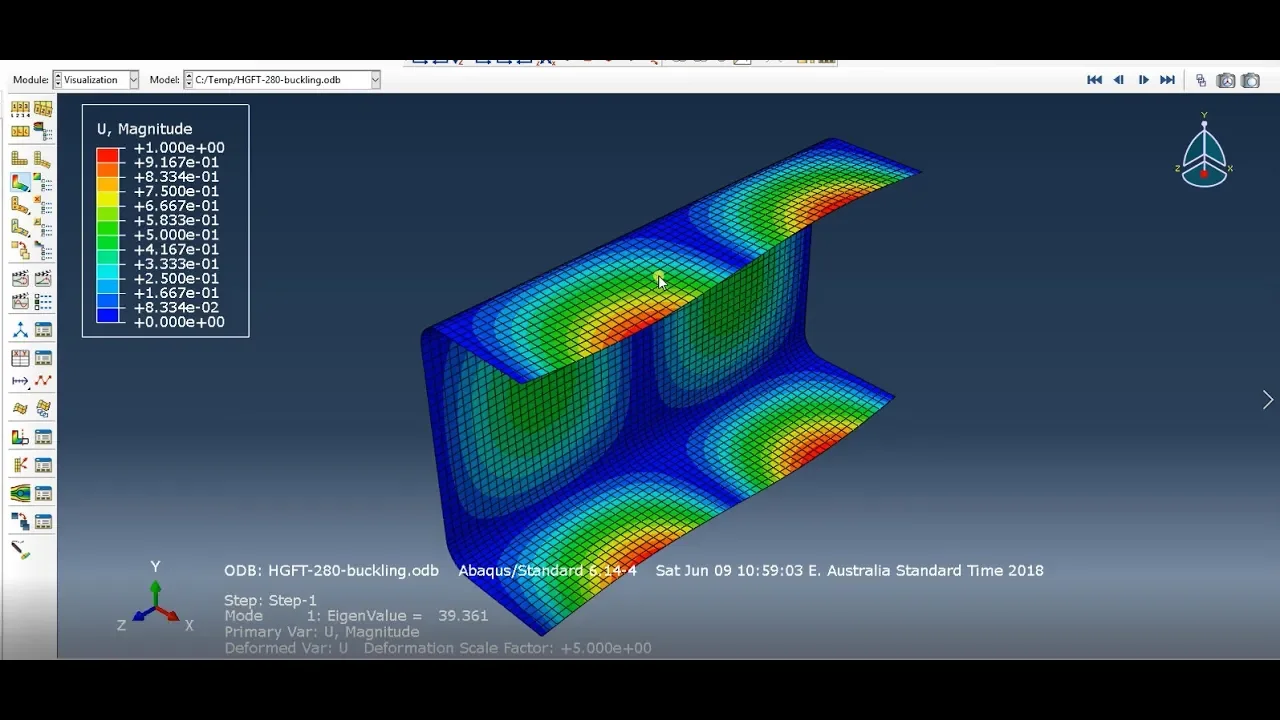

Buckling is a sudden loss of stability in compression-loaded members that occurs when the applied load reaches a critical value, causing a change in shape; Euler's buckling formula (P_cr = π²EI/L²) predicts this critical load based on material stiffness (Young's modulus), cross-sectional geometry (area moment of inertia), and length, but does not depend on material strength. The critical load is highly sensitive to end conditions (modeled through effective length K×L), slenderness ratio (L/r), and real-world factors like eccentric loading, imperfections, and inelastic behavior, which necessitate design codes and safety factors for practical engineering applications.
Buckling Explained: Euler's Formula & Column Design
Added:Fundamental concepts of stress, strain, and axial compressive loading in mechanics of materials.
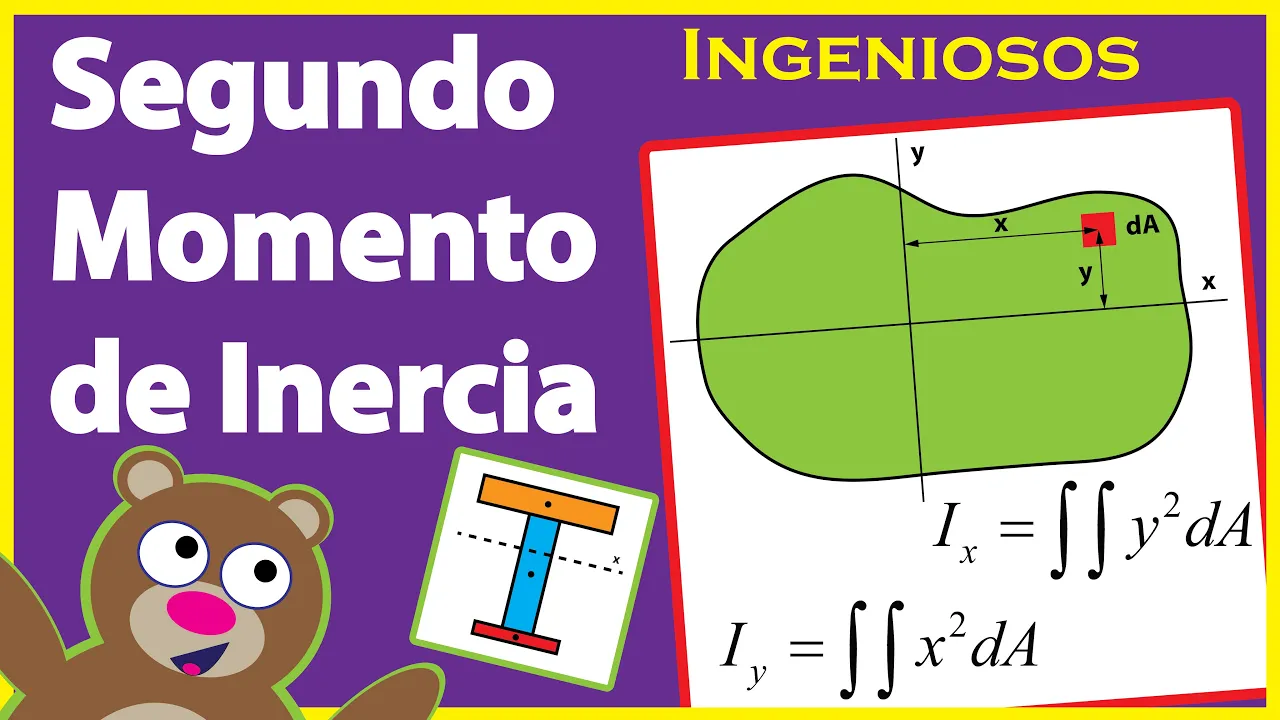
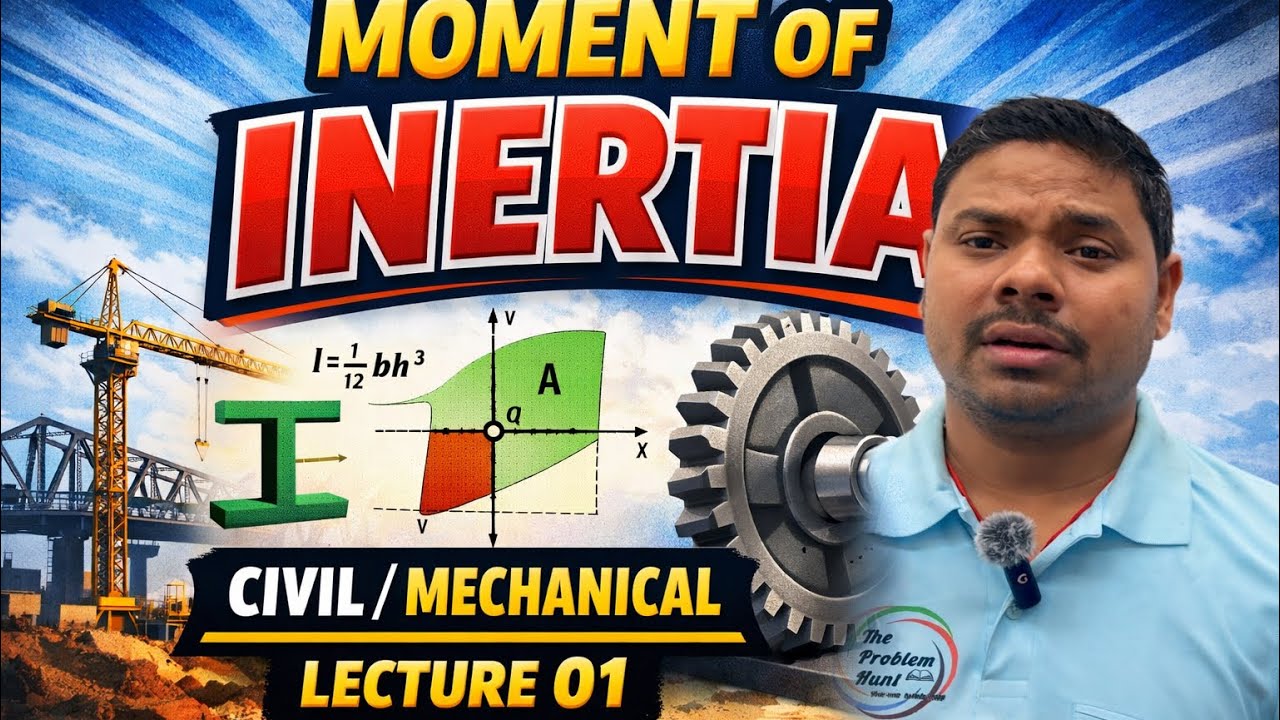
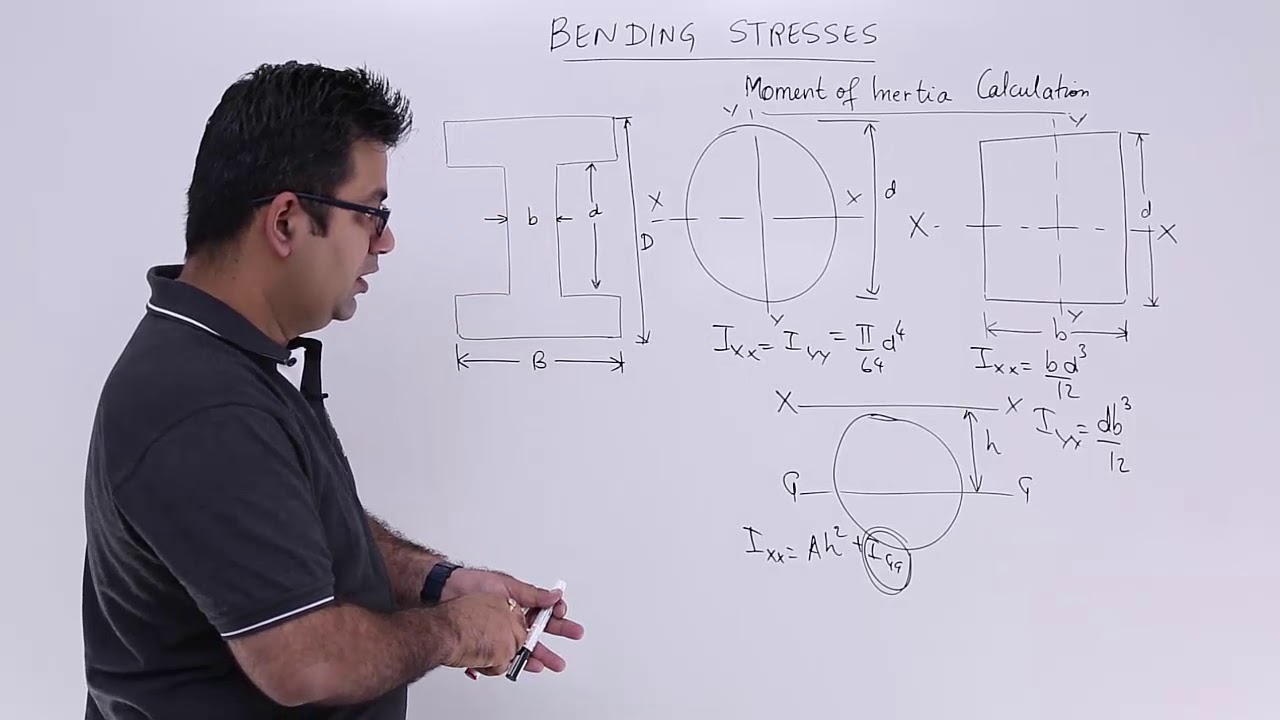
Calculation of cross-sectional properties, specifically the second moment of area (moment of inertia).
Understanding of mechanical support conditions (pinned, fixed, and free ends) and their boundary conditions.
Basic knowledge of Hooke's law and the distinction between elastic and plastic material deformation.
Application of column design formulas in real-world structural codes (such as AISC or Eurocode standards).
Analysis of local buckling in thin-walled sections versus global member buckling.
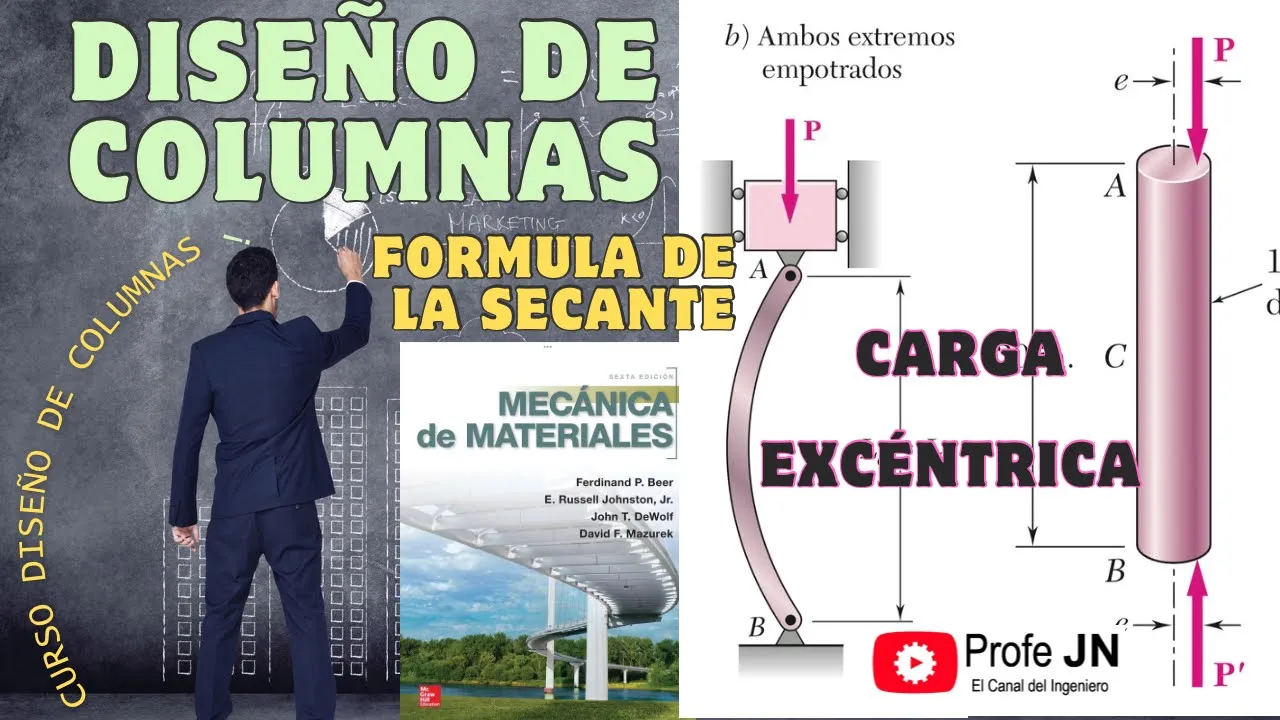
Study of eccentric loading and column imperfections using the Secant Formula.
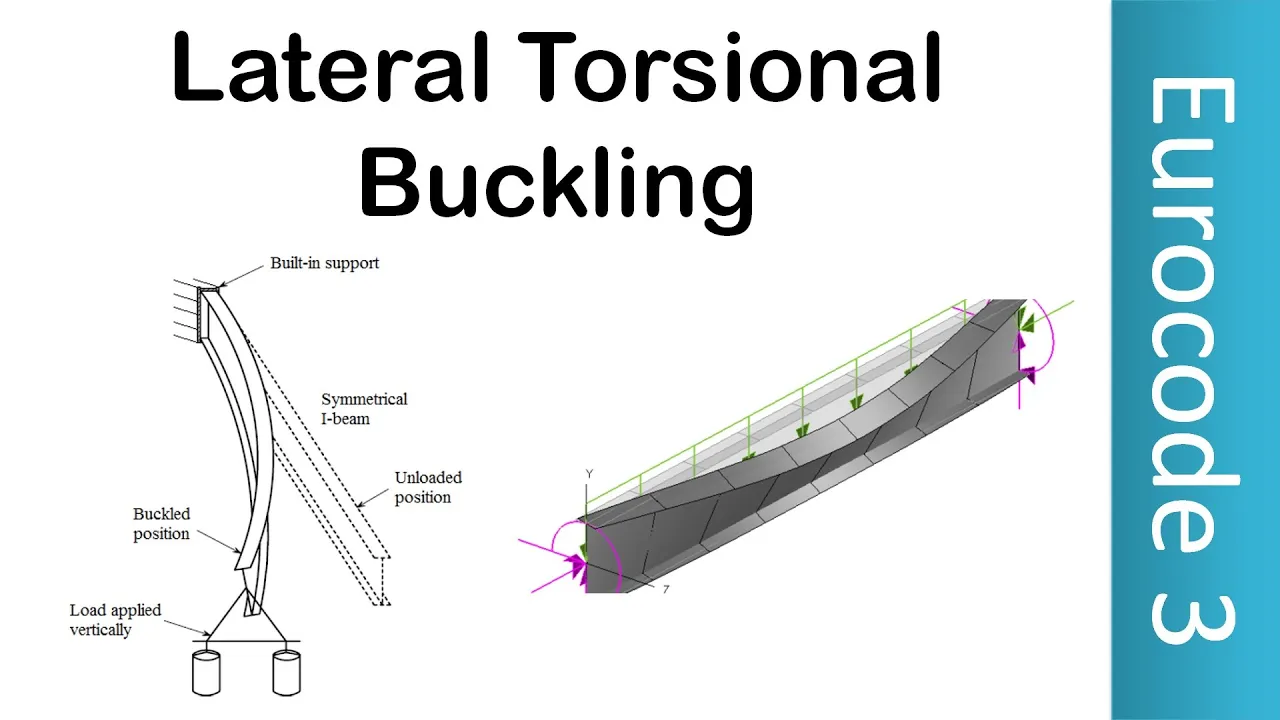
Introduction to lateral-torsional buckling and torsional buckling in asymmetric beams.
Using Finite Element Analysis (FEA) software to perform eigenvalue and non-linear buckling simulations.
1.1M views27.6Klikes14:48Original Release: 2021-08-17
Thanks to CuriosityStream for sponsoring this video.
When a bar is loaded in uniaxial tension, it will fail when the normal stress in the bar exceeds the yield or tensile strength of the material.
And if it's loaded in compression it will fail by crushing when the compressive strength of the material is exceeded.
But there's an additional way the bar can fail when in compression, which is by buckling.
Buckling is a loss of stability that occurs when the applied compressive load reaches a certain critical value, causing a change in the shape of the bar.
An initially straight member will buckle suddenly, producing large displacements.
This doesn't always result in yielding or fracture of the material, but buckling is still considered to be a failure mode since the buckled structure can no longer support a load in the way it was designed to.
The most simple example of a structure at risk of buckling is a column.
But individual members in trusses and frames can also be loaded in compression, and so are at risk of buckling.
There are other less obvious examples too.
When railway tracks heat up on a hot day, the steel the tracks are made of tends to expand.
But expansion in the axial direction is prevented, and so a compressive axial force builds up, which can lead to buckling.
A very similar issue can occur in subsea pipelines that carry hot product.
The compression that builds up due to the thermal expansion of the pipe steel can cause the pipeline to buckle on the seabed.
Buckling can clearly lead to catastrophic failure, so how do we take it into account in engineering design and analysis?
To answer this question we need to travel back to the mid 18th Century.
In 1744, the mathematician Leonhard Euler published a book in which he laid out a new method for analysing functions, called the calculus of variations.
To illustrate how this new method could be applied, Euler included in an appendix the derivation of an equation for the axial load that will cause a column to buckle.
This is the Euler buckling formula, a simple equation that engineers continue to use almost 300 years later to design columns and other members that are loaded in pure compression.
It's probably the oldest engineering design equation that's still in regular use.
The critical load at which a column will start buckling depends on only three parameters, the Young's modulus of the column material, the area moment of inertia of its cross-section, and its length.
It doesn't depend on the strength of the material at all.
This form of the equation is valid for a column that is pinned at both ends, meaning that the ends can rotate but can't translate horizontally.
So a 2 meter tall steel column that has a circular cross section with a radius of 40mm would be expected to be able to support a load of around 1000 kN before buckling, not including any safety factors.
This assumes an idealised perfectly straight column.
At the critical buckling load, any small perturbation, whether it's a lateral force or a small imperfection, will cause the column to bend.
If the cross-section has a smaller area moment of inertia about a particular axis, the column will buckle in that direction, and the smaller value of I must be used to calculate the critical buckling load.
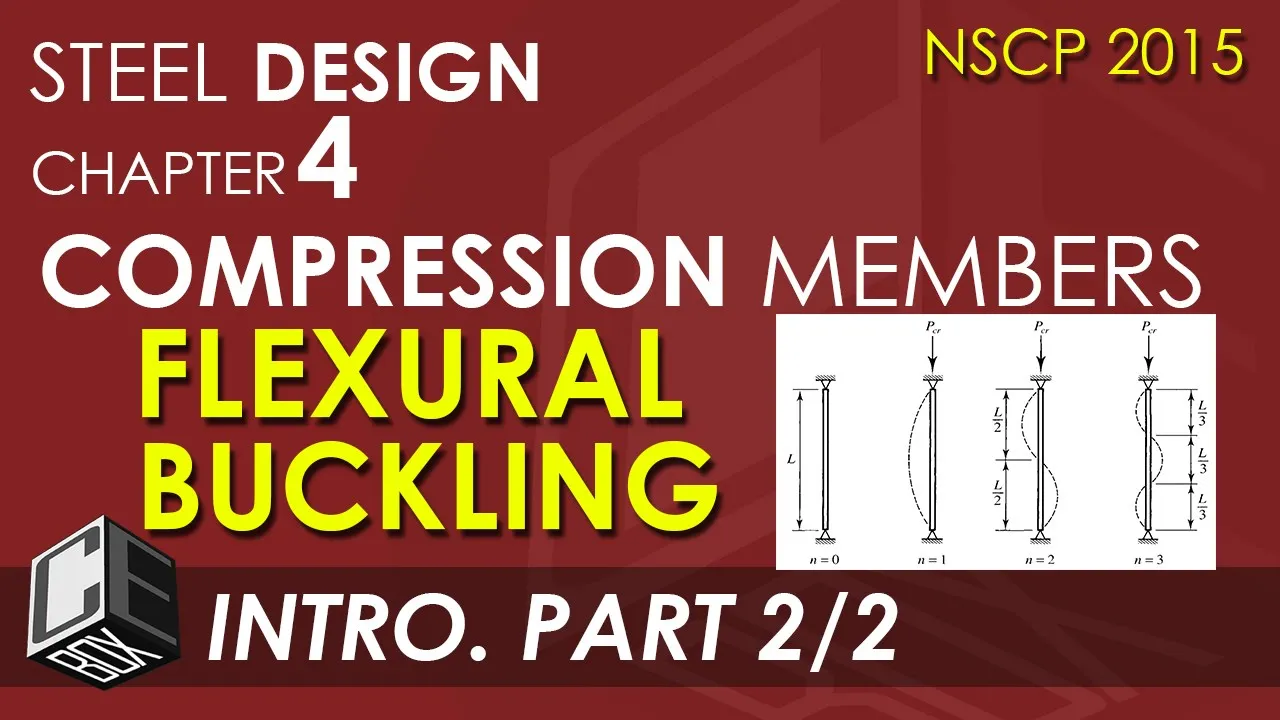
If the end conditions change so that the column is fixed at one end and free at the other, it will clearly only be able to support a much smaller load before buckling, and the buckled shape is different.
We can easily modify Euler's formula to account for different end conditions by introducing the concept of an effective length.
The effective length can be defined as the distance between inflection points on the deflected shape.
The column that's pinned at both ends has an effective length equal to the column length.
But for a column that's free at the top and fully fixed at the bottom the distance between inflection points is twice the column length.
Here are a few other common end conditions and the associated effective lengths.
We can replace the column length in Euler's formula with the effective length to make the equation applicable for all of these end conditions.
Or we can keep the column length and add in an effective length factor K.
End conditions clearly make a huge difference to the critical buckling load, and must be considered very carefully.
In real life applications it isn't always clear which effective lengths should be used, and the amount of restraint at the ends will depend on the stiffness of the adjacent members.
Design codes often provide guidance on conservative assumptions that can be used for these scenarios.
Even without knowing anything about Euler's formula it's intuitively quite obvious that slender columns are at much greater risk of buckling than stocky ones.
It's why you would never design a truss structure with long compressive members like this.
This member is under compression, and since it's so long and thin it's at risk of buckling.
Members of a truss that are in compression are sometimes designed to be thicker than those in tension to reduce the risk of buckling, and long compressive members are prevented from buckling by the use of bracing members.
Euler's formula confirms this intuition about slender columns.
The length term is squared, and so doubling the length of a column means that it can only support a quarter of the weight before buckling.
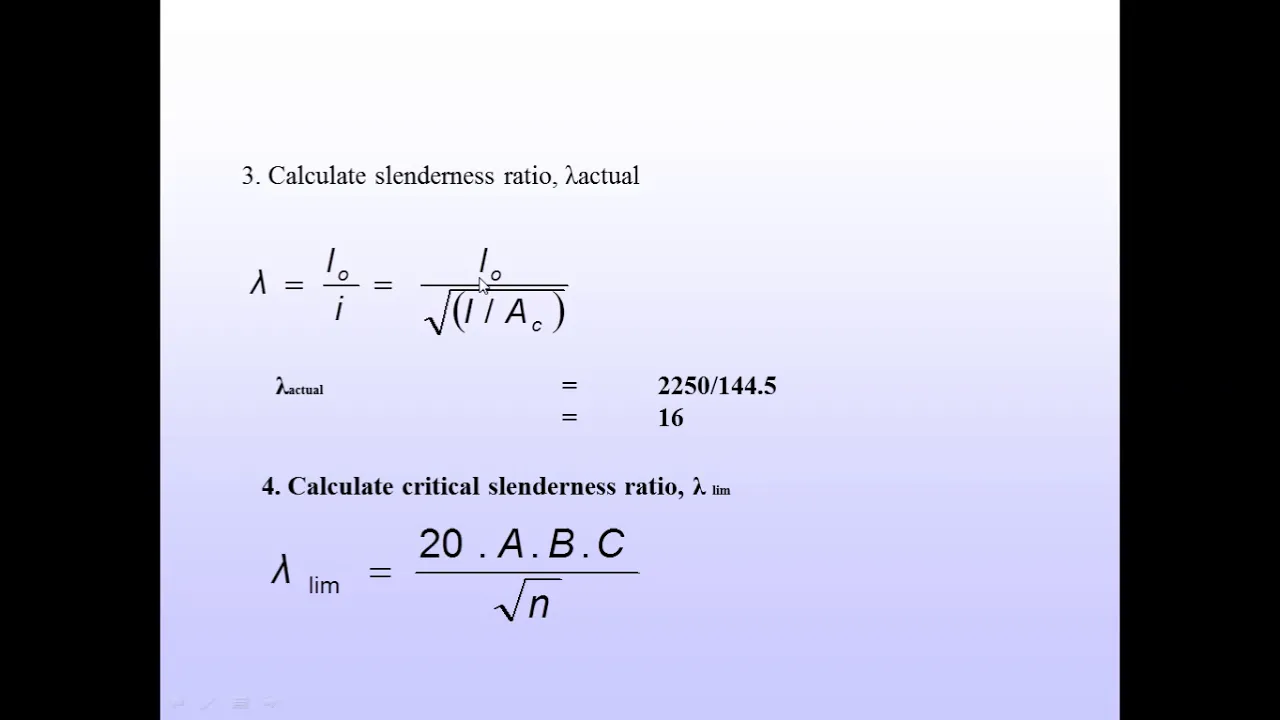
To better understand the effect of slenderness, it's useful to introduce a non-dimensional parameter called the slenderness ratio.
First, let's divide the critical load by the cross-sectional area to obtain a critical stress.
Then, if we define the radius of gyration R of the column as the square root of I divided by A, we can write the equation for critical stress in a new form.
The term L over r is the slenderness ratio.
Let's take a look at how the Euler critical buckling stress varies with the slenderness ratio.
Very slender columns have a large slenderness ratio and a very low critical buckling stress.
For stocky columns with low slenderness ratios the critical buckling stress will be very large.
If we draw the compressive yield strength of the column material on this graph, we can see that for these slenderness ratios the strength of the material will be exceeded before the buckling limit is reached.
This means we can define two distinct regions, where beams fail by crushing because the stress in the column exceeds the material yield strength, and where they fail due to buckling.
The limiting slenderness ratio depends on the material Young's modulus and yield strength.
For steel columns the limiting slenderness ratio is around 90.
But this curve only represents the theoretical behaviour of columns.
If we plot buckling stresses determined experimentally for real columns we can see it doesn't exactly match the theoretical behaviour.
In particular the transition between plastic failure and elastic buckling failure is much more gradual.
This is because for columns in this transition range, buckling is actually a complex combination of these two failure modes.
This is called inelastic buckling, and the theoretical behaviour can be modelled using methods like Engesser's theory or Shanley's theory.
There's a much better correlation between the test data and Euler's formula for very slender columns.
But even for these columns there are some limitations to Euler's formula that the engineer needs to be aware of.
One of these limitations is that the formula assumes that the applied load acts exactly through the centroid of the column cross-section.
But the applied load will always be slightly offset from the centroid, even if it's by only a very small amount.
This eccentricity introduces a moment that acts in addition to the axial load, which reduces the critical buckling stress and significantly changes how buckling occurs.
If the load is applied at the centroid of the cross-section the force-displacement curve looks like this.
There is no displacement until the critical buckling load is reached, at which point the displacement suddenly becomes very large.
But in the case of an eccentric load the additional moment causes the column to bend as soon as the load is applied.
Because of the bending, the stress in the column isn't uniform.
The maximum compressive stress occurs on the inner surface halfway up the column, and can be calculated using the Secant formula.
Another limitation of Euler's formula is that it assumes that the column is perfectly straight before the load is applied.
But real columns contain imperfections and however small they may be, these can reduce the critical buckling load.
Since imperfections introduce bending, they have a similar effect to eccentric loading and so can be modelled in the same way.
Euler's formula and the Secant formula also assume that displacements are small.
If displacements are large the moment acting on the column will change significantly throughout the deformation, introducing significant geometric non-linearity.
In structural analysis this is called the P-Delta effect.
Most design codes deal with these limitations of Euler's formula and the complexities of inelastic buckling by providing design curves that engineers can use directly to design columns.
These curves are calibrated using experimental data and are applied in combination with suitable safety factors to ensure a safe design.
Euler's formula is used to calculate the critical buckling load for a column where the displacement occurs by bending.
This is called flexural buckling.
But members can buckle in other ways too, and these also need to be checked during design.
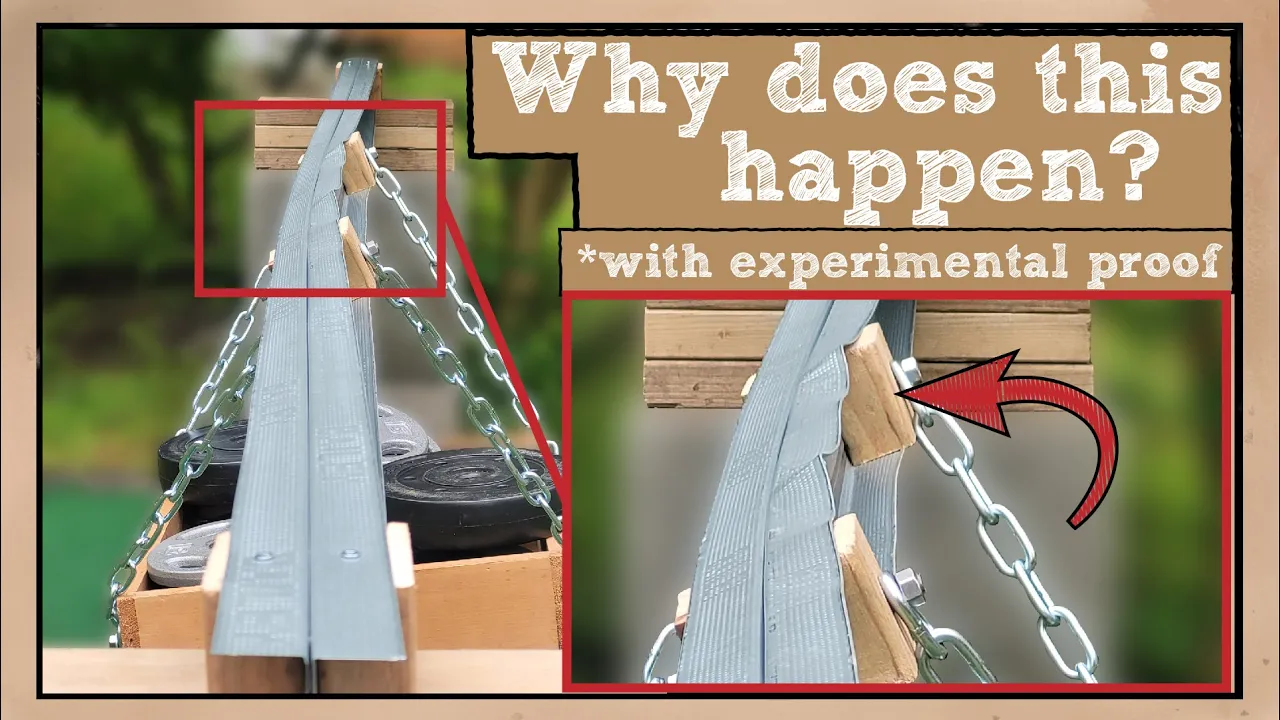
Columns with thin-walled open cross-sections tend to have low torsional stiffness.
Under certain conditions these columns can buckle by twisting, called torsional buckling, or by a combination of twisting and bending, called torsional-flexural buckling.
So far we've considered buckling of columns and other straight members, like those you might find in a truss or a frame.
But thin plates and shells like those you would find in a storage tank are also susceptible to buckling.
Buckling in these types of structures is even more sensitive to the presence of imperfections than it is in columns, and the effects are more difficult to predict.
And so, although analytical equations do exist to calculate critical buckling loads for plates and shells, they're usually considered to provide an upper limit on the buckling load.
Detailed non-linear analysis using the finite element method is often required for this type of structure.
We've seen that slender columns can buckle when compressive loads act on them.
But what about the effect of gravity?
Is it possible that a column could be built tall enough that it would buckle because of nothing other than its own weight?
This is a problem that even Euler struggled with, but since it didn't really fit into this introduction to buckling I've covered it in a short companion video that you can watch right now over on Nebula.
Nebula is a streaming platform that I've been building with a group of independent educational creators.
It's a place where you can watch our videos completely ad-free, but also get access to exclusive Nebula originals and bonus content from amazing creators like Mustard and Real Engineering.
The best way to get Nebula is through our bundle deal with this video's sponsor CuriosityStream.
CuriosityStream is a huge streaming service for documentaries that has thousands of titles for you to choose from.
No matter what you're interested in, you'll find something special to watch on CuriosityStream.
So after you've watched the self-buckling video on Nebula, why not start The World of Bridges on CuriosityStream, a series that covers the history, construction and maintenance of famous bridges around the world.
Or check out Juice, a film that explores the issues that revolve around access to electricity.
The bundle deal gives you a 26% discount on the CuriosityStream annual plan and full access to Nebula for free, but you can only get it by signing up using this link.
So to watch the companion video on self-buckling over on Nebula and get access to thousands of documentaries on CuriosityStream, all for less than 15 dollars a year, head over to curiositystream.com/efficientengineer, or click the button on screen now.
Signing up is a great way to support this channel.
And that's it for this introduction to buckling.
Thanks for watching!
Up Next

5:51
Howe vs Pratt Truss Design: Structural Engineering Lecture
@scientificmonkey3359
126.4K views•2015-01-26
30:32
Ultrasonic Transducers: Resonant Frequency Measurement and Horn Design
@imajeenyus42
229.9K views•2017-02-22
54:16
Polymer Environmental Degradation: Mechanisms & Stabilization
@iit
1.8K views•2012-07-10

33:39
How a Student's Question Saved a NYC Skyscraper from Collapse
@veritasium
22.8M views•2025-04-26
Related Study Plans & Knowledge Roadmaps
Structured learning paths in Engineering
engineering
Building Acoustic Levitators: Physics & Arduino
01The Physics of Sound and Standing Waves
02Piezoelectric Transducers and H-Bridge Drivers
03Arduino Programming: Generating 40 kHz Signals
+ 2 more learning modules
14h5 modules
Explore Roadmap
engineering
Building Peltier Cloud Chambers: Particle Tracks
01Cosmic Rays & Cloud Chamber Physics
02Thermoelectric Cooling (TEC) Fundamentals
03Custom Liquid-Cooling Loop Design
+ 2 more learning modules
18h5 modules
Explore Roadmap
engineering
Yagi-Uda Antennas: Modeling, Build & VNA Test
01Introduction to RF and Antenna Fundamentals
02Yagi-Uda Antenna Design Principles
03Antenna Modeling and Simulation in 4NEC2
+ 2 more learning modules
18h5 modules
Explore Roadmap
engineering
ECG Monitor Design: Op-Amps, Filters & Noise
01Electronics & Breadboard Basics
02Op-Amps and Instrumentation Amplifiers
03Bioelectricity and ECG Fundamentals
+ 2 more learning modules
18h5 modules
Explore Roadmap