


















![양자컴 안 된다던 젠슨황이 거액을 투자한 이유ㅣ정지훈 박사 [1부]](https://i.ytimg.com/vi/Yrs3uCUB-qE/maxresdefault.jpg)


![10년전에 AI 아무도 몰랐죠? 지금 양자컴이 그래요ㅣ정지훈 박사 [풀영상]](https://i.ytimg.com/vi_webp/WZZT2eHZwFs/maxresdefault.webp)
![[레전드 모음집] 이번 생 마지막 레전드 강의, 양자컴퓨터 몰아보기 (고려대학교 물리학과 채은미 교수)](https://i.ytimg.com/vi/29jafiWPuRg/maxresdefault.jpg)





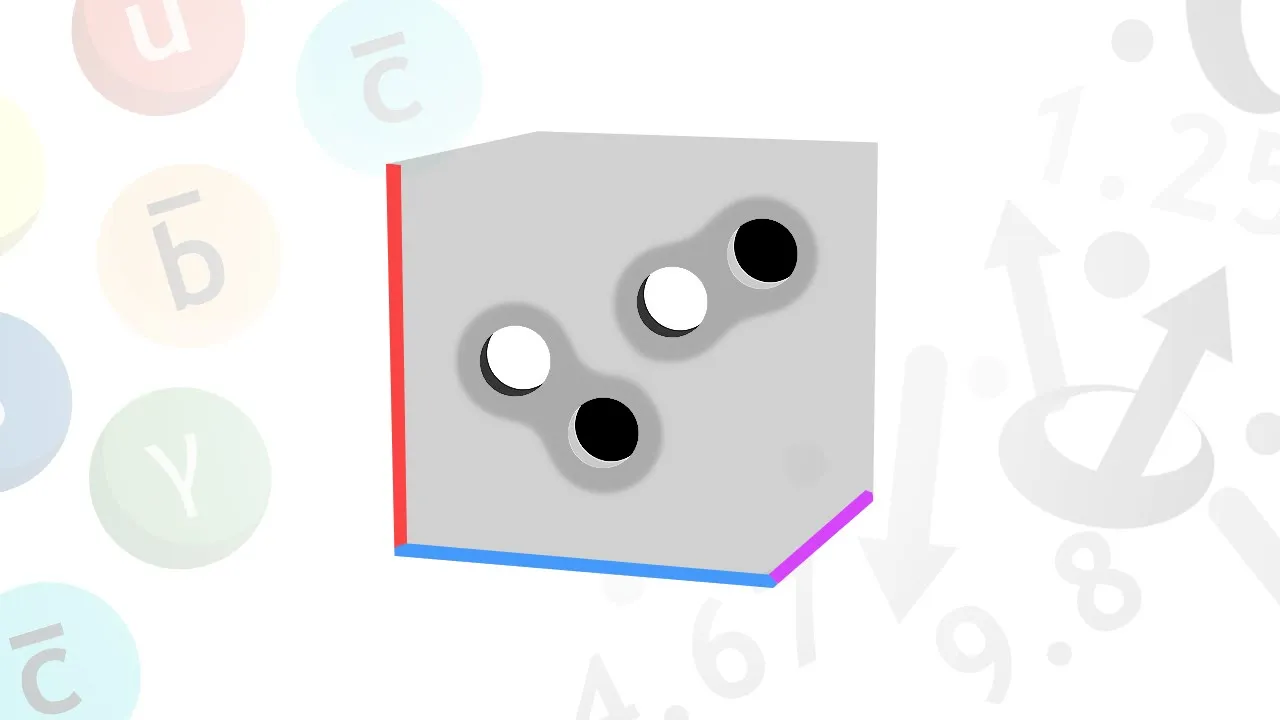




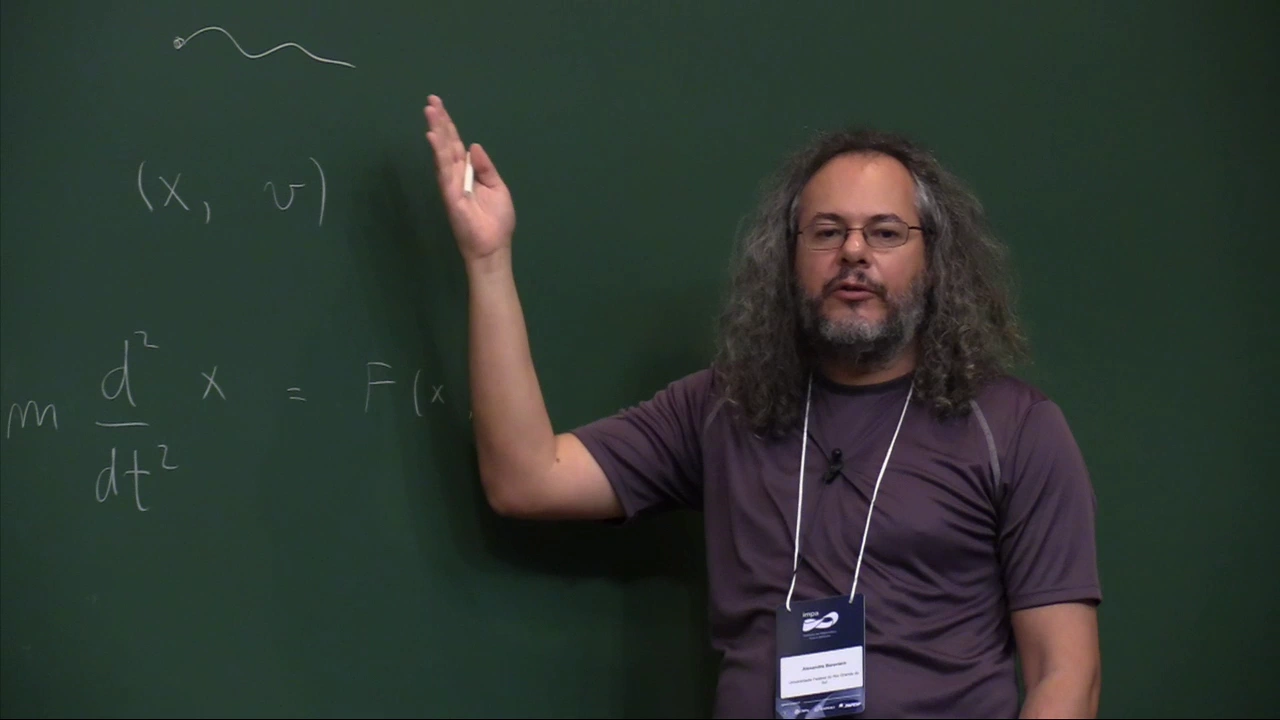
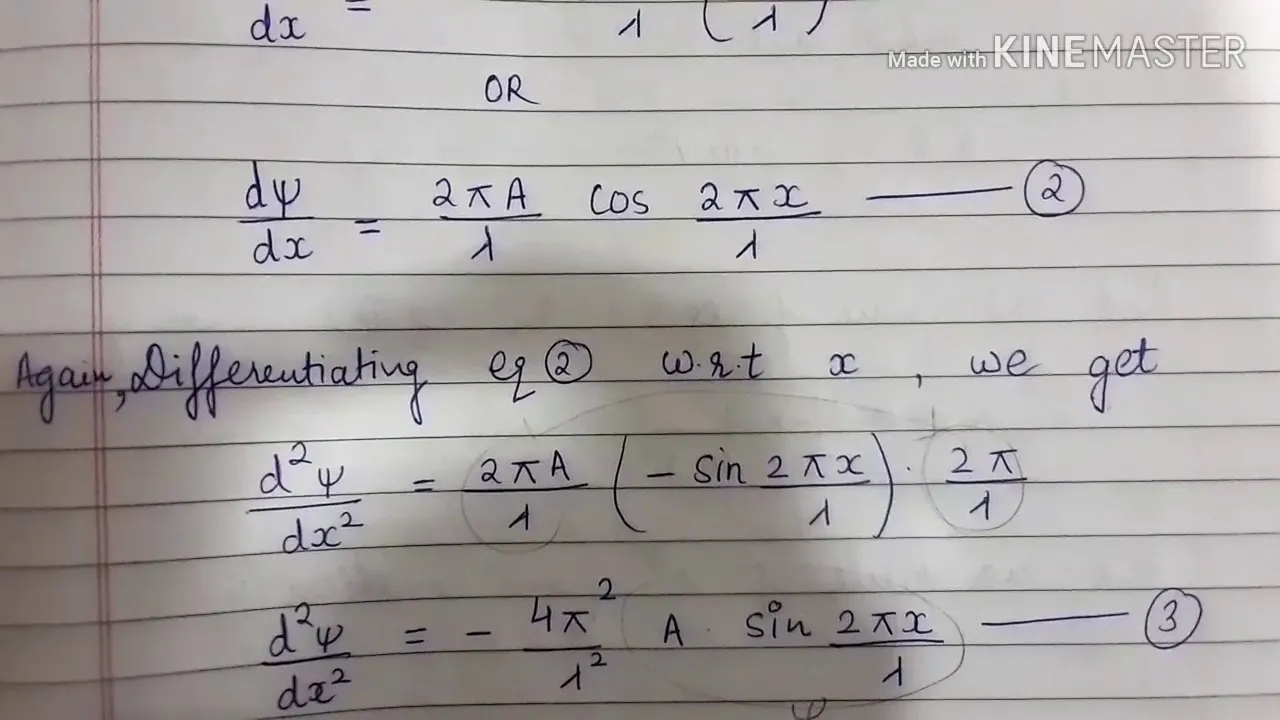
Quantum mechanics describes the behavior of particles at microscopic scales, where objects like electrons exhibit wave-like properties (creating interference patterns) rather than behaving as classical particles; according to the Schrödinger equation, quantum objects exist as probability waves spread throughout space until measured, at which point they collapse into localized particle-like states—a phenomenon known as the measurement problem that remains one of the fundamental unresolved questions in physics.
Quantum Mechanics Explained: Wave-Particle Duality, Uncertainty, and Entanglement
Added:Basic wave mechanics, including classical concepts of wavelength, frequency, interference, and diffraction.
The limitations of classical physics, specifically the failures of Newtonian mechanics at atomic scales (e.g., the photoelectric effect).
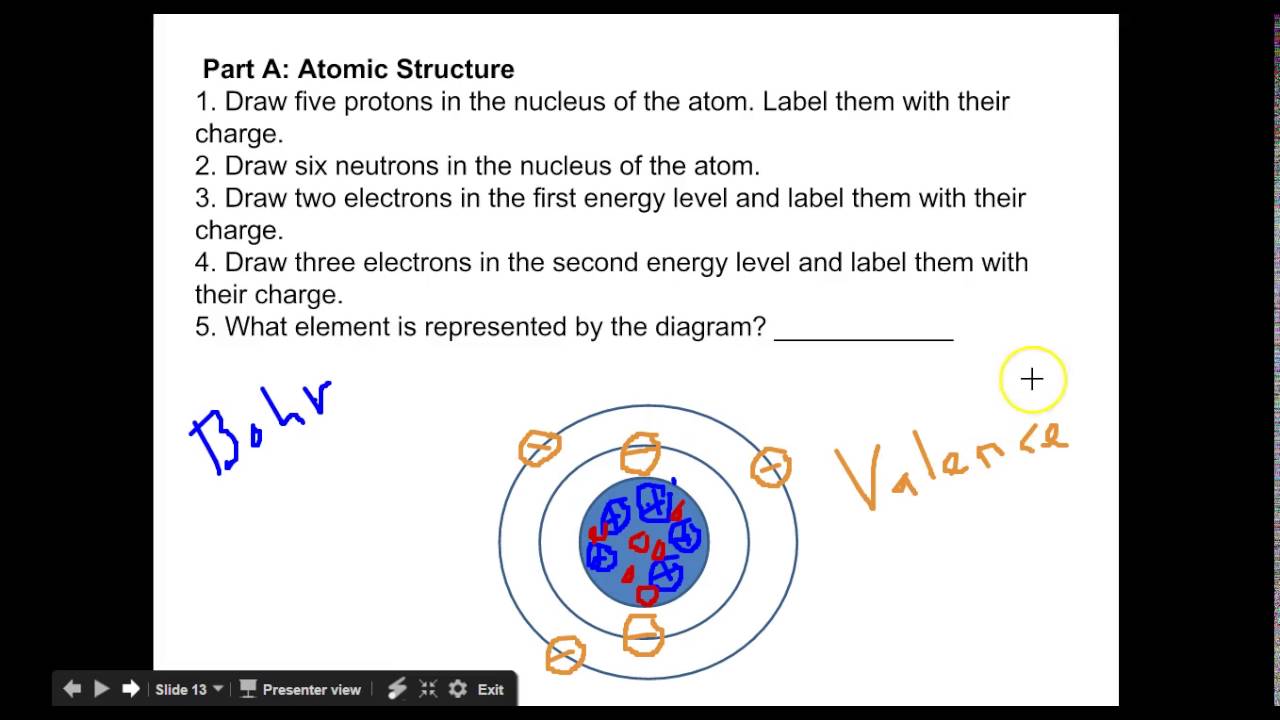
Fundamental atomic structure, particularly the composition of atoms and the Bohr model.
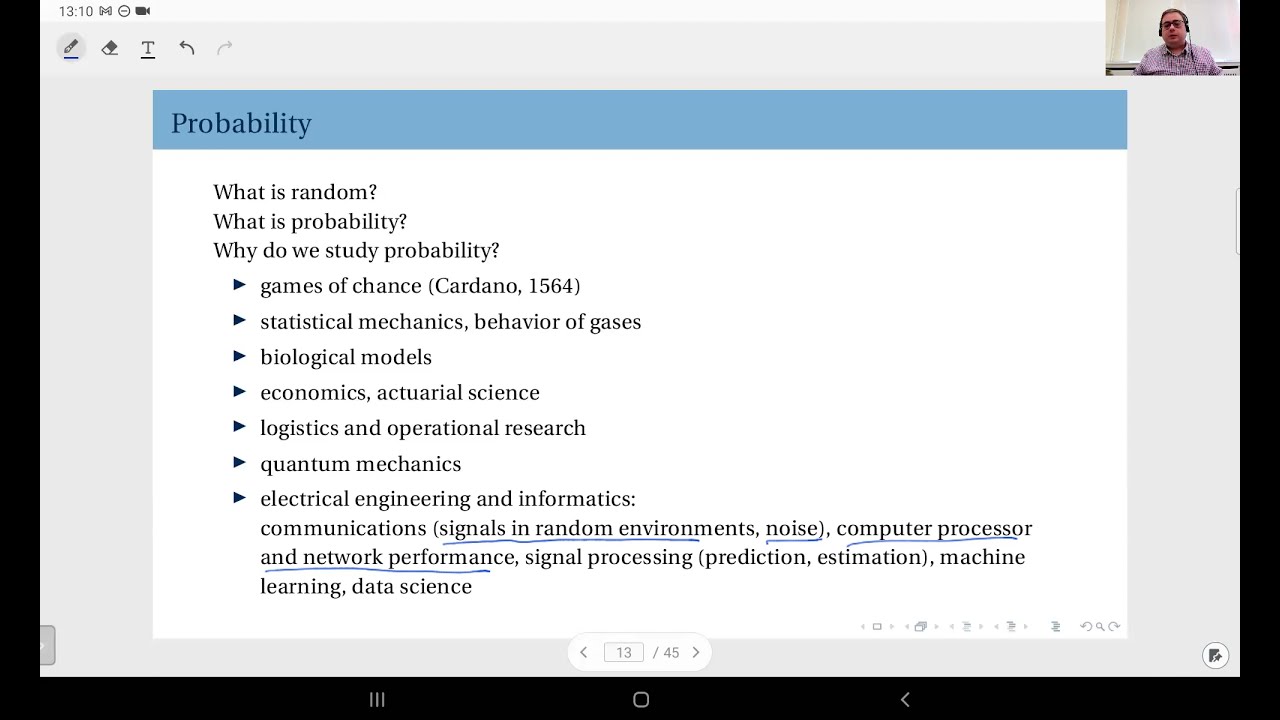
Basic mathematical probability, as quantum mechanics relies heavily on probabilistic distributions rather than deterministic outcomes.
The Schrödinger Wave Equation and how to mathematically calculate wavefunctions and probability densities.
Quantum Computing and Information Theory, exploring how qubits utilize superposition and entanglement for computational supremacy.
The philosophical interpretations of the measurement problem, such as the Copenhagen Interpretation, Many-Worlds, and Pilot Wave theory.
Quantum Field Theory (QFT), which unifies quantum mechanics with Einstein's Special Relativity to explain particle physics.
287.3K views10.4Klikes13:59Original Release: 2023-02-18
this video is sponsored by brilliant stay tuned to the end for a very special offer for Arvin Ash viewers before I give you a summary of all quantum mechanics I'm going to give you a 90 second history of it so you can get a little background on how quantum mechanics came to be so here we go classical mechanics fail to describe how an electron could orbit an atom an accelerating charge like that of an electron around a nucleus always creates electromagnetic radiation according to Maxwell's classical equations this means with the electron would constantly lose energy and eventually crash into the nucleus Niels Bohr solved this problem by hypothesizing that electrons could exist without radiating energy if they rotated in quantized orbits proportional to Planck's constant Louis de broy later showed that if such quantized orbits exist then electrons must be waves astonishingly experiments showed that not only electrons but all Quantum particles like Photon and even atoms exhibit interference with no exceptions implying everything else must be waves too Erwin Schrodinger developed an equation to explain this wave-like Behavior his equation describes how a wave evolves over time but the problem is that whenever we detect these Quantum objects we detect them as particles not as waves this presents a conundrum experiments like the double slit experiments suggest waves but detection appears to indicate particles so maxborn came up with the idea that we should interpret the wave determined by the Schrodinger equation as a kind of probability this allows a single Quantum object to be described as a wave so we've adopted a wave interpretation of a particle which evolves Through Time according to the Schrodinger equation an analogous to a classical wave it does not have a distinct location it has only a probability of being found at any particular location this location can only be determined once we measure it not in advance so that's your 90 second summary now if you're intrigued by this and want to understand this better and particularly ponder about what it all means then stay tuned because that's coming up right now [Music] so now that you know a little bit about the history of quantum mechanics let me explain what the big deal is it would be nice if we could just scale down everything we know about a macro walk to the quantum world for example if the Newtonian mechanics of a basketball apply to electrons and atoms there would be no problem everything would be intuitive and we could relate everything to our everyday experience but the universe didn't make things so simple for us Quantum objects such as electrons photons and atoms are not like little basketballs or tiny pieces of dust they're like waves because they create interference patterns like we see in the double slit experiment the Schrodinger equation was developed to explain how these waves evolved and it's quite accurate so if we have a rigorous mathematical model to describe these waves what's the big deal since we know how it works the problem is that we only observe particles or at least particle-like Behavior whenever we detect these Quantum objects this phenomenon can be seen in places like a cloud chamber and particle accelerators the subatomic objects seem to behave like particles not waves so to incorporate this into our quantum mechanics Theory the concept of measurement was introduced so you'll hear physicists say at least in the most common interpretation of quantum mechanics that whenever a measurement is made the wave collapses and becomes a very localized wave which effectively makes it look and behave like a particle measurement means and interaction an interaction of the quantum object with some kind of measuring device more specifically an irreversible exchange of energy somewhere in the measurement process this seems nice and clean but there's a huge problem no one can explain how or why this wave collapse occurs through a measurement this is called the measurement problem in quantum mechanics and since all our information comes from a measurement of some kind we can never directly see or touch this Quantum world everything we observe must go through this measuring process that seems to result in the conversion of quantum objects into particles like the classical world we are familiar with so how this wave evolves according to the Schrodinger equation while it's highly accurate in making predictions is never actually seen like I showed two videos ago ultimately quantum theory boils down to a theory of interacting harmonic oscillators combined with a measurement postulate but no one can explain how the interactions of the harmonic oscillators are different than the interaction of the measurement device if you really want to understand reality this is a fundamental problem that we need to resolve now having said all this let me add that not resolving the measurement problem has not prevented us from predicting and measuring outcomes from these equations there is a philosophy called just shut up and calculate meaning don't worry about what's really going on if the bottom line is that all our equations work and are highly accurate that's all we should care about I don't subscribe to this kind of thinking myself because I think that the purpose of scientists particularly physicists is to explain the inner workings of the universe not simply create equations that make predictions without a deep understanding In classical mechanics things are concrete objects have distinct positions and velocities in quantum mechanics objects have wave-like Behavior they're more specifically described by wave functions which are abstract mathematical solutions to the Schrodinger equation these waves aren't localized but instead take up all of space it isn't until you look for a particle that it becomes what appears to be a particle before that the particle is a collection of probability waves that theoretically extend out to the entire universe now this has some pretty profound consequences one is called the uncertainty principle which states that you can never simultaneously know exactly where something is and how fast it's going more precisely we cannot know the position and momentum at the same time this has to do with the probabilistic nature of quantum mechanics Let's do an example to understand why this is the case when we say we can't know where an electron is because it's a wave what we mean by wave is the wave function from the Schrodinger equation and this is related to the probability of finding the electron at any point in space but a perfect sine wave for the electron spreads that probability throughout all of space so the position of the electron is completely uncertain but a perfect sine wave means we know it's the wavelength so we would know its momentum quite precisely because of the de broy relation where momentum equals Planck's constant over the wavelength so in this case we have an infinite uncertainty in position but no uncertainty in momentum on the other hand if we want to know the position of the electron precisely we would need to add many waves of different wavelengths so that we can get an interference pattern such that we get a more localized wave this localized wave would get give us a more precise location but now we have no idea what the momentum is this is because all the waves that are needed to create the localization being that they are of different wavelengths have different momentums using the same debris relation so either we know the position very precisely or the momentum precisely but not both what's important to understand is that this is not a limit of our measuring equipment it's that exact answers to both the momentum and the position of a Quantum object do not exist in the universe at the same time the universe itself doesn't know the answer now this is hard to accept and goes completely against our everyday experience so you have to ask why don't we see this wave behavior in macro objects like a basketball or tennis ball or even a tiny particle of dust well I'll let you in on a little secret dust particles tennis balls and basketballs do propagate as waves just like electrons in fact everything does and their wavelengths can be calculated just like a photon or electrons using debory's formula wavelength equals Planck's constant divided by momentum but for large objects the momentum is so much bigger than the Planck's constant that their wavelengths are an undetectable fraction of their physical size so we can never notice their quantum mechanical properties for example the wavelength of something the size of a tennis ball moving 10 meters per second is 10 to the negative 33 meters this is less than the width of a proton so we would never notice it a second consequence of wave-like behavior is non-locality a wave exists over multiple regions of space this non-locality explains interference but it also means that waves can add together to give complex interference patterns so waves of multiple particles can add together to give a single wave function corresponding to multiple particles this gives rise to a strange correlation between such particles in a phenomenon called entanglement Einstein called this spooky action at a distance because it appears to indicate instant communication between distant objects at faster than the speed of light which is forbidden by relativity Theory but while two or more objects are correlated no communication is actually happening correlation does not mean communication the wave Behavior electrons also means that the concept of circular orbits of electrons around the nucleus of atoms that you commonly see everywhere when an atom is depicted is wrong a better picture is that they exist in a well-defined probability Cloud around the nucleus that might look more like this the main point is that the universe is quantized familiar quantities such as energy momentum electric charge mass and possibly even time and space are not continuous they occur in discrete Quantum units so for example the state of an electron is quantized by state I mean it's energy angular momentum and other properties so an electron in a state of 3.4 electron volts of energy that moves to 13.6 electron volts of energy does not pass through any intervening energy values it just disappears from its Old State and reappears in the new state it never exists between these two states this is how an electron moves from a lower energy shell of an atom to a higher energy cell this quantization is not directly observable in our daily experience because the intervals between the units are too small for us to notice it isn't that quantum mechanics only exists at small scales quantum mechanics is all there is it is everything Newtonian mechanics or the physics of our macro skills just happens to be a good approximation of the underlying more fundamental quantum mechanical universe and if this makes you want to learn more about the fundamentals of quantum science two of the best courses are available on brilliant.org today's sponsor the first course I want you to look at is called Quantum objects it's an 18 lesson course that walks you through the fundamentals of quantum mechanics from spin to the mathematical foundations to Schrodinger's equation it will give you the background you need for further study the second exceptional course is a new one called quantum mechanics with Sabina created with the collaboration of physicists and fellow YouTuber Sabina hasenfelder she's a friend of mine and does a great job teaching about some of the contributive aspects of quantum mechanics which will start to make better sense as you go through the course the unique thing about these brilliant courses is that they use Hands-On simulations interactive quizzes and visual demonstrations in my opinion it's a better and more fun way to learn normally difficult subjects brilliant has something for everyone with thousands of lessons over a variety of stem courses with new content added each month with as little as 30 minutes a day brilliant can help you develop your stem skills and become a better thinker brilliant has a special offer for Arvin Ash fears right now get started for free for a full 30 Days by clicking the link in the description the first 200 people will even get 20 off their subscription so be sure to take advantage of that I'd like to thank my patreon supporters who helped make these animations possible I can't thank you enough for that and if you like this video and want to be informed for future videos please subscribe to our Channel it really helps us out I'll see you in the next video my friend foreign [Music]
Up Next
6:50
Kronig-Penney Model: Energy Bands in Periodic Potentials
@PHYSICSworldDatabase
37K views•2019-01-04

12:53
21cm Hyperfine Transition in Neutral Hydrogen: Radio Astronomy Basics
@AaronRobertParsons
12.4K views•2011-10-13
13:19
Why Is the Speed of Light Constant? Maxwell's Equations Explained
@ArvinAsh
2M views•2020-03-25

27:14
Entropy and the Second Law of Thermodynamics Explained
@veritasium
27.5M views•2023-07-01
Related Study Plans & Knowledge Roadmaps
Structured learning paths in Physics
physics
Nuclear Physics (Decay, Fission & Reactors)
01Atomic Structure and the Binding Force
02Radioactive Decay and Half-Life
03Nuclear Fission Mechanics and Chain Reactions
+ 2 more learning modules
12h5 modules
Explore Roadmap
physics
Soft Matter (Polymers, Colloids & Rheology)
01Foundations of Soft Matter & Thermal Forces
02Polymer Physics and Macromolecules
03Colloids, Surfactants, and Self-Assembly
+ 2 more learning modules
38h5 modules
Explore Roadmap
physics
Analytical Mechanics: Lagrangian & Hamiltonian
01Mathematical Foundations: Calculus of Variations
02From Newtonian Mechanics to Constraint Dynamics
03The Principle of Least Action & Lagrangian Mechanics
+ 3 more learning modules
28h6 modules
Explore Roadmap
physics
General Relativity (Spacetime & Cosmology)
01Foundations of Relativity: Special Relativity
02The Geometry of Spacetime: Equivalence Principle & Curvature
03Einstein's Field Equations: The Mathematics of Gravity
+ 2 more learning modules
55h5 modules
Explore Roadmap