





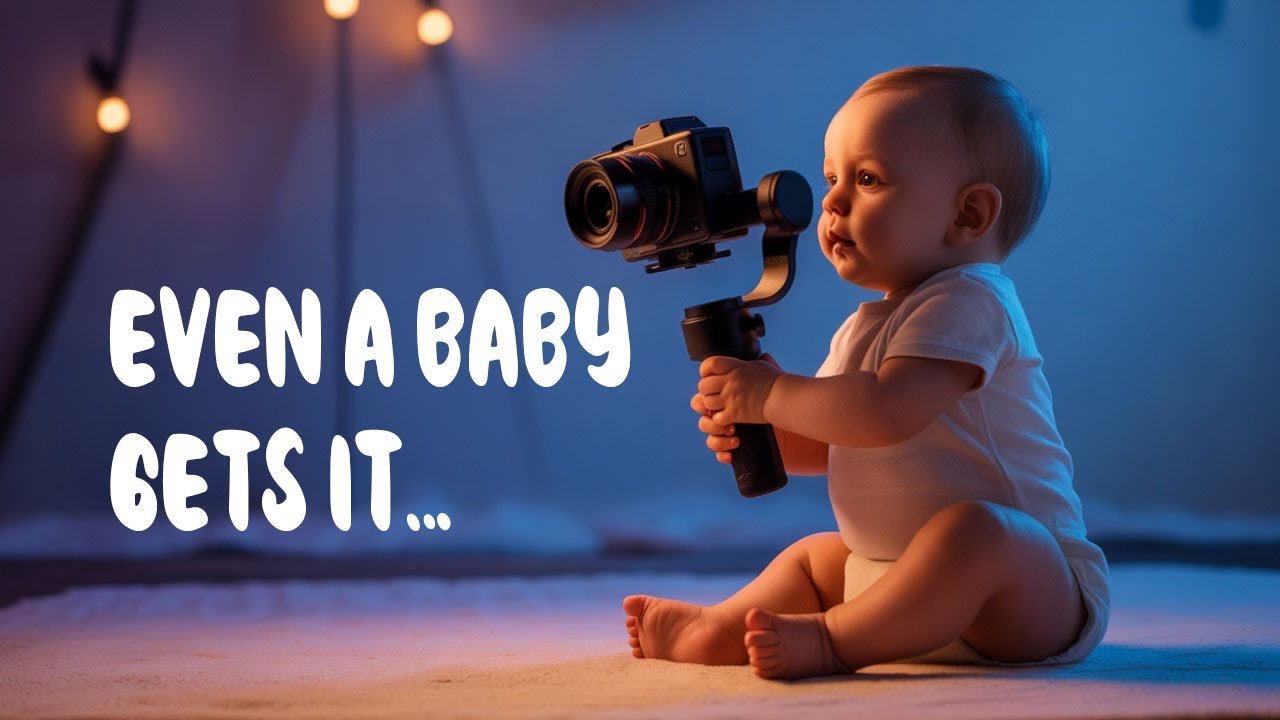













When deciding between gimbal and handheld camera techniques, filmmakers should consider two main factors: camera movement type and emotional context. Motivated movements (tracking subjects over distance) generally work better on gimbals as they reduce distraction, while unmotivated movements and story-based content benefit from handheld's ability to communicate emotion and create immersive experiences. For marketing content, gimbals provide clean, commercial aesthetics; for narrative films, handheld enhances tension and emotional authenticity. The choice ultimately depends on whether the movement serves the story's emotional needs or merely adds visual flair without motivation.
Gimbal vs Handheld: Mastering Cinematic Camera Movement
Added:Basic camera operations and terminology, including standard camera movements like pans, tilts, and dollies.
The concept of 'motivated movement' in cinematography—the rule that camera movement should be driven by narrative, character action, or emotional shifts.
Fundamental understanding of camera stabilization technology, such as In-Body Image Stabilization (IBIS) and optical lens stabilization.
The psychological impact of camera positioning and motion on the viewer's emotional response.
Choreographing and blocking complex, continuous 'one-take' scenes (oners) that require precise coordination between actors and camera operators.
Advanced camera support systems, including Steadicams, vest-and-arm stabilizer rigs, and motorized camera sliders.
Post-production motion stabilization, tracking, and artificial camera shake techniques in software like DaVinci Resolve or Adobe After Effects.
Collaborative camera operation workflows, including the use of wireless follow-focus systems and remote gimbal controllers.
375.4K views11.9Klikes8:57Original Release: 2023-02-28
there's a ton of videos on YouTube about gimbal vs handheld this one's different I'm not going to tell you which one is better or which one I prefer because both are equally important instead I'm going to explain the when and why behind Gimbal and handheld filming so that you can make an intentional choice about using the right tool in the right scenario we'll do a comparison by shooting the same scene with both and explain the motivation behind it My Philosophy towards gimbals is pretty much the same as My Philosophy towards slow motion if you overuse it or use it without motivation it distracts more than anything I always opt for natural frame rates first and only use slow motion when properly motivated but we're not here to talk about frame rates with handouts it's exactly the same I naturally go for handheld first until I can justify a reason for using the gimbal what are these reasons I make decisions based on two factors feeling and camera movement camera movement can be broken down into two broad categories motivated movement an unmotivated movement motivated movement is when the camera has a reason to move our subject is moving from the door to the couch and the only way to keep up is to move the camera in a way that she stays in frame an unmotivated movement is when the camera moves beyond the movement of the subject and this is either for dynamic effect or to reveal something like in this case a pullback shows where the model is going any motivated movement that covers a significant distance generally works better on a gimbal because it takes attention away from the camera moving and focuses more on the movement of the subject it's important to nail the movement and framing because if you miss a beat it immediately becomes a distraction in this case I framed the subject leaving space for her to move in the opposite direction and only when she settles to be correct more to the rule of thirds a good example is the sideways tracking shot of the hurdles the golf cart wasn't able to keep up with the speed of the athlete so there's only a small we know of usable footage because the moment we fall behind the attention is on the camera that can't give up this shot would be super shaky handout and they are isolated cases where it would not be a distraction but more about that later if there's any need to track a subject over a distance a gimbal is a strong consideration but where does handheld fit in handheld works great for Motivated movement if the camera doesn't have to move over distance but rather track an object or Movement by tilting or panning tracking objects or body movements are much easier to capture handout especially on close-ups these are still considered as motivated movements because the camera has to keep up with what's important in the frame with unmotivated movement my choice is largely influenced by the type of project and ultimately feeling but first let's focus on the type of project consider these two shots one shot handout and one on a gimbal the gimbal one can easily go for a marketing video selling a product the clean movement has a commercial feel to it the handheld shot although the same movement pushing forward feels completely different and would be much better suited for story based content like a short film or documentary for marketing based content I prefer to do most of my unmotivated movements on a gimbal because it's clean and neutral and doesn't communicate a feeling other than Dynamic movement which can be pleasing to look at for story based content handheld is the winner because it has the ability to communicate in motion with more accuracy which brings me to the most important factor feeling take this example from a short film I DP'd on with Reilin Joey in the beginning of the story we're using a gimbal to track the character as he hears something at the door we're still not sure who or what it is so the gimbal shot is neutral and clean and allows us to track him all the way as he gets closer what our characters see scares them so much that he immediately looks for a weapon on the floor and here shooting handheld creates the feeling of tension and angst the rapid shaky camera enhances the feeling in this moment something that would have been impossible with a gimbal in the same way we established the second character with the gimbal which makes her come across calm and clinical upon arrival but when she leaves at the end she's filled with emotion and regret again the handheld shot is motivated to complement her feelings going back to this handheld shot in the kitchen instead of the normal happy commercial shot our subject has an emotional response bad news perhaps either way the imperfect movement of shooting handout complements her emotion a lot better than a smooth gimbal shot what can we learn from this shooting handheld has the ability to communicate certain emotions like tension or uneasiness it can also give the viewer a more immersive experience almost as if they're right there in a moment observing this is a product of camera breathing or as some will say the handheld look now before I carry on I want to take a moment to thank the sponsor of this video musicbed I've been using musicbed for over 10 years now which is why I can confidently say that it's the absolute best platform to license music my main reason would have to be because of the vast amount of unique artists available don't you just hate it when clip starts playing and the first thing that comes to mind is oh no not this song again everyone always uses this song with over 1 000 authentic artists musicbed has over 40 000 high quality songs to choose from when I say high quality I mean the highest level production value out there from well-known artists to ones you've never heard of I generally prefer someone saying wow who is the artist the site is incredibly easy to use with amazing curated playlists to get you started searching by genre mood and various attributes will quickly narrow down your options to a relevant song but if you still can't find what you need their team can help with complementary song searches musicbed is something that I can wholeheartedly recommend but don't just take my word for it take your projects to the next level with musicbed and hear the difference for yourself and sign up for a free account use my code JCRAFFORD23 at checkout to receive one month free when you purchase an annual subscription so when choosing to go gimbal or handheld my decision is based on feeling and movement but feeling carries more weight and can still Trump my reasoning about gimbals shooting handheld can create a lot more energy especially in this context where the workouts feel more intense as we have the rugged and Rapid handheld movements in this shot instead of a perfect gimbal push forward I chose a skateboard shooting handheld because the camera Shake creates more energy than a perfectly steady gimbal shot instead of a steady push with a gimbal up the stairs I went for a shaky handheld shot because the feeling is intense and complements the energy of that specific film yet in the same form for the opening scene I used the gimbal the music hasn't started yet and we're just hearing Ambient sound the gimbal is the perfect choice for the shot because of the smooth movement we're focusing on what's around the corner where a shaky camera would distract once the Music Drops majority of the shots in the film are all handheld some tracking movements and a few unmotivated movements yet the moment we get to the hurdles the gimbal was the only option looking at these two factors I'm playing them against each other with feeling always being more important feeling is dictated by the following story emotion music and pace if you want to immerse your audience into a scene go hand out and let the camera breathe if you want to create more emotion handout will translate easier than a gimbal energetic music Fast Cuts handheld is the way on the flip side if you want to make sure the camera movement doesn't distract in any way go for a gimbal or a slider or any tool that will allow you to put a focus on a subject movement unless on the camera this all sounds like a lot of thinking but really only takes a few seconds to figure out when planning your shots with all this being said sometimes I don't make my choice based on any of these factors but only around agility when time is an issue and you're working with limited resources going handheld is always the winner because it can frame your shots much quicker and capturing a great moment is much better than creating a cool movement let me say that again my moments always trump movement I've done my fair share of documentary work and when you're telling a story capturing the emotion in an authentic moment is much more valuable than a cool movement without any substance behind it gimbals can take time to set up and also draw extra attention to yourself if this resonates with your project leave the gimbal at home and go for handheld and sacrifice those big tracking shots if you want bigger movements at least use something to give you more stability than your feet like a skateboard or shooting from a car gimbals are pretty amazing and when used in the right context it has the ability to add a lot of extra production value if you use it the whole time without any motivation your edits will become stale over time but more than anything it still comes down to the project and your own creative choice as long as your choice is motivated by reason if you have any questions let me know in the comments below and I'll do my best to answer thanks so much for watching and I'll see you in the next one
Up Next

49:09
Dogme95: The Danish Film Movement Explained
@majoresterhazy7012
19.7K views•2021-09-01

26:22
Walking in the City: Urban Rituals and the Flâneur in Contemporary India
@PSBTIndia
1.9K views•2016-08-02
9:49
FastAPI vs Flask vs Django: Choosing the Right Python Web Framework
@TechWithTim
302.5K views•2024-05-26

1:42
Game of Thrones Opening Credits: A Cinematic Analysis
@gameofthrones
46.3M views•2011-04-18
Related Study Plans & Knowledge Roadmaps
Structured learning paths in General & Interdisciplinary Studies
general-studies
Artificial Light: History, Tech & Human Impact
01The Pre-Electric Era: Fire, Oil, and Gas Lighting
02The Incandescent Revolution and Grid Electrification
03Gas Discharge and Fluorescent Illumination
+ 3 more learning modules
14h6 modules
Explore Roadmap
general-studies
Elevator Engineering: History, Physics & Cities
01From Hoists to Safety Brakes: The Dawn of Vertical Lift
02Hydraulic vs. Traction: The Engineering Physics of Elevators
03Modern Speed, Safety, and Algorithms
+ 2 more learning modules
12h5 modules
Explore Roadmap
general-studies
Rubber: Material Science, History & Geopolitics
01Origins of Natural Rubber & Mesoamerican History
02The Chemistry of Natural Rubber & Vulcanization
03The Geopolitics of the Rubber Boom & Colonization
+ 2 more learning modules
12h5 modules
Explore Roadmap
general-studies
Containerization: Evolution, Logistics & Trade
01Ancient Trade & Bulk Cargo: Amphorae to Barrels
02The Industrial Revolution & Cardboard Packaging
03The Containerization Revolution: Malcom McLean
+ 2 more learning modules
12h5 modules
Explore Roadmap