




















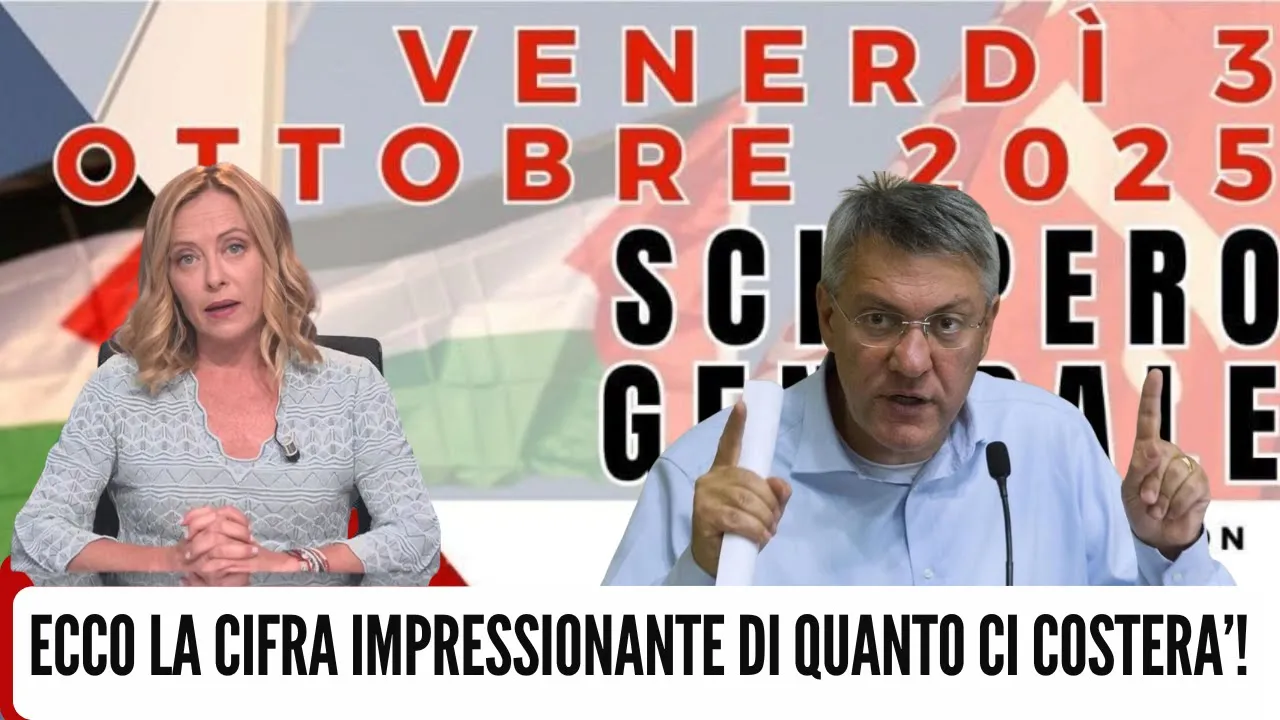
A general strike is a powerful form of collective action where workers across multiple industries simultaneously withhold their labor to address systemic political issues rather than isolated workplace grievances, representing a form of direct democracy that enables ordinary citizens to challenge government policies and demand fundamental changes to the political and economic system.
General Strikes as Catalysts for Political Change: Historical Context and Impact
Added:The fundamental principles of labor unionization, collective bargaining, and the distinction between localized strikes and a general strike.
Basic theories of democratic political change, specifically how grassroots mobilization and civil disobedience influence government policy.
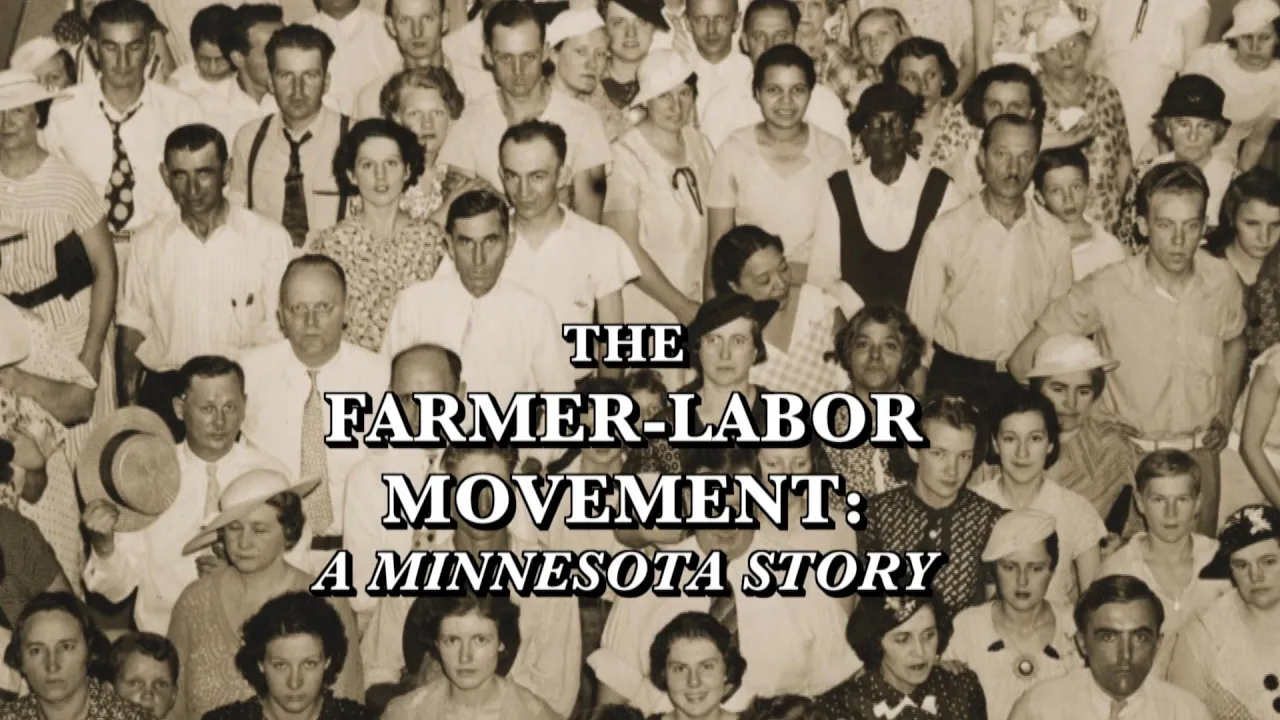
Historical context of early 20th-century labor movements, particularly key events like the 1934 Minneapolis Teamsters strike.
The concept of 'collective action' in sociology and political science, including the challenges of coordination and solidarity among diverse working-class groups.
Comparative analysis of international general strikes, such as the 1926 United Kingdom general strike or recent mass mobilizations in France and India.
The legal boundaries and constraints on labor organizing, including national legislation like the U.S. Taft-Hartley Act of 1947.
The evolution of collective action in the digital age, examining how gig-economy workers and decentralized networks organize without traditional union structures.
The macroeconomic effects of general strikes, analyzing how prolonged labor halts impact national GDP, inflation, and subsequent labor market regulations.
62.7K views3.3Klikes15:06Original Release: 2026-01-28
Welcome friends to another Wolf Responds.
I call this one general strikes change everything.
And of course, as I'm sure many of you expected, I want to talk to you today about the events in Minneapolis, about ICE, and about above all the mobilized response to ICE, which exploded to altogether new levels that change everything.
when the people and the shopkeepers and even the employers in the Minneapolis area made the decision to call a general strike.
Now, let's go through why this is the huge step that changes everything.
You all know what a strike is. That's when workers in a particular factory or office or store reach a kind of impass with their employer over the wages or the job conditions and they decide the workers do to use a very powerful weapon.
They withhold their labor.
This is not an act of violence, but it is an act that reminds the employer that there is no business and there is no profit without the workers. You know, it's a kind of lesson we learned as a nation during the pandemic a few years ago when we put an adjective like essential in front of the name worker because we realized what of course is always true that this system, this country, this economy depends in the last analysis on the working people.
Now, what a strike is in the community of a workplace, a factory, an office, a store, a general strike is something completely different.
That's when workers in one place understand that their problem isn't only with their employer but is a much bigger much broader problem.
You know, the workers in a particular Target out there might have struck target over the fact that ICE roughed up Target workers, which they did, and which is on film.
Anybody could have struck their employer over this question, and they probably did, and we didn't even hear about it because it wasn't newsworthy.
But you can't ignore it when hundreds of businesses shut. And that's what happened in Minneapolis. And tens of thousands of employees who would have made those shops and factories and offices close anyway by not showing up.
Now we know the issue is much bigger and of course it was.
Some of you think the issue was the behavior of ICE masked people killing American citizens.
Oh yes, I know. ICE was started, as these things have often been in history, trying to get us not to worry about it by saying, "Oh, it would only go after illegal immigrants with criminal records." Of course, we should have known, and a good number of us did, that the way that usually works is that your goal, which you don't admit, is to terrorize immigrants, to get them to go home, to get them to stop coming, which in a way the president told us was his goal.
And we should have understood that you don't terrorize people by only carefully selecting those without legal right to be here and who have a criminal record.
That would take a lot of time, a lot of care, and be difficult to pay for. So what you told them was go out there and be really ugly. Go after immigrants who have legal rights.
And when good Americans in a neighborly way go to help the immigrants who've been working hard side by side, all of us for years, we will discover that ICE is about terrorizing all of us, those who stand up, you know, like Renee Good.
It is a fantastic self-d delusion to imagine if you set up a special police to hound a minority in your community, good people will rush to defend them.
And what are you going to do? Kill them, too? ICE has given us the answer. So has Christian and so has President Trump.
Kill as needed.
And in case you think that's harsh, what would you say if I told you, and I hope you know this, that for months now, the United States government has been killing men and women in boats in the Caribbean and in the Pacific.
These people have been accused by our president of being narco terrorists, people involved in the drug trade. And as I have pointed out, arrest them, which is what we used to do. Give them a chance to defend themselves, which we're supposed to give everybody.
Let there be a trial. Let there be a judgment rendered in a legal way that can then be appealed.
It's not the job of the government to be in one act policeman, sheriff, judge, jury, and executioner all at once with no process. The president said, "Kill him."
and defense secretary, oh, excuse me, war secretary killed them. Why are we surprised that the killing doesn't stop when you're an American in an American city?
And you know what a general strike does?
It says our issue is now political.
We have a problem with the whole system, not with what happens in one factory, one office, one store that gets the regular strike. A general strike is when people become aware that their problem isn't this or that employer.
Their problem is a whole system.
You know why? Because the whole system pays the taxes that fund ICE. You and me with our taxes are providing the money that hires the goons shooting at us.
And you know as well as you know anything that there's something wrong when that happens.
And here's something else that a general strike represents.
It re represents real democracy.
Why? Because people are no longer, and this is to the enormous credit of the people of Minneapolis, they're no longer just feeling bad about what they see in the way of the behavior of Mr. ICE, Mr. Trump.
No, no, they're not, you know, going to the bar and drinking so they can forget.
No, no. They're not grumbling on the porch but feeling bad that they can't do anything or they can't think what can we do. Ah, a general strike is a magnificent weapon for the people because it says here is something you can do about what you feel.
Are you upset with this scapegoating of immigrants that we've been indulged in as a society for years picking up on some of the poorest people in the world?
desperately running from their home countries, their home neighborhoods, their families, their churches, their land to come to a new country whose system they don't know, whose language they don't speak, hoping to find some way to cobble together a life for themselves and their children.
Where is the ethical commandment to meet them with an ICE bully rather than a Christian or a Jewish or an Islamic welcome fellow human being.
We were once a proud country that accepted immigrants, that gave people the freedom to move as best they can.
We could do that again, but not with people who run this society who've decided to demonize these people.
Remember Mr. Trump? An invasion is coming.
Wow.
And so there have been good Americans who've said a general strike is a way for everyone who wants to. No one is forcing you to go out.
You can go out and say, "I'm not going to work. I'm not going to go to school.
I'm not going to shop." In other words, no business as usual. I'm not being violent. I'm not attacking anyone. I am saying things have got to stop because we have gone way too far in something that is way too other than what we as a nation think about ourselves and want to be known around the world for it is a democratic participation par excellence in the political life. It is a way for the people of Minneapolis to say to the whole country and the whole world because believe me, this story is being told and these pictures that you've seen are in every corner of this planet.
We are saying here's a way for us to change what's going on. We are the majority. We are the people and we are speaking in one of the few ways a people has when it steps up.
No longer focus just on the particulars of your neighborhood, your job area. No, with your neighbors and co-workers and friends and family, you are acting on a general strike. And look friends, how quickly all the government is scurrying around trying to look less awful than they do in fact act like.
The impact of this has changed everything.
There are plans for general strikes to continue. One this Friday on the 30th.
more coming May 1st being talked about.
Look at it. We are mobilizing and activating the people and the folks in Washington are trembling. Republicans and Democrats alike because a general strike also has one more message.
politics as usual, you know, a special activity in that city in Washington by the professionals who take our money and then visit us occasionally to buy votes.
That's not the only politics anymore.
The people are beginning to really participate and watch and learn and recognize with me a very old historical lesson.
General strikes change everything.
If interventions like these strike you as useful, please share this video with friends, neighbors. That's what they're made for.
And of course, if you can help defay the cost of producing them, then we would be grateful for that assistance as well.
Thank you.
Up Next
55:43
How Otpor! Overthrew Milosevic: A Study of Nonviolent Resistance
@NonviolentConflict
120.8K views•2019-12-20

24:30
BRICS Pay and de-dollarization: A New Financial Order Emerges? | 55 chars
@DannyHaiphongYT
164.6K views•2024-10-22
7:33
Government Surveillance Methods: 10 Ways You May Be Watched
@BeAmazed
1.6M views•2017-04-09
10:19
Explaining the Saudi-Iranian Proxy Conflict in the Middle East
@Vox
18.2M views•2017-07-17
Related Study Plans & Knowledge Roadmaps
Structured learning paths in Political Science
political-science
Economic Statecraft: Sanctions & Chokepoints
01Foundations of Geoeconomics and Economic Statecraft
02The Mechanics of Weaponized Interdependence
03International Sanctions: Types, Implementation, and Efficacy
+ 2 more learning modules
12h5 modules
Explore Roadmap
political-science
Central Bank Independence: Politics & Policy
01Foundations of Central Banking and Monetary Policy
02The Time Inconsistency Problem & Inflation Bias
03The Delegation Model and Designing Independence
+ 2 more learning modules
12h5 modules
Explore Roadmap
political-science
Consociationalism: Power-Sharing & Stability
01Democratic Dilemmas in Divided Societies
02Introduction to Consociational Democracy
03The Four Pillars of Consociational Design
+ 2 more learning modules
12h5 modules
Explore Roadmap
political-science
Rebel Governance: Legitimacy, Economy & State
01Foundations of Rebel Governance and Statehood
02Establishing Political Legitimacy and the Rebel Social Contract
03Wartime Economies and Rebel Resource Management
+ 2 more learning modules
14h5 modules
Explore Roadmap