



















Gerrymandering is the manipulation of voting district boundaries to favor one political party, achieved through two main techniques: 'cracking' disperses opposition voters across many districts so they cannot win any, while 'packing' concentrates opposition voters into a few districts where they win by large margins but lose elsewhere; this practice, which has evolved since 1812, allows politicians to maintain power despite losing popular vote totals, as demonstrated by North Carolina's 2011 redistricting that created 10 safe Republican congressional districts despite more registered Democrats in the state.
Gerrymandering and Political Polarization in North Carolina
Added:Understanding of the U.S. electoral system, specifically how single-member legislative districts and 'first-past-the-post' voting systems operate.
The constitutional process of redistricting, including how congressional and state legislative boundaries are redrawn following the decennial U.S. Census.
The core concept of gerrymandering, including primary strategies like 'packing' (concentrating opposition voters) and 'cracking' (diluting opposition voters).
An introductory understanding of political polarization and how ideological divergence between the major political parties shapes voter behavior and governance.
Analysis of landmark Supreme Court jurisprudence on redistricting, specifically the distinction between unconstitutional racial gerrymandering and non-justiciable partisan gerrymandering (e.g., Rucho v. Common Cause).
Evaluation of alternative redistricting models, such as independent, non-partisan, or bipartisan citizen redistricting commissions utilized in other states.
Study of quantitative metrics used to detect and measure gerrymandering, such as the 'efficiency gap' and geometric compactness tests.
Exploration of democratic reforms designed to mitigate polarization, including Ranked-Choice Voting, open primaries, and proportional representation systems.
136.7K views2Klikes15:09Original Release: 2019-11-01
[Music] take a deep breath a good job go ahead and bring your hands to your knees drop your chin to your chest breathe in welcome to Asheville take a deep breath where are yo --ga exhale is you know with those I was surprised to learn that there was go yogi evil rites petitions and a lot of liberal people in such a conservative congressional district yeah well the thing about our district is it is kind of cut up a little bit what do you mean the way that they do our districts Asheville would be a very progressive district if it weren't for the fact that they've kind of cut it right down the middle congressional districts in the u.s. are typically supposed to have similar populations resemble a coherent Geographic shape and keep communities with similar interests together of the 435 congressional districts in the US North Carolina has 13 in one of those districts the city of Asheville is large liberal-leaning population made it competitive for a Democrat to win until a 2011 redrawing divided the city's population into two otherwise conservative districts and permanently altered the political landscape [Music] Asheville mayor Esther manheimer a Democrat has seen the city's representation dramatically change over the last decade the political environment here is far outside of the average of North Carolina I would say after 2011 redistricting how was Asheville affected it was dramatically affected Asheville used to have a congressional district that took in all of Asheville in all of Western North Carolina and it supported congressman Heath Shuler who was an excellent balance of what you get when you add Asheville to Western North Carolina because Asheville is very liberal but Western North Carolina tends to be more conservative and then with redistricting by the Republican state legislature Asheville was split into two very conservative congressional districts where there's no question these districts don't represent where Asheville is on the political spectrum by splitting the city into two districts Asheville's liberal population was absorbed by two other more populated conservative districts so what happened to the influence of voters in Asheville they feel that their voice has been eradicated by gerrymandering gerrymandering or the manipulation of district voting maps for the advantage of one political party helped ensure that moderate Democrat Heath Shuler would be replaced by one of the most far-right Republicans in office today mark meadows we caught up with Heath in his former district well here's the city and it once was all the 11th district and now democratic-leaning precincts which essentially took in the whole city of Asheville are now in the 10th district redistricting in North Carolina is done by state legislators from the party in power of the State House in this case the Republicans when they were drawing the lines people were calling me would you like to have this precinct if you'll give up this precinct I'm like that's not the way this should work it's not fair to the community let's draw these lines the way they should be drawn based upon fairness stop the gerrymandering the product goes back to 1812 when Massachusetts governor Elbridge Gary's Democratic Republican Party engineer district lines to help his own party make gains in the state Senate a cartoonist satirize carries voting district as looking like a salamander and the term gerrymander was coined since then voting districts have been drawn much more precisely after 2010 Republican state legislators took over the redrawing process and have since been able to make 10 of the state's 13 congressional seats safely conservative despite there being more registered Democrats than Republicans this GOP success in North Carolina was actually a part of a broader and highly effective national strategy called red map we spoke to its architect Christian Kowski so you are the mastermind behind I think what will be known as a historic in the great 2011 gerrymandering which is still in many ways dictating politics in our country how did you decide to pursue that well really started after a wait and Obama's historic win where he really shifted a number of political dynamics in the country and so as Republicans we were looking at okay what's the path back and one of it was obviously how do we get control of the US House of Representatives what is red not red map is a strategic plan to pull money on the national level and invest it into the key state legislative races where there was going to be a redrawing of congressional lines based on the census data and focusing on the states that were either going to lose a congressional seat or gain a congressional seat to have maximum impact the direct results of the red map project on the state legislative level was to put Republicans at the table to draw the lines people ask me about red map and is it wasn't it so unfair what you did and I said well we took the rules that applied we told them what we were gonna do and we did it and it we did it in a year that was obviously historic in itself since red map Democrats have lost more than 900 state legislature seats across the country these state House wins have given the Republicans unprecedented map making power scholar and lawyer Nick Stephanopoulos showed us one of the modern tools legislators can use to redraw districts so this is Mapp titude for redistricting map titude will give you information about the populations of all of the districts you're constructing that would let you forecast how different districts would perform under different configurations in future elections the city of Asheville for example is split in two because if it were kept whole it might have been enough for a Democratic congressional district so what are you doing right now I have told matta two that I want to add counties to district 11 and I want them to come from district 10 you highlight as many of them as you want to assign click the assign button and all of a sudden those counties will now be in the district you put them in and they will no longer be in the old district you can see all of a sudden district 11 just swallowed up to two-thirds of district 10 in 30 seconds exactly no Democrats can do winning those districts it's a good computer game it's a fairly easy computer game and the two main strategies to win that game and state elections are called cracking and packing partisan gerrymandering always takes place through these two techniques of cracking and packing tracking refers to dispersing the other side's voters across a relatively large number of districts and packing refers to over concentrating the other side's voters in a few districts where their preferred candidates consistently win by enormous margins so just to be clear this process is legal and it's necessary across the country so what's the problem it's necessary because we need to make sure the districts have the same populations but there is effectively no legal limit whatsoever to how extreme their partisan gerrymandering can be and some of the most extreme examples can be found in urban areas which tend to have dense liberal populations to see the effects of cracking we went to North Carolina A&T State University North Carolina A&T is a historically black college and university there about 10,000 students here so if you take 10,000 students that's definitely enough especially in a smaller congressional election to swing a vote Oh auntie was actually split into two different dishes right now we're in congressional district 13 this street is Laurel Street and this is the street that divides the campus for voting purposes their vote is now correct so that building right there is a different congressional district than where we're standing yes 50 feet away right so now that vote has been divided exactly and have 5,000 students still significant but when you put this campus in the broader map of the district is a much smaller much weaker vote so while cracking is used to break up votes packing clusters voters of one party together we saw our Republican legislators applied this technique to smaller State House races [Applause] morning Thomas stand before you you think Republican mapmakers packed thousands of new minority voters into State House Democrat garland Pierce's district a move that pulled minority voters out of other races that they would have had more influence in so what's this here this is House District 48 in the yellow in the yellow and I say this starts this is on the way to Greensboro North Carolina 220 and this is the furthest point in the south which is Fairmont limited representative Pierce's district now weaves in and out of four counties across a hundred miles in the southern part of the state so why is the district shaped like this to stack impact my dogs do you think that the makeup of the state legislature right now represents the North Carolina population as a whole no ma'am no ma'am a neighborhood should never be split precincts and they would be split they'd use the power of opinion to really put themself in a position to leave for a while that effort has now led to Republicans occupying 64% of the state assembly seats despite there being more registered Democrats than Republicans in the state this isn't just happening in North Carolina the GOP went from controlling 14 state legislators in 2010 to 32 this year and as districts have been redrawn over that same time maps that once contained blue are consistently turning red with congressional approval ratings at historic lows there's now bipartisan support for the termination of gerrymandering this is a very dynamic office you have here well this is the predator that fought see the video real stud like me then you fight the predator with your bare hands and wipe them out then here the Terminator they're traveling through time cause if I could do this in real life I will travel back to 1812 and wipe out the gerrymandering in the movies will be easy because it just would you know go in the room where they draw the mats and blow up the room so everyone out of the room burn the maps and then have honest people draw the district lines gerrymandering sucks because it's all designed for helping the politicians but not the ordinary citizen do you think that voters know that their voter influence is in some cases being taken away or that their votes are being manipulated because it's a very complicated issues and very hard to kind of it's not the sexy issue that people can jump on and get involved with so only recently it has now come out because there's such a lack of performance and Congress is such a low approval rating that people say wait a minute we got to do something about it when you first took office as governor of California how bad was the gerrymandering here it was like Republicans were all locked into one district and Democrats were all locked into one district so the Republicans had to be as far to the right as possible in order to win the Democrats had to be as far as possible to the left so how do you get them together to agree to something or the least compromise to get something done I remember before we did the redistricting reform in California we had 265 congressional elections and only one in 10 years changed party hands only one think about that we in California went all out and declared war and gerrymandering and we have done away with it but it's not gonna ever be perfect unless you literally take it away from the legislators altogether that's the ideal thing is to take it away from them and have ordinary folks create a commission there is no interest in the party and the key thing now is is is for the Supreme Court to really understand the complexity of the issue until now the Supreme Court didn't have a way to mathematically determine the extent to which a district had been gerrymandered by party but Nick Stephanopoulos may have pollution you created a statistical measurement called the efficiency gap what is that so the efficiency gap is meant to be a measure of the extent of partisan advantage the key here is to realize that both cracking and packing produce what political scientists call wasted votes so it'll tell you in a single number the direction and the magnitude of a plans partisans you in October the Supreme Court will hear arguments for a case about Wisconsin State Assembly districts that could open the door for the efficiency gap to be used across the country any precedent set in this case could also affect the balance of power in Washington DC if they do that that's still a subjective standard and you can be assured that they'll just be more lawyers in lawsuits challenging these lines do you have any regrets for something that you hope to create no I just don't I did it because I actually think that putting Republicans in charge of state government is a good thing do I like polarization know what I like compromise depends but I don't feel bad at all about giving my party advantage because I believe ultimately and what we're trying to do and it looks like they're the Democrats they're gonna do it themselves so it there's become an arms race quality to it which I don't like but I don't we don't tend to lose you
Up Next

8:26
First-Past-the-Post vs Proportional Representation: Electoral Systems Compared
@jamescouture7915
6.9K views•2020-03-29

24:30
BRICS Pay and de-dollarization: A New Financial Order Emerges? | 55 chars
@DannyHaiphongYT
164.6K views•2024-10-22

44:59
Seat at the Table: Anand Giridharadas Interviews AOC | Political Analysis
@VICENews
96.3K views•2020-04-23
10:19
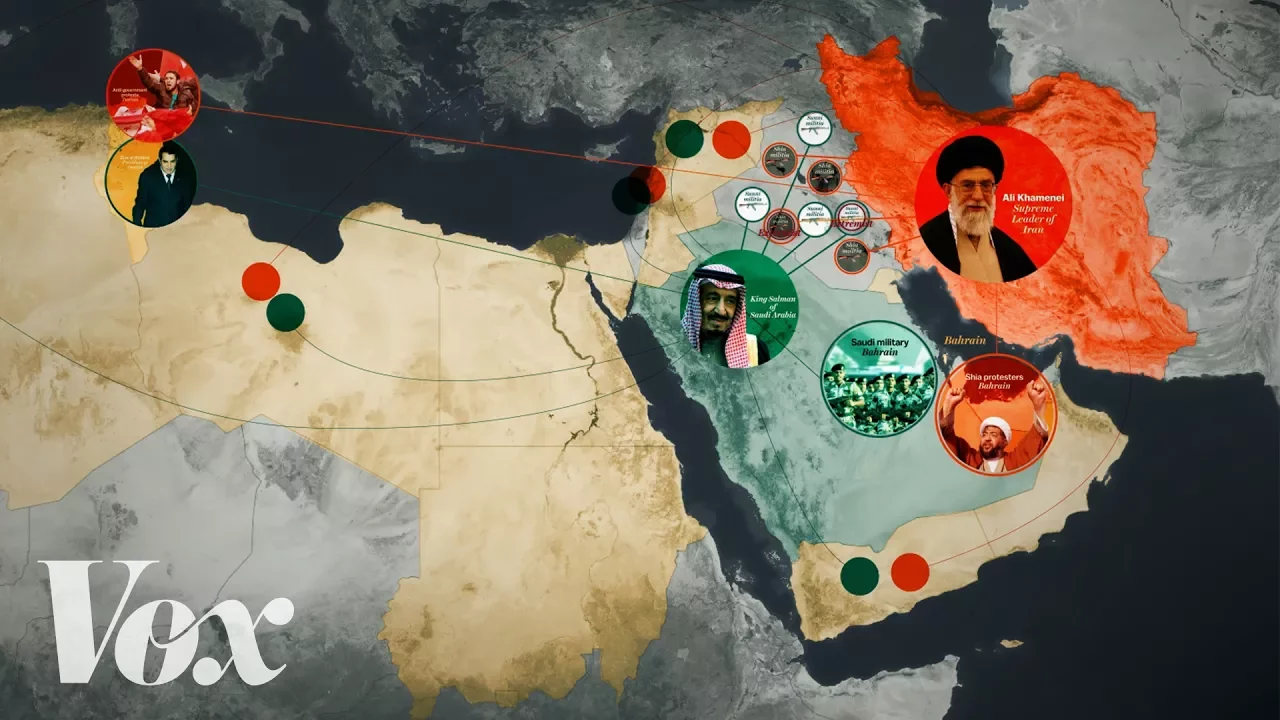
Explaining the Saudi-Iranian Proxy Conflict in the Middle East
@Vox
18.2M views•2017-07-17
Related Study Plans & Knowledge Roadmaps
Structured learning paths in Political Science
political-science
Economic Statecraft: Sanctions & Chokepoints
01Foundations of Geoeconomics and Economic Statecraft
02The Mechanics of Weaponized Interdependence
03International Sanctions: Types, Implementation, and Efficacy
+ 2 more learning modules
12h5 modules
Explore Roadmap
political-science
Central Bank Independence: Politics & Policy
01Foundations of Central Banking and Monetary Policy
02The Time Inconsistency Problem & Inflation Bias
03The Delegation Model and Designing Independence
+ 2 more learning modules
12h5 modules
Explore Roadmap
political-science
Consociationalism: Power-Sharing & Stability
01Democratic Dilemmas in Divided Societies
02Introduction to Consociational Democracy
03The Four Pillars of Consociational Design
+ 2 more learning modules
12h5 modules
Explore Roadmap
political-science
Rebel Governance: Legitimacy, Economy & State
01Foundations of Rebel Governance and Statehood
02Establishing Political Legitimacy and the Rebel Social Contract
03Wartime Economies and Rebel Resource Management
+ 2 more learning modules
14h5 modules
Explore Roadmap