









![Anand Giridharadas in conversation with Debbie Millman [Design Matters Live]](https://i.ytimg.com/vi_webp/D_ai2QTUqg0/maxresdefault.webp)











Historical crises can either entrench existing power structures or catalyze transformative reform, depending on how societies respond; the coronavirus pandemic has exposed systemic inequalities in healthcare, economic security, and social safety nets, revealing that what appears as a new crisis is often an America exposed for what it was, with collective choices made in the past—including gutting the social safety net, denying workers living wages, and defunding pandemic prevention—creating vulnerabilities that crises amplify, yet also presenting opportunities for more just and equitable distribution of power if citizens actively interrogate power and channel crisis-induced civic energy toward fundamental transformation rather than returning to exploitative systems.
Seat at the Table: Anand Giridharadas Interviews AOC | Political Analysis
Added:you good evening these are admittedly strange times our lives are not what they once were today some of you spent hours homeschooling your children while some of you spent hours haggling with the government for unemployment relief some of you stress baked sourdough while some of you didn't have bread to eat some of you stealth googled marital separation during quarantine while some of you swiped right on tinder and then swiped right again and then swiped right again and again and again and again because that is how you have sex now me I've been researching whether sideburns grow back ever since my wife gave me a haircut in our bathroom I mean is this going to be like anything else oh no to talk about my relationship issues because I am your relationship issues right you can still talk about the man you love to hear and I've been thinking about how to launch a TV news show during a crisis without precedent and what better way to launch it then with my guests today representative Alexandria Ocasio Cortes of New York who's going to talk about the future of the progressive movement the comedian Seth MacFarlane who is going to open up I hope about his private conversations and dealings with the Murdochs and Fox News and Taylor Mack playing some music for us but first I just want to say to all of you welcome take a seat at the table [Music] that's what this new show is called seat at the table because when we started dreaming up this program only a few months ago back when social distancing was just my personal experience of middle school we were so oblivious to what loomed on the horizon that we named the show after a highly irresponsible act now gathering with strangers around a table back then in the days of handshakes and dinners with friends and daily underwear changes the world felt like it was shifting and demanding new scrutiny a populist movement questioning free-market dogma was on the rise xenophobic nationalism was on the rise Keanu Reeves was on the rise in a phenomenon known as the Keanu saans back then it seemed like we needed a show where we could process these changes where we could talk and actually listen above the din of everyone yelling in a 9 Way split screen with Don Lemon where people who don't typically have a seat at the table could sit down and speak up and say all the things they couldn't normally say a show where we could question and challenge power now though the world that was changing appears to be collapsing the virus is ravaging the nation March and April saw what might possibly be the highest unemployment rates since the Great Depression Britney Spears is instagramming writers calling for Marxist revolution now the very idea of power itself who has it and how they wield it is no longer a matter of intellectual debate it's a matter of life and for people on the margins of society it always has been what we're seeing in fact is not a new America what we're seeing is an America exposed for what it was every element of this unfolding crisis is a product of the collective choices we have made in the past gutting the social safety net denying workers a living wage warehousing people in overcrowded prisons defunding pandemic prevention while spending billions fighting an imaginary war in space or is it on space war on space only Mike Pence knows for sure if we missed these things before now with our roads empty our skies clear our supply chain short on ventilators and our store shelves stripped of all-purpose flour the essential separated from the non-essential now we can see them clearly we can see the hard realities we've been too self-interested or apathetic or bamboozled to see recent New York Times op-ed put it starkly if inequality had frozen at 1980s levels hadn't been allowed to yawn ever wider the bottom 90% of American households 90% would each see $12,000 a year more in income in other words most of you watching this except the billionaires are effectively sending the billionaires a thousand bucks a month except you're not sending it it's being taken from you via policy in New York City Central Park and the Javits Center are be converted into field hospitals meanwhile in recent years around 20 of the cities struggling hospitals indoor hospitals were shut down instead of being bailed out many of them turned into housing despite concerns by lawmakers and activists that closing them would compromise the health needs of the lower-income communities they serve some like st. Vincent's were transformed into luxury condos for the rich it's not nice selling for as much as 19 million dollars which is why even as this show's title suggests an activity that is presently hazardous we remain as committed as ever to its original vision and purpose we do need to talk not just about the news per se not about what happened in the last 24 hours but about the root causes we haven't been talking about things about ourselves about our society that have been hidden for far too long and something I want to discuss with you on tonight's show and in the weeks to come is this what will the legacy of this crisis be what will we make of the massive upheaval we're currently experiencing who will we be on the other side this is not a new question as the Atlantic reminds us it's a question that goes back at least as far as the French Revolution when the righteous anger of rioting French peasants of 1789 mutated into a brutal reign of terror or more recently as noted by Rahm Emmanuel in the wake of the 2008 financial crash you never or the serious crisis neither optimistic more pessimistic I'm hopeful we're upon that crisis was immediately allowed to go to waste incredibly barely a decade later we are living that moment again the scramble has already begun Rebecca Solnit wrote recently in The New York Times the possibilities for change for the better or the worse for a more egalitarian or more authoritarian society burst out of the gate like racehorses at times like these it's easy to be cynical about who will prevail in this contest given the advantages of those with entrenched power and given what we've witnessed time and time again because in that scramble to fix a broken system chaos reigns time is short legislation is rushed through and in the smoke of the raging fire it's often the arsonists who rush in to be the firefighters costume and everything I see you debt financier in Puerto Rico I see you charter school advocates in New Orleans as Naomi Klein warned in her book the Shock Doctrine crises can be a boom time for corrupt politicians and big corporations if we don't stay focused on designing real solutions in a time like this if we don't make that our work lobbyists are more than happy to relieve us of the task you may have heard that big business and France has wanted for years to get rid of that country's 35 hour work week a cornerstone of its labor law not to be confused with America's 35 hour work day well guess when they finally got it done after the virus struck closer to home the Trump administration appears to have used the chaos of the corona virus outbreak to relax environmental regulations indefinitely a boon for polluters and a realization of its long-standing deregulation agenda and a perfect solution to a pandemic but crises can also go the other way throughout history disasters natural and man-made have served to topple entrenched power to bring about the end of decadent gilded ages to give rise to eras of reform we do not always respond to shocks with regression Naomi Klein writes sometimes in the face of crisis we grow up fast the Cataclysm of the civil war produced the Reconstruction Amendments laying the groundwork for true democracy in America for the first time the exploitation of child and immigrant labor in the Gilded Age led to the Fair Labor Standards Act and other protections of FDR's New Deal the riots that engulfed our cities in the wake of the Reverend dr. Martin Luther King Jr's assassination led to the passage of the Fair Housing Act and the adoption of widespread affirmative action policies and colleges and the workplace we can do this right when we try in fact I would say especially to the young people watching that in addition to being a time of tragedy and pain and the shattering of stability we may also soon be living in the greatest moment of political possibility you will know in your lifetimes the important questions for me for you and for this show are why and how that is what we're going to seek to set out to answer together week after week why did one crisis go that way so to entrench power while the other went the other way helping to erode it how do we not only chase away the plague but also leave in its wake a more just and equitable distribution of power how do we solve the crisis not superficially but at the root not for some but for all especially at a time like this when the traditional power building tools of organizing and door knocking are impossible historically are in that the ROI writes in the financial times pandemics have forced humans to break with the past and imagine their world anew this one is no different it is a portal a gateway between one world and the next we can choose to walk through it dragging the carcasses of our prejudice and hatred our avarice our data banks and dead ideas are dead rivers and smokey skies behind us she writes or we can walk through lightly with little luggage ready to imagine another world and ready to fight for it right now things may seem dark and hopeless as I speak to you mass graves are being dug in New York City to handle an overflow of bodies in less than two months more than 40,000 Americans have died to put it in perspective that's the number of people who died in 9/11 the 1906 San Francisco earthquake the Johnstown Flood three of the country's deadliest hurricanes Pearl Harbor and the ranks of US soldiers in the Iraq combined depending on how we act today we could still lose tens even hundreds of thousands more perhaps you've lost someone you love or you've just spent a harrowing two weeks in the ICU yourself or maybe you're one of the lucky ones and your biggest problem right now is knowing more than you ever hope to about big cat possession in Oklahoma that and needing to get back to the office so you can resume spending more time with your work husband than your quarantine husband aka your husband either way the good news is that this crisis has exposed more than a country with gaping holes in its medical supply chains and it's social safety net it has also exposed the tremendous courage decency and resilience of everyday people many of whom just six weeks ago our society did not even deem essential everyday we see UPS drivers risking their lives to make sure we get our sweet sweet toilet paper onto them I hope mine arrive soon every day we see neighbors risking their lives to bring an elderly stranger a bag of groceries every day we see nurses risking their lives macgyvering trash bags into hazmat suits and if we can harness that if we can take that energy and that civic spirit and find out how to channel it and how to sustain it then we as citizens will decide what lies on the other side we did not choose this crisis but we can try to shape its consequences we can interrogate power we can work to change other people's minds and be open to changing our own we on this show can ask more probing questions and listen more deeply for answers we can make you think and perhaps even at a time like this make you laugh and we can equip you with the truths you need to do the one job from which you can never be laid off that of citizen that is what this show will do so welcome one and all to a seat at the table and when I come back after a short break I will be at this very table so to speak with congresswoman Alexandria Ocasio Cortez stay with us [Music] the new epicenter of the epicenter of the corona virus pandemic in the United States lurks within a single congressional district in New York City this district spanning Queens and the Bronx was until recently home to an uber driver named Anil Sabah and a hospital manager named Priscilla Carroll I say until recently because this plague killed them both Anil died at Elmhurst Hospital which is where Priscilla worked as a manager and was exposed by a patient it's probably no coincidence that this very congressional district the heart of this crisis has achieved that status because of pre-existing structural conditions that made it especially vulnerable to this virus and it's no coincidence that that district in 2018 elected a firebrand of a representative to its US House seat representative Alexandra Ocasio Cortez is a hero and a lightning rod of the progressive movement was a key surrogate for Bernie Sanders's presidential campaign and in what may be her biggest accomplishment to date his seat at the tables very first guest thank you so much for joining us representative Ocasio Cortez of course thank you for having me so I want to begin by asking you something I probably wouldn't ask you in normal times I would just skip over and we've seen you doing live streams and delivering groceries to folks and making statements and making proposals I actually wonder how you're holding up personally through this no no I appreciate the question and you know it's been tough it is a huge emotional toll that emotional toll is nowhere near what a lot of our frontline workers are experiencing but you know as a leader in this community as a public servant to this community it's very difficult I frequently and routinely have to call family members congregations and people in our community offering condolences day in and day out have to talk to teenage kids who have lost their parents I have to talk to spouses that have lost their husband or wife of several decades I have to talk to people who say where am I going to get my next meal or am I going to be evicted from my apartment next month and it is extremely difficult to have those conversations and feel like we don't have the federal leadership that's required to give them a good answer you're clearly someone with a well-formed worldview no one has called you wishy-washy and you have a way of looking at these issues I wonder if this pandemic has actually made you see or think or believe anything that you didn't see or think or believed before yeah you know I think this pandemic has done that for a lot of people and I think if anything what it has done for me is just add clarity and add a finer and sharper point to a lot of what we've already been advocating for in any other circumstance I would have been a frontline worker had things not worked out the same you know had had my primary not turned out the same way two years ago and and you know I know what it's like to not have insurance I know what it's like to get on public transit and be scared even if it's not necessarily about then about acquiring a disease but you know scared of being mugged or scared of getting on at three o'clock in the morning scared of not having health insurance and so I don't think it's necessarily changed any of my underlying beliefs but it's made them more urgent I think I want to ask you a little bit about your education as a member of Congress you know I sometimes think about in my work but a lot of people I write about to get things done there's often an inside game and an outside game and in your line of work the outside game is some of the stuff you have done so effectively drive conversation command attention for a set of issues you want to talk about make people focus on your thing instead of other thing I wonder what your education has been like on that second front that we see less about how you get things done by playing the inside game there's a tactic that organizers use called power mapping and you essentially start mapping out relationships and nodes of power almost like this web or this network in your mind or you do it some people do it physically on paper and that's a lot of the work that I inside work that I think I tried to do is figure out like the power map and figure out unusual alliances try to find areas of vulnerability that can be leveraged to create pressure on leadership and pairing that but also part of that inside game has also been supporting primary challengers because ultimately if the board is stacked for the rich and the powerful even within the Democratic Party which it is you know the board is stacked for corporations in the Democratic Party and for the very wealthy and again I'm going to be kind of like people are going to be upset at me for saying that but it's true so long as the wealthy control most of political donations to either party they are the ones who are listened to so long as the board is stacked that way sometimes the only choice that you have in certain situations is to change the pieces on the board we can enact change in this country but it takes all of us and we all have to mobilize and beyond just organizing for this election I want all of us to think about how we want to make this part of our lives watching you in the last some of your last appearances campaigning for Bernie you had a stump before but now some of the last ones you seem to be delivering to close a OSE Watchers I consider myself one of them a message to the movement about what it means to be uncompromising about some of these values but also be more open armed give more of a ramp to people who are not fully down with the program but might be pulled in can you talk about that need that's something I mean you've been attacked when you when you post so much as a video of Elizabeth Warren dancing is there an issue of this movement not having enough of a ramp for other folks I think what's really important is that again it's not about giving up your principles and it's not about changing your positions but it is about opening up your posture because if we're just about finger wagging and nagging and shaming people into positions and you know sometimes that needs to be done in our politics sometimes politicians a lot of times politicians and pundits deserve to be shamed but it's not the only thing that that we can do and it's not the only tool that we have and sometimes the most persuasive way that I find to bringing people into the fold is what what my mentor called the Golden Gate of retreat is that you create a path and for someone that perhaps it started out a conversation disagreeing with you if you can create a path for them to find common ground with you for them to land in your conclusion without necessarily conceding that they were wrong but perhaps coming to the same conclusion in a different way you can you can create consensus it's fascinating so I want to after we come back from a short break talk to you about Joe Biden's we'll be back in a minute [Music] welcome back I'm back with representative Ocasio Cortez and I want to ask you about Joe Biden you have said you will be voting for Joe Biden but you have yet to endorse him your teams have talked he doesn't actually seem to be moving in your direction at all right now and are there two or three things that he could commit to out of the potential galaxies of them where you would be surprised enough to say okay didn't see that coming you have my endorsement now probably healthcare climate change and I mean the third is really tough you know it could be immigration it could be raining in Wall Street it could be stopping money in politics movement on Puerto Rico you know I think that the third one there's a lot but in terms of also just getting past the post you know I'm not here to needle and I'm not here to just try to score a point as I've said before I think these are real concessions that need to be made in order for us to win in November and to have you know if you actually look at the history of who wins these elections the Democrat who's gotten the nomination has not been able to win in November without youth support in a long time and right now we're I think we're at is we have a nominee that does not have very large youth support and at least is not particularly enthusiastic has not performed well with Latino electorate in key states like Arizona Colorado key swing states that we need to get to 270 and so I think that these are changes that need to be made in order for us to win I'm really concerned and you know I'm really kind of tired of people looking back at 2016 and again hectoring people for staying home without us being introspective about the fact that we had to historically unpopular candidates you know people can go into why and maybe that shouldn't have been this that in the other back to the matter is to historically unpopular candidates that was an overwhelmingly deflating election for a lot of people and without introspection about why that was or what changes need to be made if we try to run the 2016 playbook all over again we are taking an enormous enormous risk and so again this is not about scoring a point this is about making necessary changes so that Donald Trump does not get reelected iDEN says to wealthy donors under me nothing would fundamentally change do you think he in his heart wants the America you want but he just has a different view of what's possible or do you think fundamentally he does not want America to change in the ways that you want it to change I do not know what is in Joe Biden's you know had or in I don't you know know what's in his heart you know I know he I know he wants what is good for people but also I also understand that you know the role that he has historically played in the Senate and as vice president and throughout his entire career has been this idea of kind of This American norm um and I think that's a lot of what the candidacy is staked on is like norms and stability and respectability and just normal was not working for a lot of us it's normal it doesn't work for Millennials it doesn't work for people of color it doesn't work for any of that and so um I think you know what it does work for what you know going back to normal does work for our affluent suburban voters that both parties are very much fighting over can we hear it for all our residents justice champions to fight for our future and reject the paradigm that environmental justice must come at the cost of our jobs or economic well-being we know that's not true I think it's really important that um that we push because I don't think we can just trust that things are going to move in a progressive direction because the clock is ticking we have to fight for it and I'm fighting for things often means that you get labeled as radical and a firebrand and difficult and inconvenient and not a team player and because team players buckle up and saddle in and they stay quiet and they don't make people uncomfortable and you know there's something to be said for that but that's never been Who I am a lot of people watching this are locked at home with only some content on TV or an internet connection if they're lucky and can you recommend some of the artists and writers out there that people can be watching and and reading in this time who have helped you and who you think are at the vanguard of of shifting the consciousness of this country right now um you know what we need to do in act of rebellion is engaging in the creation of art and so whether it's reading bell hooks whether it's listening to to radical music whether it's reading theory reading about the history the Black Panthers and their establishment of mutual aid you know I think there's a lot that we could be doing right now but ultimately the I think when we talk about this idea of reopening society you know only in America does the president when the president tweets about liberation does he mean go back to work when we you know have this discussion about going going back or reopening I think a lot of people should just say no we're not going back to that we're not going back to working 70 hour weeks just so that we could put food on the table and not even feel any sort of semblance of security in our lives and you know I think that is the most important conversation we can have and I think it's going to take reading a lot of folks and indulging in poetry I think it's gonna require indulging in art in ourselves in our history in our culture I think we need to read about coal miner rebellions in the early nineteen hundred's and I think we need to read about abolition work I think we need to read the warmth of other Suns I think we need to read so much to learn about ourselves because the one thing that America does not do in our education does not do is is we do not do a good job of teaching Americans about America well I want to thank you you know the reason I wanted to have you on as our first guest on this show this shows about challenging power and so that's kind of an obvious connection but we also talked about wanting to make this show a space where we actually listen and role model the kind of listening that is actually absent from our culture in so many respects and and you are not a talking point machine you actually listen to questions and think while you're you're in the moment and that's evident today I just want to thank you so much for being our first guest representative Alexandra Ocasio cortes thank you so much for being there thanks for having me we'll be right back [Music] this is a time when people are turning to the media not just for entertainment to keep themselves from going absolutely off the deep end but for vital truth whether you're a news anchor or a kid with a tick-tock account you have the ear of the country and the world and right now that is an awesome responsibility a responsibility my next guest has been challenging those of us in the media to take a little more seriously including his own employer joining me now one of the most recognizable voices a man of many voices the creator of such entertainments as Family Guy Orville and Ted the movie not the talks Seth MacFarlane Seth welcome to the show how's it going good thank you for being one of our inaugural guests my pleasure my pleasure I'm gonna tell you why I've excited to have you on you are known for a certain blunt truth-telling in your in your comedy behind a kind of curtain of animated characters in fiction but of late you have been speaking a different kind of blunt truth not just about not just through those characters but about the media and about about truth I want to start with your most recent beef the most dangerous perhaps physically dangerous when you take on someone this powerful you have gone after Oprah why well you know look it's it's a it's not a cut and dry situation there I mean again as I as I said in the tweet Oprah has spent her career doing a lot of altruistic things given to a lot of charities supported a lot of good causes and has has really in many ways used her platform for good and the exception to that is the elevation of these purveyors of pseudoscience you know people like dr. Phil dr. oz you know all the way back to Jenny McCarthy in the anti-vaccine and it's it's a strange dichotomy that that I think a lot of people particularly right now are having trouble reconciling you know this person who's done all this all this positive work for the world and yet somehow has gotten caught up in this web of junk science on many occasions and so it's it's it's a tough thing to to balance and you hope abreast steps forward and and and as you've said tries to play some role correcting the the purveyors of misinformation who she has helped amplify over the years yeah III think that I think that would be the right thing to do and before I sent out a tweet there before I make a public statement of any kind on any issue I do try to make sure that I have all my facts straight because I'm conscious of the reach that my voice has I gotta say that's really old-fashioned particularly for someone part of the Fox Empire I mean truth truth research it's not a 19th century anymore set but I want to ask you about Fox you have and I really admire this because a lot of people you give him a paycheck they stop telling the truth about anything covered by that paycheck you've spoken about Laura Ingraham at Fox as being irresponsible you've spoken about Tucker Carlson in the past but I want to ask you a bigger picture question as someone who's seen that machinery as understood it from the inside we had this notion of a marketplace of ideas we often talked about that if you have some bad actor the theory goes spewing bad information eventually everything will be fine better information will come in the market will work and you know the truth will win it doesn't seem to be working with Fox and when you have money allied with power and a media outlet in that form and do you think the remedy for Fox is better information more truth telling people coming to their conscience glaze your tweet do you think we need to think about whether Fox should have the license to do what it does whether that's a legal operation it's engaged in I mean that's that's that's a that's a question for a much bigger brain than mine I don't know that seems quite large on this screen I mean it look to me there is always room for responsible journalism from from all sides I think you know you look at the Wall Street Journal take their op Edie section out of the picture which is a little whack of duty at times you know that's not an irresponsible publication it's conservative publication but I don't think anyone would say it's it's off the rails like Fox News so I think I think it is you know I don't think anybody's saying we want this to be Rachel Maddow I think we're just saying you know we want you to honor your duty to the truth having seen the inside of these systems when you think about a fit you know you write you you write characters who allow you to explore these ideas and human understanding human motivation is so central to the kind of work you do how do you think about media barons like the Murdock's who are so responsible for this cesspool of and for misinformation you talk about but protect themselves as we know and in ways that are inconsistent with what the network's putting on how do you think about them as human beings it's a it's a hard thing for me personally to reconcile because I I know the family I you know I have a friendly relationship with the family and by the way I've I've I've said you know I've said point blank I think you need to look at what you're doing and and and and you know take a more active role I I think they're they're you know not be it's it's since I've been doing Family Guy I have never gotten anything remotely I've never experienced anything like censorship from that level they have left us alone completely even when our politics are aggressively liberal and the same philosophy as far as I can tell applies to Fox News it's just a very hands-off philosophy and so it's not it's it's it's again it's like it's there's a there's a self-sustaining mechanism to Fox News that that I think exists independently of all that and so it's it's you know I'm very I am very comfortable you know speaking and oddly there are recognition of the reality you're describing or is that like Seth is off his rocker again and no it's no never know it's it's it's all it's in the moment it's always received very kindly and very respectfully there's no eye rolling there's no there's no you know dismissive response it's all you know there's always an open ear and you know what I have yet to see is you know a change in the in the network and again it's it's this network is hugely profitable and at the end of the day the company is a business and that's what you know it's that's really the issue that that that we're all kind of fighting here is that is that it's people watch and and it's an it's entertainment it's gonna be good guys and bad guys it's gonna be heroes and villains and nothing is is it's as simple as that every issue that we think is black and white is so nuanced and and I think you know to me that would be my biggest criticism the fox news is that the the nuance is gone it's it's it's it's I mean the Laura Ingraham tweet was a perfect example of course the Washington Post does not want this to go on forever they have families they're stuck at home - it's not that simple if if if that Network could get on board with a responsible attitude toward science alone I could live with all the other and now you're just getting crazy I don't know what I'm gonna thank you Seth for spending time with us on our inaugural show and the parting advice I would offer you because I was once like you a couple weeks ago wearing a hat like that and then I I persuaded my quarantine buddy my wife and who was now also my barber to cut my hair she studied a GQ article took notes and did it in the bathroom with clippers and scissors and you know so so find someone in your life yeah and just take the plunge I'm staring at my cat right now I don't think giving him a pair of shears is really the best idea cats a more done deft with with clippers looks good good thank you so much for talking to us and stay safe out there thank you you too and when I come back our first musical guest that seat at the table Taylor Mack [Music] welcome back joining me now I'm so thrilled to introduce to you see the tables inaugural musical guest Taylor Mack to sing to us about this crisis faced by artists in New York the epicenter of the pandemic where so many people make a living from art and from frankly the gig economy that is the art and performance world this is a moment from which many people fear they will never recover and and the line of work may not recover and then we're going to talk about it a little bit so I'm so thrilled to have you with us Taylor Mack and take it away that's so nice of you hi and I thought I'd say I wrote this song for that because of the AIDS epidemic but it works for this one too [Music] when all the artists leave or die and you're alone on stage naked and I'm reversed grasping for lives and trying to say some grace when all the fabric across the nation has been quilted and put on display then will the earth be swallowed in comfort or be boxed and rented away when all the fairies are dead and buried and will the pixie dust be swept when all the radicals sky or married then will the tragedy and or be [Music] and should we fasten pig wings and our harnesses and then should we fly to the grid then should we rise up away from the spotlight and wake in some cloud filled bed or should we get out our red paint and our sparkle our cardboard our tinsel our hokey home crafted style then should we dress like some high-heeled snowflakes and baton down the streets in hell's miracle yeah crash house parade with the odd smile [Music] do it again day after day after day until the cockroaches are even then you can play you can play Wow that was extraordinary thank you for sharing that with us tell us about trickle-up NYC we created I created with a bunch of other people I'm a thing called trickle up NYC dot org and I asked them to donate content to the site is just original and exclusive video content and we get people to it's a paid subscription ten dollars a month and we get people to subscribe and then every time we raise ten thousand dollars we give it to an artist who doesn't have anything thank you so much and all the best to you in these times thank you for having me so sweet trickle up and my C org well that does it for our inaugural episode of seat at the table thank you so much for joining us thank you to congresswoman Alexandra Ocasio cortez to Seth MacFarlane and Taylor Mack as our first guests trying us out and we'll see you right here on vice TV next week Wednesday at 10:00 [Music]
Up Next
Lee Kuan Yew and the Making of Modern Singapore
@Biographics
456.4K views•2022-06-10

BRICS Pay and de-dollarization: A New Financial Order Emerges? | 55 chars
@DannyHaiphongYT
164.6K views•2024-10-22
Gerrymandering and Political Polarization in North Carolina
@VICENews
136.7K views•2019-11-01
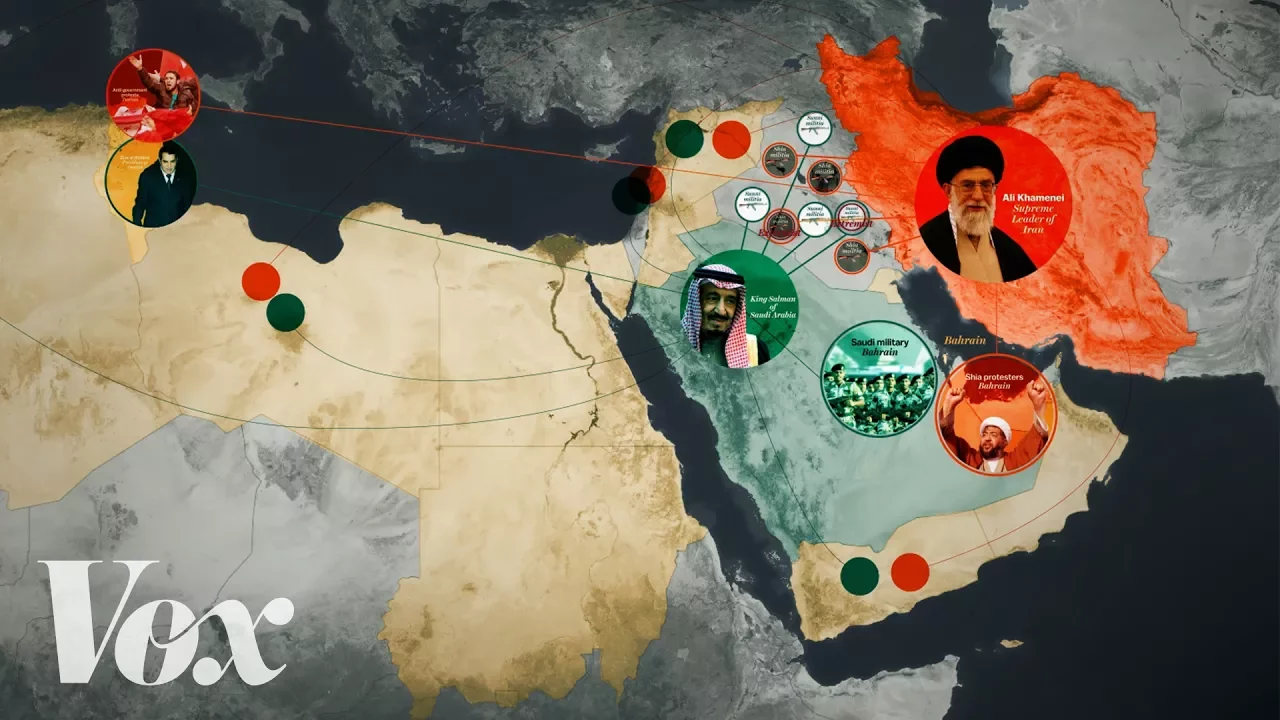
Explaining the Saudi-Iranian Proxy Conflict in the Middle East
@Vox
18.2M views•2017-07-17
Related Study Plans & Knowledge Roadmaps
Structured learning paths in Political Science