![[5]–ROS2 Basics Explained – Nodes, Topics & Messages [شرح بالعربى]](https://i.ytimg.com/vi_webp/x7fgj2tMVLg/maxresdefault.webp)
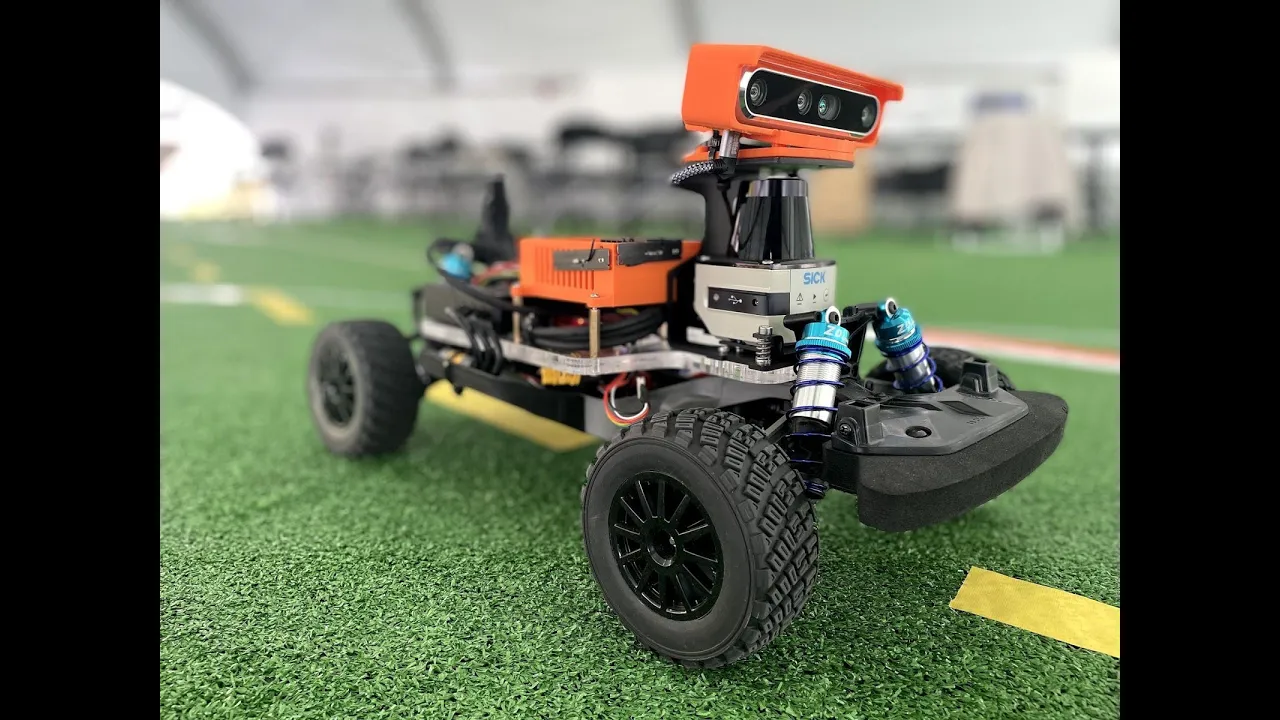




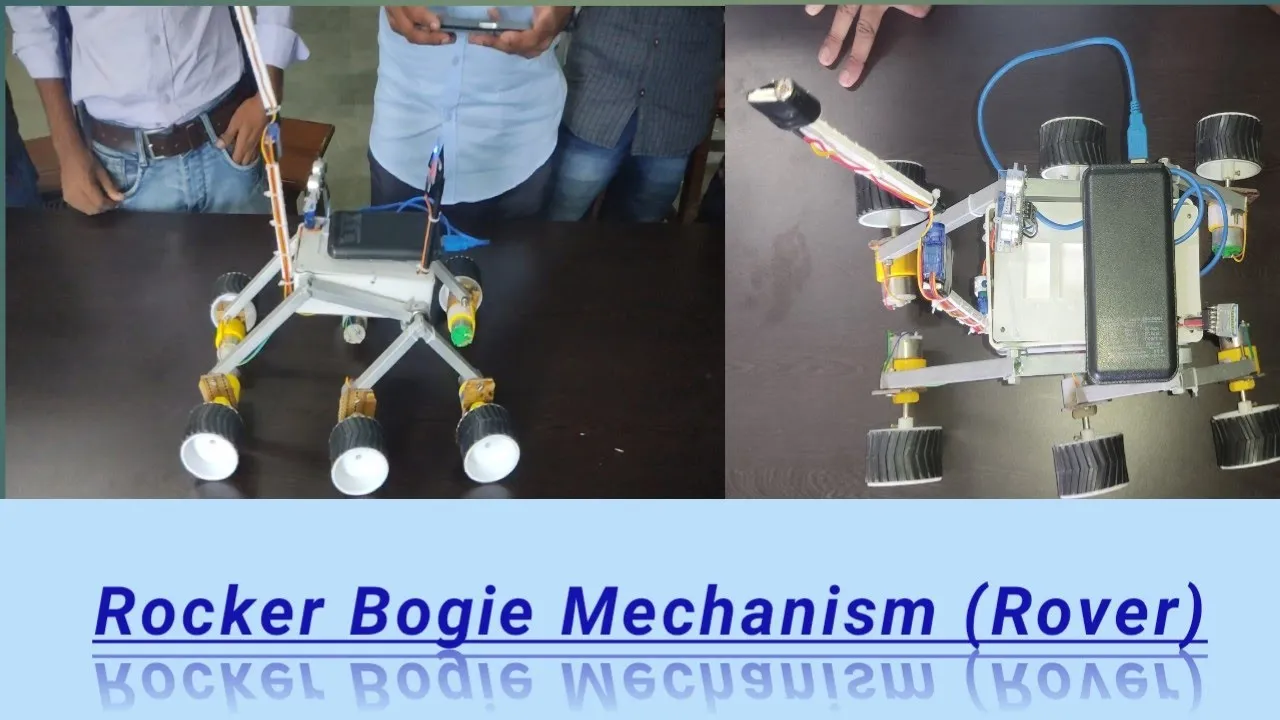














This video presents Team RUDRA's 2020 University Rover Challenge vehicle, a 40kg autonomous rover featuring a lightweight aluminum chassis with independent suspension, a five-degree-of-freedom robotic arm with a two-finger gripper, and modular electronics using Jetson TX2 and STM32 microcontrollers. The rover incorporates ROS-based architecture for subsystem communication, stereo cameras for obstacle detection, and a scientific payload including an auger for soil sampling, calorimetric assay for carbohydrate detection, centrifuge, and digital microscope for bio-signature analysis. The system demonstrates how integrated mechanical, electronic, and scientific subsystems enable autonomous planetary exploration through features like self-diagnostic capabilities, real-time GUI feedback, and obstacle avoidance algorithms.
Team RUDRA System Acceptance Review | University Rover Challenge
Added:Team Rudra has been participating in the University Rover challenge since 2013.
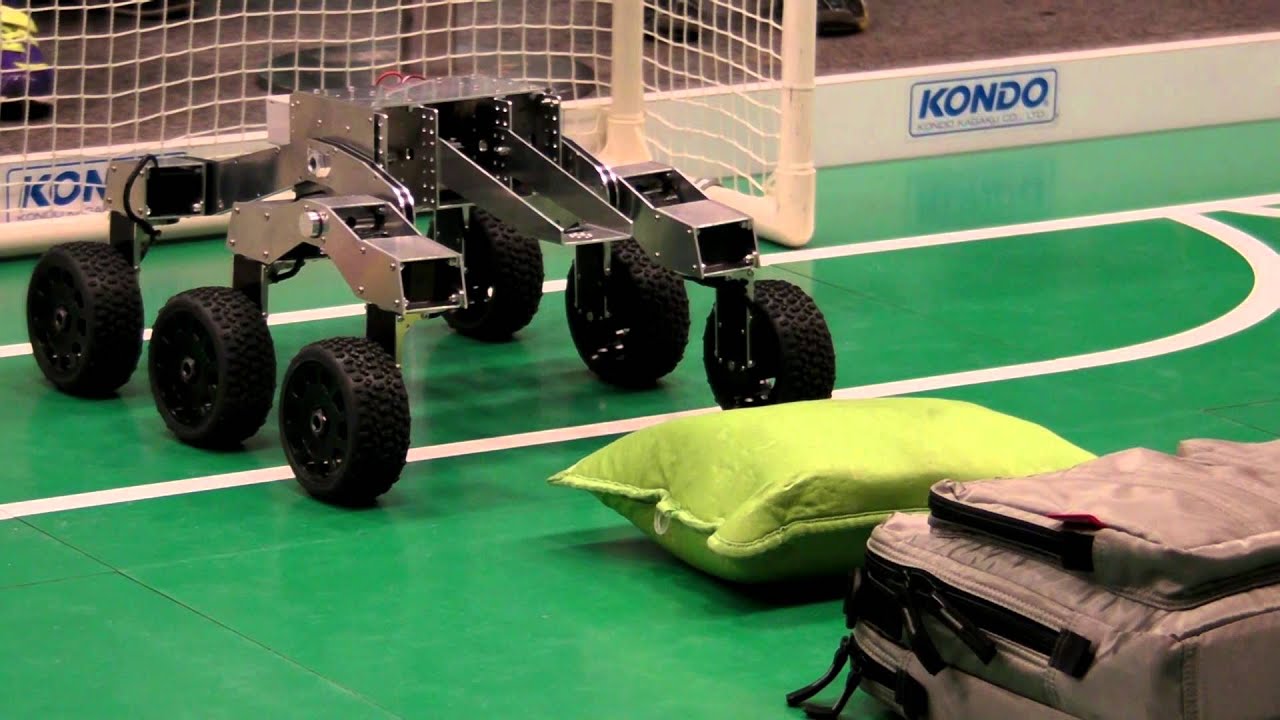
Since then our team has evolved in various technical aspects and lab has been fully equipped with latest equipments and technologies. This year rover has gone through massive transformation in all aspects. Prime goal was to make a robust system which can withstand the harsh terrain and is able to tackle all challenges during URC. Mechanical team has done R&D to develop a lighter and more reliable system this year. The rover weighs just 40 kgs with all equipments on board. Chassis is a closed frame made of hollow aluminum box channels to absorb the bending loads. This year's rover has a four-wheel drive with independent compression springs at each wheel. The suspension links and springs are designed in a way to prevent the impacts from hitting the chassis and is able to keep it almost parallel to the ground. The chassis provides enough room to install the electronics and mounting of different components. This is a jointed arm configuration with five degree of freedom and actuated by two linear and four rotary actuators. The links are made from the nylon rectangular beams with high section modulus to prevent bending. Pitch and roll motion are achieved by the different combination of bevel gear mechanism actuated by two servo motors.
The gripper is a two-finger claw with four-bar mechanism to ensure the parallel motion of fingers and is capable of picking the things of five centimeter dia. with ease. It is actuated by a lead screw which is powered through the high torque DC motor. The maximum reach of the gripper is 1.6 meters from ground and is able to lift 5 kgs of weight with no effort. 12 inch wheels with a wider base provide enough traction to the rover and make it easy to maneuver through rocky terrain. Astronaut assistant box has two separate chambers which helps in easy deploying of the tools. This year the electronics of the rover has evolved and has been made highly reliable and modular making it easy to debug. The arm and the drive system have been kept completely independent which reduces the complexity of the system. A combination of four and five cell li-po batteries are being used to power the electronic subsystem of the rover whose power supply is being regulated by an array of buck boost dc-to-dc converters.For making the drive system robust, jetson tx2 is the primary master that communicates via serial bus with the two dual channel sabertooth motor drivers controlling four 24 volt banebot geared DC motors for driving the rover. The central board of the rover has been custom designed to incorporate the STM32 micro controller, it communicates with the arm motor drivers for controlling the actuation of the arm and YPR system. It also manages the power distribution to the onboard POE and the motion of the camera system, astronaut assistance box is also controlled by the board. The rover also incorporates a kill switch that will terminate the entire power supply to the arm and drive control. For the communication, we are using 2.4 GHz spectrum that is coupled with omni-directional antenna at the access point and direction sector antenna at the base station which gives us a range of 1.2 kilometres with low latency. We are using a 1.2 and a 5.8 GHz transmitters for the analog feed of the cameras. As to advance our system and make it flexible our team moved the conventional system to ROS. Internal communication of the rover subsystems is being handled by ROS serial. The communication from the central board to the robotic arm and other peripherals is done by a checksum based serial communication. The linear actuators comprise of highly precise potentiometers to facilitate feedback for the inverse kinematic algorithms, it also allows arm to move in a specific axis in space hence making it easier to grab and drop objects. The feedback from the rover is displayed in real time on the GUI aiding in secure operation. The speed acceleration and error offset can be dynamically modified to enhance performance significantly in extreme conditions. Team has also implemented a self-diagnostic system which helps in verification of all the peripherals prior to the task. For the autonomous task, we are using stereo camera to obtain point clouds and disparity maps to determine obstacle. On reaching the coordinate the rover uses a spiral scout algorithm and distance metric Euclidean algorithm to track AR tags and pass between the gates. An array of LEDs on the hind side of the rover depict different modes of the rover, in addition to which the rover also notifies the same to the base station GUI.
The mission to find the proof of life on Mars demands the integration of diverse array of scientific techniques. Collection of soil samples is done by boring a hole of adequate depth using an auger. The rover uses a calorimetric assay to measure the presence of inter and intra-cellular carbohydrates. The science payload comprises of a high-speed centrifuge which is used to optimize the response of the assay. A maneuverable digital microscope is installed on the rover to search for bio signatures in rocks. A combination of various gas sensors will provide us with additional data to help us arrive at a correct conclusion.
Up Next

Centimeter-Level GPS: How RTK Corrections Work
@Inertialsense
9K views•2021-05-07

Triumph of Orthodoxy Icon: Byzantine Art & History Explained
@BenCallan
2.1K views•2024-08-06

FastAPI vs Flask vs Django: Choosing the Right Python Web Framework
@TechWithTim
302.5K views•2024-05-26

Game of Thrones Opening Credits: A Cinematic Analysis
@gameofthrones
46.3M views•2011-04-18
Related Study Plans & Knowledge Roadmaps
Structured learning paths in General & Interdisciplinary Studies