






















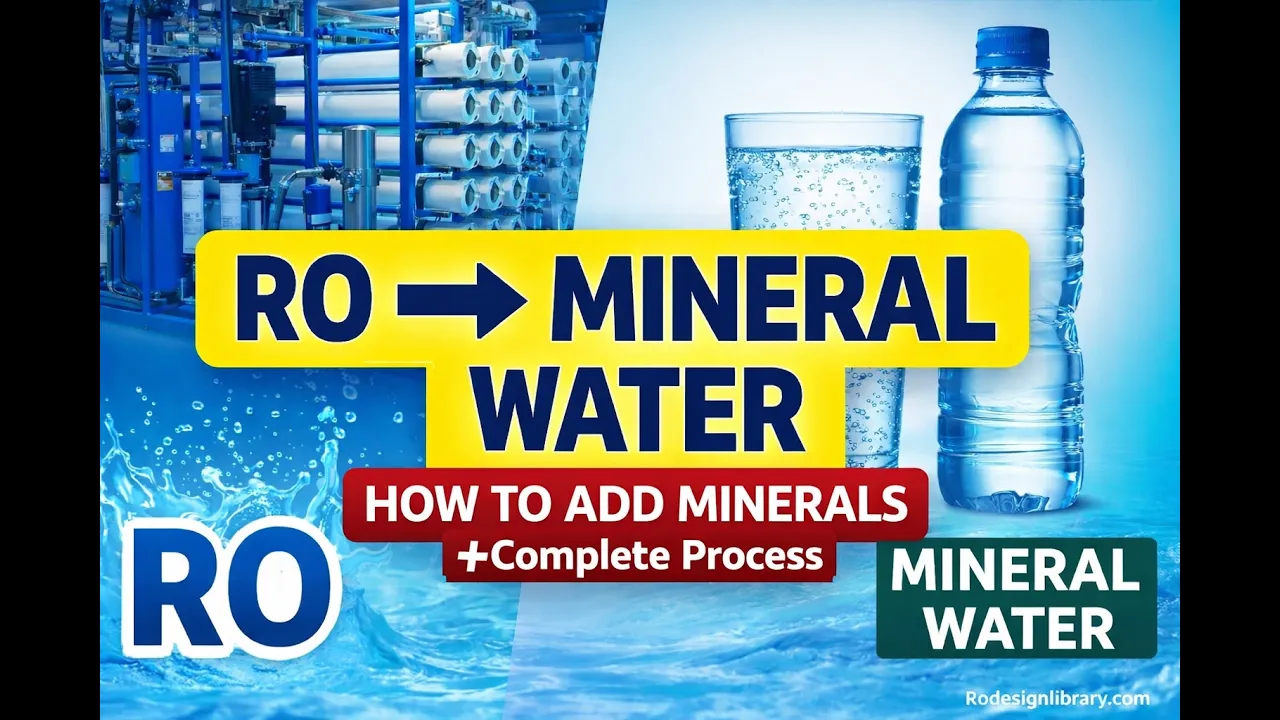

This video reviews 11 under sink reverse osmosis systems through professional lab testing, finding that tankless systems like the Water Drop G3P600 offer faster filtration and lower wastewater ratios (0.75:1) compared to tank-based systems (2-6:1), while the Aquasana SmartFlow achieved the highest contaminant reduction rates in lab testing; the best overall recommendation is the Water Drop G3P600 for tankless systems and the Aquasana SmartFlow for tank-based systems, with the US Water Systems All-American recommended for those preferring made-in-USA products.
Laboratory Assessment of 11 Under-Sink Reverse Osmosis Systems
Added:The fundamental scientific principles of osmosis, osmotic pressure, and how semi-permeable membranes function under pressure.
Common drinking water contaminants, including heavy metals (like lead and arsenic), chemical compounds (such as PFAS and chlorine), and biological pathogens.
Key water quality metrics and measurement units, such as Total Dissolved Solids (TDS), pH levels, and concentrations in parts per million (ppm) or parts per billion (ppb).
The typical stages of multi-stage water filtration, including sediment pre-filtration, activated carbon adsorption, and post-filtration.
Methods for installing, maintaining, and troubleshooting under-sink water treatment systems, including membrane replacement cycles.
The environmental and efficiency considerations of reverse osmosis, such as the ratio of wastewater generated to purified water produced.
Regulatory certification standards for water treatment devices, such as NSF/ANSI Standards 53 and 58, which validate contaminant reduction claims.
Advanced water treatment techniques that complement reverse osmosis, such as UV disinfection, deionization, and remineralization processes.
166.4K views3.7Klikes35:53Original Release: 2024-08-29
hey Sarah here from bos and Welcome to our next big water filter comparison this time featuring under sync reverse osmosis systems so similar to our top 10 countertop Ros system video today we are reviewing the 11 most promising and most popular under the sync reverse osmosis systems which as usual includes professional lab testing literally worth thousands of dollars that we conducted on each of our 11 systems in order to learn more about their real life contaminant reduction capabilities ready let's go okay first of all which are the 11 under sync AR models that we tested we have four tankless systems which means these use an electric pump to speed up the reverse osmosis filtration process so they can filter water on demand we have two water drop units the water drop X12 which is water drop's new flagship when it comes to under sync Ro systems and we have the established water drop G3 P600 next we have the simpure t1400 ALK and as the name suggests this unit makes use of remineralization and our fourth tankless Aro is the fris lifee pd600 tam3 the seven remaining systems are traditional tank-based so they don't use an electric pump which means they're much slower and they need to store purified water in a large tank for later use in this category we have the ape ro50 Essence which is not only highly affordable but also among the most popular under sync Ro systems on Amazon we also tested the aquasana smart flow the brondell H2O plus Circle and the GE gxrq18nbn what makes these three systems Stand Out are plenty of NSF certifications for contaminant reduction now you're soon going to find out if these certifications resulted in more effective filtration in our lab testing we also chose to include the US Water Systems All-American five-stage rro as well as the home Master tmhpp hydr Perfection loaded we wanted to test how those two systems would perform considering they're made in the USA and finally we have the cloud Aro this is another relatively new model that not only has a luxurious appeal but that can also be connected to your smartphone via app the app provides insights into feed and filtered water quality among other things so this was definitely something that we wanted to check out all of these 11 R systems go under the snc which means they won't take up any valuable space on your countertop and because they're hidden away from site you don't need to look at them the only part that will be visible is the AR dispenser okay how did we test and rate these 11 under sync Aros well we took the same approach we used for comparing our 10 countertop Aro systems and by the way I'll link that video here and in the description in case you want to check it out so most importantly we wanted to determine how effective each unders sync AR system is at reducing harmful water contamination because what's the point of using a water filter if it doesn't improve water quality right so one way to check a water filter for filtration Effectiveness is looking for official NSF certifications for contaminant reduction NSF certification means a water filter has been successfully tested against one or more NSF standards now essentially these standards provide standardized test testing procedures for example to find out how good a water filter is at reducing lead right so standardized testing procedures are important because they allow us to compare different water filters to one another also NSF certification can be awarded by the NSF itself but also the wqa and the iapmo so all three organizations are an accredited to do that another great thing about NSF certifications is that they are completely independent from the applying Water Filter company so in other words the company cannot influence the outcome of the certification process so results are 100% reliable at the same time not every product that lacks NSF certifications is bad especially when it comes to reverse osmosis systems and that's why we conducted our own lab testing meaning we took water samples from all 11 Ro systems and sent them to a professional thirdparty lab for analysis now we have spent thousands of dollars on this so we are really hoping that you find it useful aside from NSF certifications there is what we call NSF testing so NSF testing means a company claims they had their water filter testing against one or more NSF standards but not by the NSF wqa or I apmo so this can be valuable test data to take into account when reviewing a water filter but it needs to be taken with a grain of salt and the same goes for any other test data a company might provide we also checked each system's filtration process so the different filter stages and the filter media and methods used and if a system applied remineralization we also included that in our analysis finally we also did a taste and odor test of the filtered water obviously and that covers fil filtration performance now another important factor we use for rating any water filter is usability so for our under singar systems that meant how easy or difficult they were to install now there's also filter priming and filter replacement and once set up we also tested how long it would take each tank-based system to fill its tank and how much water you'd get so on top of that we did a pure to drain ratio AKA Wastewater test and a dispensing speed test for all 11 systems more on all of this in a bit last for usability we tested how each system performed during Everyday Use next came upfront price and long-term cost for replacement filters and then all of the other factors such as overall quality especially for the faucet since this is really the only component that you're going to see and use on a daily basis filter life and overall maintenance made in the USA or not product warranty frequent complaints from third party customers and any additional features like filter life indicators realtime TDS monitoring we installed and used the app that the cloud rro system comes with just everything you can think of now all of these factors helped us pick what we consider the best tank lless and the best tank-based under sync Reverse Osmosis System the tank-based model is also a great budget pick and if you insist on made in USA we will also have a recommendation for that later on in the video that said you can check out our full analysis of each of our 11 systems including all lab reports in this Google sheet which I will link in the video description so everything is fully transparent and as usual the sheet also contains all the product links as well as plenty of discount codes which I'll also add in the description box so don't forget to check these out in case you want to make a purchase and save a few bucks while supporting our Channel and you can also support our Channel by subscribing and liking this video it would be much appreciated and speaking of saving a few bucks allow me to quickly introduce today's video sponsor us Water Systems us Water Systems currently offers two water test kits the water Logics basic and the water Logics premium depending on which test kit you pick you can have your water professionally and independently lab tested for more than 100 analytes including Metals such as lead volatile chemicals like disinfection byproducts and salts like nitrate and fluoride the testing itself is conducted by ETR Laboratories which is the same exact lab we use for our own testing Plus testing your water with us Water Systems comes with expert consultation meaning one of the company's water experts will check your lab results with you and recommend the best product for treatment based on that from water softeners to whole house water filters now obviously you don't have to buy anything but if you do then the cost of the water test will be credited against the purchase of the recommended product now on top of that everything's backed by a one-year performance guarantee and finally us Water Systems has provided us with a discount code for 5% off any purchase you make of $199 or more the code is best5 and it can be used on uswat systems.com I'll add the code to the description below together with all the relevant links great so before we finally get to our product recommendations we need to discuss a few just quick but important things one all systems were brand new when we tested them so all we did was install each unit and prime the filter elements following the provided manufacturer instructions to the te that said for better comparability we wanted to test each of our 11 under sying Aros on the same water supply and the same kitchen sink which meant that we had to set up test and uninstall one system after the other which took us several weeks and so we had to take two water samples for each system one tap water sample and one filtered RO water sample now that was necessary because the level of impurities and contaminants in any water supply naturally fluctuates over time right so taking a before and an after water sample for each under Saro was the only way for us to guarantee that our contaminant reduction rates would be as reliable as possible and speaking of reliability we also needed to avoid TDS grape and we needed to make sure that we would take our pairs of unfiltered and filtered water samples from the same batch of water so to speak so what I mean by that is we couldn't just fill a large bucket with our raw tap water and take a sample of that and use the rest to feed one of our under synar systems right because the systems require a direct connection to a pressurized cold line so here's what we did once the system was fully set up and primed we closed its tank valve provided it wasn't a tankless system then we opened the RO faucet and let the system process enough water to make sure that all of the old water was flushed out we then took the filtered water sample directly from the RO faucet right after that we flushed my regular kitchen faucet so that no more old water was sitting in the waterline and then we took the unfiltered water sample directly from that faucet finally both samples were shipped on that same day with the sampling procedure procedure in place we are confident that our lab results are as accurate and reliable as possible but still this kind of before versus after testing isn't an exact science and you won't get 100% accurate results also please keep in mind that we couldn't test for the reduction of contaminants not present in our water supply okay aside from lab testing I've already mentioned that we also tested the filtered water for Taste and odor good news is all Waters tasted and smelled perfectly clean and the first life pd600 T3 water had a nice mineral taste to it I have to say we also tested our tank BAS systems for how long it would take them to fill we found that it took each system between 20 and 30 minutes to process and store one gallon of purified water which we find totally acceptable the only two systems that were considerably faster are the home Master at 15 minutes per gallon and the cloud Aro at 10 minutes per gallon of water filtered and stored however this wasn't really surprised because both systems use a permeate pump we also measured how much water each tank-based system could store and obviously those systems that come with a larger storage tank could store more water but still was interesting to compare theoretical with real life storage capacities the second to last test We performed was a dispensing speed test so how fast could each system fill an 8 o glass now here we allowed each tank-based system to fill first now this is important to mention because a full tank means higher flow rate from the RO faucet for our tankless systems this doesn't matter as they provide a constant flow of water so what we found here is that at 3 seconds the home Master System was the fastest to dispense 8 ounces of water followed by the US Water Systems All-American and the water drop X12 the All-American required 4 seconds and the water drop X12 4.25 seconds which is really impressive considering it's a tangless system and filters water in real time all other systems required between 4.5 and almost 9 seconds only the brondell H2O plus Circle stood out at 11 seconds which felt almost painfully slow but I'll talk more about this later in the video and by the way I should also mention that for all of these tests so our tank filling speed test our tank size test our dispensing speed test and our Wastewater test which I'll cover in a sec results are highly dependent on feed water conditions especially water pressure so my home has 75 PSI which is relatively high so if your home's water pressure is lower than that then you should expect longer tank filling times less usable water slower flow rates from the RO faucet and more waste water now this is important to consider especially if you are looking for a tank based system and finally we measured how much Wastewater each RO system would produce now here we simply pulled the drain line out of the drain saddle and diverted the Wastewater into a bucket as expected we saw the highest Wastewater ratios with some of our tank based systems the US Water Systems All-American wasted 3.25 gallons per gallon filtered and the APAC Ro s50 Essence and the GE system wasted a bit more than two gallons per gallon filtered now please note these ratios were taken with the tanks shut off and they would have been about twice as high during regular use because as the tanks start to fill they create more and more back pressure and compared to that our tankless systems had the lowest Wastewater ratios especially the water drop X12 wasting no more than half a gallon of water per one gallon purified two exceptions were the brondell H2O plus Circle and the cloud Ro now these two systems are tank-based and yet wasted very little water all right time to get to the really fun part which I'm sure is the part you've been waiting for our product recommendations ready we will start with the best tankless under sync Reverse Osmosis System which at the same time is also our number one under sync RO system overall and that's the water drop g3p 600 so if you are looking for the best under sync Reverse Osmosis System and you don't insist on tank base then we recommend the water drop g3p 600 as our number one choice although I do have to say that this was not an easy decision okay so why the water drop G3 P600 and why was it not an easy decision in our opinion the water drop G 3p 600 offers the complete package most importantly fast filtration combined with effective contaminant reduction great usability and it even has some NSF certifications The Upfront price is also acceptable and the system feels high quality but the decision wasn't easy for two reasons one none of our 11 under sync Ros turned out to be a complete failure and several did really well in our lab testing and secondly and this is our main reason there were three other systems with far more NSF certifications than the water drop g3p 600 and if you've watched our channel before you'll know that NSF certifications are one of our main focus points having said that the three systems in question had their own issues especially in terms of usability so in the end this made them fall behind the water drop for us now we will still recommend one of the systems as our number one tank-based unit in a bit but I wanted to cover the water drop g3p 600 in detail first most importantly our lab results the water drop g3p 600 could remove most impurities and contaminants entirely chlorine for disinfection byproducts copper barium lithium and uranium where we didn't see a 100% reduction was for Boron 33% strontium 94% and nitrate and fluoride at 71% minimum reduction okay so Boron 33% reduction isn't great and some of the other systems performed better here but at 94% strontium reduction the difference to the other systems achieving higher reduction rates is negligible now we assume that the same applies to nitrate because here the water drop G3 pp600 achieved 71% minim reduction which means that there were some traces of the salt remaining in the filtered water but the lab couldn't quantify how much exactly so reduction could have been in the high 90s and 71% minimum reduction for fluoride is at least as good as any of the other systems performed and finally it may be that the water drop G3 P600 leeched a very tiny amount of iron into the filtered water but if so then at 02 parts per million this was way below even the strictest guidelines and iron is only an aesthetic impurity anyway so this is absolutely nothing to worry about so what we can gather from this is that the water drop g3p 600 achieved great overall results in our lab testing with just a few of the other systems performing a tiny bit better but they had other flaws that we felt outweighed this small filtration Advantage what's more the filtered water tasted and smelled perfectly fine and we like that the system has some NSF certifications awarded by the iapmo against standard 42 for chlorine reduction standard 53 for pfoa and pfos reduction and standard 58 for the reduction of TDS fluoride cadmium chromium 6 and selenium so some really important contaminants covered here aside from official NSF certifications we also have some NSF test data provided by water drop this is mainly a list of organic compounds including pesticides and Industrial solvents compared to that most of the other Ro systems on our list aren't certified at all or for TDS reduction only now three systems have significantly more NS certifications in the water drop G3 P600 though the aquaa smartflow the brondell H2O plus Circle and the GE gxrq18nbn so why exactly did we rank the water drop G3 P600 above them for the GE which is the system with the most contaminant certified we were put off primarily by the negative customer ratings on Amazon Home Depot and GE appliances.com which is the Brand's official website at the time of producing this video the average rating on all three sites was between 3.5 and 3.7 stars with roughly 30% of ratings being one or two stars and based on what we read most negative ratings were about leaking and very slow water flow from the faucet case close I guess right as for the Bron Del H2O plus Circle customer feedback was slightly better but still not where we wanted it to be in order to feel confident recommending the product the average rating on Amazon is 3.8 Stars at the time of shooting this video with 27% so more than a quarter of ratings being one or two stars most complaints were about overall quality issues and faulty parts that stopped the brondell H2O plus circle from lasting very long and extremely slow flow from the faucet and slow flow is something we can confirm ourselves the brondell was the slowest system in our comparison in that regard so in our dispensing speed test it took the system 11 seconds to dispense one cup so 8 ounces of water 11 seconds feels really slow and this will probably only get worse as the filter elements age and on top of that remember that the feed water pressure in my home it's pretty high so in case you start at a lower pressure chances are that your brondell will be even slower than mine it's also worth noting that neither G gxrq18nbn or brondell h2l plus Circle came out on top in our lab testing because that's where the aquaa smartflow did best the Aquas smartflow also has the second most NSF certifications out of our 11 under syncros and that's why it's our number one tank-based system however the Aquas smart flow isn't without its flaws either but I'll get to that once I'm done with the water drop G3 P600 because there are a few more things worth mentioning such as the fact that the system is not only very effective removing water contamination it also wastes very little water doing so in our Wastewater test the water drop G3 P600 wasted 75 gallons of water per 1 gallon purified now to be fair this doesn't take into account any water wasted during flushing cycles that many tankless Ros perform every once in a while we also liked the filtration speed 7 Seconds to dispense one cup or 8 O of water among our tankless systems only the water drop X12 was faster Also let's not forget that a tankless RO system won't slow down as you continue dispensing water because there is no pressurized storage tank that could lose pressure and you can't run out of filtered water either because again no tank so aside from saving space that's the beauty of using a tankless RO with the G3 P600 you simply open the dispenser which triggers the system to activate its electric booster pump and filtered water is produced on demand and at a relatively fast rate in other words the system is very easy to use and it's also very easy to set up and Prime to install this system I first turned off the cold water supply valve then I disconnected the cold water pipe and installed the feed water adapter I reconnected the cold water pipe after that next I needed to install the faucet so for our purposes with testing out multiple units I ended up taking a piece of plywood cutting it down and painting it and that allowed me to drill differ size holes for all of the different units we were testing to install the faucet for this system I simply fed the tubes through the hole placed the faucet body flush against our mock countertop then I screwed the mounting washer on and made sure we had a snug fit next I drilled a hole in one of the drain pipes under my sink and I installed the drain saddle now I should mention here that the saddle was slightly too large for the sink drain pipe but I could easily fix this with using an extra piece of flexible foam board I placed the RO system housing under my sink and then I connected all of the tubings everything is colorcoded so it's very easy to follow the directions here one minor thing I want to mention here is that when installing tubes I found that compared to the other systems I had to use a little more elbow grease and just really push them in and make sure they were in there snugly after that I connected the faucet power cord into the faucet connector and I connected the power adapter as well I installed the filters with a simple twist motion then I turned on the cold water supply valve and the feed water adapter and plugged in the power adapter I waited for 5 minutes allowing the system to flush automatically then I turned on the RO faucet and allowed it to run for 30 minutes until the display screen showed a TDS reading then the system was all set up and ready to go and I should mention that the whole setup process here is pretty similar compared to many of the other Ro models that we tested during installation you'll also notice that the water drop G3 P600 looks and feels wellmade with a Sleek design and a nice faucet the faucet also displays filtered water TDS in real time now plus there is another TDS display on the system module so this allows for better monitoring and if you also pay attention to the filter life indicators on the RO faucet and the system module you'll know exactly when you need to replace one or more of the filter cartridges replacing them modular filters is also incredibly easy with no need to shut off the feed water and screw any filter housings each cartridge can be removed and installed with a single turn completely toolsfree what about replacement filter costs based on the average filter life of 550 gallons or 6 months for the pre-filter element 2,200 gallons or 2 years for the Aro membrane and 1,100 gallons or 12 months for the postfilter we estimate around $200 in annual expenses which we find totally acceptable and you can save 5% with a filter subscription the regular price for the water drop G3 P600 right now is $539 which seems reasonable and it's often on discount on top of that we were able to negotiate for a special discount code because if you use our code when you purchase the water drop g3p 600 you'll get 5% off on top of any water drop sale that's currently running so let's say there's currently a $100 sale on the g3p 600 if you use our code you get those $100 off plus an additional 5% so don't forget anything else yes we have a one-year limited warranty and helpful customer service any additional cons that I haven't mentioned yet just a couple minor things one we found contradicting information on the water drop website about the g3's exact filtration process and some people complained about the system being noisy all right and that's it for the water drop g3p 600 so in summary it's our favorite under sync Reverse Osmosis System as it achieved really solid filtration results in our lab testing filtered wire quality was perfect from an aesthetic point of view the system is backed by some important NSF certifications and additional NSF testing we have a fast and tankless filtration process that produces very little waste water and the build is high quality it's easy to install Prime use and maintain and upfront price and long-term cost for replacement filters are acceptable great now besides the g3p 600 there's another under sync AR system by water drop that I want to cover really quick the X12 as mentioned the video introduction the X12 is water drop's new unders sync Aro Flagship and it was a part of our testing and achieved great and very similar filtration results to the G3 The Taste and odor of the filtered water was Flawless too also the water drop X12 beats the G3 in terms of filtration speed at 4.25 seconds to fill an 8 O cup the X12 is almost twice as fast and it wastes 33% less water the X12 is also easy to set up and use thanks to this really cool faucet that allows you to dispense anywhere from 5 to 64 oun of water or continuously and Fs it aside the water drop X12 has a very Sleek design as a whole and the system looks and feels wellmade maintenance as simple as with the G3 P600 thanks to the modular filters that last between 6 months and 2 years and thanks to the TDS display and filter life indicator on the faucet you even get a 2-year limited warranty instead of one year but while all of this sounds great the water drop X12 is also very very expensive at a regular price tag of $1,299 $ so even if the system is often on discount and we we do think that it's a great product we didn't want to make the X12 our number one recommendation for broader audience in case you don't mind the price tag however make sure to check it out and don't forget to use our discount code because as with the g3p 600 we were able to obtain a special discount code from water drop that gives you an additional 5% off on top of any sale that's currently running all right off to our next recommendation the aquasana smartflow the aquasana smartflow is our number one tank-based under sync Reverse Osmosis System it's also a great budget pick and the aquasana smartflow could achieve the best results in our lab testing and has the second most NSF certifications among our 11 under sync Aros right after the GE so then why is it not our number one choice again that was a tough decision and it was mainly based on customer feedback and our own experience using the system but first things first let's start with the features in pros and then I'll get to the cons so unlike the water drop g3p 600 and the X12 the aqua smart flow doesn't use an electric pressure pump instead it works entirely based on your home's water pressure which means that filtration is extremely slow so the system uses a tank to purify and store water for later use how much water in our testing we could roughly dispense 1.8 gallons of usable water before the tank was basically empty and the system required around 43 minutes to process and store those 1.8 gallons personally I think that this is plenty of water and should suffice under regular use that said remember that the amount of usable water you'll get depends on several factors first and foremost the water pressure in your home we tested at 75 PSI also note that as you dispense more and more water the pressure inside the RO tank will decrease which means the faucet flow rate goes down so with a full tank you start at a relatively high flow for the aquasana smart flow that was 5.25 seconds to dispense 8 ounces in hour test so really good but with an almost empty tank the flow becomes more of a trickle and that's just how tank-based r systems work next let's discuss the Aquas smart flows lab results apparently we have the most effective filtration process of all 11 systems 100% reduction of chlorine all four disinfection byproducts copper barium Boron zinc strontium and uranium the only reduction rates below 100% were for fluoride and nitrate but fluoride was reduced to 82% and nitrate a minimum of 76% so still really really good and if you add to that all the NSF certific that the aquaa smart flow comes with it's no surprise that the filtered water tasted and smelled perfectly clean NSF standards 42 53 58 and 401 cover the reduction of more than 80 undesirable impurities and contaminants aquasana has also provided a performance data sheet with the overall reduction rates such as chlorine and chloramine 96.8% reduction asbestos 99.9% cyst 99.997% lead up to 99.8% Mercury 3 95 to 97% dozens of voc's up to 99% arsenic 5 96% cadmium 95.6% fluoride 90% chromium 6 98% nitrate and nitrite 78% pfos and pfoa 98.4% radium 98% TDS 96.4% and so-called emerging contaminants including Trace Pharmaceuticals pesticides microplastics and BPA most around 90 to 9 6% so all of this is really impressive and makes the Aquas smart flow the best system in terms of filtration performance what else did we like the pure to drain ratio to produce one gallon of purified water the Aquas smart flow only wasted 875 gallons in our test but again this was with the tank shut off so during Everyday Use you'll definitely waste more than that think back pressure in the end aquasana says that under normal conditions you'll waste around 3 gallons of water per one gallon purified well this sounds like a lot but for a tank-based RO system without pump this is actually really good now other systems waste up to five or six gallons or even more and if you don't like the thought of wasting that much water we recommend going tankless more Pros about the Aquas smartflow you can choose from four different faucet designs the system is easy to use and it's easy to replace the modular filters which last for 365 gallons or between 6 to 12 months and you get a 2-year limited warranty and 90day satisfaction guarantee which brings me to our cons our main concern concern is that the aquaa smart flow doesn't seem to be of the same high quality as most of the other systems especially the plastic valve on the storage tank feels like it could break quite easily also while the system was mostly easy to set up we had a tiny leak at the faucet base not from the air gap that we couldn't fix and what's more some of the tubing was rather short and that made it kind of difficult to make the connections but once it was set up at least the filters were easy to Prime another concern has to do with third-party customer feedback so while the overall rating for the Aquas smartflow is better than with the GE and the brondell with an average rating of 4.1 stars on Amazon and aquasana.com we read about issues with leaking and slow flow more often than we'd liked one minor con is that there's no filter life indicator and last but not least based on our lab results the remineralization filter doesn't seem to have worked at all now to be fair this applies to all the systems we tested and that make use of remineralization and I'll address this at the end of the video but for the aquasana smart flow we would advise you to Simply skip the remineralization filter this will save you around $60 a year and lower replacement filter cost to about $300 annually which is still more on the high end compared to the competition at least you can save 15% with a filter subscription and speaking of cost the regular price for the Aquas smart flow is currently $449.99 but using our discount code you get 50% off plus free shipping definitely suited for people on a lower budget so don't forget okay and that wraps up the Aquas smart flow so in summary the system had the best filtration results in our lab testing it's among the top competitors in terms of NSF certifications filtered water taste and odor was perfectly clean the system provided us with plenty of water and fast we saw a good pure to drain ratio and the system is easy to use and maintain but other people had issues with slow flow also our faucet leaked and several other people complained about leaking as well we have a lower quality build and REM mineralization didn't really work so we'd skip that to save on replacement filters upfront price is budget friendly if you use our discount code okay I have one final recommendation for those of you who prefer products made in the USA or maybe you want a traditional tank-based under the synar system but you don't want to deal with the potential issues that the Aquas smart flow has in both cases I want to recommend the All-American five-stage Ro by us Water Systems now obviously the first thing I need to address is the fact that us Water Systems has sponsored this video and now we're recommending one of their products well that's true but the reason why we recommend the All-American is that it performed really well especially in our lab testing remember that you can check the results yourself if you want and it's the only system among our 11 under sying Ros that's truly 100% made in the USA because there's also the Hem tmhpp hydrop Perfection loaded that did really well in our testing but this one is made in USA except for its UV module and storage tank and we would assume that the storage tank is probably the one component that most people looking for maid in the USA are most concerned about so while our testing showed that the home filtered most contaminates effectively and that it has very high tank filling speed and provides the fastest faucet flow you have to go with All-American if you want 100% americanmade besides installing the home master was not as smooth as with other systems and so we think that it was outperformed here by the way I'm also not saying that the US Water Systems All-American F stage Ro is the only unders sync unit that's made in the USA no it's just that we cannot test every single model and again the All-American did great and we feel good recommending it so here's the breakdown in our lab testing the system could reduce almost all contaminants to 100% 98% stonum was an almost perfect score as well for nitrate we saw 79% minimum reduction so really good 75% fluoride so also pretty good we also saw no reduction in zinc but the initial zinc level was very low at 01 PPM and like iron zinc is only an aesthetic impurity so this is absolutely nothing to worry about what else filtered water taste was superb no odor the All-American was also the second fastest to dispense water at 4 seconds to fill one cup installation and filter priming as simple as it gets there's even a handy tube cutter included great for troubleshooting and in addition the All-American was easy to use and all parts including the faucet feel sturdy and wellmade you also have four faucet options to choose from when it comes to replacing filters you should note that we have traditional filter sumps which require a bit more effort compared to replacing modular filters so you need to unscrew the filter sumps to access the filter cartridges filter life is 6 to 12 months and 3 to 5 years for the AR membrane All In All We estimate $95 to $185 in average annual replacement cost initial price point for the whole system is around $600 which includes a 2 to 5e limited warranty now $600 is more than with other similar models but I guess that's because it's made in the USA and so this seems quite reasonable what about cons we couldn't find NSF certifications or any other test data for contaminant reduction and the system had the highest Wastewater ratio in our test 3.25 gallons wasted per one gallon purified with a tank shut off so we estimate 5 to six gallons wasted under normal use higher waste water also means tank filling speed is more on the low side and although the All-American comes with a large 4 gallon storage tank we could only get 2.06 gallons of usable water still a lot and more than with the Aquis smart flow but maybe not as much as expect when you read 4 gallon tank lastly two minor things there's no filter change indicator but there's a TDS meter included so you can use that to determine the ideal time to replace the AR membrane and our package missed the tank stand and that's it if you are interested in the US Water Systems All-American five-stage Ro you can check our Google sheet for the product link and don't forget to use our 5% discount code to be used on uswat systems.com great we made it these are all the product recommendations I have for you today but before I end this video I I said I would address remineralization so out of our 11 undering Aros six featured a remineralization stage but we didn't like the results with any of them because contrary to what many people believe remineralization isn't primarily about water PH but about adding calcium magnesium and overall alkalinity back into the RO water and that will then also take care of the pH level but none of our remineralization systems reach the recommended calcium level in the purified water so it looks like some calcium was added back but not Enough by any means and only the Sim pure could add enough magnesium to barely reach the minimum recommended threshold results were a little better for alkalinity but still far from great and so if you are serious about remineralizing your RO water we'd recommend you do it manually using a mineral blend okay cool remember that you can check out our full analysis of all our 11 under sync reverse osmosis systems including lab reports in our Google sheet also check the sheet and the description box for our links and discount codes in case you want make a purchase we also have a video featuring the top 10 countertop Ros here on our channel in case you're interested in that and please consider subscribing and hit the like button if you want more content like this also feel free to ask questions in the comments below or share your own experience with these or other under sync R systems you can also let us know which water filters you would like us to review next until next time
Up Next

5:24
Sacred Geometry in Islamic Architecture | Dr Keith Critchlow
@CambridgeCentralMosque
17.5K views•2015-12-20

26:22
Walking in the City: Urban Rituals and the Flâneur in Contemporary India
@PSBTIndia
1.9K views•2016-08-02

9:49
FastAPI vs Flask vs Django: Choosing the Right Python Web Framework
@TechWithTim
302.5K views•2024-05-26

1:42
Game of Thrones Opening Credits: A Cinematic Analysis
@gameofthrones
46.3M views•2011-04-18
Related Study Plans & Knowledge Roadmaps
Structured learning paths in General & Interdisciplinary Studies
general-studies
Artificial Light: History, Tech & Human Impact
01The Pre-Electric Era: Fire, Oil, and Gas Lighting
02The Incandescent Revolution and Grid Electrification
03Gas Discharge and Fluorescent Illumination
+ 3 more learning modules
14h6 modules
Explore Roadmap
general-studies
Elevator Engineering: History, Physics & Cities
01From Hoists to Safety Brakes: The Dawn of Vertical Lift
02Hydraulic vs. Traction: The Engineering Physics of Elevators
03Modern Speed, Safety, and Algorithms
+ 2 more learning modules
12h5 modules
Explore Roadmap
general-studies
Rubber: Material Science, History & Geopolitics
01Origins of Natural Rubber & Mesoamerican History
02The Chemistry of Natural Rubber & Vulcanization
03The Geopolitics of the Rubber Boom & Colonization
+ 2 more learning modules
12h5 modules
Explore Roadmap
general-studies
Containerization: Evolution, Logistics & Trade
01Ancient Trade & Bulk Cargo: Amphorae to Barrels
02The Industrial Revolution & Cardboard Packaging
03The Containerization Revolution: Malcom McLean
+ 2 more learning modules
12h5 modules
Explore Roadmap