





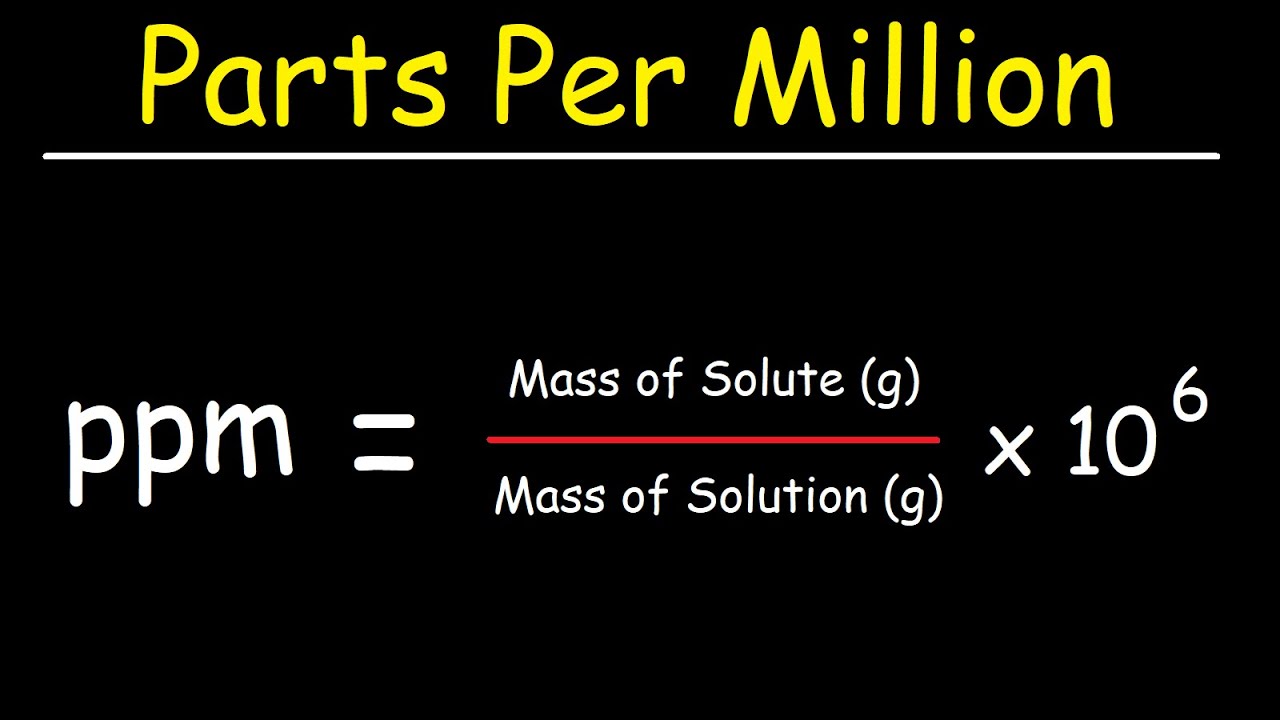















In hydroponics, pH (potential of hydrogen) measures acidity/basicity on a logarithmic scale where each unit represents a tenfold difference, affecting nutrient absorption rates; EC (electrical conductivity) measures dissolved material concentration directly in millisiemens per centimeter; TDS (total dissolved solids) is calculated from EC using conversion factors (NaCl ×500, 442 natural water ×700, KCl ×500-570) and expressed in parts per million (PPM), meaning the same EC reading yields different PPM values depending on the meter's conversion factor; therefore, EC provides more consistent measurements than TDS, and growers should understand their meter's specific conversion factor for accurate nutrient solution management.
Understanding pH, EC, TDS and PPM in Hydroponics
Added:Basic principles of hydroponics, including how soil-less systems deliver water-soluble nutrients to plant roots.
Fundamental chemistry concepts, specifically how salts dissolve into ions and conduct electricity in water.
The mathematical concept of concentration and ratios, particularly understanding parts per million (PPM).
An introductory understanding of the pH scale as a measure of acidity and alkalinity.
Practical techniques for correcting nutrient solutions, including the safe application of pH adjusters and concentrated fertilizers.
Understanding nutrient lockout and diagnosing physiological plant deficiencies caused by improper pH or EC levels.
Source water quality assessment, including how to account for starting EC/TDS (e.g., hard tap water vs. reverse osmosis water).
Designing automated monitoring and dosing systems using digital pH and EC sensors for continuous reservoir management.
531.3K views7.4Klikes22:07Original Release: 2017-11-21
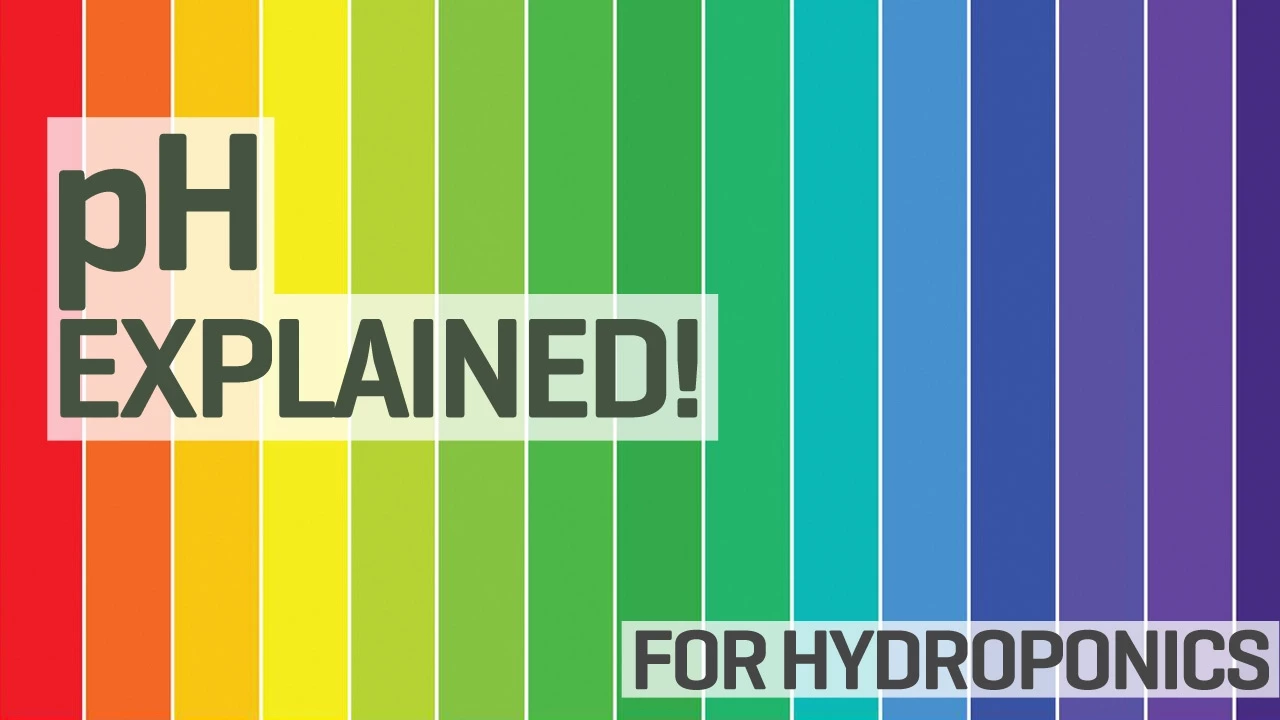
what's up everyone Kevin from epic gardening here today we're talking about something that's been confusing to I think a lot of hydroponic growers whether they be beginner or even intermediate and so what that topic is is EC electrical conductivity TDS total dissolved solids ppm parts per million pH what do these all mean why do they relate to each other how do they relate to each other which should I be using and when and what and why all of these terms can be very confusing especially if you're coming from a soil background and you haven't done a lot of hydroponic growing or maybe you're just a beginner in hydroponics so you've never gardened at all well these are confusing topics and to illustrate what these are I'm gonna use two different pieces of gear so the first is going to be this pH meter from a pair of instruments I believe it's the pH 20 pH tester so they set this out thank you very much to them and then second another piece of gear from apero is going to be the P C 60 and so this is a combo meter similar to something that you might get at blue lab or Hannah and this is the PC 60 so this will do pH EC TDS parts-per-million etc they can also do a couple other things so we're gonna get into what all these terms mean in just a second so we're gonna do some cool stuff in this video where I explain all those pieces of terminology and then how they relate and what you really need to know about them to get the most out of your growth because if we're growing hydroponically we want as much harvest as much yield as we can get so let's go ahead and get into it so the first thing we're gonna cover is pH and as you might already know it stands for potential of hydrogen and it measures the acidity or the basicity of a particular solution which is very important in hydroponics because of something I'm going to get to right after this now it is a logarithmic scale which means that a pH of 4 is actually 10 times more acidic than a pH of 5 not 1 times more acidic and that is why it is so very important to calibrate your pH because if you're off even by a couple points just maybe a few tenths a point that can mean some serious issues for your plants and we're gonna get to why in a second so here's an example of a pH scale this shows you you know neutral which is 7 which is freshly distilled water interestingly enough saliva is neutral then as you go upwards on the scale you see sea water milk of magnesia lie at the very very high end of the basicity and then sulfuric acid Tomatoes coffee other things on that more acidic side now why does it matter that our pH is in a certain range well the reason why and this is from 1947 is this is the absorption rate of different nutrients based on the pH range so as you can see at around 7 you get pretty good absorption of most of these nutrients however if you go into a slightly acidic zone some more around that 6.5 to 6.8 range you can see the absorption of iron is a little bit better as you go so as you go from 7 right look at iron you go from 7 down to 6.5 down to 6 irons absorption gets better magnesium's gets worse calcium's gets worse and so your what you're trying to do is you're trying to find a range in which most of the nutrients have high absorption and availability rates so that is why pH is so so important now let's get to EC what is e C EC stands for electrical conductivity and it measures or its measured in m/s per centimeter or that's milli Simon's per centimeter which you don't really need to know too much about just know that that's what the measurement is in and what it's telling you is how much dissolved material is in a solution which brings us to the next piece of terminology that we have to cover which is TDS total dissolved solids so TDS it is measured in parts per million or ppm so TDS is the measurement ppm is how that measurement is expressed how many dissolved solids are in a solution is expressed in ppm so if you have let's say 500 ppm that means there are 500 parts of non-water in a million parts of the solution itself and this is actually something that comes from ICI so TDS is secondary to EC you cannot get it without getting an EC reading first which is something that most people don't know you have to take EC first the thing is many meters just do that on the internal components of the meter they don't tell you that and so if you're getting a TDS meter you're actually getting an EC meter that's applying a certain conversion factor and this is where it starts to get a little confusing because there are multiple conversion factors that are at play here and so the first one we'll talk about is the NaCl conversion NaCl in case you didn't know that's sodium chloride which is just salt and the way that that one's applied is they take the EC and millisiemens and multiply it by 500 so let's say your EC was 2.0 well times 500 you have in a thousand ppm based on the NaCl conversion now the next one is the 442 natural water conversion which is a trademarked term and some people say this is actually the closest the closest approximation to a hydroponic solution and it's comprised of 40% sodium sulfate 20% sodium chloride and then 40% sodium bicarbonate and the way that this one's calculated is it's approximately 700 although that that range does vary a little bit but just for explore explanations sake at 700 times EC and mil assignments so let's say we had that 2.0 EC again now our ppm will read 1400 now the next one is KCl potassium chloride this is just another way to do it it's anywhere from five hundred to five hundred and seventy times the EC so what you're starting to see here is that the exact same EC reading can give you different ppm readings and that's why this topic can be very confusing so here we see here is an EC in in millisiemens 1.0 misses micro Simon's then you have the salt the 442 and the KCl conversion factors giving you drastically different readings here and so if you don't know what conversion factor your meter is reading you're not going to be making the best decisions as far as how concentrated your nutrient solution is because as you can see these aren't even the only three conversion factors there are more and so number one you have to know what the conversion factor is of your meter and then number two maybe it makes sense just to use EC because these numbers don't ever change the EC reading is the EC reading how it is transmitted into a ppm reading will depend on the meter and all these different conversion factors and so in summary this means the same EC reading gives you drastically different TDS or ppm readings based on the conversion factor of the meter you are using here we have the pH 20 from apéro and it's a very solid unit very simple elegantly designed we can see it's got temperature as well and what does it come with it comes with a 4.0 buffer solution and it comes with a 7.0 buffer solution and so you can calibrate your meter that way you've got a handy little thing here little holder and then some instructions and then this is what's neat about this kit at least just because when I first started out in hydroponics the fact that it's laminated it's a small thing but in my opinion it does matter because you're working with liquids here and they're not just water I mean you're working with some pH downs a pH up so this is a pretty handy little instruction guide here we have the bigger beefier p.c 60 so this will do pH conductivity total dissolved solids and salinity which is very neat as you can see it comes up a little bit more here's the meter itself you've got a pretty standard design it's the same really as the PC sixty and in appearance but there's some unique stuff that's going on with this one that makes it in my opinion probably the one you would want if you're looking for one because why I get a pH meter when you can get a combo that does everything and so you've got a 7.0 calibration solution a 4.0 calibration solution for pH and then you have a 12-point 8 8 milli Siemens per centimeter solution and that's for conductivity calibration and then you also have a 14 13 1000 for 13 solution as well for calibration boom then we've got this is neat so they have separate calibration bottles so you never mix only put the seven in this one only put the four in this one and then the same goes for the EC calibrations there's the twelve point eight eight and here's the 1413 so that's a handy little thing I mean I I know I've been guilty of miss calibrating or mixing bottles sometimes so that's something that's pretty neat and then you've got a soaking solution as well and then as with the other meter you also have this handy laminated instruction book that's pretty nice and so let's go ahead and figure out how to use these babies so before we actually get into measuring the pH with the pH 20 tester here from a para we actually have to make sure since the first time I've used it that it's in good working order and so the first thing you have to do is you have to take the pH 4.0 and pour it to the fill line in the probe cap so maybe just carefully pour it there with this stuff I always tend to be a little clumsy than I would like and then what we'll do is we will just place this down carefully cap it make sure that there's no air bubbles in there and we have to let this soak for 15 minutes now that the meter has been soaking it's time to calibrate it so what we're gonna do is take the 7.0 solution we'll long press on the cow button till we get to the cow measurement and then we're going to place some pH 7.0 in here and let it sit and what we're looking for is the smiley face so you can see that little dot that just popped up right here hard to see it there we go now it's time through short press will drop back out into the normal range so now we've calibrated 1.2 7.0 then we need to that rinse and distilled and rinse again and we're gonna go with the 4.0 now so now that we've done 4.0 a little em shows up which means that we are in calibration mode we're gonna long press again now we're in calc and we're going to dump in the 4.0 solution pop it in and now we're waiting for a smiley there we go it recognized that it was a 4.0 and we have the smiley face and so now we can short press and get out now it comes time for an actual measurement so this is some new water and we're gonna go ahead and see what it reads this is just tap water but looks like we are somewhere around six point eight six point nine and we get the smiley face on there which might not be easy to see on the camera so we're just about a 7.0 and so I want to show you just how quickly this can adjust so here's some pH up I'm just gonna dump a tiny bit in here and this is of course not how you should actually do it but for the sake of the example I'm gonna dump a bunch of it in there and let's see what happens we're seeing a seven point three seven point eight eight point oh eight point one as you can see that was a ton of pH up so this solution is gonna become much more basic now but that's how quickly a meter like this can react and so this one it gives you the temperature it gives you the calibration option so you can do one two or three point calibration and then of course it gives you the pH to the tenth which is a fantastic little tool so if you're just looking for a pH meter and you want something that's rock-solid waterproof easy to test easy to store pretty good option for you right here the PC sixty which is this one here actually has to be calibrated and started in a different way and so it's similar design there's a similar fill line here but for this one what we need to do taking care not to damage the sensor which is the lifeblood of this whole thing is we need to take some KCl soaking solution which is what you would store probe in and fill it up just to the point where it would hydrate this glass bulb here but not to the point where it would hit these black sensors and so the fill line refers to calibration solution does not refer to soaking solution so you have to make sure that when you are hydrating the probe you don't fill it up all the way so just a tiny little bit enough so that it hits the glass bulb but does not hit the rest so I'm just gonna very carefully make sure that I don't go over so it looks like I'm right about at the point I want to be maybe a tiny splash more and then I have to let this soak for 15 minutes as well when you are storing this during the soaking section you need to make sure that you don't knock it over because if you knock it over it the water line will hit that those black sensors which is exactly what we don't want to happen so make sure you put in an area where it's not going to be disturbed or touched and then let it be for 15 minutes and actually recommendation wise is actually overnight but for the sake of this video I'm gonna go with 15 minutes and then we'll calibrate from there or the conductivity meter which also does a lot more than just conductivity what we have to do is calibrate the conductivity and so what we can do is switch modes so we're going from pH there's conductivity there's total dissolved solids and their salinity so there's four different modes there but I'm gonna go ahead and go to conductivity right now and then we're gonna go ahead and calibrate so we're going to take the twelve point eight eight millisiemens solution and dump it into this little calibration bottle right here there we go and we are going to long press the calibration for conductivity it's okay if we get an error we just have to pour a little bit more in there there we go just has to fully soak and it is calibrating as we speak getting pretty close as you can see this is a backlit sensor so it's pretty nice and what we're waiting for is that smiley face that's gonna let us know it is stabilized and there we go we have the smiley face and we're gonna hit measure to get out and we're out okay so we're back out and now we have to dip the probe into the 14:13 solution and so we're gonna go ahead and do that go back into the long press to get back into calibration mode for the stuff in the bottle and then sink it and see it's recognizing that it's 14 13 right there there it goes it's finding it it's finding it it's finding it and now we are at a stable reading or the second calibration of the conductivity and so what I can do now is back out and we're out and then what I need to do is give it a quick rinse in this distilled water and double-check that we are actually at the right reading so I'm gonna put it back into the twelve point eight eight and see what it reads and so we are more or less there and it's slowly rising so I'm gonna go ahead and say that we have now calibrated it for EC as well so I'm pretty confident gonna stabilize at twelve point eight eight now I want to show you everything that this meter can actually read because it's a pretty cool piece of equipment and not something I've seen in a handheld for a while so let's go ahead and set our settings and now that we have done that we are in and so we can see it switches through different modes and I'll let me move this a little closer so you can see it right here is the starting mode we're at pH right and so you can see we're at a pH of about eight and our temperature which of course you can change the Fahrenheit if you wish and in contrast to the pH twenty tester this has another level of accuracy it goes down to the hundredths instead of the tenth and now let's go ahead and switch it over to conductivity and so here is the electrical conductivity and micro Simon's and so we have 608 now let's go over to the total dissolved solids there is the total dissolved solids reading right there and then finally we have the salinity reading and so there's a lot of different ways a lot of different info you can get out of this little meter which is pretty neat I'm also going to run you through a few of the setting modes that this tool has so first of all you have the pH buffer standards that is default to USA next you have if you wanted to automatically lock or not next you have the backlight feature so I've had that set to on next you have the temperature compensation factor and that can be anywhere from zero to four percent and then finally or not finally but most interestingly in my opinion is the tds factor and that's what we talked about in earlier in the video do you want it to be 0.5 do you want it to be a 1 and that's gonna depend on the actual conversion factor that you prefer to use and you're used to if you use TDS and you don't use EC and so that is very handy that this meter lets you set your own conversion factor so you can you can use what you're used to instead of just using whatever the meter has next you have the salinity unit and then you have the temperature unit that you want I'm gonna change mine to Fahrenheit because I'm here in the United States and then finally you can reset to back to factory defaults so there's a lot of cool settings in here let's go ahead and get back out to the main section and it's it's a pretty neat little tool I mean this is a relatively inexpensive meter in comparison to some of the other ones especially for what it does for different readings including temperature so technically I guess 5 and at a variety of conversion factors it's a pretty neat little tool and I'm super thankful to apéro for sending these out so I can teach you guys all this stuff but here is a quick example of how the EC the conductivity will change based on adding nutrients so here I have some general hydroponics flora micro which is one of the three in the three-part nutrient that I recommend and we can see that we're looking at a 600 east see in micro Simon's I'm just gonna dump some in here boom that's a lot boom immediately we see a jump and that's because the conductivity is increasing and so what I'm gonna do is I wish I could swirl this this is a bit dense of a material but you can already see that the micro Simon's have over doubled and that's how quickly that the meter responds and this is what you're working with this is how you are measuring the nutrient solution you're adding stuff like this in nutrients of any kind doesn't really matter what brand you use and based on that you're getting a reading of how much solution is in there how much how concentrated is your nutrient solution and then what does that mean for your plants and it's going to depend on the plant but based on this and this you have a really good understanding of what you are feeding your plants in a hydroponic solution well there we have it that is most of what you need to know about pH EC TDS parts per million all the different conversion factors why it's all important and what it means for your hydroponic grow now if you see something that you have a question about leave it in the comments and I will do my best to answer it for you as I always say I am a learning gardener just like everyone else who watches the channel so every now and then I make mistakes every now and then I don't explain things in the most articulate way possible and I try to clear that up in the comments because sometimes it started talking on camera like this but anyways thank you so much to a para for sending these meters out again that's the pH 20 and the PC 60 pH 20 measures pH temperature PC 60 does TDS EC salinity etc so they did sponsor the video and I'm thankful that they sponsored it so I was able to put in the time because this is probably the most involved video I've done on the channel so far and it took me a ton of time to get this done with the graphics and the live filming and all that stuff and then the editing so thank you so much to them and thank you to you for watching this is a nerdy topic this is getting into the weeds of hydroponics so I'm thankful for you for watching and if this is a type of stuff that you like to see let me know and the only way I really know is if you comment you like the video or if you subscribe to the channel and I can tell you know kind of what people want to see and why they want to see it so do that let me know until next time everyone good luck in the garden and keep growing and keep measuring with the correct methodology see in the next video [Music]
Up Next

74:57
Mastering pH Measurement: Accuracy, Calibration & Electrode Care
@hachcompany
1.6K views•2025-06-25
83:56
Biocatalysis and Catalysis in Islatravir Synthesis | Merck Webinar
@SCIwheresciencemeetsbusiness
675 views•2020-10-08
10:06
1H NMR: Determining Number of Peaks from Structure
@MSJChem
59.2K views•2017-04-06

17:31
Edible Water Bottles: A DIY Guide to Sodium Alginate Spherification
@ryan
10.5M views•2019-06-21
Related Study Plans & Knowledge Roadmaps
Structured learning paths in Chemistry
chemistry
Nuclear Chemistry: Decay, Meds & Fuel Cycle
01Introduction to Nuclear Structure and Radioactivity
02Decay Dynamics and Kinetics
03Radiation Interaction and Detection
+ 2 more learning modules
24h5 modules
Explore Roadmap
chemistry
Supramolecular Chemistry: Forces & Machines
01Foundations of Chemical Bonding and Intermolecular Forces
02Introduction to Host-Guest Chemistry
03Thermodynamics and Dynamics of Self-Assembly
+ 2 more learning modules
16h5 modules
Explore Roadmap
chemistry
Photochemistry: Excited States & Reactions
01Foundations of Light-Matter Interactions
02Molecular Orbitals and Electronic States
03Photophysical Processes and Jablonski Diagrams
+ 2 more learning modules
18h5 modules
Explore Roadmap
chemistry
Coordination Chemistry: Bonding & Properties
01Introduction to Transition Metals and Ligands
02Crystal Field Theory (CFT) and Geometry
03Magnetic Behavior and Spin States
+ 2 more learning modules
14h5 modules
Explore Roadmap