























According to Dr. Andrew Huberman, a neuroscientist at Stanford University School of Medicine, learning skills faster requires engaging the upper motor neurons through four key steps: (1) generate maximum repetitions safely in each training session, (2) make errors during practice, (3) focus intently on those errors to activate the frontal cortex and increase upper motor neuron firing, and (4) repeat the cycle. Errors trigger neuroplasticity by releasing adrenaline and creating psychological agitation, which paradoxically enhances focus and learning. Additionally, intermittent rewards (rewarding some successful trials but not all) are more effective for skill reinforcement than constant rewards, as this mimics strategies used in gambling to maintain engagement and motivation.
How to Learn Skills Faster: 4 Neuroscience Steps by Dr. Andrew Huberman
Added:let's talk about the Neuroscience of learning skills in particular how to learn skills faster there are four steps in motor sequence generation which is just fancy language for how to move our limbs in particular ways we have upper motor neurons neurons are just nerve cells those are in our brain in an area called the motor cortex those send little wires that we call axons down to our spinal cord and in our spinal cord we have another set of neurons called the lower motor neurons the lower motor neurons send their own little wires out to the muscles and they dump chemicals on those muscles to make the muscles contract and muscles of course move Limbs and body segments like our torso there's another player in this called the cpgs or Central pattern generators these are really cool neurons they are clusters of neurons scattered throughout our spinal cord that can control rhythmic movements that we already know how to perform so if you already know how to walk dance play tennis run your central pattern generators are handling those and they handle that without the involvement of the upper motor neurons now the upper motor neurons can take control of any of those things that we already know how to do at any moment so for instance if you can already walk but you want to slow down or speed up your pace you activate that slowing down or speeding up with your upper motor neurons but then you'll notice your central pattern generators will just take over you don't have to think about it much now when we learn a skill we need to engage the upper motor neurons and the best way to do that in fact the only way to do that is to focus and the question always is what to focus on and that answer is Made Simple by the Neuroscience literature that supports that error recognition focusing on your screw-ups activates the frontal cortex areas that queue up Focus increase focus and lead to heightened activation of upper motor neurons that then generate more powerful communication through these circuits that I'm describing and in other words errors increase Focus to errors which is mentally psychologically uncomfortable but that increases activation of the upper motor neurons for deliberate action and leads to faster learning so all this can be distilled into a simple process in the end what you want to do is generate the maximum number of repetitions that you safely can so that would be more steps more uh you know if you're trying to learn archery you know more attempts shooting if you're trying to learn any skill more repetitions as many as you safely can pack into a training session and how long that training session will last will depend on a lot of different factors but you want to generate the maximum number of repetitions and you absolutely want to make errors a lot of people when they make errors because there's a little bit of epinephrine adrenaline released into the brain and body when we do that we feel frustrated and we want to walk away from the process or we think we're screwing up those errors and the chemicals that are deployed in response to those errors are opening the gate for neuroplasticity the agitation is the entry point for neuroplasticity and indeed that's true but errors are the entry point for True focus and errors in agitation and focus together repeated over and over is what leads to motor skill learning so the simple way to describe this is you want to generate reps generate repetitions as many as you safely can in a given session make errors focus on those errors and when you do that you will naturally engage the upper motor neurons to fire more robustly and then you want to repeat so it's repetitions errors Focus repeat repetitions errors Focus repeat now there's always the issue of reward when and what to reward well rewards come in the form of chemicals that are released subjectively right when you perform something correctly there will be a release of the neuromodulator dopamine and that will help reinforce whatever circuit preceded the activity that came right before the success before the dopamine but if you reward every trial then it doesn't work as well do what the casinos do do what the people that control gambling do to keep people going which is intermittent reward so say you perform something successfully you might want to reward that you might want to reward the next one and the next one as well but every once in a while you want to leave out the rewarding of a successful trial of a successful performance that could be a whole game it could be one repetition and what do you do instead you get right back into more repetitions this is really the key to reinforcing this whole process intermittent reward is very powerful and it works very well which is why the people that control gambling use it and it always works out in their favor at least on average so that's learning skills and how to learn faster using the Neuroscience of basically neuromuscular Junctions and all the other stuff you might have heard of in Neuroscience literature I've tried to make it as simple as possible and as always thank you for your interest in science
Up Next
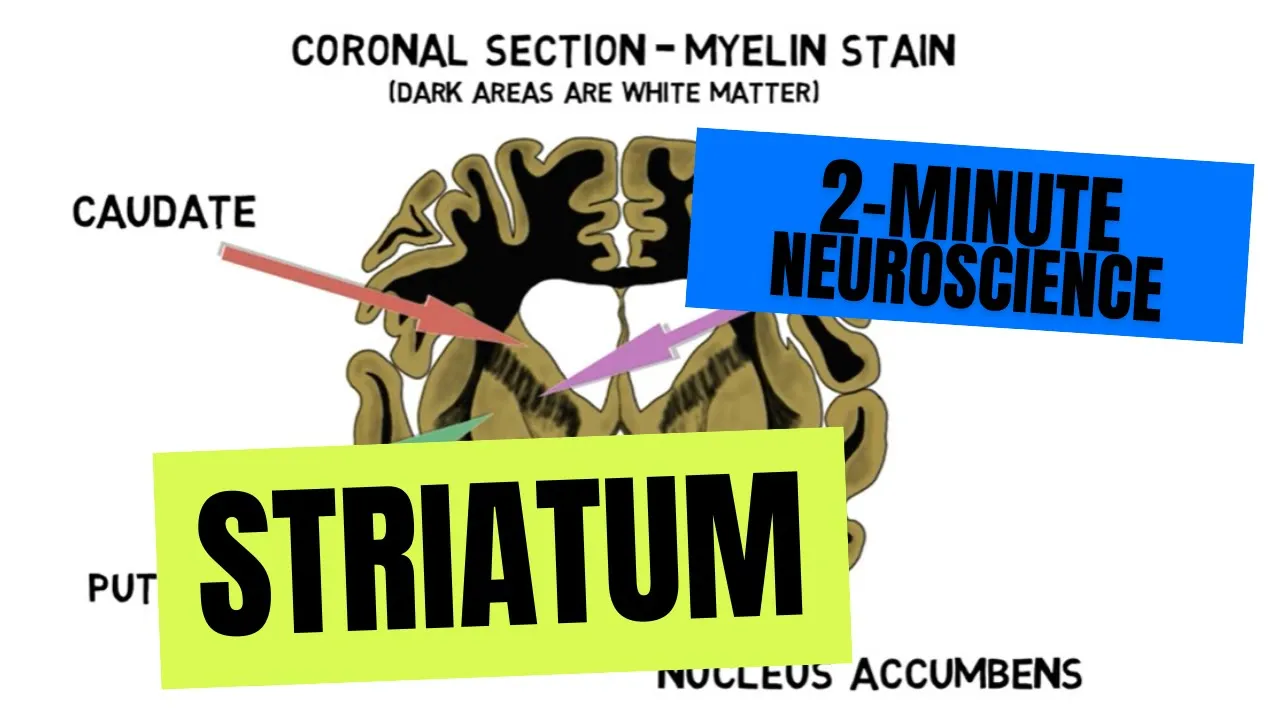
Striatum: Anatomy, Function & Role in Basal Ganglia | 2-Min Neuroscience
@neurochallenged
145.2K views•2016-06-25
Deciphering Neural Circuits Controlling Anorexia in Mice | Richard Palmiter
@AllenInstitute
2.3K views•2011-10-10

Vagus Nerve (CN X): Anatomy, Nuclei & Functions Explained
@Alilamedicalmedia
305.2K views•2022-10-31
How Exercise Benefits Your Brain: Science Explained
@TED
11.4M views•2018-03-21
Related Study Plans & Knowledge Roadmaps
Structured learning paths in Neuroscience