





















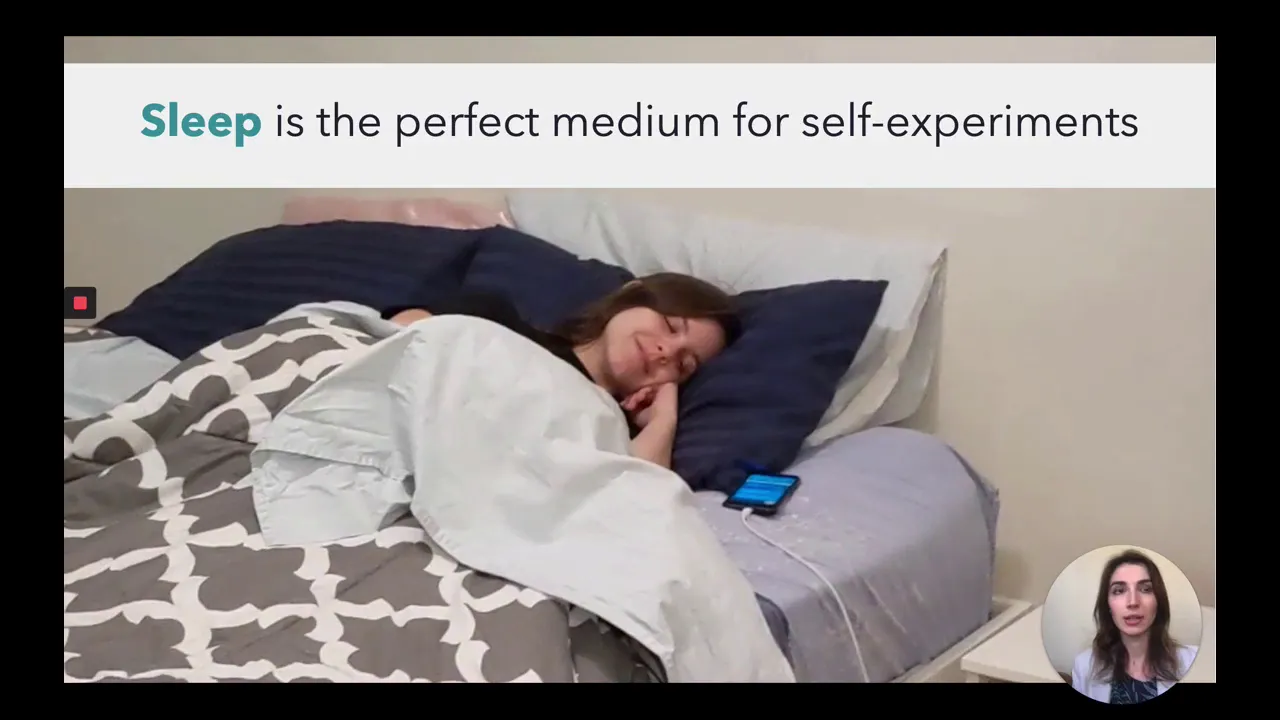



A morning routine optimized for alertness includes: (1) tracking wake time to determine your temperature minimum (lowest body temperature occurs ~2 hours before average wake-up time), (2) forward ambulation/gait generates optic flow that reduces amygdala activation and anxiety, (3) 10-30 minutes of morning sunlight exposure stimulates circadian-regulating melanopsin cells and triggers healthy cortisol release. These practices leverage your body's natural circadian rhythms for maximum effectiveness.
Daily Protocols for Productivity: Sleep, Focus & Health
Added:Basic understanding of human circadian rhythms and the biological clock, including the roles of melatonin and cortisol.
Fundamentals of neurochemistry, specifically how neurotransmitters like dopamine influence motivation and adenosine regulates sleep pressure.
The physiological mechanisms of light perception, including how retinal ganglion cells communicate ambient light exposure to the brain.
A foundational knowledge of sleep architecture, including the distinct stages of REM and non-REM sleep.
Advanced principles of neuroplasticity and how to apply them for long-term behavioral change and habit formation.
The study of sleep chronotypes and the customization of daily productivity schedules based on individual genetic predispositions.
Methodology for designing personalized 'n-of-1' self-experiments to track and analyze biometrics like heart rate variability and deep sleep duration.
Exploring non-pharmacological protocols for stress and focus optimization, such as Non-Sleep Deep Rest (NSDR) and cyclic hyperventilation.
799.7K views22.2Klikes6:55Original Release: 2021-07-12
- Welcome to the Huberman Lab Podcast, where we discuss science and science-based tools for everyday life.
[upbeat music] I'm Andrew Huberman, and I'm a professor of neurobiology and ophthalmology at Stanford School of Medicine.
Today, we're going to talk about science-based protocols for sleep, mood, learning, nutrition, exercise of various kinds, strength and endurance, and hypertrophy, and we are going to talk about some protocols that relate to creativity.
We're going to talk about behavioral protocols, supplement based protocols, all science backed by quality, peer-reviewed literature.
The reason that we're holding this episode now is that in the recent previous episodes, we've covered some pretty intense and in-depth topics.
We've talked about vision and how we see and how to get better at seeing and how to maintain vision.
We've talked about hearing and balance.
We've talked about chemical sensing.
And we had a guest episode that covered a lot of information about new and emerging technologies in neuroscience, as well as mental health.
That was the interview episode with Dr. Karl Deisseroth.
So given that we've covered so much detailed information in the previous 27 episodes of the Huberman Lab Podcast, I decided that we would hold office hours.
Office hours in the university setting are when students come to the professor's office or you meet outdoors on campus or in the classroom to review the material and questions from lecture in more detail.
Now, unfortunately, we don't have the opportunity to meet face to face in real life, but nonetheless, you've been sending your questions, putting them in the comment section on YouTube, et cetera, and I prepared a number of answers to the questions that have shown up most frequently.
Now, in order to provide context and structure to the way that we will address these questions, I've arranged the science and science-based protocols that relate to various aspects of life- such as mood, exercise, sleep, waking, anxiety, creativity, et cetera- into the context of a day.
Selecting the unit of a day in order to deliver this science information and protocols is not a haphazard decision on my part.
It's actually the case that every cell in our body, every organ in our body, and our brain is modulating or changes across the 24 hour a day in a very regular and predictable rhythm.
And it's no coincidence that the Earth spins once on its axis every 24 hours.
These two things are coordinated by virtue of genes and different proteins and things that are expressed in every cell of your body.
And so selecting the unit of the day is not just a practical one, but it's one that's related to our deeper biology.
You may have heard in my interview episode with Dr. Karl Deisseroth that he himself, in order to juggle a tremendous workload, a full-time clinical practice, a lab of 40 plus people, a family of five children, et cetera, breaks up his life into units of days.
And so today we are going to further dissect the day as a unit that one can manage and manage extremely well, and, in fact, can optimize.
So we're basically going to talk about how to leverage science-based protocols.
And when I say science, I mean, quality, peer-reviewed science published in excellent journals.
We're going to talk about how to take that science, convert it into specific protocols that break up along the course of a single day and direct certain types of behaviors in order to optimize the various features of life.
I will couch this in the context of what I do across a daily 24-hour rhythm.
That doesn't mean that you have to follow this schedule at all or even in part.
It's just by way of example.
Any number of the different things that I describe could be applied to any number of different schedules or frameworks.
But if there's one truth that applies to all of us, is that we all have to exist within the context of this 24 hour rhythm that we all possess.
So that's what we'll focus on.
Before we begin, I'd like to emphasize that this podcast is separate from my teaching and research roles at Stanford.
It is, however, part of my desire and effort to bring zero cost to consumer information about science and science-related tools to the general public.
In keeping with that theme, I'd like to thank the sponsors of today's podcast.
Our first sponsor is ROKA.
ROKA makes eyeglasses and sunglasses that I believe are the very highest quality possible.
Developed by two All-American swimmers from Stanford, ROKA sunglasses and eyeglasses were developed with their intention to create sunglasses and eyeglasses that could be worn anywhere.
So while exercising or while working, at home, while driving.
The reason I like ROKA glasses so much is that first of all, they're extremely lightweight.
The optical clarity of the lenses is excellent, and so I often just forget that I have even have them on.
When I'm outside and I'm wearing sunglasses, they have this really terrific feature which is that I can move in and out of shadows or the cloud cover can change and I can see perfectly well the entire time.
You know, many eyeglasses and sunglasses that I've tried, depending on what we call the "ambient lighting conditions," the local lighting conditions outside, I have to take them off or put them back on.
It's really annoying for me.
But with ROKA glasses, somehow, I'm assuming because they really understand the science of the visual system, the eyeglasses and sunglasses work seamlessly with whatever environment you're in.
So that's absolutely terrific.
Another thing about ROKA eyeglasses and sunglasses is that their aesthetic is really terrific.
You know, I don't think I'm alone in saying that many performance glasses as they're called end up making people look like a cyborg, but the sunglasses are of the sort that, you know, you can wear while running or biking or driving or out to dinner.
I don't typically wear sunglasses while out to dinner, but you get the idea.
You can wear them anywhere and they look very natural.
They have a huge number of different styles to select from.
If you'd like to try ROKA glasses, you can go to ROKA, that's R-O-K-A.com, and enter the code huberman to save 20% off your first order.
That's ROKA, R-O-K-A.com, and enter the code huberman at checkout.
Today's podcast is also brought to us by InsideTracker.
InsideTracker is a personalized nutrition platform that analyzes data from your blood and DNA to help you better understand your body and help you reach your health goals.
I've long been a believer in getting regular blood work done for the simple reason that many of the factors that impact your immediate and long-term health can only be analyzed from a quality blood test.
With InsideTracker, it alleviates a specific problem that's associated with most, if not all, of the other blood tests and DNA tests out there.
And that problem is you get information back about the levels of various things, metabolic factors, hormones, et cetera, but you don't know what to do with that information.
With InsideTracker, they have this terrific dashboard that allows you to both see your levels of hormones, metabolic factors, and the rest, but also, it suggests specific things that you can do with your nutrition, your exercise, and lifestyle, and so forth in order to bring those levels into the ranges that are best for your immediate and long-term health.
In addition, they make the whole process of getting your blood and DNA taken very easy.
They'll even come to your home to take the sample.
If you'd like to try InsideTracker, you can go to insidetracker.com/huberman.
And if you do that, you'll get 25% off any of InsideTracker's plans.
Just use the code HUBERMAN at checkout.
That's insidetracker.com/huberman to get 25% off any of InsideTracker's plans.
Today's episode is also brought to us by Helix Sleep.
Helix Sleep makes mattresses and pillows that are ideally matched your sleep needs.
I started sleeping on a Helix mattress about eight months ago, and I can honestly say it's the best sleep that I've ever had in my entire life.
And that's because the mattress was actually designed for me.
And you can have a mattress designed for you.
If you go to helixsleep.com, they have this free, very brief, two-minute quiz that asks you a number of questions like do you sleep on your side or your back?
Do you tend to run warm while you sleep or do you tend to get cold in the middle of the night?
Maybe you don't know the answers to those questions, and that's fine too.
After taking that quiz, they will match you to a specific mattress that's ideal for your sleep needs.
I matched to the so-called "Dusk Mattress," D-U-S-K, because I wanted a mattress that was not too firm, not too soft.
As I mentioned, I absolutely love it.
If you're interested in upgrading your mattress, you can go to helixsleep.com/huberman, take their two-minute sleep quiz, and they'll match you to a customized mattress and you'll get up to $200 off your mattress order and two free pillows.
They also make these terrific pillows.
They have a 10-year warranty and you get to try out the mattress for 100 nights risk free.
If you don't like it, they'll come pick it up and they'll take it away, but I think you'll love it.
I certainly love mine.
Again, if you're interested, you can go to helixsleep.com/huberman for up to $200 off and two free pillows.
So let's talk about how to apply quality, peer-reviewed science to your day and how to optimize everything from sleep to learning, creativity, meal timing, et cetera.
As I mentioned earlier, I'm going to do this in the context of my day and what I typically do.
However, the specific protocols for any number of different things, sleep, relaxation, meal timing, exercise, et cetera, any one or all of those could be rearranged to suit your specific needs.
I'm going to tell you what I do from morning until waking and even what I do while I sleep in order to optimize my sleep.
So let's start with getting up in the morning.
Now, for me, I tend to wake up sometime around 6:00 AM, 6:30, sometimes as late as 7:00 AM.
I don't typically sleep much later than 7:00 AM.
The first thing I do after I wake up is I take the pen that's on my nightstand and the pad of paper on my nightstand and I write down the time in which I woke up.
Now, I do sleep with my phone in my room.
I realized this is considered a sin and has certain hazards associated with it, but I put my phone on airplane mode about an hour before I go to sleep.
And then I set my alarm typically for 6:30 AM.
And some days the alarm wakes me up; other days I wake up before the alarm.
And yes, some days the alarm goes off and I hit snooze a few times, and then usually by 7:00 AM, I am up and out of bed.
The reason for writing down what time I wake up is because I want to know that average wake up time.
That average wake up time informs what's called my "temperature minimum."
It tells me when my body temperature was lowest.
The temperature minimum is the time in each 24-hour cycle that your body temperature is lowest.
I don't sleep with a thermometer in my mouth or elsewhere, and I don't think you should either.
Instead, I know that the lowest temperature that my body will be at across the 24-hour cycle tends to be two hours before my typical wake up time.
And I want to know that number.
It's called our "temperature minimum."
So if you're somebody that typically wakes up at 8:00 AM, then your temperature minimum is sometime around 6:00 AM.
Remember, the temperature minimum is a time in the 24-hour cycle.
I don't care what my actual temperature is; I care when my lowest temperature is.
And I know that that lowest temperature is approximately two hours before my average wake-up time.
So I highly recommend that you write down when you wake up or track that in some way that works for you and use that as a reference point to determine your temperature minimum.
We will return to the temperature minimum and how you can leverage the temperature minimum for several things: shifting your clock, shifting your circadian sleep schedule and wake schedule.
Also for shifting your eating schedule, et cetera, We will return to that.
But even if you don't travel, even if you don't care about things like jet lag, even if you sleep fabulously all year round, never have a poor night's sleep, knowing your temperature minimum, that time when your temperature is at its lowest point, is a valuable thing to know.
The second thing I do after I wake up is to get into forward ambulation, which is just nerd speak for taking a walk.
I have a dog, and as many of you know, he's a bulldog and he doesn't really like to walk, especially not in the morning.
But for humans and for animals, there's a phenomenon whereby when we generate our own forward motion, forward ambulation, visual images pass by us on our eyes, so-called "optic flow."
And for those of you that are low vision or no vision, the same phenomenon occurs in the auditory system.
Sounds pass by us in so-called "auditory flow."
Getting into a mode of forward ambulation, and especially experiencing visual flow, has a powerful effect on the nervous system.
The effect it has is essentially to quiet or reduce the amount of neural activity in this brain structure called the "amygdala."
Amygdala means "almond," and many of you have probably heard about the amygdala for its role in anxiety and fear and threat detection.
And indeed, the amygdala is part of the network in the brain that generates feelings of fear and threat and anxiety.
It does a bunch of other things too, but that's one of its primary functions.
There are now at least half a dozen quality papers published in quality, peer-reviewed journals that show that forward ambulation, walking or biking or running, in generating optic flow in particular has this incredible property of lowering activity in the amygdala and thereby reducing levels of anxiety.
There are two papers that I'd like to highlight in particular that relate to this phenomenon.
The first one was published in the journal Neuron and the title of this paper is "Whole-Brain Functional Ultrasound Imaging," that just means they have a cool technique to evaluate the activity of structures in the brain across the entire brain, reveals brain modules for visual motor integration.
What they found in this study, and I should mention the first author is Mace, this comes from Botond Roska's group, this was work done in mice, but I'll talk about other species in a moment.
What they found was essentially that when these mice walk forward and their eyes move from side to side, which is a natural consequence of moving forward, so-called "optic flow" is flowing past their eyes, many brain areas are activated, increase in their level of firing, but the amygdala in particular reduced its levels of firing.
That's a very interesting finding, but it is in mice.
However, another paper, "Eye-Movement Intervention Enhances Extinction via Amygdala Deactivation," was published in The Journal of Neuroscience, a strong journal, and shows that, again, these eye movements, these lateral eye movements from side to side reduce activity levels in this fear/threat/anxiety center in the brain, the amygdala.
Now, those are eye movements.
They didn't specifically look at forward ambulation.
And yet other papers have looked at forward ambulation and we know that forward ambulation, walking forward, generates the sorts of eye movements that cause optic flow and reductions in amygdala activation.
So for me, this process of taking a walk each morning isn't about exercise.
It's not about burning calories.
It's not about any of that.
It's really about getting into optic flow and reducing the levels of amygdala activation.
Now, I don't have anxiety, at least I don't have chronic anxiety or generalized anxiety.
I tend to have a lot of energy, but at these points in the morning, I'm not very energetic.
Sometimes I'm sort of shuffling more than I'm walking in fact.
And Costello is almost always shuffling and I'm almost always trying to drag him first thing in the morning.
But that walk is a particularly important protocol each day because it really serves to push my neurology in the direction that I'd like it to go, which is alert, but not anxious.
And it's kind of a fine line sometimes, especially as events surface throughout the day, emails come in, text messages come in, get bombarded with a number of things.
I want to be alert and responsive.
I want to be able to focus, but I don't want to. feel anxious or reactive to these things.
So the forward ambulation and this optic flow is the way that I ensure, based on quality, peer-reviewed data, that my amygdala activation is slightly suppressed.
Now, at the same time, I also want the alertness.
I want alert and focused.
I don't just want to be sleepy or super, super relaxed.
I want to have a high degree of focus and alertness because I'm soon going to move into a about of work.
I need to lean into the day.
So in order to do that, I make sure that the walking is done outdoors.
That might be sort of a duh, but many people get up and start moving around their house, their apartment, and they don't go anywhere.
And just walking around inside, it will generate some optic flow, but nothing like the sort of optic flow that you can generate in larger environments like out of doors environments.
If you can't get outdoors, doing it indoors is perfectly fine, but it's not going to have the same magnitude of positive effect.
Now, in order to get the alertness, I do it outdoors because I also want sunlight in my eyes.
I know many of you have heard me talk about this ad nauseam on various podcasts, in this podcast, but getting sunlight in your eyes first thing in the morning is absolutely vital to mental and physical health.
It is perhaps the most important thing that any and all of us can and should do in order to promote metabolic well-being, promote the positive functioning of your hormone system, get your mental health steering in the right direction.
There are a number of reasons for this, but before I get into those reasons, let me just emphasize what the protocol is.
The protocol is get outdoors, ideally with no sunglasses if you can do that safely, even if there's cloud cover.
More photons, light information are coming through that cloud cover than would be coming from a very bright indoor bulb.
So getting outdoors is absolutely key.
How long should you do this?
It's going to depend on the brightness of the environment.
It's going to depend on a number of different factors.
Two minutes would be a minimum, 10 minutes would be even better, and if you can, 30 minutes would be fantastic.
Now, it's a very bright day or, you know, you live in a place where there's bright sunlight, clear day on a snowfield, you would only need something like 60 seconds.
But most people aren't living in those sorts of conditions.
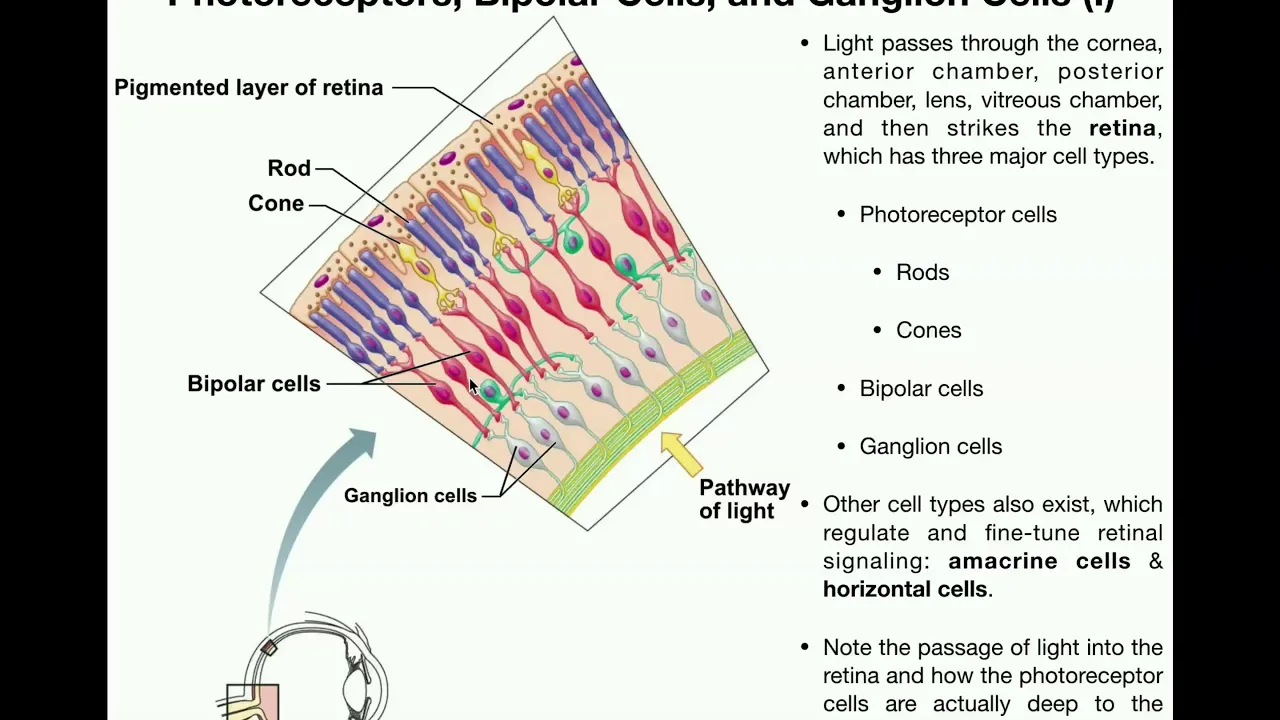
So getting outside for a 10-minute walk or a 15-minute walk will basically ensure that you're getting adequate stimulation of these neurons in the eye that are called the "melanopsin," intrinsically photosensitive ganglion cells.
I know that's a mouthful.
These are neurons that don't care about shapes of objects or the motion of objects.
These are neurons that convey to the brain that it's daytime and it's time to be alert.
And it sets in motion a huge number of biological cascades within every cell and organ of your body from your liver to your gut, to your heart, to your brain.
It really sets things down the right path.
Early in the day, we experience a natural and healthy bump in a hormone called "cortisol."
Cortisol comes from the amygdala.
That cortisol, as I mentioned, is healthy and normal and promotes wakefulness.
It actually promotes a healthy immune system.
So I know you've heard that stress and cortisol disrupt the immune system, but not the short little pulse of cortisol that you get each morning.
It's very important that that pulse of cortisol arrive early in the day.
I want to emphasize this again.
It's very important that that pulse of cortisol arrive early in the day And that pulse of cortisol is going to happen once every 24 hours no matter what.
It's going to happen and you get to time it.
How do you time it?
Primarily by when you view bright sunlight or bright light of another kind, and we'll talk about that in a moment.
So you want that cortisol pushed early.
If you wake up before the sun comes out, it's fine to turn on artificial lights, but then you would want to get outside as soon as you can to get this, excuse me, natural light stimulation of your eyes.
And it does have to be to your eyes.
Just to really drill down into the details for a moment, you don't want to stare directly at the sun or any light that's so bright that it feels painful.
If you feel like you have to close your eyes or blink, please do.
You don't want to damage your retinas.
The point here is to get the sunlight indirectly.
It's going to essentially be scattered everywhere through the cloud cover, but you know from looking at us at a flashlight directly into that flashlight versus looking at the beam that flashlight generates on the ground that if you're standing in the shade, you're going to. get less of that sunlight than you are if you're out in an open field.
So this is why the time outside, it's going to need to vary depending on your particular environment.
But do your best to do this every day.
If you miss a day, no big deal, but try not to miss more than one day.
Otherwise your mental and physical health will start to suffer.
And doing this each day costs nothing.
It's just time You can combine it with the forward ambulation with the walk and the optic flow that I talked about before.
And that's what I do each morning to generate a sense of alertness in my body and brain to generate a sense of calm, yet alert.
And that's also what I do with Costello, with my bulldog.
People have asked me, do the same mechanisms apply to animals?
Well, the reality is many of these mechanisms were actually discovered in animals, and then were tested in humans and verified that they also exist in humans.
Not always.
Sometimes it was the reverse, where they were tested first in humans, and then brought to animals.
But indeed, your dog, your horse, you know, I don't know what other animals are out there, they need this.
Now, if you have a hamster or a nocturnal animal, the reason why they like to run on their wheels at night is because they're nocturnal.
They don't like being in the light.
Light actually causes them to freeze, right?
Actually, if you are into aquaria, you like fish, they always say, "Don't overfeed your fish.
You'll kill the fish."
That's true, but guess what the fastest way to kill a fish is?
To keep the lights on 24 hours a day They also need circadian rhythms, these 24-hour rhythms.
So we'll do an entire month at some point about pet health, but meanwhile, get that morning sunlight.
So now we have a first protocol, which is to write down the time of day that you wake up, the second protocol is to take a walk first thing in the morning, and the third protocol is woven in with that walk, at least for me, which is to get that sunlight exposure.
Now, if you can't get sunlight exposure, you absolutely can't, I don't necessarily recommend buying one of these dawn alarm lights.
And I'm sorry to say this, but they're just vastly overpriced relative to what they are.
They're basically a bright LED.
I instead use, I have a pad that's a 930-lux LightPad.
I think it was designed for drawing.
Those are available at a fraction of the cost that a morning light simulator would provide, and yet it's really bright enough, at least for me.
I tend to put it on my desk while I work each morning.
So here's a principle that you can leverage.
If you want to be alert, view bright lights and make those lights above you or in front of you.
If you want to go to sleep soon or you don't want to be awake for whatever reason, try and eliminate your exposure to light.
And this, again, is not about exposure of the skin to light; this is about exposure of your eyes, of your neural retinas to light.
For those of you that are concerned about blue light, I want to that blue light is precisely the wavelength of light that is optimal for stimulating these neurons in your eye, which set your circadian rhythms properly.
So you don't want to shield yourself from blue light early in the day or throughout the day or anytime you want to be awake.
In fact, that could have a number of detrimental consequences.
Fortunately, all those consequences are going to be reversible after a short period of time of making sure that you don't wear your blue blockers during the day, please.
The time to wear blue blockers, if you do, is at night and in the evening when you're headed towards sleep.
My colleague Samer Hattar, who is head of the chronobiology unit at the National Institute of Mental Health, has spoken about this before on my Instagram.
We held an Instagram Live and I said, "Samer, what do you think about blue blockers?"
And he said, "I don't think that's a good idea at all, unless it's really late at night and you're in a bright environment and you're trying to limit the amount of bright light that impacts the eyes."
Eliminating specific wavelengths of light, in Samer's opinion and also in my opinion, is not a natural thing for the visual system and the brain to experience.
Some people get headaches while they work on the computer all day or staring at screens, and so they get blue blockers thinking that's going to protect them from their headaches.
However, any protection that you get from headaches from blue blockers is going to be minimal in comparison to what's really going on there, which is that people are viewing devices and screens up close for too many hours throughout the 24-hour cycle.
A better remedy would be to step away from that computer from time to time, and to make sure that you can look far off into the distance.
Ideally, a distance longer than 20 feet like view a horizon, go out on a balcony, things of that sort.
Take a walk around, get into optic flow So if you're into blue blockers, make sure you're only wearing them in the late evening and at night.
I personally don't wear blue blockers at all.
I prefer to just control my light viewing behavior by doing this, I do the other form of circadian control, which is to dim the lights.
And I do that because dimming the lights and setting them lower in the environment sets up the brain and body for sleep much better than simply just wearing some blue light blue blockers, excuse me.
And please know if you do wear blue blockers that if the light in your environment is bright enough, it doesn't matter if you're blocking out the blues.
The cells in the eye will respond to other wavelengths of light.
So I have no vendetta against the blue blockers, and, you know, I fully expect the blue block-anistas to come after me with, I guess, blue blockers, but as you do that, please understand that the biology points in the direction of get a lot of bright light throughout the day, including blue light, and at night, just limit the total amount of overall light that you're exposed to, including from screens.
So then Costello and I get back from our walk.
Sometimes that walk was 10 minutes, sometimes it was 60 minutes, depending on how slowly Costello is walking that day.
Indeed, many mornings I'm the guy carrying his bulldog back up the hill.
My neighbors know me so well, they know Costello so well that they've since stopped pulling over and asking if the dog is okay.
Sometimes they'll ask if I'm okay.
Nonetheless, we get back, I give him his food, I give him his water, and I give me my water.
I'm a big believer, based on quality, peer-reviewed data, that hydration is essential for mental performance.
Now, I confess I don't really like drinking big glasses or big jugs of water first thing in the morning.
I don't know why, but my thirst doesn't tend to kick in first thing.
You may be different.
Either way, I force myself, essentially, to drink at least 16 and, most days, 32 ounces of water.
I also put a little bit of sea salt in the water.
As many of you know, neurons require ionic flow.
What that means is neurons need sodium, they need magnesium, and they need potassium in order to function.
We do tend to get dehydrated at night.
Even if the day is not very hot, I try and top off or I try and make sure that I'm hydrated early in the day before I begin any work.
So I make myself drink this water with a little bit of sea salt.
How much sea salt?
If you really want to get detailed, I suppose it's about half a teaspoon.
It's not much, That's what I do.
And I drink that more or less room temperature.
I find that drinking really cold water first thing in the day kind of like cramps up my insides, so I don't do that.
At that point, I start thinking about and fantasizing about and craving caffeine, but I don't drink that caffeine yet.
I purposely delay my caffeine intake to 90 minutes to 120 minutes after I wake up.
Of course, I know when I wake up 'cause I wrote it down, although it's pretty easy to commit to memory.
The reason I delay caffeine is because one of the factors that induces a sense of sleepiness is the buildup of adenosine or, as some people call it, adenosine in our system.
The buildup of adenosine accumulates the longer we are awake.
So when I wake up in the morning, when you wake up in the morning, your adenosine levels are likely to be very low.
However, caffeine is an adenosine blocker.
It's actually a competitive antagonist for you aficionados.
It sort of parks in the receptor that adenosine normally would park at and prevents adenosine from acting on that receptor.
That's why you feel more alert, because it's essentially blocking the effect of this sleepiness factor that we all create called the "adenosine."
The reason for delaying caffeine intake 90 minutes to two hours after waking is I want to make sure that I don't have a late afternoon or even early afternoon crash from caffeine.
One of the best ways to ensure a caffeine crash is to drink a bunch of caffeine, block all those adenosine receptors, and then by early or late afternoon, when that caffeine starts to wear off and gets dislodged from the receptors, a lower level of adenosine is able to create a greater level of sleepiness.
It took me years to figure this out.
I used to wake up and I'd think, "Oh, I don't want to drink caffeine too close to bedtime, so I'm going to start drinking my caffeine really early."
I let my cortisol naturally come up in the morning.
I avoid drinking caffeine until about 90 minutes or two hours after waking.
And when I do that, I find that I don't experience the afternoon crash.
At least I don't experience that crash unless I do something foolish, like ingest far too much food at lunch or I stay up all night the night before.
But provided I don't do anything foolish like that, delaying caffeine to 90 minutes to two hours optimizes this relationship between adenosine and wakefulness and sleepiness in a way that really provides a nice, consistent arc of energy throughout the day and brings energy down as I'm headed toward sleep and falling asleep.
My primary objective early in the day is to get into a mode of being focused, yet alert so that I can get work done.
I found that the best way for me to achieve that state is through fasting.
So I don't eat anything until about 11:00 AM or 12:00 noon.
I'm not absolutely religious about it.
There are days when I'll have a few Brazil nuts or a spoonful or three of almond butter, for instance, but most days I'm not doing that.
I'm just not eating anything.
I'm drinking some caffeine caffeine source for me is yerba mate, guayusa tea.
Those are my preferred sources I tend to avoid coffee these days.
Occasionally I'll have a cup, but most often I stick to the teas.
I drink water as much as I feel I need to and want to.
And I also drink my athletic greens, which is compatible at least for me with fasting.
Let's talk about why fasting works to create this heightened state of alertness, yet calm brain state.
Fasting increases levels of adrenaline, also called "epinephrin" in the brain and body.
And when our levels of epinephrin and adrenaline are increased, we learn better, we can focus better.
There's terrific data supporting that.
You don't want epinephrine, aka adrenaline, too high.
That feels like stress and panic.
You get jittery, you can't focus.
But in its optimal range, adrenaline really provides a heightened sense of focus and the ability to encode, meaning bring in, and retain, remember information.
And so since my job is mainly a cerebral one where I'm writing grants and working on papers, et cetera, I fast in the early part of the day.
I mentioned ingesting things like guayusa or yerba mate or, in my case, athletic greens.
Many people ask, in fact there's a whole community and discussion boards, et cetera, and YouTube comments on the internet, about what breaks a fast and what doesn't.
The fact of the matter is that's going to be highly individual because it's going to depend on how sensitive your blood sugar.
And more accurately, it's going to depend on things like your insulin sensitivity.
So for instance, if you're somebody who gets up in the morning, hydrates, and goes out for a six-mile run, you could probably eat a jar of almond butter and still be what's called fat-fasted.
Your insulin levels will still be very low because even though that is a large volume of almond butter, even to me and Costello, that large number of calories comes from a source that doesn't increase blood sugar very much and insulin very much.
Now, I'm not suggesting you do that, but what I just described as a vastly different situation than somebody that ate their last meal at 2:00 AM, and that meal was essentially a feast.
And for that person, fasting until 10:00 or 11:00 AM, their blood sugar might still actually be pretty high or even lowish such that they might eat one almond and it would bump them out of fasting.
So you get the idea.
It's going to depend on your recent eating history, your blood sugar history, your glycogen stores, et cetera.
So if anyone tells you that breaks a fast or that doesn't, that's kind of silly.
Would one grain of sugar break your fast? No.
Would an entire tablespoon of sugar break your fast? Yes.
You'll get a big blip in blood sugar and insulin from that.
However, how long that lasts, how long it breaks your fast will depend on how glycogen-depleted you are and a number of other factors.
So for me, I just keep it fairly simple: I ingest water, caffeine from your yerba mate and guayusa, and I drink my athletic greens with some lemon juice in it.
That constitutes my fasting.
And there are days when I do all those things.
There are days when I do none of those things.
Although most days, I would say about 355 days out of the year, I'm ingesting water, caffeine, and athletic greens during this period of fasting early in the day, and that's the period of time when I do my work.
One interesting fact about yerba mate and guayusa teas is that they increase release of something called "GLP-1."
GLP-1 is related to glucagon.
Glucagon is a hormone that you can sort of think about as opposite to insulin and blood sugar.
It's more complex than that, but GLP-1 has a couple of positive properties.
One is it increases lipolysis and mobilization of body fat stores, so burning of fat.
In fact, there are now a number of clinical trials that are achieving good success and there are drugs out there only available by prescription which mimic GLP-1 and are being used to treat, quite successfully, certain types of diabetes and obesity.
Now, I'm not diabetic, nor am I trying to shed a ton of body fat, but I figure as long as I'm fasting and as long as I like yerba mate and guayusa, which I do, they're delicious, I'll tell you which type I use in a moment, I might as well increase my GLP-1 because it's probably not as good as getting out and doing some cardio work.
But nonetheless, if I'm fasted, increasing GLP-1 in my system, I'm going to be alert from the caffeine, the adrenaline, et cetera, and I'm going to burning body fat while I'm doing my work.
So for me, it's just an efficient, biochemically rational, or I should say grounded in quality biochemistry sort of approach.
Yerba mate comes in a lot of different forms.
There are a lot of different brands out there, et cetera.
I don't have any relationship whatsoever in a business sense to any of these brands.
Some of them are very smoky.
I, just because of something in my genetic makeup, or I don't know, maybe it was some sort of Y chromosome-associated lesion early in life, but I don't like smoky flavors.
So I'm not a Gouda cheese guy.
I don't like smoky stuff.
You may love it, but I tend to avoid smoky-tasting mates.
Instead, there's a particular brand that I just found on the internet called Anna Park.
I don't know Anna, I don't know if she has a park, and I certainly don't know what Anna Park is, but for me, that's the best-tasting yerba mate.
Again, I don't have any relationship to them, but it's affordable in the context of yerba mate and it's the one that I use.
And I should mention along the lines of affordability and GLP-1 is there's a nice feature of yerba mate which is if you put it in a filter or a metal strainer and you pour hot water over it, and then drink it, keep the leaves.
The yerba mate leaves can be used over and over again.
It seems that the GLP-1 stimulating aspects of yerba mate actually are enhanced with subsequent pour overs.
So there's something interesting about these teas that my tea aficionado friends tell me allows the tea to release more of some of the beneficial compounds by reusing the tea leaves.
Now, eventually it'll grow mold and other sorts of disgusting things.
You don't really want to run that experiment.
I would say you can use it for a day or two before it starts to go bad, but that's a feature that will extend the life of whatever yerba mate you happen to use if you decide to use it, and that's certainly what I do.
Next, I want to talk about what I'm doing while I'm drinking all this yerba mate.
'Cause I'm not just sitting there thinking about all the GLP-1 circulating in my system.
I'm working.
A couple of things for optimizing workspace that are grounded in neuroscience and physiology.
I've talked before about the fact that when our eyes are directed upward, literally when our eyelids are open, no surprise there, and when our eyes are directed upward, it creates a state of heightened alertness.
And this has a relationship to the brainstem neurons that create alertness and their control over the muscles of the eye and, believe it or not, the eyelids.
Now, it's not the case that if you are absolutely exhausted and you need to feel more alert that looking upward is going to make you feel wide awake, although it will help support your levels of alertness.
The point here is that you can optimize your workstation in a physical way that leverages this aspect of the visual system and your level of alertness.
Since most of us want to be awake while we're working, try and position your screen or your tablet, whatever device you happen to be working on, at least at eye level and ideally slightly higher.
Now, if you think about it, most people are not doing this.
Most people are looking down at their computer or tablet or are angling their eyes at their screen at about 30 degrees.
That is not going to support heightened states of alertness and optimal attention.
In fact, the opposite relationship between eye position and alertness is also true.
When we look down, when our eyelids are slightly closed, it tends to decrease our levels of alertness and increase our levels of sleepiness.
I really want to emphasize this, that there's a bi-directional or reciprocal relationship between the brainstem areas that control alertness and the eyes, meaning how alert you are controls how open or closed your eyes are, no surprise there, but also the how open and upward directed your eyes are will increase your levels of alertness And if your eyes are pointed downward and your eyelids are hooded, like they're slowly closing, like Costello's are always are, you'll feel more sleepy, especially if you're somebody who tends to have that mid-morning sleepiness or mid-morning crash.
So what I do is I have a standing desk, but I also prop the computer up such that it's at least at eye level.
And I haven't figured out yet how to develop a workstation where the computer is above me.
I think the only way to really do that is actually to tilt one's body back, but actually that's not a good idea either.
They have done studies recording from areas of the brain associated with alertness.
Areas like locus coeruleus in the so-called reticular activating system.
What they found is that depending on how reclined you are or upright you are, you will decrease with reclining and increase with sitting forward your levels of alertness.
So body posture and whether or not your upright or reclining will impact your levels of alertness in the predictable ways.
And where you position your eyes, whether or not your eyes are upright, so to speak, looking up or directly forward or looking down, will dictate whether or not you are feeling more alert or more sleepy, respectively.
So try and arrange a workstation or a position of your body in your chair or your standing desk, whatever it is, that allows you to work with a heightened state of alertness.
This is really, really key for me because I found that when I would sit down, not only would my hip flexors start to get sore, I feel tight in the back, et cetera, but if I was staring down at my screen all day or even for short periods of the day, I would start to feel sleepy and I couldn't figure out what was going on.
I also thought maybe I needed glasses.
I do wear readers at night, but it was really a problem.
And simply by getting the screen directly in front of me at eye level, it's been completely transformative.
So we're now at the description of my day in these protocols in which I would do a 90-minute about of work.
Now, why 90 minutes?
Well, the brain is going through these 90 minutes so-called "ultradian cycles" throughout the entire day and night.
Every 90 minutes, we shift over from being very alert to being less alert, and then back to alert again.
Here's how it works.
At the start of one of these 90 minute ultradian cycles, my brain is not quite engaged in whatever it is I'm trying to do.
Oftentimes I have things jumping into my mind, I've got distractions, et cetera.
I'll talk about how to deal with those distractions in a moment.
But I set a timer for 90 minutes and I try and get a strong about of work done inside of that 90 minutes with the full understanding that the entire 90 minutes is not going to be uniform in terms of my ability to focus.
There will be kind of peaks and valleys within that, but that 90 minutes is about what the brain can handle in terms of a dedicated effort for high degree of focus.
Some people can push out a little bit further, some people can't handle more than 10 minutes, but that's what I'm striving toward.
You'd be amazed how much you can get done in 90 minutes if you are focused.
So how do you increase that focus and how do you use the timer feature?
Well, you can combine those.
I use a program called Freedom.
It shuts me out of the internet completely.
So that means no checking the markets, no checking social media, no checking, you know, the news, no checking email, none of that.
I get a dedicated about of work done.
I confess, I don't allow myself to go to the restroom in that period of time.
Here's an interesting little tip that's grounded in physiology.
You have a direct neural connection from your bladder to your brainstem areas that increase alertness.
This is why when you have to go to the bathroom, when you have to urinate, it is extremely agitating, right?
It can be very, very agitating.
I'm not encouraging you to get so agitated by filling your bladder so much and resisting going to the bathroom that you are uncomfortable and can't focus, but I generally will just drink liquids and work away and work away, and I won't walk away to go use the bathroom unless I absolutely have to.
Sort of odd that we're talking about this, but this is one way in which I've learned to funnel my attention into whatever it is I'm doing.
Because as you all know, the moment you sit down to do some serious work and you flip off the internet, all of a sudden it's as if the phone has a voice, it starts calling you.. It's almost as if the restroom has a voice.
But we all are familiar with the fact that if we are focused on something that all that just kind of melts away.
So the goal is to get into what I call the tunnel, to really get into a tunnel of quality work.
The brain loves that state, but it's very hard for many of us to access.
My phone is absolutely off.
It's not on airplane mode.
It's absolutely off during this time.
If I've been struggling with that and, I confess, you know, there are times when, for whatever reason, something going on in life, it's been harder to put away the phone.
I will sometimes put it in my car.
I used to joke that I used to throw it up on the roof or something like that.
Look, I've done and I suggest people do whatever they need to in order to self-regulate that activity.
And if you're somebody that feels that you absolutely need to be on your phone and on the computer for this work about or the work that you do, well, that's a different matter altogether.
This is just simply how I work.
So I will do 90 minutes and I do set a timer and I turn on the program, Freedom locks me out of the internet.
If someone rings the doorbell, I will often shout, "Not coming to the doorbell. Leave it there."
I mean, unless there's a real emergency, I'm not going to step away from that work.
I learned how to do this when I was a graduate student under different conditions where I used to slice brains on what's called a microtome.
So I used to spend time, just cutting very thin slices, it's like a deli slicer, but for a brain, of various types of brains.
And I've sectioned through a lot of brains.
And we had a rule, which is that when the blade hits the brain, you don't stop pulling, even though it's very, very slow even if a nuclear bomb goes off, even if a fire alarm goes off.
Now, I don't want anyone, you know, burning to a crisp because they didn't step away from their workflow.
That would be foolish, but that's the mentality that I've embedded in myself, that there's nothing more important than what I'm doing in that 90-minute block.
And that's what works for me.
You can try various other things.
That's what works for me.
In addition, I use low level white noise.
This is something that is supported by quality, peer-reviewed data.
We covered this on the episode on hearing and balance, but it turns out that white noise, which is essentially all frequencies of sound, or all frequencies of sound that we can perceive, mixed up kind of randomly, there's no structure to it, turned on at a low volume, not with headphones most of the time, puts the brain into a state that's optimal for learning and workflow.
And I covered two papers during that episode.
One that showed that, indeed, brain areas involved in attention, brain areas involved in focus and cognition and memory, those are engaged to a greater degree when there is low levels of white noise playing in the background.
The other paper that's really interesting did brain imaging and showed the areas of the brain that are associated with dopamine release are increased by low levels of white noise.
Dopamine release is associated not just with pleasure, but with motivation and craving.
So everything about this 90-minute block from the low levels of white noise to the position of my computer, how I'm standing, where my eyes are positioned, is geared towards putting me in this tunnel of work.
And I have to say that while it can be a challenge to try and achieve this state in this tunnel of work some days, you start to get kind of addicted to it.
It feels really good.
It's like a workout for the mind.
And it is something that as you exit that 90 minutes, you really feel like you've accomplished a lot because often you have, and it just feels deeply satisfying.
And I'm convinced that that's because of the release of neuromodulators like dopamine and the norepinephrine that's circulating in your system.
And I want to be clear that I'm not perfect about this 90 minutes.
Occasionally I get drawn away.
Occasionally something will happen or I'll go use the restroom or Costello will have a need or somebody will have a need that I will have to respond to, but I really try and achieve this most, if not every day that I'm alive because for me, that work session is kind of holy.
It's where I set up a relationship, not just between me and the work that I'm doing, but between me and my ability to control my own state of mind using these various supports of the white noise, et cetera.
But really those supports are peripheral to the fact that I'm creating this space.
I'm funneling my brain into a state rather than allowing whatever events and contexts on social media and elsewhere might be occurring in the world that would yank me out of what for me is my purpose and my mission in life, which is to do the sorts of work that I do.
There's a powerful way in which you can place the timing of this 90-minute work about in an optimal way.
You have access to a very important piece of data that dictates when this about should start more or less and when it should end.
That piece of data is your temperature minimum.
If you're somebody who wakes up on average at 7:00 AM, well, then your temperature minimum is 5:00 AM.
And you can be reasonably sure, I want to underscore reasonably, but you can be reasonably sure that your best work is going to be done anywhere from four to six hours after your temperature minimum.
So for me, I tend to wake up around 6:30 AM, that means my temperature minimum is at 4:30 AM.
You can add five hours to that.
So that means that a 90 minute work about could fall at 9:30 AM and it would be fairly optimized.
Or I could do it at 10:30 AM, or I could do it at 8:30 AM.
Somewhere in there, all right?
That we can't say that it's exactly six hours after your temperature minimum.
You will find it, however.
There is a precise and best time for you to do this 90-minute work about.
Whether or not it's five or six hours after your temperature minimum is going to vary from person to person.
How do I know this?
How do I know this relationship between temperature minimum and focus cognition?
Well, temperature minimum defines the trough, the nadir, as they say, of your temperature across the 24-hour cycle.
And immediately after that, your temperature will start to rise.
That temperature rise is actually what triggers the initial cortisol release that you experience and wakes you up further.
And then, of course, that sunlight that you're getting is going to further enhance that healthy release of cortisol.
That cortisol will then provide fuel, if you will, for that increase in temperature.
And your body will continue to increase in temperature throughout the day toward the afternoon.
What you're trying to do in this idea of optimizing this 90-minute work about to a particular time of day is catch the portion of the steepest slope of that temperature rise.
Now, again, you're not walking around with a thermocouple or a thermometer in some orifice of your body.
So you don't have accurate information about temperature, but you can make very good guesses about when your body temperature is rising fastest by virtue of that temperature minimum.
So again, just to be clear, it's a 90-minute work about.
That's about what the brain can handle for a very intense work about.
Do you understand, again, that they're going to be portions of that 90 minute that your brain is flickering in and out of focus, other portions, where you're going to be entirely focused.
That's entirely normal.
But when to place that 90-minute work about, when to start it, and when to end it will depend on that temperature minimum.
So if you're somebody who wakes up at 8:00 AM each morning, your temperature minimum is 6:00 AM, chances are you're going to want to start this work about somewhere around 10:00 AM or 11:00 AM.
Now, some people wake up and feel very alert first thing in the morning.
They can really do their best work first thing in the morning.
Please, if that's you continue to do that.
Leverage that time. Use that time.
But if you're somebody who struggles to find focus, definitely let your physiology and this rise in your body temperature support your efforts to focus rather than trying to do your best work at times of day when your physiology is actually directing your body and your brain toward de-focus and towards being more lethargic.
It just is setting yourself up for success when you try and capture this rising phase of your temperature.
So up until now, we've been emphasizing practices that allow you to optimize your level of alertness and your levels of mental focus.
Data going back to the 1990s supports the idea that physical movement of particular kinds can support brain health and brain function both in the immediate term and in the long term.
Now, this is has had a profound impact on the field of neuroscience, but frankly, it's also had a profound impact on how I structure my day.
So after I've finished a about of work, this 90-minute about of work, I force myself some days, other days I want to, but I force myself to do some sort of physical exercise that is going to be supportive of my brain health and brain function and organ health and bodily function in general.
So I just briefly want to touch on what the structure of that exercise looks like, how it's structured within the day and how it's structured across the weeks in fact, based on the scientific data and what the scientific data say is best or optimal in order to promote longevity of the brain, ability to focus, as well as cardiovascular health and all the other things that we know exercise supports.
Now, there are various forms of physical activity or what we call exercise, but those can generally be batched into two categories.
First is strength and hypertrophy work.
So physical movements that are designed to make you stronger and/or make your muscles larger.
There's also endurance work.
Physical exercise and movements that are designed to allow you to do more work over time or to extend the amount of time that you can do work of any kind, both physical and mental.
And we did two full podcast episodes on the details and the science and the protocols related to these topics.
We did an episode on the science of strength and hypertrophy, of building strength and muscle building.
And that included a lot of protocols.
And we did an episode on endurance.
How to build any one or all of the four types of endurance, which are muscular endurance, anaerobic, aerobic, long-distance endurance, et cetera.
So if you're interested in the specifics of those protocols, please see those episodes.
However, right now I just want to emphasize how the data impact my day and how I structure my day in a way that I can incorporate physical movement in a way that supports my brain and health.
Basically, after I finished that cognitive work about, that 90-minute work about, I do some form of physical exercise for about an hour.
The data all point to the fact that working out hard for longer than an hour can actually be detrimental because of the way that it raises cortisol.
And cortisol can be a good thing if it's appropriately timed and in the appropriate low levels, but you don't want to have your cortisol levels up throughout the day or have big spikes of cortisol repeatedly.
So keeping workouts relatively short can definitely help with that And certainly if you're training hard, 60 minutes or less should be more than sufficient.
And for many people, including myself, 45 minutes or 50 minutes is probably even more optimal.
The basic design of this physical exercise is that it be approximately 60 minutes.
So maybe 60 plus or minus 15 minutes should be well within the margins of keeping hormonal health proper and not going too long nor making the workout so short that it's not beneficial.
And essentially what the data tell us is that in order to optimize cardiovascular and brain health and other systems of the body, we want to exercise at least five days per week.
I know that seems like a lot.
It certainly is a lot for certain people.
Some of you, you compulsive exercisers, might gasp at the idea of taking two days off.
I personally find that taking two full days off per week is actually both beneficial to my exercise training performance, as well as pleasant.
I like those rest days.
But essentially the structure of the exercise regimen that works for sake of supporting health is going to be one in which there's a 3:2 ratio.
Where for a 12-week period or so, maybe 10 to 12 weeks, three of those five workouts per week emphasize strength and hypertrophy and the other two emphasize endurance.
Then, after 10 or 12 weeks, one over to a 10- or 12-week regimen of doing a 3:2 ratio where you're prioritizing endurance work.
So primarily the sorts of workouts that are described in the endurance episode and those protocols.
And the other two days, you're focusing on strength and hypertrophy work merely to maintain strength and hypertrophy, to not lose the strength and hypertrophy that you've created.
And there a lot of data now supporting the fact that maintaining muscular health and bone health is supported by resistance training, weight training of various kinds.
It can also be done with body weight if you don't have access to equipment.
And, of course, that doing cardiovascular endurance work is very beneficial both to the muscles of the body, the organs of the body, but also to the brain.
Many of you have probably heard that doing physical exercise of various kinds can support the production of new neurons in the brain.
Frankly, those data are specific to research animals.
As far as we know, increases in neuron number are not supported by exercise in humans.
There is a little bit of data that supports that maybe a few neurons might get created by running or weightlifting or things of that sort in human beings, but there's still a host of other reasons to have this hour or so per day where one is doing physical exercise.
And those include increased blood flow to the brain.
Remember, the brain is an organ too.
It's the most metabolically demanding organ in your body and it's receiving those metabolic factors, it's receiving its fuels by way of vasculature, of blood vessels and capillaries and veins and things of that sort.
So movement is very crucial to get your brain to function properly.
Movement of various kinds is very important to get your brain to function properly.
Resistance training turns out to be as important as endurance training because of the way that it stimulates the release of particular hormones actually from bones, things like osteocalcin, which can positively impact brain function and can support the health of existing neurons as opposed to increasing the number of neurons.
It turns out increasing the number of neurons may not actually be as beneficial as we think.
It all sounds great. More neurons, more neurons.
Certainly more neurons is better than fewer neurons and losing neurons, but incorporating new neurons into existing brain circuitry is actually very challenging for the brain to do.
I make sure that after that workout, I get this one hour or so of exercise five days per week because of the ways that it supports my general health.
And there are now hundreds of studies supporting the fact that both endurance work and strength training or hypertrophy training done in combination, meaning not necessarily in the same workout, but done across the week is immensely beneficial for the production of things like brain-derived neurotrophic factor, for limiting inflammatory cytokines like IL-6, for promoting anti-inflammatory cytokines like IL-10, provided that exercise is of the proper duration and that it's not so intense that you're actually creating damage to the various systems of the body.
Now, where is the threshold between optimal, sub-threshold and detrimental?
This is a complicated theme if we don't put some structure around it.
So let's put a little bit of structure around it.
We already said that about 60 minutes, so 60 minutes plus or minus 15 minutes, is going to be optimal for all these health benefits.
What about the structure of the actual workouts?
Well, we need to address this issue of intensity.
A good rule of thumb based on the literature, and I discussed this with Dr. Andy Galpin prior to this strength and hypertrophy and endurance episodes, and the literature that's published in quality, peer-reviewed journals really points to the fact that approximately 80% of the resistance training you do should be resistance training that doesn't go to what they call failure, where you can't actually move the resistance anymore.
The other 20% can be of the higher intensity to failure type training.
Now, with respect to endurance work, one can build up endurance without having to log long, long mileage or extensive mileage in the pool or by running.
And that's because there are these other forms of endurance that can build up, for instance, the capillary beds within the muscles.
Building up the capillary beds within the muscles will allow more oxygen utilization within the muscles, and thereby will increase your endurance both of the muscles, but also will improve brain metabolism and the way that the heart functions, so cardiovascular function.
That 80/20 rule of less than failure and work to failure in the resistance exercise regime can be transported or translated to the endurance exercise portion by focusing on that thing that we're familiar with, which is the burn when we're running hard or cycling hard, we'll experience a kind of burning of the muscles that's associated with the lactate system.
During the episode on endurance, I pointed out that that burn is not lactic acid.
Contrary to common belief, it is not lactic acid.
It's associated with lactate metabolism.
And again, about 80% of the endurance work should not incorporate that so-called "burn," but if 20% of that work or so, I should say approximately 20% of that work, does include the so-called "burning sensation," that burning sensation actually triggers the activation of release of certain compounds and molecules from glia, this brain cell type that supports neuron health.
And actually, the lactate system is its own form of fuel for the brain.
And so there's increasing interest in generating the lactate or pushing past that lactate threshold for small portion, 20% or so, of endurance work in order to support brain health and function.
So what does all this all look like as a protocol?
Well, as I mentioned before, this 3:2 ratio.
So maybe you spend 10 weeks or so or 12 weeks or so focusing mainly on endurance, where three workouts per week on endurance work, 80% of those workouts, meaning 80% of the time you're below that burn threshold, you are not experiencing a burning sensation, but that for 20% of it, you are.
That, based on the scientific data, should support lactate metabolism, brain health, et cetera, as well as cardiovascular health and oxygen utilization.
All the forms of endurance that we're aware of.
And then the other two workouts would involve resistance training, again, with this 80/20 split, where 80% of the work is not to failure and 20% is.
And then maybe after 10, 12 weeks, you switch, where you start emphasizing strength and hypertrophy work for three of the workouts and endurance work for two of the workouts.
Now, of course, some of you will be able to train six days a week or you'll compulsively need to train seven days a week.
If you decide to do that, please be aware that this cortisol threshold is a real thing.
So for me, the 3:2 ratio works out perfectly 'cause I like two full days off a week.
When I take those really depends on my schedule and how I'm feeling.
Sometimes it's two days in a row.
Sometimes they're interspersed throughout the week.
But in reviewing the scientific literature for those two episodes of the podcast and in talking to people who are really informed in the world of resistance training and endurance training and how that relates to brain health and body health, this seems to be the most rational and grounded protocol, so that's the one that I follow.
So on any given day, I finish that work block and I train.
I do some sort of resistance or endurance training.
I put those on alternate days or different days, rather.
So we've now talked about the arc that spans all the way from waking to a morning about of focused work to physical training.
I have not mentioned ingesting anything or nutrients.
One of the most common questions I get are what should I eat for my brain?
Well, ironically enough, one of the best things you can do for your brain is to not eat, but, of course, we all have to eat sooner or later and eating is wonderful.
I absolutely love eating.
I even enjoy the mere act of chewing.
But the question of what to eat is an important one as it relates to brain health and brain function.
Before we talk about that, I want to emphasize that training fasted actually has some immediate and long-term benefits.
Prior to having my lab at Stanford, I was down in San Diego at UC San Diego and had an appointment at the Salk Institute of Biological Studies.
I had a colleague there by the name of Satchin Panda.
He wrote a wonderful book called "The Circadian Code."
He runs a serious biology laboratory focusing on metabolism, circadian rhythms, and so forth, as well as the effects of fasting.
Satchin and his book "The Circadian Code" describe how engaging in physical exercise while fasted can amplify the effects of that exercise, not just for sake of increasing the percentage of things like body fat burned, et cetera, but for cellular health, liver health, and the health of other organs.
So where possible, I do strive to do my workout without eating anything first.
However, some days I'm very, very hungry, and so I do ingest water, which contains electrolytes, so that means sodium, magnesium, potassium, for the simple reason that sodium, magnesium, potassium are required for neurons to function properly.
It's part of the way they generate electrical activity.
As well, Ingesting electrolytes for me can quell hunger.
And this points to a whole other topic we could do another episode on at some point, which is many times people will think that their blood sugar is low and actually that's not the case.
And frankly, one wouldn't want their blood sugar to be high.
You don't want your blood sugar too low, but you also don't want it too high.
Very low blood sugar is terrible, but lowish blood sugar tends to give us a sense of mental clarity and focus, related to this adrenaline phenomenon that we talked about earlier.
In order to be able to focus on exercise or work or anything else, you need sufficient electrolytes.
And so many people find that if they simply ingest some water with salt, maybe a 99-milligram potassium tablet, all of a sudden they feel very mentally clear and able to do physical work and mental work.
So what I do is, prior to this morning exercise, although it's now late morning in this way I'm describing it and typically it does occur late morning, I'll have some water with either maybe half a teaspoon of sea salt with a 99-milligram potassium tablet or these days I'm fond of taking what's called "LMNT."
L-M-N-T. LMNT.
I learned about this from Lex Friedman's podcasts.
I know many of you are familiar with Lex, has a excellent podcast, excellent scientist.
I don't have any business relationship to LMNT.
They're not a sponsor of the podcast, but LMNT is a product that essentially contains electrolytes: sodium, potassium, as well as magnesium malate, which has been shown to offset things like delayed onset muscle soreness.
That form of magnesium doesn't make people drowsy.
It's not an anxiolytic like some other forms of magnesium.
An anxiolytic is just one that reduces anxiety.
So whether or not it's LMNT or whether or not you're just putting a little bit of salt into some water and ingesting that prior to training, that can be an excellent way to ensure that you're able to complete the physical exercise, even though you haven't eaten anything.
And I confess, some days I will eat a little bit before my workout, just because I can't seem to resist eating.
I want to mention the use of stimulants before physical training.
This has certain benefits and certain drawbacks.
The benefits are sometimes it can facilitate motivation because things like caffeine can increase the release of dopamine, can increase the release of epinephrin, can reduce that adenosine level in the bloodstream.
So some people use caffeine before training in ways that benefit them.
It can also increase fat oxidation and kind of fat metabolism and things if that's your goal.
I'm not a particular fan of ingesting stimulants before training because of a whole set of problems associated with most forms of stimulants in the form of energy drinks, et cetera.
I am not a fan of energy drinks.
I did a decent portion of a previous episode on food and mood on energy drinks and some of the detrimental things they contain.
Rather, I try and train simply by ingesting the caffeine sources I mentioned before, guayusa, mate, some electrolytes, some water.
Occasionally I'll have an espresso or a cup of coffee before I train.
And on rare occasions, I should emphasize rare occasions, if I really need help increasing my motivation or I decide I want to push extremely hard, I will ingest something like alpha-GPC.
Alpha-GPC supports the release of a neuromodulator called acetylcholine.
So 300 milligrams of alpha-GPC has been shown to increase physical performance, but also cognitive performance.
Some people might not be interested in ingesting anything to improve their physical performance or anything at all, but they might be addressing how they can improve cognitive performance and focus.
And alpha-GPC is a non-stimulant way to approach that.
Again, definitely check with your doctor before taking anything or stopping to take anything, but alpha-GPC has been shown in various studies to improve cognitive performance.
And in people who have age-related cognitive decline, there have been some positive benefits reported in quality, peer-reviewed journals.
If you want to explore those references, please go to examine.com, go please put in alpha-GPC, go to the Human Effect Matrix, and there you can find details of those studies, references to PubMed, et cetera.
So let's talk about food timing first.
As I mentioned, I eat my first meal sometime around noon plus or minus an hour for the reasons we've discussed.
The volume of food is also important.
If you eat a large volume of anything, because it diverts blood to your gut, you will feel lethargic and you will have less blood going to your brain.
That seems like a simple and trivial fact, but if you want be able to think, you can't ingest large volumes of anything into your gut.
So the discussion about what foods give you energy is kind of moot if you eat enormous volumes of that food.
Now, the volumes are going to depend on you and your needs and your activity levels.
I'm going to discuss what I do in terms of food content, but I'm not going to discuss food volume.
I sort of know where that mostly full, like 80% full line is, and I usually eat a little bit past that, frankly.
And I'm able to maintain a decent degree of alertness into the afternoon.
And that's my goal and I think that's the goal of most people, to not work out in the morning or do some work, and then just collapse into a slumber that lasts all afternoon, but to be able to generate alert, calm, focus states throughout the day.
So for lunch, I do emphasize slightly lower carbohydrate or low carbohydrate intake for the simple reason that adrenaline and dopamine and their associated neuromodulators are going to support alertness.
So for me, I fast up until about noon.
Then I eat a lunch that consists of some sort of protein thing, like some meat or some chicken or some salmon and some vegetables, et cetera.
And if I've exercised previously, which I do, as I mentioned, five days a week, then I will ingest some starches.
I'll in just some red or, bread, excuse me, or rice or oatmeal and butter and nuts and things like that.
I will consume the various food groups, as they say, but I will keep the total amount of carbohydrate a little bit on the low side, or if I haven't trained, I won't have any carbohydrate at all.
Not because I'm ketogenic, not because I'm inter carbohydrate, not because I'm on a pure carnivore diet, far from it, but because starches cause the release of serotonin in the brain and lend themselves to a state of sleepiness.
Now, I should mention that about 25% of individuals have genes that encode for enzymes that allow them to eat large amounts of carbohydrate and not suffer from this lethargy, this kind of sedation from carbohydrates.
But I don't have that gene, and so for me, eating a noonish meal that is not enormous, but is decent in size, but that is mainly protein, healthy fats, and lowish carbohydrates or no carbohydrates is what allows me to achieve heightened states of alertness throughout the day, which is what I need for my purposes.
So just knowing that meats and nuts support alertness, provided you don't eat too much of them, that vegetables are healthy for us and therefore we should eat them, and I happen to like them as well, and that carbohydrates tend to have a kind of sedative like quality to them, that should help you and guide your food choices in an intelligent way that's grounded in the scientific literature as it relates to alertness.
Now, what about components of foods that are not about alertness, but are about mood?
We did an entire episode on mood and food, and it's very clear, based on now dozens of studies, that ingesting sufficient levels of omega-3 fatty acids is going to support healthy mood and even can act as an antidepressant.
More than a dozen studies have shown that ingesting at least 1,000 milligrams per day of the EPA form of essential fatty acid is as effective as prescription antidepressants in relieving depression.
And if you're somebody who requires prescription antidepressants, Prozac, Zoloft, et cetera, it can allow people to take lower doses of those medications, which in many cases is a positive thing or a good thing to do because of the side effect profiles that many of those drugs carry.
So I find these data remarkably compelling.
I mean, here we have a food or a substance from food that can improve our mood and our sense of wellbeing, and it does that by way of increasing certain neuromodulators in the brain, in particular dopamine, but also some other related neuromodulators.
So if you're eating fatty salmon regularly, if you're eating krill regularly, meaning if you're a whale, if you're ingesting foods that tend to have a lot of omega-3s, you probably don't need to supplement with omega-3.
Most people are not ingesting sufficient levels of omega-3, and I'm certainly one of those people.
Despite an effort to eat good foods and whole foods, et cetera, and unprocessed foods, I've made the choice to ingest at least 1,000 milligrams per day of EPA.
I do that in the form of fish oil and the EPA-DHA combination fish oil, but the threshold of 1,000 milligrams is not 1,000 milligrams of fish oil; it's 1,000 milligrams of EPA.
Now, for those of you that don't want to consume fish oils and prefer to get your omega-3s from non-animal sources, there are non-animal sources, various forms of algae, et cetera.
You can just look that up online and you should be able to find that.
There are also a number of foods that include these essential omega-3s.
We did an episode on food and mood where I go into more detail than you could ever want on that, as well as some additional recommendations.
We also did an episode on thyroid function, this hormone that's important for metabolism, and that pointed to the importance of getting sufficient iodine, which you should naturally get from the salts you're ingesting, provided you're ingesting enough salt.
I'm not somebody who eats a lot of kelp, but, or seaweed, although I don't mind the taste of seaweed, I don't ingest it regularly, but ingesting sufficient selenium or selenium has been shown to be important for proper thyroid production and thyroid function, which is why I tend to eat a few Brazil nuts each day typically with my lunch or sometimes before my workout.
It doesn't really matter.
The point is that the volume, the amount, the content, and indeed the ratios of protein to fat to carbohydrates are going to impact how you feel and they're going to impact your brain health.
And, of course, the timing.
We know that allowing periods of 12 hours or more each 24-hour cycle where you're not ingesting anything is beneficial for your brain and body health.
That's what Satchin Panda and his colleagues' work has shown over and over again in these quality studies.
So when people ask me, you know, "What should I eat for my brain?"
More often than not, it's really a question of how you're structuring your day, when you're eating for the first time, how long you're allowing yourself to fast each 24-hour cycle, and also whether or not you're getting sufficient omega-3s, whether or not you're getting sufficient selenium to support things like thyroid function, which has an impact both on the metabolism of the body, but also the metabolism in the brain.
And when I say metabolism, I don't just mean burning energy; I actually mean the rebuilding of things.
So in the episode on growth hormone and thyroid hormone, we talked about how metabolism means, not just the breakdown of fats and carbohydrates, but also the building up, the repair of muscle tissue, the repair of bone, the reinforcing of bone and the repair and the buildup of brain tissue.
And so those are the things that I emphasize because they are so strongly supported by the scientific data done in mice studies, done in humans.
And basically there's a lot of biochemical evidence that supports everything that I just described.
Along the lines of health and wellbeing, I'd be remiss if I didn't mention hormones.
Hormones have broad effects on the body and brain.
We did an entire month on hormones if you want to hear about any of those hormones in detail.
We talked about testosterone and optimizing testosterone, estrogen, et cetera.
The sex steroid hormones, which include testosterone and estrogen, which, of course, are present in varying ratios, but in both men and women and in kids, they are manufactured from cholesterol.
We hear about cholesterol as this terrible thing, but they are actually made from cholesterol.
And so if you don't get sufficient levels of cholesterol, that can be problematic for your hormones and that can be problematic for your brain and your body health.
So without going into too much detail, I'll just point to a couple of things that I do that, at least from my blood work and from my subjective experience, have been very beneficial for me that some of you might want to consider.
First of all, I am not shy about my love for butter.
I will eat packs of butter directly.
I believe if people are going to eat cheese without a cracker, I will eat butter without a cracker.
Butter is high in cholesterol, so I don't eat a ton of it, but at least for me and for my lipid profiles, it's fine.
Butter has cholesterol, which is a precursor to the sex steroid hormones, and men and women need testosterone and estrogen in order to feel good and to be able to think.
You do not want your estrogen too low or your testosterone too low.
So I eat butter in order to ensure that I get sufficient cholesterol.
Butter also has some other things that are beneficial, various small fatty acids that are that are interesting in terms of their effects on metabolism, et cetera.
You can look those up, benefits of butter.
But again, volume is important and you can't overdo it.
Costello incidentally loves butter as well.
Along the lines of hormones and testosterone, I get a lot of questions about this I think because a lot of online communities are sort of obsessed with testosterone, and I just want to emphasize that, yes, having sufficient levels of testosterone is vitally important for brain function and having sufficient levels of estrogen will allow your brain to actually function.
It turns out that estrogen is one of the main ways in which the brain maintains longevity and maintains its ability to think.
So we should all be seeking optimal testosterone levels for ourselves, both testosterone and estrogen.
And many of the things that we've discussed up until now, morning sunlight, exercise, fasting, those can support testosterone and estrogen in meaningful and positive ways.
I get a lot of questions about hormone optimization.
We did an entire month on this topic.
We did an entire episode on testosterone and estrogen optimization.
I just want to briefly highlight two things that could be relevant, and then if you want more details, please go see that episode.
The first is that testosterone can exert its various functions only in its unbound form, free testosterone.
We all make a particular binding protein called "sex hormone binding globulin" that essentially binds up testosterone, prevents it from being free.
This sounds like a terrible thing, but actually it's a good thing because it allows testosterone be transported to the various tissues, including the brain, where it can exert its various functions.
For those that have lower than desired levels of testosterone or too much sex hormone binding globulin, it turns out that 400 milligrams per day of something called "tongkat ali," which is a form of ginseng, can actually help increase levels of free testosterone.
Many people experience a positive subjective effect and some objective affects as well, meaning increases in free testosterone when they do blood analysis.
There are some data on that, not a ton in the peer-reviewed literatures, and again, always approach these with a sense of caution and definitely talked to your doctor.
If you want to learn more about that, you can go to examine.com.
There's a lot of information there listed about that.
The other compound that's relevant both to men and women, or I should say people that are trying to optimize testosterone and/or estrogen, is Fadogia.
Fadogia agrestis is actually an herb that increases the levels of what's called "luteinizing hormone."
Luteinizing hormone is a hormone that's released from the hypothalamus within the brain that travels to the gonads, either the ovaries or the testes, to stimulate the release of estrogen or testosterone.
And Fadogia agrestis has been shown, albeit in a limited number of studies, to increase levels of luteinizing hormone and thereby levels of testosterone and estrogen in ways that some people find beneficial.
So I just want to mention those two.
And again, if you want a lot more information about hormone optimization, please see the episodes on hormone optimization.
A key aspect to the mid-day meal, if you want that meal to benefit you, is to take a brief walk afterwards.
It turns out that brief walks of five to 30 minutes after ingesting food can accelerate metabolism and actually can accelerate and improve nutrient utilization, which is essentially the same as metabolism.
But nonetheless, that's something that I do after I finish my noon meal.
I do force myself to stand up and go outside and take a brief walk.
That also gets me, again, into optic flow.
It also has another benefit, which is that I am giving my brain and thereby my body more information about light and time of day, which is always better than less information about light and time of day.
Much of our circadian rhythm and our health rhythms and all of our cognitive rhythms, et cetera, are supported by our cells knowing where they are in time, and light is the primary zeitgeber, that's German for "timekeeper," is the primary way in which the body learns information or about what function should be turned on and what functions should be turned off.
So getting that morning light pulse, but then also leaving the house or apartment or workplace and getting out for a few minutes after lunch is beneficial for metabolism, beneficial for nutrient utilization, and beneficial for all the organs and tissues of the body because you're getting that outside light exposure.
Now I'd like to shift our attention towards science supported-protocols that increase the effectiveness and our performance in everything.
And by everything I mean sleep, I mean physical performance, I mean mental performance, I mean less anxiety, all the things.
Truly all the things.
And that is something called "non-sleep deep rest."
Non-sleep deep rest or NSDR is an acronym that I coined as an umbrella term to encompass many protocols that all have been shown, in one form or another, to support better brain and body function.
Now, these protocols have names that you've heard before.
Things like meditation, things like yoga nidra, and things like hypnosis.
All of these protocols and these activities, however, share something in common, which is they involve a deliberate and directed shift in one's state, and the shift tends to be toward a state of deeper relaxation.
We certainly don't have time now to dissect out the literature on all of these.
There is ample literature, I should say there is robust and ample literature, supporting the fact that a regular meditation practice is beneficial.
But meditation itself has many forms: transcendental meditation, loving kindness meditation, third eye meditation, walking meditation.
Yoga nidra is a practice I've talked about many times before, which involves simply lying down.
It doesn't involve any movement.
No down dogs or up dogs or anything.
It just involves lying on your back and doing some specific long exhale breathing.
There are a lot of yoga nidra scripts out there that are quite good.
But there's one NSDR type protocol that has been shown by the greatest number of scientific studies to promote not just states of deep relaxation, not just states of heightened focus, but also to accelerate plasticity and learning within the brain, and that's hypnosis.
And I've become increasingly excited and interested in hypnosis as a tool, and not just a tool of any kind, but a tool that really can be directed toward particular goals and outcomes.
And I think that's really what sets hypnosis apart as an NSDR, non-sleep deep rest, protocol from things like naps or things like yoga nidra or things like meditation.
And I certainly believe and understand that meditation naps and yoga nidra can be directed toward less anxiety, et cetera, but hypnosis is unique in that it's very directed.
The essence of hypnosis is for the person, you, to guide your brain toward a particular outcome or change.
So I'd like to point out a particular resource.
It's a completely zero-cost resource, which is reveri.com.
That's R-E-V-E-R-I.com.
reveri.com obviously is a website where there are links to an app that's available in Apple and Android.
This is a hypnosis app, but this isn't just any hypnosis app.
This is a hypnosis app that contains multiple hypnosis protocols that are all backed by very high-quality science.
The science was done by my colleague and our associate chair of psychiatry at Stanford School of Medicine, that David Spiegel is responsible for that work.
I'm not associated with that scientific work.
They've examined what brain areas get activated during hypnosis, what the outcomes are for various hypnosis protocols.
And within Reveri, you will find hypnosis protocols for enhancing your focus, enhancing creativity, reducing pain, getting better at sleeping, reducing anxiety.
Most of these are about 10 or 15 minutes long.
Some of them are extremely brief.
One minute long.
They have a one-minute hypnosis that you can do.
Those one minute hypnosis scripts work best if you've been doing the 10 and 15 minute ones regularly or semi-regularly.
It's a really wonderful resource for which there is a lot of peer-reviewed published data.
One study I'd like to emphasize in particular is Jiang et al.
J-I-A-N-G.
That is a reference you can find on the reveri.com website under Our Research.
And the title of this paper is "Brain Activity and Functional Connectivity Associated with Hypnosis," and it was published in the journal Cerebral Cortex.
What this paper essentially shows is that specific areas of our brain that are involved in executive function, which is associated with our ability to focus, as well as what's called the "default mode network," which is sort of the way that your brain idles, does your brain tend to idle at a level of high anxiety or calm, as well as activation of a brain area called the "insula."
That's I-N-S-U-L-A.
The insula is extremely interesting.
Hypnosis has been shown to activate the insula, which can enhance our sense of interoception, our sense of internal state, which might sound like a annoying thing.
You don't want to be thinking about your heartbeat or your breathing.
But what's really interesting about hypnosis is that it increases areas of the brain that are responsible for deep relaxation, focus, and self-awareness, this interoception, simultaneously.
And that's very unusual compared to other states, any other states of any kind.
So I've made it a practice, a daily practice in fact, that after lunch and after this walk, I do a brief 10-minute hypnosis script because what I've found is that in contrast to naps and in contrast to other forms of NSDR, it really allows me to enter a state of deep relaxation, but also to then exit that state in a very focused and deliberate way that allows me to lean into my afternoon in an alert way, in a way that I can function and do mental work and interact with people, et cetera.
So there's no brain fog, there's no grogginess.
And I want to emphasize that the hypnosis that I'm referring to here and that Reveri provides is not stage hypnosis.
This isn't you being programmed to squawk like a chicken or do anything against your will.
This is you teaching your brain how to access these focused, relaxed, interoceptive states.
This is also an extremely valuable aspect to hypnosis because it can increase plasticity, the brain's ability to change in response to experience.
It's essentially opening up pathways that allow you to change your brain in the ways that you want.
And it's very directed toward particular outcomes So I am an, as you can probably tell, I'm very enthusiastic about hypnosis as an optimal NSDR protocol, and so I do that every single day.
There are days that I don't manage to do it for whatever reason.
I forget or interference from email or et cetera.
But that is essentially how I enter my early afternoon.
I do this post-lunch, post-walk NSDR in the form of a Reveri hypnosis.
Again, a completely zero-cost resource to you.
There are excellent data.
All those data can be found on the Reveri site, and you can also learn a lot more about hypnosis and what sorts of hypnosis protocols might be optimal for you.
So if you are looking for a science-backed, zero-cost, very effective tool for getting better at focusing, better at sleeping, better at all the things that I believe people want, I do believe that is the best tool that one can access at this point in time.
So then after I exit hypnosis, I usually give Costello a little scratch behind the ear, and then I make sure that I hydrate.
Hydration, again, is vitally important for brain function.
It's vitally important for all bodily functions.
And I often forget to do it, so I've just sort of linked the drinking of water to my hypnosis practice.
As soon as I'm done, I hydrate.
And then I tend to focus on another work about.
So this would be, for me, sometime around 2:30 or 3:00 in the afternoon when normally I would be quite sleepy and passing out.
However, the protocol of shifting my morning caffeine to 90 minutes to two hours after waking, as well as the use of this hypnosis protocol has really allowed me to move through the afternoon in a way that I don't experience that dip in.
Energy every once in a while I'll feel kind of sleepy or kind of out of it, but I've been really pleasantly surprised at the extent to which one can avoid that afternoon dip.
If you do certain things properly prior to the arrival of 2:00 or 3:00 PM.
Now, if you're a napper and you want to nap, no big deal.
Naps can be wonderfully beneficial.
Here are the rules around napping according to the sleep science.
Stanford has an excellent sleep clinic.
I consulted with Jamie Zeitzer, my colleague in the Stanford Sleep Laboratory, as well as Matt Walker out at Berkeley whose name I'm sure most of you are familiar with.
He wrote this wonderful book, "Why We Sleep."
Naps should be 90 minutes or less, and 20-minute naps are fine, but not longer than 90 minutes.
And there are essentially two varieties of people: people for whom napping interferes with falling asleep later that night and staying asleep and people for whom the nap does not interfere.
You have to decide who you are.
And if you're somebody who can nap and not have any trouble falling asleep and staying asleep later that night, well, by all means, nap.
Just make it 90 minutes or less.
Again, these 90-minute cycles are really a vital constraint that we should all obey.
If it's 91 minutes, don't worry.
You won't dissolve into a puddle of tears.
But if you're starting to sleep for an hour or more in the afternoon, that can be problematic.
If you're somebody who can nap for 10, 20 minutes, that's probably better than getting a full 90-minute cycle, unless you didn't get enough sleep the night before.
But you really have to figure out what's right for you.
There's a lot of variety there.
But that's essentially what the science says.
Now, whether or not you nap or whether or not you do not nap, a key protocol for sleep health and wakefulness and metabolism and hormone health is viewing light in the afternoon.
So here's the reason for doing this.
As we progress into the evening hours, there's a phenomenon where our retina, our eyes, become very sensitive to light, such that if we view bright lights or even not so bright lights between the hours of 10:00 PM and 4:00 AM, that is strongly disruptive, very disruptive for our dopamine production.
It can really screw up our sleep, and it's actually been shown in data from David Berson's lab at Brown University, one of the foremost circadian biology laboratories, as well as Samer Hattar's laboratory at the National Institute of Mental Health that viewing bright light, or even not so bright light, between these hours of 11:00 PM and 4:00 AM or even 10:00 PM and 4:00 AM can disrupt learning and memory, can disrupt the immune system and can disrupt mood in very long-lasting ways.
There are ways to offset that, however.
What I call your "Netflix inoculation."
For those of you that like to stay up late on the tablet or computer or watching Netflix, getting a little bit of afternoon light in your eyes, somewhat counter-intuitively, can prevent this disruption of bright light later in the evening, at least somewhat.
What do I mean by that?
Well, if you view light as the sun is starting to go down, so if you step outside around 4:00 PM, 5:00 PM, again, what time exactly will depend on time of year and where you are located on our planet, but as the sun starts to head down, you don't necessarily have to see the sunset, it'd be lovely if you could, sunsets are beautiful, but if you can get outside and see the sun as it arcs down, or if you can't see the sun directly, get some sunlight in your eyes in the afternoon hours, so maybe 4:00 PMish, and do that for 20, 30 minutes, maybe reading outside or taking a walk, I walk the dog again, that's my protocol, in order to get that evening light, what it does is it lowers the sensitivity of your retina in the late evening hours, which allows you to buffer yourself against the negative effects of bright light later at night.
Now, it won't allow you to blast your eyes with bright light; you still need to dim the lights in the evening.
But there's a very nice study that was published in scientific reports that illustrates that if one does this, if you go outside and view sunlight in the evening hours for anywhere from five to 30 minutes, and I realized that people have a range of constraints on their schedule, but from five to 30 minutes, what happens is that your melatonin rhythm stays appropriate.
Now, we haven't talked too much about melatonin, but melatonin is a hormone that is inhibited by light.
It's actually prevented by light.
And melatonin is the hormone that allows you to fall asleep easily.
Now, I'm not talking about supplementing melatonin; I'm talking about melatonin that you naturally produce from your pineal.
So the protocol is very simple: get outside in the afternoon or evening for 10 to 30 minutes, take your sunglasses off, get some bright light, get some natural light in your eyes.
If you can't do that, probably better to just stay with standard artificial lights inside.
Don't crank them up, but just start to dim them.
Again, this would be a time to avoid blue blockers.
People are popping on blue blockers at four o'clock in the afternoon 'cause you're worried that blue light is going to disrupt your sleep.
Well, you're making your eyes more sensitive to any light that you might see later in the evening, blue light or otherwise.
So get that afternoon light.
So what you'll probably notice is that the optimal protocols for optimizing your brain and body health and performance and sleep, et cetera, are actually really simple.
But just because they're simple does not mean that they are not powerful; in fact, they are very powerful because they leverage the most powerful technology that exists, which is your nervous system.
You know, we always think about technologies as devices, and indeed there are some wonderful devices out there.
Some people are really into tracking their sleep and their sleep time.
If you're into that, great.
That's not something that I personally do, although I keep telling myself that I should do that.
There are devices that can control brainwaves and things of that sort.
But what we are talking about today are really basic things that we can all do that can steer our neurology and our biology in the directions that are going to support workflow, that are going to support hormones, that are going to support brain function.
So this afternoon light viewing is yet another example of leveraging a technology that you were born with and that you will die with and that you will have every day in between in order to tweak the hormones of your system, in this case, the hormone melatonin, so that it's released at the appropriate times and not at the wrong times.
Because we know that when hormones and systems of the body are well aligned with the 24-hour schedule, beautiful things happen.
And when they are misaligned, terrible things happen.
Sometimes those terrible things are subtle at first, but disrupting your circadian rhythms is really bad for every system in your body.
Getting it right, and as you can tell, getting it right doesn't take much, can really serve to "optimize" you.
When I say "optimize," I mean it puts you into a better mood overall, better state for learning, et cetera.
So get that afternoon light as well.
So at some point in the evening, I eat that thing that we call dinner.
And while it feels sort of strange to talk about my dinner, the reason I want to talk about my dinner and what I eat for dinner is that for me, dinner, of course, is about eating- I'll mention again I love eating- but also about optimizing the transition to sleep and sleep.
So obviously I eat foods that I enjoy.
I'm not one of these people that will eat anything or avoid eating anything simply to benefit from that.
I do enjoy food very, very much.
And so my dinner generally is comprised of things that are going to support rest and deep sleep.
And that means starchy carbohydrates.
It's absolutely clear that one of the major ways that we can increase serotonin, which helps in the transition to sleep, is by ingesting starchy carbohydrates.
Now, I realized that starchy carbohydrates are kind of a demonized term nowadays and everyone's anti-carbs, but, you know, we really should distinguish between refined sugars and complex carbohydrates.
And we did an episode about this.
We talked about how refined sugars disrupt, not just metabolism, but they actually disrupt some of the neurons in the gut that sense fatty acids and amino acids from fats and proteins.
But those same neurons can actually respond to sugar and create a situation where you actually start craving more sugar because those neurons in your gut communicate via a nerve pathway for you aficionados called "the vagus nerve" and a little cluster of neurons called the "nodose ganglia."
N-O-D-O-S-E.
Nodose ganglias are right next to the corner of your jaw and can trigger the activation and the release of dopamine in your brain, which basically makes you crave more sugar, independent of how something tastes.
So when I say carbohydrates, what I really mean is starchy carbohydrates, non-refined sugars.
And in the episode about food and mood and metabolism as well, I referenced a really spectacular lecture by Dr. Robert Lustig who's a pediatric endocrinologist at UCSF, UC San Francisco, absolutely spectacular talk, you can find it on YouTube easily, where he talks about the science of refined sugars.
And this isn't in any kind of conspiracy or paranoid way.
This is really the medical and scientific literature.
So my dinner is carbohydrates and some protein.
So maybe some chicken or fish or something like that, maybe some eggs, or sometimes just pasta or just rice and vegetables.
And that's because I enjoy those foods, but also because I want to increase the amount of serotonin in my brain so that I can actually fall asleep that night.
Many people who are on low-carbohydrate diets struggle with falling and staying asleep, and that's because it's hard to achieve heightened levels of serotonin which are necessary to enter sleep.
I should also mention that melatonin and serotonin fall in the same pathway.
They are related hormones and neuromodulators.
We won't go into their biosynthesis now, but essentially what we're talking about is a system that's biasing us towards rest and relaxation as opposed to wakefulness.
You might ask, "Well, can't I just take serotonin?
Can't I just take 5-HTP or a precursor to serotonin or tryptophan?"
And indeed you can, however, many people including myself, find that when they supplement with serotonin in the evening or at night, that can cause problems in the architecture or the structure of sleep.
It can cause a lot of people, including me, to fall asleep very fast, sleep very deeply for three or four hours, and then wake up and have a terrible time falling back asleep.
And that effect, at least for me, can last several days.
It's really disruptive.
So I don't like to supplement with anything that is directly dopamine or a precursor to dopamine at any time or directly serotonin or a precursor to serotonin.
Rather, there are other things that can enhance the transition to sleep safely, which we will talk about in a few minutes.
But the evening meal consists largely of carbohydrates for that specific purpose of generating a sense of calm.
And, of course, carbohydrates are delicious.
And because I'm doing some physical training and presumably you are as well, or I hope you are, 'cause it's so beneficial to one's health, that's also going to replenish my glycogen stores, which is one of the primary fuel sources for moving one's muscles and moving around and doing exercise, as well as for the brain and for cognitive function.
So low carbohydrates throughout the 24-hour period are not something that are attractive to me.
I realized that some people will do much better on a low-carbohydrate or even ketogenic diet, but for me, and I do believe for most people, creating a situation of maybe fasting, and then low-carb or no-carb diets for states of alertness and focus at one portion of the day, and then ingesting starchy carbohydrates for sake of inducing rest and relaxation is a at least scientifically, rationally-based protocol.
It's grounded in real neurochemistry.
It's grounded in things that we can point to and say, "Ah, this food substance, this thing can support my brain, not directly because it's some magic substance that's going to make all my neurons, you know, extremely robust, but rather it's going to support sleep," which is perhaps the foundation of all mental and physical health.
In fact, we can point to sleep as the primary way in which we can ensure our overall health, including our brain health.
So let's talk about sleep and how to access sleep, how to fall asleep easily, and how to make sure that the sleep we have is of sufficient duration and quality.
One way to do that is to leverage the drop in temperature that's necessary to fall and stay asleep.
So I mentioned earlier in the early parts of the day after waking, our body temperature is rising, and that continues throughout the day.
And then sometime late in the afternoon, our temperature peaks, and then it starts to drop.
That drop in temperature of one to three degrees is vitally important for us to be able to fall asleep easily.
One way that we can decrease our transition time into sleep is to accelerate that drop in temperature.
And one way to accelerate that drop in temperature somewhat counter-intuitively is to use hot baths, hot showers, or if you have access to one, a sauna.
Now, this is counterintuitive because you'd say, "Well, hot bath, so it's going to heat me up."
But actually, if you are to get into a sauna or a hot shower or hot bath, and then get out, your body is going to engage particular mechanisms for cooling itself off that are going to allow you to drop your temperature more quickly and fall asleep more easily.
And this is why many people find that falling asleep after a nice hot shower, bath, or sauna is really, really easy and really terrific.
It's sort of a natural state that follows hot baths, saunas, and showers.
So how would you do this?
Well, we did an entire episode on this topic as well.
The use of sauna for sake of growth hormone release.
If you want to check that out in all the details, you can look at the episode on growth hormone.
You will experience a growth hormone release from sauna, hot bath, and hot shower, provided they're done for sufficient duration and sufficiently high temperature.
For all the details of that, please go to that episode.
It's all laid out there, it's all timestamped, it's all captioned in English and Spanish, et cetera.
But basically what we're talking about is 20 minutes in the sauna, or if you're one of those folks who's really chasing growth hormone release, you could do 20 minutes, then get out of the sauna for 10 minutes, and just cool off at room temperature, and then get back into the sauna, then get out, and then shower, dry off, and head to bed.
Shorter bouts of sauna will work also.
The longer bouts of sauna, cooling, sauna, cooling have been shown to lead to huge increases in growth hormone.
And growth hormone, of course, is involved both in muscle growth, but also growth and metabolism of all tissues, fat metabolism, and repair of various tissues.
So it's not just about growth.
You hear growth hormone, you think hypertrophy, but the enhancement of metabolism and health and repair in a number of tissues.
So that's one way you can leverage heat toward the transition to sleep by the ways in which exposure to heat actually cools off your body.
Now let's talk about actually getting to sleep.
And let's talk about behavioral protocols first.
It is absolutely true that keeping the room very dark is beneficial.
Some people, including myself, have thin eyelids and it doesn't take much light to wake up the brain and body.
So keeping a room very dark is essential.
The other thing is keeping the room cool.
You've probably heard this before.
Keep the room cool, get under warm blankets, but rarely is it discussed why keeping the room cool is useful.
The reason keeping the room cool is useful for getting into and staying asleep is that throughout the night, there are phases of sleep where you are paralyzed, so-called REM sleep, that's a healthy paralysis, presumably so you can't act out your dreams, but there are portions of the night where you can move.
And one of the more important movements that you do in the middle of the night is put your hand out or your foot out or you take your face out from under the covers as a means to cool yourself, and you do this while you are asleep.
If you are in a cool room, you can put yourself under the blankets to stay warm, and then if you want to cool off, you can simply remove a limb or you can toss the covers off entirely.
However, if you are in a room that's too warm, it's very hard to cool off.
You would need a bucket of ice water or to get up and turn on the air conditioning or something of that sort or turn on the fan.
So it's a simple but non-trivial way in which we can improve our entrance to sleep and staying asleep.
So keep the room cool or cold and get under warm blankets.
And if you want to understand more about why putting a hand out or a foot out is valuable for cooling, I did an episode on the role of cooling in something called "heat dumping" or bringing he into the body through the palms, the face, and the bottoms of the feet.
You've got these portals, these radiators, if you will, that allow us to bring heat into the body and to dump heat.
I don't want to go into the details now, but that episode is entitled "Supercharge Your Exercise With Cold," is based on work that was done by Craig Heller's lab at Stanford University.
Absolutely incredible data showing that the proper use of palmar cooling, so the palms or the upper half of the face or the bottoms of the feet, can vastly, I mean vastly increase the volume of exercise that one can do and still recover from that exercise and derive benefits from it.
But this method of cooling for exercise is grounded in a basic physiological function of our palms, the bottoms of our feet, and our face, which is to dump heat or to allow cool to pass into the body.
So that's why in the middle of the night, as long as you're not in REM sleep, if you get too warm, you put your foot out or you put your arms out.
You're actually allowing cooling of the body through what are called "AVAs," arteriovenous anastomosis is the technical name, that are in the palms, the upper half of the face, and the bottoms of the feet.
And that's a very efficient way to cool off your body, so you do that subconsciously.
Now, there are things that one can take to enhance the transition to sleep.
I am not a fan of melatonin for enhancing the transition to sleep for a couple of reasons.
One, dosages of melatonin are far too high in most supplements.
Melatonin can have some negative effects on the sex steroid hormones testosterone and estrogen.
That's a serious concern.
Third, melatonin's role during puberty or around puberty is to suppress the onset of puberty.
So that's concerning.
I don't know that people should be taking this hormone that has all these other effects.
The other reason is that melatonin will aid the transition to sleep, but it won't keep you asleep.
And many people that take melatonin find that they fall asleep more quickly, but then they wake up unable to fall back asleep.
Three compounds that can be very beneficial for aiding the transition to sleep and for which there are wide safety margins, although please do check with your physician before taking anything, are specific forms of magnesium, something called "apigenin" and "theanine."
Magnesium comes in many forms.
Magnesium malate has been shown to improve recovery from sore muscles, for instance.
Magnesium citrate is an excellent laxative, for instance, Magnesium threonate, that's T-H-R-E-O-N-A-T-E, threonate, and magnesium bisglycinate have transporters that allow them to cross the blood-brain barrier more readily than other forms of magnesium.
And there within the brain, they promote the release of a neurotransmitter called GABA, which is an inhibitory neurotransmitter which shuts off the forebrain to some extent.
It doesn't shut it off completely, but it essentially shuts down thinking, rumination, planning, and in what we call "executive function."
So for many people, taking 300 to 400 milligrams of magnesium bisglycinate or magnesium threonate, and there I'm referring to the elemental magnesium for you aficionados, many people find that doing that 30 to 60 minutes before sleep can aid them in falling asleep, can really help them fall asleep faster and stay asleep.
Some people, however, achieve some gastrointestinal discomfort from magnesium and therefore should avoid it.
Magnesium threonate and magnesium bisglycinate for many people work, however, and when coupled with apigenin and theanine, provide a sort of synergy or a sleep cocktail that seems to be very effective in aiding the transition to sleep.
So apigenin is the substance that's found in chamomile.
And 50 milligrams of apigenin taken 30 minutes before sleep can act as another way to shut off the forebrain and reduce rumination, reduce anxiety, and allow people to fall and stay asleep.
I did a podcast with Dr. Darya Rose.
She's got an excellent podcast that I highly recommend you check out.
Covers a number of different health, scientific, and other subjects.
And she's a PhD in neuroscience, terrific scientist, et cetera.
She's a big fan of apigenin, as am I.
And then the third compound is theanine, T-H-E-A-N-I-N-E.
Theanine is a compound that can also increase GABA, but also increases activation of something called "chloride channels."
Chloride channels are another way in which neurons turn themselves off or turn each other off.
Not turn each other off in the way that we typically hear like that turns me off, but turn them off and then shut them down.
Lower their levels of activity.
So magnesium threonate or bisglycinate, apigenin, and theanine in combination can be very effective for aiding the transition to sleep.
And I realized that not everyone wants to take supplements.
I certainly am not pushing any of these.
I would hope that everybody be able to fall asleep easily and stay asleep for the duration of time that they want without any supplemental help, but I do think it's important to point out some things that lie somewhere between doing nothing and taking prescription drugs, because many of the prescription drugs associated with sleep, and you all know what those are, carry other side effects.
They can create bad dreams, often very disturbing dreams.
They can be addictive or at least habit forming.
They can create grogginess in the morning.
Some are safer than others.
There's a variety of them out there.
But for those that want to explore supplements and how they can impact sleep, this combination of about 300, 400 milligrams of magnesium threonate or bisglycinate, 50 milligrams of apigenin, and 100 to 200 milligrams of theanine alone or in combination have been beneficial to many people.
And there are excellent studies to support those statements.
Again, I suggest you go to examine.com and look up the Human Effect Matrix for each of those compounds, and you can explore them.
One of the more interesting aspects to magnesium threonate and bisglycinate is that it seems to have some neuroprotective effects as well.
There aren't many studies on it, but the few studies that are there point to the fact that magnesium threonate and magnesium bisglycinate can also support neuron health and neuron longevity, which is just an added bonus, in my opinion.
Now, what if you wake up in the middle of the night?
This is a very common occurrence.
And there are two general themes around waking up in the middle of the night that one can use tools to counteract.
The first theme is if you're somebody who is tired in the evenings and you're kind of pushing yourself to stay awake, so you're going to the party or you're pushing yourself to study or work when in fact you'd like to get into bed at 8:30 or 9:00, and then you're falling asleep around 10:30, 11:00, and waking up at 2:30 or 3:00 in the morning and you can't fall back asleep, chances are that your melatonin pulse was initiated early in the night.
So that melatonin pulse started probably around 8:30 or 9:00, but you're staying up, you're battling that melatonin.
And then sometime around 2:30 or 3:00 in the morning, that melatonin is no longer present at sufficiently high levels in your bloodstream and you're waking up, you're getting your morning cortisol pulse shifted into those wee hours of the morning.
You may not like this advice, but one of the things that you can do to offset that is to simply go to bed earlier.
By going to bed earlier, you're going to get the longer duration of sleep.
But I realized that there are social reasons and work-related reasons why going to bed at 8:30 or 9:00 is not necessarily beneficial to your life.
So in that case, you might be one of the rare individuals for whom getting a little bit more bright light in the evening could be a good thing.
So this would be around the hours of 7:00 or 8:00 PM.
And in that way, causing that pulse in melatonin to be delayed because, again, light inhibits melatonin.
Now, the other thing is many people wake up in the middle of the night because of anxiety or because they have to use the restroom.
It's perfectly fine to flip on the lights, but keep the lights dim.
But if you flip on those lights, try and flip them off as soon as possible and try and get back into bed.
And if you have trouble falling asleep again and you absolutely need to sleep, that's where these NSDR, these non-sleep deep rest protocols, can really be beneficial, even though the NS, the non-sleep part, might make you think that they will prevent you from falling asleep.
Rather than trying to fight your mind, trying to fight anxiety, which is always a terrible thing to do, I always say it's very hard to control the mind with the mind, look to the body.
And that's what NSDR scripts do.
Things like yoga nidra, even the sleep hypnosis done in the middle of the night if you wake up and want to fall back asleep oftentimes will help you fall back asleep immediately.
And if they don't, they will at least put your brain and body into a state of deep relaxation that more closely mimics the sleep state that you ought to be in than the awake, ruminating, stressing about the fact that you're not sleeping state.
So if you wake up in the middle of the night, really try and get back to sleep.
And if you can't do that by doing, for instance, long exhale breathing, which can work, use some other tool of the body to shift the mind.
And the tools that I'm recommending are of the non-sleep deep rest variety.
So now we've essentially traveled around the clock, so to speak, from the time where one wakes up until the time they start working, until the time they exercise, eat lunch, do an NSDR, head to sleep, get to sleep, maybe wake up, get back to sleep, et cetera.
I want to emphasize that, although people's schedules vary, most people are doing more than one or two work bouts per day.
And indeed, I'm doing more than one or two work bouts per day.
I really emphasize that morning, 90-minute work block because I think most people would agree that there's a portion of each day in which we need to do the hardest thing or the most important thing or the thing that demands the most of our cognitive self.
I position that early in the day and I position everything around that in order to ensure that it happens and that it happens with the highest degree of efficiency, and yes, I make sure that it happens every day.
And that brings about two other important points.
First of all, we do have this thing called weekends, and I tend to take one day off per week, not both, much to the dismay of people in my life and Costello.
But nonetheless, there is something called weekend drift, which is that we can be very regimented on a Monday or a Tuesday, and then even if we're good about maintaining a schedule Wednesday, Thursday, Friday, et cetera, most of us, I would hope, would alter their schedule somewhat on the weekends in order to recover and get some additional rest.
And I want to emphasize I absolutely do that.
I take one day per week where I go full Costello, where I essentially do nothing in a structured way.
At least if I have my way, I'm not making any plans, I'm completely free to explore what I want to do and when I want to do it.
That's not the way life works out.
Oftentimes there are social engagements and other things that get in the way or that I enjoy and that breaks up the day, but I do take rest.
I don't think that one has to follow the same schedule every single day; however, I do think there are a few things that people should do every single day, if possible, and those are get morning sunlight, because if you don't your circadian rhythms and your health, et cetera, and your mood are going to start to drift, and to try and get sleep on a regular basis.
And, of course, some of the greatest of things in life happen after 10:00 PM and some of those even involve sleepless nights of various kinds.
I certainly don't want to discourage people from having a social life or from having a robust party life, if that's your thing, or for enjoying life because that's certainly one of the main things that we should all be pursuing, is to enjoy life.
The only point I want to make about sleep is that if you happen to stay up late, it's still best to get up at your regular wake-up time.
It's a very simple solution to a problem that a lot of people have, which is they stay up till 2:00 or 3:00 in the morning, and then they tend to sleep late, and then it tends to disrupt their rhythm.
Try on most days and most nights to wake up at more or less the same time and try to go to sleep at more or less the same time.
In fact, I was talking to Matt Walker about this recently, and he was also surprised to see these new data and I was surprised to see these new data that emphasize that if you get a poor night's sleep or if you're up late the previous night for good reasons, many people feel like they just want to go to bed early the next night, but it turns out that's not the best thing to do for your immediate and long-term health.
Try and stay up to the point where you would normally stay up, and then get to sleep.
If you go to bed a couple hours earlier, it's probably not going to kill you, but try to not go to bed, for instance, at 6:00 PM, because you were up the entire night before.
That can really be disruptive.
The other thing I want to emphasize is that even though that morning, 90-minute work block is so vital, of course, there's a second work block.
And in fact, I described one in the afternoon after the NSDR.
For me, that's Reveri hypnosis.
There's a 90-minute work block in which I drop in again in a no internet connection, no phone kind of way to complete some work that's important to me.
So combined, that's just three hours of focused work, which may not seem like a lot, but if you were to dissect your day and kind of look at the arc and structure of your day, I'd be willing to bet that if we added up the total period of time in which you were in what Cal Newport would call deep work, really focused, dedicated work, that it would probably amount to about three or four hours.
If you can squeeze in another 90-minute work block or if you can get four 90-minute work blocks, well, then more power to you, but I think most people find that one or two of these really deep focus, 90-minute work blocks are about what one's schedule and even mind can handle.
And, of course, throughout the day, there are other things happening.
Outside of those 90-minute work blocks, I'm checking my text messages, I'm checking my email, I'm responding to various demands.
I'm working and tending to life.
So while I've carved some boundaries or delineated some boundaries around those work blocks, and I'm certain that if you do too, you will benefit from them, they are certainly not the only periods of time each day in which I or I believe other people should be trying to learn or trying to focus.
And I want to emphasize that even though my job is to discover knowledge and distribute knowledge because I'm a scientist, I realized that 90-minute work blocks of the sort that I'm describing may not apply specifically to the kinds of work you do.
If you're an artist or a sculptor or you build furniture, whatever it is that you happen to, you teach children or they teach you, whatever it happens to be, of course, please adapt and modify what I've described today in ways that best serve you and your schedule.
What I've tried to do is provide you a picture of the 24- hour schedule that I follow and why I do certain things at particular times and why I do those particular things.
And I've really tried to emphasize the scientific rationale behind those things, the peer-reviewed data.
In some cases, I pointed out the specific papers.
In other cases, I've referred to large bodies of work that support these practices.
When I say "large bodies of work," I'm a big fan of looking to the scientific literature and asking, "Where is the center of mass for a particular topic?"
For instance, where is there 50 or 100 or 1,000 papers that, for instance, support morning light viewing in order to optimize melatonin secretion in the day, cortisol secretion early in the day, mood, metabolism, et cetera?
If one were to put into PubMed "light, metabolism, and mood," you would literally get tens of thousands, maybe even hundreds of thousands of studies.
So when I say the center of mass, what I've really tried to do is examine the literature and figure out where there's sort of a directive protocol that emerges from all these various studies that used, you know, in some cases, animals, in many cases, humans and explored different, what we call, "dependent variables."
Some studies were looking at effects on blood sugar, other on mood.
So I hope that makes clear why the rationale behind what I provided today.
If you're learning from this podcast and enjoying it, please support us by subscribing to the YouTube channel.
There at YouTube you can also provide comments and feedback.
We use that feedback to inform future episodes.
In addition, please subscribe on Apple and Spotify.
And on Apple, you have the opportunity to leave us up to a five-star review, as well as to leave us written comments.
If you're not already following us on Instagram, please do.
There, I provide short tutorials on neuroscience and neuroscience-based tools on a frequent basis.
Please also feel free to join our Neural Network.
The Neural Network is a free resource newsletter that I provide each month that has protocols and resources all zero cost.
You can find it at hubermanlab.com.
During today's episode, I described various supplements that one might want to consider taking.
We've partnered with Thorne, that's T-H-O-R-N-E.com, because Thorne supplements are known to be of the very highest stringency and quality.
When I say stringency and quality, that means the quality of the individual ingredients, as well as the amounts of those ingredients match precisely with what's listed on the packaging.
If you'd like to see the supplements that I personally take, you can go to thorne.com/U/Huberman.
And there, you'll see all of the supplements that I take, and you can get 20% off any of those supplements or any of the other supplements that Thorne makes.
Another great way to support us is by checking out our sponsors.
We only work with sponsors whose products we absolutely love.
And if you want to support us, please check out their websites.
The links to those websites are in the episode caption.
And last but not least, thank you for your interest in science.
[upbeat music]
Up Next
5:30
Miter Joint Strength: Wood Glue vs CA Glue Testing
@TheFunnyCarpenter
60.1K views•2024-02-22

26:22
Walking in the City: Urban Rituals and the Flâneur in Contemporary India
@PSBTIndia
1.9K views•2016-08-02

101:24
Growth Mindset for Learning and Performance Optimization
@hubermanlab
2M views•2023-07-17

1:42
Game of Thrones Opening Credits: A Cinematic Analysis
@gameofthrones
46.3M views•2011-04-18
Related Study Plans & Knowledge Roadmaps
Structured learning paths in General & Interdisciplinary Studies
general-studies
Artificial Light: History, Tech & Human Impact
01The Pre-Electric Era: Fire, Oil, and Gas Lighting
02The Incandescent Revolution and Grid Electrification
03Gas Discharge and Fluorescent Illumination
+ 3 more learning modules
14h6 modules
Explore Roadmap
general-studies
Elevator Engineering: History, Physics & Cities
01From Hoists to Safety Brakes: The Dawn of Vertical Lift
02Hydraulic vs. Traction: The Engineering Physics of Elevators
03Modern Speed, Safety, and Algorithms
+ 2 more learning modules
12h5 modules
Explore Roadmap
general-studies
Rubber: Material Science, History & Geopolitics
01Origins of Natural Rubber & Mesoamerican History
02The Chemistry of Natural Rubber & Vulcanization
03The Geopolitics of the Rubber Boom & Colonization
+ 2 more learning modules
12h5 modules
Explore Roadmap
general-studies
Containerization: Evolution, Logistics & Trade
01Ancient Trade & Bulk Cargo: Amphorae to Barrels
02The Industrial Revolution & Cardboard Packaging
03The Containerization Revolution: Malcom McLean
+ 2 more learning modules
12h5 modules
Explore Roadmap