






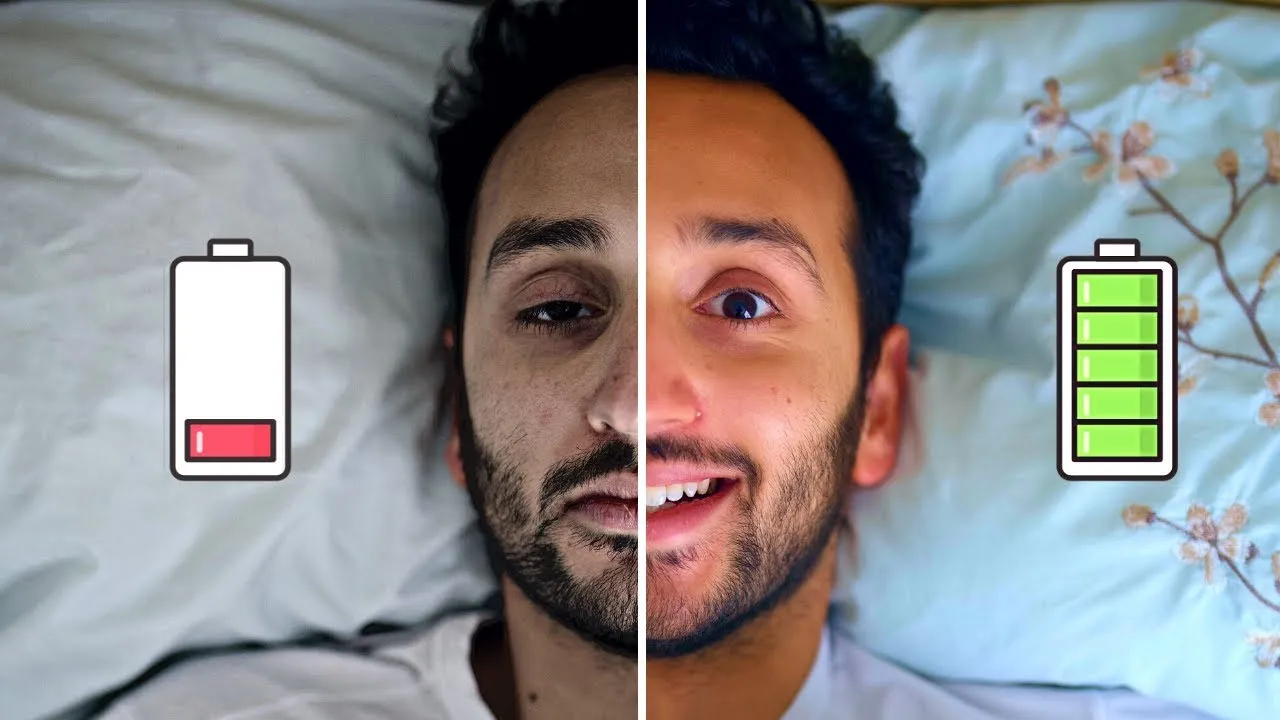













Sleep is the single most effective intervention for resetting brain and body health, more important than diet or exercise; insufficient sleep costs nations billions annually, impairs cognitive function, weakens the immune system, increases risk of obesity, diabetes, cardiovascular disease, and Alzheimer's, and sleep deprivation compounds over time like financial debt, making consistent, quality sleep essential for long-term health and well-being.
Sleep Expert Matthew Walker on the 6 Science-Backed Sleep Hacks You Need
Added:Understanding the circadian rhythm, the body's internal 24-hour biological clock regulated by light and darkness.
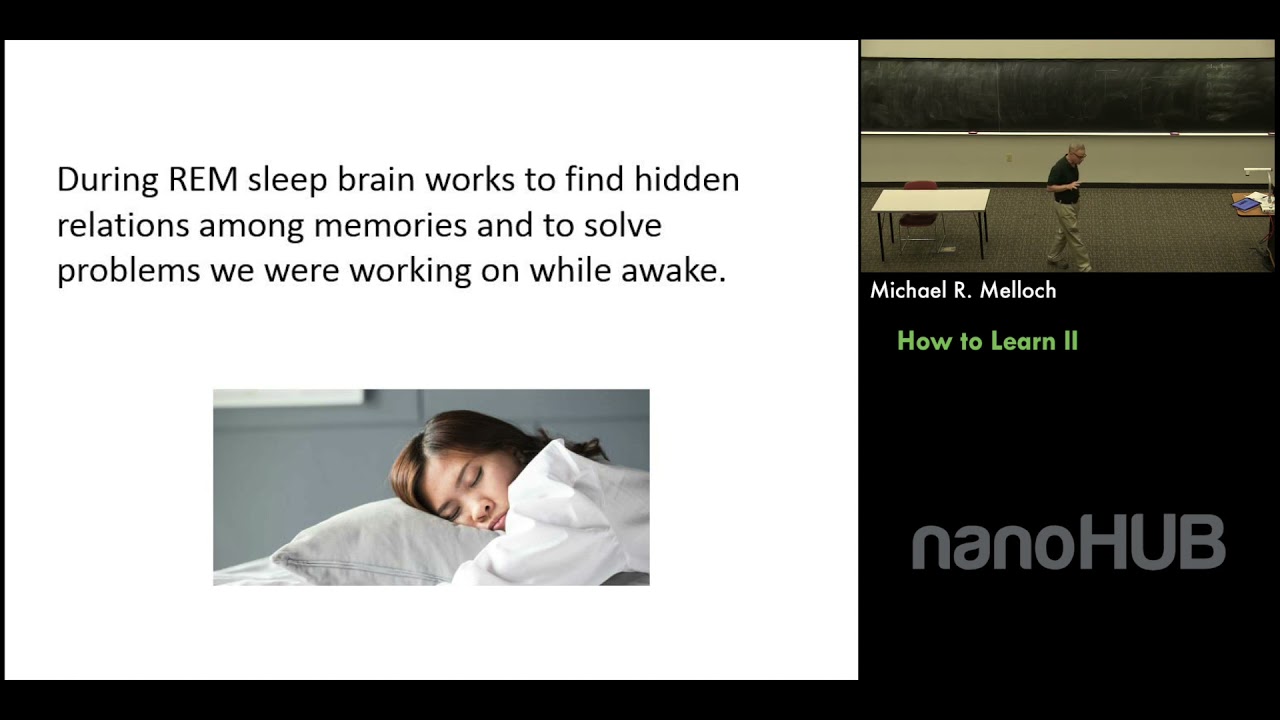
The basic architecture of sleep, specifically the distinction and cycles between REM (Rapid Eye Movement) and non-REM (NREM) sleep.
The concept of homeostatic sleep pressure, driven by the accumulation of the chemical adenosine in the brain during waking hours.
The physiological role of melatonin, a hormone produced by the pineal gland that signals to the body that it is time to prepare for sleep.
Exploring individual chronotypes (e.g., 'night owls' vs. 'morning larks') and how genetic variations affect personalized sleep schedules.
The functioning of the glymphatic system, the waste clearance system of the brain that operates primarily during deep sleep to prevent neurodegenerative diseases.
Clinical sleep interventions and therapies, such as Cognitive Behavioral Therapy for Insomnia (CBT-I), and the pharmacology of sleep aids.
The impact of chronic sleep deprivation on cardiovascular health, metabolic function, immune response, and emotional regulation.
6.4M views129.1Klikes2:05:41Original Release: 2023-03-09
when you're struggling with sleep in the middle of the night and you're wide awake in the last hour before bed try this experiment I'm I'm sold Matthew Walker neuroscientist and best-selling author and one of the world's leading researchers in sleep science it's gonna blow your mind there's a global sleep loss epidemic shaped by this thing called the modern world what Society wants is that you're either producing or you're consuming in fact the CEO of Netflix his statement was that we are to commit war against sleep we have this mentality in business less sleep equals more productivity that is just not true insufficient sleep costs most Nations about 411 billion dollars your rates of obesity cardiovascular disease mental health conditions all of these things escalate if that wasn't bad enough oh my God if you're not getting sufficient sleep then 60 of all of the weight that you lose will come from lean muscle mass and not fat not the muscle how would you redesign Society to help us to sleep better so first I would feels like caffeine is a miracle drive with no apparent cost was I wrong or was I right wrong caffeine will hurt your sleep in three ways most people are not aware of so if you have a cup of coffee at midday what happens is that before we get into this episode just wanted to say thank you first and foremost for being part of this community um the team here at the diver CEO is now almost 30 people and that's literally because you watch and you subscribe and you um leave comments and you like the videos that this show has been able to grow and it's the greatest honor of my life to sit here with these incredible people and just selfishly ask them questions that I'm pondering over or worrying about in my life but this is just the beginning for the day of this year we've got big big plans to scale this show and to every corner of the world and to to diversify Our Guest selection and that's enabled by you by a simple thing that you guys do which is to watch so if there's one thing you could do to help this show and to help us continue to do what we do it's just to hit the Subscribe button if you like this show if you like what we do here if you watch these episodes please just hit that subscribe button means the world let's get on with it [Music] I have spent the longest time trying to sit down with you on this podcast I'm very very happy to spend some time with you today and that is because your your work is now world renowned um and it's a very very important work but as is the case with a few of the recent episodes in this podcast I wanted to start by asking you in your view what is it you do and why is it so important in your mind that you do it well firstly thank you so much for having me here and having this conversation it's an incredible privilege to sit with you um why do I do what I do and why do I think it's important um sleep I would argue is the single most effective thing that you can do to reset your brain and body health and I don't say that flippantly it's not as though I'm dismissing exercise or Diet those two things are absolutely critical but if I were to take you the individual and deprive you of exercise for a day deprive you of food for a day deprived you of water for a day or deprive you of sleep for a day 24 hours and I were to map your brain and body impairments it's not even a competition that one night of lost sleep relative to those other things it dwarfs the only thing I lose out against is oxygen if I deprive you oxygen you're going to Puff out of existence a little bit quicker than you will with a lack of sleep so sleep to me I think is the elixir of life it is your life support system and as best we can tell I would argue it's Mother Nature's Best effort yet at immortality and so in that regard that's why I when I look across all of the studies and all of the data it's so compelling to me and part of the reason I think it's I've desperately tried and I haven't done a good job but I've tried to offer some public mission of reuniting Humanity with the sleep that it's so bereft of is because it does appear that there is a global sleep loss epidemic if you look at the numbers people are struggling so desperately with their sleep so we have all of this knowledge this incredible knowledge of sleep and how important it is and it's a perfect storm colliding with this great sleep depression in modern society and for that reason I just felt as though what can I do to try to help offer this voice and this science and I am but a scientist and I stand on the shoulders of all of my colleagues and all of these Giants in the field I'm just a researcher so that's a little bit about I guess who I am but more about why I do it and why I think it's important if I were to try and Define your sort of unless I hate doing this because it requires the application of some kind of narrow label if I was to try and Define what your title is in your own words what would that be so I'm just a professor of Neuroscience of brain science at the University of California Berkeley um I am I am not a medical doctor just FYI for all of the things that we will talk about in this conversation so I'm just a PhD just a PhD yeah you know that's um incredibly humble of you but but I would assert that you're without a shadow of a doubt the leading author scientist commentator voice as it relates to the topic of sleep and my my question from that is where did that begin like where did that start in your life in the Journey of your life when did sleep become the thing it occurred to me or happened to me I should say when I was doing my PhD I was studying people with dementia and we were trying to understand what type of different dementia that they had very early on in the course of their disease and we were looking at patterns of brainwave activity so I was placing electrodes all over the head and I was measuring them and I was trying to differentially diagnose them very early on and I was getting no good data whatsoever it's miserable nothing was was Landing and one day I went home at the weekend and sort of with all of my printed journals and I go to the my doctor's residence and have this sort of igloo of journals around me that I would sit and read at the weekend um and I was which probably tells you everything about my social life at the weekend if that's what I was doing but um so I was reading these journals and it occurred to me that some of these dementias were eating away at the Sleep Centers in the brain and others would leave them untouched and at that moment I realized I'm measuring my patience at the wrong time I'm measuring them when they're awake should be measuring them when they're asleep started doing that got amazing results and at that point I wanted to ask the question well I wonder if the Sleep problems are not simply a symptom of the dementia I wonder if it's a potential cause of the dementia and at that point I started to think well so then what is this thing called sleep and what I learned is that some of the greatest Minds in the past 100 years had tried to answer a very simple question why do we sleep and you know 30 years ago in fact the crass answer was that we sleep to cure sleepiness which tells you nothing about you know it's like saying I eat to cure hunger well no you that's not the right answer now 30 years later we've had to upend the question and we now have to ask is there any physiological system in your body is there any operation of your mind that isn't wonderfully enhanced when you get sleep or demonstrably impaired when you don't get enough and the answer seems to be to be nother so my journey into the science of sleep really was an accident but at that moment in time when I started reading about sleep I utterly fell in love with the topic and it is a love affair that has lasted me over 20 years I think it is the most beguiling Topic in all of science I'm biased of course and I will never study anything different I know that now I'll study it to the end of my career and until the end of my life wow I've never heard anybody say to me on this podcast that they would study the same topic for the rest of their life and you're a young man that's a you've got a long way to go actually the amount you've been sleeping it's very kind of you to say yeah I I wish I'm moving into the foothills of middle age rapidly but no I I'm so fortunate in what I do um to have found it or for it to have found me you know if I won all of the money in the world tomorrow I would genuinely genuinely not do anything different um I I am so fortunate well I probably start trying to fly like business class or first class that would be nice but other than that um I would do nothing different and I I'm very mindful of that because that sounds very privileged and I know a lot of people endure what they do for a living rather than enjoy what they do for a living and I know how lucky I am so I don't mean to be dismissive of of people in that regard I just know how much I love what I do you you asked a question now which is um you you posed a question which many people have tried to answer you gave the the answer from 30 years ago about you know why do we sleep um and it dawned on me as you said that that I've never asked myself that question I've never even pondered the thought of why I sleep I mean I know what happens when I sleep but do I know why my body can't just find another way why can't my body stay awake for the 24 hours I know some animals they sleep half their brain and then the other half kind of it doesn't happen whatever why why why do we sleep it's a puzzling question because when you think about it from an evolutionary perspective it makes no sense whatsoever sleep is utterly idiotic because when you're sleeping firstly you're not finding a mate you're not reproducing you're not foraging for food you're not caring for your young and worst of all You're vulnerable to predation now on any one of those grounds but especially all of them as a collective sleep should have been strongly selected against during the course of evolution but from best we can tell sleep evolved with life itself on this planet and it has fought its way through heroically every step along the evolutionary path and what that has told us is that sleep must be essential at the most basic of biological levels and now we understand that mother nature didn't make a spectacular blunder with this thing called sleep sleep for example will restock the Weaponry in your immune Arsenal and it will make you a more immune sensitive individual so your more immune robust when you wake up we also know that it regulates your blood sugar levels it controls your appetite hormones it also regulates your sex hormones testosterone estrogen sleep upstairs within the brain will fixate memories and help you learn and remember sleep will de-escalate anxiety it will reduce your emotional difficulties and traumas sleep will actually cleanse away the Alzheimer's toxic proteins that build up in the brain you know the list is endless these are all of the reasons that we need to sleep but why can't I just do what those animals do where they half their brain falls asleep after the brain stays awake is that at all linked to the fact that we we live in tribes so we are essentially although we're you know there might be 10 people in the tribe where all 10 of the tribe so we can rest at different times and kind of cover each other's backs or gosh yeah so actually there are two nested very insightful questions there the first is this notion of what you're describing which is what we call uni hemispheric sleep which is just a fancy way of saying you can sleep with one half of your brain and the other half is wide awake now there are only a few species that can do this um for example aquatic mammals dolphins are a great example we can place actually electrodes on their heads and you can see that one half of their brain will be fast asleep it will be in deep deep non-rem sleep the other half of the brain will be frenetic wide awake and in part for them the reason is because they need to maintain aquatic Mobility you know they need to keep surfacing for ER otherwise you know that's not going to be a good outcome we also know that uh birds or even many avian species will have uni hemispheric sleep and you can actually see this there's some great YouTube videos online where they will film one half of the sort of the side of the The Bird's face and the eye is closed and what it means is that the other half of the brain because the brain is actually the left half controls the right side the right side controls the left side so that left side is now fast asleep which is the right eye closed and then you kind of pan around and all of a sudden the other eye is wide awake and it's clearly looking about now this is obviously not for aquatic surfacing to gain air this is for a different reason what happens is that in a flock a bunch of birds will all land on a branch now all of the folks in the middle they get to sleep with both halves of their brain they can sleep with both halves or just one half all of the folks in the middle they get to sleep with both halves the unfortunate girl or guy who sort of lands at the end to the far end they will actually sleep with one half of their brain so one half of the flock the entire flock has one eye 180 degrees of sort of half panoramic view out the other bird on the other end will have the other half of the brain asleep with the other eye awake giving the other 180 degree view of protection vision and therefore the entire tribe has a 360 degree assessment now you would think in furnace that once those guys or girls at the end have done their Duty they get to move into the middle and they get to sleep with both halves no that's not what happens what they will do after a while is that they will stand up they will turn around 180 degrees sit back down and switch the other sides of the brain so to to just be clear the complexity of wiring and architecture that has to happen for one half of the brain to be deep in sleep and the other half to be wide awake is astronomically hot I mean it's incredibly difficult to create that wiring what that tells me is that if sleep was dispensable if it was negotiable then mother nature would have just found a different way for us to get all of these brain and body benefits and not gone to all of the evolutionary trouble of figuring out this fancy wiring for half brain sleep in other words you just can't get away from sleep you have to sleep but your second question I think is is even more fascinating which is us as a tribe because we are a tribe species now there is something else that we call your chronotype are you a morning type evening type or somewhere in between and by the way you don't get to decide it's not your choice you know this notion of these go-getter type A's who say everyone has to be awake at five in the morning you know you go to the gym you blast out a workout for an hour and you're at the desk by 6am um you have no choice if you're an evening type you're an evening type it's hard-coded we know that right now there's at least 22 different genes that dictate what you are morning type evening type or somewhere in between and it's about third third split across the population why is it a split why are we nicely spread out across our chronotypes for exactly the reason you described because when we're in a tribe if we all sleep at the same time we're all vulnerable for eight hours but if you were to insert some genetic variability into when people have a desire to sleep you've got the morning types who maybe go to bed at 9 00 pm and are waking up let's say at 5 00 am and then you've got all of the extreme evening types who are going to bed at 2AM and waking up at maybe 11 or midday so that way the everyone gets their eight hours of sleep but the entire tribe the nucleus of this group of homo sapiens themselves is only vulnerable for maybe just two or three hours so it's a clever solution that Mother Nature has come up with to say everyone gets there eight hours but as a species you're only going to be vulnerable for two to three hours max when everyone at least as a collective is sleeping absolute genius I used to think it was a load of nonsense that this Chrono type thing um it was actually on this podcast where I learned about its existence and then I went on YouTube to learn more and your video came up if you're explaining it because I thought I was pondered by my partner goes to bed super early wakes up super early I go to bed late wake up late um I'm gonna ask you this question actually because because I've wondered this in that situation where I'm sleeping in bed with a partner that has a different chronotype yeah it can have an impact on my sleep right because of the way that our sleep cycles work and the REM sleep in the stage one deep sleep etc etc if she's waking up when I'm pulling into REM sleep I she's waking up at 5am but at 5am because I've gone to bed later my REM sleep has just begun that has quite a significant impact on me right if she is waking you up yeah she's waiting if she wakes me up then it's non-trivial and likewise if you're waking her up as you're getting into bed on the front end of sleep so it's very difficult one of the things that couples will cite if they break up firstly is usually about a third of them will cite sleep difficulties or sleep issues really as a as a cause of their their breakup or at least as a contributing factor to that breakup one-third yeah that it's one of at least one of the factors when you go it then in and when you double click to say okay then what it is about this sleep kind of tension between the two of you one of those things is a mismatch in chronotype and you can see this when you know people I think this you know on dating profiles now someone was telling me people will even say like I'm a morning type or I'm an evening type as if you're stating up front this is part of my identity and just FYI be forewarned because maybe it's been an issue for them in the past this is why I often speak about the notion of what's called a sleep divorce to prevent a real one now it's not for everyone um a sleep divorce is where you sleep in separate locations and when we've surveyed people um both uh use it in the from the Sleep Council in the United Kingdom and also in the National sleep Foundation here in America the data is about the same one in four people will say that they sleep in different locations with their partner so almost a quarter of people in relationships will sleep in different locations we think it's potentially an underestimate because if you survey people anonymously then a third of them will report waking up at least in a different location the next morning and part of the reason that it's a taboo is because people think well if I'm if we're not sleeping together then we're not sleeping together the exact opposite is true that when a couple is sleeping well we know that the sex hormones are improved testosterone men estrogen and uh at least an icing hormone in women we also know that your um desire to be intimate with your partner is increased what we found is that for an hour of extra sleep if a woman gets an hour of extra sleep her libido desire to be intimate with her partner increases by 14 percent now to give you some context the FDA drugs for improving or increasing libido in women drugs such as violisi here clinical drugs they will increase it by about 24 and that's a pharmacological agent but here just the added non-pharmacological benefit of one hour of extra sleep will get you more than 50 percent of the way there so I want to just remove that notion of the stigma of that if you're not sleeping together you're not sleep it's usually quite quite the opposite um I would say that part of the the challenge though is that if we look at all objective measures if I measure your sleep and the sleep of your wife if when you're sleeping separately versus when you're sleeping together it's very likely that objectively you will both be sleeping worse when you're sleeping together that's what the science tells us however what's interesting is that when you survey people and say how satisfied are you with your sleep which is a subjective measure people will say I'm actually more satisfied with my sleep when I'm with my partner than when I'm sleeping alone so there's a mismatch here objectively your sleep is better but subjectively you still prefer that and of course it's natural you know we there is safety there's Security in co-sleeping there is this sort of connection that we get you you can approach it if you want just be honest with yourself and be honest with your partner and you can start by saying look this isn't forever I just want to say Let's do an experiment for a week 10 days let's let's just try it and see how it goes it doesn't need to be permanent because what you actually miss are the book ends of sleep for the most part the two of you are not conscious for most of the experience of sleeping together it's really getting into bed instead of having a kiss or a cuddle or and sort of waking up together in the morning and sort of now obviously when you're a mismatched chronotype that's also it can be a challenge too so you can still have a sleep divorce but you can set up a system where you will go in and you'll say your good nights and you'll kind of get into bed have a kiss and cuddle and then you Retreat to a separate location and you can repeat that same process so I I don't want to sort of believe at the point of a of a sleep divorce but um people can certainly explore there is something called a halfway house which is called the Scandinavian method which sounds far more salacious than it actually is it's simply that you buy two beds and you put them side by side in the same room and therefore the amount of disruption physical um disruption that happens by way of sheets and movement is decreased but that doesn't solve it all sometimes there is snoring uh sometimes there is sleep talking those things are not obviated by the Scandinavian method when you think about where Society is I was I was going to ask you you know you said you wanted to to do the work you're doing now for the rest of your life um so do you think the work you're doing now is going to become increasingly more important and relevant I.E is the problem gonna get worse or is it going to become less significant and less relevant based on the trajectory of societies you see it you know I'm mixed I think when I wrote the book I started writing uh a book that was called why we sleep back in probably about 2014 or 15 and at that point sleep was the neglected stepsister in the health conversation of that day you know we were speaking a lot about diet and exercise which was wonderful but there was no voice of sleep and I was so sad about that because I could see so much disease and suffering that was coming so clearly by way of a lack of sleep but it wasn't there on the public buffet menu for consumption of knowledge and so that was part of the motivation for trying to write the book so I would say now and this is not because of me or the book or anything like that but is is sleep more of a conversation in this day and age than it was six or seven years ago I think I would say yes there is a greater awareness of of sleep um but with that awareness I want I think one can still question the pragmatics meaning just because we're talking about it more does not mean that people are still failing to either get the sleep that they need or that they are unable to get the sleep that they need and those two things are different one is that you are healthy and you can generate the sleep that you need but you don't give yourself the opportunity time or life I should say sometimes because it's sometimes not your choice life does not give you the chance to get sleep and if only you had the chance you could sleep that's one version the second version is no I'm giving myself the right opportunity to sleep but because I'm anxious or because of other issues I am not able to generate sleep I suffer from insomnia and sleep problems so those two things I don't see having changed since you know I think this public movement this increasing movement of sleep conversation came on the table so in that regard I'm more pessimistic than I am optimistic and I think it will only get worse if you look at rates of insomnia for example they're only increasing they're only escalating rates of anxiety disorders the very same thing and those two things are intimately intertwined so I think I wish I my mission was extinguished within the next couple of years because Society started sleeping wonderfully well I don't think that's going to be the case so I think I've got my work cut out for me um to try and help people with better sleep um is it so it's getting we're getting worse at sleeping I think modernity is making it so much more difficult for us to sleep modernity I think when you think about we often think about sleep as a biological process and it very much is and but also it's so environmental as well as biological meaning when you were to say you know how did you sleep last night think about all of the external factors that changed it well I had to be up at this time I had to catch a flight this time my partner went to bed at this time and she woke up at this time there was this noise that sort of happened I'm now sleeping in a hotel room you know there are countless externalities and those externalities are shaped by this thing called the modern world and in the modern world if I could really be cynical and I'm not someone I'm very optimistic and I'm very non-cynical but you could argue from a capitalistic standpoint that Society does not want you sleeping because what Society wants from a capitalistic point of view is that you're either producing or you're consuming and when you're sleeping you're neither producing and you're neither consuming and so there are lots of ways that I think society and the modern world has conspired willfully or not conspiratorially or not to decrease and try to diminish sleep in fact I think the CEO of Netflix several years ago and I'm sure that YouTube comments will correct me if I'm wrong here but I believe his very statement was that we are we are deciding to commit war against sleep that was their goal and it just stunned me that you know that we're going to go to war with sleep we're going to remove you from your sleep so there are lots of ways in in which I think Society does not help us light is another good example we are a dark deprived Society in this modern era because we're exposed to light we are not giving ourselves the right temperature cues you know we go into an office where it's you know 20 degrees at 70 degrees Celsius whatever it is stock stable then we come home and we regulate our temperature at home to be the same thing we take on board probably too much caffeine in this day and age although I am actually an advocate of drinking coffee and I can explain why too but anxiety as I said is a huge issue all of these things are preventing and classic roadblocks to sleep any of us are getting the sort of recommended daily allowance of sleep as a percentage do you know it seems to be about um one third of most modern civilizations are failing to get the recommended seven to nine hours of sleep a night one third so roughly 30 35 33 roughly yeah and it does that have Geographic variants I in some countries it's worse in some countries it's better I'm thinking about the UK versus the us or you know Japan or whatever yeah it is and in fact you let me give numbers to the three countries that you've described uh here in the United States the average amount of sleep that people are getting is uh six hours and uh 29 minutes in the UK it's not much better 6 hours and 49 minutes Japan was the worst six hours and 22 minutes now to be clear that's the average what that means is that there is still a large proportion of that bell-shaped distribution of people getting even less than that amount now there are some countries that you look at um that are actually sleeping much better than that I think let me um Mexico for example is um is doing very well if you look at Mexico City uh people are actually sleeping and not too far off from eight hours so there is variability and we can try to understand why which by the way just brings me back while I think about it to your comment of will my work be done not from the because I'm a scientist and I do I have a run a Big Sleep Center at UC Berkeley but the work I do as a hopefully a public advocate for sleep why I don't think it's going to change um anytime soon is because governments aren't really doing much about it and I've tried as best I can and if there is any government out there that listens to this that wants to work with me I'd be delighted I don't remember and maybe you can but any major first world nation government that has had a public health campaign regarding sleep and it stuns me because those same governments have had Public Health campaigns regarding you know eating regarding smoking regarding drunk driving regarding risky behaviors safe sex loneliness loneliness Mental Health suicide where is sleep in that equation and it's such a fundamental ingredient and in fact almost all of those things that I've just described have an intimate relationship with sleep I mean suicide especially we we're starting to do a lot of work with this although it's been hard to get funding but what we found is that insufficient sleep is a precursor to Suicide that sleep disruption seems to predict both suicide ideation in other words suicidal thinking suicide planning and tragically suicide completion as well so if we were to try to have governments create a public health campaign to pull this Archimedes lever on better sleep there are so many other health benefits you know sleep is the tide that rises all the other health boats it's almost like um it's like a mixing deck in a studio you know in those sound Studios where you've seen it and then there's that one button all the way to the end the white button sort of that when you move it up instead of all of the other dials the sort of the red yellow orange green dots they all move up at the same time as well there's this like sort of one mess there's like one ring to rule them all which sleep is that Archimedes lever so if governments could only execute on that the health benefits would be manifold in terms of their consequences it begs the question you know if I were to make you today president prime minister whatever of the world and you had to do you know just a few things to really fix the lack of sleep epidemic there you go diagnosed it um what would those things be if you were in charge how would you redesign Society to help us to sleep better gosh it's such a good question and I've thought a lot about this it almost in Reverse which is to say why is it that we are struggling to get sleep and there is no single answer there are so many different reasons and that's why it's actually a very challenging problem to solve I would go through a descending level of steps so first I would start at the government level and we would get those Public Health campaigns in order next I would go to the professional level because there we have this mentality in business that you know sleep is for the soft Among Us that less sleep equals more productivity and that is just not true and I can provide you with all of the evidence so we need to get rid of this sort of sleep machismo attitude in the workplace where we were where our badge of honor of sleep deprivation on our arms we need to get companies to actually start embracing sleep and I can guarantee you and I can give you all of the evidence as to why if as a company as a CEO if you start prioritizing the sleep of your employees you will be far better off as a company you will be more product based and you will be more profitable and revenue generating sleep is the very best form of physiologically injected Venture Capital that you could ever wish for and in fact the Rand corporation which is an independent survey Corporation what they found is that at a national level insufficient sleep costs most Nations about two percent of their GDP so here in America that number was 411 billion dollars of lost profit caused by insufficient sleep in the United Kingdom it was over 50 billion dollars in Japan it was over 120 billion dollars if I could solve the Sleep loss crisis in the workplace I could perhaps double the healthcare benefit for many of those countries or I could halve the out the education deficit in those countries so the next level I would Target is at business then next step down would be medicine medicine is a classic demonstration here we have Junior doctors or here in America they have doctor residency programs where people are working 20 30 hour shifts and so already doctors are inculcated into the mindset of the uselessness of of sufficient sleep across numerous countries and I think it was maybe over eight different countries we looked at the medical curricula and we asked how many hours of education do doctors get about sleep and what's strange is that you know often doctors you'll go in and you'll have an appointment they'll say okay you know how are you eating and you know what's going on with the bathroom how's the toilet and then you know how are you sleeping as if sleep is one of these Universal Health barometers but what we found is that most doctors will only be given about an hour to an hour and a half of sleep education during their entire medical school education which blows my mind because it is one third of the patients lives but they're only given about 90 minutes of education so no wonder your doctors aren't treating your sleep problems thinking about your sleep problems understanding yourself it's not their fault and plus they're sleep deprived anyway when they're being trained ironically by the way doctors Junior doctors who've worked a 30-hour shift when they finish that 30-hour shift and get back in their car they are 168 more likely to get into a car accident because of their lack of sleep and and back up in the emergency room from where they were just working but now as a patient I mean this the Paradox the irony just stuns me so I next move down to the level of medicine then I would go to education because we don't get taught about sleep in schools and I never got one of those special classes you know I got sort of you know sexual education classes classes about drugs no one came in and told me about the benefits of sleep why aren't we doing that then next I would move down into the family because there is Prejudice in families with sleep it's this notion of parents of teenagers and these Teenagers by the way it's not their fault they have a shift in their chronotype in their circadian rhythm that when they go through puberty when they're going through adolescence they get fast forwarded in time so when they were eight or nine years old they would be going to bed you know sort of early in the evening but now as teenagers they seem to be stubborn and they're staying awake staying awake until midnight 1am and they won't get into bed it is not their fault because they have a biologically wired shift in the tendency of when they want to wake up and when they want to sleep why am I bringing this up about this sort of mismanagement in the home because parents at weekends will go into the room of the teenagers they'll you know pull open the curtains they will pull the covers off and they say you're wasting the day you know and firstly what they're doing is probably trying to sleep off a debt that we've lumbered them with during the week because of this incessant model of early school start times which I'll I'll come back to but within the home if you ask parents of teenagers what percent of parents think that their teenagers are getting sufficient sleep and about 70 of them will say yes my teenager is getting sufficient sleep when you look at the data only about 15 of teenagers are actually getting the sleep that they need so what happens is a parent-child transmission of sleep neglect they're saying you're lazy you're slothful so then what happens well in 15 20 years time now that teenager has got a teenage child what do they do they go back in the room they rip the curtains open they say you're wasting the day because that's what they were told so we need to break that down too and then finally we need to come to the individual and we need to solve the individual's sleep problems so it's a very long answer and I'm desperately sorry to a very big question as to what I would do if I was off for a day but I hope that gives you some sense of of the depth that I think we need to go to I've tried to think about the question a lot it's not particularly well executed I don't think I was very eloquent there but I hope that gives a sense it sounded perfectly eloquent to me it sounded like a Manifesto so um hopefully if there are people listening from governments which I'm sure there are because you know I hear about that sometimes which is quite bizarre but um I I'm sure they'll be getting in touch with you very quickly going back to the top of that that stag on the company level so as a CEO or a CFO or an employer whatever um there are some companies that are incentivizing their team members to sleep right is there any data showing the efficacy of that is data that we have and it's bi-directional both the efficacy of when you increase sleep and also the detriment when you don't allow sleep so a great example was um NASA back in the 1980s they were looking at using naps in the astronaut program because when you're up and you're orbiting Earth you will actually be cycling Earth you know really quite quickly and you will get to see depending on the orbit maybe somewhere between 10 to 15 sunrises every 24 hours which sounds I mean amazing and remarkable but trust me in terms of your sleep it is very dislocating so they were looking at how to use naps strategically to improve performance because the weakest link on any space mission and we've done some work with NASA um is the human being themselves and they can cause catastrophic failure now if you make an error at work and you're here terrestrially on the ground you know it's probably non-trivial make an error when you're up in space it can be a big deal so they were looking at that and what they found was that these naps anywhere between 20 minutes to an hour could increase productivity on these different tasks by about 34 and increased General alertness by over 50 percent and in fact the data was so powerful that it ended up being transmitted to all of the terrestrial workers on the ground that NASA would start to in it was what was called NASA naps it was a NASA nap culture now NASA isn't desperately compassionate by any means it's a great organized but they just like companies like Google or Facebook they understand the pounds and pennies cents you know the dollars and the cents version of productivity so anything that returns productivity they will invest in and some of those companies you know I um I did some work uh Google uh during a sabbatical and there on their campus they will have these nap pods and they will have these what are called rooms where you can go and you can take a nap so think about 20 years ago you would never imagine a company paying you to sleep on the job if you have caught sleeping on the job you'd probably be fired now companies are incentivizing it not because they are thinking compassionately or empathetically about the health or the wellness of their individuals it is because they understand that it transacts marked productivity so NASA is a good example when you give sleep you get something back but I can go back to the reverse of that why we think that a lack of sleep does not equal more productivity is for at least five reasons first when you survey and we've we can do these studies in the in the laboratory too when you undersleep employees they will choose less challenging problems so if you give them an array of work problems they will just simply you know check email they'll listen to phone messages they don't dig into deep Project work second of the problems that they do take on in their work they will produce fewer Creative Solutions and after all creativity and Ingenuity are supposed to be the two engines that drive businesses forward in terms of their productivity in their revenue third that interesting finding that we've discovered is that when underslept employees start working in teams they will slack off they won't do their work they will let other people do their work it's what we call social loafing so they ride the coattails of other people's hard work which won't breed a good atmosphere in your company you know trust me the fourth thing that we found is that underslept employees are more deviant that they're more likely to fudge data in spreadsheets they're more likely to falsely claim uh money for reimbursement that was inappropriate the final thing is that a lack of sleep will go all the way to the top of the business chain what we found is that the more or less sleep that a business leader has had from one night to the next to the next the more or less charismatic that employees will rate that business leader from one day to the next to the next even though the employees themselves they know nothing about the sleep that that CEO has been getting it's evidential in how charismatic that CEO is so you can add all of these things up and no wonder you know if you don't snooze you lose in the case of business in that regard that's why I can produce I think a non-trivial case for business by the way the other aspect that is hugely costly to businesses and when I go and speak to businesses about why they should value sleep if you offer it on the grounds of again sort of compassion or mental health probably don't want to listen when you convert it into the cost of the company and how much it's fleecing them in terms of their profits then they start to pay attention underslept employees will take on average about 11 more days uh sick days throughout the year relative to well-slept individuals so you're essentially just paying people additionally for 11 days of work that they will never give you when you are under sleeping them secondly the utilization of Health Care Resources increases by about 80 percent so the cost to either you the company here in the US where your company is paying for your health care or the cost of the government for example in the United Kingdom is astronomical and also then the co what we call comorbid diseases your rates of obesity diabetes cardiovascular disease mental health conditions all of these things escalate as underslept employees continue to get even more underslept so there is no strong case that I've seen that leads me to think businesses should foster the mentality of insufficient sleep quite the opposite so that's hopefully an answer to your question we can look at it bi-directionally when we give sleep back do you get productivity yes when you take sleep away the things implode rapidly yes and is it costly to your company very much so on that point of naps and you know Google sleep pods naps and things like that there was a point in my life where I because I learned about REM sleep and the importance of REM sleeping deep sleep and that happens a little bit further on into my you know the 90 minute look at me trying to tell a Sleep Experts well I love it but you see what I mean like this is my very this is my monkey brain so I didn't understand the subject matter very well still really don't to be honest but in the first it takes me a significant amount of time to get to Deep Sleep into REM sleep how long on average would you say it takes for it for some you know yeah so you will probably go into light sleep in the first 10 to 15 minutes then you'll go down into deep sleep you'll stay there for about 30 40 minutes and then you'll start to rise back up and you'll pop up and you'll have a short REM sleep period and then you complete the non-rem to REM cycle after about 90 minutes and back down you go again down into non-rem and up into REM so on average for human beings it's 90 minutes so I therefore assumed that napping really does nothing because I thought well it takes me so long to get to REM sleep and to deep sleep that there's if I've got 15 minutes 20 minutes to to nap it's just a waste of time right was I wrong or was I right you were understandably wrong okay good I'm happy because I I've always rejected naps because I thought they don't matter because it takes me so long to get to a restorative State anyway so so we've done lots of different studies with naps we and other colleagues uh too and what we found is that naps can transact some fantastic benefits they can improve cardiovascular health lower blood pressure they can improve your learning and memory abilities they can reset the emotional north of your magnetic compass in a good way where you can de-escalate negative emotions and increase positive emotions um so naps certainly are a good thing but with a big caveat that I'll come back to um yes you're right in the sense that to get a full cycle of sleep and to get into REM sleep you would probably have to make that nap about 90 minutes and in fact a lot of the cities that we do we will use a 90-minute nap duration of time so that the brain can cycle through all of those different stages of sleep but you don't need to nor would I suggest that you do what we found is that different stages of sleep perform different functions for the brain at different times of night there are actually four separate stages stages one through four increasing in their depth of sleep so stages three and four are those really deep stages of non-rem sleep stages one and two that's the lighter form of non-rem and then you have rapid eye movement sleep or what we think of as dream sleep and people will sometimes say to me how do I get more REM sleep or how do I get more deep sleep I might response to them is why do you want to get more REM sleep and their answer is what isn't that the good stuff and it turns out that there is no good stuff it's all good stuff you know maybe with the exception of that light stage one non-rem sleep that's shallow sleep and we typically don't like to see too much of that but stage two non-rem sleep three and four they all have their different functions that we've discovered and REM sleep has its functions so you need all of them you can't Short change any of them but for nap what we found is that you can get nice benefits for things like your learning and your memory and it can even reduce some level of anxiety up to about 20 minutes you can in fact you can nap I think the study one of the studies they brought a nap down to about nine minutes in duration and there was still some basic improvements for your sort of General level of alertness and reaction time for example if you're an athlete that's that's non-trivial so um so the reason I would say be careful with naps is for two main um sort of suggestions the first is try not to nap for about longer than 20 minutes because once you go past 20 minutes you really start to go down into those deeper stages of non-rem sleep and if you wake up after about 45 minutes or 60 minutes it's not a problem I'm not suggesting that you shouldn't or you couldn't I'm just saying be aware because when you come out of that deep sleep and you wake up from that deep sleep normally that's not how you wake up you will usually wake up out of lighter stages of sleep or out of REM sleep it's rare that we wake up out of deep sleep but if you nap and you snap for about 40 minutes you'll probably go down into deep sleep and at that point where if you wake up and your alarm goes off then you're going to feel almost miserable and worse than you did before the nap because you have what's called Sleep inertia which is essentially a sleep hangover where the brain is still sort of pulled back into that deep sleep State and it can take you almost an hour before you feel like you're back up to operating temperature and you're up to Motorway speed so I would say keep it to 20 minutes and you don't suffer too much of that inertia you still get some nice benefits also don't nap too late in the afternoon also the final part is if you are struggling with sleep at night if you're someone who has insomnia or sleep difficulties do not nap during the day it's the worst thing that you can be doing because when we're awake during the day we build up a sleepiness chemical in our brain it's called adenosine and the longer that we're awake the more adenosine that builds up the more denosine that builds up the sleepier and sleepier that we feel and when we sleep the brain gets the chance to clear away all of that adenosine all of that sleepiness and somewhere between seven to nine hours after sleeping a full night the brain has evacuated all of that sleepiness chemical of that adenosine so that then we should wake up and we should feel refreshed and restored and not needing caffeine to function why is that relevant to naps well it's relevant to naps because when you take a nap you're essentially it's like a pressure valve on a cooker you're just releasing some of that healthy sleepiness that you've been building up and therefore if you are struggling with sleep at night and then you nap during the day it's terrible because you're taking away all of that healthy good weight of sleepiness that we've been trying to build up on your shoulders to give you the best chance of a good night of sleep that's why I would say if you are suffering from insomnia don't nap during the day also even if you are if you don't struggle with sleep at night try not to nap after about 3 P.M in the afternoon or 2 P.M napping late in the afternoon or in the early evening it's a little bit like snacking before your main meal it just takes the appetite off your sleep hunger so try not to do that but naps for the most part if you don't struggle with sleep they are wonderful things just keep in mind the 20-minute sort of idea you mentioned caffeine there a topic I've modeled over over and over again on this show um because as I've said to maybe three or four of my guests now it feels like caffeine is a miracle drug that comes with no apparent cost but when I think about things like anxiety and I know shallow sleep States I've always pondered that maybe caffeine is playing a role in that you said you you're you're Pro caffeine you're a caffeine Drinker yourself so I am not a caffeine Drinker myself but I am Pro coffee oh okay and I'm I'll tell you why I'm very thoughtful about my wording between caffeine and coffee there and to your point it's a it's another astute one which is it would you know is it a miracle drug with no cost in biology and Medicine There is almost no free lunch um and that is true when it comes to caffeine and sleep so perhaps I'll give the skinny on caffeine and how it impacts your sleep but then Circle back around to what seems an oxymoronic statement for me which is why I'm still Pro coffee um caffeine will hurt your sleep and probably at least three ways some of which you most people are not aware of the first issue is the duration of its action so caffeine has what we call a half-life of about five to six hours in other words after about five to six hours half of that caffeine is still in your system what that means is that caffeine has a quarter life of somewhere between 10 to 12 hours so if you have a cup of coffee at noon at midday a quarter of that caffeine is still in your brain at midnight so having a cup of coffee at noon and it's hyperbole in truth probably or it's a little bit hyperbolic but it's almost the equivalent of a coffee at noon as the equivalent of you know talking yourself into bed and just before you turn the light out you Swig a quarter of a cup of coffee and you hope for a good night of sleep and it's probably not going to happen so that's the first thing to keep in mind is that the timing of caffeine the second is that caffeine is a stimulant now everyone knows this everyone knows that caffeine can make you more alert and more awake by the way how does it do that um it comes back to adenosine which is the chemical that we spoke about the sleepiness chemical it's no coincidence that those two things sound the same at the end of the name caffeine and adenosine caffeine will actually race into your brain and it will latch onto the adenosine receptors the welcome sites in your brain and it has very sharp elbows and it will force away the adenosine from those receptors and it will hijack those receptors now at this point you may be thinking well hang on a second if it's latching onto those sleepiness chemical receptors shouldn't caffeine make you more sleepy and the answer is no because what it does is it just latches onto the receptor and it inactivates it essentially so it masks the receptor what caffeine does then is race into your brain you've got all of this sleepiness at 9 00 PM or 10 p.m you have an espresso because you're trying to power through and finish the report or you know the presentation for your sort of your pitch uh deck for your startup company and that caffeine races in it latches onto the adenosine receptors and blocks the signal of adenosine so now your brain was thinking I'm starting to get tired it's 10 p.m but now all of a sudden that signal is blocked and a caffeine is like hitting the mute button on your television remote controller it just mutes the signal of sleepiness so now you think well no I don't feel sleepy anymore and here's the danger that even though well when the caffeine is in your system and it's latched onto the receptors that adenosine is still there it's not going away in fact if anything during the course of the caffeine in your system it continues to build and build and now when the caffeine finally gets metabolized and excreted out of your system not only do you go back to the sleepiness that you had many hours before it's that plus all of the adenosine sleepiness that's been building up during that time in between so you get hit with this huge tsunami wave of sleepiness and that's what we call the caffeine crash so the one of the issues so that's sort of caffeine in terms of how it works in its timing another issue is that it creates anxiety just as you said and anxiety is probably one of the greatest enemies of sleep it's one of the principal reasons that underlies insomnia is a physiological state of anxiety that your fight or flight branch of the nervous system is ratcheted up that's what caffeine will do it needs to do the opposite for you to fall asleep that's why you can have what we call the tired but wired phenomenon where you say I'm so desperately tired I am so tired but I'm just so wired that I can't fall asleep it's because your nervous system is too amped up caffeine will trigger that amping up then at that point if you're struggling to fall asleep because you've got too much caffeine on board it is what we call anxiogenic so now you start to worry and the last thing you need to do when your head hits the pillow for good sleep is worry because when you start to worry you start to ruminate and when you ruminate you catastrophize and when you catastrophize you're dead in the water for the next two hours when it comes to sleep because we have this sense that you know things at night in the darkness of night are so much bigger than they are in the brightness of day and we start worrying you know in this modern era we're constantly on reception and very rarely do we do reflection unfortunately the only time when we typically do a reflection is when we turn off the light and our head hits the pillow and that is the last time you want to be doing reflection so that's the the second problem with caffeine it's anxiogenic and it only makes you sort of almost like the Woody Allen neurotic of the Sleep World the final part of caffeine is that it's very good at blocking your deep sleep so we've done a number of these studies where we'll give people a standard dose of caffeine let's say 100 150 milligrams 200 milligrams which is probably you know a cup and a half of good strong coffee and then we put you to bed and we look at the amount of deep sleep and it will strip away your deep sleep by about somewhere between 15 to 30 percent now to put that in context to drop your deep sleep by 30 I'd probably have to age you by about 40 years for zero or you could do it every night with an espresso with with dinner and that's one of the problems people will say to me look I'm one of those people who I can have two espressos with dinner and I fall asleep fine and I stay asleep so no harm no foul well not necessarily because even if you fall asleep and you stay asleep you're not aware of the lack of the deep sleep that you're not getting because of the caffeine and so now you wake up the next day and you think well I don't remember having a hard time falling asleep I don't remember waking up but now I'm reaching for two or three cups of coffee the next morning rather than my standard one cup of coffee because I don't feel refreshed and restored by my sleep because I was lacking the amount of deep sleep and deep sleep what does that Rob us of the lack of deep sleep so lack of deep sleep deep sleep is critical for regulating your cardiovascular system it's the time when we do replenish the immune system it also regulates your metabolic system so it controls the hormones such as insulin that will regulate your blood sugar and you will become blood sugar dysregulated without sufficient deep sleep upstairs in the brain deep sleep will strengthen and consolidate and secure new memories into your brain they will prevent those memories from being forgotten deep sleep is also the time when we cleanse the brain of metabolic toxins particularly the toxins that are related to Alzheimer's disease so getting a lack of deep sleep is I would say a non-trivial thing in that regard but I don't want to be also puritanical here and this is where I'm going to change my title tune I am not here to tell anyone how to live their life I have no right to tell anyone how to live the life I'm just a scientist all I want to try and do is gift you the science and the knowledge of sleep so that you can make an informed choice and after all and the same is true for alcohol too and sleep you know life is to be lived to a certain degree you know no one wants to be the healthiest guy in the graveyard I don't want to be that way too I want to live life just with moderation the reason I don't drink uh caffeine is not because I'm so pure technical I want to be the poster child of good sleep I love the smell of freshly ground coffee in the morning and it's a great ritual it's just that I've ruined my genetics and I am one of these slow caffeine metabolizers so you can do these genetic kits online and they will tell you are you a slow metabolizer or a fast metabolizer so that's the variability that's why some people say look I'm pretty immune to caffeine others will say no I'm not um why do I now favor coffee I was actually quite anti-caffeine and coffee when I first came out with the book just looking at the studies but now the data is immensely compelling the health benefits associated with coffee are undeniable study after study after today and we can put them all together in this big what we call a meta-analysis study and it is so strikingly clear that coffee drinking coffee is a good thing for you from a health perspective two things to say about that the first is that it's got nothing to do with the caffeine and a lot of people have sort of rightly challenged me to say look you say how problematic sleep can be when you're drinking too much caffeine but yet coffee is associated with many of the same health benefits that sleep is associated with but coffee is supposed to hurt your sleep how do you reconcile those two Matt Walker and the answer is very simple antioxidants because it turns out that the Coffee Bean contains a whopping dose of antioxidants things such as is what's got other things such as Cafe style but it's got a bunch of incredible antioxidants probably the most powerful of them in terms of the Coffee Bean is something called chlorogenic acid now don't worry it's not chlorine it's not chloride it's not bleach chlorogenic acid is very different and what's happened in the modern world is that we on we have and struggle with our diet so much because we don't eat enough Whole Foods Etc so what's happened is that the Coffee Bean has been now asked to carry the Herculean weight of all of our antioxidant needs on its shoulders and where most people get the majority of their antioxidants is by way of drinking coffee that's why coffee is associated with so many health benefits it's not the caffeine case in point if you look at the studies with decaffeinated coffee you get very similar health benefits again it's not the caffeine it's the coffee itself so the bottom line here is drink coffee but I would say the dose and the timing make the poison so try to limit yourself to about two cups of coffee three cups of coffee maximum because if you look at the health benefits by the way it's a dose it's not a dose response we're at linear where the more and more coffee you drink the more and more healthy you become it Peaks at about two to three and then actually starts to go down in the opposite direction for lots of reasons that we can speak about so dose and the timing make the poison when it comes to coffee so you drink decaf so I do drink decaf so I will drink coffee just because I love the smell and I do enjoy the taste of it but I drink uh decaffeinated coffee I would love to drink a caffeinated coffee too because I you know I'm sure it would be interesting because I work out every day and I work out every morning and so many of the health coaches that I speak with and health professionals say you know you should definitely get a shot of caffeine and boost your workout and actually the data on that is pretty clear too that you're lifting for example in the gym and your metabolic activity is stronger when you've had pre-caffeine doses but it's also stronger when you sleep so but exactly and that's the problem so and sleep is I would argue much more beneficial to health and if you're trying to work out or you're trying to be an athlete or perform sleep Will trump caffeine five ways till Tuesday I mean sleep is probably the very best legal performance enhancing drug that we know of that not enough athletes are abusing as you might know the show's now sponsored by Airbnb I can't count how many times airbnbs have saved me when I'm traveling around the world whether it's you know recently when I went to the Jungle in Bali or whether it's when I'm staying here in the UK or going to business in America but I can also think of so many times where I've stayed in a host's place on Airbnb and I've been sat there wondering could my place be an Airbnb as well and if it could be how much could I earn it turns out you could be sitting on an Airbnb gold mine without even knowing about it maybe you have a spare room in your house that friends stay from time to time you could Airbnb that space and make a significant amount of money instead of letting it stay empty that in-law that guest house that Annex where your parents sometimes stay you could Airbnb that and make some extra income for yourself whether you could just use some extra money to cover some bills or for something a little bit more fun your home might be worth a little bit more than you think and you can find out the answer to that question by going to airbnb.co.uk host one of the other sort of ongoing stereotypes that I've always wondered if it was wrong or right or whatever now I get a chance to ask you is about this culture of sleep medication so I've got some friends who who might have I don't know prescribed sleep medication but I've got a lot of friends also that use what they call sort of natural they always use the word natural natural something so it's like natural sleep tablets yeah what's your perspective on this culture of us of humans taking sleep tablets to get them to feel sleepy and go off to sleep at night usually when people ask me that question personally I the first thing I ask them is why is it that you think you're not able to sleep and try to reverse engineer the question from there before we even start thinking about sticking Band-Aids on wounds I firstly want to ask what's causing the infection because we can keep bandaging it for all we like but if it keeps festering it's probably not going to go away anytime soon is there a problem to keep bandaging it it is a problem right now we don't typically Advocate sleeping pills as the first line defense agent against or for insomnia as a treatment in fact in 2016 the American cult and again this is me simply describing the science this is me being descriptive of the science not prescriptive in terms of medicine because I'm not a medical doctor um but in 2016 the American College of Physicians they had a expert panel who surveyed all of the literature on classic sleeping pills and what they suggested was that sleeping pills must no longer be the first line treatment for insomnia it has to be cognitive behavioral therapy for insomnia or we call cbti which is a psychological intervention that we can speak about but their recommendation was that they found I think their wording was small and of questionable clinical importance in terms of the benefits of sleeping pills now there is a time and a place for in clinical medicine for sleeping pills but usually as an adjunct in combination with cognitive behavioral therapy they are not advocated for long-term use but so they're usually advocated for short-term use weeks most people have been on them for months if not years these classic sleeping pills and that's a problem because those sleeping pills are in a class of drugs that we call the sedative hypnotics and sedation is not sleep for some subset of some people there are some of these quote unquote sleep supplements that may benefit but overall the studies are very clear none of them are efficacious and when you think about it it makes sense if there was some cheap sleep supplement that you could buy on Amazon that was the shangri-lar of good sleep that was this miracle sleep drug don't you think that a pharmaceutical company would have patented it 20 years ago and be making billions of dollars from it you know that alone tells you all that you need to know about you know these natural sleep supplements cognitive behavioral therapy for insomnia though seems to be the kind of the front line of prescribed defense against a lack of sleep in so many conditions what exactly is that therapy aiming to do what like what does it do for for somebody great question so in some ways that the title tries to suggest what it what it does but not particularly well perhaps so it focuses on cognitive aspects and it focuses on behavioral aspects so for the cognitive aspects when we do cognitive behavioral therapy working with the patient we'll try to focus on thoughts and beliefs and ideas around sleep do they have anxiety around the bedroom most of them do I can't sleep because I can't sleep so every time I walk into the bedroom my bed is the enemy and I look at the bedroom I look at the bed and I just know that that means I'm going to have a bad night of sleep so what's happened is that at that point your sleep controls you and you've lost all confidence in your ability to sleep and we need to course correct that so one of the things we do in cognitive behavioral therapy is that we lower that anxiety and we say look everyone has a bad night of sleep even a bad couple of nights of sleep in fact I will tell you I don't sleep perfectly well all the time too I've had at least two very severe bouts of insomnia in my life we all have a bad night of sleep it doesn't mean that tomorrow you're going to wake up with depression or Alzheimer's disease don't worry you're not going to get cancer you know just because you've had a bad night of sleep so we start to change people's misbeliefs about sleep and we try to get them back from being catastrophic about this idea of my not sleeping so we that's the cognitive aspect we start to lower their anxiety around the bed and and the bedroom we start to try to build confidence back we start to reduce their expectations about you know what is reasonable sleep well right now you're getting four or five hours of sleep and we can do better but don't start thinking that you need to get eight hours of sleep straight out the box let's just manage it that's just because it's going to stress you out right it's only going to make matters worse right okay you know when you're struggling with sleep in the middle of the night and you're Wide Awake you're laying in bed and you're thinking oh my god I've got five hours left before I've got to go to work it's the last you know it's a little bit like trying to remember someone's name the harder you try the further you push it away so would you say and that's what do I do in that situation you it's 2 A.M in the morning you've got to be up at seven there's a flight you're getting on so whatever yeah what should one do because from what I was reading in chapter 14 I was I was hearing that maybe I should get out of bed or not just sit there and ruminate you know into the early hours of the morning or do I stay in bed and do something what does one do the prototypical recommendation is that after about 30 minutes of time a week you should get out of your bed and you should just go to a different room and do something like you know read a book or listen to a podcast don't eat because it then trains your brain to wake up to do that don't stop working or getting in front of a computer screen you know I said listen to a podcast sure you know just make sure your phone's in you know you don't start scrolling any more than that but you can do relaxing things stretch meditate the reason is because if you start to spend a lot of time awake in your bed your brain is an incredibly associative device and very quickly it will start to learn that this thing called your bed is this place where I'm always awake and therefore you start to learn through this repeated Loop of behavior that I'm always going to be wide awake in bed and we need to break that Association and that's why we say get out of bed after about 30 minutes because you're just training your brain to think that this thing called my bed is the place where I'm never asleep and we want to break that and only return to bed when you're sleepy and there's no time limit for that and that way gradually it's much better because you will relearn the association that your bed just as when you were young is guaranteed that your bed is this place where you will always be asleep the problem with that is many people don't want you know it's the middle of the night it's dark it's cold I'm not I'm just not going to get out of bed so what's your other what what else have you got in your toolbox Matt um at that point I would say okay that's reasonable the first thing I would suggest is meditation you know I am a hard-known Scientist and when I was researching that the book I was you know I just thought this sounds all a bit woo-woo and you know I uh live and work in Berkeley California which is kind of you know the Free Speech you know flower power movement San Francisco flowers and you have business I just thought this is all of it you know holding hands and singing come by ours this is not for me this this meditation stuff I couldn't get away from the strength of the data it was immensely powerful regarding sleep and its benefits on insomnia and sleep so I started meditating and uh now I meditate for 10 minutes before bed every single night and I've been doing that for about four years so I would say if even if it's in the middle of the night and if I wake up in the middle of the night I'll start trying to walk myself through a meditation um you reference their listening to podcasts etc etc you know doing something else to stimulate the brain I when I go to bed I have to have something playing I say have to I shouldn't be that definitive I like to have something playing some kind of sound or noise whatever and much to my partner's dismay my content of preference is serial killer podcasts or documentaries or just like something which is really going to grab hold of my brain and focus me so something like it has to be really interesting to me for me to be able to focus on it my partner is the opposite again she likes um silence why do I listen to serial killers it's different for different people's constitutions yeah yeah and public psychologies uh and you know I can pathologize to you or you like if if you would wish me to but I would say it what's fundamentally going on here with meditation and I'll come back to an alternative too but the reason why some meditation apps as well have now started to do what's called Sleep stories which in some ways is what you're doing a version of with your podcast is Hawks back to when we were kids you know for many parents they would just read a book to the kid you know the children's books good night books because you would read the child to sleep and for some reason we as we developed into adults we thought well we no longer benefit from having a story read to us to help our sleep no it's not true we we benefit hugely in fact the the meditation company calm you know was saved by the the introduction of sleep stories into their app they were doing pretty well as a meditation app but then they started to do sleep stories and it became a unicorn company um in terms of its valuation it broke a billion dollars and it was on the the back of sleep stories and what they realized is that people were self-medicating their insomnia by way of meditation so they latched on to that and then they found that these stories sleep stories were great and you've got now wonderful people people who you've interviewed on the show so what you're doing and what those sleep stories are doing and what meditation is doing it's all the same thing which is that it is taking your mind off itself because when you are struggling to sleep or you've woken up in the middle of the night what you don't want to be doing is focusing on either what you what you what did I do today what did I not do today what did I do poorly oh my goodness what have I still got to do tomorrow and at that point things are just a disaster you're Wide Awake what all of the things that we've just discussed do is they take your mind off itself and at that point then you start to allow sleep to come back naturally that's why one of the other suggestions is take yourself for a mental walk so don't count sheep by the way that doesn't work if colleague of mine at UC Berkeley did the study actually takes you longer to fall asleep if you're counting uh sheep what she found at Dr Allison Harvey was that if you just close your eyes and you think about a walk that you take frequently let's say it's a walk with the dog and you think about it in High Fidelity detail so I close my eyes I go out the door take a left down the steps then I'm going to go up the street I take the first left past that pine tree that's the level of detail if you just walk yourself on that mental walk sure enough people fall asleep in about 50 less time half the time it takes this is the thing with sleep stories and also my serial killer documentaries or serial killer podcasts that I listen to detail exactly you get even I've listened to calms sleep stories before and the attention to detail in the sort of descriptive nature of what they're saying is so apparent they'll say things like the cold wet window sill saw the raindrops like um tapping against it one by one by one by one and that sounds very similar to my serial killer documentaries when I hear about the serial killer coming in through the window yeah yeah yeah at night time um and I wondered why the descriptive nature of it the detail matters for dozing us off and because it prevents I mean you've got limited bandwidth in terms of cognitive capacity right and if you're consumed and you saturate your bandwidth with that level of detail it's very hard for any of these other things called our worries and our anxieties to start entering into our mind the other thing I would note by the way though is if you are if none of these things are working for you if the fictional notion of Serial killing is not working for you if meditation is not working for you if going on a mental walk is not working for you this is the final suggestion I have if you're lying there awake firstly by the way if you're struggling with sleep remove all clock faces from your bedroom to one of the best pieces of advice I can give you knowing what time of night it is is no favor so knowing now that it's 3 23 am in the morning and I'm still struggling to fall asleep and then I look back at the clock and it's now 403 am and I've still been awake and now it's 4 27 and I've got to wake up at 6 30 a.m knowing that has no utility for you remove all clock faces from your bedroom it is a gift but coming back to the final suggestion if you don't want to get out of bed if you don't want to listen to a podcast the final thing I would say is just accept and say look it's okay tonight is not my night it is not the worst thing in the world and instead of trying to sleep all I'm going to do here is lie in bed and I'm just going to rest because wouldn't it be lovely if someone came to you in the middle of your work day you're just stressed and someone said by the way just come into this room there's a bed here just lie down and just rest for an hour wouldn't it be lovely just have a good old rest for an hour just rest there and I would say that if you can't sleep just lie in bed stop worrying about sleep and not being able to get it stop worrying about the next day just lie in there and enjoy a nice good old rest and by the way usually what happens is that after you start thinking okay I'm going to rest the next thing you remember is the alarm clock going off at 6 30 because finally you stop trying and sleep happens so of course you know prolonged one of the things I've also I wonder if this is a if I'm wrong about this is I sometimes thought that you know I could go Monday to Friday and kind of sacrifice my sleep this was specifically when I was really in the height of like running big businesses Etc um and then on the weekend I'll just make up for it so I thought you know I could go Monday to Friday I'll sleep maybe sometimes two hours a night three hours a night whatever then Saturday you know I'll just do a you know 11 hour sleep and I'll just make up for it yeah is that a good strategy the delightful laughter at the end of your sentence that uh I think probably tells you the answer that you know um unfortunately sleep doesn't work like that it would be nice if it did sleep is not like the bank in other words you can't accumulate a debt as you were doing during the week and then hope to try and pay it off at the weekend um so for example let me take an extreme version of that experiment let me take you tonight I'm going to deprive you of sleep for an entire night for let's say eight hours of sleep and then tomorrow night I'm going to give you all of the recovery sleep that you want as much as you wish for and then the next night you can have all of the recovery sleep that you want and even on the third night will you sleep longer that first recovery night after a night of No Sleep absolutely you will sleep longer but across those three or four recovery nights of sleep will you get back all of the sleep that you lost not even close you'll maybe only sleep back about four four and a half of the eight hours that you lost in other words by that stage you are four or three and a half hours in overdraft on your sleep bank account you went into debt and you only paid about 50 percent of it back so what's happening with you during the week is that you're accumulating this debt you know of maybe 10 hours you should change and you're only sleeping like six hours a night for the five nights during the week and then you binge on sleep and you try to maybe sleep 10 hours or 11 hours that's only two or three extra hours so some total that's only four to six you know hours of made up sleep relative to the 10 hours of debt so what happens is that that next week you now carry forward four hours of your debt and then next weekend you try to sleep it back but you're still four hours lost so now you've got eight hours of net debt in other words what it develops is into a compounding interest on a loan it just starts to escalate ballistically across weeks across years and across the lifespan and then what happens in terms of Health outcomes so say that I did that for a couple of years say that I sustained that pattern of you know depriving myself of sleep throughout the week maybe catch up on Saturday yeah depriving myself again the next week catch up on Sunday deprive myself the next week and I did that pattern for multiple years what would be the health implications so you can describe them short mid and long term the first thing I would say though is that the elastic band of sleep deprivation will stretch only so far before it snaps the short-term you know probably the most immediate short-term consequence is that you are popped out in a driving related accident drowsy related accident because drowsy related accidents are non-trivial they make up a large proportion of accidents on our streets in terms of human errorful driving when you say popped out of the gene pool okay so what happens is that when you are under slept you're at the wheel and you start to have what we call Micro sleeps where your eyelid will partially close now you are not aware of it you have no awareness of it whatsoever and in fact parts of your brain seem as though they're almost falling asleep like you're having this micro sleep and it lasts for about a second or two seconds now if you're on the motorway and you're traveling at 70 miles an hour and you have a two second micro sleep that's enough time for you to drift from one lane into the next if you're just in a two on a two-lane you know sort of back street where there's oncoming traffic in the other direction and you're traveling at 40 miles an hour and you drift half the way into that lane that's oncoming traffic so in other words if you have a micro sleep at 60 or 70 miles an hour at that point there's a two-ton missile traveling at 60 miles an hour and no one's in control and that may be the last micro sleep that you ever have in your life obviously all the other things you've mentioned would be implications things like performance drop sort of memory relationships libido would all drop off so I wouldn't be having as much sex I would like all those things then midterm so midterm then you're going to escalate those things into more disease state so for example if I were to take an individual and uh people have done these studies not not we but um where you limit them to let's say four or five hours of sleep for one week your levels of blood sugar are disrupted so significantly that your doctor at the end of that one week would classify you as being pre-diabetic so that's you could almost argue that short term not mid-term um you know one if you're a male and I limit you to four or five hours of sleep a healthy young male um for one week I will drop your levels of testosterone to that of someone who is 10 years older than you so I can age you by a decade just by short sleeping you for one week we see equivalent impairments in female reproductive Health in estrogen luteinizing hormone and follicle stimulating hormone um so it's both men and women your blood pressure will start to creep up your systolic blood pressure in particular will creep up your heart rate in terms of its contraction rate in other words your speed of your heart starts to increase the progression into obesity diabetes cardiovascular disease mental health issues anxiety depression suicidality all of these things immune compromise infection all of those things can be termed you know will be midterm now all of those things have a longer term tale to them which is this thing called premature mortality so using that sweet spot of seven to nine hours of sleep you can argue that there's a simple truth on the basis of the data the shorter your sleep the shorter your life that short sleep will predict all-cause mortality is that supported by the by data that's supported by data now there's an interesting change there which is once you get past about 9 or 10 hours your mortality risk doesn't just keep going down and down it will hook back up again as if almost too much sleep is a bad thing and we can explain why that is the case as well and why it's probably not quite as simple as that but the final long-term consequence that I would say is Alzheimer's disease you know the two most feared diseases in developed nations are cancer and Alzheimer's disease both of them have links to insufficient sleep many of them causal and this relationship between sleep and Alzheimer's disease this is where we actually do I'd probably say almost 50 of the work that I do at my sleep center is focused on sleep and Alzheimer's disease and there the data is stunning I would say at this stage insufficient sleep seems to be one of the more or one of the most significant lifestyle factors that can develop or dictate the development of Alzheimer's disease later in life now that's a lifestyle Factor there are other genetic factors but certainly we now know that it's not just that insufficient sleep predicts a greater amount of Alzheimer's pathology in your brain so for example people who on average are sleeping six hours or less have a far higher magnitude of amyloid of beta amyloid which is the sticky toxic protein related to Alzheimer's disease and another protein called Tau protein these are the two protein culprits of Alzheimer's both of those are escalate the less and less sleep that you have now that's just associational we also know by the way that two Sleep Disorders insomnia and sleep apnea heavy snoring both of those are associated with a marked increased risk of your Alzheimer's disease of Alzheimer's disease later in life that's simply associational that doesn't prove causality but we now have the causal evidence both in animal models and in human models if I deprive a human being of sleep for a single night or I even just deprive you of deep sleep for a single night the next day we can see an immediate increase in these Alzheimer's disease related proteins circulating in your bloodstream circulating in what we call a cerebral spinal fluid that bathes the brain and using special brain scans we can even measure it within the brain itself so these are causal manipulations it's not associational I manipulate this thing called sleep and the consequence is that I manipulate your Alzheimer's disease proteins that's correlation going to causation then the question is well mechanism what is it about sleep when you get it that is de-escalating Alzheimer's disease risk in other words when you don't get it what why would it increase your Alzheimer's risk and this is a stunning discovery made by a scientist called Macon nedergaard at the University of Rochester here in America and she found three things first studying mice and rats she found that the brain has a cleansing system now we didn't used to think that your brain had a cleansing system your body had one and everyone knows what it's called it's called the lymphatic system um we didn't think the brain had one but she discovered that the brain has one it's called the glymphatic system named after these glial cells that make it up the second thing that she discovered is that that cleansing system within the brain is not always switched on in high flow volume across the 24-hour period it was expressly during sleep and particularly during deep non-rem sleep when that sort of sewage system was pushed into overdrive and washed away all of this detritus that built up during the day and the final thing that she discovered and this is why it's related to Alzheimer's disease is that two of the metabolic byproducts that build up during the day in our brain are beta amyloid and Tau protein the two Bad actors in Alzheimer's disease so in other words what she discovered is a system of you know good night sleep clean that sleep is a power cleanse for the brain and if you're not getting your sleep every night you know it doesn't mean that you're going to get Alzheimer's disease next week it doesn't mean that you're going to get Alzheimer's disease you know in a year's time but night after night once again it's like compounding interest on a loan and that's why we now believe through this causal mechanism that insufficient sleep is a risk factor for Alzheimer's disease lots of people will say to me look there are these individuals in society who claim that they you know didn't need very much sleep who didn't sleep a lot you know Margaret Thatcher has often quoted me uh quoted to me about that you know um uh Ronald Reagan was apparently another short sleeper I don't think it's coincidental that both Thatcher and Reagan went on to die of the unfortunate disease of Alzheimer's I'm sold sleep is important I get it I'm sold how do I my question is what are the things that in the modern society are standing in the way of sleep we've touched on some of them Loosely but some of the like big obvious things the things that you would suggest doing very actionable things we could do straight away to improve our chances of having that healthy um deep sleep that we need to be um optimal in every regard of our health and performance there's probably I think five standard tips what we call sort of sleep hygiene that you can do and then I'll come on to maybe just some unconventional tips that we've sort of touched on and we've spoken about many of these the first thing I would recommend people to do and this is why when some people say how what about this new sleep supplement or you know it's it's 40 quid for this bottle of these the new sleep natural medication so I'm going to give it a try I would say try these tried and true things first before you spend your money on supplements the first thing is regularity go to bed at the same time and wake up at the same time no matter whether it's the weekday or the weekend your brain expects regularity it thrives best in the conditions of regularity when you give it regularity you can improve the quantity and the quantity of your sleep the second thing is get some Darkness at night as I said we don't get enough darkness in the modern world and so the trick I would offer and I don't use it I don't like the word hack but the suggestion would be in the last hour before bed try this experiment for everyone listening for the next week dim down half of the lights or switch off half of lights or even three quarters of the lights in your home in the last hour before bed all of the lights in every room in all of the rooms you know switch off almost all of the light now I'm not suggesting be unsafe and walk around in the darkness in the last hour that's not everyone's saying just dimmed out you know switch off half of the lights you will be surprised at how sleepy that Darkness will make you feel and it's also an incredible behavioral trigger to signal to your brain that it is time for sleep that darkness is around me that's the second tip is Darkness the third tip is temperature most people sleep in an ambient bedroom temperature that is too high and you need to aim for bedroom temperature of about 18 18 and a half degrees Celsius around about 65 to 68 degrees Fahrenheit if I'm probably butchering the the mathematics there on that but um you need to get cool now you can wear thick socks you can have a hot water bottle that's fine but the ambient needs to be cold because you need to drop your core body temperature and your brain temperature by about one degree Celsius to fall asleep and stay asleep and it's the reason that you will always find it easier to fall asleep in a room that's too cold than too hot so make your bedroom cold make it dark like a cave that the fourth question would be sort of what we've or fourth suggestion would be Walk It Out and we've spoken about this the 30-minute rule you know get up do something different or meditate you know don't lie in bed awake for too long then the final two things we've spoken about well we've spoken about caffeine we haven't spoken about alcohol but let me just say as the kind of headline of it alcohol is not a sleep aid many people use it as a sleep aid it is not your friend alcohol again is a sedative so it knocks you out the second is that it fragments your sleep so you wake up your sleep is littered with all of these small Awakenings most of them you don't remember because there's too brief but it makes for miserable lousy quality sleep and the final thing is that alcohol is very good at blocking your REM sleep or your dream sleep which we know is critical for many other functions as well so alcohol's not your friend that's the sort of the final tip again you know just every if you're with friends have a glass of red wine just know okay my sleep's not going to be great thank you I'm joking you know I'm not yeah it's just you know live life too of course I'm not saying that I I was I was thinking there about the other sort of Behavioral things that we do that harm our sleep as well we talked about coffee earlier on avoiding that weird that people drink it after dessert in the evening so yeah never understood that because that's an old tradition um but the other thing obviously that the modern generation are even more susceptible to is to have a quick tick tock the social media account or something now I thought you know there's a lot of different products out there that are trying to help with the the light that comes from these screens that I think is the cause of what's keeping us awake but there's this little button called Dark mode on my iPad there's also one called night shift so if I just pop that on Bob's your uncle and I can crack on with my screen time true or false partly true oh good okay so I can just pop that on night mode in dark mode and then I can carry on using my iPad partly true so it turns out that the blue light from screens does have an impact on sleep so there's a great City done by Harvard Medical School by some colleagues there and they showed that reading for an hour on an iPad just before bed relative to just reading a book in dim light firstly it delayed the time with which people fell asleep so it took them a lot longer to fall asleep second it reduced the total amount of sleep that they had third it decreased a sleep-related hormone called melatonin it delayed the release of that melatonin and it reduced the amount of melatonin and finally it reduced the amount of rapid eye movement sleep so it had significantly significant the Melatonin Point significantly so it delayed the release by about somewhere between 90 minutes to two hours across the individuals so in other words your brain wasn't so what melatonin does it's a it's called the hormone of Darkness or the vampire hormone just because not be because it makes you want to bite into being next because it signals to your brain that it's night time that it's Darkness and so your brain needs the signal of melatonin for it to understand when is it dark in other words it needs to understand by way of melatonin when it is time to fall asleep and when you're bathed in electric light at night and especially when you're getting blue light from these devices your brain is fooled into thinking it's still daytime and when there is light emitting through your retina coming into your brain it signals to a part of your brain to hit the brakes on melatonin and your brain will not release melatonin so what was happening with this iPad reading is that you are artificially telling the brain it's still daytime and the brakes on melatonin were still shut on and so melatonin was not starting to be released until much later and what was it also interesting about the study by the way is that when they stopped the iPad reading the Sleep disrupted pattern continued for several days later in other words it was almost like a drug that it had a washout period that was a blast radius to it now there's been some great work by a wonderful sleep scientist in Australia Michael gradazar and he is added to this story and he said it's not just the blue light these devices the principal function of these devices is that they are attention capture devices just like you said I'm just going to have a wee little Tick Tock before bed they are in the attention economy and all they care about is capturing your attention for current currency and they make a lot of money from it what that attention does is that it stimulates your brain and when your brain is stimulated it's very difficult for you to fall asleep and it creates what we call Sleep procrastination where you're lying in bed and you could be perfectly sleepy and you could fall asleep right now but then you sort of check social media and they think oh I'll just shoot that last email and then I'll order that last thing on sort of you know Amazon and then you get a text back from your friend and you start texting them and and then you look up and it's now an hour later and you're an hour deficient on sleep so it's the activation of your cerebral cortex by these devices that is perhaps the more harmful aspect of them regarding your sleep now here again I don't want to be finger wagging you know the genie of technology is out the bottle and it's not going back in any time soon there's nothing that I'm going to say as a sleep researcher that's going to change that I don't take my phone into my bedroom I put my phone uh out in the kitchen I don't see it until morning but lots of people do and fair enough but there's another rule uh that I've stolen from another friend called Michael grandner who's uh here in America at the University um of Tucson in Arizona he has this Great rule regarding technology and it's the following that if you really must take your phone into your bedroom you can only use it standing up and what you'll find is that after about six or seven minutes standing up you think I'm just gonna I'm just gonna sit down on the bed and at that point as soon as your backside hits the bed you're done you've got to put the phone away I think it's a great rule of thumb if uh if you need to take technology in the bedroom um I'm going to apply that the other thing I wanted to ask was about sleep and weight loss had a lot of Health experts on this podcast recently but none of them have really talked to me about the role that sleep or sleep deprivation plays in wait is there a relationship it's probably one of the most well defined relationships that we know in all of sleep science and it is at least a three-part story so the first emerging evidence came in terms of hormones so there are what we call appetite regulating hormones and the two principal ones of concern here are something called leptin and ghrelin now leptin when it's released will signal to your brain that you're satisfied with your food you are satiated and you are no longer hungry Lin does the opposite when ghrelin is released it says no you're not satisfied with your food you are not full you still want to eat more you are still hungry and some of the first studies they started to just limit people restrict people's sleep to six hours or five hours or four hours and what they found was that um there was firstly that signal leapt in that says no you're satisfied with your food you don't want to eat anymore you're full that signal of fullness satiation was decreased by 18 percent if that wasn't bad enough ghrelin which is the hunger hormone that lapped up by 28 percent overall hunger levels Rose by about at 26 percent so firstly you are it's almost like double jeopardy that you are getting punished twice for the same crime of not sleeping enough once by losing the signal of I'm full I I don't want to eat anymore and once again for the no I'm much more hungry and I'm just going to overeat which is ghrelin so what that produces is a profile of increased eating so on average underslept individuals started to eat in those studies about three to four hundred extra calories at each sister at each sitting by way of insufficient sleep then what they discovered is that it's not just that you want to eat more it's what it is that you have a craving for when you are under slept and this is the problem what they found is that when you are under slept you eat more of everything but you especially eat more of these heavy-hitting stodgy carbohydrates bread pasta pizza the the next thing that you started to eat have a preference for was simple sugary Foods sweets and chocolate and then finally you started to Crave very salty food and high sodium food intake will increase your blood pressure so that was the first of the the three mechanisms then we did a study where we said perhaps it's not just the circulating hormones in the body the brain is the ultimate Arbiter of your food decisions so what's going on in the brain so we took a group of perfectly healthy individuals and we put them through the experiment twice once when they'd had a full eight hours of sleep and once when we deprived them of sleep and the next day we place them inside an MRI scanner and we showed them images of lots of different foods that range from being sort of you know very healthy to being very unhealthy and sort of ice cream and you know chocolate and pizza and things to Leafy salads and nuts and greens and vegetables and we asked them to rate how much they wanted that food for each item now we did something a bit just sort of dastardly to make it more ecologically correct so that they weren't just saying okay they probably think I should probably say that's healthy we said we're going to randomly select one of these image which is these food images that you see and after you get out the brain scanner we're going to give you that food and we're going to politely ask you to eat it all so it made it a bit more realistic so the choices were more you know as much as that we could so what we found is that when they were sleep deprived the Deep hedonic centers the emotional centers of the brain these desire centers these reward centers they ramped up in their activity in response to these highly desirable highly unhealthy Foods so these more basic sort of you know guttural parts of the brain as it were these reward centers were lighting up much more strongly when you're sleep deprived worse still the impulse control regions in the front of the brain what we call the prefrontal cortex they were shut down they were taken offline so as a consequence you lost your impulse control and that's why you start to then say you know when I'm sleep deprived at the food sort of buffet I'm not I'm not going to do salad I'm just gonna that pizza looks awful good or that pasta with the cream I'm just gonna go into that all go so so you're it's what we call a pattern in terms of brain activity in Neuroscience of hedonic eating that your brain goes into this hedonic desire profile so now we understood it's not just hormones in the body it's also changes in the brain then came the finding that there's another chemical in the body that's responsible and this comes on to cannabis when people um when people when people that you may know have smoked uh cannabis they'll often say I get viciously hungry I get the munchies I get really hungry that's no coincidence because cannabis will stimulate appetite now we all have naturally occurring cannabis compounds in our brain and our bodies they are called endocannabinoids Endo meaning comes from insiders whereas the Cannabis that comes externally when you sort of smoke it or take edibles so endocannabinoids do many things for the brain and the body but one of the things that they do is control your appetite and your hunger and what we found is that when you sleep deprived individuals these naturally occurring endocannabinoids rocketed up by over 20 percent cranking up people's appetite and so these three ways lead you to stop hacking on you know when insufficient sleep is occurring when sleep gets short your waistline typically starts to expand and we Now understand the reasons if that wasn't bad enough the last thing that we discovered is that let's say that you're trying to be really careful and you're trying to diet and you're trying to lose weight if you're not getting sufficient sleep then 60 of all of the weight that you lose will come from lean muscle mass oh God and not fat not the muscle I know exactly so in other words when you are dieting but you are under slept you lose what you want to keep which is muscle and you keep what you want to lose just fat so again it's I'm sold not an ideal situation my last question for you in fact was of all the subject matter we've talked about what is the most interesting thing we've missed in your view the thing that you think is most pertinent or interesting or significant or perks people up or sits them on the end of their chair when you discuss it I think the only other area that fascinates people even more than sleep is dreaming hmm so dreaming above and beyond the stage of which it comes from which is principally called rapid eye movements they put dream sleep REM sleep provides a set of physiological and uh benefits but dreaming we've now discovered even above and beyond that provides benefits and it provides at least two benefits the first is creativity I was telling you that during deep sleep you cement individual memories you grab memories and you shift them from a short-term storage Reservoir to a long-term storage Reservoir and you strengthen the circuit of those memories so you future proof information but that's individual memories what we discovered is that sleep is much more intelligent than you ever thought possible that it's during REM sleep and particularly during dreaming that we take all of the individual pieces of information that we've been learning and we start interconnecting them and associating them with all of our back catalog of stored information and so what dreams the one of the functions of dream sleep is to cross-link and Associate new memories together so you wake up the next day having After Dream sleep with a revised mind web of associations and those are capable of divining solutions to previously impenetrable problems so think of dreaming as it's almost like informational alchemy that you start to fuse things together that shouldn't normally go together but when they do they cause marked advances in your thinking in your productivity in your Ingenuity and in that way you go to sleep with the pieces of the jigsaw but you wake up with the puzzle complete and I would argue that that's the difference between knowledge which is remembering the individual pieces and wisdom which is knowing what it all means when you fit them together that's one of the functions of dreaming it's the Reason by the way that you've never been told to stay awake on a problem yeah um the other function of dreaming that we know of is that dreaming provides a form of emotional first aid that we've we've done a lot of work and we came up with a theory that was called Dreaming as overnight therapy and what we've discovered is that when we go into dream sleep particularly based on its neurochemical profile and its physiological anatomy of the brain um the dreaming brain will take difficult painful experiences sometimes traumatic experiences and it will essentially strip away the bitter emotional rind from the informational orange so let's take a step back what makes a memory emotional what makes a memory emotional is that at the time of the experience that experience triggered a strong visceral reaction and that visceral reaction is useful to the brain and it wraps that experience in this blanket of what we call emotion it red flags it and prioritizes it in the brain so now you've created a memory of an emotional event in other words you've created an emotional memory but what dream sleep does is then it takes that useful emotional memory and it will Detox the emotion from the memory it strips the bitter emotional rind from the informational Orange it's almost and that's why we called it overnight therapy so that the next day you come back and now you feel better about those experiences so you have a memory of an emotional event but is no longer emotional itself you don't regurgitate that same visceral reaction that you had at the time of learning so the brain has done this elegant trick of stripping the emotion from the memory so it's that's this that's the second benefit um is that it provides it's not time that heals all wounds it is time during sleep and particularly during dream sleep that provides emotional convalescence it's funny because there's a stereotype that we should never go to bed angry at each other you will wake up far less angry as a consequence Matt we have a closing tradition on this podcast where the last guest asks a question for the next guest not knowing who they're gonna ask it for um the question that's been left for you from our previous guest obviously they didn't know who they're leaving it for but uh it's a very I love these questions when they're challenging um what is the biggest way in which you are a contradiction a gosh I'm a contradiction in so many ways I think I'm a contradiction in the sense that within my profession with this field of sleep I feel very comfortable I'm reticent to say confident but I am very comfortable to get on stage you know give a TED talk in front of a couple of thousand people and my heart rate will be very stable I probably I probably don't feel I feel more myself on stage alone in front of thousands of people than I do at any other time in my life that's where I feel most myself but yet I'm a contradiction because off stage I'm very insecure I am very much an introvert I'm very shy um I don't like being the focus of attention and so those two things I've often wrestled with but the more people I've spoken to sort of now being out in the public sphere and sort of sort of being more in this sort of public intellectual realm you start to meet you know very famous people and you meet you know musicians and and what you learn is that they're very similar that they say that they become this version of themselves on stage and then when they're off stage they are a radically different person but I am such a contradiction in that sense I feel very comfortable and very secure on stage in front of thousands of people and for many people public speaking is one of the most anxiogenic things you can ask anyone to do but for me heart rate is probably in the you know mid 40s uh very relaxing for me but then put me in a room in a small room of a couple of people my heart rate's probably through the roof and I've become very introverted so I'm a contradiction in that sense um yeah Matthew thank you thank you for making the time today I've I've wanted to speak to you for many many years and you absolutely never disappoint anybody so you're it's really kind of you to say it's exceptionally important work and as you said at the start of this conversation we often neglect the medicinal properties of a great night's sleep over things like diet and medicine or exercise whatever whatever else it is but your your voice and the the passion that sits behind it has led a a charge in society which is waking us up no pun intended to the um the virtues and the power and the importance of having a great night's sleep but in a nice way in a way that I find a really empowering and actionable and that's the most important thing so thank you for that Matthew thank you and thank you for saying that last part especially I I don't think I can um lay claim to that sort of early on I think I'm doing much better as much better I'm doing a little bit better as a public communicator and being less puritanical and dictatorial in my sleep message I think it did a terrible job coming out I'm learning and I'm being more sensitive but I'm always lovely to hear feedback from folks about what I'm not doing well because I would love to do this better and better if I can but thank you for saying those kind words and thank you again for having me on giving me this opportunity to speak I now will anoint you as a sleep ambassador from this point forward so thank you so much again Stephen thank you so much [Music] quick word from one of our sponsors I have to say I've been on a bit of a journey with this brand because when I started my business in new territories when we first moved social chain to the to New York City the first place we went to was we work we moved four of our team members out to New York City and we built the business from there um I have to say there's something magical about weworks I've spent the last two or three weeks in LA in a wee work and as you walk in the front door every day it's almost like that sense of community that sense of magic excitement camaraderie is tangible and you don't get that when you're working at home you don't get that often when you're sat in your bed on your laptop there's something about getting out and getting into a wee work that makes me feel a sense of Entrepreneurship and and creativity and building and the way that we work to design both both in the way that they offer subscriptions so that you can work you know on demand but also that the flexibility of the contracts means that it's just the perfect place for businesses to scale their companies and if you haven't checked out where you work and you want to you can go to we dot Co slash CEO where you can try out your local wework for the day at 50 off just download the wework On Demand app and use the code diary at checkout you know I never really usually pick the chocolate flavored heels my favorite are the banana flavor I love The Salted Caramel flavor but recently I think I in part blame Jack in my team who's obsessed with the chocolate flavor heals I've started drinking the chocolate flavor heels for the first time and I absolutely love them my life means that I sometimes disregard my diet and it's funny that's part of the reason why I've had a lot of guests on this podcast recently that talk about diet and health and those kinds of things because I am trying to make an active effort to be more healthy to lose a little bit of weight as well but to be more healthy and the role that he'll plays in my life is it means that in those moments where sometimes I might reach for you know junk Foods having an option that is nutritionally complete that is high in fiber that is incredibly high in protein that has all the vitamins and minerals that my body needs within Arm's Reach that I can consume on the go is where he always been a game changer for me [Music] foreign [Music]
Up Next
12:18
MIND Diet Explained: A Beginner's Guide to Brain Health & Dementia Prevention
@healthylifestyle2557
3.4K views•2018-04-20

37:45
Rapid Quantitative Immunostaining of Intact Biological Systems
@simonscenterforthesocialbr1919
247 views•2015-12-02

10:28
Neuroanatomy: Central and Peripheral Nervous System Divisions Explained
@AKLECTURES
136.2K views•2014-09-20
3:05
Stages of Labor and Vaginal Birth | Childbirth Animation
@nucleusmedicalmedia
52.1M views•2017-08-18
Related Study Plans & Knowledge Roadmaps
Structured learning paths in Medicine
medicine
Interpreting PFTs: Spirometry & DLCO
01Respiratory Anatomy and Physiology Foundations
02Spirometry: FVC, FEV1, and Flow-Volume Loops
03Lung Volumes and Plethysmography
+ 2 more learning modules
12h5 modules
Explore Roadmap
medicine
Abnormal LFTs: Diagnostic Workup & Pathology
01Liver Anatomy and Basic Physiology
02Introduction to Liver Function Tests (LFTs)
03Hepatocellular vs. Cholestatic Patterns
+ 3 more learning modules
12h6 modules
Explore Roadmap
medicine
Analyzing Blood Smears: RBC, WBC & Platelets
01Introduction to Blood Components & Smear Preparation
02Normal Morphology of Blood Cells
03Erythrocyte Pathologies & Morphological Variants
+ 2 more learning modules
12h5 modules
Explore Roadmap
medicine
Mechanical Ventilation: Waveforms & Alarms
01Anatomy and Physiology of Breathing
02Introduction to Mechanical Ventilation & Core Modes
03Ventilator Settings and Waveform Interpretation
+ 2 more learning modules
12h5 modules
Explore Roadmap