
![Gier auf Geld [3sat Doku]](https://i.ytimg.com/vi/RD0Ss5P7jB8/hqdefault.jpg)












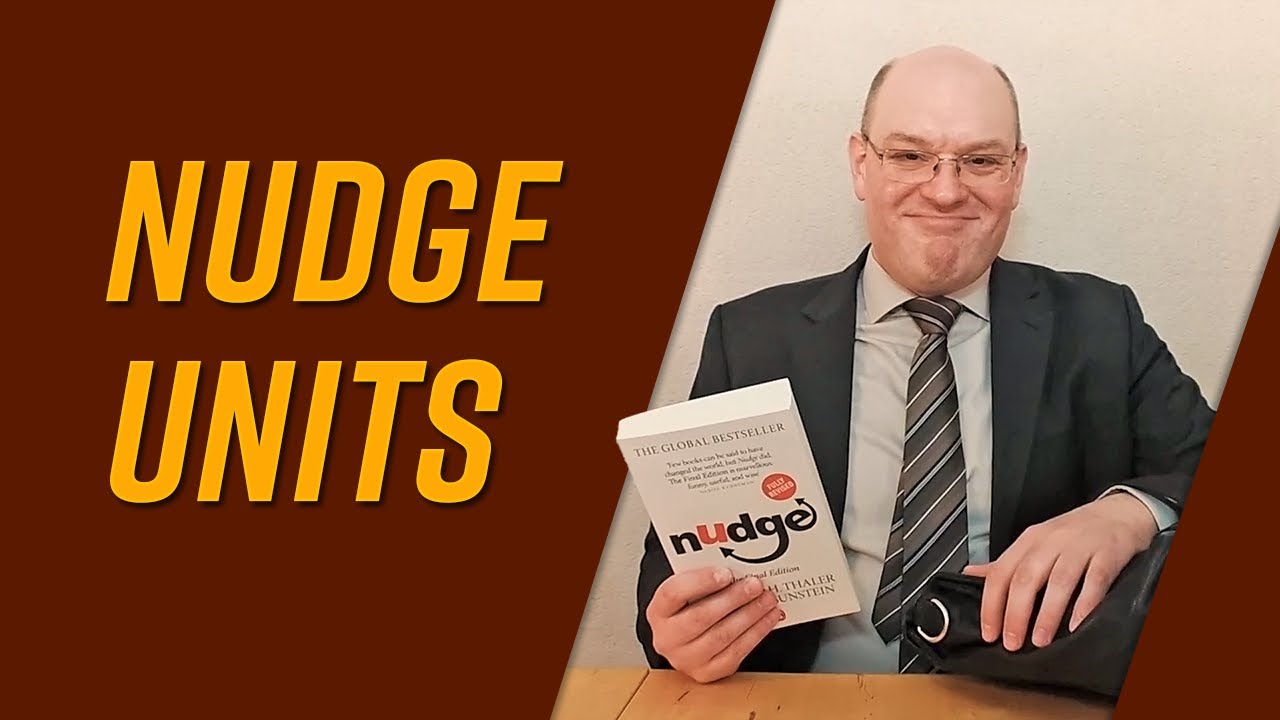





A behavioral nudge is a small, inexpensive change to the environment or context that influences people's behavior in predictable ways without restricting their choices or significantly altering economic incentives, as defined by behavioral scientists Richard Thaler and Cass Sunstein; this approach, known as libertarian paternalism, leverages insights from psychology to encourage beneficial behaviors like exercising, saving money, and getting vaccinated through subtle interventions such as placing healthy food at eye level or using optical illusions to slow drivers, offering a simpler, cheaper, and more scalable alternative to traditional behavior change methods.
Behavioral Nudge Definition, Examples, and Applications
Added:The distinction between Classical Economics (rational agent theory) and Behavioral Economics (predictable irrationality).
Dual-Process Theory, specifically Daniel Kahneman's model of System 1 (fast, automatic) and System 2 (slow, logical) cognitive processing.
Fundamental cognitive biases, such as status quo bias, loss aversion, anchoring, and social proof.
Basic ethical principles in psychological and behavioral research, particularly regarding human autonomy and consent.
The concept of 'Sludge' and dark patterns, which represent the unethical or manipulative misuse of behavioral design.
The role and history of 'Nudge Units' (e.g., the UK Behavioural Insights Team) in shaping public policy and government communication.
How to design and conduct Randomized Controlled Trials (RCTs) to empirically measure the effectiveness of a behavioral intervention.
Advanced application of choice architecture in digital product design, user experience (UX), and conversion rate optimization.
28.8K views509likes7:23Original Release: 2021-06-12
changing behavior is difficult governments and institutions around the world want to help people lead better lives to exercise more to save more money and to take life-saving vaccines among many other beneficial behaviors although the main tools of government like changing tax incentives developing public education initiatives enforcing existing laws and implanting you with 5g enabled microchips can be effective at changing behavior they can also be heavy-handed overly restrictive or just too expensive luckily it is possible to make positive impacts on behavior with smaller and less intrusive methods and that's where nudging comes in this is behavioral science toolkit a series on behavioral science and its applications the term nudge was first popularized by monty python he's uh is your wife a goer i know what i mean not i mean nudge nuts know what i mean say no more and then again further popularized by the book nudge authored by behavioral scientists richard thaler and cass sunstein thaler and sunstein offer a solution to the problems governments usually have with behavior change encourage people to make better decisions by making small changes to existing processes services and environments based on insights from psychology and other social sciences by changing the way forms are designed how cafeterias present their food choices or the wording of tax compliance letters policymakers and service designers can nudge people to make choices that are in their interest without forcing them to thaler and sunstein define a nudge as any aspect of choice architecture that alters people's behavior in a predictable way without forbidding any options or significantly changing their economic incentives to count as a mere nudge the intervention must be easy and cheap to avoid nudges are not mandates putting the fruit at eye level counts as a nudge banning junk food does not let's take a closer look at this definition step by step firstly what is choice architecture it's another term coined by thaler and sunstein choice architecture very broadly refers to the process of influencing an individual's behavior by changing the context in which they make a decision in a school cafeteria you can strongly influence the food that students choose to buy by changing the arrangement of that food children who pass through a cafeteria where apples are placed at eye level where they're most easily seen and grabbed are much more likely to end up eating apples than those who pass through a cafeteria where french fries are at eye level the cafeteria can therefore be architected to make some choices more likely and others less so and children may end up more or less healthy as a result the term choice architecture does not itself imply an intention to produce any particular behavior someone could design a school cafeteria line without caring what the children end up eating and yet where they place the food still has a significant impact on their diet however a nudge does imply intention to produce a particular behavior and that brings us to this next part changing behavior in a predictable way changing the context in which someone makes a decision is pretty useless if you don't know whether that change will have a positive impact on their behavior there's a large body of research on how changes to cafeterias websites public transportation grocery stores or mostly any context changes the way an individual behaves nudges utilize this literature and other past evidence to design interventions to influence specific behaviors in specific ways these last three aspects of nudging all have to do with the ethics of this particular approach to behavior change a nudge cannot forbid any options cannot significantly change the economic incentives around a behavior and must be easy and cheap for people to avoid these three tenets make up the foundation of a concept called libertarian paternalism or the idea that public and private institutions can attempt to influence the decisions and behaviors of people while also respecting their freedom of choice a nudge can't forbidden options because this wouldn't maintain an individual's freedom of choice any intervention implemented as a nudge must be easy and cheap to avoid for the same reason a nudge that creates too large a barrier or too great an expense to avoid it effectively removes choice from those who have neither the time nor money to do so and severely inhibits everyone else just as a nudge shouldn't saddle individuals with onerous financial costs it also shouldn't offer overly large incentives to perform a behavior although they can be generous large incentives may coerce people into acting against their own desires now that we know what constitutes a nudge let's take a look at a few of the most popular examples in the 1990s an airport in amsterdam was having an issue with spillage in their bathroom urinals because jet-lagged men aren't known for being particularly careful with their aim to keep their bathrooms clean the airport could have hired more janitors to mop up the mess more frequently which is expensive or attempted to find people who didn't hit the target which is difficult to enforce instead they decided to etch an image of a little fly in the urinals at minimal cost to give these men something to aim at and to make the desired behavior more entertaining and fun this intervention reduced overall spillage by around 80 percent and as a result cleaning costs went down as well in another case in the 2000s the city of chicago had a problem with drivers taking an especially dangerous curve on lakeshore drive at high speeds the city could have increased the police presence in the area to encourage slowing down or added even more signs to inform people of the risk of speeding but again these solutions were either too expensive or not particularly effective instead they used an optical illusion to slow drivers they put lines on the road that got closer together as you approach the curve making drivers feel like they were accelerating and so they would slow down to compensate the first six months of this intervention resulted in a 36 drop in vehicle accidents at that curve saving both money and lives there are countless other examples of interventions like these that have led to meaningful improvements in people's lives and saved money in the process some but certainly not all of these interventions are based on cognitive biases and heuristics some of which have already been discussed on this channel with more coming on the way the behavioral insights team one of the first organizations to implement this approach at scale in collaboration with the us office of evaluation sciences conducted an evaluation of hundreds of nudge-type interventions impacting millions of people and found an average improvement of over 8 percentage points over the status quo with this approach to behavior change although nudges are not a silver bullet and much care and thought needs to go into their design if done well nudges provide a simpler cheaper and often more scalable alternative to behavior change problems the nudge approach has gained more and more attention in the past decade or so so there's plenty of examples to look back on share your favorite examples of nudges in the comments below and if you'd like to see more videos on the basics of behavioral science like this one or videos that go in more depth on topics in the field be sure to hit that subscribe button below and we'll see you in the next one thanks for watching [Music] you
Up Next

73:36
Nudge Theory with Cass Sunstein | Behavioral Economics at Harvard
@GBHForumNetwork
36.1K views•2012-08-13

5:07
Impact of Yuan in Indo-Russian Trade Amid Sanctions
@WION
261.9K views•2022-07-01
10:33
Behavioral Economics Explained: Rationality, Nudges, and Risk
@crashcourse
1.1M views•2016-03-12

113:18
The Age of Easy Money: Fed & Inflation | Full Documentary
@frontline
21.2M views•2023-03-15
Related Study Plans & Knowledge Roadmaps
Structured learning paths in Economics
economics
Sovereign Debt: Defaults, IMF & Restructuring
01Introduction to Sovereign Debt & Government Bonds
02Debt Sustainability & Credit Ratings
03Anatomy and History of Debt Crises
+ 2 more learning modules
12h5 modules
Explore Roadmap
economics
Market Design: Matching Theory & Gale-Shapley
01Introduction to Market Design and Price-Free Markets
02Two-Sided Matching & The Gale-Shapley Algorithm
03School Choice Systems and Mechanism Design
+ 2 more learning modules
10h5 modules
Explore Roadmap
economics
Impossible Trinity: Forex, Capital & Policy
01Introduction to Monetary Policy and Central Banking
02Exchange Rates and International Capital Flows
03The Mundell-Fleming Model
+ 2 more learning modules
8h5 modules
Explore Roadmap
economics
Healthcare Economics: Market Failures & Systems
01Introduction to Healthcare Markets and Market Failure
02Asymmetric Information and Adverse Selection
03Moral Hazard and Insurance Design
+ 2 more learning modules
12h5 modules
Explore Roadmap