













![상상초월 트럼프표 공화당 공약노트 [미국연구소 EP.07]](https://i.ytimg.com/vi/eZn36H9ZtZg/maxresdefault.jpg)







Sludge refers to obstacles—such as bureaucratic paperwork, waiting times, and confusing processes—that society imposes to prevent people from achieving their goals; while some sludge is justified (like requirements for driver's licenses that ensure safety), excessive sludge constitutes an abuse of time and dignity, and reducing it requires conducting systematic 'sludge audits' focused on time costs to identify and eliminate unnecessary barriers.
Sludge: How Bureaucratic Friction Wastes Your Time and Freedom
Added:Introduction to Nudge Theory and Choice Architecture: Understanding how the presentation of choices influences human behavior, a foundational concept developed by Richard Thaler and Cass Sunstein.
The Basics of Public Administration and Bureaucracy: Familiarity with how government agencies function, execute laws, and historical perspectives on 'red tape'.
Microeconomic Concepts of Transaction Costs: Understanding the non-monetary costs—such as time, effort, and search costs—associated with participating in an economy or accessing services.
Cognitive Load Theory: Awareness of how limited mental bandwidth affects decision-making and how complex processes can lead to decision fatigue or abandonment.
Administrative Burden Frameworks: Exploring academic research on how compliance, learning, and psychological costs act as barriers to accessing public benefits.
Systemic De-sludging and Regulatory Reform: Studying policy design strategies, such as the Paperwork Reduction Act, regulatory 'lookbacks', and default enrollment to minimize friction.
Digital Government and Civic Tech Design: Investigating how human-centered design, UI/UX principles, and digital portals can reduce or inadvertently introduce sludge in public services.
Equity and Distributive Justice in Policy: Analyzing how administrative barriers disproportionately harm marginalized and low-income populations, worsening social inequality.
109.9K views4.2Klikes6:41Original Release: 2022-03-23
- All over the world 'sludge' is an obstacle to freedom.
Sludge consists of frictions that separate us from something we want.
When there's waiting time, paperwork requirements, some confusing process that you can't navigate- that's sludge.
It's like a kind of gooey, viscous substance in which your feet are stuck and you can't get out.
If you're dealing with a criminal justice system it's especially severe, but if you're dealing with a hospital or your employer, your school, your government or company, it can also be really bad.
And it's not merely frustrating; it's treating you without dignity.
The question is: What are we gonna do about it?
Sludge reduction can produce big dividends.
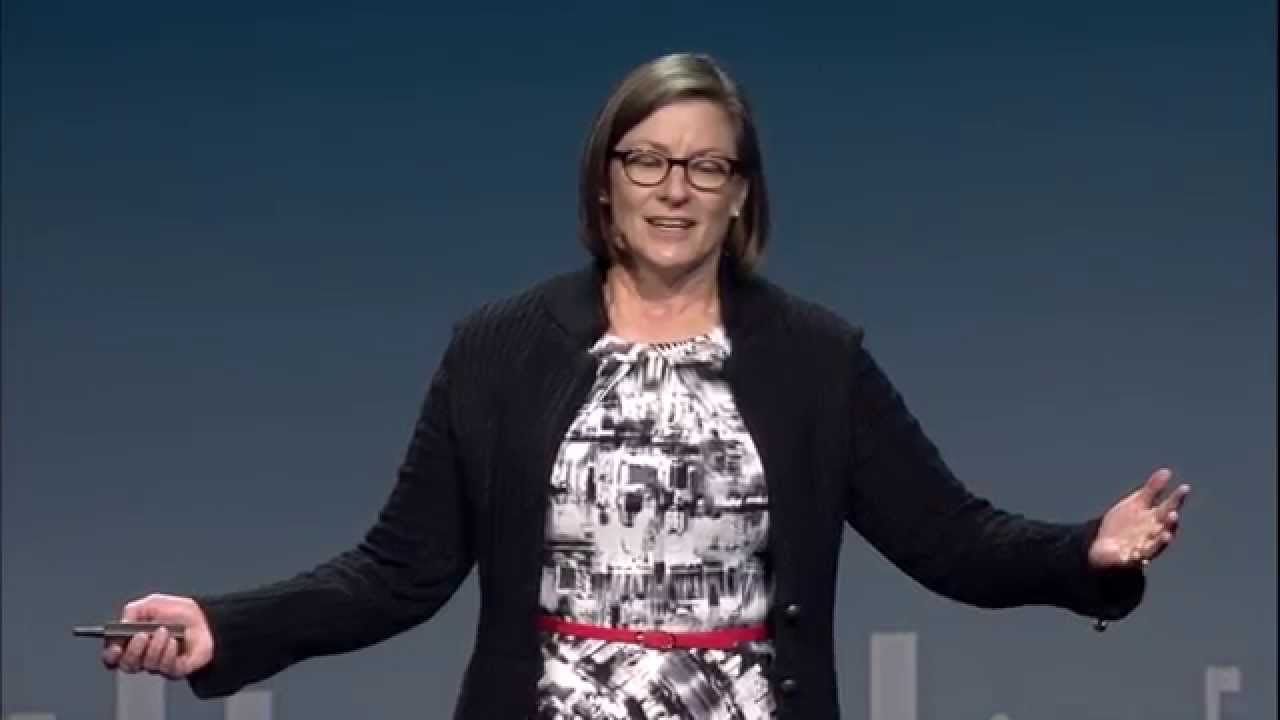
My name is Cass Sunstein.
I teach at Harvard Law school.
I have a new book, it's called "Sludge," and it's about what makes it hard for us to get where we're trying to go.
Sludge can be good when it is ensuring that people aren't reckless or impulsive.
For example, if you need to get a driver's license you will encounter some sludge.
It's justified.
You shouldn't get a driver's license just because you want one.
It's a matter of health and safety.
Sludge can also be good when it's a way of ensuring that the people who are seeking benefits are actually entitled to them.
So to impose a little bit of sludge to make sure that those who are trying to get something from the government or company actually have a right to that thing, that's 'okay sludge.'
Sludge is bad when it makes navigation really hard between a human being and something that can make their life much better.
So it might be that in order to get a loan you need to fill out paperwork, and it might be 14 pages.
And each of the pages might have really small font.
And we might, three pages in, give up and think, "I can't handle this", or "I'll handle this tomorrow."
And tomorrow never comes.
Sludge.
To get health care, sometimes you might have to wait for weeks or months to get a test- sludge.
And you might find in a hospital, for example, that nurses are spending 10 hours a week entering things into forms- that's sludge.
Our lives depend on our capacity to navigate something, and when we can't frequently because sludge stands in our way, we're lost in a world of just fog and diminishment.
One of the less lovely facts of the last decades of research into behavioral science is that we now know more than we ever did about how to manipulate people.
But if you have a company that wants to make money at people's expense, it can use sludge strategically as a way of achieving that goal.
'Dark patterns' are patterns of architecture online that end up exploiting people's lack of information or behavioral biases to ensure that they end up buying things they really ought not to buy, or that they part with something that matters to them without fully knowing what they're getting into.
So for many of us unsubscribing to something is an ordeal.
And that's intended by the people who make it an ordeal because subscribing makes them money.
They impose sludge in order to make it hard for us to unsubscribe.
I myself subscribe to four magazines which I more or less hate because I didn't want to navigate the sludge that was entailed in the unsubscribing to those products.
It's also the case that you can use sludge as a way of disguising terms that you're obliging people contractually to agree to.
It's time to recognize, right, not to be manipulated, and often the method by which people are manipulated is through the selective imposition of sludge.
Some of the most admirable designers of programs or cities or products, are acutely attentive not only to the product itself, but to what human beings are actually like- and often with a kind of humor and delight.
Never with a sense of condescension, and never exploiting people's human foibles to try to trap or trick them.
We can think of companies that are minimalist with respect to sludge, in the sense that it's just really easy to deal with them.
If you want to buy something, return something, make a complaint- they make it really easy for you.
The products are easy to use; they're very intuitive and people want to continue buying those products.
A 'Sludge Audit' is an exercise by which someone sees how much sludge there is in a system.
A sludge audit should be focused on time, because sludge is a kind of 'time tax.'
So you could imagine a hospital doing a sludge audit, asking what are the obstacles patients face in terms of waiting time.
Or a government can ask with respect to poor people who are eligible for certain benefits, what do they have to do every month to maintain their eligibility?
They might have to do something that's very burdensome every week, and the sludge audit might uncover that.
Reducing sludge is not merely a way of giving people access to the things to which they have a right frequently, but it's also a way of demonstrating that they count.
- Get smarter, faster with videos from the World's Biggest Thinkers.
To learn even more from the World's Biggest Thinkers, get Big Think+ for your business.
Up Next

25:38
Political Ecology Explained: Nature, Power, and Capitalism
@criticalgeopolitics8523
3.7K views•2024-01-28

24:30
BRICS Pay and de-dollarization: A New Financial Order Emerges? | 55 chars
@DannyHaiphongYT
164.6K views•2024-10-22
7:33
Government Surveillance Methods: 10 Ways You May Be Watched
@BeAmazed
1.6M views•2017-04-09
10:19
Explaining the Saudi-Iranian Proxy Conflict in the Middle East
@Vox
18.2M views•2017-07-17
Related Study Plans & Knowledge Roadmaps
Structured learning paths in Political Science
political-science
Economic Statecraft: Sanctions & Chokepoints
01Foundations of Geoeconomics and Economic Statecraft
02The Mechanics of Weaponized Interdependence
03International Sanctions: Types, Implementation, and Efficacy
+ 2 more learning modules
12h5 modules
Explore Roadmap
political-science
Central Bank Independence: Politics & Policy
01Foundations of Central Banking and Monetary Policy
02The Time Inconsistency Problem & Inflation Bias
03The Delegation Model and Designing Independence
+ 2 more learning modules
12h5 modules
Explore Roadmap
political-science
Consociationalism: Power-Sharing & Stability
01Democratic Dilemmas in Divided Societies
02Introduction to Consociational Democracy
03The Four Pillars of Consociational Design
+ 2 more learning modules
12h5 modules
Explore Roadmap
political-science
Rebel Governance: Legitimacy, Economy & State
01Foundations of Rebel Governance and Statehood
02Establishing Political Legitimacy and the Rebel Social Contract
03Wartime Economies and Rebel Resource Management
+ 2 more learning modules
14h5 modules
Explore Roadmap