
















Tidal stresses from gravitational interactions between icy satellites and their host planets create dynamic stress patterns that fracture surfaces and serve as conduits for cryovolcanic eruptions; these stresses arise from multiple mechanisms including non-synchronous rotation, orbital migration, internal differentiation, and diurnal tidal effects from orbital eccentricity, with the resulting fracture orientations and eruption timings being consistent with observations of features like Europa's cycloids and Enceladus's tiger stripes.
Tidal Stresses and Cryovolcanism on Icy Satellites | Planetary Science
Added:Understanding of gravitational forces, orbital eccentricity, and orbital resonance, which drive tidal heating.
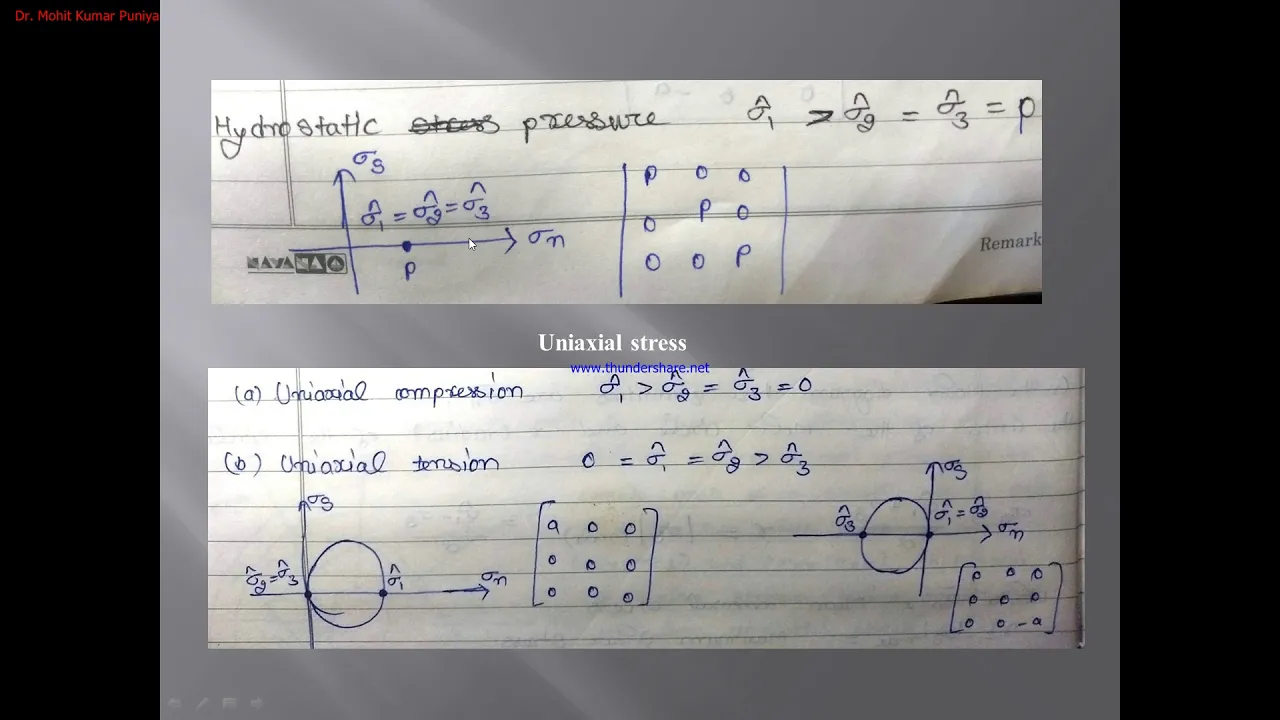
Basic principles of geology and geophysics, specifically stress-strain relationships and fracture mechanics in solids.
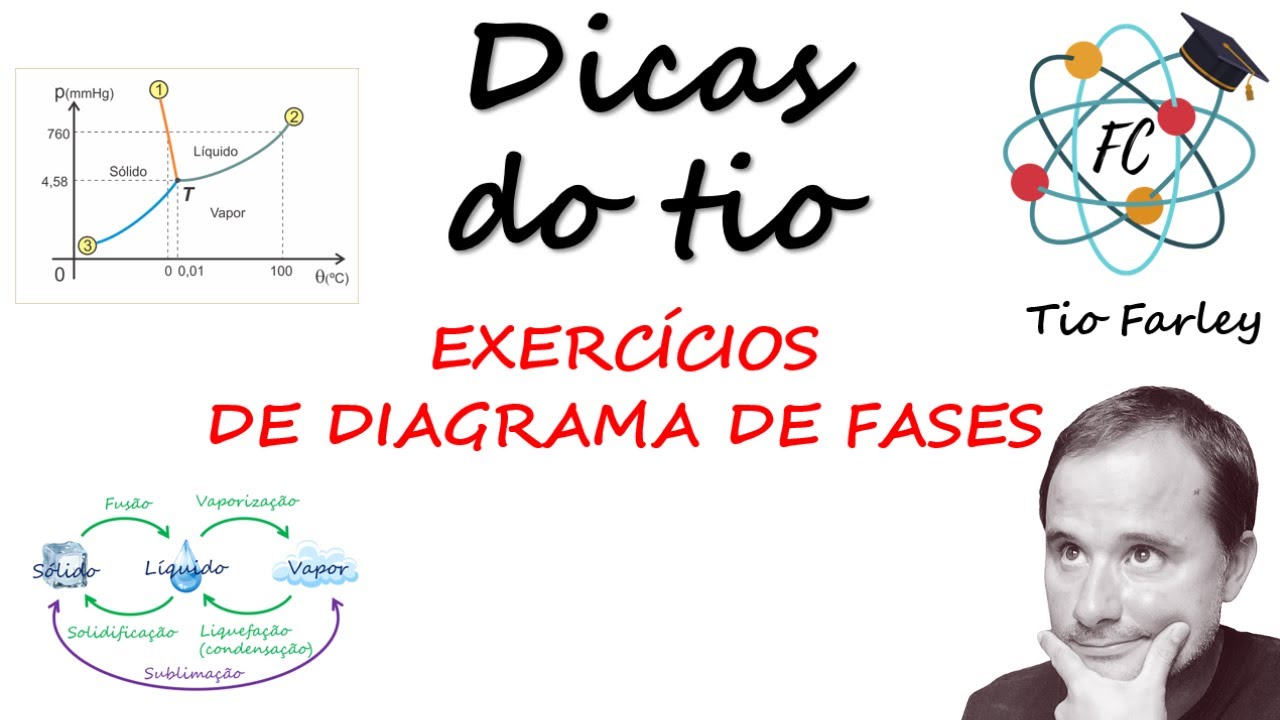
Fundamental knowledge of thermodynamics and the phase behavior of water and volatile compounds under varying pressures and temperatures.
Familiarity with the general anatomy of the outer solar system, particularly the satellite systems of Jupiter and Saturn.
Astrobiological implications: examining how subsurface oceans and cryovolcanic activity create habitable environments and potential biosignatures.
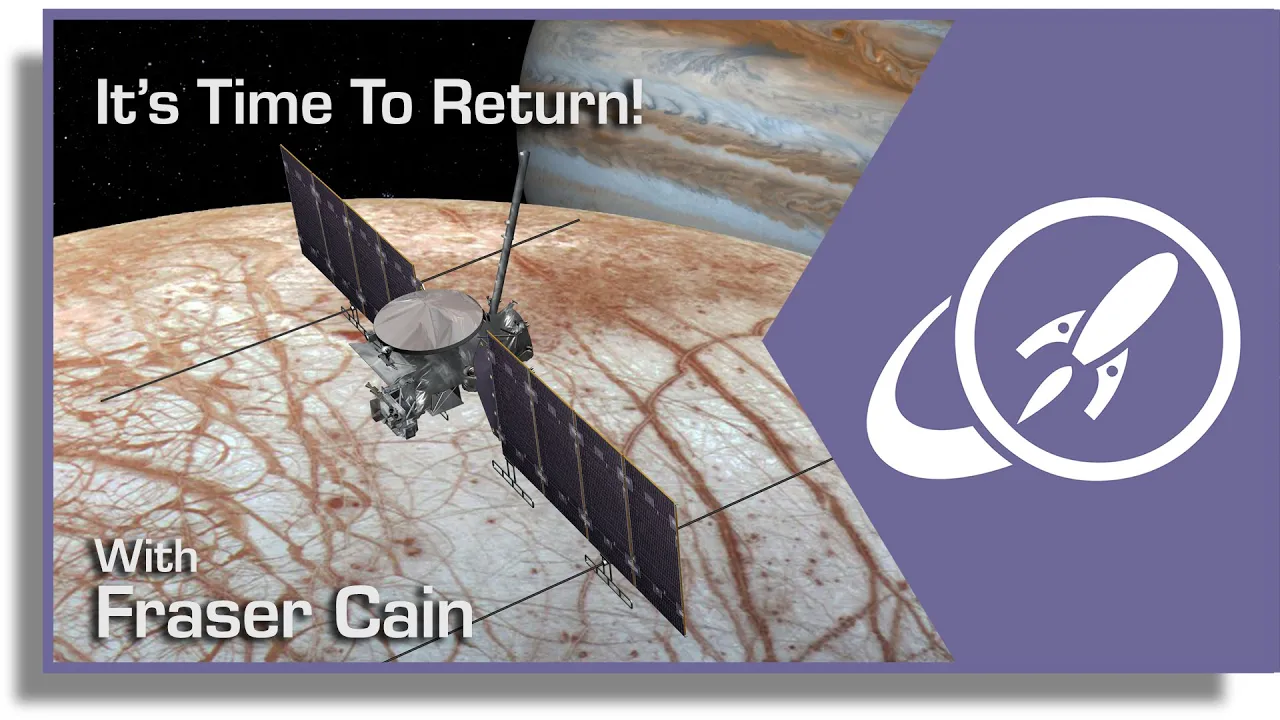
In-depth analysis of past and upcoming space missions targeting icy worlds, such as Cassini-Huygens, Europa Clipper, and JUICE (Jupiter Icy Moons Explorer).
Advanced mathematical modeling of viscoelastic deformation in planetary ice shells and hydrothermal systems.
Comparative planetology: contrasting the tidal tectonics of icy satellites with silicate volcanism on Earth and Io.
245 views4likes32:15Original Release: 2018-08-27
okay good morning today I'll be talking about stresses tectonics and their links to cryovolcanism on Isis satellites and so I've got a set of slides I think a really good of a kind of giving an intuitive feel for what are these different types of stresses that we're looking at and how they're driven and how we calculate them and then the patterns that they develop on the surface but the main thing is uh we start with the equations if I lead you through these slides these are the equations of the tidal stresses in a thin shell that are very simple and analytical you there are cases where the thin shell approximation is probably isn't great and you could play the same game with a more complicated formula but I just want to use this as kind of our backdrop for showing you how these different tidal stresses manifest and so these stresses are on the surface of the sphere so here's a picture of our deformed planet with some primary it's a distance a away the closer it is the higher a tide will be imparted on to its surface and in the thin shell approximation the height of the tide depends on the grab the average density of the body and how much it tidally responds which is given by the h2 love number and then the the rigidity of the outer layer that's being flexed and so the closer it is the higher the tides will be and more stress can be imparted and also the more rigid that outer membrane that's being stretch our deformed is the higher the stresses can be and of course the h-11 number how tidally responsive it is the more penalty responsive is the higher the stresses but this form is the the form of the equations and and so now I'm kind of gonna jump through and show you how we use these equations to look at different stresses from different different processes so the first one is just tidal reorientation you've probably have heard a lot about non synchronous rotation and really that is that the fact that the moon might be rotating faster than its it's synchronous rotation rate and so that causes the tidal bulge to move relatives at some point on the surface and can also cause stresses and the way we calculate that with these title equations is by bookkeeping the location of the tidal bulge which is in this theta factor which is the angle between the tidal bulge and the axis of symmetry of the of the tidal problem the same equations can be used for polar wander is just a different axes of rotation than non synchronous rotation and you can add these together if you have some sort of funky rotation state but this is a proposed source of some little long trending fractures on on Europa for example and so here's a visualization of that there's a cartoon that just shows you there's this flag that's pointing at Jupiter where the tidal bulges and as it rotates on so you're going to see the flag move so that point relative to Jupiter has change location and that produces a stress pattern like the one over here on the on the left from greenberg at all 1998 where they show that some of these stresses seem to fit some of the patterns of the of the large linear features on Europa you can also do orbital migration with these equations so if you have a body that's moving closer or farther away from the primary that also changes the stress state as you move farther away the tidal bulge will decrease in magnitude and that change in shape will and enhance of stresses on the surface or if you move closer to the primary the tidal bulge grows in magnitude and that put stresses on the surface and so this is one of the stresses that we we thought about for Triton and Phobos in our solar system these are two moons that are falling into their their host planets and it also might be interesting for extrasolar planets that are moving closer to their stars so here's this cartoon of work that we did with Phobos here's a Phobos cartoon as it's orbiting Mars it's getting closer and closer and that getting closer causes it to elongate toward toward Mars and then the stress pattern that you see on the on the left is the stresses that would be produced and in this case because Phobos is moving closer you get tension and kind of this martien and anti martian points on the surface and then you get a mix of tension and compression at latitude and longitude in between those those sub anti bars regions you can play the same game for triton there's a very few fractures to map but many of the factors lie within the central pencils own caused by the in fall stresses here's a stress stress mechanism that we don't talk about very much but internal differentiation can also cause the stresses on the surface so internal differentiation really just changes the h2 response of the planet so how much it wants to respond title ii and as you concentrate more and more mass in the center you actually reduced the h2 love number you reduced its ability to respond totally to the stress the gravitational forces on it and so in this it's very similar to the migration because you've got a bulge it's just two collapsing so and next i don't have a movie for it but here's the stress pattern that you would produced because of a collapse of the tidal bulge due to differentiation it's also the same pattern you would get if you were to move outward and migration but just physically it looks the same but this is driven by a different mechanism but anyways as you collapse the tidal bulge along the axis of symmetry you actually get compression in that direction and then again in the inner region between the anti sub and anti primary regions you get a mixture of compression and tension and to my knowledge I don't think anyone is trying to to fit any kind of stress pattern or any tectonic patterns these uh these stresses so you don't see any anything drawn on that figure on the left and then finally the the stress that we talk about a lot which is the diurnal stresses it's actually a combination of the fact that as you're in orbit that's not well mostly we look at the diurnal stresses from orbital eccentricity and so orbital eccentricity has two effects it causes the primary distance to change so parry scenario a little bit closer to the primary and Apple Center here a little bit farther away so that title bulb is going up and down throughout the orbit but it also causes the location of the tidal bulge to change a little bit so if you were to stand on say you ropa and look at Jupiter at 0 degrees longitude Jupiter would hang in the sky above you right at peri Center but then as you move in the orbit Jupiter would seem to oscillate in the sky a little bit and it rocks back and forth by about a degree or so and so that change in the in the location causes the change in the physical location of the tidal bulge and the two together then produced stresses on the surface and there are other diurnal effect or things I would lump into dynamo flex like obliquity obliquity can cause the the title balls migrate and latitude throughout the orbit but it doesn't change the magnitude of the tidal bulge just its place in my attitude and then there probably are longer non diurnal libations and such you can have a librarian at the diurnal frequency or vibrations at longer frequency frequencies but nor those for now and just look at diurnal stresses from eccentricities and so here's kind of a movie that just explained a figure that just shows that I explained that you know at peri Center you're a little bit closer to your primary and got a larger tidal bulge appleson right a little farther way and this depiction it's harder to tell that the flag is actually moving and longitude a little bit's but there is a rock back and forth but this creates a really dynamic stress field so this is a movie I think of Europa but really any anybody with orbital eccentricity would be very qualitatively similar you get this pattern of tension and compression that seemed to sweep across the the mid latitude or the equatorial region and then in the higher latitudes you get mixture of compression and tension and in the Northern Hemisphere they seem to rotate in a counterclockwise sense and the southern hemisphere they rotate in the clockwise sense but again the important thing is here this is a very dynamic process so I'm Europa this whole cycle repeats every three and a half days on the solid the everyone at one point three days whatever the orbital period is of the satellite so impassive only talked about gravitational tidal stresses but I thought for this this venue I thought I'd play the same game with other sources of stress that can be important for these satellites and their bodies for for tectonics and so here's a rotational stresses I've taken the equations from Hubbard his book and just kind of um rewritten them into some of the the common parameters that we use in the gravitational case the first thing to note is that the rotational stresses are of the same form as the gravitational stresses and that there's still this degree to harmonic in them the only difference is that they're the acts as a symmetry here is around the pole and so the equator primary taxis so in here on these equations the theta is from the axis of symmetry so it's measured from the pole of rotation but still the important thing is that it's these stresses for the thin shell still really depend on the rigidity of the of the outer shell that's being flexed but here they also depend on the rotation rate so here in my cartoon you can see that there's some ablation caused by the rotation and that causes the equator to kind of expand relative to the polar radius and then when we when we look at stresses from rotation from rotation really we're just bookkeeping how the Omega changes so what is the rotate there the rotation rate change and then how does that then apply to a stress change and if I followed my other side that would have circled the omegas red just let you know that's what bookkeeping the stress is fairly simple compared to the or looks fairly simple compared to those the tidal stresses but in this case I have a spin down stress and so a spin down stress actually causes rebound in the polar regions and so you can see in the polar regions here on the left you've got tensile stresses as it's rebounding and then there's a mixture of tension and compression in the mid-latitudes with tension in the kind of the along the longitudinal direction and compression along the latitudinal correction and if you were to spin up the body you would get the exact you get the exact same pattern but the opposite sense of all the stresses and then finally the final stress won't talk about it's just the stress from radial change so if you've changed the radius of the body and you want to expand or contract it you're going to impart a stress on the surface and this is the form of that stress in terms of the rigidity of the body it's a Poisson ratio and then just the change in radius that you're your bookkeeping and I note that this stress can be rather large and can swap out diurnal effects and oftentimes I think when we have problems with the magnitude of stresses trying to drive something that we're looking at on a body it's sometimes people are tempted that they oh there might be some other such as expansion or contraction all stress that can then get me over some sort of barrier to activate some sort of factor but the main thing is that this stress is isotropic and so it doesn't really have a directionality to it and so a thought is that if you can combine this with some other stress mechanism then it will take on the shape of the other mechanism and just give you a boost in stress in practice I think it's a little bit more complicated than that and so I haven't seen anybody I should do it successfully in a paper but I've heard a lot of people give lip service Toa that talks but I'll just point out for completeness this is what the stress looks like so in the next part of my talking when we talk about the responses to these stresses we've kind of gotten a hopefully I can give you a quick of a primer on my intuitive feel for what these stresses are doing on the surface but it's like this it's nice to see some actual examples of these stresses that work in the solar system and so these stresses we think they can fracture the bodies if we think that they they can things seem to fit best in the outer solar so they look at fracturing dude attention and we've linked a number of different processes to these dresses and so I'll go through some of those the first is strike-slip so the first mention of strikes just from Tufts $19.99 is it's looking at this long fault esta pelea Linea on Europa's southern hemisphere it's about the size of the San Andreas Fault you know it shows a lot of offset with these parallelogram pull apart zones and so randy was able to reconstruct it and instantly show that there's enough things that crisis that you can realign when you reconstruct the feature that it probably is a strikes a fault and then he and a gray capo worked on this idea of tidal walking so how do you get the strikes that what kind of plate motions are going on on Europa and they came up with the fact that this diurnal stress that we talked about is very dynamic and it could probably maybe leave to these offsets and so the idea walking ethically there's a talk yesterday that have very good sequence of examples of it but basically you pull the fracture apart in tension you share it and then when the fracture wants to go back and then you put it back it together in compression but then once it's compressed the opposite shear tries to relieve the offset you'll be parted on the fracture but because it's in compression it can't quite do that and so you know left with a little bit of offset if you repeat this over every three and a half days for a long period of time it can then build up a large amount of offset along these faults and then ELISA took this process and kind of looked for the pattern so so Greg and and Randy were focused on just one fault on Europa and they seem to have the story of this title walking ELISA took it farther and you know there's a lot of strikes at faults on Europa and if you do a survey of all them you can see what kind of left or right lateral you have at different locations and of course with the title walking story what determines the strike sense that you have depends on where the fault is located in its orientation to give you whether or not it's going to be a left or right lateral fault and so then she compared that to models of this walking process and included a liquid into those models and found that there was a nice match between the pattern that we see on Europa and the theory and so this is kind of evidence for there being a small amount of obliquity on Europa even though we haven't really measured it yet and then finally the I think the feature really put the nail on the coffin and the the the ability of these dynamical stresses that do something or the cycloid features so here a bunch of pictures of cycloids on on Europa there are features that are defined by the fact that they're a bunch of arcuate segments kind of chained together and we think that this has been interpreted as tensile fractures that are forming and then propagating in this dynamic stress field and so as they're forming they're actually being affected by the changes in the stresses which it causes the arcuate shape and so here's the the model that they put together where you have tension that breaks a fracture and then it starts to propagate but the stresses change orientations and that causes the art the veer and make that argument shape until the stresses get too low the propagation stops until the next day and you can form chains of arguments that way I'll point out that some of the cycloidal features on Enceladus seem to have this kind of chain of arcuate shape to them so it's just an example that I have put together for an LPS you abstract and then some work that I've done and I think Alyssa and I and Alex paid off for doing probably better it's just to look at the orientations of the tiger stripes in general and Enceladus and see if they're consistent with formation in final stresses so here i've look i've plotted here at each of these bubbles in the inner region or it's a gray area and that's the area that's allowed orientations if you allow fracturing to happen between 20 and 90 kilo pascals which seems to be what we use on europa to match fractures fairly well in models of stresses on Enceladus we don't really know what the total response is but I've modelled them to give us some stresses that are the order of the same stresses that we see on Europa so we reach these stress thresholds and then again that gray area is the orientation that allowed and then the blue lines are the lines of the actual orientations of the fracture around that location so you can see there's quite a while pretty good agreement between the the blue and the gray which i think is indications that's consistent with the formation of from title titled diurnal stresses but once you have these fractures you know really can they be exploited as conduits for up shins and really we have Excel Enceladus as the archetypal example of this so here's the discovery photos from Porco at all and and the Sears hotspots kind of give us a clue to where these things are coming from and the tiger-stripe features I have a movie here of just how the stresses work on these fractures in the South Pole here I've just projected the stresses to the South Pole I'm gonna color the fractures green if they experience tension and they're black if they're in compression and then the clock on the right just shows you kind of wearing the orbit you are hope you didn't want to play but again this process happens every three three point seven days and you go from compressive stresses at at peri Center to basically tensile stresses at apple center and back again but the fact that you're changing the stress State on these fractures kinda led us to think that you might be able to change the output of the eruptions from the syllabus and indeed we did observe that in the bim's data and also an ISS data later on that you can see that there is a change in the brightness of the plume and here I've scaled the ISS and and the bim's data by a common data point to basically show you what the cycle looks like but for anything is that if you're just using a simple model of tidal stresses and say hey if things are in tension we have eruptions this is what you would predict you would predict their activity really early on in the orbit and then following off toward the end it's not really it doesn't really work really well and then Francis shifted that said hey what if there's some sort of lag you have a thicker ice shell you lag the system you can get a fairly decent fit but you know it predicts this plateau of activity which you don't observe in the data and so some work I'm doing now is it's kind of start thinking about reservoir depths and hitting those so this this red line is just that the stresses at the surface and you can imagine it even if you have something in tension if you're right at the surface just a little bit below you the overburden stress is get to put you back in compression so it's probably not the best representation of the system so I've tried a bunch of different depths and here's the the fit that works the best I think and so here's our source at about 750 meters which you can still tap in tension so the red line is just the fact the percentage of the scale percentage of the fractures in tension throughout the orbit and it seems to fit the pattern pretty well but you still do need a little bit of lag in the system but I think the main thing I want to show you putting this out here is that you really have to start thinking about where the magma or whatever is roughly where it is in the system we can't just think about what's going on on the surface of the other planet and again here I plotted the maximum depth of coolant failure so if you think of these fractures is just vertical conduit straight into the surface you can crack down in tension to some depth and then you can have activity even lower than that depth through cruel impaler so even though the fracture is in compression if the shear stresses are high enough you can overcome that compression and still have fracturing and so that allows for the assumptions I made about it and so those two have kind of activity down to about three kilometers and a lot of the places on the the tiger sites where you see activity seem to correspond to where you have these deeper depths that you can go to not through cool failure but that brings us to an important question if there's if it's important to think about what is the depth of the magma chamber what does that mean for different bodies we've been talking about and solidus but if you have stress is on the order of 100 kiloPascals which is kind of the diurnal stress level we think on Europa maybe on Enceladus now on Europa that means that you're going to only have factory and activity not even down to a hundred meters in those dresses I put down triton it's a little bit better around 100 meters maybe a little bit larger but also bear in mind for Triton that there's no about or relaxing tricity so only or bollock obliquity or some sort of light vibrations might give you some sort of stress in these ranges and then for Enceladus you can get down you know two kilometer or so and if you have some larger stresses then you can get deeper of course and so I put down one mega pascals because this is about the stress that we think non-synchronous rotation can import to the surface or if you were to have some sort of global expansion or contraction you can get stresses of these magnitudes but I would really want to point out that you know it's all this is kind of special in that it's small and because it's small it allows these these fractures to propagate lower you know into the surface or deeper into the surface because the gravity is smaller and so the overburden stresses are smaller and also if you have water that's closer to the surface then it's easier to tap them on these small bodies so I think it's all this might be a special case that allows us to see the activity fairly easily oh and I just point out in in work that I've been doing there is a buoyancy problem of water but I think we can the back of the envelope first assumption might be that you can get water up to within ninety percent of the surface just that's kind of a float line of an ice on top limit ocean and so the thicker the ice shell is kind of the deeper that ninety percent line is and as you get thinner you can guard to get closer and closer to the surface so Enceladus we first thought you know maybe the ice shell is 20km there's thick and so then you'd have to get water up that means water could get up to about two kilometers of the surface somehow and then the stresses could actually tap down to that depth you can stress you can go to tensile stresses to about a kilometer you can probably go deeper with Coulomb failure but you know more and more recently it seems like it's all of this is ice is thinning in all the models that people are using and so that actually helped us a 10-kilometer ice shell would only have would be able to get water up to about a kilometer within a comet at the surface and then we can actually fracture down in tension to that depth so Enceladus again a thin shell and the fact that it's small makes it a little bit easier to get water to so I think I'll skip my summary on just put this movie up this one movie I did for in solidus where I just assumed that there's some sort of water reservoir water table at about three kilometers depth and then showed what the stresses are like can here the stresses are yellow if it's breaking in coolant failure in red if it's intense Halle failure and you can see throughout the orbit these stresses grow and allows these these active this activity or these stresses allow the fracture to plumb to the greater and greater depths until at some point you can hit that three kilometer mark and then I just changed the color of the plume to may be indicate some different material coming out these plumes are very active but I think it's very possible that the composition of the plumes could be changing daily to as you activate different depths underneath it so I'll leave that up and taking questions if I have time hi so when we were looking at Volcanology type propagation doesn't happen independently of the existing stress field it's it's very very strongly affected by it but it's also strongly affected by the state of the magma reservoir which for icy satellites according to the the work that I've seen over recent years it looks like the ocean may well be quite highly pressurized have you given any thought to the interplay of that ocean pressurization with these tidal stresses and how fracture propagation could possibly go deeper in effect if you've got massive additional stresses because of compression yes I haven't I'm aware that they think the ocean can be pressurized in some of these systems I sure which bodies are better or worse for looking at that I think you have a pressurized ocean and you can get yourself water up probably above that float line a little bit easier I have not really thought too much about what is the fracture is down at lower or depth whether their basal fractures are coming up or some other type of fractures just these are very brittle icy systems and maybe they're just fractured and trinsic lis that allows water to come up do it but I think pressurization does help you get that water up even higher into the water column or into the ice column and I've kind of been staying very conservatively at that 90 percent line there's just well and on the solidus I don't think we need to we don't need to invoke any other thing I think when you start thinking about Triton or it or Europa if we do have plumes then it's either very near serve it's got to be very near surface water if you're going to be copying them with title title like stresses and so then you do need some other mechanism to help you get that water up there so I to follow up on that I'm too curious about the the role that these over pressurized oceans play in the eruption factor you know I'm skeptical even in the sort of thin ice models how long you can sustain a fracture at the base of these ice shelves just because of how ductile that ice is for long periods of time I think it's gonna be challenging especially because it's if you relieve it you're gonna change maybe change the the density of the ice and then it will refreeze but I was curious about the the the differentiation stress that you talked about I hadn't heard you talked about that before and that's really neat but that's like a stress that's really gonna happen early in the ice shall history or the planet the body's history right so the so even if you assume that the stress won't relax away we might not see any evidence of that right right yeah there are different timescales for these possibilities so I would agree with you if there was a signature of differentiation would be very early on but wouldn't something like the solidification be like differentiation as a say an internal ocean gradually freezes the expansion so you'd have that expansive stress everywhere yeah but still isotropic yep that's a topic whereas depreciation has a pattern to it but there are some bodies still experiencing you different maybe I mean maybe come with though still art it's I'm different or partially different you do yeah could still be going on yeah yeah we don't see any factors regardless on the surface okay another question back there bill yeah Terry Terry very very very nice I agree with you that for Enceladus given you continually uh take the cork off I think long-term pressurization is probably not actually playing a role there but it's very encouraging just like you said to get these tensile stresses down even for you know one bar of tension because the it's not just that the overall shell thickness is dropped but also especially the shell thickness in the south polar terrain which is really what we're talking about but that brings me to my question so you can't at this point you can't actually predict what the phase lag is it's a sort of an arbitrary fitting factor and but let me finish the question the real question is what about Europa where they tried to predict where they would see the plume the next time and they would use Hubble to look again and then they didn't see it but maybe they don't have the right face like or the right position I mean have you thought about how you would take that your Enceladus intuition and apply it more specifically or more more precisely to Europa right so with the phasic in the thin shell models I can just put in the arbitrary lag that's all I can do but you can use a thicker shell model that when you put in the right material parameters that falls out okay what does that lag so you can do it more robustly and get that same answer I think for Europa I think Alissa has done a really great job of looking at those the observation sequences and seeing whether or not they really well what the conditions were each time to see whether or not they were the same or not the same and my problem is it often times and you have those detection there's some case that is very similar in terms of orbital position than everything with wasn't it detection yeah so it kind of right now is kind of pointing at non periodic eruptions they exist okay any more questions yes Jeff I'm just wondering if if work has been done on the phase like to look at the lag and time between when you would at when particles and gases would leave the surface and when you would actually observe the brightening pipe above that in the plume I'm pretty sure that Nimmo has argued that that's a very short lag and given the lag of the material coming up through that come on do it really well so that's and I have talked about it and it's like you know within a degree or two okay so overall position which isn't actually lesson introduced nothing to be applicable I've looked at it and I've convinced myself to that it's not probably like the
Up Next

74:37
Titan's Potential for Life: Exploring Saturn's Enigmatic Moon
@brightside_series
258.5K views•2024-05-10
61:17
First Billion Years of the Universe with the Square Kilometre Array
@iaaudc
121 views•2022-05-26

6:25
Kepler's Laws of Planetary Motion Explained (Educational Astronomy Video)
@Peekaboo_Kidz
404.9K views•2023-02-17

6:10
Gamma-Ray Bursts: Cosmic Snipers Explained | Astronomy
@kurzgesagt
15M views•2016-07-31
Related Study Plans & Knowledge Roadmaps
Structured learning paths in Astronomy
astronomy
Reionization: Pop III Stars, IGM & 21cm Line
01Foundations of Cosmology & the Early Universe
02Population III Stars & Cosmic Dawn
03Physical Mechanisms of Reionization
+ 2 more learning modules
17h5 modules
Explore Roadmap
astronomy
Planetary Rings: Dynamics, Roche & Resonances
01Foundations of Gravity and Orbital Mechanics
02Tidal Forces and the Roche Limit
03Structure, Composition, and Collisions
+ 2 more learning modules
10h5 modules
Explore Roadmap
astronomy
Asteroseismology: Stellar Waves, Ages & Cores
01Foundations of Stellar Astrophysics & Wave Mechanics
02Stellar Oscillation Modes: P-modes and G-modes
03Mathematical Framework of Asteroseismology
+ 2 more learning modules
35h5 modules
Explore Roadmap
astronomy
Adaptive Optics: Physics, Engineering & Control
01Foundations of Wave Optics and Wavefronts
02Atmospheric Turbulence & Optical Distortion
03Wavefront Sensing Technologies
+ 3 more learning modules
35h6 modules
Explore Roadmap