














![François Truffaut Interview (1975) [English Subtitles]](https://i.ytimg.com/vi/njAHwM7HCTs/maxresdefault.jpg)







Jean-Luc Godard's Breathless (1960) revolutionized filmmaking by establishing three fundamental principles: first, that there are no fixed rules in art and experimentation should drive creative decisions; second, that filmmakers should call attention to the constructed nature of cinema through techniques like jump cuts and breaking the fourth wall; and third, that resourcefulness and working within constraints can produce innovative results. These principles, developed during the French New Wave movement, continue to influence modern cinema.
Understanding the French New Wave: Godard's Breathless and Filmmaking
Added:Classical Hollywood Cinema and Continuity Editing: Understanding the 'invisible' editing rules (such as the 180-degree rule and match-on-action) that French New Wave filmmakers actively sought to disrupt.
Basic Cinematography and Film Terminology: Familiarity with fundamental film concepts including shot types, framing, traditional editing transitions, and camera movement.
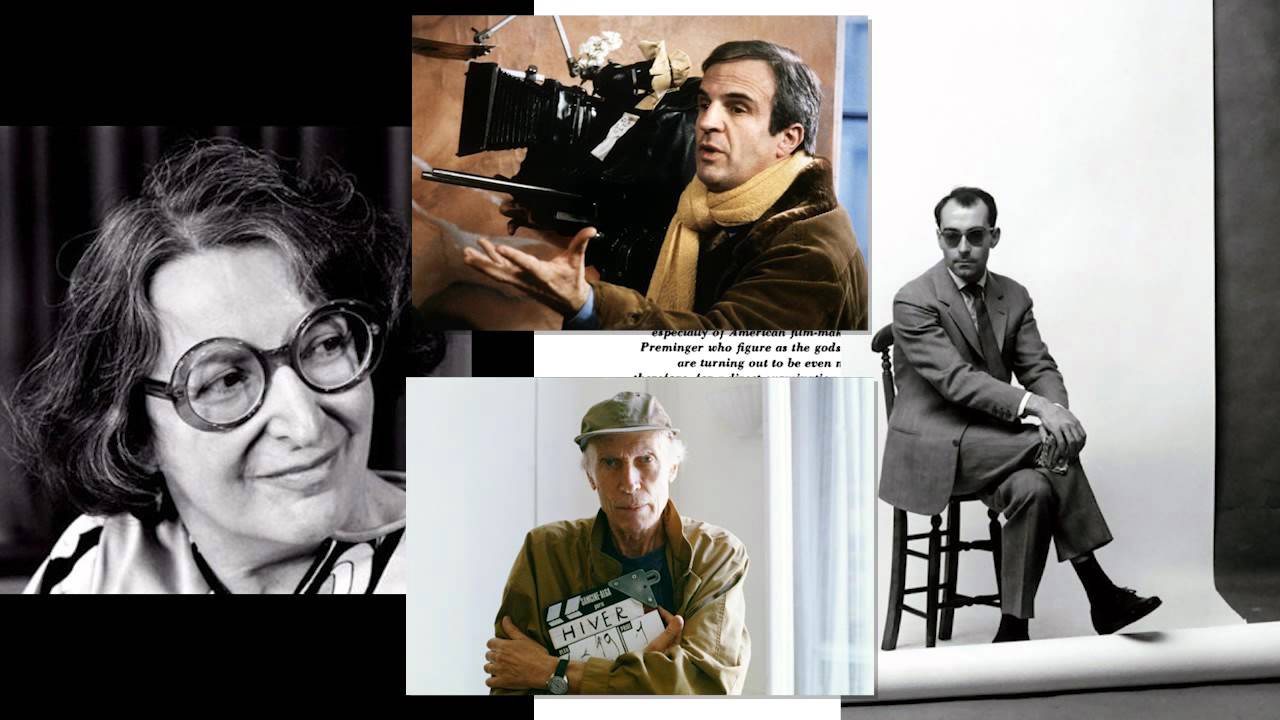
The Historical Context of Cahiers du Cinéma: Awareness of the influential French film magazine where critics-turned-directors like Godard and Truffaut first formulated their radical theories on cinema.
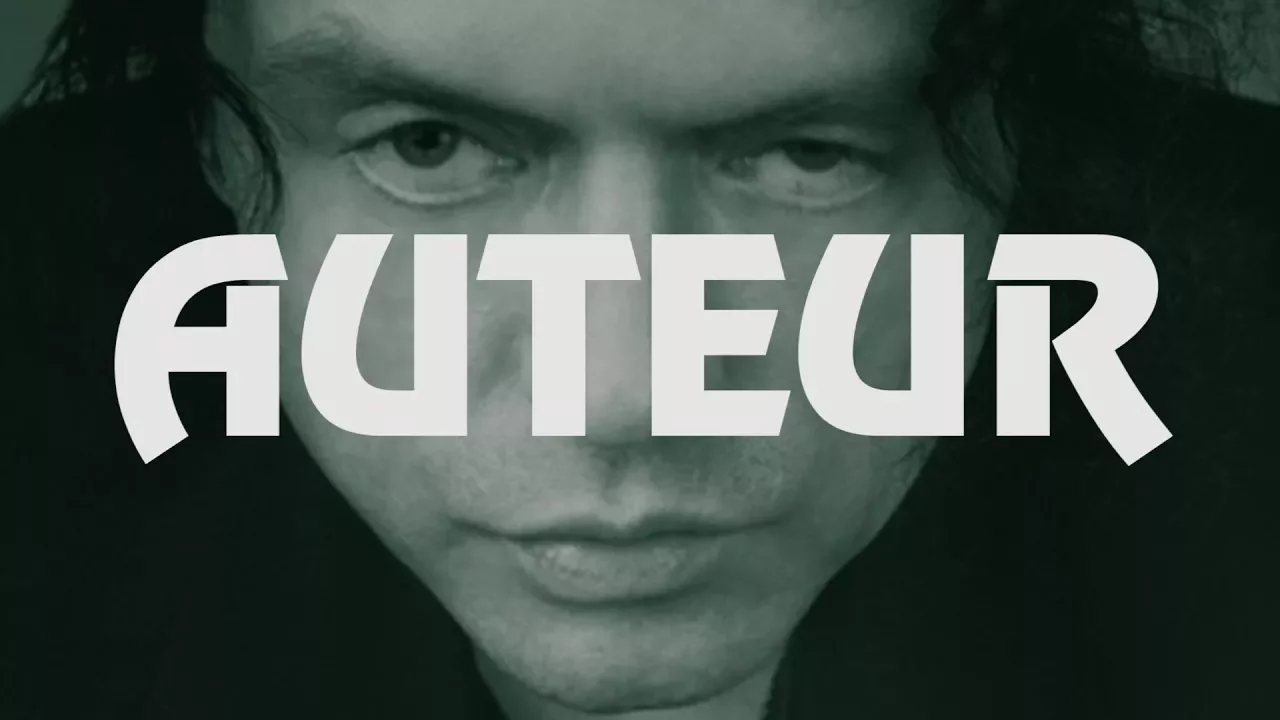
The Concept of Auteur Theory: A basic understanding of the theory that posits the director as the primary creative 'author' of a film, possessing a distinctive visual style and thematic consistency.
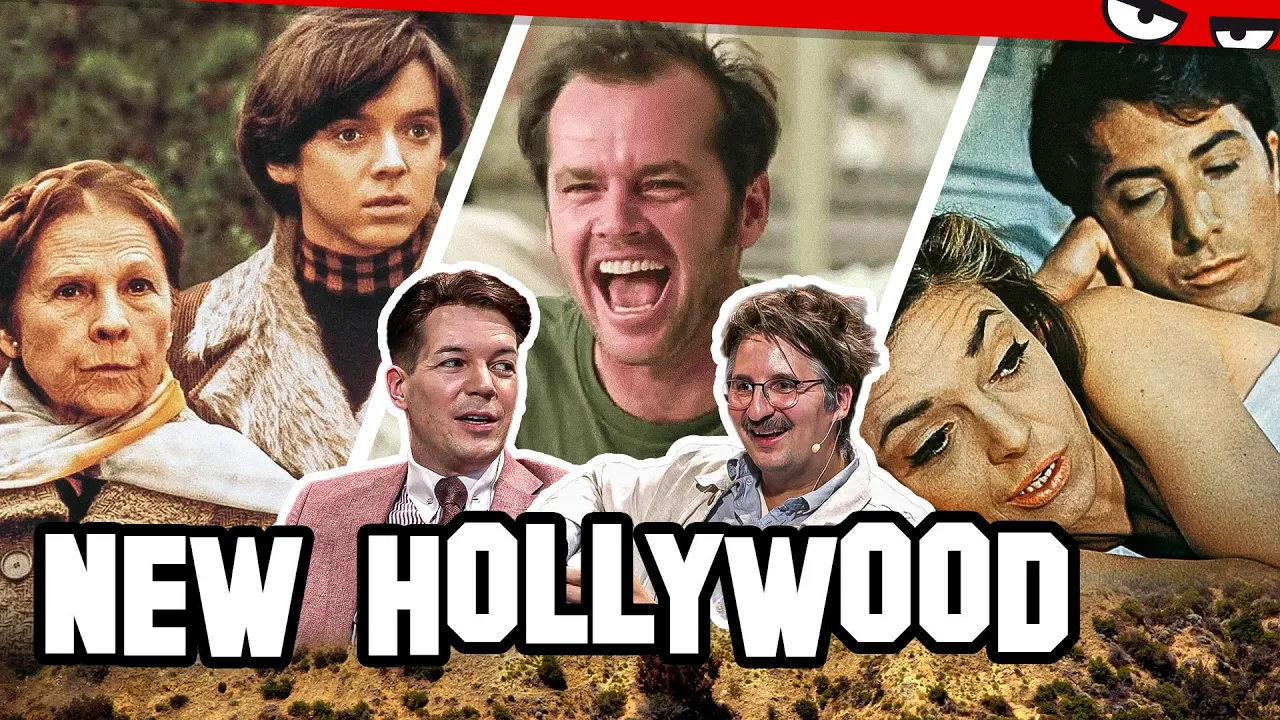
The Legacy of the French New Wave on New Hollywood: Analyzing how directors of the 1970s and beyond, such as Martin Scorsese, Francis Ford Coppola, and Quentin Tarantino, adopted Godard's stylistic rule-breaking.
Comparative Analysis of New Wave Contemporaries: Exploring the works of other Left Bank and Right Bank filmmakers, such as François Truffaut, Agnès Varda, and Alain Resnais, to contrast their styles with Godard's.
Godard's Political and Essayistic Cinema: Examining Godard's transition from playful genre subversion to radical Marxist politics and self-reflexive video essays in his later career (e.g., 'La Chinoise' and 'Histoire(s) du cinéma').
Postmodern Film Theory and Self-Reflexivity: Studying how the breaking of the fourth wall and overt stylistic choices in 'Breathless' contributed to the development of postmodernism and metacinematic storytelling.
244K views6.2Klikes9:39Original Release: 2015-02-03
Hey everybody, Tyler here. This video on Jean Luc Godard’s Breathless will be an experiment in a new interactive video essay format. So, you can expand upon the information and references in this video by clicking these buttons, which will pause this video and open a new window.
These buttons will only expand on the information, so if you do not wish to click them or are on a mobile device, no worries, the video will play through like normal. Let’s get started... Breathless was Jean Luc Godard’s first feature film and premiered in 1960. Alongside Francois Truffaut’s The 400 Blows and Alain Resnias’ Hiroshima mon amour (both released a year earlier), Breathless is credited as starting the French New Wave movement of the 1960s.
The French New Wave marked a change in production by rejecting the practices of the normal films churned out by the studio system and instead, favoring new modes of production based around experimentation and the rethinking of film form. This included favoring real locations over constructed sets and soundstages, available resources over big budgets, lightweight cameras and small crews over large productions, and pretty much breaking all of the conventions considered at this point to be the rules of proper filmmaking.
Breathless is one of the most influential movies ever made, making popular several concepts that are still used today and inspiring a vast array of filmmakers and their films.
This includes Pulp Fiction, My Own Private Idaho, and Bonnie and Clyde to name a few. And Godard was actually approached to direct Bonnie and Clyde but was passed over by the producers after he planned to set the film in Japan with Bonnie and Clyde as teenagers.
The story for Breathless was written by Francois Truffaut and Claude Chabrol who gave it to Godard after they decided not to make it. Godard had only made a few shorts and was unknown as a filmmaker, so Truffaut and Chabrol wrote to the producer while at Cannes (where Truffaut had just won the best director award) and told him that they would work on the film, so that Godard would be allowed to direct. However, Godard’s changes to the story apparently made it very different than the original treatment. Godard actually made up a lot of the dialogue as he shot. It was a philosophy of his to try and capture real spontaneous moments.
All the dialogue was dubbed because the camera was too loud and Godard was usually feeding the actors lines from behind the camera.
This philosophy inspired the unique documentary-style of the cinematography. It was shot almost entirely hand-held using only available light.
“When we were shooting Breathless, we tried to film it the way news reports were shot, i.e., with a handheld camera and in natural lighting. In other words, for me it was very much like filming in the heat of battle. Naturally, there was no actual danger involved.” It should be noted that Robert Drew’s Primary and Jean Rouch’s Chronicle of a Summer, two major films at the forefront of the Direct Cinema and cinéma vérité movements respectively, both came out around the same time as Breathless.
Hollywood adopted the documentary style-- a style invented to better capture truth— and instead used it as a tool to make fiction “seem” more real. Contemporary Hollywood sort of ran with it after its brilliant use in Steven Speilberg’s 1998 war film, Saving Private Ryan. This style, once used to manipulate a sense of reality into the minds of an audience well versed in fly-on-the-wall documentaries, field journalism, and amateur home video, has now been transformed into a device used try and heighten suspense by giving a sense of a physical presence to the camera’s (and therefore the audience’s) point of view. Some of the best applications of this style occurred during the Hollywood Renaissance.
“I would literally rehearse a scene with the actors without the camera crew in the room. I would tell the director of photography, who does the lighting, I’d say, ‘well, they’re going to be roughly in this area over here and…’ ‘Roughly? So, what do you mean roughly?’ ‘We might go here we might- I don’t know what. Let’s just light the set from here to there.’” So what can we learn?
First, there are no rules in art.
The “rules” that are established for filmmaking stem from figuring out what works well in conveying a specific concept to an audience. Nevertheless, we seem to have reached a point in cinema where a suggested approach to a cinematic concept has been mistaken for a rule. This isn’t to say that experimentation doesn’t sometimes fail miserably, but there is certainly an aversion to trying new and offbeat techniques. It makes sense that, with an extremely large amount of money on the line, a production might not want to risk a new approach when an older one has worked many times in the past. A film like Breathless was able to change and influence what is acceptable in film from its experimentation, which was most likely due to its shoestring budget. It also helps that Godard is an unabashed renegade.
“What do you rebel against in particular?” “It’s not really rebelling. It’s annoying not being able to do what you want. It’s annoying to have to shoot Le petit soldat abroad because it couldn’t be shot in France under current conditions… Anyway, I don’t think cinema influences youth. We should instead let youth influence cinema to hold on to our desire.” Perhaps the technique Breathless is most known for is its use of jump cuts where pieces would be cut out of a single shot making it appear that the shot is “jumping” in time. Godard got the idea from Jean Rouch’s use of jump cuts in his 1958 ethnofiction film titled Moi, un noir (or Me, a Black), a film following Nigerian immigrants living in the Ivory Coast.
Godard was a huge fan of Moi, un noir and the film is credited as being highly influential to the French New Wave movement. Godard, however, provided his own take on the jump cut technique.
In Breathless, these cuts give the scenes a jagged and edgy rhythm, but this technique was not planned from the beginning. Rather, the film was too long (most likely due to the scenes being frequently improvised) and instead of cutting full scenes out of the picture, Godard chose to cut pieces out of the middle of single shots. This caused the scenes to sometimes skip from moment to moment and thus, shortened the runtime of the film.
This technique is often seen today in video blogs and is usually used to forcibly construct or sustain a pace by removing pauses or errors.
With all this in mind, it is important to have a reason for your experimentation. The established techniques are there because they were born out of experimentation themselves and affect the audience in the intended way. But experimentation in this case is essentially problem solving. Never stop thinking of new and better ways to get your ideas across.
Number 2: Seriously, there are no rules.
Godard was heavily influenced by theater director and playwright Burtolt Brecht. Brecht prevented the audience from becoming wrapped up in the story by constantly reminding them that they are watching a constructed work of fiction. He would emphasize to the audience that they are not viewing reality, but rather something made to resemble reality.
Godard applied this to his films by calling attention to things that are meant to be “invisible” in classic filmmaking. These include editing techniques like the jump cut, characters looking into the camera or talking directly to the audience, and in his films following Breathless, the abrupt starting and stopping of music.
“It throws us out of the movie, so we’re thinking about the movie, so that we’re watching these characters along with Godard knowing that they’re fictional characters at the same time that we realize that they express things about the world we actually live in. Godard was very strongly influenced by the great German playwright Burtolt Brecht who wanted to accomplish exactly that. Who wanted people not to be absorbed in the story, in a psychological way, he wanted people to be thinking about the story, in an intellectual way. That way you can have a dialogue with the work of art. You can think about the world that produced that work of art and whether you might want to change that world.” The main character, Michel, is on the run from the police and in this scene, this man (played by Godard himself) recognizes Michel from the newspaper and alerts the police.
I just love the idea of a director having a physical effect on the plot from within the diegesis of the film.
Number 3: make use of what you have.
A major tenet of the French New Wave movement is being resourceful. These films had very little budget to work with, so directors would often only shoot in places they already had access to, with whatever equipment they had access to, and using people they knew as crew.
Before Breathless and the French New Wave, movies were shot mainly in soundstages with constructed sets and specialized lighting. Breathless was filmed on the streets of Paris without permits or permission. Often dolly shots would be created by having cinematographer Roul Cotard sit in a wheelchair and be pushed through the scene. It proved that the ability to make a movie was not limited to just those with money. Today, this philosophy has never been more valid. Not only does pretty much everyone have access to a camera, but we carry one around in our pocket at all times. In Godard’s most recent film titled Goodbye to Language, he shot on small consumer 3d cameras and a Canon 5d that Canon loaned him for the movie.
Number 4: study film.
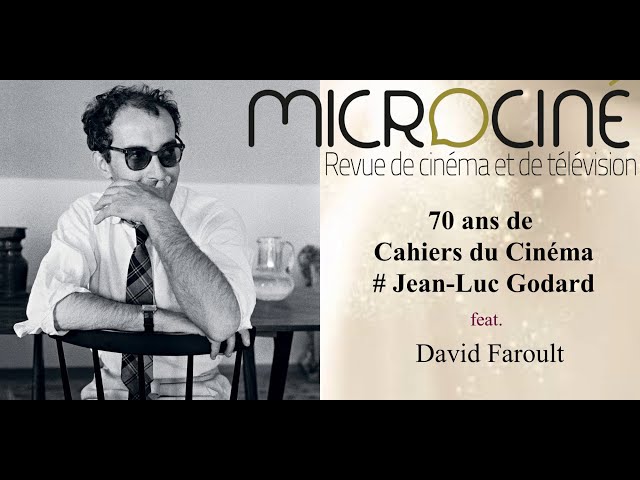
This one is kind of weird because this is actually what we are doing right now, but Godard, Truffaut, and other French New Wave proponents actually started out as critics writing for the film magazine Cahiers du Cinema before making films of their own. Their critiques and discussions helped them discover what makes a movie good and contemplate the very nature of film form.
Godard, a film lover, peppered Breathless with many references to films and genres.
Michel’s Bogart obsession, the movie posters on the wall, and the overly-dramatic music are all nods to Hollywood. The French New Wave was about cinema being made by cinephiles.
Movies like Breathless are what gave rise to auteur theory and therefore, the best that cinema has to offer.
Thanks for watching. Feel free to let me know if you enjoyed the interactivity of this video.
Did it make the experience better? Was it too distracting? If you have any suggestions, I’d love to hear them. And if you’re new here, please hit that subscribe button now because there are plenty of new videos on the way for cinephiles like you. Thanks again for watching.
Up Next
6:44
Match Cut Techniques in Film Editing: A Visual Guide
@StudioBinder
546.4K views•2019-02-11

12:54
Triumph of Orthodoxy Icon: Byzantine Art & History Explained
@BenCallan
2.1K views•2024-08-06

9:49
FastAPI vs Flask vs Django: Choosing the Right Python Web Framework
@TechWithTim
302.5K views•2024-05-26

1:42
Game of Thrones Opening Credits: A Cinematic Analysis
@gameofthrones
46.3M views•2011-04-18
Related Study Plans & Knowledge Roadmaps
Structured learning paths in General & Interdisciplinary Studies
general-studies
Elevator Engineering: History, Physics & Cities
01From Hoists to Safety Brakes: The Dawn of Vertical Lift
02Hydraulic vs. Traction: The Engineering Physics of Elevators
03Modern Speed, Safety, and Algorithms
+ 2 more learning modules
12h5 modules
Explore Roadmap
general-studies
Rubber: Material Science, History & Geopolitics
01Origins of Natural Rubber & Mesoamerican History
02The Chemistry of Natural Rubber & Vulcanization
03The Geopolitics of the Rubber Boom & Colonization
+ 2 more learning modules
12h5 modules
Explore Roadmap
general-studies
Containerization: Evolution, Logistics & Trade
01Ancient Trade & Bulk Cargo: Amphorae to Barrels
02The Industrial Revolution & Cardboard Packaging
03The Containerization Revolution: Malcom McLean
+ 2 more learning modules
12h5 modules
Explore Roadmap
general-studies
Textile Tech: Evolution, Labor & Global Impact
01Pre-Industrial Textiles: Handloom & Cottage Industry
02Mechanization: The Spinning Jenny to the Power Loom
03The Factory System & Global Labor Transformation
+ 2 more learning modules
10h5 modules
Explore Roadmap