












![Ultimate Guide to Scene Transitions – Every Editing Transition Explained [The Shot List, Ep 9]](https://i.ytimg.com/vi/TKXBAaQB03U/maxresdefault.jpg)



![Бегущий человек. Лишние люди. О романе Стивена Кинга и его экранизациях (Это фантастика) [RocketMan]](https://i.ytimg.com/vi/kXUe5IL6CaQ/maxresdefault.jpg)
A match cut is a film editing technique that transitions between scenes by matching visual, auditory, or movement elements between the previous and next scene, creating a seamless and emotionally resonant connection; there are three primary types including graphic match cuts (matching shapes and imagery), movement match cuts (connecting physical actions), and audio match cuts (linking sounds), with the pass-by effect being a specific movement match cut where an object passes in front of the camera to reveal another location.
Match Cut Techniques in Film Editing: A Visual Guide
Added:Fundamental principles of continuity editing, including the Kuleshov Effect and the 180-degree rule.
Basic elements of mise-en-scène and visual composition, specifically framing, dominant shapes, and screen direction.
The distinction between standard transitions like hard cuts, jump cuts, fades, and dissolves.
The concept of temporal and spatial relationships in cinema, and how editing manipulates time and space.
Practical execution of graphic, motion, and audio matches using non-linear editing (NLE) software.
Advanced audio-visual relationships, such as complex sound bridges, J-cuts, L-cuts, and sound design as a narrative driver.
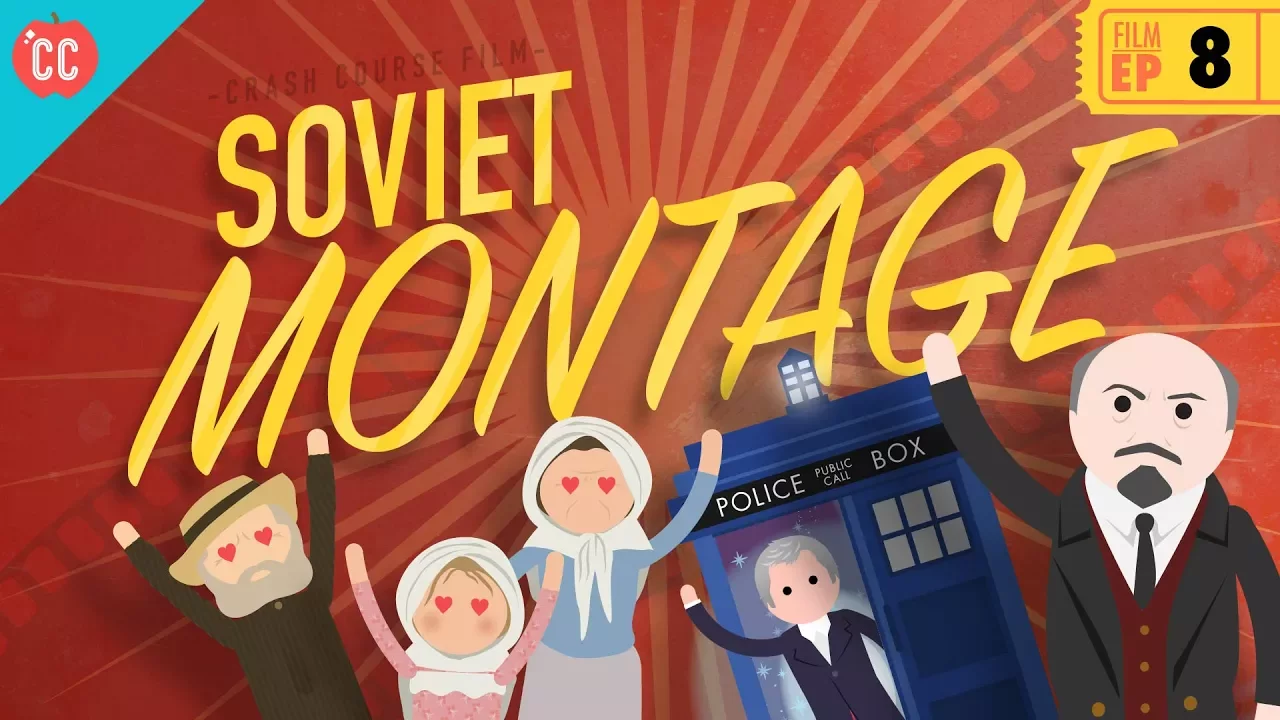
Soviet Montage Theory, focusing on how intellectual and associative editing contrasts with continuity match cuts.
Auteur analysis examining the signature transition styles of directors known for their precise editing, such as Alfred Hitchcock, Stanley Kubrick, and Edgar Wright.
546.4K views14.6Klikes6:44Original Release: 2019-02-11
Ever notice how certain scenes just seem to stay with you?
For me, it's this scene in "Schindler's List."
There's something about this moment that completely changed the way I view things.
It's the scene transition.
But this isn't just any scene transition.
It's "The Match Cut."
So what is a match cut exactly?
A match cut is any transition audio or video that uses the elements from the previous scene to fluidly bring the viewer to the next scene.
Match cuts differ from regular cuts because they imply a deep sense of connection between two separate events or concepts.
They have the ability to perform an emotional switcheroo.
Before we break down the different types of match cuts, subscribe to our channel for more videos, and click the bell icon to stay in the loop with new releases.
So there are three types of match cuts you can use in any project.
Graphic Match Cuts where shapes and imagery are matched during the transition.
Movement Match Cuts where movement is matched.
And Audio Match Cuts where sounds are matched.
We're going to use StudioBinder shot listing features to label the shots throughout today's video.
Understanding how directors label their shots and plan setups will help you build your own dynamic scenes.
First up - Graphic Match Cuts.
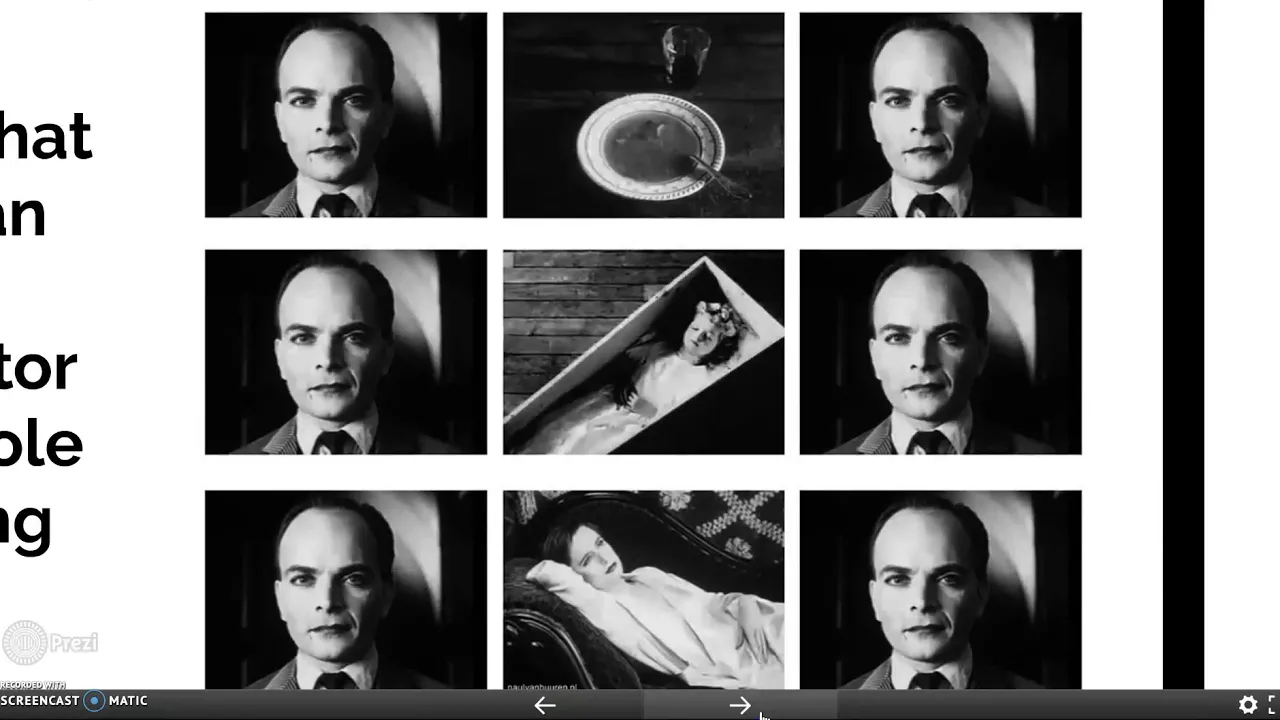
When you use a graphic match cut, you combine or replace the emotional context of imagery in your scene.
Two separate images suddenly become one, and you are forced to consider what the possible connection might be.
You can also use graphic match cuts for a seamless passage of time.
It can be with a dissolve or a straight cut.
You can graphic match cut across multiple transitions allowing a single physical object to act as a visual through-line for your scene.
Graphic match cuts are like a bucket of water tossed onto the viewer`s head.
How quickly you pour is up to you.
So make sure your match cuts have some motivation behind them.
The next kind of match cut is Movement.
The movement match cut draws a direct connection between actions within both scenes.
"Taxi!"
Story-wise movement match cuts generate a narrative momentum that highlight the physical connections between two scenes.
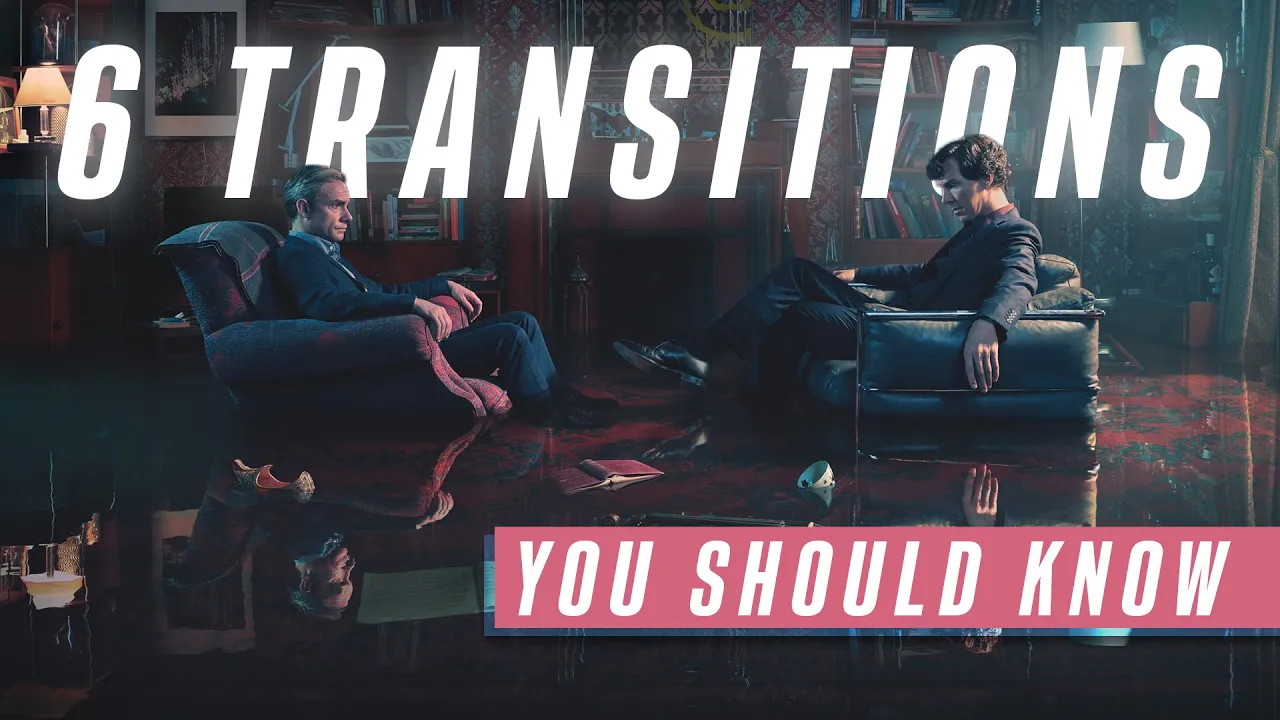
Here is an example from "Sherlock" that connects the separate actions of Watson and Holmes.
A more specific version of an movement match cut is known as a Pass-By Effect.
Where an object passes in front of the camera to reveal another location.
Lastly, Audio Match Cuts.
[Music] This is where you cut on similar sounds, but it's all about how you use your audio match cut.
It's an overlap of matches, and has a direct connection to the narrative.
[Music] Here is an example from "Apocalypse Now."
[Music] In this scene, we hear a helicopter at the dissolve to find a ceiling fan.
[Music] It makes you think when soldiers come home they bring those memories with them.
[Music] You can use audio match cuts in conjunction with graphic and movement match cuts to supercharge their effect.
Never underestimate the power of audio.
It's 50% of your project.
So to recap, there are three types of match cuts you can use in your projects.
Graphic Match Cuts which help you replace or combine the meaning of an image.
Movement Match Cuts which help you create a jolt of energy, as well as narrative momentum.
And Audio Match Cuts which assist your other match cuts, as well as providing new meaning and momentum.
Nothing will help you achieve a match cut better than a storyboard or shot list.
StudioBinder makes it really easy to plan out your match cuts when building your shot list.
Add more shot specs, share it with department heads and take it on set to act as your checklist.
If you're thinking about building your own match cuts, then you're already becoming a better filmmaker.
Match cuts are just one piece of the filmmaking puzzle.
Make sure to take a look at our video on rack focus.
Subscribe for more videos on production.
Remember to click the bell icon to stay in the loop on future videos.
Game. Set. Match.
[Music]
Up Next

26:15
Memento Analysis: Leonard Shelby as a Self-Deceiving Manipulator
@sodercinema
579.9K views•2024-06-01

12:54
Triumph of Orthodoxy Icon: Byzantine Art & History Explained
@BenCallan
2.1K views•2024-08-06
25:19
Post-Production Sound for Film: The Complete Process Guide
@StudioBinder
142.4K views•2025-03-17

1:42
Game of Thrones Opening Credits: A Cinematic Analysis
@gameofthrones
46.3M views•2011-04-18
Related Study Plans & Knowledge Roadmaps
Structured learning paths in General & Interdisciplinary Studies
general-studies
Elevator Engineering: History, Physics & Cities
01From Hoists to Safety Brakes: The Dawn of Vertical Lift
02Hydraulic vs. Traction: The Engineering Physics of Elevators
03Modern Speed, Safety, and Algorithms
+ 2 more learning modules
12h5 modules
Explore Roadmap
general-studies
Rubber: Material Science, History & Geopolitics
01Origins of Natural Rubber & Mesoamerican History
02The Chemistry of Natural Rubber & Vulcanization
03The Geopolitics of the Rubber Boom & Colonization
+ 2 more learning modules
12h5 modules
Explore Roadmap
general-studies
Containerization: Evolution, Logistics & Trade
01Ancient Trade & Bulk Cargo: Amphorae to Barrels
02The Industrial Revolution & Cardboard Packaging
03The Containerization Revolution: Malcom McLean
+ 2 more learning modules
12h5 modules
Explore Roadmap
general-studies
Textile Tech: Evolution, Labor & Global Impact
01Pre-Industrial Textiles: Handloom & Cottage Industry
02Mechanization: The Spinning Jenny to the Power Loom
03The Factory System & Global Labor Transformation
+ 2 more learning modules
10h5 modules
Explore Roadmap