









![2.15A - Semi-Log Plots (multiple choice) [AP Precalculus]](https://i.ytimg.com/vi/-DmiL4p54Jw/sddefault.jpg)



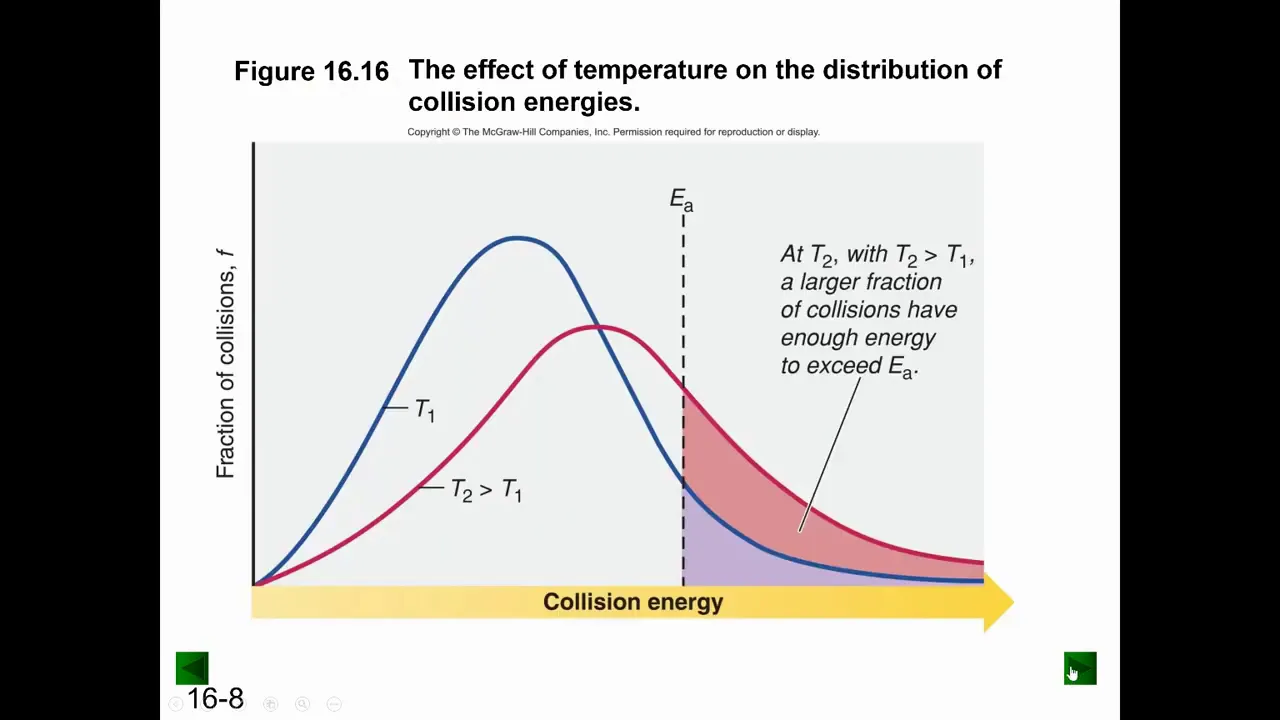





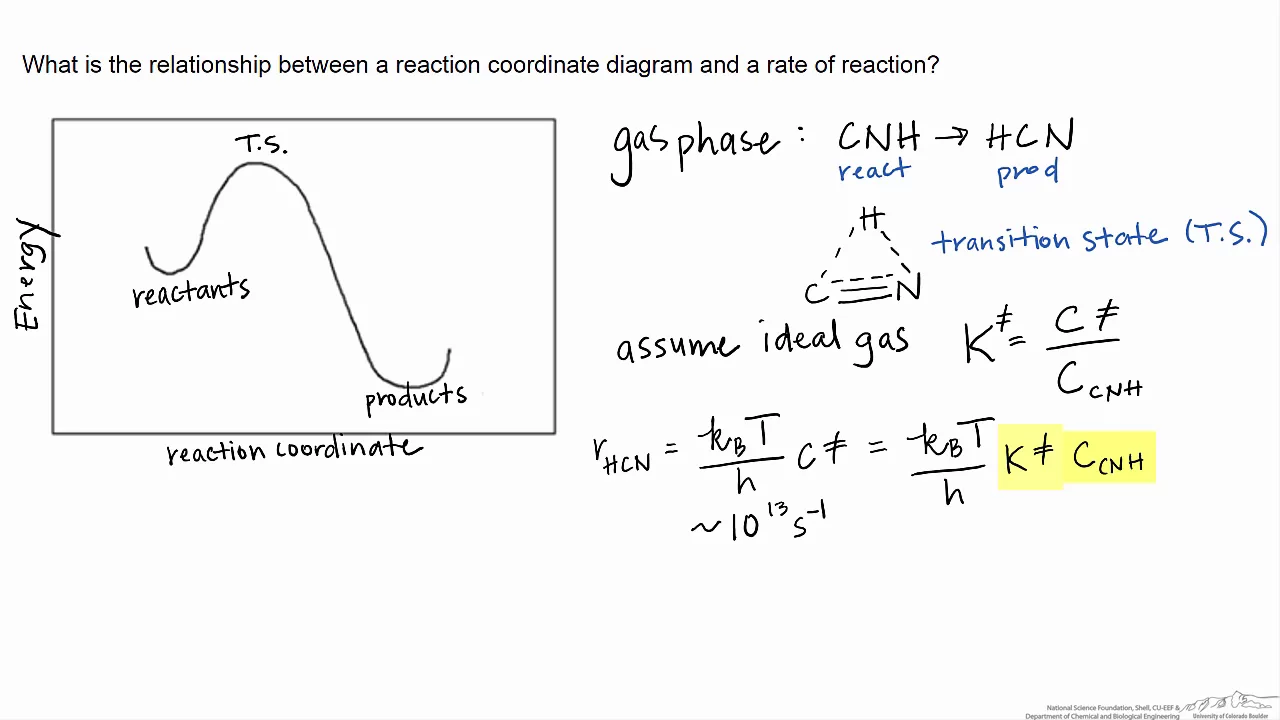


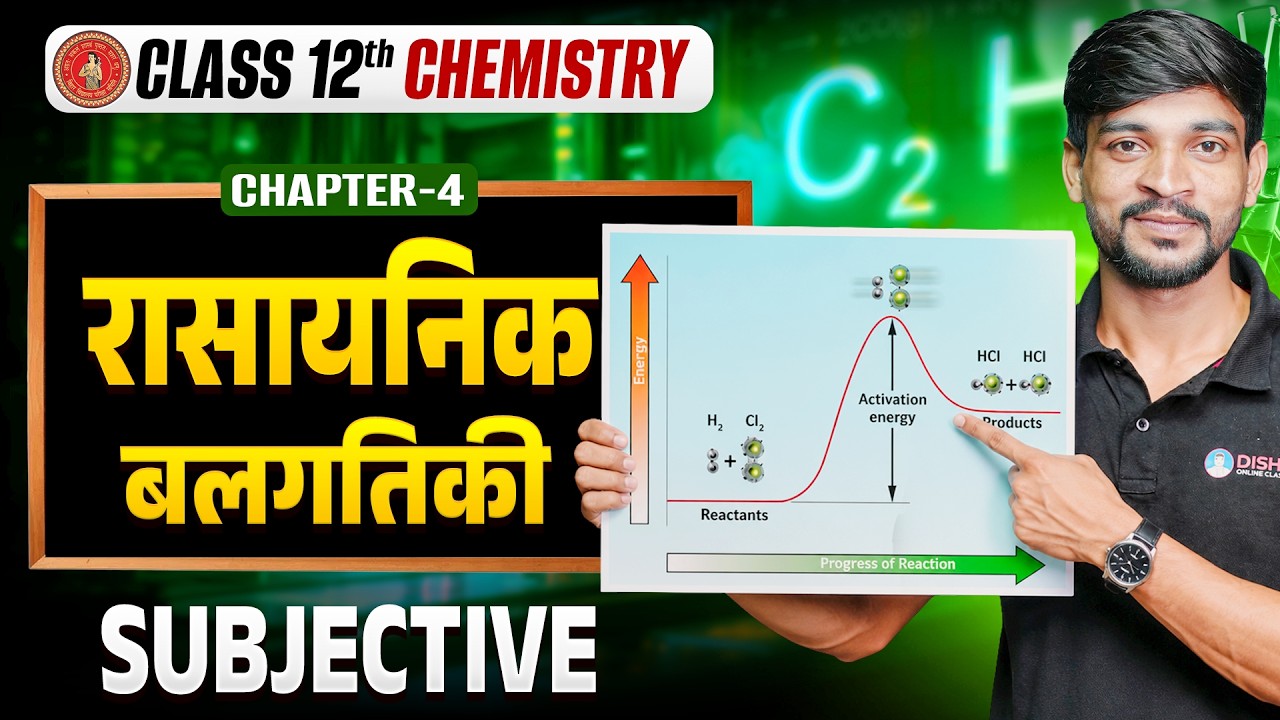

The Arrhenius equation (K = A × e^(-EA/RT)) describes the relationship between the rate constant K, activation energy EA, temperature T, and the Arrhenius constant A; taking the natural logarithm of both sides gives ln(K) = ln(A) - (EA/RT), which can be rearranged to calculate activation energy as EA = -R × T × (ln(K) - ln(A)), where increasing temperature increases K while increasing activation energy decreases K.
Arrhenius Equation: Calculate Activation Energy | Chemistry Tutorial
Added:Understanding of basic chemical kinetics, including how reaction rates are defined and measured.
Familiarity with rate laws, reaction orders, and the physical meaning of the rate constant (k).
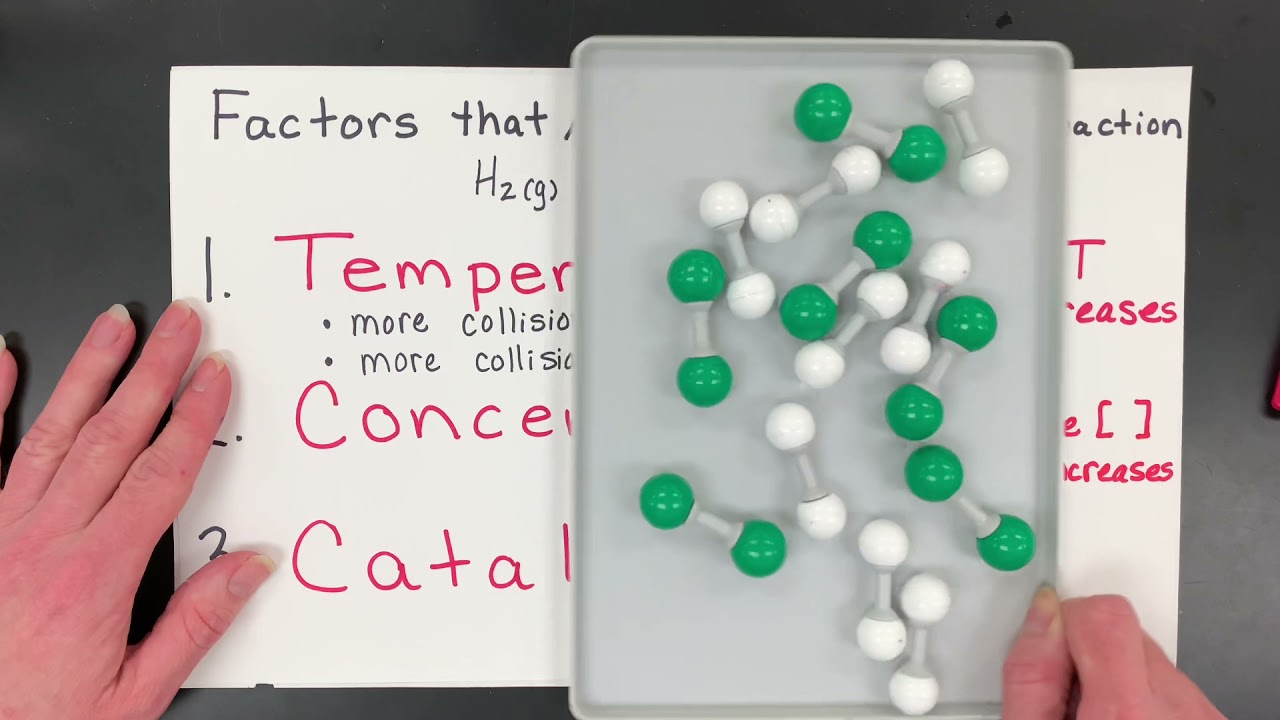
The Collision Theory of chemical reactions, specifically the concept that molecules must collide with sufficient energy to react.
Mathematical proficiency with algebraic manipulation, natural logarithms (ln), exponential functions (e), and the slope-intercept form of a linear equation (y = mx + b).
The relationship between temperature and molecular kinetic energy, as represented by the Maxwell-Boltzmann distribution.
Using the two-point Arrhenius equation to calculate activation energy or rate constants at two different temperatures.
Exploring reaction mechanisms and determining how elementary steps and the rate-determining step relate to overall activation energy.
Understanding the chemical principles of catalysis, including how catalysts provide alternative pathways with lower activation energies.
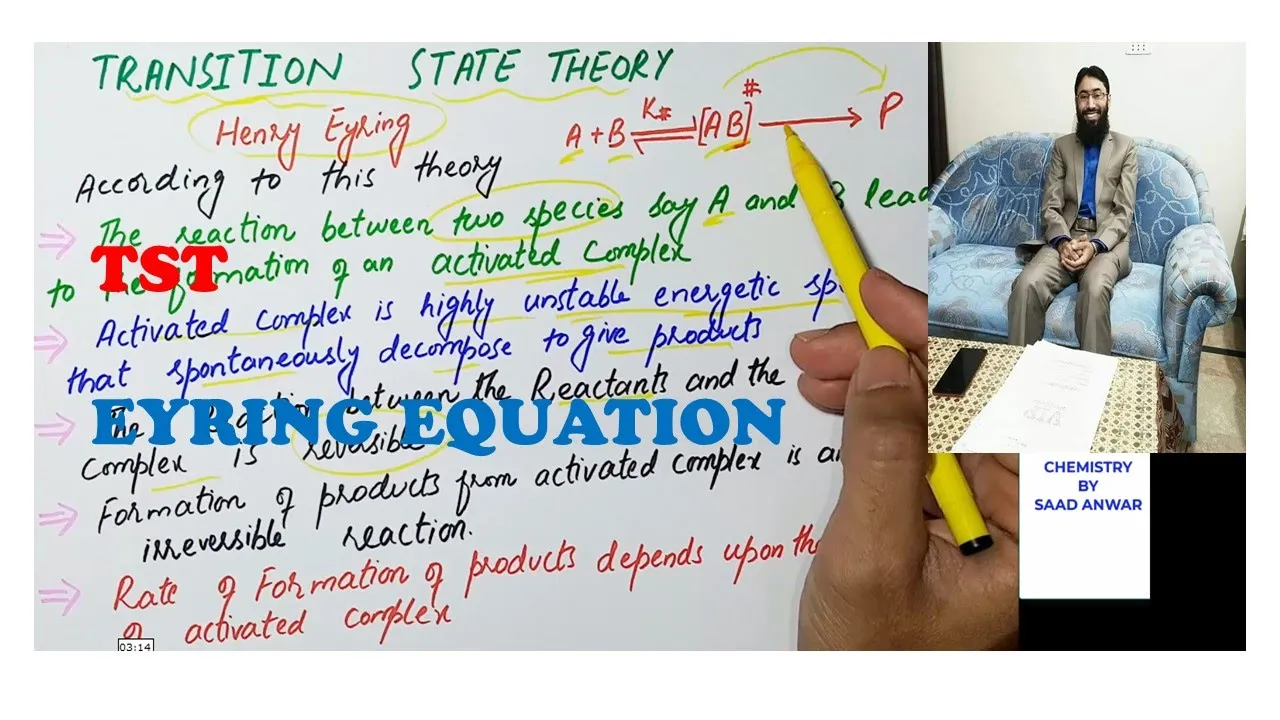
Studying Transition State Theory (Eyring equation) for a more advanced, thermodynamic treatment of reaction rates.
Applying Arrhenius kinetics to real-world scenarios, such as predicting food spoilage rates, pharmaceutical shelf-life, or volcanic degassing.
157.9K views2.5Klikes11:45Original Release: 2016-10-16
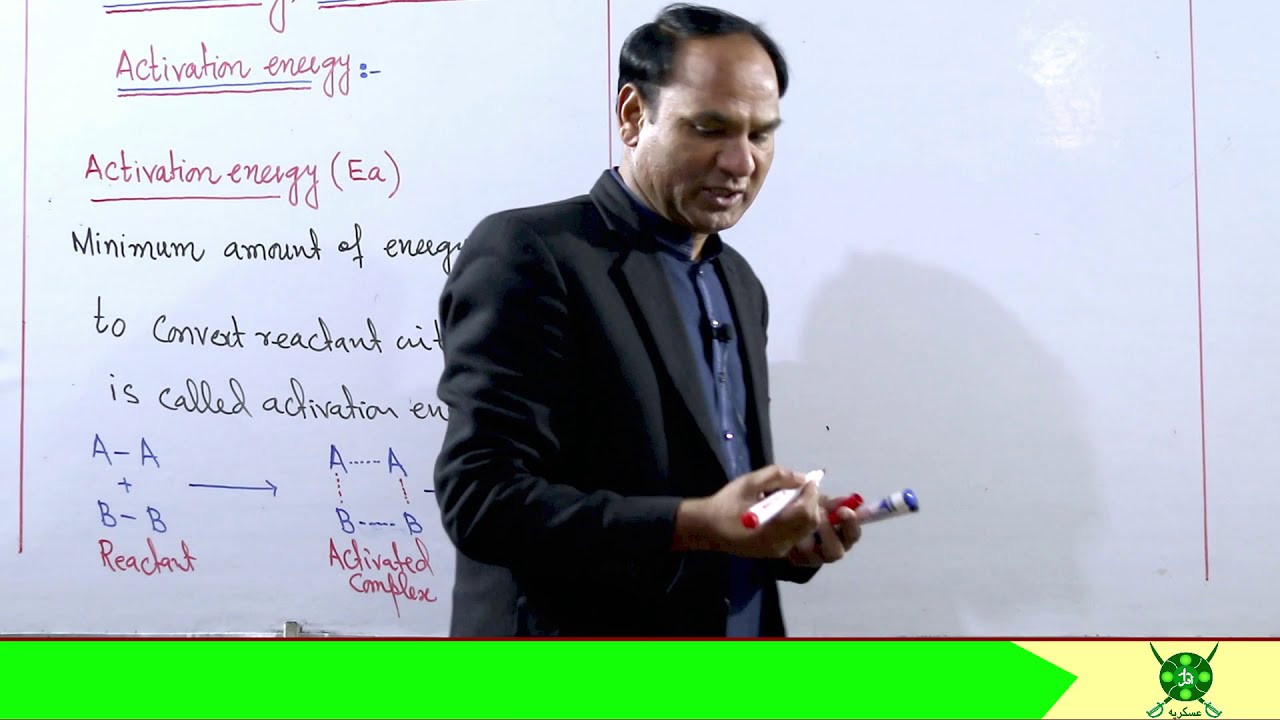
[Music] hi there my name is Chris Harris and I'm from alert.com and welcome to this video on the arenus equation so in this video we're going to look at this quite expanded bit of uh chemistry they've really added a lot of this to the new specifications in particular um so this video is basically going to look at a calculation what the equation is is and we're also going to go through like I say an example as well and also talk about the effects of uh certain parts of the equation um because you need to be able to kind of talk about this in particular if your exam has multi-choice where they could throw this types of questions in as well so um basically what is arenus equation arenius was a um a chemist a physicist and he um he won the Nobel Prize um I believe he was Swedish um and he basically came up with an equation that showed a relationship between K which is the rate constant which you probably will have seen in your rate Expressions so rate equals K and then concentration of your reactants Etc um and how this relates with t which is temperature and EA which is activation energy and so this whole equation is obviously centered around this um and I'm basically just going to show the equation first and we're going to go through all the little bits as well and then go through these bits later on okay so we'll start with this one here this is the equation for that arenus came up with and he basically said that the rate constant which is K so let's uh write that down blue so this is your rate constant uh and the rate constant is uh basically represented by a e and then minus the a over RT and a is something called the arous constant and don't worry too much about that because you'll be given that in the exam so arenus constant uh and this is an exponential relationship for a posh word basically this is what this ebit means and if you look in your calculator um you might be able to see it on there you can see there is the you'll see there's like a little symbol that says e on the top uh and so that is the exponential button and under that is Ln which we will come on to in a minute so that's the button you're going to be using quite a lot in your calculator okay so uh basically this is exponential e we said was activation energy which you will have come across already activation energy okay R is your gas constant again if you've done um in as so in your first year you would have done ideal gas uh equation so R is just a gas constant again you'll get that one uh given to you so this is a gas constant and T I'm running out of room here is temperature right a few things um temperature must be in kelvin that's very important uh activation energy is in Jewels um you can convert to KJS if you want um but generally it's written in Jewels um and R is 8.31 because that's the gas constant a can change um again you'll be given that in the exam it depends on what you're working out uh and obviously K is just your rate constant as well okay now you might look at that and think well that looks quite complicated and we're going to try and simplify it just a little bit and the thing which is really really kind of ugly in this bit is the E bit the exponential and so what we can do is we can try and get rid of that now in math if you want to get rid of one function you have to do it to both sides of the equation so in other words the opposite of your exponential is what we call a natural log we call it Ln again I'll pick up the calculator and you can see you've got a button that says Ln on there you've got one that also says um log that's next to it and Ln is right next to a there you go you can see it there so that's natural log so you're going to use that button uh in your calculations quite a bit and you can see it's the opposite of exponential which is the little one just at the top there so that's the button you're going to be using it's different from log it is completely different button so it's called a natural log so if we take the natural log of both sides uh we get Ln K you can see I've just put Ln in front of here and then we put LNA minus EA RT and you can see what we've done is we've lost the ebit from there okay so we're just going to add that on there we're going to say you take natural logs of both sides all right okay so this will still get you the the same answer it's just a lot easier to rearrange uh when you have to work out activation energy as you can see down there um okay in terms of um the effects of different things um you need to be able to explain the effects of um temperature and activation energy on K which is your rate constant and you need to be able to explain it as well using the correct terminology so for example if we increase the activation energy remember this is the minimum amount of energy required for a reaction to occur okay um remember particles need to collide obviously for a reaction to occur and they must have enough energy to do that and if we increase that activation energy then our rate is going to drop mainly because we have less particles with sufficient energy for a successful Collision to occur um and for that reason our value of K decreases so and you can try it you can put the numbers into your equation and just change e a uh keep everything else the same and you'll see the effect to has on K but it will drop it will decrease if we take a rea ction and we heat it up so we increase the temperature then the effect on K would also increase again the reason why is because the particles have more energy so therefore they have a higher chance of successful collisions because they have more kinetic energy providing of course they're in the correct orientation um but effectively again you can put it into your equation and you can change the temperature and keep everything else the same and you'll see if you increase the temperature your rate constant should increase you are expected to be able to comment on these and you will need to be able to say why using the uh reasoning that I've just given there so it's both successful collisions Etc so it's not too bad okay finally let's just look at the equation here because obviously you need to be able to calculate these things it's not too bad providing you use the simplified version it's probably easier to use I think okay so here's an example we've got calculate the activation energy of a reaction at 330 kelv and a rate constant of 1.30 * by 10-4 s-1 this is just like an example we're using we're assuming that the arena constant is 4.55 * by 10 13 and the gas constant is 8.31 okay dead easy we're going to do is we're going to start writing up our equation first so uh tell what we'll do it in blue so I'm going to put our equation here so I'm going to put Ln k equals LNA okay minus EA over RT okay so we need EA so we're going to rearrange it I'm just going to rearrange going like across here so what I'm going to do is I'm going to bring this whole bit here this e a r t shift it across to that side and then move the Ln K over here so at least I have EA on one side of the equation so that's going to leave is with because that's minus EA over RT that's just going to be positive EA over RT and again that's another reason why I've decided to drag it across that side because I get a positive value which is what we're looking for uh okay and then what we're going to do is we're going to drag the Ln K over to this side so that's going to be LNA minus Ln K so you see this is positive lnk we shift it across it becomes minus okay still we don't have a a on its own so we need to rearrange a little bit further and we need to get EA on its own you can see this is divide by RT so what we do to cancel out we do multiply by RT on the left and we multiply by RT on the right and that basically cancels the RT bit out on that side so activation energy equals LNA uh minus Ln K Times by [Music] RT okay there we are right okay so what we've got here we've now got activation energy on its own and that's all the hard work really the rest of it is pretty straightforward you just got to make sure you put the right numbers in there and you break it down in your calculator using brackets okay I'll show you what I mean so let's drag this here and we're going to put EA okay e which and this equals the LNA so we're just going to put in here Ln which is the natural log a we said was 4.55 * by 10 13 okay and then we're going to subtract that away from the uh there you go natural log of and this is going to be K so K is rate constant 130 so it's 130 * by 10- 4 there you go make sure you work this bit out first cu the calculator may get a little bit confused if it doesn't so work this bit out first this is the LNA minus lnk and then we're going to multiply that answer and again put this in Brackets just to make sure you get the right number R which is 8.31 okay and that's going to be multiplied by the temperature which is 330 Kelvin there you go and then if we put all of that into our calculator making sure we're using that natural log button that I showed you before um we should get an answer in Jewel it be quite a large number cuz it's obviously in Jews so it's 110 11 1 0779 you should get.9 uh and that one will be in Jewels per mole um but you can let's say if we want to put it into um three significant figures and put it into kles instead then eventually what You' get is 111 K per mole and it's pretty much much as simple as that I mean the most difficult bit for this is is trying to rearrange it making sure you're getting all the right things in the right places but once you've actually done that um it shouldn't actually be too bad um and just make sure that you're obviously putting your right numbers in and you make sure you're bracketing it in the right place do it in separate bits and then put it in rather than Chuck it all into the calculator because it'll come out with a with a different number um but that's pretty much it and there is another video as well on the arenus equation we using graphs um the could get you to plot some data and then work out um activation energy for example from a graph um so um if you want to see that video if you just click on the link below uh you can see that video there but um other than that that's it bye-bye
Up Next

20:37
AQA A-Level Chemistry: Kinetics Explained | Collision Theory & Rates
@MrERintoul
211.6K views•2014-06-02
83:56
Biocatalysis and Catalysis in Islatravir Synthesis | Merck Webinar
@SCIwheresciencemeetsbusiness
675 views•2020-10-08
23:10
AQA A-Level Chemistry: Halogenoalkanes Revision Guide
@AlleryChemistry
148.9K views•2017-05-08

17:31
Edible Water Bottles: A DIY Guide to Sodium Alginate Spherification
@ryan
10.5M views•2019-06-21
Related Study Plans & Knowledge Roadmaps
Structured learning paths in Chemistry
chemistry
Nuclear Chemistry: Decay, Meds & Fuel Cycle
01Introduction to Nuclear Structure and Radioactivity
02Decay Dynamics and Kinetics
03Radiation Interaction and Detection
+ 2 more learning modules
24h5 modules
Explore Roadmap
chemistry
Supramolecular Chemistry: Forces & Machines
01Foundations of Chemical Bonding and Intermolecular Forces
02Introduction to Host-Guest Chemistry
03Thermodynamics and Dynamics of Self-Assembly
+ 2 more learning modules
16h5 modules
Explore Roadmap
chemistry
Photochemistry: Excited States & Reactions
01Foundations of Light-Matter Interactions
02Molecular Orbitals and Electronic States
03Photophysical Processes and Jablonski Diagrams
+ 2 more learning modules
18h5 modules
Explore Roadmap
chemistry
Coordination Chemistry: Bonding & Properties
01Introduction to Transition Metals and Ligands
02Crystal Field Theory (CFT) and Geometry
03Magnetic Behavior and Spin States
+ 2 more learning modules
14h5 modules
Explore Roadmap