

![GOC Class 11 One Shot Chemistry [ Concept + PYQs ] AP TS EAPCET 2025](https://i.ytimg.com/vi/6xjzvqf2y0E/maxresdefault.jpg)


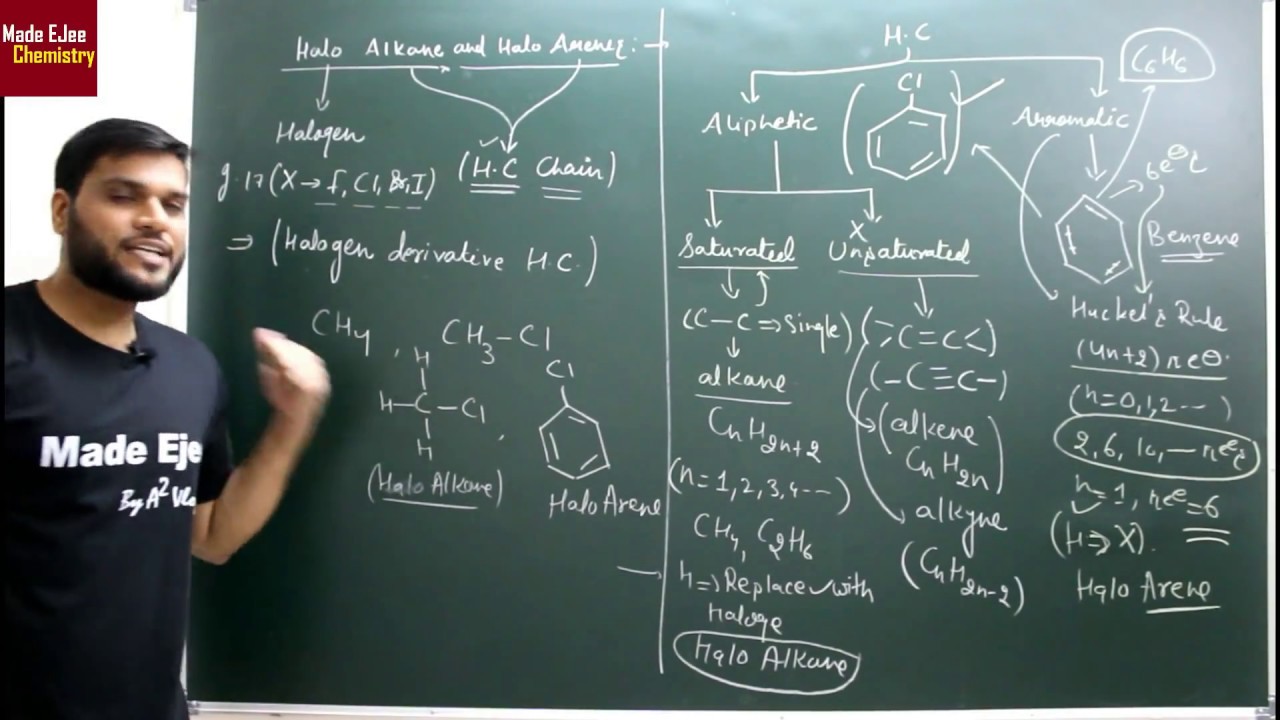















Halogenoalkanes are organic compounds containing one or more halogen atoms attached to a carbon chain, named using prefixes (fluoro, chloro, bromo, iodo) indicating the halogen type and position, with boiling points increasing down Group 7 due to stronger van der Waals forces; they undergo nucleophilic substitution reactions where the polar C-X bond is attacked by nucleophiles (such as OH⁻, CN⁻, or NH₃) to form alcohols, nitriles, or amines respectively, with the solvent determining whether substitution or elimination occurs, and their reactivity increases down the group due to decreasing bond enthalpy, while CFCs (chlorofluorocarbons) were banned because they catalyze ozone layer destruction through radical reactions that release chlorine atoms which break down ozone molecules.
AQA A-Level Chemistry: Halogenoalkanes Revision Guide
Added:[Music] hello and welcome to this video on ecology no alkane this is a revision video for the AQA topic of ecology no alkanes my name is Chris Harris I'm from Allawi cheaters.com and basically in this video I'm just going to go through an overview of the topic and make sure that you kind of you've got a bit of good insight as to what you expected to know in terms of content for the exam and you can the PowerPoint I'm going to use in this in this video and you can purchase if you just click on the link in the description box below the video and you'll be able to get the other powerpoints from there and then you can you can use them you can you can print them out you can use them use your notes you can look back over them and whenever you want is busy just a just a supplement your revision material that you may already have some only good idea to and to do that if you if you'd like them ok right so like I say these are very specific to AQA so we've got obviously the specification got the spec points written down here and it's just basically highlights that the fact that anything in this PowerPoint is related to the specification okay so naming halogen or alkane so Halle Gino alkanes are basically our kids they have one or more halogens attached to it so in terms of naming we have to find the longest carbon chain and this will form the last part of the name and so this would be this is a bit like when you've got your obviously your alkanes as well then the names of the positions of the halogens of the molecules comes first that's the prefix and then we're going to use the prefixes fluro chloro bromo RI odo and use the numbers to state their positions on the carbon chain and so and you've got to make sure they're in alphabetical order as well so if there's more than one halogen molecule that's pretty important and if you have more than one type of the more than one of the same type of the halogen and the new prefix would die for to try three and tetra for four of them so let's have a look let's see what we've got so we've got the first one here this is obviously one carbon with three fluorines and asses can we try again of highlights and purples to try for the purple box plural because we've got the flow in there and methane because that's the longest carbon chain is only one carbon there this one is you can see we've got two because we're going to say where the chlorine is it's on the second carbon chloro propane three carbons long and this one is a bit more complicated it went a bit bit adventurous for this one this one's going to be one bromo look that's on the first carbon one bromo one one dichloro two chlorines two I order Ethan busy I'm just trying to highlight the order alphabetical order B then C then I okay so must go in alphabetical order if you've got more than one type house in okay this one's one bromo one one dike or two I order Ethan okay turns out I'm quickly okay so that's basically the naming of the of the halogen or alkenes now we need to know a bit of properties about them so I'm going to boiling point trends of how the geno alkanes a boiling points of halogen no alkanes increases we go down the group and this is why so the strength of the intermolecular force has governed the boiling points how strong these things are so basically the higher or the stronger the intermolecular force or bond the higher the boiling point so and as we do as we go down group seven the number of electrons and the halogens or the number of electrons in the housing atoms they effectively increase so this means they have more van der Waals forces more energy needed to overcome these strong forces and this is why the boiling points of halogen arcades increases would go down the group this basically leads to if we have all these as methyl so I'm hollow no hill or hill metal compounds who've got phloem ether in chlorinated Bromley thin iodoethane so just to keep it the same as the halogens are changing so we're looking at the effect of the halogen the halogen gets bigger and more van der Waals bond point increases as we go down the group bond polarity and nucleophiles right these are pretty important so we need to describe how these things react so halogen no alkanes have a polar bond they are attacked by nucleophiles okay so we need to what these little bits are so halogens are electronegative okay so here we've got chloromethane they pull electrons towards themselves and this is what leads to that polar bond that we're talking about put the Delta negatives and Delta positives on there as Delta negative Delta positive especially shows that the carbon is electron deficient and your air chlorine is electron rich okay so the polar bond means that halogen Larkin's can be attacked by nucleophiles in case this is polar so nucleophile is just a substance that is an electron pair donor so donates electron donates electrons to the actual system so examples of nucleophiles that you need to know are cyanide ammonia and hydroxide so we've got them here this one's your cyanide there's your lone pair ammonia has got a lone pair and hydroxides actually got two lone pairs but doesn't really matter as long as we've got a lone pair of electrons notice don't have to be charged cyanide and hydroxide are but ammonia isn't so that doesn't matter it's the lone pairs that come okay curly arrows and you will see needs before property and they show the movement of electron pairs they move from the lone pair on the Delta positive lone pair on the nucleophile to the Delta positive carbon look lone pair arrow going to the Delta positive carbon you'll see a lot of this in this topic later on okay let's look at some very specific reactions so reaction with hydroxide ions so halogen or alkanes react with hydroxide ions via nucleophilic substitution okay this is the name of the mechanism they ask about the name of it this is what it's called okay so the conditions for this reaction we need warm aqueous sodium hydroxide and basically this gives you this is going to give you the source of the O H minus ions which is your nucleophile this is all carried out into reflux so remember reflux we got the Liebig condenser on top of your round bottom flask and you're heating it up water goes through the Liebig condenser and it basically stops any volatile substances from escaping while you're heating it okay so basically got your nucleophile in this case it's a hydroxide ion this will attack the Delta positive carbon and replace the hydrogen on the Hilo arcane and or halogen or arcane and hence the reason why we say substitution because we're swapping one for the earth okay let's start and write this mechanism out so lone pair okay arrow goes to the Delta positive carbon so this is trying to form a bond with the carbon then because this is now trying to form a bond with it the carbon now has 1 2 3 4 5 bonds so it needs to break one of the bonds and it'll break the weakest one which is always the carbon halogen bond so this one's going to break and this is what we're saying here so the CX bond this bit the X represents the halogen and breaks both the electrons move from the bond to the halogen and a new bond is formed between the o h- and the carbon so there it is there's the bond that breaks okay and we form this product and you can see here we have actually swapped the halogen now for an Oh H because the OHS added itself on the halogens dropped off so it's a nucleophilic that's the nucleophile substitution because we've swapped it your chloride iron is now free to move around and do whatever it needs to do your alcohol is formed and pretty much and you can use that for whatever you want to use like for disinfectants and ethanol as long as you can use s and all it drinks alcoholic drinks re so that's that's not the overall reaction for this rx X is used quite a lot to represent the halogen so this is your halo alkane Paladino Archaean reacting with sodium hydroxide forms the alcohol plus sodium and halide this would be a salt that's are there this also just represent the hill iodine yeah and the arbitrary alkyl group as well okay so it could be a ch3 and hardly representative bromine or chlorine right mechanisms are really important make sure you know that we can get a lot of them here so much so here's another one right so halogen you know alkanes they also not only to do that with hydroxide ions but they also react with cyanide ions this claim they're weeknight trials so the conditions for this reaction we've got warm ethanol ik potassium cyanide this biz you're going to give you the source of cyanide ions again this whole things under reflux so we've got the nucleophile again same thing as you cyanide will attack the Delta positive carbon and kick off the halogen and we call this against substitution so there's the first bit again that bond breaks just like before and and we get a new bond that's formed between the carbon and CN - there it is and we form our product known as our product and this is called the nitrile this one here one two three carbons that we've extended the carbon length chain and so this is propane that char okay and so the overall reaction again there's your halogen there's kcn so this is taslim cyanide we add these two together you form your night trial which is this and your K X your potassium here light remember your R's and X is what they are so this is called the Nitro okay same mechanism so it's not too bad don't remember a separate mechanism okay right another one right this one's a little bit tricky little bit extra stuff in here so you have to watch out for this one right halogen Oh alkenes on top of hydroxide ions and cyanides they also react with ammonia via nucleophilic substitution so it's a very similar start actually and this time though we're going to heat it with ethanolic ammonia okay and we'll must have an excess of ammonia I'll tell you why in a minute when we see the mechanism it's really important to have an excess right let's have a look at the first bit here's our halogen larkin here's our nucleophile this is ammonia lone pair on here and basically this is going to guess what this is going to go to your Delta positive carbon and it's going to kick off the halogen okay so there it is as your first step there's the second step okay so same as before except problem is is that we've added on now a molecule which is now going to be quite unstable then whole nh3 has added onto the carbon and that's it there there's the carbon the whole lot added on that's now left with the nitrogen with a positive charge because it's got four bonds remember nitrogen can only bond three times and we've got it's chloride that we've kicked off now this is where it gets a little bit different okay so in the second phase yes we've got two phases of this another molecule of ammonia act to the base by reacting with the hydrogen and this is the reason why we need excess ammonia so there is your ammonia lone pair on the nitrogen and what this is going to do this is acting is a base here and bases are proton acceptors so this is going to go for a proton not the nitrogen here so there's the our oh look we've formed the hydrogen and then obviously because that this is forming the bond of the hydrogen hydrogen can only bond once this bond has to break and the electrons shuffle into that nitrogen there to stabilize it so there it is okay so we've stabilized that nitrogen and all the electrons have moved in there so the aiming is produced we can identify any mean by this kind of fishy smells it's very distinguishable and the ammonia mine is also produced this is NH 4 plus as you can see here but we form a Moute an amine which is this one here okay so make sure you're able to identify this is an amine and it can be formed by this mechanism so we've got ammonia acting as a nucleophile here because a lone pair donor and we've also got ammonia another molecule of ammonia reacting as a base because acting as base because it's gone for a proton as a proton acceptor okay the overall reaction here those you hear arcane push the ammonia form you're a mean plus your ammonium quad which is just your salt at the end there all right okay so halogen or alkene reactivity okay so how Latino are kids they become more reactive as we go down the group okay so what determines this reactivity the bond strength or the bond enthalpy determines the reactivity knot and the bond polarity okay and that's really important so people get this confused okay so it's important they get this right so the table shows bond enthalpies of what are see ex bonds are carbon halogen bonds okay so the CI bond has the lowest bond enthalpy and the easiest one to break there it is okay this means reactions with the CI bond will be more reactive okay so remember this is do the enthalpy so this is the weakest bond then speeds easiest to break so in reactions won't take that much energy so this is going to be much more reactive the CI bond then for example the CF bond which is a bit stronger okay so the reaction with hydroxide ions so let's have a look at these so halogen Joaquin's react with hydroxide ions via elimination using ethanol solvent right notice the reaction that we looked up before this was the reaction of a halogen o alkane react with hydroxyl ions but this time we're using aqueous solvent back then and we got an alcohol this one would just change the solvent same same substance as a hydroxyl ion we've changed the solvent the solvent is now phenol so let's look at the commission's warm ethanol ik sodium hydroxide this gives you the source of the O H minus ions and this is carried out under reflux okay and basically the main difference here is the oh it's minus from the tap the hydrogen ion or the hydrogen on a carbon adjacent to the carbon with the halogen on okay and the O H minus act as a base which is a proton acceptor forming water right so what doesn't happen we don't get because this is dissolved and ethanol we don't get the electrons moving in for the Delta positive carbon instead this is going to move in for a hydrogen that's adjacent to the carbon with the chlorine attached to it so that could be this one or this one so because this is dissolved in ethanol so the solvent plays a really big role here okay so this one's obviously on to hydrogen at the top it doesn't really matter which one and so this is going to go for the hydrogen then the electrons in the bond move to form a double bond between the two carbons so these electrons here jump in here and they form a double bond there so obviously because this is forming a double bond we'll have this carbon will have too many bonds because it'll have one two three four five so it's got to break the weakest one the weakest one here is the carbon halogen bond always so the electrons will then jump from there onto the chlorine there it is okay so this is why that happens and then the product is an alkene so we've nicked this hydrogen with the niklas hydrogen off the molecule so not there anymore the chlorines also been kicked off so that's not there anymore but we do have a double bond there there it is okay so we form an alkene so this is your alkene H+ and the cr- is eliminated obviously H+ reacts with ëoh - to form water and you get CL - as well so the solvent is really really important and there's the overall reaction so you've got your Bilbo are key in there this is tuber mo and propane without to me the potassium hydroxide and this will form your alkene this is e teen plus water plus potassium bromide in this case or you can have calcium chloride if you want okay so is it elimination or substitution so like to say the solvent plays an important role in deciding if a reaction is elimination or substitution so when we react sodium hydroxide with a halogen or alkane and we can make an alkene just which is one which is seen before using ethanol as a solvent oh it needs an alcohol or would form an alcohol when we're using water as a solvent but both alkene and alcohol with a mixture will provide well that will provide a mixture of both solvent so basically if we had alkene alcohol mixed we'll get both of these substances forms okay so let's have a look this one here is your first one there's your a claw alkene your two core propane here react it with Oh H - or ethanol the Oh H - act is a base because the solvent we using is ethanol and we form an alkene check out for easy isomerism as well and there is a video where we looked at easy ed in the introduction to organic chemistry so and have a look at that on there if you want to check out our spot for easy lie solids you might gets me dead from that as well and the other one let's say now we're going to use Oh H - same Oh H but we're going to use a water solvent this time the Oh H - acts as a nucleophile and we get a substitution reaction so we form an alcohol instead okay so really look out for the the type of solvent you're using because OAH - behaves need depending on the solvent you using okay CFCs so CFCs are am basically chlorofluorocarbons now these are used or were used to say in refrigerants and propellants in deodorants and things so but the problem is is that these break down ozone in the atmosphere so an ozone the layer which protects us from UV so CFC these are molecules that have had all their hydrogens replaced by chlorine and fluorine okay so they're pretty stable that's why we use as refrigerants and but they are broken down by UV if they exposed to UV so what happens is the carbon chlorine bond like this one here is broken down by some UV that comes in and this is coming in from the atmosphere and the radicals there are forms and these catalyze the breakdown of ozone so you might have seen radicals before so in the alkanes topic for example you might see radicals so the CCL bonds are broken easiest okay so these are the easier to break than the MCF bonds okay because we have them louis ponent to remove from the previous slide so a CF bond is less likely to be broken because it is a stronger bond so you just need to know that we form these radicals as UV that breaks down these CFCs and so now we need to know well how do these CFCs destroy the ozone so we know how they're broken down so basically they form these radicals like we said these catalyze the breakdown of ozone you need to know the reactions for these as well so here's the initiation step remember obviously we've got CFC there it is UV comes in breaks the CCL bonds we've produced two radicals and eventually these will react with ozone so let's have a look so there it is CCL three F plus h view this is basically just radiation energy and then we form a radical there you go see CL to F dot plus CL dots so basically what a CL dot and whatever the rest is we've got the two radicals there then obviously we've got a propagation step and the CL dot that was formed here react with ozone to form CLO dot intermediate and oxygen and then that radical then reacts with more ozone to make oxygen and Cl and basically because this CL dot has reformed it we know it's a catalyst so let's um look at the reaction in the first propagation we've got the chloride chlorine radical that was formed here now reacting with the ozone in the atmosphere that forms oxygen in form CL o dot remember the radical in step one is also the reactant in step two so we drag that down there there it is that reacts with even more ozone in the atmosphere and that produces two molecules of oxygen and you form your CL dot remember your radical in radical produced in step two must be the reactant radical in step one okay so make sure they match that's kind of tells you how to work these things out and because it's reformed look it was used there and it's reformed here that is a catalyst that's how we don't see our dot as a catalyst okay and termination basically this is where we got two radicals and reacting together so for example were forming at CL 2 there it is CL dot 2 CL that form CLT and that's the termination step so overall what we have and you'd see them circled there in red and blue we've got two molecules of ozone which is the red one at producing three molecules of o2 which is the one in blue and Cl dot is the catalyst here okay so restricting use of CFCs okay so CFCs are now banned because obviously the damage that they caused so they're really stable and unreactive and they're non-toxic and that like I said they were used as refrigerants and propellants and deodorants so it was demonstrated though by scientists that CFCs were damaging the ozone layer so despite the advantages the risks outweigh the benefits okay and so that obviously the now banned and and remember the ozone absorbs this harmful UV radiation from the Sun so and it stops it blocks some of the harmful types of UV and it protects and animals and plants suppose living on the earth and obviously the ozone is depleted and we have lost that level of protection so what do we use today well now we use HFCS and the is our hydrofluorocarbons and they're a little bit safer to use and and hydrocarbons also and just straight-up hydrocarbons without any and chlorine in it and so things like alkanes etc they can be used as alternative so they lot safer to use than what we used to use and that's it so that is a very quick overview of your halogen or alkanes topic and again just make sure you know your radical reactions and you know the mechanisms are so important here especially the use of solvent with the hydroxide line and that obviously is going to pose a little bit of a problem and if you're not too sure on the difference just read the question really carefully but like I say and these powerpoints are available to purchase just click on the link in the description box below this video to and get a hold of but that's it for now bye bye
Up Next
Acid Rain: Causes, Formation & Environmental Impact | Chemistry
@fuseschool
786.8K views•2014-08-10
Biocatalysis and Catalysis in Islatravir Synthesis | Merck Webinar
@SCIwheresciencemeetsbusiness
675 views•2020-10-08
Arrhenius Equation: Calculate Activation Energy | Chemistry Tutorial
@AlleryChemistry
157.9K views•2016-10-16
Edible Water Bottles: A DIY Guide to Sodium Alginate Spherification
@ryan
10.5M views•2019-06-21
Related Study Plans & Knowledge Roadmaps
Structured learning paths in Chemistry