






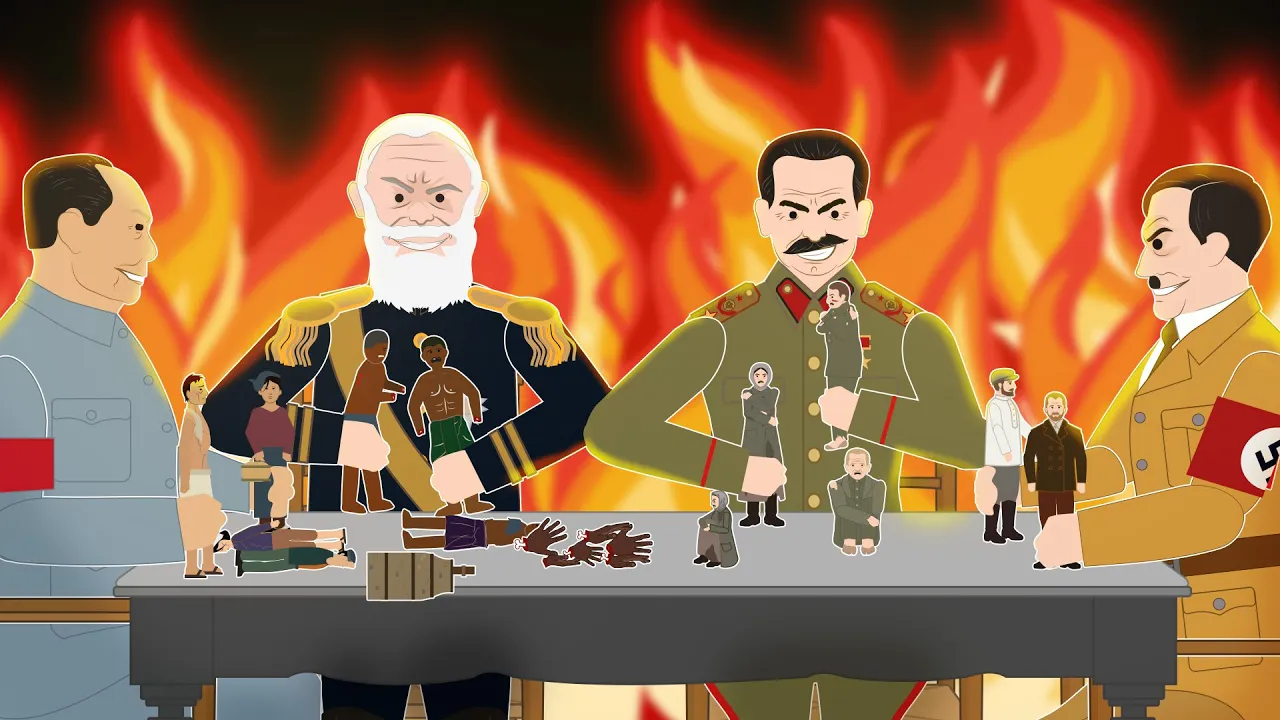


![| DAY BREAK | Kenya-France: What's next? [Part 1]](https://i.ytimg.com/vi/eTKbku_psow/maxresdefault.jpg)


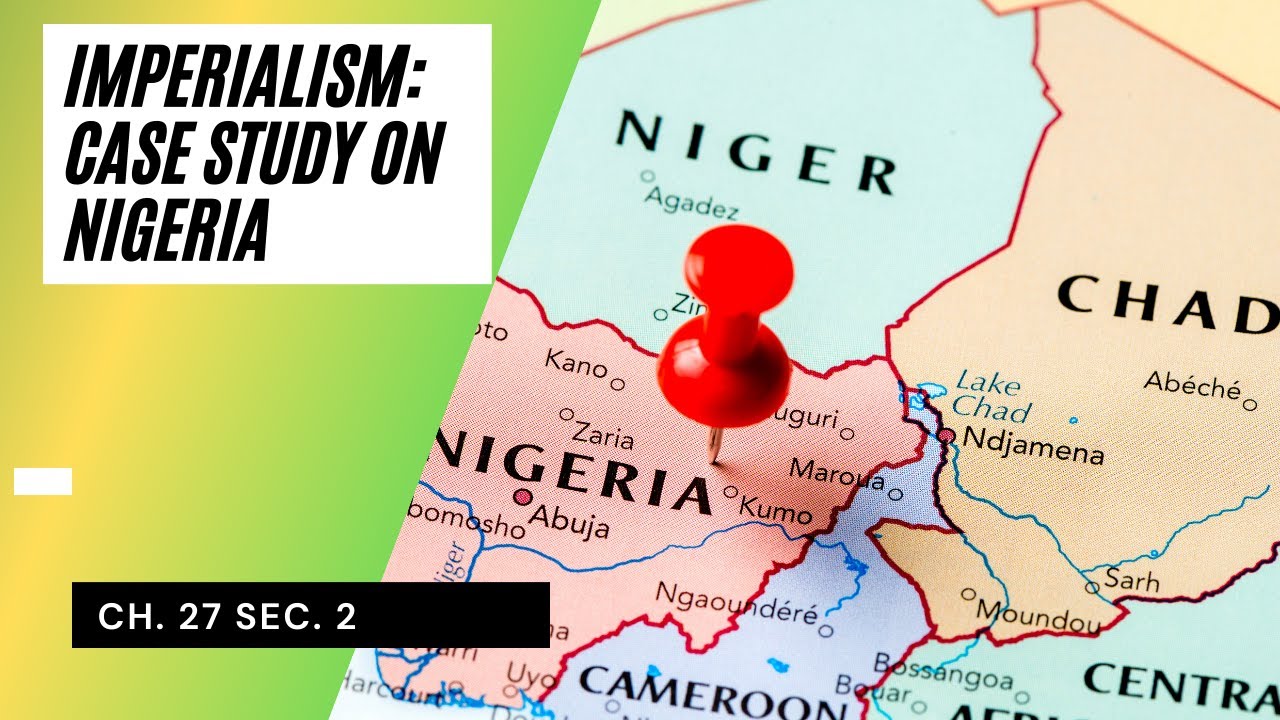


![State Building AFTER Decolonization [AP World History Review—Unit 8 Topic 6]](https://i.ytimg.com/vi_webp/Yu-tvtvXd8w/maxresdefault.webp)
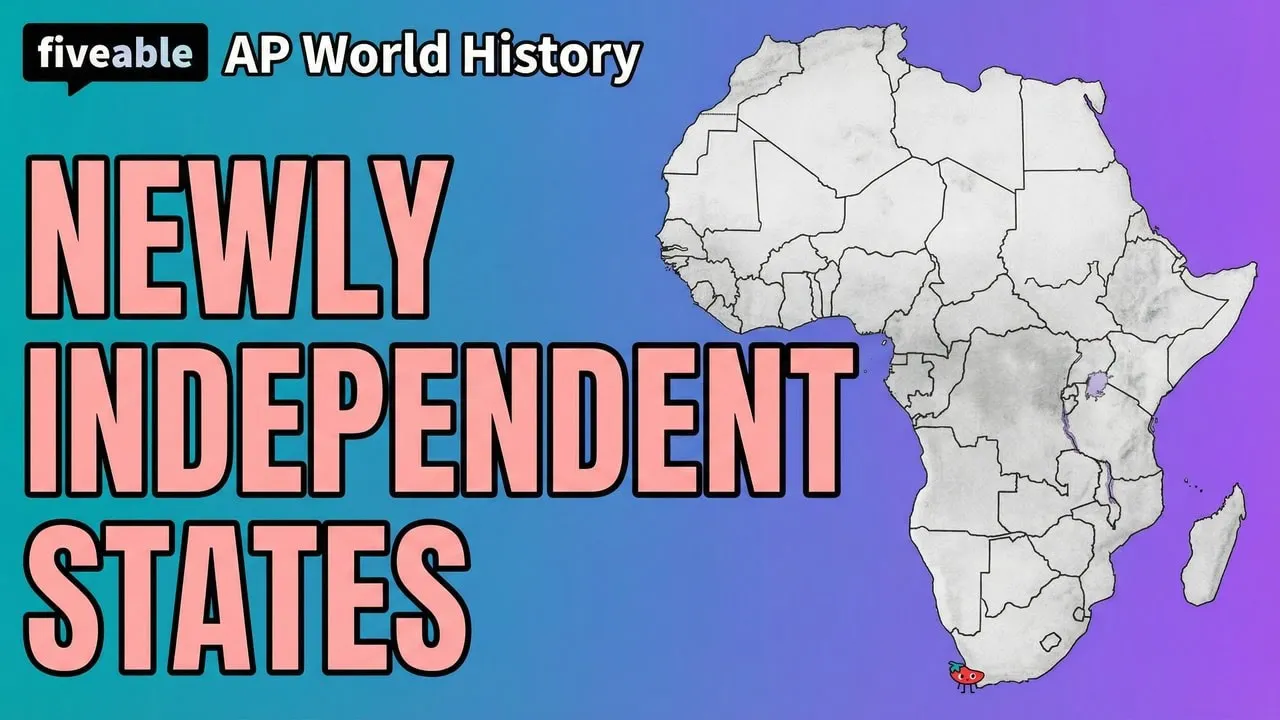






The 1884-1885 Berlin Conference, organized by German Chancellor Otto von Bismarck, was a secret meeting of 14 European powers that divided Africa without any African representation, establishing rules for colonial exploitation that created artificial borders, forced rival ethnic groups into the same territories, and established an economic model of resource extraction that continues to shape Africa's political instability, economic dependency, and conflicts today, with modern powers continuing to exploit the continent through new forms of economic and strategic control.
The Berlin Conference of 1884: Africa's Colonial Partition
Added:The concept of 'New Imperialism' and the economic, political, and social motivations driving 19th-century European expansion.
The impact of the Industrial Revolution on European demand for raw materials (such as rubber, cotton, and minerals) and new consumer markets.
The pre-1884 geopolitical state of Africa, including the coexistence of diverse indigenous empires, kingdoms, and decentralized societies.
The early European exploration of the African interior and the controversial actions of King Leopold II of Belgium in the Congo Basin that triggered geopolitical tensions.
The methods of colonial administration implemented post-conference, specifically comparing British 'indirect rule' with French 'assimilation policies'.
African resistance movements and military conflicts against European colonial imposition, such as the Battle of Adwa or the Maji Maji Rebellion.
The mid-20th-century decolonization movement and the challenges of nation-building within arbitrarily drawn colonial borders.
The contemporary geopolitical and economic legacy of the partition, including dependency theory, neo-colonialism, and modern resource extraction conflicts.
240.7K views8.7Klikes22:13Original Release: 2025-05-03
[Music] The leaders of 14 European countries in the United States met at a conference.
The aim of the conference was for Western countries to avoid waring among themselves over Africa. The superpowers wanted to ensure maximum control over Africa's resources by establishing rules by which to divide the spoils at the expense of the Africans who rightly own them. Hey there, Breakdown family. Today we're traveling back to a moment in history that changed everything. A moment so chilling, so outrageous that its effects are still felt across Africa today. The year was 1884. The place Berlin, Germany, and inside a grand European hall behind closed doors, the future of an entire continent was being decided.
No, not by Africans. Not with African input, but by European powers slicing Africa up like a cake. Each claiming pieces for themselves with no regard for the people, the cultures, or the histories that lived there. Today on the breakdown, we're exposing the shocking truth about what really happened inside the Berlin Conference. Who started it? Who was at the table? and who was not and how the decisions made there brutally shaped Africa's borders, its conflicts today, its economy, and its destiny. And we're going even further.
We also look at how in many ways the spirit of the Berlin Conference is still alive today in the modern scramble for Africa's land, its minerals, and its future. Because this is the story they never taught us. This is the story we need to understand if we ever hope to reclaim our power. Now, before we dive in, I want to invite you to be a part of something bigger. Because here at Panagenius TV, we're building more than just a channel.
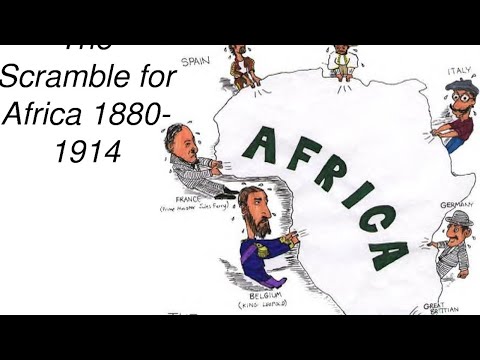
We're creating a home, a global home for black stories that are told with truth, with care, and with power. And if that speaks to you, and I hope it does, hit subscribe, tap the bell, drop a super thanks, and consider joining our membership community where you will get exclusive videos, behind the scenes conversation, and the chance to be part of the dialogue shaping our future. This isn't just content, it's a movement, and I'd love for you to be a part of it. Now, let's get into it. So to understand how we even got to the Berlin conference, you have to know the real story, not the sanitized version they put in the textbooks. The conference wasn't about peace. No, it wasn't about progress. It was about power and yes, greed. a colony that made many European states compete with each other, vie with each other to accumulate colonies in order to make them great. In the early 1880s, Europe was in a frenzy over Africa. They called it the scramble for Africa, and that's exactly what it was. A race to grab land, resources, and markets before anyone else could. Kin Leopold II of Belgium played a major role in sparking the urgency. Behind the scenes, he was desperate to legitimize his personal control over the Congo, a territory he claimed under the fake banner of humanitarian work, but was really setting up for brutal exploitation. At the same time, Germany under Chancellor Otto von Bismar was becoming a new rising power in Europe.
Bismar didn't even care about Africa initially. No, but he saw an opportunity. He realized that by calling a conference, Germany could establish itself as a diplomatic leader in Europe and use Africa as a bargaining chip in bigger European rivalries.
So according to historians, it was Bismar who organized the Berlin conference officially under the banner of bringing order to Africa. But the real goal was to prevent wars between European powers over African territory while carving it up in ways that served their own interests. Now, here's the part that would never sit right. Not a single African leader, not a single African king, not a single African voice was invited to that table, that dinner table. 14 countries attended. Germany, France, Britain, Belgium, Portugal, Spain, Italy, the Netherlands, Austria, Hungary, Sweden, Norway, Denmark, Russia, the Ottoman Empire, and the United States. But not one African nation had a say. Well, it's not really a surprise, is it? You can't exactly invite the person you're planning to conquer to the party, can you? Now, they talked about Africa as if it was empty land, property to be negotiated, divided, and sold. A place without history, without governments, without civilizations worth respecting, without people worth listening to. And my people, that right there tells you everything you need to know about the real foundations of the colonial system that would come after. It was never about partnership. It was about conquest, extraction, and control.
Dressed up in the language of civilization.
So what actually happened inside that room? For three straight months from November 1884 to February 1885, European leaders sat around at series of grand tables, maps spread out before them like a feast. They negotiated. They argued. They made deals. But they all agreed on one thing.
Africa was theirs for the taking. So they sat around a table amicably without the presence of any African, it must be pointed out, and they consulted amongst themselves in order to decide on the rules for occupation.
The result was the General Act of Berlin, a document that set the ground rules for how European powers could claim African land. First, it introduced something called the principle of effective occupation, which basically said you couldn't just plant a flag and call it yours anymore. You had to show that you could actually control the territory with military force, administration, and trade. In theory, it was supposed to make things fairer between European nations, but in reality, it kicked off a violent race to invade, conquer, and occupy as much of Africa as possible, no matter the cost to the people living there. The act also guaranteed free trade in certain regions, but again, not for Africans. It was free trade for European merchants, corporations, and governments to extract whatever resources they wanted. Gold, rubber, ivory, copper, cocoa, you name it. They also agreed on freedom of navigation along major African rivers like the Congo and Niger. Again, not to help Africans travel or trade, but to make it easier for European powers to ship out goods and troops. When the conference ended in 1885, Africa was on the path to being completely divided. In less than 30 years, over 90% of the continent would be under European control. Ancient kingdoms collapsed.
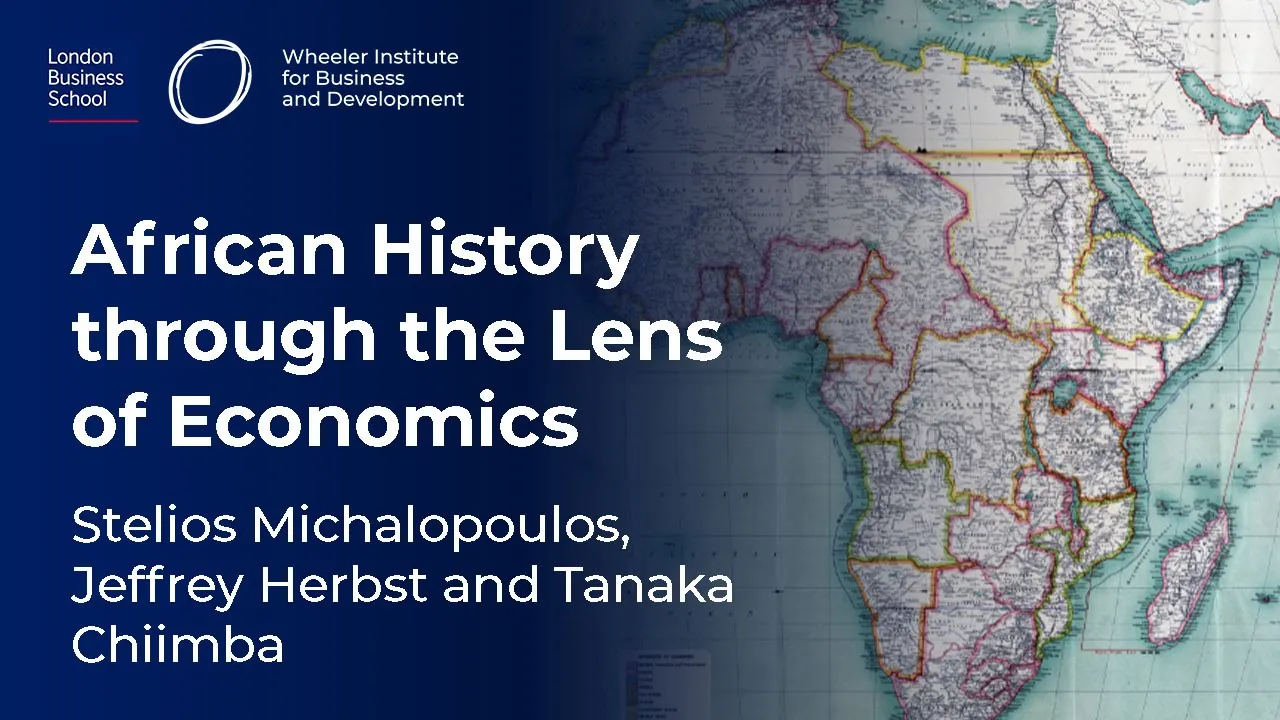
Families were torn apart by artificial borders. Rival ethnic groups were jammed into the same colonies, sewing divisions that would explode into conflict decades later. Should be seen on a spectrum on a continuum of plunder, pillillage, and rape that all the European powers engaged in. but they're engaged in at varying degrees and at varying levels.
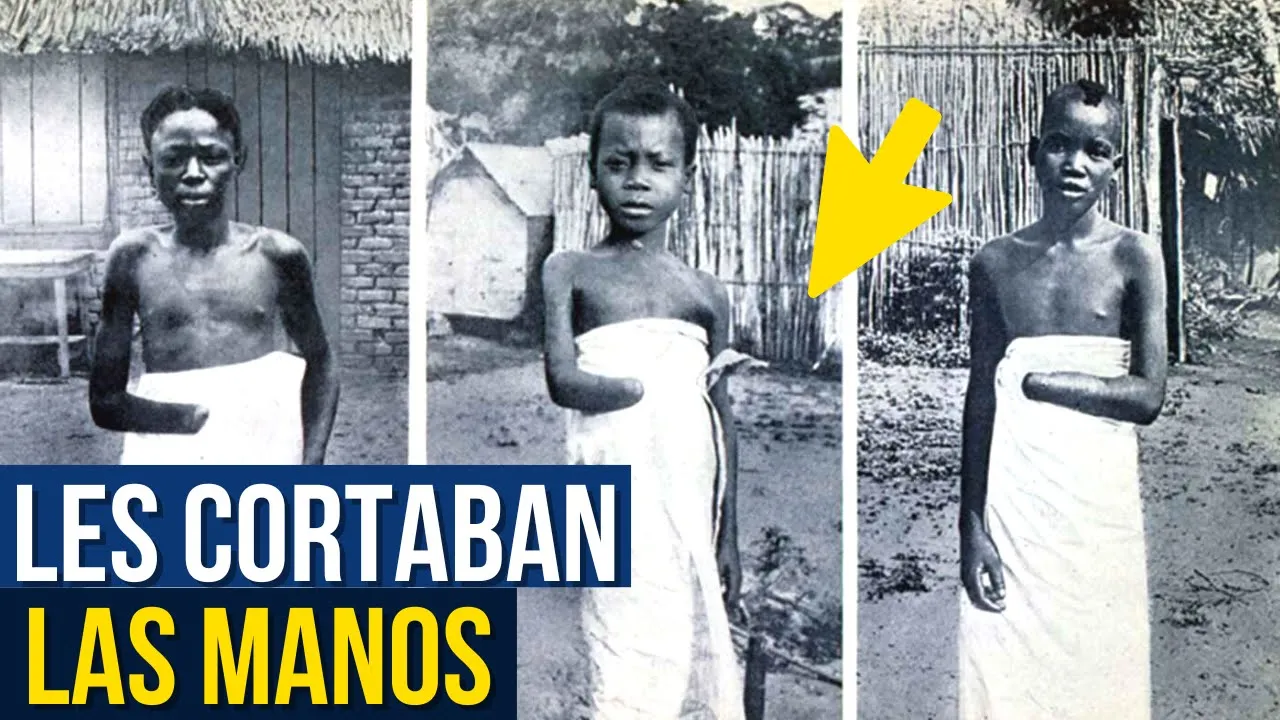
And the most horrific exemplar of the the violence of colonialism is Congo. And it all started right here, not on African soil, but in a European conference room where Africa's fate was decided without a single African voice in the room. My people, when we talk about Africa's struggles today, we simply can't forget this because the wounds that were opened in Berlin still bleed into our politics, our economies, our societies today. And it's painful to watch. The huge basin of the Congo River in central Africa is extraordinarily endowed with vast resources.
This land 2.5 million square kilometers crisscrossed by navigable waterways was extraordinarily rich in natural resources brimming with coveted commodities like ivory, palm oil, timber and copper. This region was also blessed with huge quantities of another highly valuable substance, rubber. Advances in the vulcanization of rubber made it more durable and less brittle, facilitating the invention of the pneumatic tire.
Soon, rubber would become one of the most sought-after resources on the planet. The ancient rubber vines that grew wild over the equatorial rainforest of Congo had long been exploited by the custodians of this land. But now, outsiders were intent on plundering them. Following the Berlin conference, Congo Basin was recognized as the possession of its sole owner, the king of the Belgians, Liupold II, renaming at the Congo Free State. Liupold now personally controlled a territory 76 times the size of his home country.
Since childhood, one of the things he had craved was a colony. And so he created one for himself. and he did it by convincing other European uh leaders that he was going to spread Christianity and bringing quote unquote civilization to the people. King Leopold II um interests in the Congo were largely underpinned by enormous greed. Um, and as a result of that greed, the Belgian Congo became the personal private property of the king of Belgium and the discovery of rubber um became a godsend to King Leopold II.
Liupold ordered the rubber to be collected as fast as possible. Soon, vast areas were stripped of every single rubber vine. The mindless plundering of the land for its resources was repeated all across Congo Free State. The profits going into the pockets of one man, Leopold II. The environmental damage was only a tiny part of the story. The damage caused by the Berlin conference didn't end in 1885. It set off a chain reaction that Africa is still trying to heal from today. When those European powers drew lines across the continent, they didn't care about Africa's kingdoms, cultures, or communities, they didn't care that one line might cut straight through an ethnic group, separating families and villages across different colonial borders. They didn't care that they were forcing rival groups, groups with centuries of tension between them, into the same artificial countries overnight.
They carved up Africa for their own convenience and we're still living with the consequences. Today, so many of Africa's conflicts in places like Sudan, Congo, Nigeria, and beyond can be traced back to those colonial borders. Borders that forced different nations and peoples into the same fragile states. borders that made unity almost impossible from the start. You see, the Berlin Conference didn't just redraw the map.
It ripped apart Africa's political, social, and economic foundations.
It locked Africa into an economic model where raw materials, gold, oil, cocoa, cobalt were extracted and shipped overseas while African economies remained dependent and underdeveloped. It stripped away sovereignty, dignity, and control, leaving behind a legacy of exploitation, instability, and division.
And perhaps the most brutal of all, this was no accident. It was by design. The goal was never to build Africa, y'all.
The goal was to break Africa, to weaken it enough so it could be controlled, exploited, and profited from indefinitely. And when we talk about poverty, conflict or underdevelopment in Africa today, we have to understand the Berlin conference lit the fuse. The explosion is still echoing through history. So my people, hey, here's the hard truth we face today and that we continue have to grapple with as Africans. The Berlin conference may have ended in 1885, but the mentality behind it, the idea that Africa is a prize to be divided, exploited, and controlled, it never really went away. Today, we're witnessing a new scramble for Africa.
has scrambled not with flags and armies, but with loans, mining contracts, security partnerships, and trade deals.
China is building massive infrastructure projects across the continent through the Bel and Road Initiative. Russia is sending military contractors, striking mineral deals, and expanding its political footprint from Mali to Sudan.
The United States is stepping up military aid and mineral agreements, trying to counter Russian and Chinese influence. Europe is still deeply entangled through old colonial ties, especially in West and Central Africa.
And nowhere was this more clear than in a recent US Senate hearing we broke down right here on the breakdown where top generals openly without shame discussed Africa. No, not as a partner, not as a rising force, but a strategic battlefield, a place to outmaneuver China and Russia. A region to secure resources, ports, and influence for their own global advantage.
We had a whole of government approach and some of the uh some of the challenges on the African continent and we use that in past years. Uh now uh you know given that uh USAD and number of capabilities are being folded under state department. Uh we continue to look ways look at ways to be able to leverage that uh in US government pressure on especially our competitors in achieving our strategic goals. Sir, I am seeing that you know there's uh a number of programs uh that we see that uh that the uh Chinese Communist Party is trying to replicate. They can't do what we do.
They can't do what we do in uh PEPAR with extended the life uh span of a number of Africans by 20 years. Uh they're trying to replicate that.
They're trying to match what we do. So that's what we're that what we're seeing uh as we start to uh fold in the capabilities of uh USAD under state department. Uh they're trying to uh China is trying to exploit that scene.
Okay. what you can't imagine how frustrating it it seems to me that this mineralrich continent um has not been able to move to a utilization of the resources to benefit the people there after all this time.
It's um it's a puzzle that we haven't unwound up. H everywhere you look, powerful nations are once again rushing to stake their claims. They are after Africa's cobalt, its lithium, its oil, its gold, its farmland, its farmland.
Again, the very lifeblood of the future economy.
And once again, far too often, Africa's voice, the voice of its people, its movements, its visionaries, is being drowned out in the noise of foreign interest, just like it was in Berlin.
So the methods have changed, the language has changed, but the underlining dynamic, the fight to control Africa's wealth without empowering Africa's people remains dangerously familiar. And if we don't recognize it, if we don't name it and confront it, history is bound to repeat itself once again. So my people, where do we go from here? The Berlin conference. It reminds us of one brutal truth. When you are not at the table, you are on the menu. H in 1884, Africa wasn't just ignored. It was carved up without consent, without respect, without mercy. And today, as a new scramble for Africa unfolds, we have to ask ourselves the hard question. Will history repeat itself?
Will Africa once again be treated as a prize to be fought over by by outsiders?
Or will this generation, our generation, stand up, speak up, and reclaim the right to write our own story? This time, will it be different? Because the choice is not just in the hands of foreign powers.
It's in the hands of African leaders.
It's in the hands of African citizens.
It's in the hands of all of us, you watching, the descendants of this history, the witnesses to this moment, the allies who want to see Africa rise. Because maybe just like this senator, you don't understand why this continent that is rich with so much still hasn't been able to use that wealth to the benefit of its people. We must demand real partnership, not just new masters. We must demand sovereignty, not just aid. We must demand a future where Africa is not the battleground for someone else's empire, but the architect of its own destiny. So here's my question to you, my people.
If you could say one thing, just one thing to African leaders today, one thing to your president, your lawmakers, your institutions, what would you say?
Now, I know you all, you all are my people, so I know you probably have more than one thing to say. Drop them all in the comments. I look forward to hearing from you. Let's build. Let's reflect.
Let's keep pushing for something better because the more we talk about it, the more we change history. We change the future. So, I can't wait to hear from you. And if this episode sparked something in you, make sure you hit that like button, subscribe if you haven't already, and tap the notification bell.
Because here at The Breakdown, we're not just watching history happen. No, we're breaking it down. We're learning from it, and we are using it to fight for the future. that we deserve. And if you want to go deeper with us, consider joining our growing membership community or dropping a super thanks to support our work. I can't wait to connect with you there. Thank you so much for watching.
I'm Sandra Babuing. Until next time. Take care. Hey you, thanks so much for watching this episode. I hope you enjoyed it and if you did, don't forget to subscribe and join the family. Also visit facetofaceaffaffrica.com for your daily news and updates on what's going on within the global black community so you can stay informed.
Up Next
79:27
The Brutal Legacy of King Leopold II & the Congo
@PeopleProfiles
666.6K views•2024-02-04

33:02
The Great Schism of 1054: Causes and Consequences
@SacredCathedrals
113.5K views•2026-02-19
91:57
The Geopolitics of the Ukraine War and the Rise of Global Autocracy
@JordanHarbingerShow
468K views•2025-04-19
17:05
Understanding the Cold War: Superpower Conflicts and the Road to Détente
@OverSimplified
46.1M views•2019-01-24
Related Study Plans & Knowledge Roadmaps
Structured learning paths in History
history
Byzantine Iconoclasm: Theology, Art & Politics
01Foundations of Byzantium and Early Christian Images
02The First Iconoclasm: Leo III and the Crisis of Images
03Empress Irene, Nicaea II, and the Second Iconoclasm
+ 2 more learning modules
9h5 modules
Explore Roadmap
history
Iranian Revolution (Causes, Events & Legacy)
01The Pahlavi Dynasty and the Roots of Discontent
02The Spark of Rebellion and the Rise of Khomeini
031979: The Fall of the Shah and the Climax of the Revolution
+ 2 more learning modules
8h5 modules
Explore Roadmap
history
Mali Empire: Mansa Musa, Trade & Timbuktu
01Foundations of the Mali Empire
02The Trans-Saharan Gold and Salt Trade
03The Reign and Pilgrimage of Mansa Musa
+ 1 more learning modules
6h4 modules
Explore Roadmap
history
1947 Partition: Politics, Borders & Legacies
01Foundations of British India and the Divide
02The Political Negotiations and the Mountbatten Plan
03Drawing the Boundary: The Radcliffe Line
+ 2 more learning modules
8h5 modules
Explore Roadmap