Uganda's economy evolved from a federal structure of kingdoms in 1900 to an enclave economy characterized by the 'three Cs' (cotton, copper, coffee) and 'three Ts' (tobacco, tourism, tea) in 1962, which nearly disappeared by 1986; the National Resistance Movement (NRM) successfully revived and expanded this modern sector, integrating it with the broader economy, while emphasizing that true democracy requires genuine popular support for leaders to govern effectively.
Yoweri Museveni on Uganda's Economic Evolution: Presidential Debate
Added:Deep Dive
The concept of an 'enclave economy' and how colonial structures historically isolated export-oriented sectors from the domestic market.
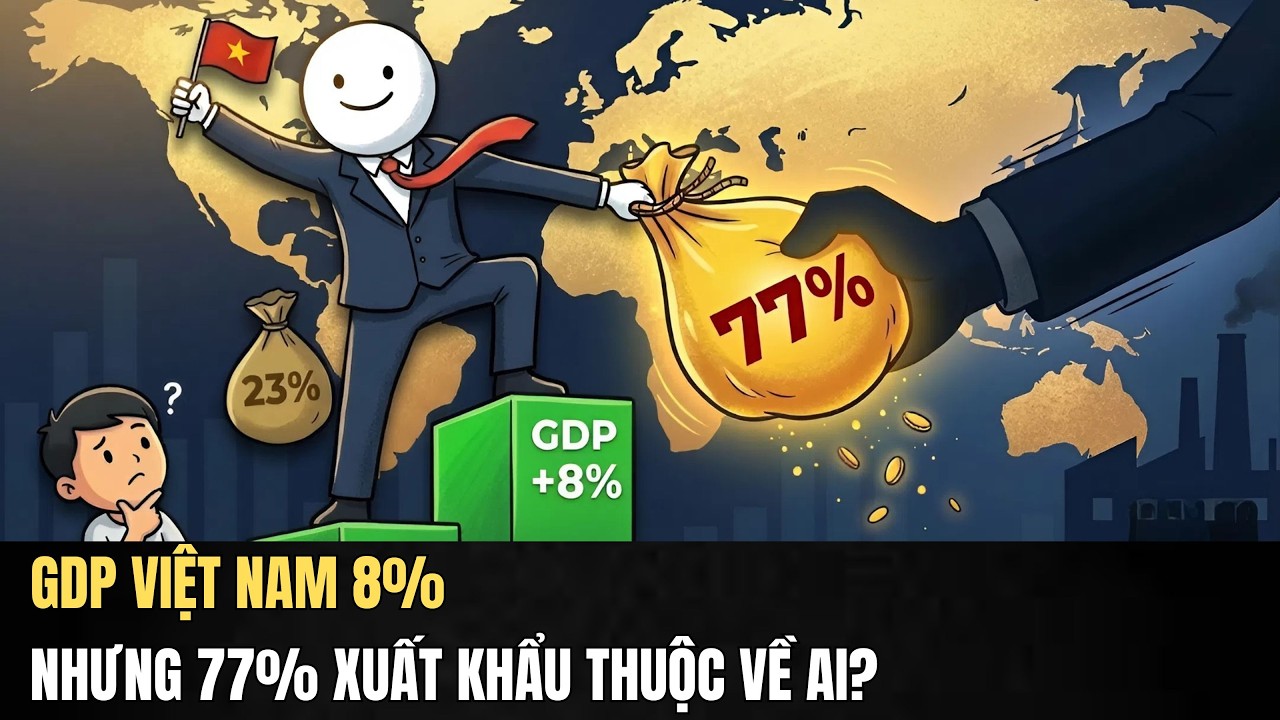
GDP Việt Nam 8% Nhưng 77% Xuất Khẩu Thuộc Về Ai? | Sự Thật Về Chuỗi Sản Xuất
315
Vietnam's FDI model creates an 'enclave economy' where industrial zones function as isolated islands. Raw materials are imported, Vietnamese labor is used for assembly, and finished products are exported. Most value creation does not flow into the domestic economy, creating no demand for local restaurants, no stimulation for domestic suppliers to move up the value chain, and no development of engineering capabilities for future generations. This structural isolation prevents the economic multiplier effects that would occur in an integrated domestic economy.
Click to watch →

Justin Dargin Harvard Lecture: Resource Nationalism: From Spanish Roots to an Arab Tree
1.7K
The dual economy structure emerged from colonial status, creating bifurcated economic systems where: (1) A stunted domestic handicraft economy constructed to meet local needs; (2) A natural resource sector (oil, gas, mining, plantations) geared toward international markets with little backward or forward linkages to the rest of the economy. This created foreign economic enclaves juxtaposed against domestic sectors with minimal benefit flowing to the broader economy. Even when these enclave economies spread to other sectors like mining or plantations, benefits remained tied to colonial powers' demand cycles rather than domestic economic development. This colonial heritage left internal and external residuals that continue to impede national economic development and full state control over natural resources in many oil-exporting countries.
Click to watch →

Explicación kaldoriana del crecimiento económico en México
101
The absence of deliberate industrial policy created what researchers call an 'enclave economy.' Large multinational corporations established themselves to exploit NAFTA's commercial advantages and geographic proximity to the US market. However, they operated almost isolated from the local economy, importing nearly all intermediate goods (microchips, engines, screens) and exporting finished products. The connection to domestic suppliers and value chains was broken or never formed, like a Formula 1 engine installed in a family car chassis without connecting the transmission to the wheels.
Click to watch →
MODELOS ECONÓMICOS
6.8K
The first development model created an 'enclave economy' structure characterized by: (1) Capital, investment, employment, income, and consumption occurring only in specific areas (ports, mines, plantations), (2) The rest of the economy consisting of indigenous reservations, artisan production, and small-scale farming (minifundism) that were not capitalist or modern. This created a dual economy with a modern capitalist sector isolated from the traditional sector.
Click to watch →
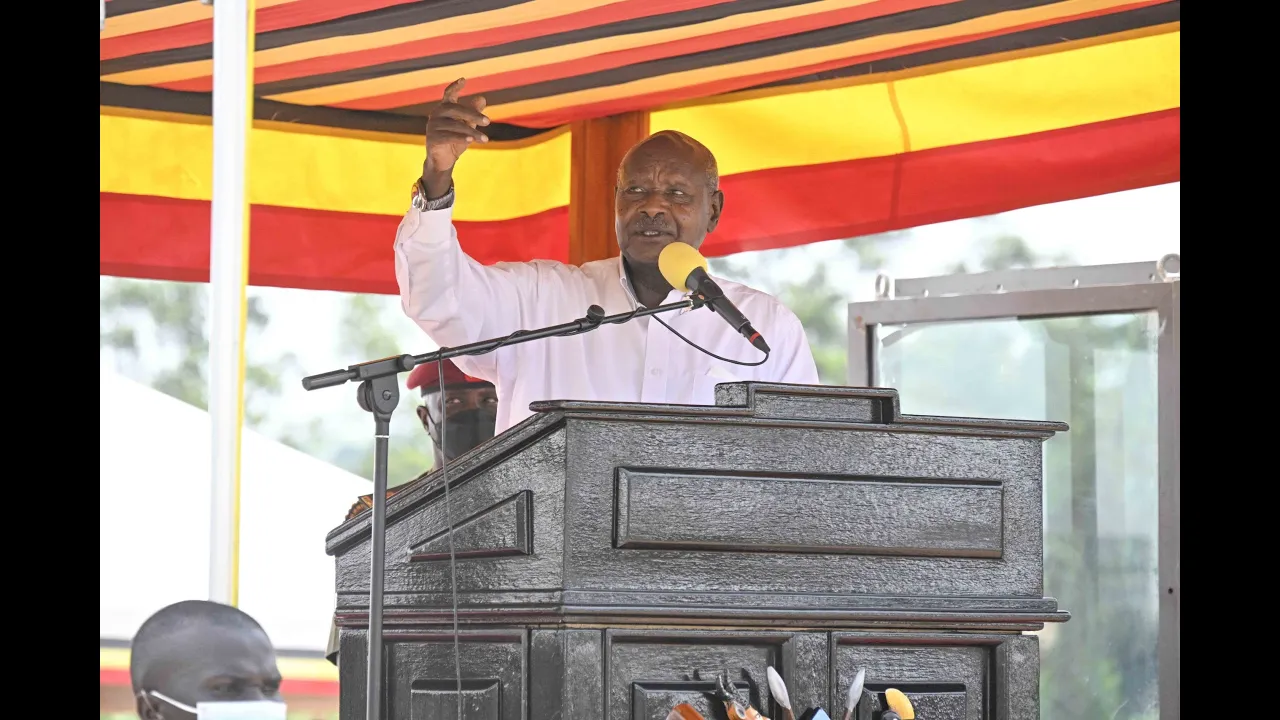
Museveni Greatest Speech of All Time | Changed Uganda into the Most Peaceful Country in Africa
713
By 1962, Uganda's pre-capitalist economy had transformed into an enclave colonial economy characterized by a small island of modernity surrounded by a sea of backward subsistence activities. This model focused exclusively on producing cash crops for export rather than developing a comprehensive domestic economy. The British left behind what was described as the economy of the three C's (coffee, cotton, copper) and three T's (tobacco, tea, tourism).
Click to watch →
Deep Dive
The modern political history of Uganda, particularly the rise of Yoweri Museveni and the National Resistance Movement (NRM) in 1986.

Yoweri Museveni takes the oath of office in Kampala,January 1986🇺🇬
215
Yoweri Museveni became President of Uganda on January 29, 1986, after leading the National Resistance Movement (NRM) and National Resistance Army (NRA) in a successful 5-year liberation struggle against the Idi Amin regime; the NRA, which began with only 26 fighters and operated 20 miles from Kampala, is unique in Africa for being the only guerrilla force to take power without external support or a base in a neighboring country, demonstrating sophisticated organizational discipline under extremely difficult circumstances.
Click to watch →

Je, Yoweri Museveni ni kiongozi wa aina gani, na amesalia vipi mamlakani kwa miaka arobaini?
132.8K
Yoweri Kaguta Museveni, born September 1944, rose from a failed 1972 coup attempt to become Uganda's President in 1986. After studying political science at Dar es Salaam University, he formed the Front for National Salvation (Fronasa) in 1973 to fight Idi Amin's regime. In 1979, he allied with Tanzanian forces and the Uganda National Liberation Front (UNLF) to overthrow Amin. After losing the 1980 election, he formed the National Resistance Movement (NRM) in 1981, launching a five-year military campaign. On January 26, 1986, the NRA captured Kampala, ending Obote's second term. Museveni was sworn in as Uganda's eighth President on January 30, 1986, beginning a 44-year rule that has made him one of East Africa's longest-serving leaders.
Click to watch →
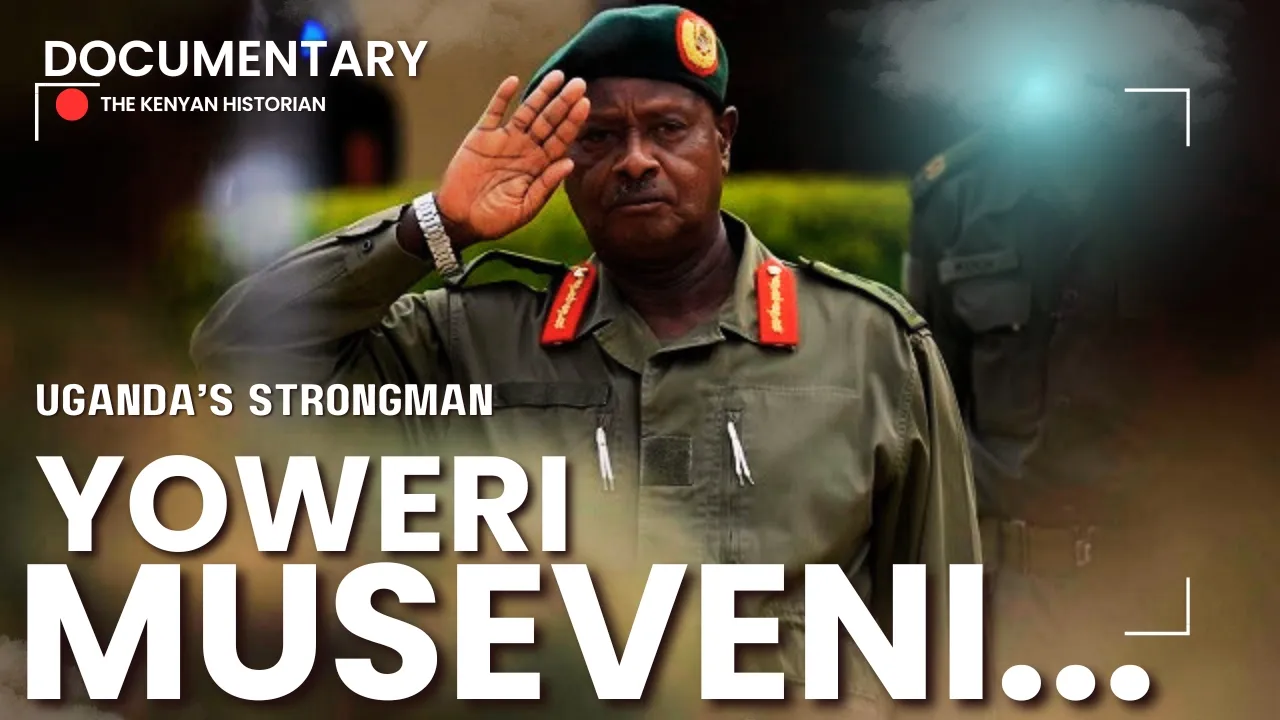
YOWERI MUSEVENI | The strongman of Uganda
106K
Yoweri Kaguta Museveni was born in 1944 to a cattle-keeping family in Western Uganda. His father served in the British colonial army, and his name derives from Acoli warriors. During university in Tanzania, he formed the University Students African Revolutionary Front and received military training from the Mozambican Liberation Front. In 1978, he joined Tanzania's invasion of Uganda against Idi Amin, recruiting approximately 9,000 followers. After losing the 1980 elections to Milton Obote, Museveni initiated a five-year guerrilla war from central Ugandan swamps. In January 1986, his National Resistance Army captured Kampala, establishing a new government. Museveni introduced the 'movement system' of politics, arguing that traditional parties split Uganda along ethnic lines. Uganda achieved steady economic growth with over 5% annual growth, doubled primary school enrollment, and reduced HIV rates through anti-AIDS campaigns. However, his reputation suffered when Uganda and Rwanda invaded Congo in support of rebels. Museveni increasingly relied on a 'kitchen cabinet' of hardline supporters, with over 34% of Ugandans having known only one president.
Click to watch →

Uganda s Political Economic and Social transformation 1986 2015
138
Uganda underwent comprehensive transformation under the National Resistance Movement (NRM) government from 1986 to 2015, achieving political stability through democratic reforms including multi-party elections, defeating the Lord's Resistance Army insurgency, and implementing economic liberalization policies that drove GDP growth from $1.5 billion to $25.3 billion while expanding infrastructure, healthcare, education, and technology sectors to establish the country as a regional development model.
Click to watch →
Butcher Of Uganda: Inside Idi Amin's Brutal Dictatorship
297.4K
Yoweri Museveni's National Resistance Movement entered Kampala in January 1986, making Museveni president. He never left office, becoming one of the world's longest-serving heads of state, recently reelected in 2021. Ugandan politics has been dogged by human rights abuses and persecution of minorities since. The Ugandan Bush War involved ongoing conflict between Museveni's forces and those who did not recognize his legitimacy, demonstrating how post-dictatorship transitions can fail to resolve underlying political tensions.
Click to watch →
Deep Dive
Fundamental macroeconomic principles of economic integration, structural transformation, and industrialization in developing nations.

Think Tank - O país visto por Jorge Marrão e Joaquim Aguiar - 26/10/2023
24.6K
Economic integration with developed markets creates both opportunities and constraints for developing countries. While integration provides access to larger markets and technology, it also exposes domestic weaknesses and requires structural transformations that may be politically difficult to implement, particularly when existing interests benefit from protectionist arrangements.
Click to watch →

Erik Reinert, "What the Cold War Did to Economics - including Ukraine, Russia, and Finland?"
338
Three important principles of development economics were abandoned during the Cold War: First, nations should industrialize first before gradually integrating economically with nations at similar development levels—symmetrical integration creates win-win situations. Second, democracy and political freedom require a diversified manufacturing sector subject to increasing returns. Third, neoclassical economics assumes all economic activities are qualitatively alike, ignoring industrial structure. John Stuart Mill understood that infant industry protection was necessary, but modern liberals rejected this insight, leading to policies that undermined developing nations' industrial capacity.
Click to watch →

Aula 4 Integração da America Latina Prolam USP 2022
115
Economic integration exists on a spectrum from free trade areas to economic unions. A free trade area eliminates internal trade barriers while maintaining independent external policies. A customs union adds a common external tariff. A common market adds free movement of factors of production. An economic union coordinates macroeconomic policies extensively, potentially including a common currency. Trade creation occurs when integration leads to new trade between member countries that would not have occurred otherwise. Trade diversion occurs when integration shifts trade from more efficient non-members to less efficient members due to preferential treatment. Import substitution industrialization (ISI) is a development strategy where countries protect domestic industries through tariffs and other trade barriers to develop manufacturing capabilities. The size of domestic markets affects industrial development through economies of scale. Industries with high fixed costs require large markets to achieve efficient production levels. Countries with small domestic markets may struggle to develop certain industries because they cannot achieve the production volumes needed to lower unit costs.
Click to watch →

Teori-teori perubahan Ekonomi struktual/kel.3/part2/Siti Alfiani Nim E20192352
102
This segment covers four major theories explaining economic transformation in developing nations. Social dualism theory describes how societies develop parallel systems where advanced segments adopt foreign values while traditional segments remain unchanged, resulting from colonial conflicts. Arthur Lewis's dualism theory (1950) divides economies into traditional rural sectors with surplus labor and low productivity, and modern urban sectors with industrial activities, explaining urbanization through labor migration. Hirschman's theory explains structural shifts from agriculture to industry as per capita income rises. Harrod-Domar theory emphasizes investment's role in expanding aggregate demand and supply through income addition and production capacity, complementing Keynesian economics for long-term national development analysis.
Click to watch →

Centro Celso Furtado / prof. Deepak Nayyar (Jawaharlal Nehru University, New Delhi)
243
Developing countries' integration into the global economy accelerated dramatically. Their share in world exports rose from 14% in 1970 to 42% in 2010, and their share in world imports rose from 14% to 39%. Foreign direct investment flows reversed direction—developing countries became net sources of FDI rather than recipients. Their share in world manufacturing output doubled from 16% to 32% between 1990-2010, reversing centuries of de-industrialization. This catch-up was driven by import substitution strategies, state intervention, borrowed technologies, and learning processes. However, success varied significantly across countries and regions.
Click to watch →
Deep Dive
The role of international financial institutions, such as the IMF and World Bank, and their Structural Adjustment Programs (SAPs) in Africa during the late 20th century.
MOYA EP4 | DR KHANYISILE LITCHFIELD TSHABALALA | FEMINISM | PATRIARCHY | UN AGENDA | GENDER EQUALITY
25.8K
After Ghana gained independence in 1957, Kwame Nkrumah refused to borrow from IMF and World Bank, calling them international financial institutions. These institutions profiled themselves as development banks but had stringent conditions that kept Africa backward. Structural Adjustment Programs (SAPs) meant currency calculations and restricted development. Where development really mattered, money couldn't go there. These programs came with racist conditionalities that tied African currencies to the dollar, causing Africa to fall from 18% GDP contribution to 20% or less. African countries started raising voices in the General Assembly to demand development that benefits Africans, not just investment that benefits Western countries.
Click to watch →
Exposed! How the IMF and World Bank Crushed Africa’s Future #Afriscopetv
31.5K
The IMF and World Bank have imposed Structural Adjustment Programs (SAPs) on African countries that require cutting public spending, privatizing essential services, and maintaining high tax rates to service debts denominated in US dollars, creating a debt cycle where African nations pay more in debt servicing than they receive in aid while being forced to export raw materials rather than developing their own food production, thereby undermining economic sovereignty and perpetuating dependency on Western economies.
Click to watch →
Traoré declara su independencia financiera; crédito local de 3.200 millones de dólares ...
121
For nearly half a century, African development was guided by two institutions: the IMF and the World Bank, the twin pillars of what economists now call the 'postcolonial financial empire.' Their contracts were described as 'masterpieces of coercion.' Each loan came disguised as assistance, each signature wrapped in promises of growth, but each dollar came chained to conditions. These were called 'structural adjustment programs' - a phrase so elegant it almost concealed its cruelty. The conditions included: privatize public assets, cut subsidies, freeze salaries, deregulate markets, and sell lands.
Click to watch →
Biggest Scam Of The Century: How The World Bank And IMF Enslaving African.
23K
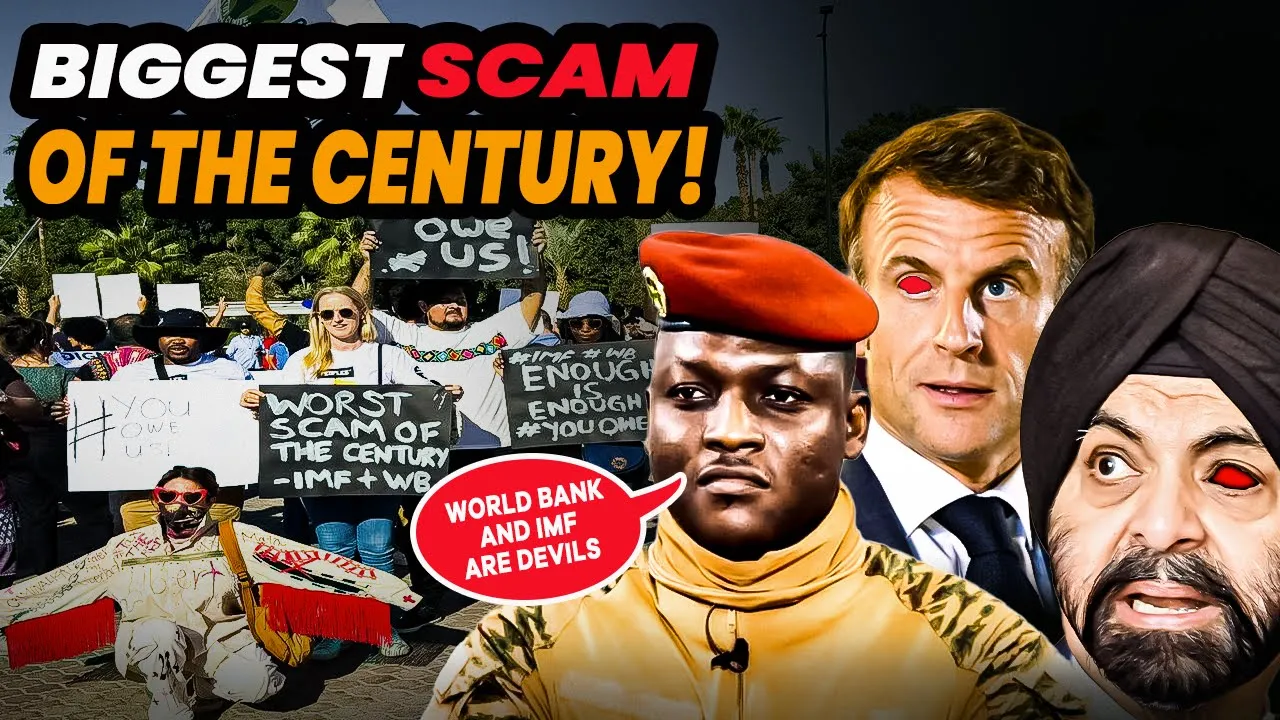
Over the past 40 years, the IMF and World Bank have imposed neoliberal structural adjustment programs as conditions for loans to African countries. These programs focus on privatization, austerity measures, and forced market liberalization. While creating profit opportunities for European multinational companies, these policies caused decreased income, increased poverty, and decades of recession and stagnation across Africa during the 1980s and 1990s.
Click to watch →

UPSA Annual Leadership Lecture 2025 : MK Party President Jacob Zuma
19.9K
For decades after independence, African states turned to IMF and the World Bank for loans, hoping for development support. Instead, Africans received debt traps and humiliation. The infamous structural adjustment programs of the 1980s and 1990s forced Africans to privatize public services, devalue their currencies, cut health care and education budgets, and dismantle their local industries. What was the result? Africa became poorer, factories closed, farmers abandoned their land, youth unemployment soared, and national debt ballooned.
Click to watch →
Prerequisite Knowledge
- Concept 01The concept of an 'enclave economy' and how colonial structures historically isolated export-oriented sectors from the domestic market.
- Concept 02The modern political history of Uganda, particularly the rise of Yoweri Museveni and the National Resistance Movement (NRM) in 1986.
- Concept 03Fundamental macroeconomic principles of economic integration, structural transformation, and industrialization in developing nations.
- Concept 04The role of international financial institutions, such as the IMF and World Bank, and their Structural Adjustment Programs (SAPs) in Africa during the late 20th century.
Subsequent Learning
- Step 01An empirical evaluation of Uganda's current economic performance to critique the claims of successful transition to an integrated economy.
- Step 02Comparative analysis of regional economic integration within the East African Community (EAC) and Uganda's position in it.
- Step 03The political economy of long-term presidential regimes in Africa, analyzing the tension between economic developmentalism and democratic consolidation.
- Step 04The impact of foreign direct investment (FDI) and external debt, particularly from non-Western partners like China, on Uganda's modern infrastructure.
Setting the Record
Economic Revival
Debate's Core
Setting the Record
0:00Playing Section
- 1
Prefers discussing factual Uganda over fiction or literary debates.
- 2
Describes Uganda in 1900 as a federal state of distinct kingdoms.
Neo-Patrimonialism and Structural Stagnation in Uganda's Economy
Critics and independent economists challenge President Museveni's narrative of Uganda's successful economic transformation, arguing instead that the country's development is hindered by systemic corruption, crony capitalism, and a lack of genuine structural change. Rather than a modern integrated economy, opponents point out that Uganda remains heavily reliant on primary agriculture, external debt, and foreign aid. The benefits of growth are concentrated among a politically connected elite, leaving a vast majority of the population in the informal sector with high rates of youth unemployment. Furthermore, political scientists argue that Museveni's claimed 'democratic support' is undermined by authoritarian consolidation, patronage networks, and the suppression of political opposition. From this perspective, Museveni's economic policies have fostered a fragile, debt-dependent, and highly unequal system designed primarily to sustain his regime's political survival rather than achieve broad-based economic emancipation.
Deep Dive
An empirical evaluation of Uganda's current economic performance to critique the claims of successful transition to an integrated economy.

President Museveni Vows: This Is the Term of No Sleep, No Corruption! | SONA 2026 🇺🇬🚨
313
The British colonial economy in Uganda was a disaster for the majority, evidenced by infant mortality of 128 per 1,000 live births in 1962 and life expectancy of only 46.8 years. The movement recognized the need for vertically and horizontally integrated national economies. For people to participate in this integration, they had to transition from the traditional pre-capitalist economy of subsistence (working only for stomach) to the money economy. The transformation process involved sensitizing cattle corridor populations to stop nomadism, make land enclosures, and engage in commercial agriculture with communities like Chibaro, Chura, and Emar, shifting from subsistence to profit-oriented farming.
Click to watch →

Museveni Responds Daily Monitor About 40 Years of No Change
3.7K
Uganda's economy has undergone five distinct phases of transformation over 40 years under the NRM government: minimum economic recovery, expansion of the small colonial economy, economic diversification, value addition to raw materials, and transition to a knowledge economy encompassing automobiles, computers, and ICT; this transformation has expanded from 9% of Ugandans in the money economy at independence to 61% by 2019, with current economic growth at 7% and projected to reach double digits with oil development.
Click to watch →
State of the nation address 2026
154
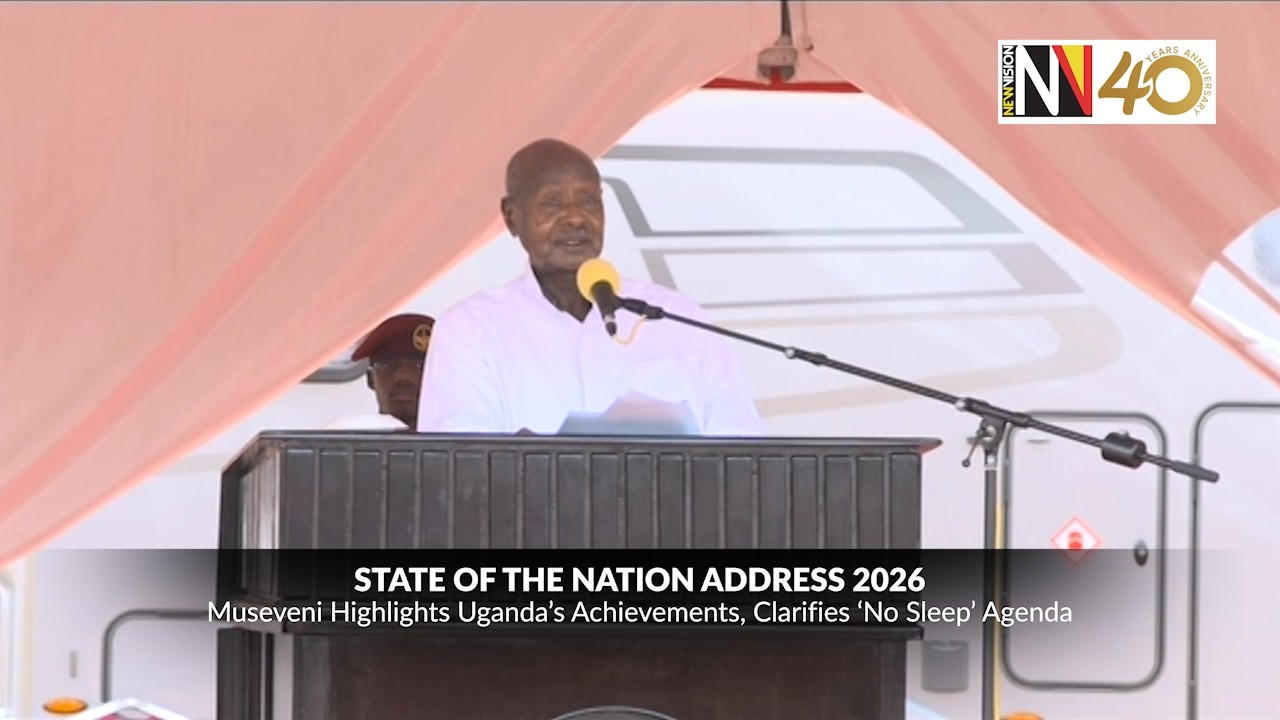
Uganda's economic transformation has produced measurable results: GDP grew from 3.9 billion to 69.3 billion shillings (forex method) and 197.1 billion shillings (PPP method), representing expansion of more than 17 times over 40 years. The country has graduated from least developed country status to lower middle-income country status, with GDP per capita reaching $1,278. Household poverty declined from 56% in 1992 to 16.1%, while life expectancy improved from 43 to 68 years. Agricultural production expanded dramatically: milk from 200 million to 5.4 billion liters, coffee from 2 million to 9.3 million bags, and exports reached $18 billion in 2026. The export basket now includes manufactured goods like pharmaceuticals, refined gold, steel, ICT products, ceramics, and plastics.
Click to watch →
MUSEVENI LIES OR TRUTH ALWAYS IN STATE OF THE NATION ADDRESS
198
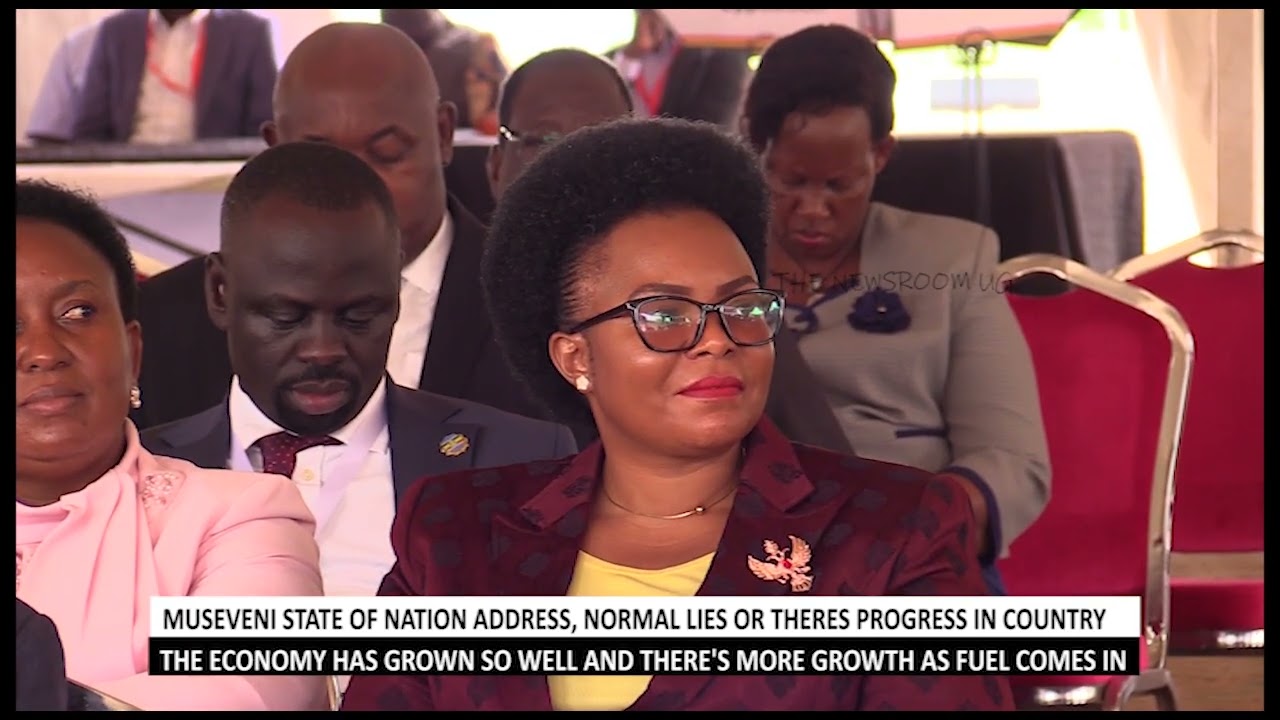
Uganda has achieved remarkable economic transformation: 67% of homesteads are now in the money economy (up from 9% in 1962), GDP rose from 3.9 billion to 69.3 billion, and household poverty declined from 56% to 16.1%. The economy is projected to grow at 6.4% this year and 10% next year, pushing GDP to US$80 billion. Uganda has diversified exports to include pharmaceuticals, refined gold, steel, ICT products, ceramics, plastics, and dairy products, reaching US$18 billion. The country is building standard gauge railways and pipelines with Kenya and Tanzania to move heavy cargo from roads to railways and petroleum products from roads to pipelines, reducing road congestion and improving efficiency.
Click to watch →
Bobi Wine leker'awo okusomba abantu ngobatwala ku laalezo
227
Economic growth is measured through GDP (nominal and PPP), GDP per capita, and sectoral output. Uganda's economy grew from $3.92 billion in 1986 to projected $68.4 billion by 2026 (nominal) and $194.2 billion (PPP). GDP per capita of $1,399 indicates transition from least developed to lower middle income status. Agricultural production increased dramatically: coffee from 3,600 to 8.2 million bags, maize from 322,000 to 4 million metric tons, milk from 200 million to 5.4 billion liters. Economic transformation involves integrating households into the money economy: at independence (1962), only 9% were in money economy; by 2013, 32%; by this speech, 70%. Poverty alleviation requires systematic programs: UPE, Nandiqua, NADS, Operation Wealth Creation, Moga, Women Fund, Universal Secondary Education. Success depends on community adoption.
Click to watch →
Deep Dive
Comparative analysis of regional economic integration within the East African Community (EAC) and Uganda's position in it.

Kabale University; The status of the Economy as Uganda celebrates 60 years of Independence.
403
This segment compares Uganda's economic position within the East African Community (EAC). Despite gaining independence in 1962 (after Tanzania in 1961 and before Kenya in 1963), Uganda ranks last among these three countries in economic growth and development. Kenya leads in growth indicators, followed by Tanzania, with Uganda performing worse. The debate questions whether Uganda is utilizing its peaceful environment for development or if the peace dividends are being wasted. The challenge of leveraging regional integration for economic growth is discussed.
Click to watch →

LIVE: UBC FRONT BENCH WITH JORAM PAUL SSONKO | FEBRUARY 10, 2025
365
Uganda, as a founding member of the East African Community (EAC), plays a crucial coordinational role in regional integration through its Ministry of East African Community Affairs, which serves as the focal point for coordinating all EAC matters, implementing the four pillars of integration (Customs Union, Common Market, Monetary Union, and Political Federation), and facilitating trade through initiatives like one-stop border posts and the simplified trade regime. The ministry monitors implementation of regional protocols, prepares positions for negotiations, and sensitizes the public about integration benefits, while Uganda balances its national interests with regional commitments through market access, infrastructure development, and political cooperation.
Click to watch →

Justine Nameere makes another strike leaving Parliament in shock as Ssenyonyi responds to SONA
56.3K
The EAC Secretariat's regional integration report of 2025 shows that intra-regional trade and the East African Monetary Union, originally targeted for 2025, has been postponed indefinitely for lack of fiscal discipline and institutional convergence. Uganda ranks 112th on the World Economic Forum's travel and tourism competitiveness index behind Kenya at 82nd, while Rwanda has invested over 330 billion since 2018 on tourism branding alone, more than Uganda's entire annual Uganda Tourism Board budget.
Click to watch →

Yusuf Nsibambi on tension as he attends his first NRM caucus meeting after clrossing from FDC
1.7K
The East African Community established industrialization goals in 2012, targeting 40% value-added exports by 2032. This requires regional cooperation where countries partner to establish processing facilities rather than exporting raw materials. Uganda has resources including energy, land, and infrastructure to process minerals like gold from DRC. The standard gauge railway from Mombasa to Malaba facilitates regional integration. However, Uganda faces challenges: public debt exceeds 50% of GDP (currently 56%), and fiscal deficit exceeds 3%, preventing qualification for the monetary union. Leaders must champion value addition policies to transform raw material exports into higher-value products. The EAC monetary union requires member countries to meet specific macroeconomic convergence criteria, including debt-to-GDP ratios below 50% and fiscal deficits below 3%.
Click to watch →

IKI GITONDO LE4|3 INKURU NZIZA IGARUTSE MU GISIRIKARE CY'U RWANDA, RED TABARA IGABYE IGITERO, M23
79.5K
The East African Community (EAC) is a regional intergovernmental organization promoting economic integration among East African nations. Member states include Tanzania, Kenya, Uganda, Rwanda, Burundi, and South Sudan. The EAC facilitates trade through the African Customs Union, which harmonizes customs procedures and reduces trade barriers among member states. This regional bloc aims to create a unified market and enhance economic cooperation across East Africa.
Click to watch →
Deep Dive
The political economy of long-term presidential regimes in Africa, analyzing the tension between economic developmentalism and democratic consolidation.

CONFERENCE
3.1K
The theory of developmentalism, initiated in the late 1950s, estimated that development required concentration of efforts, suppression of opposition, and marginalization of public liberty. This theory led most African states in 1964 to establish political monolithism with single-party systems. The failure of this theory led to the democratic renewal of the 1990s, which emphasized the establishment of democracy as government of the sovereign people by those to whom the people entrust the exercise of power for the realization of the collective good. The question of which political regime a country is under (presidential, parliamentary, or semi-presidential) is fundamental to understanding the balance of powers.
Click to watch →
L’Afrique, entre stupeur et tremblements
2.1K
Africa faces interconnected challenges of political stability, power consolidation, and economic reform. In Cameroon, President Paul Biya's 8th term (43 years) faces youth unemployment (35%) and economic stagnation despite long-term leadership. His power is maintained through control of electoral institutions, with the Constitutional Council appointed by himself. The 'democratic fiction' of regular elections masks the absence of genuine democracy. Similarly, Côte d'Ivoire demonstrates that long-term leadership can produce economic results (40% of WAEMU GDP), but political exclusion of major parties ensures predetermined outcomes. France maintains dominant economic influence through nearly one million companies. The common thread is that political stability must precede economic reform, and power consolidation through electoral control enables indefinite rule.
Click to watch →
TANZANIA: the EXAMPLE that puts AFRICA’s take-off at risk - VisualPolitik EN
129.9K
Tanzania's economic growth since abandoning African socialism depended on political stability, including the absence of civil war or military dictatorship. The country opened up to multi-party politics 25 years ago and maintained stability, which attracted investment. This demonstrates that political stability is a prerequisite for sustainable economic development and democratic consolidation.
Click to watch →

🇸🇳 Sénégal-Pourquoi le régime présidentiel nous condamne le parlementarisme, clé de la souveraineté
104
Since independence, African states have remained trapped in presidential systems inherited from colonial powers, which have become matrices of political and economic underdevelopment. The 1957-1962 parliamentary experiment in Senegal under Mamadou Dia, which aimed to build an independent national economy through endogenous development and democratic governance, was brutally interrupted by a constitutional coup orchestrated by Senghor with neocolonial blessing. Across Africa, from Senegal to Nigeria, Côte d'Ivoire to Cameroon, Kenya, Guinea, Tanzania, Zambia, and the DRC, the scenario is identical: a president cumulatively holds functions of head of state and head of government, controlling the army, diplomacy, finances, and sometimes even the parliament. The result is chronic political violence, corruption, clientelism, and capture of public resources. In contrast, rare African countries with parliamentary systems—Ethiopia, Mauritius, Botswana, and South Africa—show superior performance in institutional stability, economic growth, and political transparency.
Click to watch →

Des Mots et Débat avec Noel Magloire Ndoba 28/04/18
1K
The video presents an observation about differential democratic development in Anglophone versus Francophone Africa. Among 21 Francophone countries, there has been higher incidence of coups and extended presidential terms. Among 20 Anglophone countries, more democratic consolidation has occurred. Botswana exemplifies democratic stability with a president voluntarily leaving office. The Cameroun, described as a microcosm of African history, experienced the first armed liberation struggle in Africa. Paul Biya's 30+ year presidency raises questions about whether longevity constitutes stability or authoritarian governance.
Click to watch →
Deep Dive
The impact of foreign direct investment (FDI) and external debt, particularly from non-Western partners like China, on Uganda's modern infrastructure.

Breaking: Ebya Muhoozi Kati US Eri Serious. Bukya Ajooga, Bamukozeko Omukukku Gwa Alipoota
9.8K
China is a leading source of direct foreign investment in Uganda, with commitments reportedly totaling $4.2 billion, including the $1.7 billion Karuma hydropower station. China Exim Bank financing comprises the second largest share of Uganda's external public debt. China has provided surveillance equipment for Kampala, including cameras with facial recognition technology, and has been named in Uganda's efforts to intercept communications of government critics. Russia-Uganda relations have deepened, with Russia reportedly offering to expedite delivery of attack helicopters in exchange for Uganda state television airing Russian state-funded news. Uganda has become a regional hub for maintenance of Russian-origin military equipment, and in 2024, Russia donated $100 million. The US sanctioned Uganda-based businessman Valeri Campoi and his company Prohilli for supporting Russia's defense sector.
Click to watch →

Did China takeover Uganda’s Airport? Whole Controversy Explained
427.6K
China holds 20% of Uganda's external debt, totaling $1.6 billion, raising concerns among European Union countries about potential loss of control over national assets. Uganda has developed a sycophantic relationship with China, becoming the second country after Pakistan to host Chinese military presence. The government provides exceptional security to Chinese investors and invites Chinese bureaucrats to teach governance. Uganda has spent millions on Chinese military equipment, including aircraft, following the pattern of debt trap diplomacy where countries borrow heavily and are pressured to purchase Chinese military goods as repayment.
Click to watch →
The best speech of Ssemujju Nganda in the month of May 2024 - Why Uganda's Budget is exaggerated.
23.4K
Uganda's external debt stock is 52.8 trillion, with annual servicing at 3.2 trillion. China accounts for 75% of external debt stock and 23% of total foreign debt, with Uganda paying 434 billion in commitment fees for unutilized loans, 125 billion (29%) to China. Uganda has 25 licensed commercial banks, but only four (Centenary, Finance Trust, Housing Finance, and Post Bank) are locally owned. The rest are foreign owned. The NRM regime committed a big financial crime when it sold Ugandan commercial banks and closed Grameen and Comparative Banks. When the government borrows from the loan market, it is actually borrowing from foreign banks, which take over 10 trillion in interest every year. The government has borrowed 18.7 trillion not utilized, with 13.2 trillion borrowed for roads in the last 5 years, but 7.8 trillion remains unutilized.
Click to watch →
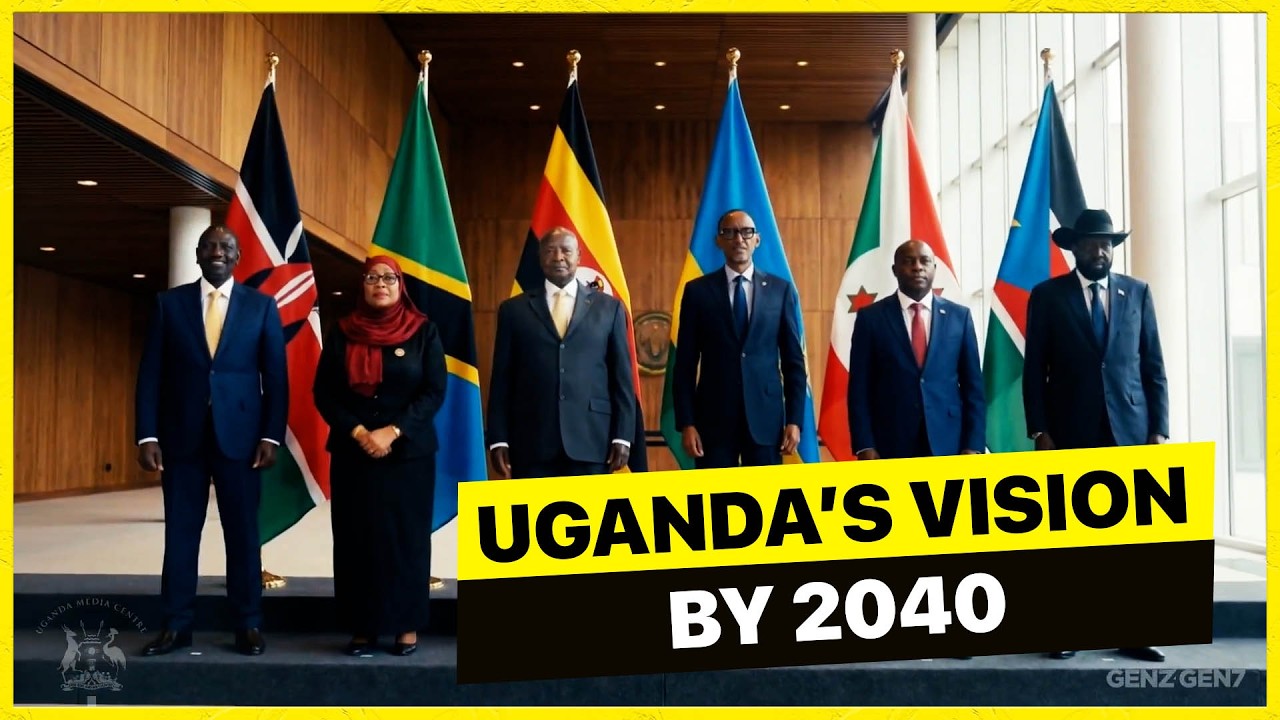
Uganda Media Centre Shows The Vision They Hope Uganda to Achieve By 2040
292
Uganda's infrastructure development has been heavily dependent on foreign funding. The Kampala Northern Bypass was primarily funded by the European Union through the European Union Development Bank, with minimal Ugandan government contribution. The Entebbe Express Highway, described as the most expensive road in Africa, was funded by the Export-Import Bank of China through a 350 million dollar soft loan, with the Ugandan government contributing only 126 million dollars. This raises questions about sustainable development and national ownership of infrastructure.
Click to watch →

Uganda Owes China More Than Its GDP
3.4K
Uganda owes China over $4 billion, which represents more than half of Uganda's entire national budget. This demonstrates the massive scale of debt that developing nations can accumulate from foreign infrastructure investments.
Click to watch →
Setting the Record
Economic Revival
Debate's Core
Setting the Record
0:00- 1
Prefers discussing factual Uganda over fiction or literary debates.
- 2
Describes Uganda in 1900 as a federal state of distinct kingdoms.
Neo-Patrimonialism and Structural Stagnation in Uganda's Economy
Critics and independent economists challenge President Museveni's narrative of Uganda's successful economic transformation, arguing instead that the country's development is hindered by systemic corruption, crony capitalism, and a lack of genuine structural change. Rather than a modern integrated economy, opponents point out that Uganda remains heavily reliant on primary agriculture, external debt, and foreign aid. The benefits of growth are concentrated among a politically connected elite, leaving a vast majority of the population in the informal sector with high rates of youth unemployment. Furthermore, political scientists argue that Museveni's claimed 'democratic support' is undermined by authoritarian consolidation, patronage networks, and the suppression of political opposition. From this perspective, Museveni's economic policies have fostered a fragile, debt-dependent, and highly unequal system designed primarily to sustain his regime's political survival rather than achieve broad-based economic emancipation.
The concept of an 'enclave economy' and how colonial structures historically isolated export-oriented sectors from the domestic market.
The modern political history of Uganda, particularly the rise of Yoweri Museveni and the National Resistance Movement (NRM) in 1986.
Fundamental macroeconomic principles of economic integration, structural transformation, and industrialization in developing nations.
The role of international financial institutions, such as the IMF and World Bank, and their Structural Adjustment Programs (SAPs) in Africa during the late 20th century.
An empirical evaluation of Uganda's current economic performance to critique the claims of successful transition to an integrated economy.
Comparative analysis of regional economic integration within the East African Community (EAC) and Uganda's position in it.
The political economy of long-term presidential regimes in Africa, analyzing the tension between economic developmentalism and democratic consolidation.
The impact of foreign direct investment (FDI) and external debt, particularly from non-Western partners like China, on Uganda's modern infrastructure.
131.8K views681likes4:11@ntvugandaOriginal Release: 2016-02-13
I am thankk you very much for organizing this U debate the other time I the other time I did not come because I was far away but I also had some questions about the the method of debate but uh there's no harm since there are some people who watch the TV uh there's no harm in talking to to them now I am here to talk about Uganda not about [Laughter] [Applause] fiction if you want fiction and you want a Nobel a Nobel Prize for literature [Applause] and composition then you can talk the way you are you want to talk Uganda 1900 was a federal country of different kingdoms 1900 1962 it was what we call call an enclave economy an enclave economy means a small island of modernity in the midest of a sea of under development those professors I'm sure know what we are talking about an enave economy that economy of 1962 was described as an economy of the three Cs and 3 TS that's what they used to that's how they used to characterize that economy at that time the three C's were cotton copper and coffee and the three te's were tobacco tourism and uh and tea by 1986 the small island The Enclave had almost disappeared that's what we are talking about so it was the job of the nrm to revive that small island of modernity and we have not only revived it we have expanded it and integrated with the economy therefore whatever you talk about talk about Uganda as it is not as it should have been because it wasn't and I am glad I came here this morning this evening to talk to all of you directly when you are all here because the reason I'm not sure about the mod is is the short time because these are big issues they are not issues for for school debate I actually said [Applause] it but but finally since I in this debate I'm debating finally about democracy democracy means the people support you if they don't support you you don't win that's all thank you very much
Up Next
44:09
Social Ecology Explained: Bookchin's Ecology of Freedom
@ChampagneAnarchism
15.8K views•2025-04-04

24:30
BRICS Pay and de-dollarization: A New Financial Order Emerges? | 55 chars
@DannyHaiphongYT
164.6K views•2024-10-22

7:33
Government Surveillance Methods: 10 Ways You May Be Watched
@BeAmazed
1.6M views•2017-04-09
10:19
Explaining the Saudi-Iranian Proxy Conflict in the Middle East
@Vox
18.2M views•2017-07-17
Related Study Plans & Knowledge Roadmaps
Structured learning paths in Political Science
political-science
Economic Statecraft: Sanctions & Chokepoints
01Foundations of Geoeconomics and Economic Statecraft
02The Mechanics of Weaponized Interdependence
03International Sanctions: Types, Implementation, and Efficacy
+ 2 more learning modules
12h5 modules
Explore Roadmap
political-science
Central Bank Independence: Politics & Policy
01Foundations of Central Banking and Monetary Policy
02The Time Inconsistency Problem & Inflation Bias
03The Delegation Model and Designing Independence
+ 2 more learning modules
12h5 modules
Explore Roadmap
political-science
Consociationalism: Power-Sharing & Stability
01Democratic Dilemmas in Divided Societies
02Introduction to Consociational Democracy
03The Four Pillars of Consociational Design
+ 2 more learning modules
12h5 modules
Explore Roadmap
political-science
Rebel Governance: Legitimacy, Economy & State
01Foundations of Rebel Governance and Statehood
02Establishing Political Legitimacy and the Rebel Social Contract
03Wartime Economies and Rebel Resource Management
+ 2 more learning modules
14h5 modules
Explore Roadmap