


























Cable properties—membrane resistance, internal resistance, and membrane capacitance—are three biophysical parameters that determine how electrical signals propagate through neurons; larger cells have lower membrane resistance and internal resistance but higher capacitance, making smaller neurons easier to depolarize and recruit first (the size principle), while myelination dramatically increases conduction velocity by reducing capacitance and membrane resistance.
Cable Properties in Electrophysiology Explained
Added:Basic electrical circuit concepts, including Ohm's Law (V = IR), capacitance (C = Q/V), and the behavior of resistors and capacitors in parallel and series.
The anatomical structure of a neuron, specifically focusing on the axon, dendrites, myelin sheath, and the lipid bilayer membrane.
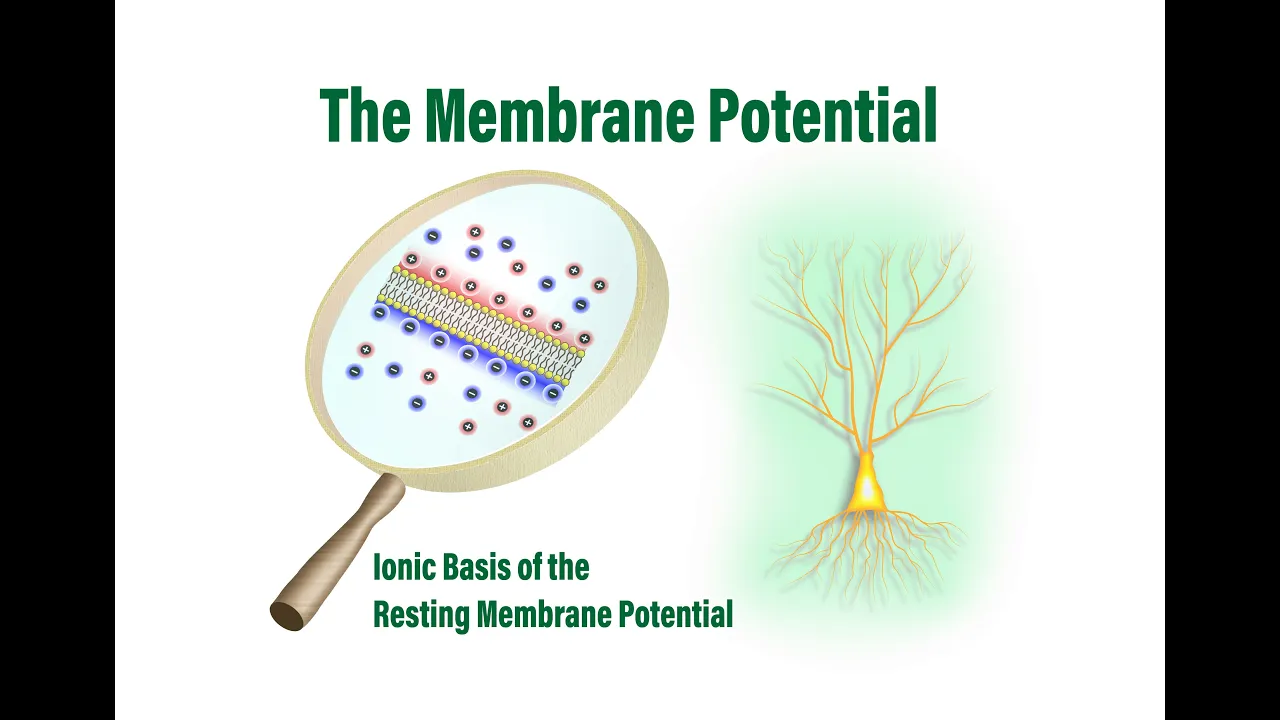
The concept of membrane potential, including how concentration gradients and selective ion channels establish the resting potential.
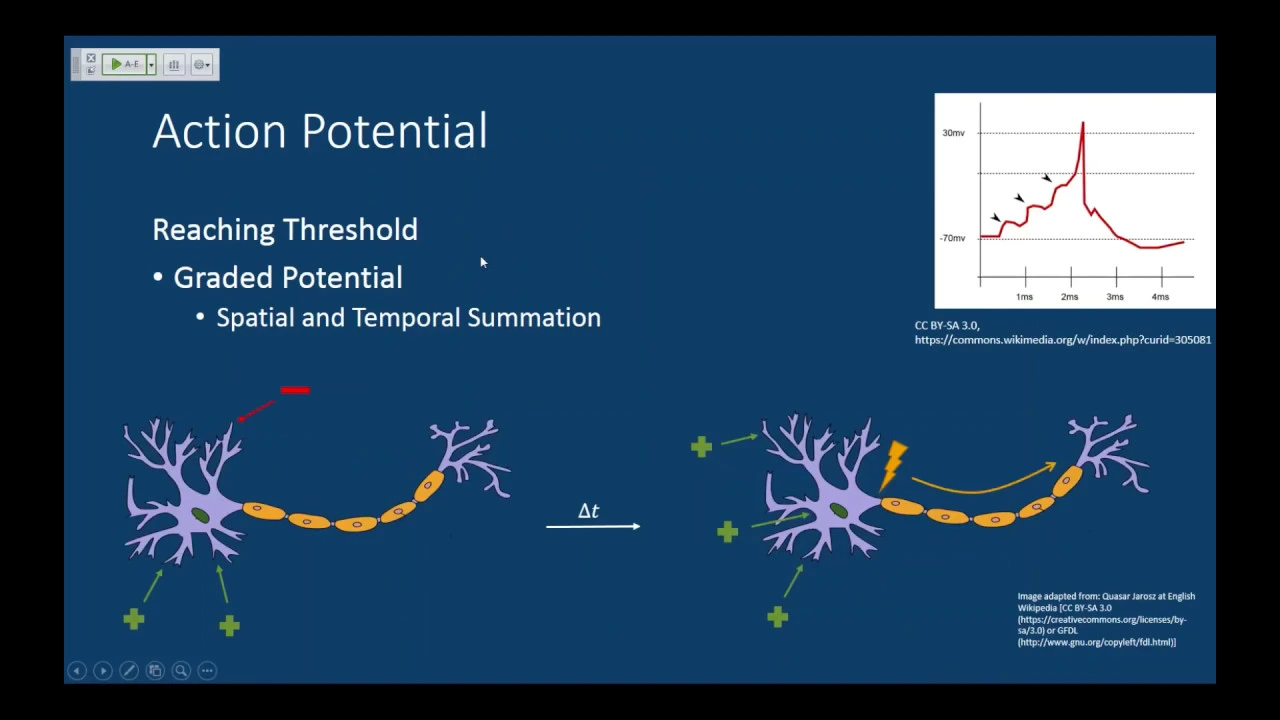
The fundamental mechanics of an action potential, including depolarization, repolarization, and the role of voltage-gated ion channels.
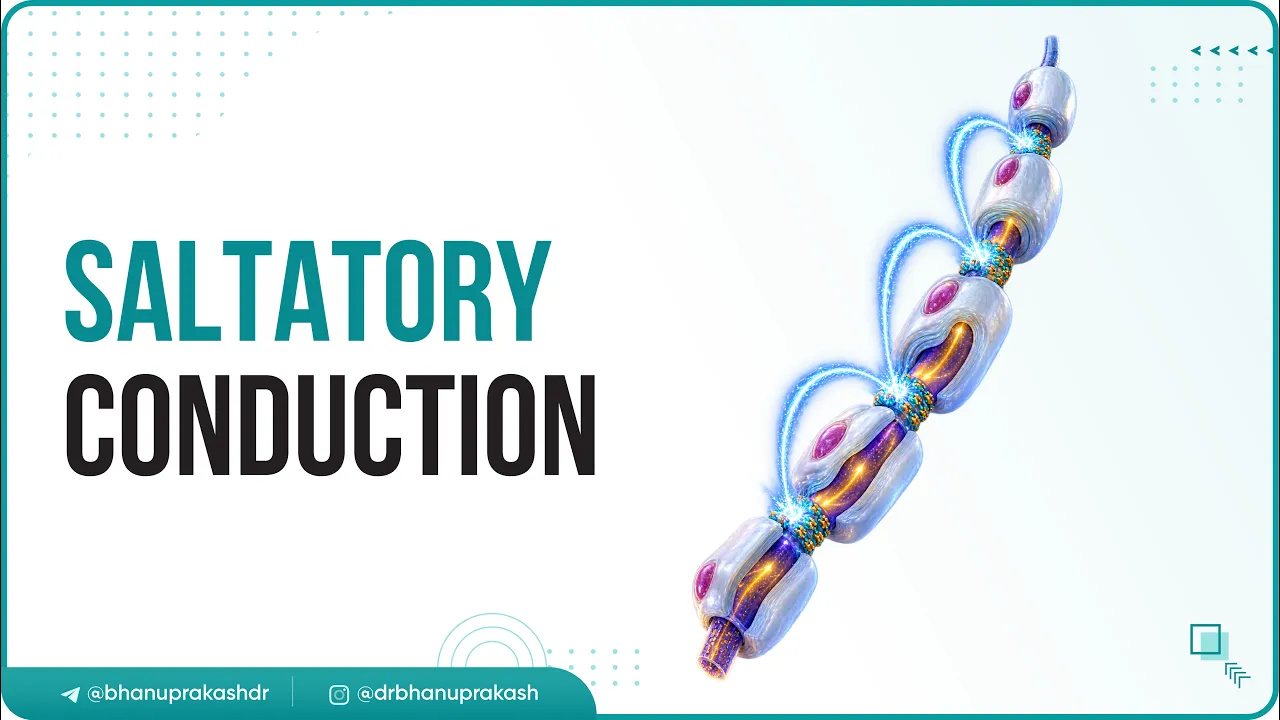
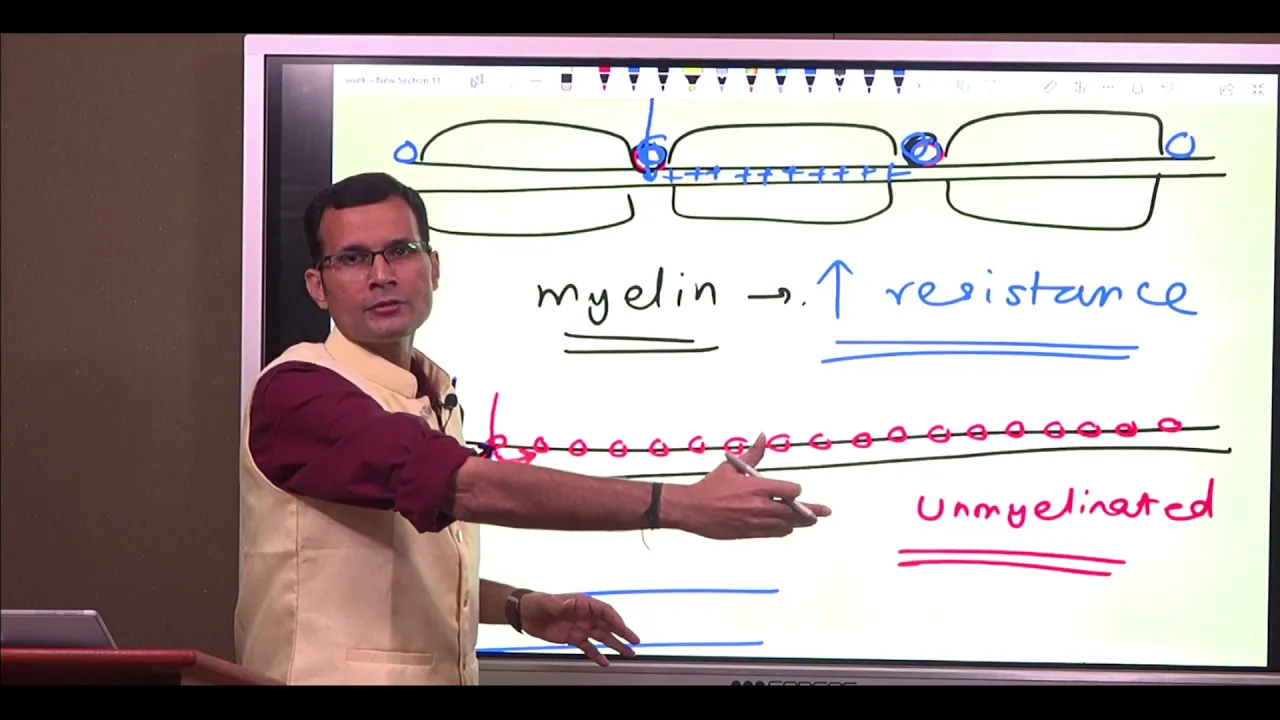
Saltatory conduction, exploring how myelin alters membrane resistance and capacitance to dramatically increase signal propagation velocity.
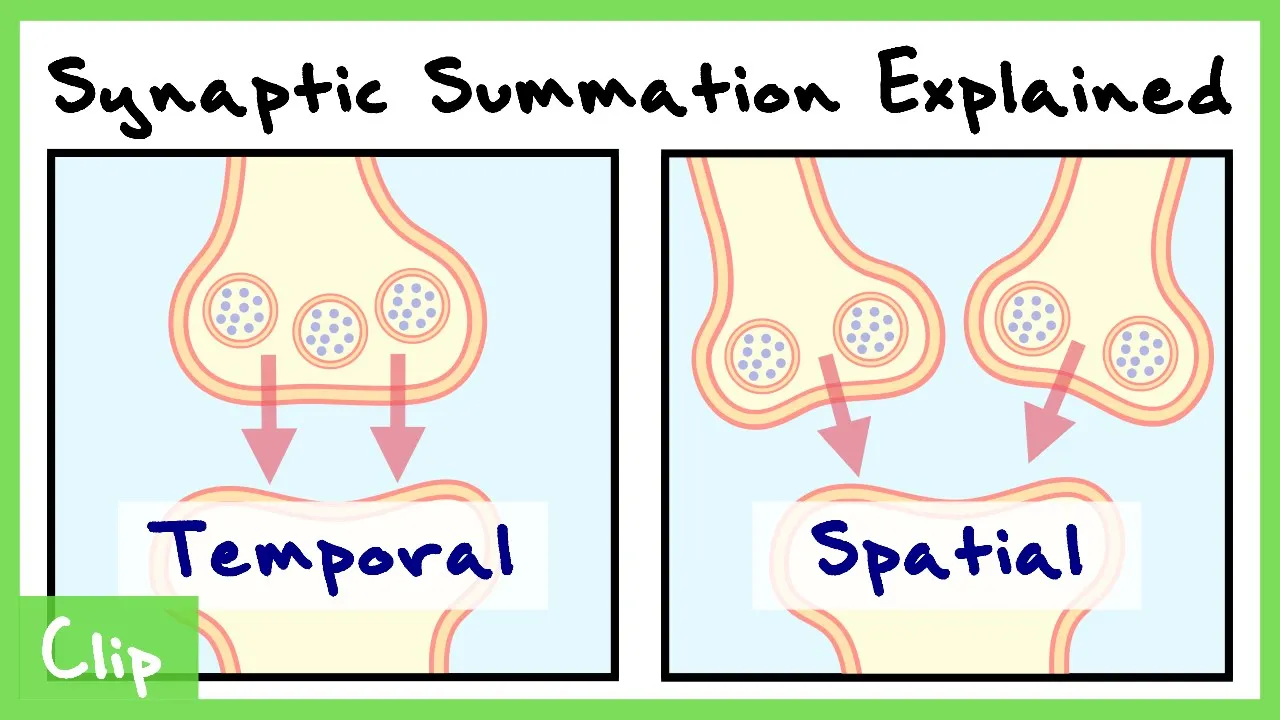
Dendritic integration and summation, analyzing how passive cable properties determine if synaptic inputs will trigger an action potential at the axon hillock.
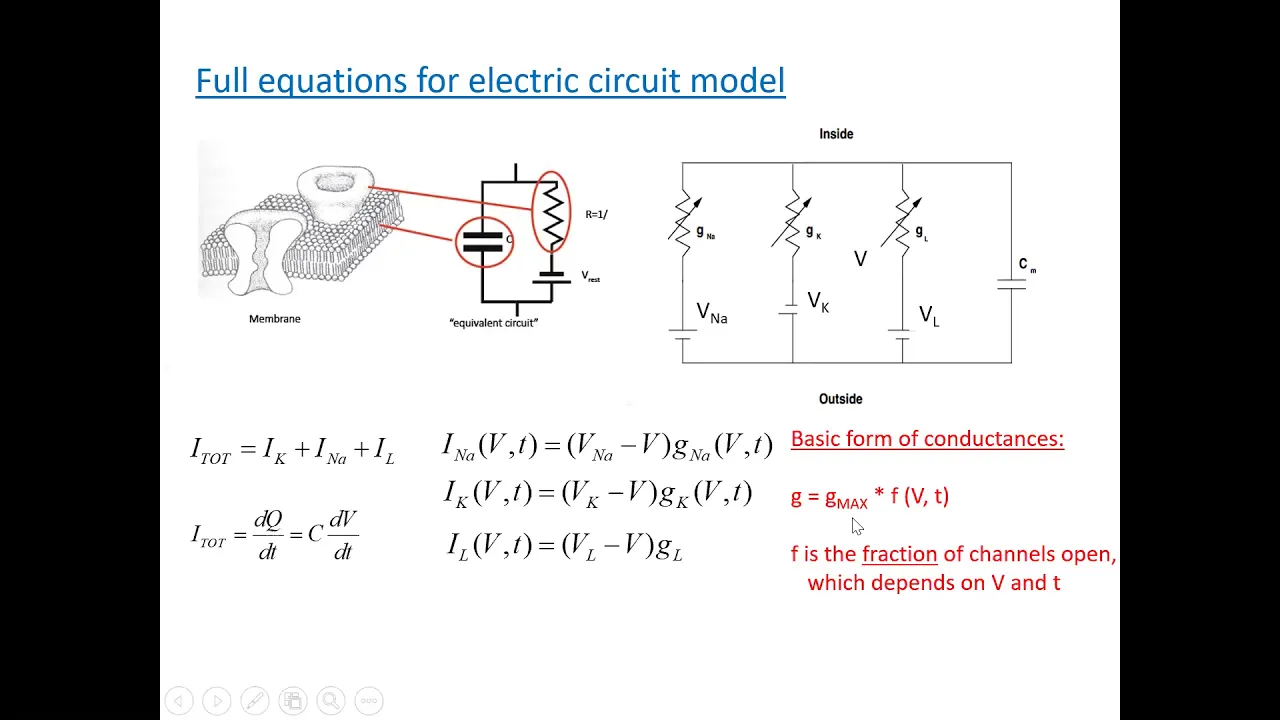
The Hodgkin-Huxley model, applying quantitative mathematical equations to describe how action potentials are initiated and propagate.
Pathophysiology of demyelinating diseases, such as Multiple Sclerosis, to understand how changes in cable properties cause signal degradation and conduction block.
Computational neuroscience modeling, using software like NEURON to simulate complex dendritic trees and realistic electrical signal propagation.
33.4K views807likes18:12Original Release: 2016-01-15
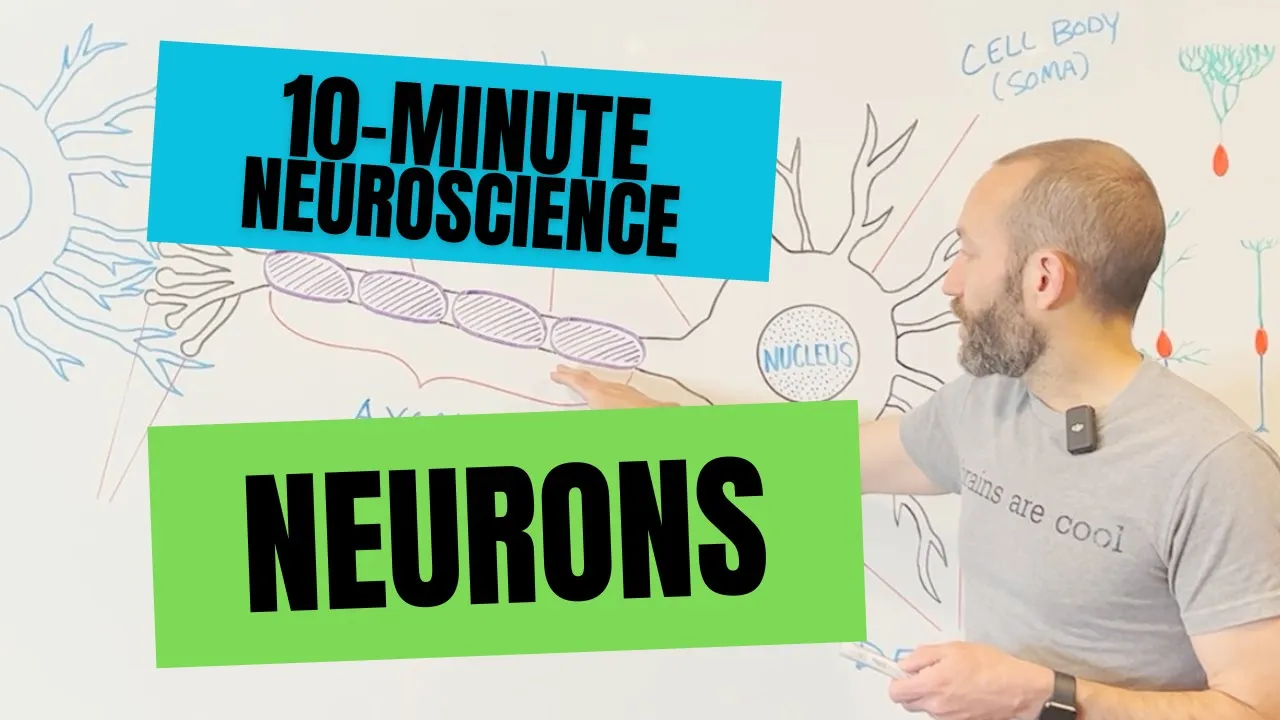
hello everyone this is a tutorial on electrophysiology specifically talking about cable properties I'm David Brown professor in the physiology department and this is a tutorial designed to help students understand how charges can flow through tissues of different properties it is anticipated and hoped that this tutorial will Aid in your understanding of Concepts that are presented in Neuroscience as well as in physiology one of the things that we discussed when we talk about the spread of charge through tissues is that it's often like a wave of dominoes that falls and that the first Domino that falls is what kicks it all off in tissues these are graded potentials so to refresh your memory graded potentials are found at synapses of one nerve with another nerve or with one nerve with a muscle for example like a skeletal muscle or the heart graded potentials are small local changes in the membrane potential that spread throughout a cell in this example we have one axon terminal here that synapses with a post synaptic neuron and that the graded potential is generated ultimately leads to the influx of a positively charged ion like sodium in this case this would be an excitatory post synaptic potential or an epsp and the sodium or positive charge that comes into the cell with spread throughout the cell over time and over space so that the strength of the potential and the amplitude of the graded potential wanes as you get further and further away from the synapse the analog that we like to talk about is to drop a rock in a pond the size of the wave would be very high where the Rock first entered the water and the size of the Ripple would then decrease more and more the farther and farther you got away from where the rock went into the water we talked about the concept of a trigger Zone in an axon where you can have a stimulus that comes down leads to excitatory post- synaptic potentials and that that depolarization would spread through the tissue getting smaller and smaller but if it was still more positive than the threshold potential at the axon helic then that would lead to the opening of voltage gated channels and the influx of positive current ultimately leading to the action potential to today I want to talk specifically about what determines how charges will flow through cells or through nerves in this case we're looking at one neuron you can see the dendrites here in the cell body we've got the axon hilic or the trigger Zone here and then the axon that you can see here so we can think about really three ways that positive charge would flow through cells and I just want to talk about positive charge for Simplicity so let's just assume that we're talking about excitatory post synaptic potentials or the influx of a positive charge into the cell what happens once that positive charge goes into the cell well there's three options the first is that it can just leak right back out so the charge can come into the cell flow a little bit through the cytoplasm and then just leak back out of the membrane through an open Channel the second thing is that the charge can flow through the cytoplasm and in many ways this is what we want to happen we want the charges to flow down tissues leading to some sort of neurological or physiological response in this case it would flow down hopefully to the axon hilic give enough positive charges that you're more positive than the threshold voltage and lead to the action potential finally the charge can be stored by the membrane and this is the concept of capacitance that we discussed in physiology where the charge can go but it will stay by the cell membrane and not progress any further so I want to explore these three concepts in a little bit more depth for the purpose of today's tutorial these collectively are referred to as cable properties so they're three biophysical parameters that influence changes in membrane potential in nerves and in cells the first cable property is called membrane resistance this refers to the ability of charges ions to move from the inside of the cell out of the cell the second is called internal resistance or R subi this is also called cytoplasmic or you may also hear it as axoplasmic resistance this refers to the ability of charges or ions to move through the cell cytoplasm finally is the property of membrane capacitance which we've talked about a little bit before this is the ability of the membrane to store charges so let's get things started talking about membrane resistance membrane resistance or R subm is when charges inside the cell can leak out of the membrane so this is one example where a charge started to flow through the axon or down the axon and then just leaked back out outside of the membrane a important concept to remember is that with membrane resistance the more membrane that you have the more area that there is to leak charges and so that means that larger cells have lower membrane resistance the charge is more likely to leak out of a larger cell than it is out of a smaller cell the second cable property to discuss is called internal resistance or R subi internal resistance refers to the ability of charges to spread through the cell or through the nerve a metaphor that I like to think about is this one let's say that we have two faucets and those faucets are attached above two different cylinders the cylinder on the left is filled with big rocks or gravel the cylinder on the right would be filled with sand if we had the same amount of water or the same current of water going in each of these cylinders you can imagine that gravity would pull the water down in both cases but yet the cylinder on the left would have a lot more water that would be able to come through than the cylinder on the right to think about this differently we would say that the cylinder on the left has a lower internal resistance than the cylinder on the right this would have a higher resistance because it's more difficult for the current or the water to pass through one of the concepts that we'll discuss is that increasing the size of the cell decreases the internal resistance finally is the property of membrane capacitance and we talked about this a little bit in physiology to remind you a capacitor is something that has the ability to store charge the technical definition is its two conducting plates that are separated by an insul uh by an insulator and so cell membranes make great capacitors the lipid by layer that separates the inside and the outside of the cell is very resistant to charge flowing so it's an insulating material and yet charge can flow very nicely in the water soluble compartments on the outside and on the inside of a cell remember that capacitance is a lot like the term capacity of a room for example so capacitance is directly proportional to the size of the axon or the size of the cell the bigger the cell the bigger the capacitance and vice versa capacitance is also inversely related to the difference separating the two plates so if the inside of the cell and the outside of the cell are functionally far further away from each other the capacitance will go down one of the examples that we talked about is if we had a game to get from this point over to the finish line and then in order to go from left to right we had to First fill the dots if this dots if this top green circles had a capacity of two dots per Circle and we started and the bottom had a capacity of 10 dots per Circle and we started you can imagine that it would be much slower to fill the 10 dots down here than the two dots up in this example and so we would fill two dots two dots two dots and two dots and we would finish finish very quickly so the metaphor that I want to get home is if the capacitance is low it's easier for a wave of dots or a wave of depolarization to progress in this case from left to right so the green would win in this race before we move on let's take a quick concept quiz I want to ask the question think about it and then you can pause it before we go on the next slide which will have the answers what effect would changing cell size have on each of the three cable properties let's first start with membrane resistance a larger cell has a larger or smaller membrane resistance than a smaller cell or neuron second a larger cell has a larger or smaller internal resistance than a smaller cell or neuron and finally a larger cell or neuron has a larger or smaller capacitance than a smaller cell and neuron once you've worked through that then think about these bullets which are a little bit harder with the the increas in size make the charge more or less likely to propagate down the cell based on what happens with the membrane resistance would a larger cell be more or less likely to have an action potential propagate the cell based on the uh internal resistance and finally how would the capacitance influence the ability of charge would it make it more or less likely to propagate down the cell so what I'd like for you to do is think about each of these three questions pause it if you need to and when you're ready we'll move on so as we talked about before a larger cell or neuron has a smaller membrane resistance than a smaller cell or neuron that means if it has a smaller resistance here it is less likely to propagate down the cell in a larger neuron so a larger cell or neuron has a smaller membrane resistance secondly a larger cell has a smaller internal resistance than a smaller cell or neuron this makes it more likely that the charge will propagate that on the cell so the cell is larger that means it has a smaller internal resistance if the resistance is smaller it's more likely for current to flow finally a larger cell or neuron has a bigger capacitance as we've discussed than a smaller cell this makes it less likely that the signal would propagate down because some of the charge is more likely to stay by the membrane and not propagate all the way down the cell I want to talk specifically about about the internal resistance when it relates to the cell size so let's say that we have this example here we've got one larger neuron on the left and a smaller neuron on the right you could see if we took a cross-sectional area of any portion of this neuron we would have a larger radius or larger diameter for the bigger one than we would for the smaller one for this a little bit of math has to come in but I promise I won't get carried away if we think about axons as being like cylinders each of them would have a radius and then the axon would have a length for any given uh cylinder here the membrane area can be estimated by multiplying 2 * pi * the radius multiplied by the length of the cylinder whereas if we wanted to estimate what the volume of it would be Pi * the radius squared time the length so because of this the volume is a function of the radius squared that means that any change in cell size has the biggest effect on the internal resistance so what does all of this mean remember the internal resistance is represented representing the cytoplasm and so that means it's the uh entire volume which is full of cytoplasm the membrane resistance and the capacitance are only happening at the membrane and so that's why we look at the membrane area here the punch line is is that anytime you change the size you will change the volume more than you will change the membrane area whether you get bigger or whether you get smaller the membrane volume will have the biggest effect so that's why the internal resistance can be so important if we think about this then when nerve conduction by size let's say we have the same press synaptic nerve that is synapsing with a smaller post synaptic neuron and a larger post synaptic neuron the smaller post synaptic neuron has a higher internal resistance it has a higher membrane resistance and it has a lower capacitance the larger post synaptic neuron has a lower internal resistance a lower membrane resistance and a higher capacitance when you put all of this together because the internal resistance the cytoplasm volume would change the most with size changing the size of the cell or the neuron lowers in this case increasing the size of the cell or neuron lowers the ri more than it changes the other variables like capacitance this means that smaller unit motor units or smaller neurons will often be recruited first and this is referred to as the size principle in this case we have uh neuron W that's coming down the spinal cord it synapses with small motor unit X medium-sized motor unit Y and big motor unit Z and this case X would be the smallest and so the small neurons have very small X on diameters they're easier to depolarize to threshold they have a lower capacitance they have a higher membrane resistance and so they're activated first one of the metaphors that helps me think about this sometimes is if we had two beakers full of water let's say Beaker a had 10 milliliters of water and Beaker B had 100 milliliters of water if we only put 10 drops of blue ink in each of the beakers the smaller volume would have a much higher change in color and so Beaker a with a very small volume would see a much greater change in color with any given amount of ink this is similar to what we see with charges flowing flowing through the tissues smaller neurons have shorter diameters between their cell bodies and the axon hilic it's more likely that the impulse will get to the Hilux and generate a membrane potential so they're activated first larger motor units are recruited last and so in this case z would be the largest motor motor unit the axon diameter is Big it's harder to depolarize at the threshold because it has a higher membrane capacitance and a lower membrane resistance so it requires greater synaptic input often what you would see here in the case of motor units if we looked at the development of force or tension on the y- AIS and this was um the uh excitatory input here you would often see that we would activate the smaller motor unit first generating a little bit of tension and then on top of that we would then add the med medium size and the larger motor units with a greater amount of u Drive coming from the spinal cord so this is the size principle smaller motor units are recruited first finally I want to talk about nerve conduction velocity where we can think about the influence of both the size and also the importance of myin let's start here with a small unmyelinated neuron as we've talked about these unmated neurons have small neurons have higher internal resistance higher membrane resistance and lower capacitance they're recruited sooner and the conduction is slower in these types of um neurons and the slow conduction here really relies again on the fact that the um uh resistance the internal resistance is is the highest if we increase the size of this unmyelinated neuron the internal resistance would go down which would help us with conduction the membrane resistance would be a little bit lower since we got bigger and the capacitance would be higher since the neuron got bigger so comparing this neuron to this neuron conduction would be slightly faster finally let's think about a large melinated neuron in this case the large melinated neuron would have a low internal resistance just like this big neuron but the myin now would uh lead to a very high membrane resistance making it much less likely that current would go across the membrane since it's wrapped uh in the myin it also now has a very low capacitance since the myin has in effect increased the distance between the inside of the cell and the outside of the cell the point is is that since you have a very low capacitance and a very high resistance for charge to leak out of the cell you have very fast very efficient conduction that conduction goes down the nerve and as we've talked about the conduction is Amplified in each of the nodes of Ron V where you have very high density of voltage gated sodium channels finally we just talked about in class just to refresh you one of the problems with um multiple sclerosis is that you have a degeneration of the myin chath that leads to an increased capacitance it makes the membrane resistance go down so current is less likely to um uh propagate more likely to leak out of the membrane or to stay by the membrane and all of this leads to many of the symptoms that are associated with multiple sclerosis I hope that this tutorial and the cable properties has been helpful for you as always please let myself or any of the other faculty know if you have questions thank you very much
Up Next
66:30
Dendrites: Cable Theory and Signal Propagation | MIT 9.40
@mitocw
11.4K views•2020-06-29
21:55
Deciphering Neural Circuits Controlling Anorexia in Mice | Richard Palmiter
@AllenInstitute
2.3K views•2011-10-10

4:10
Vagus Nerve (CN X): Anatomy, Nuclei & Functions Explained
@Alilamedicalmedia
305.2K views•2022-10-31

13:03
How Exercise Benefits Your Brain: Science Explained
@TED
11.4M views•2018-03-21
Related Study Plans & Knowledge Roadmaps
Structured learning paths in Neuroscience
neuroscience
Appetite Regulation: Brain Circuits & Hormones
01Foundations of Endocrinology and Brain Anatomy
02Introduction to Energy Homeostasis
03Peripheral Signals: Leptin, Ghrelin, and Insulin
+ 2 more learning modules
14h5 modules
Explore Roadmap
neuroscience
Neuroeconomics: Value, Risk & Brain Mechanisms
01Foundations of Neuroscience and Brain Anatomy
02Introduction to Neuroeconomics and Subjective Value
03Dopaminergic Prediction Errors & Reinforcement Learning
+ 3 more learning modules
18h6 modules
Explore Roadmap
neuroscience
Spatial Navigation: Cells, Grids & Brain Maps
01Foundations of Brain Anatomy and Memory
02Place Cells and Head-Direction Cells
03Grid Cells: The Brain's Coordinate System
+ 2 more learning modules
12h5 modules
Explore Roadmap
neuroscience
BCIs: Neural Decoding & Prosthetic Control
01Neuroscience Foundations: How the Brain Signals Intent
02Signal Acquisition: Recording the Brain's Activity
03Neural Decoding: Translating Brain Waves into Data
+ 2 more learning modules
25h5 modules
Explore Roadmap