










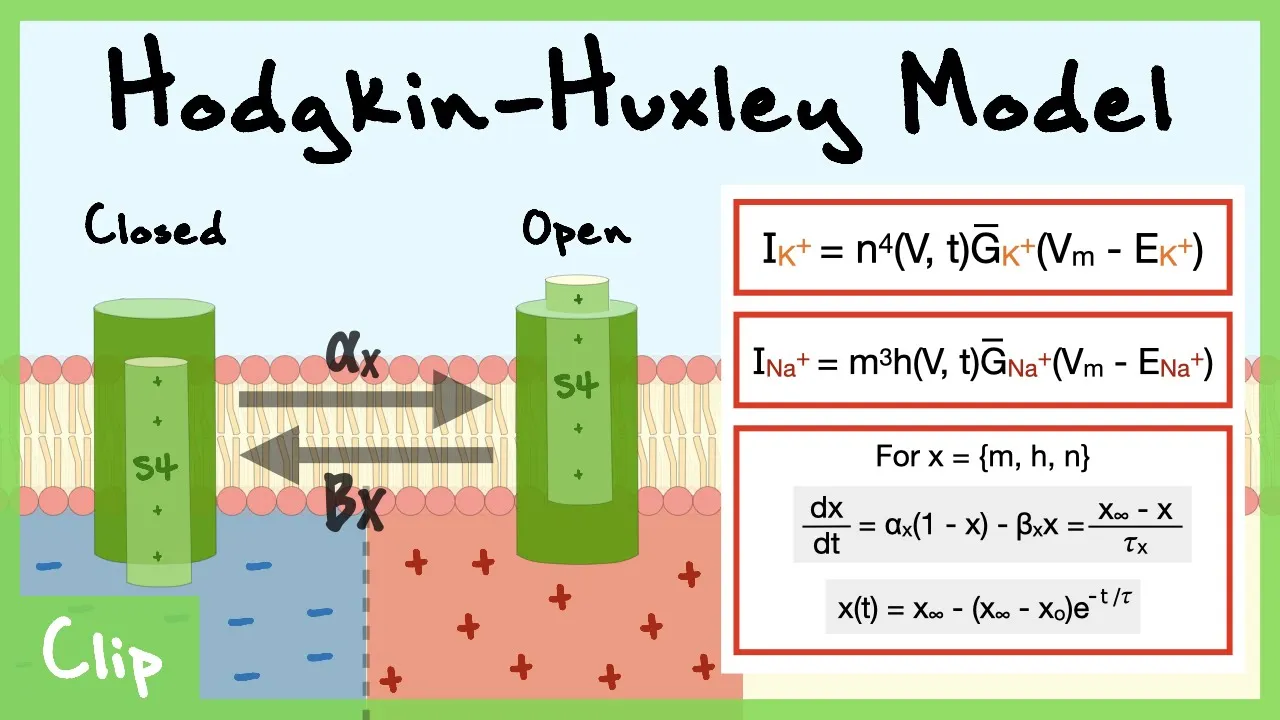


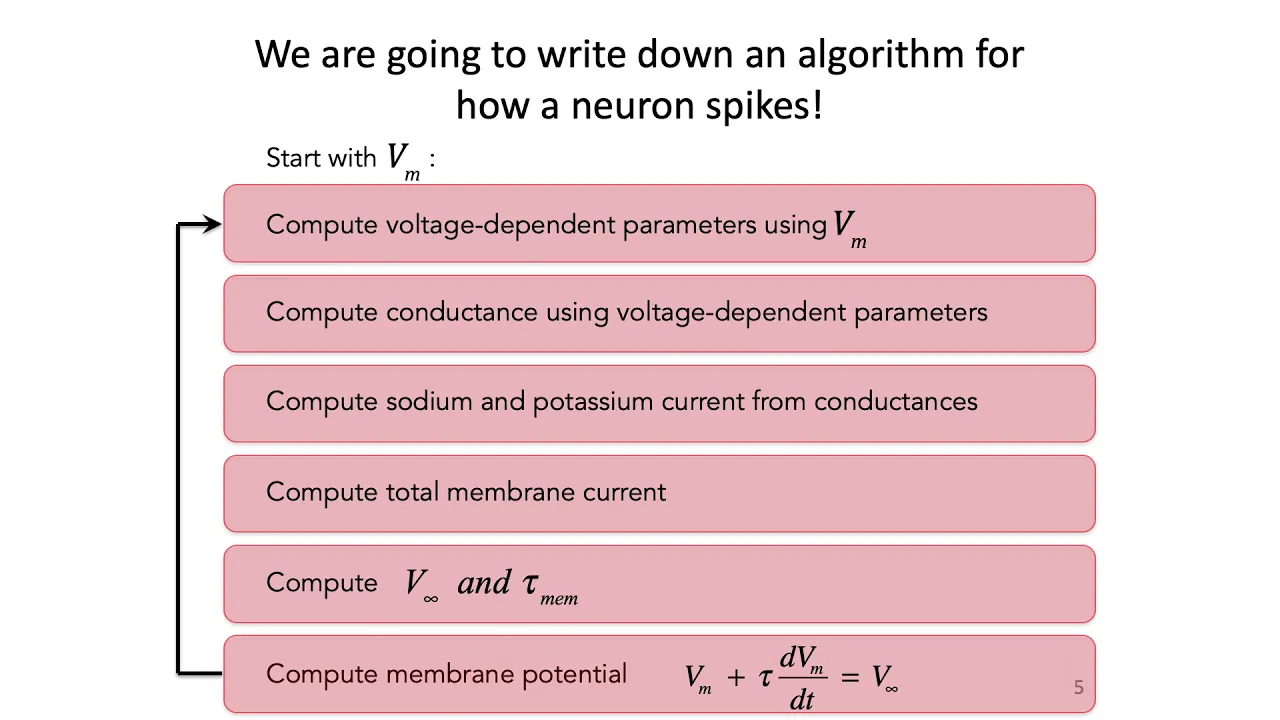


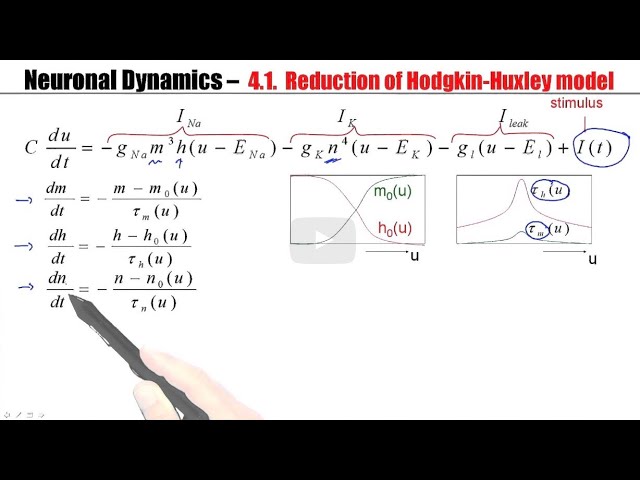









The Hodgkin-Huxley model is a comprehensive mathematical framework that describes how action potentials are generated in neurons by integrating electrical circuit principles with voltage-gated ion channel dynamics; it models the cell membrane as a capacitor with three conductances (potassium, sodium, and leak) driven by their respective Nernst potentials, where each conductance depends on the fraction of open channels (gating variables n, m, and h) that follow kinetic equations based on membrane potential, with potassium channels requiring four independent gates (n⁴) and sodium channels having three activation gates (m³) plus one inactivation gate (h).
Hodgkin-Huxley Model: Action Potential Biophysics Explained
Added:Basic neurobiology of the action potential, including resting membrane potential and the roles of sodium (Na+) and potassium (K+) ions.
Fundamentals of membrane biophysics, specifically electrochemical gradients, ion selectivity, and the Nernst and Goldman-Hodgkin-Katz equations.
Basic electrical circuit concepts, such as Ohm's law, capacitance, resistance, conductance, and how they apply to biological membranes.
Introductory calculus and ordinary differential equations (ODEs), as the model relies on rate equations to describe gating variables.
Simplified computational neuron models, such as the FitzHugh-Nagumo or Morris-Lecar models, which reduce the dimensionality of the Hodgkin-Huxley equations.
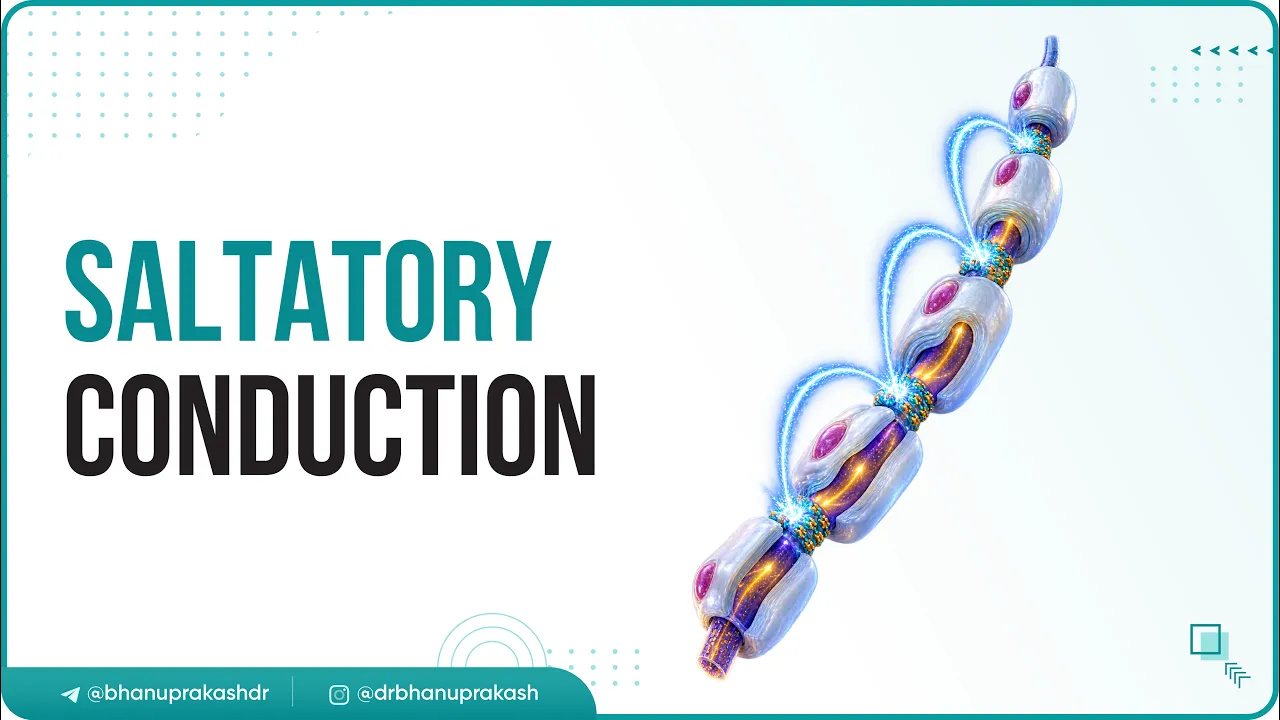
Cable theory and spatial propagation, explaining how action potentials travel down myelinated and unmyelinated axons over distance.
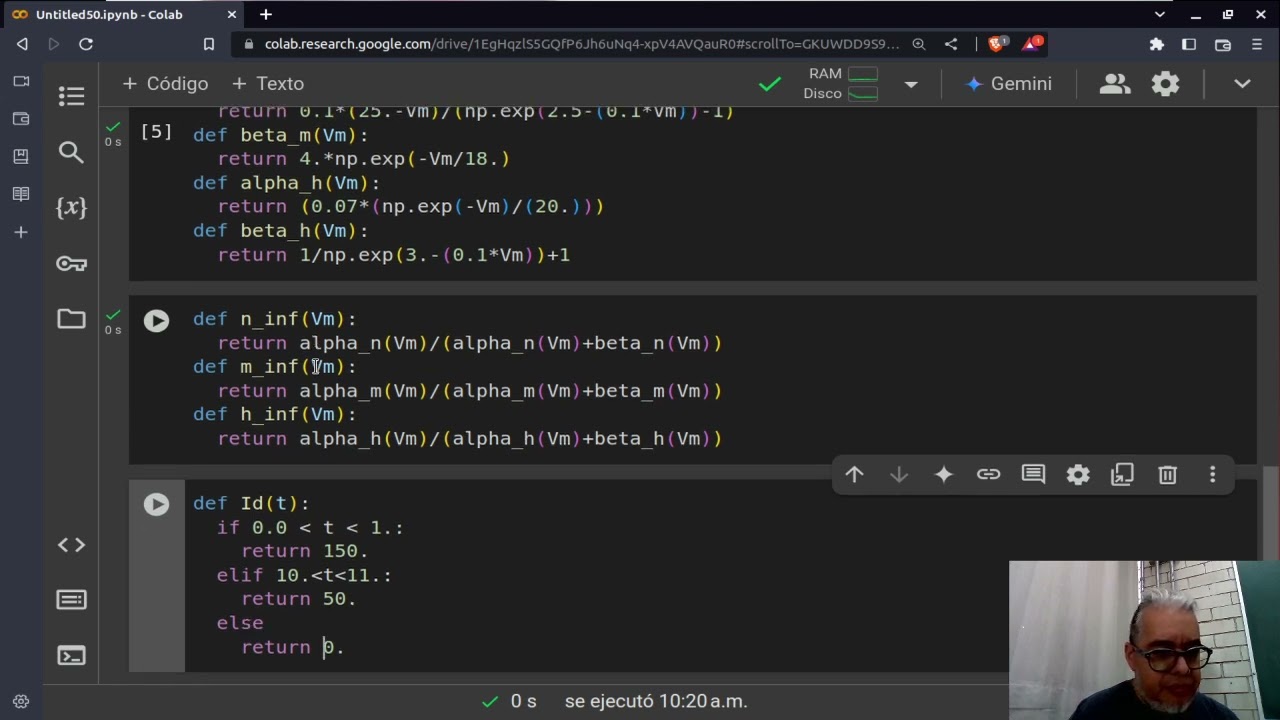
Practical implementation of neural simulations using computational tools like Python, MATLAB, or the NEURON simulator to solve the HH equations numerically.
Network-level modeling, exploring how multiple Hodgkin-Huxley neurons interact via synaptic connections to generate collective rhythmic activity.
29.4K views611likes24:27Original Release: 2020-04-12
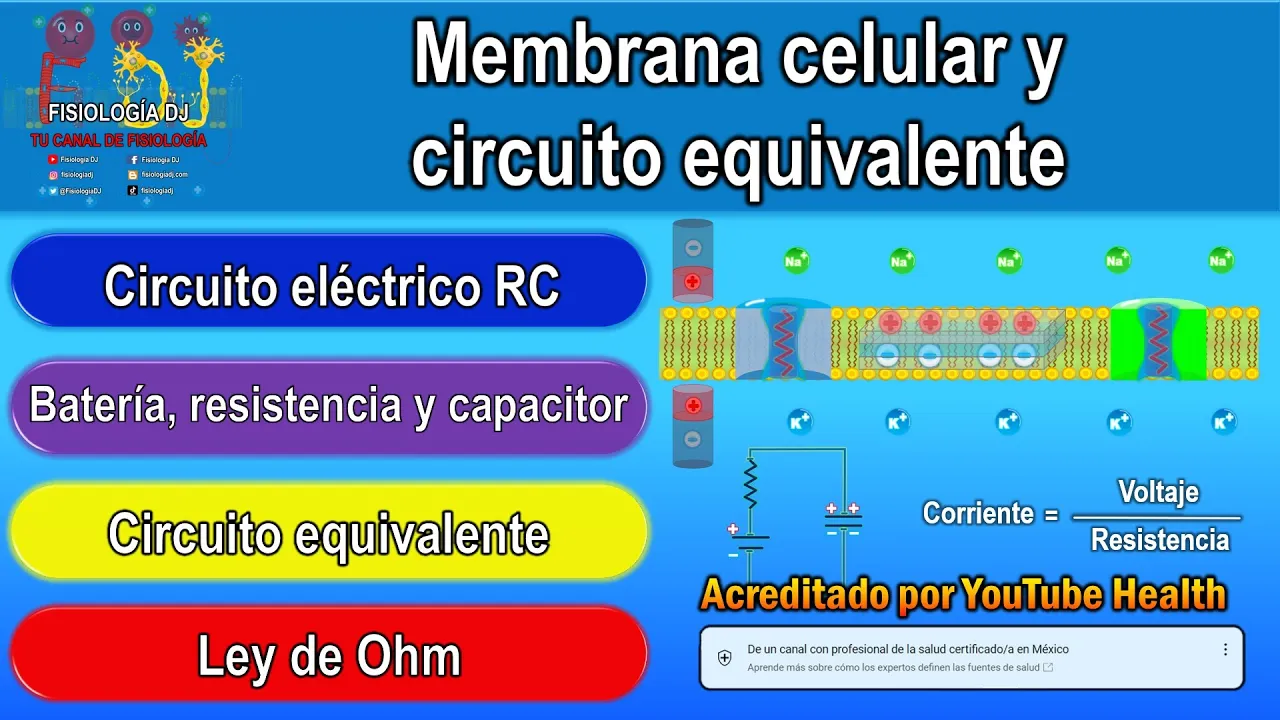
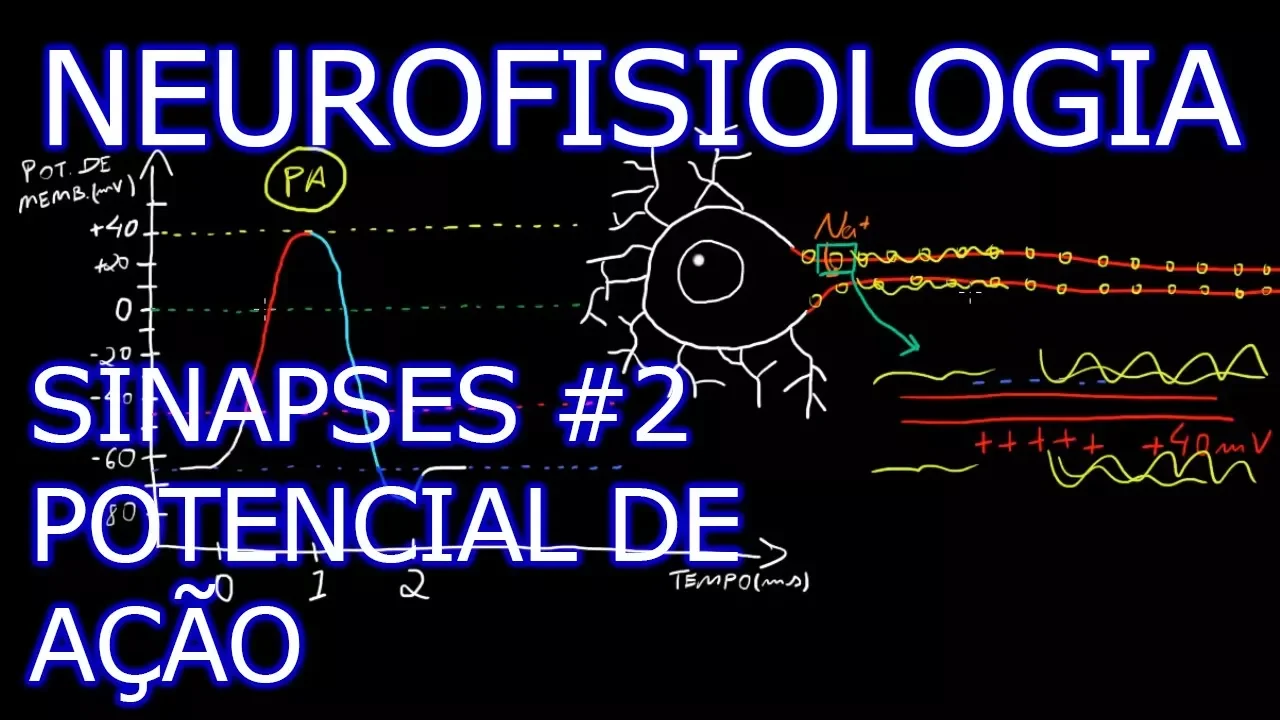
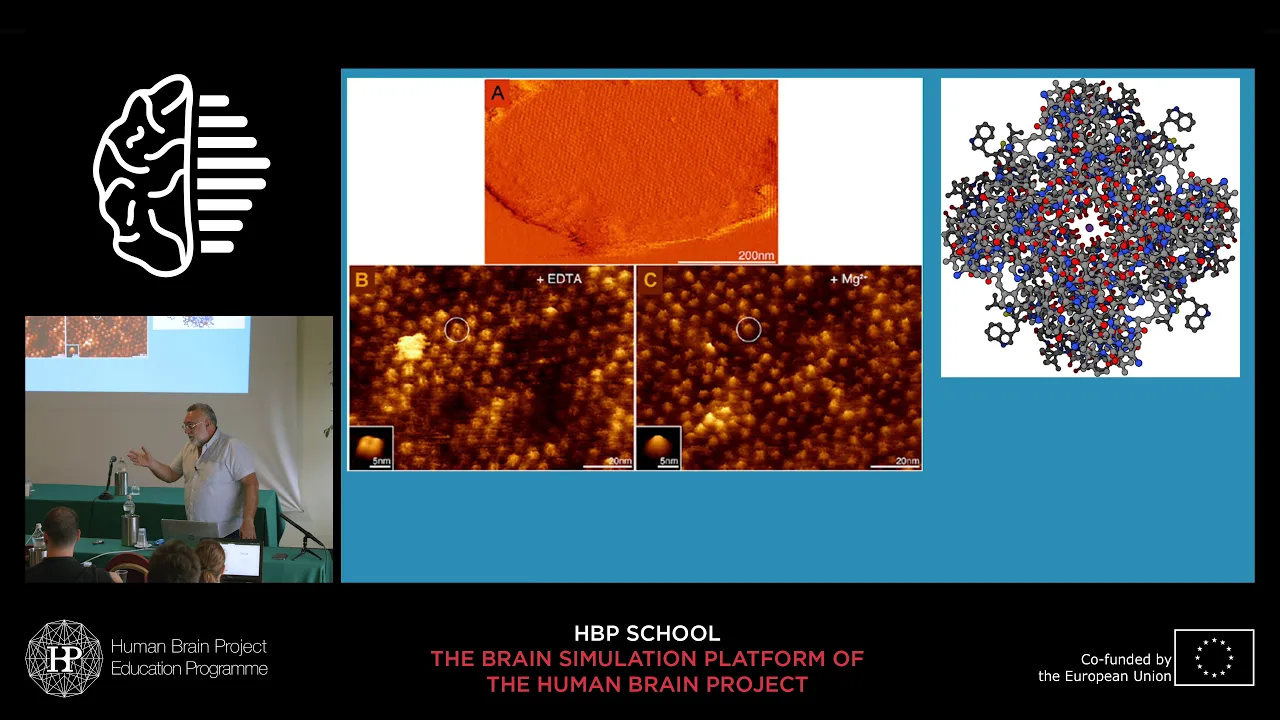
hey guys welcome to biophysics class 36 and this class is on the hodgkin-huxley model this is our final model our culminating model of the action potential which we've been studying for several classes using the first the donnan equilibrium then the ghk equation and then some circuit ideas of circuit models of the action potential but the hodgkin-huxley model builds on the circuit model and also includes the ideas of the nernst potential into a fully integrated model of the action potential so first a little bit of history and background hodgkin and huxley were studying um wanted to study uh the action potential um in nerve cells but uh didn't have equipment to electrode small enough to study it in in mammals and smaller smaller organisms so they looked at the giant squid whose axon connecting neurons in the brain down to its tail uh or its its its base here um are quite enormous several centimeters in diameter so the electrodes back in 1952 when hodgkin and huxley developed this model were sufficient size to um sufficiently precise to record action potentials and voltages across those across those axons a second interesting aspect is that the model was developed and tested and refined before the use of computers and you'll see in when we get to the form of the equations that they're fairly involved differential equations and this was done without the ability to without knowledge of genetics or the ability to manipulate proteins and many of the tools of modern biology so hodgkin and huxley were working with oscilloscopes and microscopes and electrodes and making guesses at what was what was going on and they had to compute each time and see if it agreed with their readings and all these things computations were done by hand so it's quite an amazing accomplishment and was rewarded in 1963 11 years later with the nobel prize in physiology and medicine and amazingly after over 60 years almost 60 years it remains the most widely used model for the action potential okay so it's it's a very uh it's amazing what hodgkin actually were able to do back at such an early stage in the revolution in biology so how does it work well we start with our electric circuit model where the cell membrane or the axon membrane is modeled as a capacitor separating charge on either side of the membrane ionic charge and where the ion channels are are modeled as conductances or resistors and where the the nern's potential the tendency of ions to move back and forth is modeled as a as a battery okay or as a yeah as a battery so um so we have this model then for our um basic squid axon and most neurons we have um sodium and potassium and what's called a leak current and elite current is of all the gates the current through all the gates which are always open um the sodium and potassium gates are most of them are voltage-gated or membrane potential gated they change their conductivity with the with the membrane potential v but the um leak uh gates are always open so the what goes through the leakage well it would include some sodium and some potassium but also other ions um calcium and chlorine and um and several others so it's everything that isn't involved in the voltage-gated sodium and potassium and then we have our capacitor and our three nernst potentials acting as driving forces to move the sodium and potassium and leak currents uh through the membrane so quantitatively our total current will be our potassium plus our sodium plus our leak current and each of these can be written as a function of membrane potential and time and is equal to the difference between the nern's potential and the membrane potential because remember if the nernst potential is equal to the membrane potential no current of that ion will flow that ion is has competing tendencies which are satisfied by a membrane potential equal to its earnings potential so this is the effective potential for for sodium times the conductivity of sodium which also depends on voltage and time and we have similar expressions for potassium with the effective uh driving potential of potassium times its conductivity and the leak which is the leak membrane protect the effect the composite leak nuts potential over all the involved ions minus the membrane potential times the connectivity and notice the connectivity doesn't depend for the current on voltage because the leak gates are not voltage voltage dependent they're not voltage-gated okay so let's dig in um a little bit more to the uh form of the conductivities the conduct or conductances the conductances are take the form in the model the hajj canoxide model of a maximum value times a fraction of channels which are open fraction f of channels which are open so if all of these for example all of the sodium channels are open we're at a membrane potential where that's the case where f would be equal to one then the that we would be at maximum conductance for sodium on the other hand if if uh none of the channels were open we were at a at a membrane potential where none were open we would have zero conductance and g max f this fraction would be between zero and one so g max would be the maximum value associated where f with the case where f was equal to one so that's going to be the form that we we use for the conductance a maximum value times the fraction of channels which are open to wrap up this uh differential equation we we need another um form for the current and that's that would be equal to the charge on one side the derivative of that charge which because it's a capacitor is going to be equal to q is equal to cv dq dt is c dv dt for capacitor so we can write then the current is equal to c dv dt which is equal to the sum of these three currents and so we have c dv dt is equal to vk minus v and so forth okay so um this is our differential equation for the membrane potential v and we know that we have in these conductances we have more voltage dependence and we know that it has to do with the fraction of open channels so let's look at that in a little bit more detail so the key concept in this is called a gating variable each of the gates the sodium and potassium gates can be closed or open and they can go back and forth between being closed and open depending on the membrane potential and and time so we call a gating variable f the portion of channels of a particular type which are open so if f was equal to a half half of the for sodium half of the sodium channels would be open and the other half would be closed so if uh so f is the fraction of open channels also known as the gating variable if f since a since a channel is either open or closed if a fraction f is open then one minus f will be closed so if 25.25 fraction of sodium channels are open 0.75 would be closed 1 minus 0.25 all right so how can how can these how can this fraction change well there's two ways we can have a closed channel open or we can have an open channel close so for the first process the the rate of the change in the portion of open channels would be equal to the uh portion of closed channels times the rate at which closed channels open which is called alpha okay so if we take the fraction of closed channels times the rate at which closed channels open that's going to increase the number of open channels we subtract off the fraction of open channels times the rate at which open channels close because that's going to decrease the fraction of open channels so this so beta here is the rate at which open channels close which depends on v as does the as does alpha they're both voltage dependent okay so we're going to have gating variables for associated with potassium activation sodium activation and sodium inactivation and it's instead of f to distinguish them they're going to be called n for sodium for potassium activation m for sodium activation and h for sodium inactivation all right so let's start off with potassium activation or gk as a function of v and t we can write this as uh gk gk max or gk bar times a gating variable n to the fourth power so g k bar is the maximum conductivity with all gates open and our gating variable n is equal to one and then you'll notice this is to the fourth power okay and that seems really curious but that's because each potassium channel has actually four activation gates there are four gates so because the four gates are open or closed independently of each other to get the chance of all of the gates being open we have to take the chance of of each of the gates being open multiplied all together so it'd be n times n times n times n or n to the fourth and this is a picture of a potassium g or a diagram with the proteins drawn schematically and it has four tetramers here with it in a ring shape and all four of these have to be in a open position for the ion to pass through which explains the fourth power here okay and then so we have the fourth power because of the four gate four gates in the channel but then the gating variable n follows the form we we saw in the previous slide for f the change in the number of open potassium channels is equal to the fraction of closed channels times the rate at which closed become open which is alpha minus the fraction of open channels times the rate at which open become closed which is beta so again same as the previous slide but where it was f but it's now called n for potassium activation and as was mentioned alpha and beta depend on voltage on membrane potential and there those functions are chosen so that the potassium gates begin to activate and deactivate at the right points in the action potential so for potassium that's around zero it starts to activate so potassium will flow out on the downstroke and it begins to deactivate at or below minus 20 so the potassium will stop flowing out and come to the resting potential okay let's move on to sodium current activation gna via t and we actually write this the sodium conductance as the a maximum sodium conductance times the product of two terms the first one is activation the m term the second one is inactivation which we'll deal with in a minute so for the m term it's m cubed for the same reason that uh potassium was n to the fourth there are actually three activation gates in the sodium channel resulting in the third power for the gating variable m the activation variables for sodium so here are the three gates which are activation variables the other ver the other gate here is an inactivation gate which is associated with the variable h and then with the first for the activation variable we have the same form of equation the um one more time the change in the number and the fraction of open gates is the fraction of closed gates times the rate at which closed become open minus the fraction of open gates times the rate at which open become closed okay so hopefully that's starting to sink in and become familiar um and as in as in potassium uh for sodium the rates at which open become closed closed become open and open become closed as a function of membrane potential are chosen so that the sodium gates begin to activate at the right time and deactivate at the right time for sodium that's about minus 50 millivolts so that it rushes in creating the upstroke begins to deactivate at or below minus 30 millivolts so it's gone on the uh so it's lessened on the downstroke finally we get to the inactivation sodium current where we have the h variable notice that inactivation means no current will flow so that would correspond to uh the value h equals zero in a inactivation gate would be a it would be inactivated would correspond to an h value of zero giving a conductance and therefore a current of zero there's one inactivation gate as as we mentioned so this h is just is to the first power and it obeys a similar equation as the activation as the activation for sodium and potassium and the um rates at what the rates at which the um closed close goes to open and open goes to closed are chosen for the for sodium gates to slowly inactivate around -20 okay so uh around here and then very slowly begin to de-inactivate down around minus 40.
that that prevents sodium from rushing in during the downstroke and allows the potassium to rush out and decrease the potential back down to its resting potential okay so at this point we're ready to put together the full hodgkin-huxley model again it's based on a couple of ideas the idea of the circuit model and the circuit model has again conductances for potassium and sodium and the leak current with their nernst potentials driving each and the the cell membrane as a uh a a capacitance so we have this equation which is for the membrane potential the first equality is from the capacitance the second from adding up the three currents which are the effective potentials times the conductances of each and now we know that the conductances are voltage and time dependent and for the potassium we know that the it can be expressed as a gating variable as a maximum conductance times a gating variable n to the fourth power because there are four gates in each channel for sodium there are three activation gates so we have a third power and one inactivation gate so we have a first power of the other variable h and the leak current is just always has the same conductance it's not voltage dependent for each of these gaining variables we have n m and h we have equations which represent the transfer of gates from open to closed states and the rates at which those occur are the alpha and beta parameters beta being how open goes to close and alpha how close goes to open so we have four variables um the membrane potential v and the variables n m and h which are the gating variables the fraction of channels of sodium activation sorry potassium activation sodium activation and sodium inactivation the parameters are the capacitance and the membrane potentials sorry the nernst potentials which depend on the concentrations of ions inside and outside the cell as well as the maximum conductivity or conductance of each type of channel which depends on the density of ion channels in the cell membrane or the axon membrane and the three as we saw the three alpha and beta functions the rates of closed to open and sorry open to closed and close to open are chosen so the channel gates open at the appropriate membrane potentials and the and with the appropriate speed to create the action potential for a particular type of neuron so that's the hodgkin-huxley model two basic ideas the circuit model with the capacitor and the the channels as as wires with conductances also known as resistances and the idea of fractions of open open gates and conversion between opening closed gates through these form of equations here so i hope you appreciate the complexity of this model and can appreciate how difficult it might be to create this model before having computers to test test out measurements and what an accomplishment it was for hodgkin and huxley to create this back in the pre-computing era so that's the hodgkin huxley model and i hope you have enjoyed this presentation and i will see you in class
Up Next
7:21
Understanding Nernst and Goldman Equations | Membrane Potential
@kcneurobiology6079
4.5K views•2020-12-30
50:12
Bacterial Communication: Quorum Sensing and Biofilm Formation Explained
@JHUAAP
12.6K views•2011-06-28

5:35
Enteric Nervous System Explained: The Gut's Brain | Neurobiology Lecture
@alumniu6029
438 views•2018-09-12

7:08
Bacteriophages: Earth's Deadliest Killers and Future Antibiotics
@kurzgesagt
34.6M views•2018-05-13
Related Study Plans & Knowledge Roadmaps
Structured learning paths in Biology
biology
RNAi: Biogenesis, RISC & Gene Silencing
01Molecular Biology Foundations: DNA to Protein
02Introduction to RNA Interference (RNAi)
03Molecular Biogenesis of miRNA and siRNA
+ 2 more learning modules
10h5 modules
Explore Roadmap
biology
Mycorrhizae: Signaling, Biophysics & Ecology
01Foundations of Mycorrhizal Symbiosis
02Molecular Signaling and Root Colonization
03Biophysics and Bioenergetics of Nutrient Exchange
+ 1 more learning modules
11h4 modules
Explore Roadmap
biology
Circadian Clocks: TTFL, SCN & Periphery
01Foundations of Molecular Biology & Gene Expression
02Introduction to Chronobiology and Actograms
03The Core TTFL: Molecular Architecture of the Clock
+ 3 more learning modules
14h6 modules
Explore Roadmap
biology
Population Genetics: Math, Drift & Selection
01Genetic & Probability Foundations
02The Hardy-Weinberg Principle and Baseline Models
03Mathematical Modeling of Natural Selection
+ 3 more learning modules
18h6 modules
Explore Roadmap