











![[PR PASS] 17/08 - UE1 ORBITALES](https://i.ytimg.com/vi/wQrx3DXOso0/hqdefault.jpg)










Carbon hybridization describes how carbon's atomic orbitals combine to form new hybrid orbitals that enable bonding; sp³ hybridization (25% s, 75% p character) occurs with four electron domains and tetrahedral geometry, sp² hybridization (33% s, 66% p character) occurs with three electron domains and trigonal planar geometry (leaving one p orbital for pi bonds), and sp hybridization (50% s, 50% p character) occurs with two electron domains and linear geometry (leaving two p orbitals for pi bonds), which can be determined using the n-1 rule where n equals the number of electron domains.
Carbon Hybridization in Organic Chemistry: sp3, sp2, sp Explained
Added:Understanding atomic structure, orbital types (s and p), and writing electron configurations, particularly for carbon.
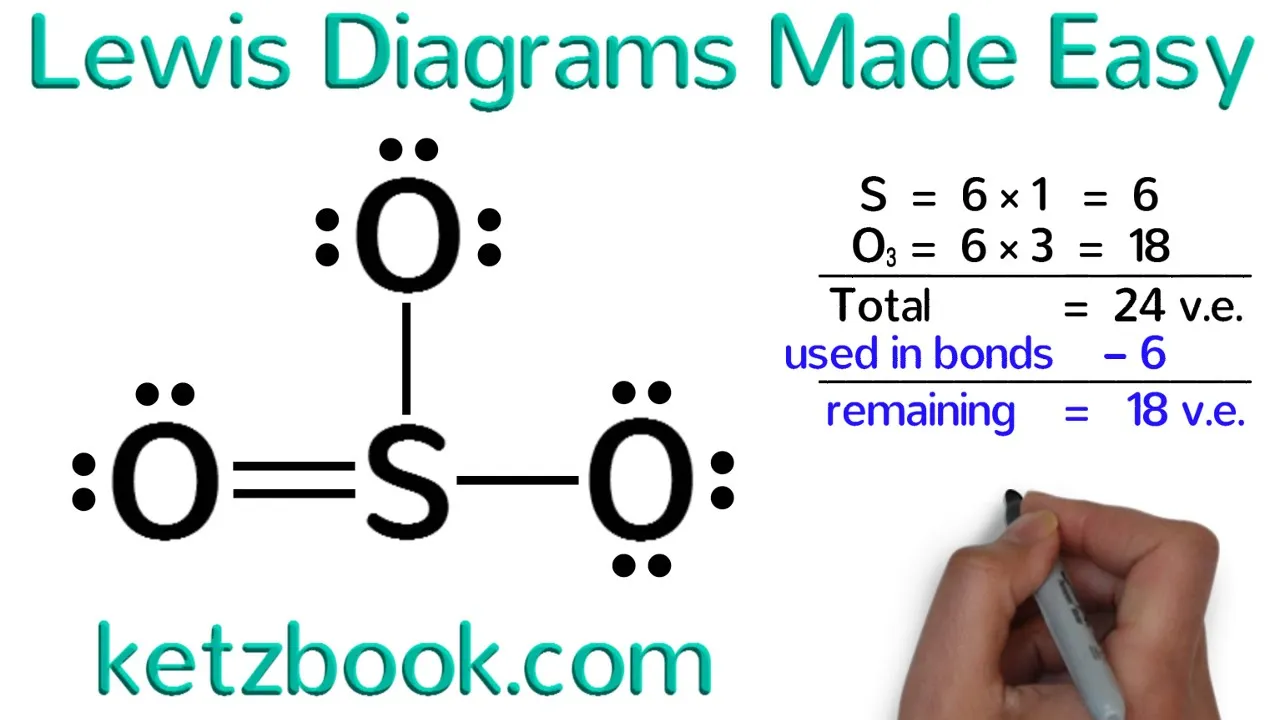
Familiarity with drawing Lewis dot structures to represent covalent bonding and valence electrons in simple molecules.
A foundational understanding of VSEPR (Valence Shell Electron Pair Repulsion) theory, electron domains, and basic molecular geometries (such as tetrahedral, trigonal planar, and linear).
Basic knowledge of covalent bonding concepts, including the distinction between single, double, and triple bonds.
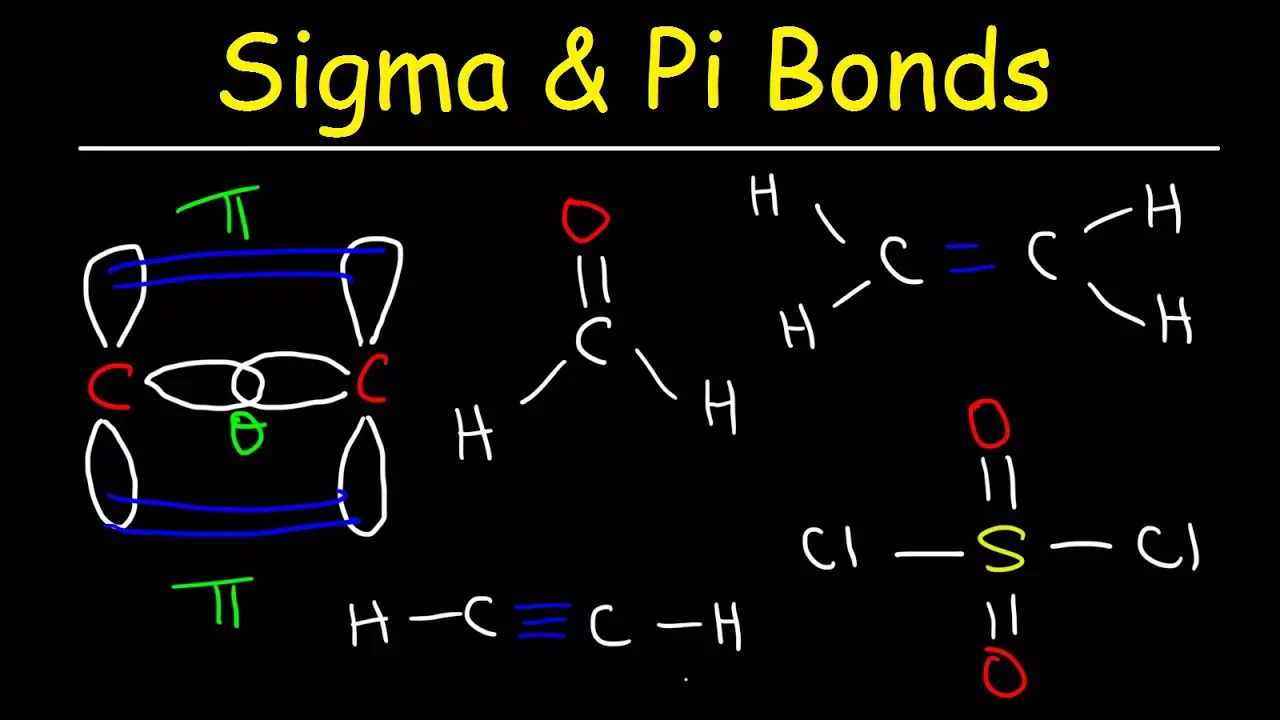
Distinguishing between sigma (σ) and pi (π) bonds, and understanding how unhybridized p-orbitals overlap to form multiple bonds.
Exploring molecular orbital (MO) theory to understand how atomic orbitals combine to form bonding and antibonding molecular orbitals.
Investigating resonance, conjugation, and aromaticity, where delocalized pi electrons exist across adjacent unhybridized p-orbitals.
Applying hybridization concepts to organic reactivity, such as explaining how the planar geometry of sp2-hybridized carbocations influences stereochemistry during reactions.
48.8K views604likes16:49Original Release: 2015-01-30
all right welcome back everybody to lecture two in the organic chemistry series of online lectures this lecture is entitled carbon hybridization learning to hybridize so in today's lecture we're going to be talking about hybridization which is a technique you hopefully learned in general chemistry but we're specifically going to apply it to carbon because carbon is so prevalent in organic chemistry so let's go ahead and get started with today's lesson so first um a brief General chemistry reminder uh we want to ask ourselves what is hybridization so hopefully uh everybody remembers hybridization is when we are talking about S and P orbitals that are merging together in order to create new lower energy SP orbitals and this is favorable for bonding so hybridization is really when the atomic orbitals uh get ready to form bonds they're going going to take the S and the P orbitals they're going to combine them together and that's energetically favorable and it also allows for overlap of the orbitals so you're going to have these hybrid orbitals and when one atom and another atom have the same hybrid orbitals they come together and those orbitals overlap very nicely in order to share electrons so that's the general premise of hybridization so we have a couple of different hybridization uh hybrids that we talk about uh in organic chemistry we're going to focus on sp3 SP2 and SP now there are sp3d and sp3d2 you can get hybridization in the D orbitals those tend to be with inorganic compounds uh things that have the 3D orbital available to them so sometimes you see the halogens uh sulfur phosphorus can violate their octets when they create high hbd orbitals that go past the sp3 level but because we're mostly dealing with carbon hydrogen oxygen nitrogen um sometimes the halogens but the halogens aren't the center atoms when we're dealing with Organic Chemistry we're going to focus on sp3 hybridization and below so let's start with sp3 hybridization which is by far the most common hybridization of carbon in organic chemistry uh so recall that molecules with a tetrahedral geometry are most often going to occupy the sp3 uh hybridization and what we mean by tetrahedral is there are four electron domains around a molecule so an electron domain is any space that electrons occupy it could be a bond single double or triple bond would count as one electron domain and then any number of Lone pairs of electrons each Set uh would count as another electron domain so carbon if it has four bonds uh in its neutral state is going going to normally be tetrahedral in its geometry and its structure it's going to have four electron domains and therefore it's going to be an sp3 hybrid when we come across a carbon with four bonds uh you can see this little chart down here if you've taken my general chemistry courses this should be familiar but for those of you that are just joining us what we're looking at here is really for carbon the second quantum level we have the S shell and the pshell filled together the way that we get carbon with four unpaired electrons is that these S and P orbitals combine together so look here we have one orbital with our s we have three of them with our P if we merge all of these together into a new set of energy levels we get four unique SP orbitals one from the S three from the P 1 + 3 is a total of four so why isn't this called sp4 because the number at the top of the P the superscript up there is referring to the number of P orbitals contributed we didn't contribute four P orbitals we contributed three for a total of four hybrid orbitals so when we say sp3 we're really referring that three is referring to the number of P orbitals that have been contributed here so you can see circled in red here the S and the P they all combine their orbitals we get four new orbitals and we take the four electrons we shake them up and we place one into each of the new hybrid orbitals that's what an sp3 would would look like and each of these lone electrons here are available for bonding with some other atom so if we want to take a closer look at the sp3 Hybrid orbitals you can see in the diagram here we have 2 s that's a spherical the S orbitals are always spherical and then we have three different P orbitals if you look at PX 2px it's running horizontally across the x axis 2py is going up and down as it would on a y AIS on a graph and 2pz is really coming in and out of the screen or the plane if you were to look at a three-dimensional plane there now what happens is these s and these P orbitals come together they hybridize and they form these new SP orbitals which you can see over on the right here after hybridization occurs so for a tetrahedral we have four of these new SP orbitals and notice they look almost like half of the dumbbell shape there's really a smaller negative region here that's the smaller side of that hybrid orbital it's really the S and the P orbitals coming together so when I have sp3 I'm really 25% s character and I am 75% P character because if I look at the breakdown I have 1 s and 3 PS out of 100% 34s would be 75% for the P 1/4 for the S because it only contributed one orbital would be 25% s s character so this is sort of what these hybrid orbitals would look like so continuing on here if we take a look at ethane which is a very simple organic molecule and it's hybridization we can see that it's sp3 so ethane would be a ch3 and another ch3 attached to one another so I have two carbons if you look at the bottom here two carbons with a single Bond and then they have three hydrogens surrounding the carbon that would be ethane and you can see the ball and stick model over here that we have uh so if we take a look at this individually we have two sp3 carbons you have a carbon here a carbon here if you look at these pink orbitals those are the sp3 orbitals that are going to overlap with one another in order to form the carbon carbon bond which we see in the middle here and if you think about it what are each of these little green balloons or green sp3 orbitals that are left out to the side for well those are each going to be for a hydrogen that would come in and remember hydrogen cannot have hybridization because it has no P orbitals available so hydrogens would just be characterized as s so each of those S orbitals that would have one electron would come in and would bond with the sp3 orbitals they would overlap them to create the hydrogen bonds so ethane has a sp3 hybridization so let's let's go ahead and take a look at SP2 hybridization which is the next one so for SP2 hopefully you realize if the number up top is referring to the number of P orbitals donated an SP2 hybrid has only donated two of its P orbitals it is keeping a p orbital behind and what we want to think about is why would we need to keep a p orbital behind well usually what ends up happening not all the time but most of the time is that that p orbital is being reserved for pi electrons so remember we have Sigma electrons involved in single bonds and Pi electrons are going to be involved in double or triple bonds uh and so again I I want to remind you sp3 is the most common hybridization for carbon uh but it is certainly not the only hybrid formation we definitely have SP2 and SP when we're dealing with organic molecules uh so when carbon is involved in a double bond it must keep a p orbital behind uh that is unhybridized we don't want to hybridize that p orbital in order for pi electrons to reside in that p orbital and this means only two of the three p orbitals can be donated to the hybridization so we see the red circle around the two P orbitals here this one over on the left is going to be left behind uh for pi electrons and we're still going to donate the S so we have S and then two of the PS to make SP2 we're keeping one of these PS behind and you can see a total of three electrons circled three electrons equal equally distributed to the hybrid orbitals so these will act just like the SP 3s did these hybrid orbitals however there's going to be one p orbital left behind and this looks a little bit different so let's take a look at it uh the SP2 hybrid only has three hybrid orbitals available for bonding of Sigma electrons the remaining unhybridized p orbital is going to be reserved for the pi electrons in a double bond so if you look at the SP2 model here and we're going to talk about Ethylene right uh which is SP2 hybridized ethylene is the same model as ethane except there's a double bond between the carbons which leaves only enough room for two hydrogens on the outer skirts of each carbon so take a look at the left here see these up and down they're sort of a purplish blue uh p orbital you can see the dumbbell running up and down these would be py orbitals that are running along this axis here we're going to save a p orbital on each carbon so can form a double bond these are where the pi electrons are going to be held in the upper p orbital level and in the lower p orbital level the pi electrons are going to circulate between those two areas uh and then you can see the little green ones the green SP2 hybrid orbitals out on the sides are going to be for the hydrogens and then the in between here is going to be where the first carbon carbon Sigma Bond happens and so if we jump over to the left here we can see we have to start with a carbon carbon single Bond then we can make a carbon carbon double bond where the pi electrons will occupy this p orbital space around the single Bond it's going to rotate above and below the single Bond then on the side would be just like in the sp3 case we have these SP2 hybrid orbitals and they will be available for bonding to the hydrogens so finally let's take a look at SP hybridization oh and remember I want to mention one uh briefly the SP2 hybrid only has three electron domains because it's got the double bond and then two single bonds remember a double bond counts as one electron domain so therefore it's going to have a trigonal planer geometry um and the bond angle is going to be roughly 120 between each of those bonds it would be 109.5 for a tetrahedral with the sp3 so let's take a look at the SP hybridization uh you should understand by now again the number there's an implied one when we write SP it's just one p okay when we're talking about SP hybridization we're going to leave behind two P orbitals and we're going to take a look at Just One S orbital and one p orbital merging together in order to form SP okay so the two P orbitals behind again are going to be left for pi electrons most likely and so if we take a look at what's called acetylene which is carbon triple bonded to carbon and and then we have the two hydrogens we can get a rough idea or feel for this so it's going to be somewhat similar to the SP2 hybrid except it's going to keep two P orbitals behind instead of just one p orbital behind the SP hybrid has the two unhybridized P orbitals which will allow two sets of Pi electrons and this can be used as either two double bonds or one triple bond and the SP hybrids only have two electron domains and so they're going to have a linear geometry with 180° a straight line between the bonds so if we take a look here this starts to get complex all right the SP hybrid orbitals are these green ones here that's where the overlap comes so the first set that's green here that you can see my arrow over that set is for the first carbon carbon single Bond the other ones that are green on the outside are going to be for the hydrogen because we have to connect a hydrogen to the carbon carbon triple bond the up and down that are blue are one set of P orbitals the back and forth which would be like a pz uh that are pink are going to be the second set of z uh I'm sorry the second set of P orbitals and we are going to have electrons that occupy both sets of P orbitals so this starts to look very complex if you come over to the right here the green in between there that's the single Bond all right and then if you look at the blue we have electrons circulating above and below the sigma Bond and then if you look at the pink we we really have another set of Pi electrons rotating to the left and to the right so we have above and below and then left and right of that Sigma bond that is a carbon carbon single Bond so we have the single Bond then a double bond with a p orbital and then a triple bond with another p orbital and then the hydrogens would be on the outside of that carbon carbon triple bond so as we move along uh most students in my class tend to like this method of soling for hybridization because it's the easiest one uh it it's certainly legitimate but I encourage you to learn hybridization the proper way uh but the hybridization sheet method is n minus one and this works well especially in organic chemistry when you don't have those D orbitals so um to use the N minus one rule it's going to be where n is the number of electron domains around an atom of interest and nus1 will equal the value that is assigned to P in the SP hybridization so you will solve the number of electron domains that'll be n you're going to take n minus1 and whatever n minus one equals is the number of P orbitals that were contributed so let's take a look here if we take a look at the carbon on the left here I've got 1 2 three four bonds around it that's four electron domains four minus 1 is three so this would be sp3 so hopefully you guys get the idea if I come to this one this carbon here has 1 2 and remember the double bond counts as only one electron domain so three if this carbon only has three electron domains 3 - 1 is 2 that's SP2 if this one only has two electron domains over on the right here 2 - 1 is 1 so it would just be SP so hopefully this method and you can test it out uh will make sense I also just want to mention you can find hybridization for other atoms besides carbon we focused on carbon because it's organic chemistry but oxygen nitrogens um any of those other atoms can certainly have hybridizations you just want to follow the same rules and remember lone pairs when we get to those atoms also count as an electron domain when we're determining hybridization so um that pretty much wraps up hybridization this was sort of a brief overview if you are struggling with it I would strongly encourage you to go back to the molecular geometry chapter that I have posted in the general chemistry section you can review hybridization there in a bit more detail uh and then you can brush up some on it here again organic chemistry so as always thank you um for watching and continue learning and investing in your knowledge thanks very much for watching please remember to like if you found this video helpful if you comment I will do my best to get back to your comments or just feel free to leave a comment if you found something uh useful and please subscribe if you have the time to it will be the easi eest way for me to get in touch with you when future videos come up uh and it'll allow you to go through playlists and things like that so uh thanks again guys and I will see you guys for the next lesson we're going to start chapter two which will be polar calent bonds and some acidbase chemistry thanks guys
Up Next
23:54
NMR Spectroscopy Explained: Spectra Analysis for Chemistry Students
@Chemistorian
228.1K views•2023-01-08
83:56
Biocatalysis and Catalysis in Islatravir Synthesis | Merck Webinar
@SCIwheresciencemeetsbusiness
675 views•2020-10-08

48:46
Reverse Phase HPLC: Principles, Retention, and Optimization
@ChemComplete
56.8K views•2020-08-17

17:31
Edible Water Bottles: A DIY Guide to Sodium Alginate Spherification
@ryan
10.5M views•2019-06-21
Related Study Plans & Knowledge Roadmaps
Structured learning paths in Chemistry
chemistry
Nuclear Chemistry: Decay, Meds & Fuel Cycle
01Introduction to Nuclear Structure and Radioactivity
02Decay Dynamics and Kinetics
03Radiation Interaction and Detection
+ 2 more learning modules
24h5 modules
Explore Roadmap
chemistry
Supramolecular Chemistry: Forces & Machines
01Foundations of Chemical Bonding and Intermolecular Forces
02Introduction to Host-Guest Chemistry
03Thermodynamics and Dynamics of Self-Assembly
+ 2 more learning modules
16h5 modules
Explore Roadmap
chemistry
Photochemistry: Excited States & Reactions
01Foundations of Light-Matter Interactions
02Molecular Orbitals and Electronic States
03Photophysical Processes and Jablonski Diagrams
+ 2 more learning modules
18h5 modules
Explore Roadmap
chemistry
Coordination Chemistry: Bonding & Properties
01Introduction to Transition Metals and Ligands
02Crystal Field Theory (CFT) and Geometry
03Magnetic Behavior and Spin States
+ 2 more learning modules
14h5 modules
Explore Roadmap