












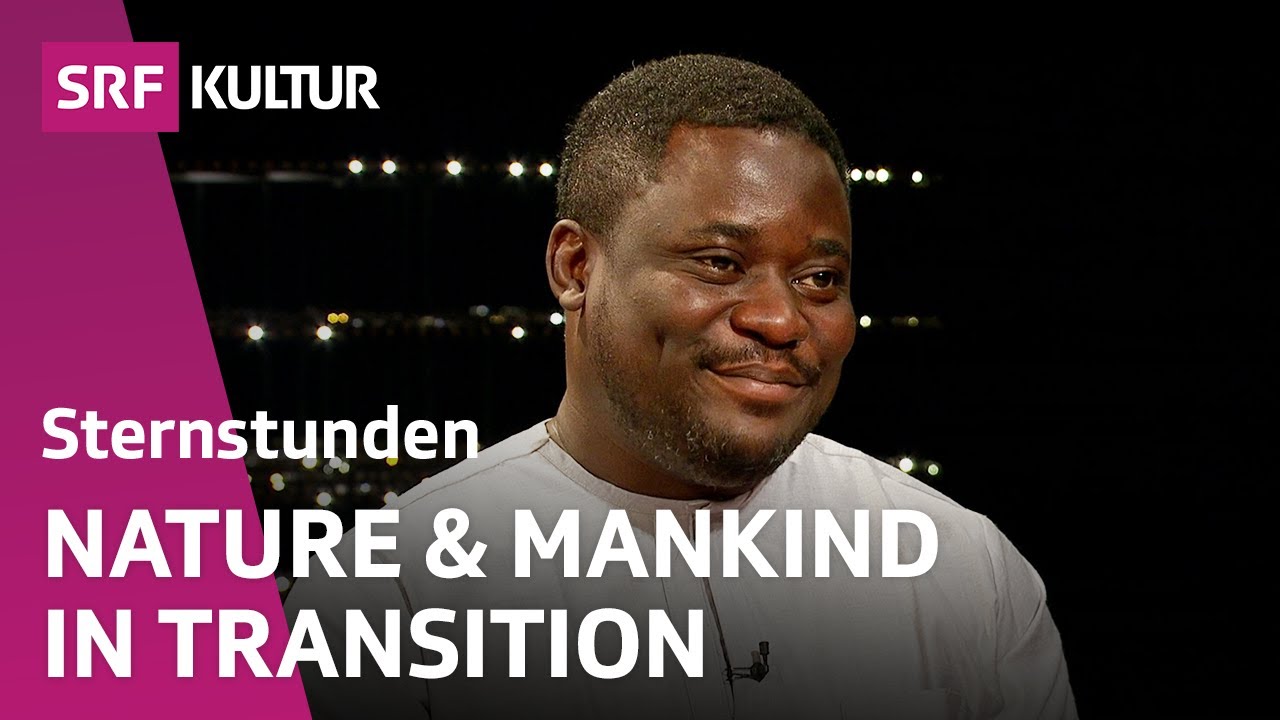









Decolonizing outer space involves critically examining how current space exploration practices perpetuate colonial ideologies, including the use of Indigenous lands for launch sites, military applications that harm Indigenous peoples, and the Eurocentric dominance of Western nations like the United States in space governance; this interdisciplinary challenge requires collaboration between political scientists, sociologists, anthropologists, and technical experts to ensure space exploration respects Indigenous sovereignty and avoids repeating historical patterns of exploitation and domination.
Decolonizing Outer Space: Beyond the Final Frontier
Added:Historical patterns of colonialism and imperialism, specifically focusing on territorial expansion, resource extraction, and the concept of 'terra nullius'.
The core principles of the Outer Space Treaty of 1967, particularly its designation of outer space as the 'province of all mankind'.
The distinction between traditional state-led space exploration (the Cold War 'Space Race') and the modern commercialized 'New Space' era.
Fundamental concepts of postcolonial theory, including how 'frontier' language and narratives can perpetuate historical power imbalances.
Alternative cosmologies and Indigenous perspectives on humanity's relationship with the cosmos, challenging Western-centric exploration narratives.
The ethics and governance of space resource utilization, such as asteroid mining, and the equitable distribution of its benefits.
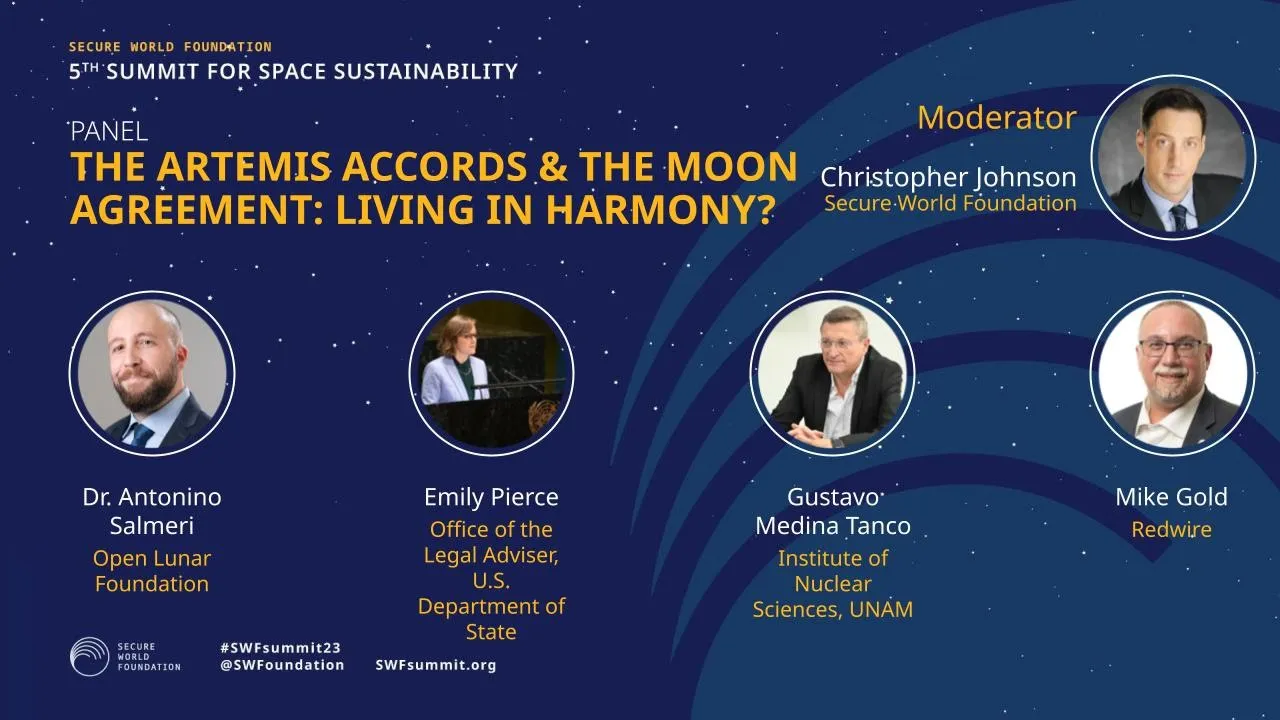
Astropolitical policy design, including the geopolitical tensions surrounding the Artemis Accords versus alternative international agreements.
The application of environmental justice frameworks to orbital space preservation, space debris mitigation, and planetary protection protocols.
262 views8likes6:46Original Release: 2024-11-19
Decolonising outer space is multilayered.
Sometimes it's about thinking about the future and making sure colonial practices don't extend into the future.
It's also about how to stop or disrupt the colonial activities going on right now associated with space exploration.
Things like the use of Indigenous lands for launch sites and how to rematriate that land back to its original people, or things like military uses of outer space, which oftentimes lead to Indigenous people being harmed or killed through space technologies.
Decolonising outer space moves back and forth into the future and the past.
Humans have been going to outer space for many years, with the Apollo landings on the moon being really famous.
What people may not know is that there's a new set of missions that are attempting to either colonise the moon, send people into orbital infrastructures, or in Elon Musk's case, to try to set up a colony on Mars.
Our project is trying to look at the political implications of that.
Can we use our memory, understanding, and theories of how colonisation worked on Earth to understand this new dimension of outer space exploration?
Right now it’s more of a continuation of colonial practices.
We can see the legacies of colonial practices daily in terms of the physical, mental, and cultural structures as well, that have long-lasting and profound repercussions on people.
The idea of decolonising outer space is not decolonising the place.
It would be as simple as saying, "If you want to decolonise it, don't go there."
It's rather more decolonising the thoughts of how we have this very extractive practice and mentality related to personal gain and individual gain as well.
Right now, space does have a bias toward Eurocentric ideas and constructions.
Mostly when we're talking about going into space or who is active in space, we're talking about Western nations.
Mostly the United States.
We all know NASA.
It's one of the most branded entities on the planet.
Oftentimes it means that the United States or the West get to lead in what activities or what kind of governance we'll have in the future in space.
Whether or not we're putting the economy before the people is oftentimes a Eurocentric bias because of how historically, Europe has always tried to dominate the land and the people for its benefits.
We're seeing that now replicated with the race to space and the possibilities of splitting up the moon in the same way that European colonisers tried to split up the world for their benefit.
A lot of discourse and conversation around space, and especially the posture that a lot of academics and people in general have, is often abstract and not very tangible.
Learning to moonwalk is a project where I'm trying to bring some viscerality and tangibility to this question of how does it feel to be on the moon?
It also puts a lens onto the things that we don't discuss when we're thinking about space exploration.
More particularly moon settlement, which is the workers, the little things that change so that we're not walking normally, but we're bouncing around and that we have changed.
This changes our stance and therefore our perception of the world around us and it affects how we think about the world and our world-views.
The fact that you see an Earth crescent as opposed to a moon crescent.
What does it do and how does it influence our ability to exist?
I think it's really important to look at this problem now.
That's because, for one, we know that in past forms of imperial encounter and endeavour, in the very early days of colonial exploration, the rules of the game were set in place very early.
The institutions of slavery, of the denial of indigenous sovereignty.
All of these things appear early.
You want to get in on the ground up.
Secondly, I think we're seeing such a rapid expansion in the amount of investment, the number of countries involved, and so few political scientists paying attention or doing work on this.
It's as you're saying.
The problem is we try to avoid repeating our mistakes in outer space.
It's crucial to have this conversation now so we know what we're getting into because I don't think there's a way we can stop it to a degree.
Maybe the idea is to do it in a different, more respectful way, or less with land-grabbing priorities and things like that.
I don't know what it looks like but this conversation is important so we can start thinking about it.
We're constantly, and I mean that globally, astrobiologists, physicists and biologists across the world are always looking for life in outer space.
We're always like, "There might be something out there."
Historically, we haven't been the greatest at encountering other humans and treating them with respect and dignity.
I have a hard time believing that if we encounter something radically different from us that we'd be able to just go, "Yes, friend."
Make it so that our systems and our ideas about what it is to go into space are already thinking about the encounters rather than being surprised by them.
That's because we're looking and we can't be surprised when we find something.
That's how I see it.
I don't want us going out and killing little green men, and I don't want them to kill us either.
I think maybe understanding better relations with living, and more than human beings right now is probably the way to go.
I'd say that what's interesting about this field is that it creates the opportunity in which people who work in politics, sociology and anthropology, have a lot to say to, and work with people in completely unrelated fields, working in astronomy, design and engineering.
All of those groups are making a whole bunch of technical decisions about the politics of outer space, the sociology of outer space, that we've yet to look at and yet to understand.
There's room for cross-conversation and cross-fertilisation between these different groups in how we understand this phenomenon.
Up Next
13:50
Geoeconomics: Economic Power Politics in Realist IPE | Lecture
@assemblingpostcape
135 views•2024-11-14

24:30
BRICS Pay and de-dollarization: A New Financial Order Emerges? | 55 chars
@DannyHaiphongYT
164.6K views•2024-10-22

7:33
Government Surveillance Methods: 10 Ways You May Be Watched
@BeAmazed
1.6M views•2017-04-09
10:19
Explaining the Saudi-Iranian Proxy Conflict in the Middle East
@Vox
18.2M views•2017-07-17
Related Study Plans & Knowledge Roadmaps
Structured learning paths in Political Science
political-science
Economic Statecraft: Sanctions & Chokepoints
01Foundations of Geoeconomics and Economic Statecraft
02The Mechanics of Weaponized Interdependence
03International Sanctions: Types, Implementation, and Efficacy
+ 2 more learning modules
12h5 modules
Explore Roadmap
political-science
Central Bank Independence: Politics & Policy
01Foundations of Central Banking and Monetary Policy
02The Time Inconsistency Problem & Inflation Bias
03The Delegation Model and Designing Independence
+ 2 more learning modules
12h5 modules
Explore Roadmap
political-science
Consociationalism: Power-Sharing & Stability
01Democratic Dilemmas in Divided Societies
02Introduction to Consociational Democracy
03The Four Pillars of Consociational Design
+ 2 more learning modules
12h5 modules
Explore Roadmap
political-science
Rebel Governance: Legitimacy, Economy & State
01Foundations of Rebel Governance and Statehood
02Establishing Political Legitimacy and the Rebel Social Contract
03Wartime Economies and Rebel Resource Management
+ 2 more learning modules
14h5 modules
Explore Roadmap