Paper money was invented in China during the Song Dynasty in the 11th century CE, nearly 20 centuries after the earliest known use of metal coins; it evolved from merchants leaving heavy strings of coins with trustworthy agents who issued paper promissory notes, eventually leading to government-licensed deposit shops and standardized national currency printed with woodblocks and backed by silver or gold.
The Origins of Paper Money: Song Dynasty Invention, History
Added:Deep Dive
The distinction between commodity money (such as metal coins with intrinsic value) and representative currency.

نقود وبنوك| المحاضرة الأولى - الفرقة الثانية
1.7K
Commodity money (like gold and silver) has real value equal to its commodity value (1 gram of gold equals 1 Egyptian pound). Representative money is paper that substitutes for precious metals and has no intrinsic value—it derives its value from the trust that it can be exchanged for actual precious metals.
Click to watch →

ద్రవ్య భావనలు,రకాలు; Concept of Money and types of money
196
Commodity money has intrinsic value equal to its face value (e.g., gold coins where the metal value equals the face value). Representative money has face value greater than its intrinsic value (e.g., paper notes where the paper value is much less than the face value). Commodity money was used in ancient times with gold and silver coins. Representative money is the modern form where paper currency represents value but has minimal intrinsic value.
Click to watch →

MONEY, BANKING AND INFLATION
132
Commodity money refers to money where the intrinsic value equals the face value, such as gold coins in ancient times. The video explains that commodity money is considered full-value money because its internal value matches its external value. Representative money, on the other hand, has a face value greater than its intrinsic value, such as paper notes and coins. The video provides examples showing that a ₹10 gold coin in ancient times had intrinsic value equal to ₹10, while modern currency has face value exceeding its material value.
Click to watch →
A Brief History of Money
44.8K
Representative money represents something of value without having intrinsic value itself, while commodity money has actual intrinsic value. In Mesopotamian cities, farmers deposited grain at local temples and received clay tablets recording their deposits, which could be used to pay off debts. This marked the birth of representative money, where tokens without real value represented stored commodities. In contrast, commodity money like gold or silver has inherent worth independent of its use as currency.
Click to watch →

DAY 1 || MONEY & BANKING || BHU B.COM || EXAMTYM🔥
2.9K
Commodity money is money made of certain metals (gold, silver, copper) where the face value equals its intrinsic value. Representative money is money where the material value is greater than its face value, meaning it represents something of higher value. For example, a ₹5 coin has a face value of ₹5, but if it's made of gold worth more than ₹5, it's representative money.
Click to watch →
Deep Dive
The economic and commercial landscape of the Song Dynasty (960–1279 CE), characterized by high agricultural productivity, trade expansion, and urbanization.

Economy of the Song dynasty
370
The Song Dynasty (960-1279 CE) experienced sustained economic growth through technological innovations including movable print, improved agricultural techniques, coal-powered industries, and the world's first paper money, combined with sophisticated commercial organization through merchant guilds and extensive maritime trade networks that connected China to global markets, making it an early modern economy centuries ahead of Western Europe.
Click to watch →

중국중세사13
150
The Song Dynasty experienced a comprehensive economic transformation that fundamentally changed Chinese society. The agricultural revolution included double-cropping systems, intensive farming techniques, and polder reclamation, transforming the Yangtze River Delta into the primary agricultural center. This surplus supported population growth from approximately 100 million to over 120 million. The commercialization of agriculture created sophisticated trade networks with regional specialization, while state monopolies on tea and salt generated significant government revenue. Urbanization accelerated as cities developed specialized commercial functions, with traditional wall-based structures declining as commerce became dominant. The emergence of powerful merchant groups accumulated significant commercial capital, representing a shift in economic structure. The dynasty developed sophisticated commercial infrastructure including water transportation networks, distribution systems, and commercial organizations.
Click to watch →
Ch. 8 / Section 1.3 “Tang and Song Dynasties”
111
The Song dynasty (960-1279) restored order after the Tang's collapse without territorial expansion, instead implementing domestic improvements that made Song China the world's most advanced society. Agricultural innovations including drainage, irrigation, and terrace farming, combined with Southeast Asian rice strains, doubled harvests and enabled China's population to reach 100 million by 1100 AD. The economy boomed with trade in sugar cane, tea, bamboo, silk, paper, and ceramics. For the first time, the state earned more from trade than agriculture, leading to banking and the world's first paper money. Cities became centers of commerce and culture, with geographers studying their spatial distribution and growth patterns.
Click to watch →

AP World UNIT 1 REVIEW (Everything you NEED to KNOW!)
1.6M
The Song Dynasty experienced significant economic commercialization, meaning manufacturers and artisans produced more goods than they consumed and sold excess products in domestic and international markets. Major traded goods included porcelain and silk. Agricultural innovations, particularly the introduction of Champa rice from the Champa Kingdom, contributed to this prosperity. Champa rice matured early, resisted drought, and could be harvested multiple times per year, enabling population growth and increased food production.
Click to watch →

1.1 Sui, Tang, Song (AP World History)
5.2K
The Song dynasty (960-1279 CE) divided into Northern and Southern periods following nomadic invasions. Neo-Confucianism emerged as an intense fundamentalist revival emphasizing strict adherence to traditional principles, formal education, and rigid social hierarchies. Despite suppression efforts, Buddhist ideas persisted among commoners through concepts like universal sagehood. The dynasty achieved remarkable economic prosperity through agricultural innovations (Champa rice, improved irrigation), maritime technology (magnetic compass, stern post rudder), and commercial expansion. Population grew to 100 million, driving urbanization and intensifying trade networks between East and South Asia.
Click to watch →
Deep Dive
The logistical limitations of metal coinage, specifically the weight, volume, and transport challenges associated with 'strings of copper cash'.
How Ancient China Invented Paper Money
9.9K
Ancient China's economy relied almost entirely on copper coinage, which created significant logistical challenges. A single copper cash coin weighed only a few grams, but merchants transporting payment for major shipments needed tens of thousands of coins tied onto ropes. These caravans carried enormous physical burdens that had to be hauled across mountains, fed down rivers, guarded from bandits, and counted repeatedly. This system worked as long as the empire had sufficient copper supply, but became unsustainable when population surged and trade expanded beyond the available metal resources.
Click to watch →
The Untold Story of the World’s First Paper Money
221
China's vast size and economic complexity created logistical problems with metal currency. Copper and iron were heavy, making transportation costly—sometimes more expensive than the value being transported. Caravans carrying metal became targets for bandits, and river barges overloaded with coins sank in storms. Additionally, different local governments produced their own versions of copper cash with varying purity and weight, creating a confusing mosaic of regional currencies that didn't always match.
Click to watch →

How China TURNED PAPER Into POWER — And the West COPIED It (600 Years Later)
1.7K
The Song Dynasty faced significant logistical challenges with copper coin currency. Copper coins were small, round, heavy objects with square holes that could be strung together. Merchants traveling hundreds of miles needed to carry hundreds of pounds of coins, requiring carts and guards. Bandits targeted copper shipments, and the economy grew faster than the money supply could support. Mines couldn't keep up with demand, leading to shortages despite government efforts to import copper, melt down old statues, and ban copper exports.
Click to watch →
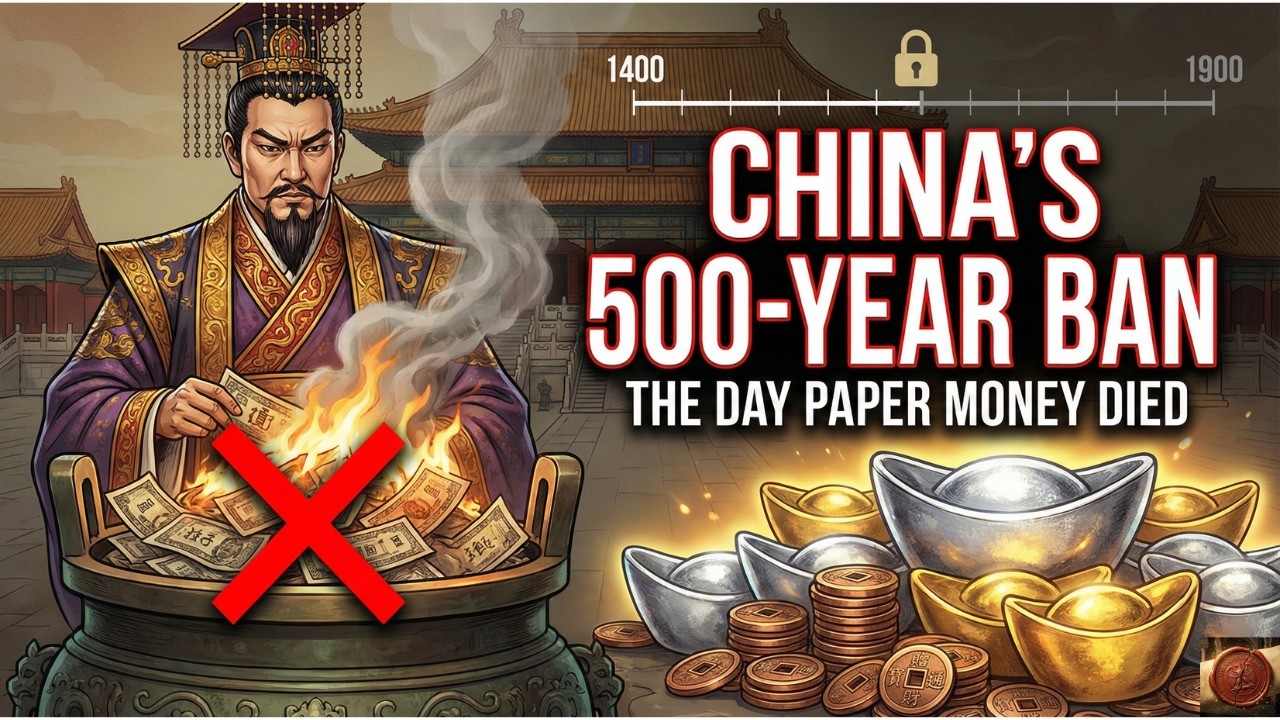
Why China Banned Paper Money for 500 Years - How a 98% Crash Killed Paper Money for Centuries
155
In 11th century China, currency consisted of heavy metal coins (copper or iron with square holes for stringing). While durable and having real value, these coins created severe logistical problems. Peasants could manage small transactions, but merchants faced 'logistic nightmares' - needing ox carts to transport cash for significant transactions. In Sichuan province, iron coins were so heavy that buying a simple bag of salt required coins weighing more than the salt itself. This inefficiency slowed trade velocity and attracted bandits, demonstrating that physical money has inherent limitations that constrain economic growth.
Click to watch →

Falling Asleep to History: Why Sweden’s 43lb Copper Coins Created the First Banknotes
353
The physical properties of metals directly determined their suitability as currency. Gold is more than twice as dense as copper, and silver is about 20% denser than copper. This means that to represent the same value, you need much more copper than silver and vastly more copper than gold. For example, a merchant in Stockholm in 1640 needing to purchase supplies worth 10 daler would need copper coins weighing approximately 20 pounds—roughly the weight of two gallons of milk or a small suitcase packed for travel. This made it impossible to casually carry in a pocket, requiring a bag carried with effort or better yet a small chest. For larger transactions involving hundreds or thousands of daler, the copper would be measured not in pounds but in tons. The Swedish government had attempted solutions like plate money—large stamped copper plates representing higher values—but these became notorious for their impracticality.
Click to watch →
Deep Dive
Basic financial concepts of credit, trust-based transactions, and the role of merchant guilds in issuing early promissory notes.

Did The Next Phase Of The BANKING CRISIS Just Start?
115.3K
Early banks built their business models on reputation and trust. Merchants would accept IOUs from established banks because they trusted those institutions' track records. When a merchant needed to buy goods from someone who didn't know the original bank, they would go to a trusted intermediary who would accept the IOU and provide goods, creating a chain of trust that enabled commerce across different communities.
Click to watch →

Como llenar un Pagare.
34.2K
A title of credit is a paper instrument with a signature that provides full probative value of the obligation it contains. These are mercantile instruments that generate profit and are objects of commerce. A promissory note involves two parties: the creditor (lender) and the debtor (borrower). The note must include the number, place and date of issuance, the unconditional payment clause, the payee, place of payment, payment date, and amount. The amount should be written in both figures and letters to prevent alterations.
Click to watch →

L 2 I Negotiable Instrument Act 1881 CA Foundation I CA Foundation June 24 Business Law Chapter 7
32.9K
A Promissory Note is an instrument in writing, signed by the maker, containing an unconditional promise to pay a certain sum of money to a certain person or to the bearer. Essential elements include: (1) Must be in writing and signed by the maker, (2) Must contain an express unconditional promise to pay, (3) Must specify a certain sum of money, (4) Must specify a certain person as payee, (5) Must be payable on demand or at a fixed future time, (6) Must promise money only (not goods or services), and (7) Must be stamped under the Indian Stamp Act. A Promissory Note involves exactly two parties: the Maker (who makes the promise) and the Payee (who receives payment). The Maker must sign the instrument to validate it. Bank notes and currency notes are exceptions as they are not considered Promissory Notes despite containing promises to pay.
Click to watch →

Банковская афера длиной в 26 лет - Кредитов не существует 100% факты | Pravda GlazaRezhet
178.4K
Promissory notes (векселя) are debt securities where signatories become liable for debt with recourse rights against other signatories. Simple promissory notes are unconditional payment obligations that can be issued by anyone without registration. Transferable promissory notes direct debtors to pay specified sums to third parties. Acceptance (акцепт) transforms conditional obligations into binding payment commitments. Banks exchange borrower debt obligations for bank notes, which are themselves promissory notes. This exchange mechanism allows banks to provide credit services while technically avoiding direct lending activities, as they are not licensed to lend money directly but can facilitate debt exchanges.
Click to watch →

Class 10th Economics Chapter 3 Objective | मुद्रा, बचत एवं साख Class 10 Question Answer Bihar Board
60.6K
Credit instruments are financial tools based on trust. Checks are written orders from bank account holders to their banks to pay specified amounts to designated persons. Bank drafts are instructions from one bank to another to pay specified amounts. Traveler's checks are portable instruments for obtaining money while traveling. Promissory notes are written promises to pay a specified amount by a certain date, often with interest. These instruments function as substitutes for cash in transactions.
Click to watch →
Prerequisite Knowledge
- Concept 01The distinction between commodity money (such as metal coins with intrinsic value) and representative currency.
- Concept 02The economic and commercial landscape of the Song Dynasty (960–1279 CE), characterized by high agricultural productivity, trade expansion, and urbanization.
- Concept 03The logistical limitations of metal coinage, specifically the weight, volume, and transport challenges associated with 'strings of copper cash'.
- Concept 04Basic financial concepts of credit, trust-based transactions, and the role of merchant guilds in issuing early promissory notes.
Subsequent Learning
- Step 01The monetary policy challenges of early paper currency, including over-issuance, inflation, and the eventual collapse of the currency system under the Song and Jin dynasties.
- Step 02The standardization of paper currency (Chao) under the Mongol Yuan Dynasty and how global travelers like Marco Polo introduced this concept to Europe.
- Step 03The comparative history of European adoption of paper bank notes, starting centuries later in places like Sweden and the Bank of England.
- Step 04The evolutionary path from commodity-backed paper money to modern fiat currency and the establishment of contemporary central banking systems.
Origins of Cash
State Paper Issue
Origins of Cash
0:00Playing Section
- 1
Traces earliest money to cast copper coins in 11th century BCE China.
- 2
Explains coin strings as the standard for carrying and trading value.
- 3
Notes metal coins predate paper currency by nearly two millennia.
Tang Dynasty Feiqian and the Gradualist Origin Theory
While the Song Dynasty is widely credited with introducing the first official state-backed paper currency (Jiaozi), many economic historians argue this attributes too much novelty to a single era. Instead, they propose a gradualist model pointing to the Tang Dynasty's (618–907 CE) 'flying cash' (feiqian) as the true origin of paper credit. Feiqian allowed merchants to deposit cash in the capital in exchange for paper certificates redeemable in the provinces, establishing the core mechanics of paper-based transactions. Furthermore, some scholars trace proto-paper currency back even further to the Han Dynasty's leather money (120 BCE). This perspective shifts the narrative from a sudden 11th-century Song invention to a centuries-long evolution of credit instruments. It also highlights that the early Song Jiaozi began as private, localized promissory notes issued by merchants to solve iron coin shortages, rather than a top-down state-engineered monetary revolution.
Deep Dive
The monetary policy challenges of early paper currency, including over-issuance, inflation, and the eventual collapse of the currency system under the Song and Jin dynasties.

China creó el dinero moderno, lo arruinó y lo borró. #cibertales
195.5K
Paper currency systems can collapse when governments print more money than the economy can absorb. During military campaigns, the Song Dynasty faced costs exceeding their treasury reserves. The solution was to print more paper without metal backing, leading to inflation where prices rose and the paper lost value. The people eventually stopped believing in the currency. In 1455, the Ming Dynasty made the unprecedented decision to prohibit paper money entirely, despite having invented and refined the system. This demonstrates that currency value depends on public trust and government credibility.
Click to watch →

Historia del DINERO PAPEL CHINO con Leopoldo Bebchuk - L251
7.8K
The Southern Song Dynasty (1127-1279 CE) attempted to implement paper currency after facing copper shortages and military pressures. In 1131, they initially tried to create metal currency but failed due to lack of resources. In 1160, they attempted a second paper currency initiative, creating the Juizi. This currency featured a 3-year circulation period and an annual emission of 10 million units. The government prohibited private paper currency and established strict controls on monetary issuance. However, by 1176, the government faced deficits and began extending circulation periods to 6 and 9 years, effectively allowing paper currency to remain in circulation indefinitely. This change enabled the government to continue issuing currency without redeeming it, creating a mechanism for perpetual financing. The Juizi currency initially maintained value because the Southern Song was expanding its territory, creating new demand for currency. However, this expansion was temporary and could not sustain the currency indefinitely. By 1210, the currency had tripled in circulation, and by 1232, it was significantly devalued. In 1247, the government issued notes with unlimited circulation, effectively abandoning convertibility. The currency's value continued to decline, and by 1279, when the Mongols invaded, the Juizi had fallen into disuse. This case illustrates how paper currency systems can maintain value temporarily through territorial expansion but ultimately face limits when the expansion ends. The Southern Song's military defeats were partly a consequence of their monetary weakness, demonstrating the connection between fiscal policy and military capability. The Jin Dynasty (1115-1234 CE), established by the Jurchen people, conducted early experiments with paper currency. In 1153, they issued paper currency with a 7-year circulation period, maintaining strict emission controls based on copper reserves. However, in 1190, an emperor removed the circulation period requirement, allowing paper currency to remain in circulation indefinitely. In 1192, they prohibited the issuance of more paper than copper reserves, but by 1200, the paper currency had lost most of its value. In 1215, they prohibited the use of copper coins entirely, forcing citizens to use paper currency. By 1216, the paper currency was worth only 1% of its face value. The dynasty attempted redenominations (removing zeros from denominations) but these measures failed to restore confidence. The Yuan Dynasty (1271-1368 CE), established by the Mongols, implemented the Jiaochao paper currency system. This was the first Chinese paper currency based on a silver standard rather than copper. The currency was issued with a nominal value equivalent to half the value of the metal it represented, effectively implementing a 50% discount on the metal backing. The system was not convertible, and the government enforced its use through severe penalties, including death for those who refused to accept the currency. The Jiaochao represented a significant departure from previous Chinese currency systems, prioritizing paper currency over metal and establishing a fiat system from its inception. The Jiaochao currency system collapsed despite the Yuan Dynasty's military power and brutal enforcement mechanisms. In 1262, the government prohibited the use of gold and silver as currency. In 1273, they prohibited private transactions in gold and silver. In 1280, they prohibited private transactions in gold and silver in newly conquered territories. In 1283, they prohibited the circulation of wooden and bamboo money (gift cards). In 1287, they issued new currency worth five times the previous value, effectively admitting a 80% devaluation. In 1294, they prohibited the circulation of wooden and bamboo money entirely. By 1310, the government attempted another redenomination, but the people rejected it. The currency system collapsed because the population had learned to value metal currency over paper, demonstrating that even military force cannot sustain a currency system that lacks public confidence. The Jiaochao currency system persisted for approximately 100 years, with only about 25 years of relative stability. The currency's value continued to decline, and by 1350, the government issued new currency valued at twice the previous level, attempting to restore confidence. However, this currency was denominated in copper rather than silver, representing a return to traditional Chinese monetary practices. The system ultimately failed because the population had learned to prefer metal currency over paper, and the government's attempts to force paper currency use through prohibition and penalties proved ineffective. The Yuan Dynasty's collapse in 1368 marked the end of this monetary experiment, demonstrating that even a powerful military force cannot sustain a currency system that lacks public acceptance.
Click to watch →

The Song Dynasty’s Paper Currency Crisis | The Inflation Crisis in History
423
The Song Dynasty (960-1279 CE) pioneered the world's first government-backed paper currency to address commercial challenges during China's commercial revolution, but their strategic overprinting to fund military campaigns and bureaucracy destroyed public trust, demonstrating that once trust in currency collapses, no amount of policy reform can restore economic stability, as the dynasty ultimately fell not just from military defeat but from a monetary system that made every other problem worse.
Click to watch →

المال المحكوم سياسيًا | الرأس والمال مع جاد غصن
23.2K
Paper currency emerged in China around 1000 AD as a solution to transporting heavy metal coins. Merchants deposited iron and received paper receipts for transactions. This innovation spread rapidly but faced challenges when some issued receipts without metal backing. The Chinese government regulated paper currency by issuing colored notes representing different values. Kublai Khan expanded paper currency without metal backing, causing inflation. The Ming Dynasty inherited a collapsed system, demonstrating the fragility of paper currency without proper backing.
Click to watch →

How China Is Walking Into the Same Economic Trap Again
190
Song China's GDP represented roughly 25-30% of global output during this period. However, paper money carried a fundamental flaw that the Song were the first to discover: when a government prints currency backed by reserves, the system works; when a government prints currency to cover deficits, the system collapses. The Song overprinted, the currency devalued, prices rose, and the pattern of monetary collapse was born.
Click to watch →
Deep Dive
The standardization of paper currency (Chao) under the Mongol Yuan Dynasty and how global travelers like Marco Polo introduced this concept to Europe.

What to Know About the Yuan Dynasty
4.6K
In 1273, Kublai Khan issued paper bank notes called chao that were backed by the government. While paper currency had been used during the Song Dynasty era, the Yuan Empire was the first in the world to use paper currency as the predominant circulating medium. Europeans were astonished when Marco Polo described this system. For a while, paper currency helped increase trade with the rest of the world and brought prosperity to the empire.
Click to watch →
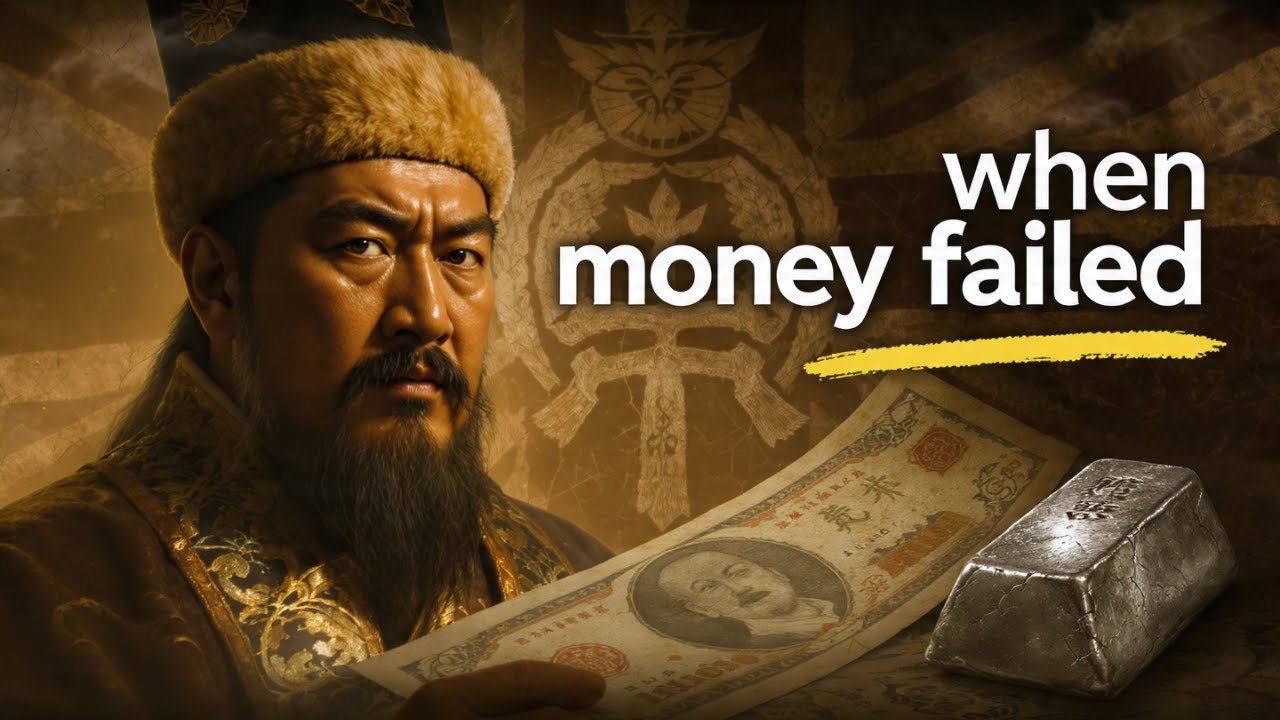
How a Currency Devaluation Toppled a Dynasty
204
In July 1260, Kublai Khan introduced the world's first precious metal standard for paper currency, the zhongtong chao. Made from mulberry bark and stamped with the imperial seal, these notes were officially backed by silver at a rate of two guan for one tael. This was the first time a government pegged paper currency to a precious metal. The system worked because it was simple and people believed the government had silver to back it. Exchange bureaus in major cities allowed people to convert notes to silver at a guaranteed rate minus a 3% commission. By the 1270s, paper money was everywhere: peasants used it for rice and salt, merchants for silk and tea, officials for salaries, and soldiers for pay. Marco Polo called it 'the Golden Touch,' recognizing that the Khan could buy all the world's treasure with money costing nothing to produce.
Click to watch →

Genghis Khan and the Making of the Modern World with Jack Weatherford (WIM514)
10.6K
Standardization of currency began under Genghis Khan but reached its culmination under his grandson Kublai Khan. Kublai sought to standardize Chinese currency first and then institute paper money as the exclusive and primary system, later expanding it to other parts of the empire. Paper money had already been used in smaller ways in China, but Kublai expanded its use dramatically. Marco Polo described this system as 'the true alchemy of the world'—creating golden wealth from paper. The system worked effectively in China because people were willing to accept it, and foreign merchants exchanged it for gold and silver upon leaving. However, the system eventually failed when the government began producing excessive currency, causing people to lose faith in its value. This illustrates how monetary systems depend on public trust and government restraint.
Click to watch →
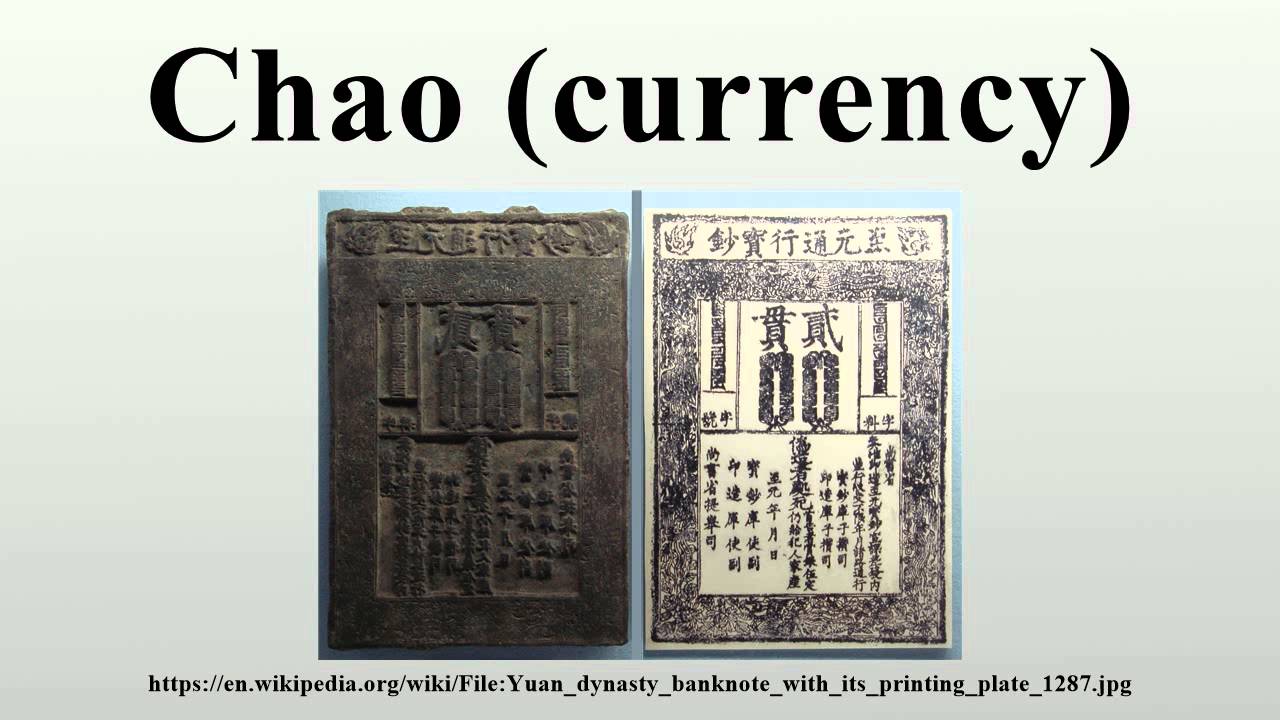
Chao (currency)
132
The Chao was the official banknote of the Yuan dynasty in China, established in 1260 at the imperial mint in Yanjing (later moved to Kant Valley), and it became the first paper currency to serve as the predominant circulating medium in Chinese history, with regional capitals also authorized to print money; this currency was described by Rusticello in his account of Marco Polo's travels, and later inspired Gay Kartu of the Ilcanet in Persia to attempt a similar paper money system in 1294, which failed and resulted in his assassination.
Click to watch →

Pax Mongolica: Genghis Khan & Kublai Khan
550
When Marco Polo arrived in Cambaluc (Beijing), he noticed people paying for goods not with gold, silver, or copper but with paper. Within the Mongol Empire, almost everyone used stamped, printed, and standardized paper currency backed by massive reserves of gold and silver, stabilizing trade between different cultures, religions, and ethnicities. Marco Polo had trouble describing how it worked, initially misunderstanding it completely. He wrote that Kublai had so great a quantity of these paper notes made that he could pay for all the treasure in the world though it costs him nothing - not realizing this was how paper currency actually functioned.
Click to watch →
Deep Dive
The comparative history of European adoption of paper bank notes, starting centuries later in places like Sweden and the Bank of England.

Ricos vs pobres en tiempos de inflación: dueños de activos vs. vendedores de tiempo
5.4K
Europe took centuries to adopt paper money, but when it did, the lesson was the same. In Sweden in the 10th century, the first central banks emerged that issued bills backed by metal deposits. The Bank of England perfected this practice and expanded it worldwide. The initial idea was to maintain discipline by backing each bill with gold, but the temptation of excess was always present. The most famous case of the Early Modern period was Revolutionary France in 1789, when the state issued assignats backed by church properties confiscated.
Click to watch →

Rafael Augusto Mattos Ferreira - História da Moeda - do Ouro ao Bitcoin
174
European paper currency emerged approximately 500-600 years after Chinese paper money. The first European banknotes appeared in Sweden and England in the late 17th century. Sweden's 1661 banknote is considered by some historians as a promissory note rather than true currency because it was issued by a bank rather than the Swedish state. English banknotes, by contrast, were produced with governmental authority, establishing the model for modern central banking.
Click to watch →

ما الذي أجبر البشر على اختراع النقود؟
1.4K
Following China's example, European countries gradually adopted paper money. The Bank of Sweden issued the first official paper currency in Europe in 1668, followed by the Bank of England in 1694. These early paper notes, called 'bank notes,' initially remained convertible to gold and silver, meaning holders could exchange them for physical metal. Over time, most countries transitioned to circulating paper currency while reducing the use of physical coins.
Click to watch →

L’HISTOIRE DE LA MONNAIE ❌ Du blé au Bitcoin…
1.6K
While China innovated with paper money, Europe remained faithful to metal coins until the idea of banks and bills began to spread centuries later. Europe's first steps toward paper money came in 1661 when the Stockholm Banco in Sweden issued the first European banknotes. This banking system was quickly adopted in other countries like England with the founding of the Bank of England in 1694.
Click to watch →

Trueque a Billetes: La Increíble Historia de la Creación del Dinero
997
Paper money took centuries to spread beyond China. In Europe, paper money gained popularity in the 15th and 17th centuries with the emergence of modern banks. The Bank of Sweden issued Europe's first paper money in 1661, allowing banks to lend without delivering gold or silver coins. In England, the Bank of England adopted paper money in the late 17th century, establishing a model that spread rapidly. These paper notes were bank promises backed by gold deposits, marking the beginning of the fiduciary money system where value depended on institutional trust rather than material worth.
Click to watch →
Deep Dive
The evolutionary path from commodity-backed paper money to modern fiat currency and the establishment of contemporary central banking systems.

What is Money?
13.1K
Money evolved from bartering and commodity currencies (shells, beads, cocoa beans) to precious metals, then paper money in 9th century China, and finally modern fiat currency. The US dollar emerged from Civil War-era greenbacks. After the Civil War, J.P. Morgan and his associates secretly designed the Federal Reserve system on a Georgia island, creating a central banking system that Americans historically distrusted. The Federal Reserve Act, signed by Woodrow Wilson, established the current financial system that has failed repeatedly over more than a century.
Click to watch →

Episodio 6. "En efectivo, por favor"
1.7K
Money evolved through distinct stages: (1) Barter system (10,000 years ago) with limitations in finding compatible exchanges and portability; (2) Commodity money (salt, shells, cacao) valued for beauty or utility; (3) Precious metal money (gold, silver) with standardized coinage emerging in Lydia (6th century BCE) and China; (4) Paper money originating in Asia (6th century) to solve transportation weight issues; (5) Central banking with initial gold convertibility; (6) Modern fiat currency based entirely on trust and confidence in issuing authorities rather than physical commodity backing.
Click to watch →

Banking | Patrick Newman
2K
Money evolved from commodity money (gold and silver coins) to fiat currency through historical developments. Under the gold standard, money proper was gold, and money substitutes were bank notes redeemable for gold. The Federal Reserve introduced paper currency payable to bearer on demand, initially redeemable for gold. In 1933, the U.S. abandoned the domestic gold standard, ending direct redemption of dollars for gold. By 1971, the international gold standard ended entirely, making paper currency the money proper while electronic checks and debit cards became the primary money substitutes used in daily transactions.
Click to watch →
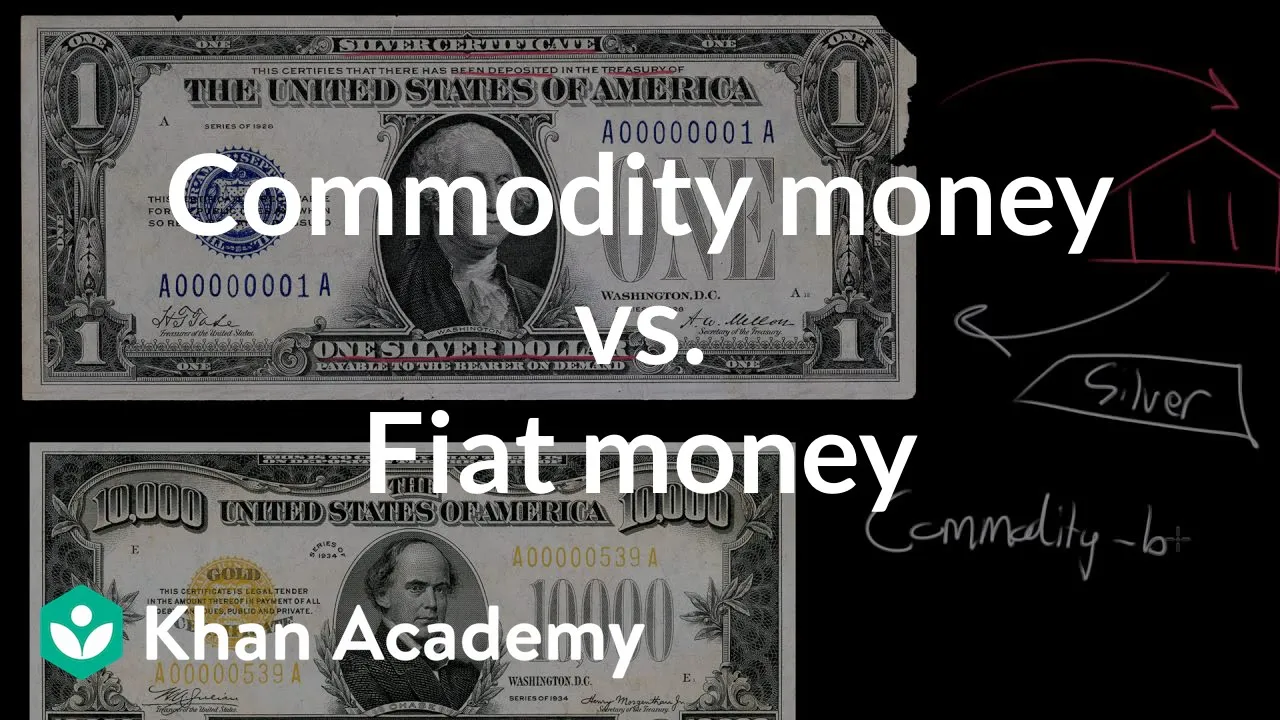
Commodity Money vs Fiat Money: AP Macroeconomics Guide
278.6K
Currency has evolved through distinct stages: (1) Commodity money where the currency itself holds intrinsic value (silver/gold coins), (2) Commodity-backed money where paper certificates guarantee redemption for physical commodities, and (3) Fiat money where value derives from government declaration and public trust. Early U.S. silver certificates exemplified the transition, promising redemption for actual silver dollars while providing convenience over carrying heavy metal. This evolution reflects humanity's ongoing need for portable, divisible, and durable mediums of exchange that maintain value across transactions.
Click to watch →

Банки сегодня и завтра. Банкротство SVB. Ответы на вопросы. Олег Насобин
38.4K
The transition from commodity money (gold, silver) to fiat currency (paper receipts) occurred gradually as banking systems evolved. Initially, banks issued receipts backed by actual gold reserves, but over time, the ratio of receipts to reserves increased. This process culminated in the complete separation of paper currency from physical commodity backing, enabling central banks to create money without corresponding increases in real economic output.
Click to watch →
Origins of Cash
State Paper Issue
Origins of Cash
0:00- 1
Traces earliest money to cast copper coins in 11th century BCE China.
- 2
Explains coin strings as the standard for carrying and trading value.
- 3
Notes metal coins predate paper currency by nearly two millennia.
Tang Dynasty Feiqian and the Gradualist Origin Theory
While the Song Dynasty is widely credited with introducing the first official state-backed paper currency (Jiaozi), many economic historians argue this attributes too much novelty to a single era. Instead, they propose a gradualist model pointing to the Tang Dynasty's (618–907 CE) 'flying cash' (feiqian) as the true origin of paper credit. Feiqian allowed merchants to deposit cash in the capital in exchange for paper certificates redeemable in the provinces, establishing the core mechanics of paper-based transactions. Furthermore, some scholars trace proto-paper currency back even further to the Han Dynasty's leather money (120 BCE). This perspective shifts the narrative from a sudden 11th-century Song invention to a centuries-long evolution of credit instruments. It also highlights that the early Song Jiaozi began as private, localized promissory notes issued by merchants to solve iron coin shortages, rather than a top-down state-engineered monetary revolution.
The distinction between commodity money (such as metal coins with intrinsic value) and representative currency.
The economic and commercial landscape of the Song Dynasty (960–1279 CE), characterized by high agricultural productivity, trade expansion, and urbanization.
The logistical limitations of metal coinage, specifically the weight, volume, and transport challenges associated with 'strings of copper cash'.
Basic financial concepts of credit, trust-based transactions, and the role of merchant guilds in issuing early promissory notes.
The monetary policy challenges of early paper currency, including over-issuance, inflation, and the eventual collapse of the currency system under the Song and Jin dynasties.
The standardization of paper currency (Chao) under the Mongol Yuan Dynasty and how global travelers like Marco Polo introduced this concept to Europe.
The comparative history of European adoption of paper bank notes, starting centuries later in places like Sweden and the Bank of England.
The evolutionary path from commodity-backed paper money to modern fiat currency and the establishment of contemporary central banking systems.
4.6K views41likes3:15@wizplus4122Original Release: 2020-11-13
[Music] the invention of paper money [Music] paper money is an invention of the song dynasty in china in the 11th century ce invented nearly 20 centuries after the earliest known use of metal coins [Music] while paper money was certainly easier to carry in large amounts using paper money had its risks [Music] earliest money the earliest known form of money is also from china a cast copper coin from the 11th century bce which was found in a shang dynasty tomb in china metal coins whether made from copper silver gold or other metals have been used across the globe as units of trade and value copper coins were designed with square holes in the middle so that they could be carried on a string for large transactions traders calculated the price as the number of coin strings [Music] paper money takes the load off during the tang dynasty 618-907 ce however merchants began to leave those heavy strings of coins with a trustworthy agent who would record how much money the merchant had on deposit on a piece of paper [Music] the paper a sort of promissory note could then be traded for goods and the seller could go to the agent and redeem the note for the strings of coins at the beginning of the song dynasty 960 to 1279 ce the government licensed specific deposit shops where people could leave their coins and receive notes jazzy under the song [Music] the song established factories to print paper money with woodblocks using six colors of ink in 1265 the song government introduced a truly national currency printed to a single standard usable across the empire and backed by silver or gold mongol influence the mongol yuan dynasty founded by kublai khan 1215-1294 issued its own form of paper currency called zhao the mongols brought it to persia where it was called jau orja however the paper money was not backed by gold or silver china did not print paper money again until the 1890s when the qing dynasty began producing yuan
Up Next

26:12
How Inflation and Coin Debasement Caused Rome's Economic Collapse
@InvictaHistory
454.7K views•2022-10-06

12:54
Triumph of Orthodoxy Icon: Byzantine Art & History Explained
@BenCallan
2.1K views•2024-08-06

9:49
FastAPI vs Flask vs Django: Choosing the Right Python Web Framework
@TechWithTim
302.5K views•2024-05-26

1:42
Game of Thrones Opening Credits: A Cinematic Analysis
@gameofthrones
46.3M views•2011-04-18
Related Study Plans & Knowledge Roadmaps
Structured learning paths in General & Interdisciplinary Studies
general-studies
Elevator Engineering: History, Physics & Cities
01From Hoists to Safety Brakes: The Dawn of Vertical Lift
02Hydraulic vs. Traction: The Engineering Physics of Elevators
03Modern Speed, Safety, and Algorithms
+ 2 more learning modules
12h5 modules
Explore Roadmap
general-studies
Rubber: Material Science, History & Geopolitics
01Origins of Natural Rubber & Mesoamerican History
02The Chemistry of Natural Rubber & Vulcanization
03The Geopolitics of the Rubber Boom & Colonization
+ 2 more learning modules
12h5 modules
Explore Roadmap
general-studies
Containerization: Evolution, Logistics & Trade
01Ancient Trade & Bulk Cargo: Amphorae to Barrels
02The Industrial Revolution & Cardboard Packaging
03The Containerization Revolution: Malcom McLean
+ 2 more learning modules
12h5 modules
Explore Roadmap
general-studies
Textile Tech: Evolution, Labor & Global Impact
01Pre-Industrial Textiles: Handloom & Cottage Industry
02Mechanization: The Spinning Jenny to the Power Loom
03The Factory System & Global Labor Transformation
+ 2 more learning modules
10h5 modules
Explore Roadmap