












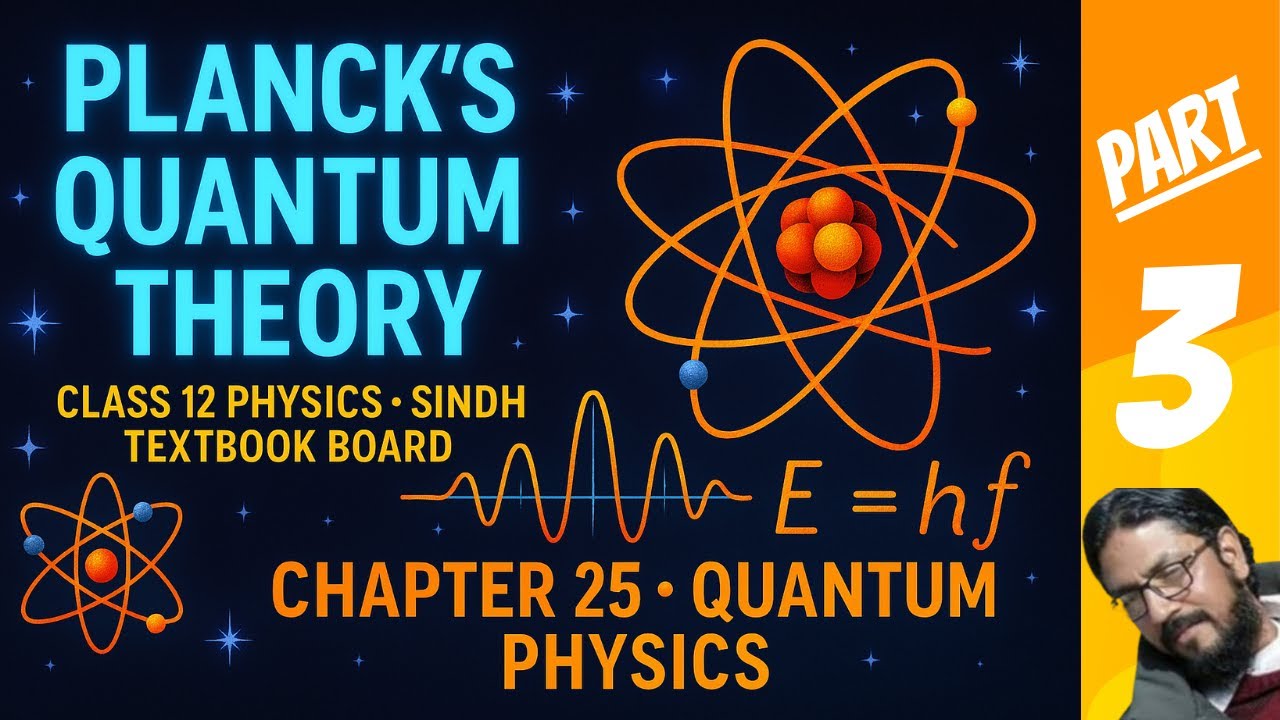










Black body radiation is electromagnetic radiation emitted by an idealized object that absorbs all incident radiation (100% absorption, 0% reflection), with its emission spectrum depending solely on temperature; this concept, pioneered by Gustav Kirchhoff, revealed that all objects emit thermal radiation across all wavelengths, with the peak wavelength inversely proportional to temperature (Wien's Displacement Law) and total intensity proportional to the fourth power of temperature (Stefan-Boltzmann Law), but classical physics failed to explain the observed spectrum, leading to the ultraviolet catastrophe that Max Planck resolved by introducing quantization of energy.
Black Body Radiation Explained: Why Hot Objects Glow
Added:Basic wave mechanics, specifically understanding the relationship between wavelength, frequency, and the speed of light.
Fundamental concepts of thermodynamics, including temperature, thermal equilibrium, and heat transfer by radiation.
Classical electromagnetism, particularly the classical view of light as continuous electromagnetic waves.
The 'Ultraviolet Catastrophe' and how Max Planck solved it by introducing the quantization of energy.
The Photoelectric Effect, which experimentally confirmed the particle-like behavior of light (photons).
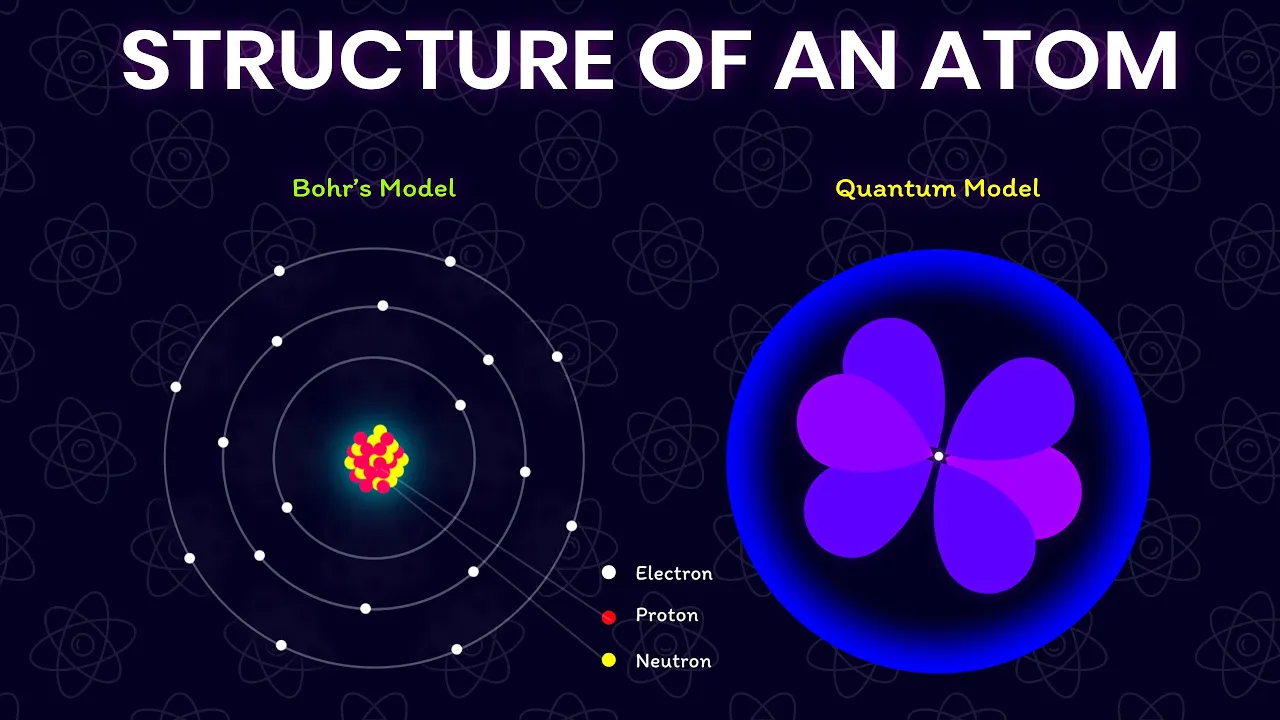
Bohr's model of the atom and the explanation of discrete atomic emission spectra.
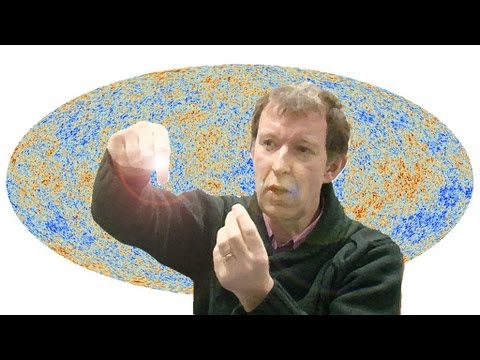
Practical applications in astrophysics, such as measuring stellar temperatures and studying the Cosmic Microwave Background (CMB) radiation.
244.2K views10.6Klikes17:48Original Release: 2024-09-06
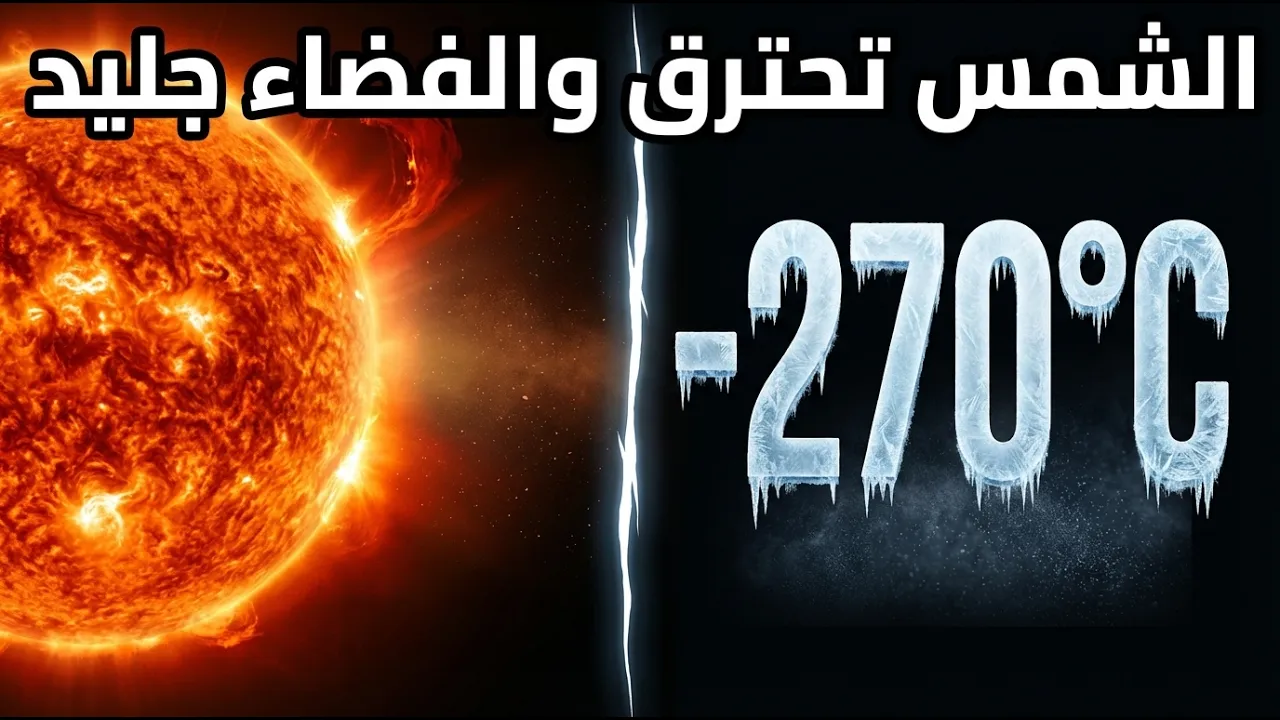
anyone can build a website using Squarespace the sponsor of this video when you make Metals hot they start glowing red kind of like coal or lawa if you make them hotter they start turning orangish this is an everyday phenomena so the physics over here must also be pretty straightforward or is it in the 1900s the color of hot glowing things baffled even the greatest Minds because it showed us that there was something fundamentally wrong with physics and it's what led Max plang to quantum theory purely by accident but what is so baffling about hot glowing things well when I first learned about this in high school the way I understood it was something something black body radiation something something classical physics fails ultraviolet catastrophe oh no and then something something MX plun comes along proposes e equal to H new and quantization and it solves everything and quantum theory is B but when I went into the college I then started getting some details in fact I started getting too much details I only got details of derivations and math and and graphs and whatnot and again the big picture was lost I after all of this I couldn't answer the fundamental question of why did hot glowing things break physics and how did it lead to the quantum theory what is the intuition behind it so for the past few days I have been breaking my head going over a lot of resources and even reading books for that matter and I finally think I got some really really strong intuition and I want to share that with you so this is the first of a three-part video series where we're going to intuitively ReDiscover the whole thing and in this video we're going to we're going to see how it all started what the heck is a black body what's that got to do with glowing things and why did it baffle physicists back then and the next video we'll try to attack this problem using the known laws of physics and ReDiscover the whole Ultra wallet catastrophe and finally we will see how quantization solves it all so if you're ready for this let's begin so we're going to start with the biggest and the most fundamental question I had when I was reading this particular topic and that is why do we care about black bodies and to answer that question we're going to talk to the man who started it all Gustav Robert kof kof why do we care about black bodies and kof says Mahesh if you take an apple and you keep it in the sunlight it gets hot why and I'm like totally unrelated but that's because the apple is absorbing all the sunlight and that energy is getting converted into thermal energy raising the temperature and kof is like almost correct but remember that apple is not absorbing all of the light some of the light is getting reflected that's why you see the Apple but yes the rest of the light is being absorbed it's converting into thermal energy and the temperature is Raising but that apple is continuously absorbing sunlight and therefore its thermal energy should continuously increase and so the temperature should continuously increase eventually vaporizing the apple right but that doesn't happen why not and I'm like wa that that is a beautiful question K I never even thought about it so why doesn't it happen well K says this could mean only one thing not only is that Apple absorbing the sunlight that tends to increase the temperature it must also be radiating it back that tends to decrease the temperature and that's how the temperature stays steady in other words the apple is in thermal equilibrium and therefore that Apple must not just be reflecting light it must also be radiating light it must be creating its own light it must be glowing and he call this the thermal radiation now kof has no idea what causes the thermal radiation because electrons were not discovered back then but today you and I know thermal energy is basically jiggling electrons and we know jiggling charges produces electromagnetic waves and that's what causes thermal radiation but kop was able to argue purely from energy conservation point of view and that I find is fascinating it just goes to show how powerful energy conservation is but anyways this means K off that apple is glowing it's producing its own light right and Kish says not just the Apple mahes everything around you including you me and donkeys we are all glowing but then I'm like if we are all glowing due to thermal radiation why don't we see it if I switch off the light why don't you see me glowing ah says kha well that's because you're not glowing in the visible region at very low temperatures like at room temperature most of the radiation that we giving out is in infrared region and that's why our eyes cannot detect it but if you use an infrared camera then we can see it today but now if you could increase the temperature to thousands of degrees C then we can see visible light coming out and that's why you know Metals glow red hot or cold or lava they start giving you all of that color and then if you could increase the temperature even more to about say 10,000 de C now we'll start even getting ultraviolet light and that's why welders for example need protection from ultraviolet light and so the color of this th radiation depends on temperature but whatever it is we're all glowing as long as you have temperature we all glowing due to thermal radiation and I find this fascinating because you know in earlier in primary school we had learned about luminous objects like light bulb and Sun that give out their own light and non luminous objects like you and me and donkeys but turns out we're all luminous okay all of us are actually giving out light just that we're not all giving out invisible Spectrum we're giving out mostly in the infrared light but we are all luminous we're all glowing which is super awesome now this is all great kiss off but the big question is why does it behave that way I mean why is it at low temperature I most gave out just infrared and then at higher temperature start giving out visible and then even UV and kov says exactly mahes that's exactly what the question I had and that's why I was urging the scientific Community to do some research on black bodies because that way we would get to the bottom of this but I'm like wait a second wait a second what has this got anything to do with black bodies Kira asks mahes you are now giving out thermal radiation what does that depend on and I'm like it depends on temperature we just talked about it I'm giving out infrared light kof says no not just the temperature see if you're wearing clothes that are reflective highly reflective of say infrared then a lot of the infrared light that you're giving out your body is giving out will be reflected back and most of it will not make out so the thermal radiation that finally comes out not only depends on the temperature but also depends upon what you're wearing how thick it is and all of that but what if the clothes that you're wearing were 100% absorptive zero Reflections then all of that infrared will be completely absorbed and then reemitted and now all of that infrared will come out and now it will be independent of how thick that material is or what that material is made of as long as it's 0% reflective 100% absorptive all of the thermal radiation will come out in other words if you had an object that was 100% absorptive zero reflection the thermal radiation that comes out will have nothing to do with the surface feature will have nothing to do with the material is made of it has nothing to do with anything except for temperature now the thermal radiation would be purely a function of temperature in other words we are staring at a fundamental law of Nature and I'm like that's a very interesting way to put it kop wow but what kind of material would give you zero reflection 100% absorption black bodies and Kish says no no no perfect black bodies it's an idealized concept a body that will not reflect anything so even the even the black objects that you have around you they do reflect something that's why they Shine That's why you can make out the surface feature a perfect black body would not reflect anything not nothing invisible nothing in front nothing in you with nothing at all 100% absorbent and the th radiation provided produced by a perfect black body would only depend on temperature that was the big deal and that's why kof was urging the scientific Community to do research on that that's why hard glowing things was a very interesting subject so putting it all together kof loved perfect black bodies because the thermal radiation that they would give out would purely depend on temperature so analyzing it would be analyzing a fundamental law of physics so what happened next and kof is like for the next 20 years nothing happened and I'm like why not kin says what do you mean why not mes it's the 1860s we don't have the technology to do any of these experiments yet but in the early 1900s we finally started doing experiments on perfect black bodies and I'm like wait a second wait a second what you mean we finally started doing it perfect black bodies do not exist how can you do experiments with perfect black bodies turns out we found an ingenious way to actually build a perfect black body it's kind of like an ingenious tool that we use to build websites today Squarespace the sponsor of this video I call it ingenious because first of all you can get started for free but more importantly both professionals and amateurs like me can build incredibly amazing websites how does it cater to both of us if you don't know anything about building websites kind of like me then you can pick this option where you can use readymade templates you can choose what kind of website you want to build and then pick one of the templates that you like and it will give you a skeleton and here comes the good part just by clicking buttons you can hyper customize it to your liking you can tweak every single thing and tailor it to your Perfection but what if you are a professional and you don't want to use templates well then you can click this other option because here you get to build everything from scratch ingenious isn't it and yes you can check various kinds of data in their analytics sections to see how your website is doing you can use their dedicated support if you ever get stuck you can even buy and manage domains directly from Squarespace but what's really awesome is you can get started for free by going to squarespace.com floatheadphysics and yes if you decide to make a purchase you can even save 10% by using the promo code fload physics at the checkout all right back to hot glowing things again how exactly do we build a perfect black body well in from the 1890s to 1900s there were a ton of people who did a lot of research both experimentally and theoretically so let's talk to one of the prominent ones Auto lummer Mr lummer how exactly do you build a perfect black body it's an ideal thing how do you build one Lumar says using a hole in a box and I'm like what take a hollow metallic cube with the walls painted black and put a hole on one of the face in one of the faces now that cube is certainly not a perfect black body because it's going to reflect a lot of light but what about that hole if you shine light into that hole there's a good chance that light is pretty much lost inside it'll be absorbed the chance of that light coming back out of that hole is almost zero in other words that hole is pretty much 100% absorptive zero reflective that hole acts like a perfect black body and I'm like wait a second that's cheating that's a hole it's not a thing and lommer says M remember what kof taught us it doesn't matter what that material is made of that is irrelevant as long as you have something that is 100% absorptive 0% reflective it is a perfect black body its thermal radiation would purely be a function of temperature that whole is pretty much 100% absorptive 0% reflective so that whole nothing else just that hole acts like a perfect black body so if you heat the whole metal up to very high temperatures and look at the radiation that's coming out from the hole not from the rest of the cube but just from the hole and analyze it that would be thermal radiation of a perfect black body and that's exactly what they did and I'm like lummer along with your friends please take a bow because that is incredible remember we're talking about the 1900s they found a way to create a perfect black body and this is one of the the reasons why I think we should when we learning physics or any subject for that matter we should dive deep into the experimental details because it's going to give us a lot of insights and it's going to help us appreciate the subject even more but the big question now was what are the findings of this experiment well the findings can be summarized by drawing a graph yes this is the famous black body radiation graph where on the x-axis we're going to plot the wavelengths which you can Loosely think of it as colors and on the Y AIS we're going to plot the intensity which you can Loosely think of it as the brightness of the different colors that are coming out out so Lumar what did we find lummer says first of all at whatever temperature you choose the thermal radiation will always contain all the colors of light that means that right now you me and donkeys we're not just radiating in infrared we are radiating invisible we are also glowing in ultraviolet we're glowing and giving out all the colors of Light which is pretty awesome if you think about it but the reason why you cannot see me is I mean when in in the dark for example why don't I glow in the dark you can't see me is because not all the different colors have the same brightness they do not have the same intensity turns out at room temperature the graph looks like this you can immediately see the amount of ultraviolet and the visible that we're all giving out is negligible it's almost zero it's there but it's almost zero but most of the intensity is in the infrared far right infrared region and that's why at room temperature we mostly give out infrared light but what happens if we increase the temperature well let's increase it to say about 2500° cus what is the graph look like it looks like this you can see the graph is now so big it goes out of bounds we can't even see it anymore and that's because at higher temperatures you have more thermal energy and so the thermal radiation is much higher and so all the colors of light will now get more intensity but if we scale down the graph we rescale the graph you can now see that this time although the graph has become bigger now the a lot of visible light is coming out this is because the peak has shifted to the left that's the that's one of the key things over here and this is the reason why when we heat up Metals For example you now see them glowing reddish because now visible light comes out mostly in the red end of the spectrum and if we increase the temperature even more the same thing happens the peak shifts even more left and now a lot of visible light starts coming out I mean still you're getting a lot of infrared that's there but now almost all the colors of the light visible light is also coming out and now the object will look pretty much whed and that's what happens to the sun the sun has a temperature of about 55° and that's why it glows white I mean it looks yellow to us because of the atmosphere but if you went outside the atmosphere looked at it the sun is pretty much white because that's the spectrum of the Sun and of course if you increase the temperature even more the peak shifts to the left even more and now we get a lot of UV but the ultimate question is why does the graph look like this why is it at low temperatures we mostly get infrared and then as the temperature increases the peak start shifting to the left and you start getting more and more VIs visible in UV that was something that people were trying to figure out and in order to do that people studied the graphs even more and they came up with some results some very interesting results the first one is the Stefan bolman's law we call it they figured out that the area under this graph which is basically the total intensity given out by all the colors of light at a particular temperature is proportional to the fourth power of that temperature this is the reason why when we increase the temperature the graphs blows up and scales up so quickly because a little increase in the temperature will give out a lot more output power another brilliant analysis was done by a scientist named William Wan he figured out that the vavin that corresponds to the peak intensity it's inversely proportional to the absolute temperature again that kind of makes sense when you look at the graph as the temperature increases as we saw the peak shifts to the left so that's exactly what they're saying but he figured out that it was actually inversely proportional to the temperature and he also figured out what that proportionality constant is now these two laws do not explain why the graph is the way it is but I find them fascinating because we can do some pretty cool things with that for example by using the wi displacement law I can now look at the temperature at the Spectrum of the sun figure out what the peak wavelength is and from that I can figure out what the temperature of the Sun is that's how we know today that the sun's surface temperature is about 5,500 de C how cool is that and not just that now that now that I know the temperature of the Sun I can use use the stepen bolman's law to figure out what is the total energy that the sun is giving out and then I can figure out how much of that energy Earth is receiving and then if I build a solar panel I can then estimate how much electricity I can produce just by using solar power I mean this is just mindboggling but here's what's really mind-blowing guess what's the most perfect black body that we have access to today just just guess well it's the cosmic microwave background yes the remnants of the big bang turns out it perfectly matches the black body radiation curve with its peak wavelength lying in the microwave region and again I can use the v's displacement law to figure out what this temperature is the temperature turns out to be insanely low so black body radiation isn't just a theoretical concept it's the key to unlocking the deepest Mysteries of the universe it tells us that everything is glowing it helps us figure out the temperature of the stars and it allows us to analyze the oldest light from The Big Bang itself but but the ultimate question is why does the graph look like this when we try to attack this problem using classical physics we ran into a catastrophe which we'll explore in a video here and then we will see how quantization saved the day in the video over here I'll see you
Up Next
15:15
Planck's Constant and the Origin of Quantum Mechanics | PBS Space Time
@pbsspacetime
2M views•2016-06-22

12:53
21cm Hyperfine Transition in Neutral Hydrogen: Radio Astronomy Basics
@AaronRobertParsons
12.4K views•2011-10-13

15:00
Huygens Principle: Deriving Reflection & Refraction | Wave Optics
@Mahesh_Shenoy
241.2K views•2014-12-02

27:14
Entropy and the Second Law of Thermodynamics Explained
@veritasium
27.5M views•2023-07-01
Related Study Plans & Knowledge Roadmaps
Structured learning paths in Physics
physics
Nuclear Physics (Decay, Fission & Reactors)
01Atomic Structure and the Binding Force
02Radioactive Decay and Half-Life
03Nuclear Fission Mechanics and Chain Reactions
+ 2 more learning modules
12h5 modules
Explore Roadmap
physics
Soft Matter (Polymers, Colloids & Rheology)
01Foundations of Soft Matter & Thermal Forces
02Polymer Physics and Macromolecules
03Colloids, Surfactants, and Self-Assembly
+ 2 more learning modules
38h5 modules
Explore Roadmap
physics
Analytical Mechanics: Lagrangian & Hamiltonian
01Mathematical Foundations: Calculus of Variations
02From Newtonian Mechanics to Constraint Dynamics
03The Principle of Least Action & Lagrangian Mechanics
+ 3 more learning modules
28h6 modules
Explore Roadmap
physics
General Relativity (Spacetime & Cosmology)
01Foundations of Relativity: Special Relativity
02The Geometry of Spacetime: Equivalence Principle & Curvature
03Einstein's Field Equations: The Mathematics of Gravity
+ 2 more learning modules
55h5 modules
Explore Roadmap