













![[스피드 특강] 전기자기학 60점만 넘자! - 1. 정전계 vs 정자계](https://i.ytimg.com/vi/aY2-0k7M1bU/sddefault.jpg)
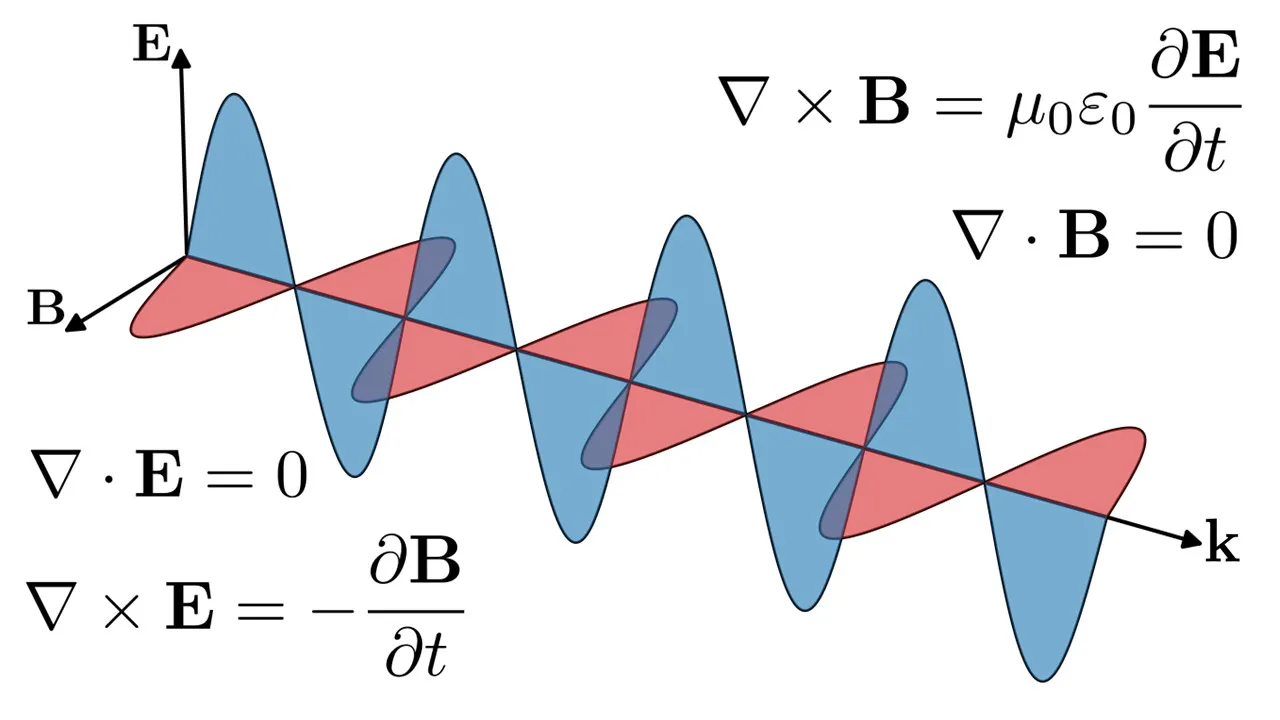





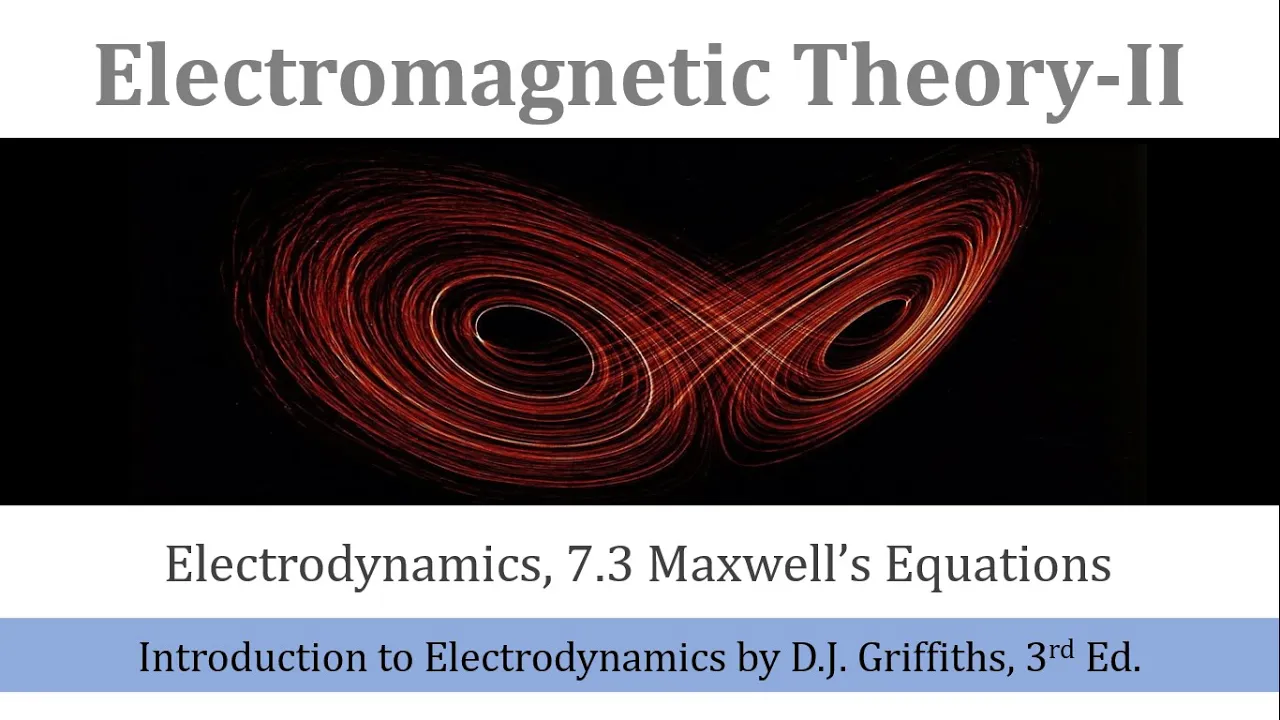



Maxwell's four equations in differential form describe the fundamental laws of electromagnetism: (1) Gauss's law for electricity: ∇·D = ρ, where D is the electric displacement vector and ρ is the free charge density; (2) Gauss's law for magnetism: ∇·B = 0, indicating no magnetic monopoles exist; (3) Faraday's law of electromagnetic induction: ∇×E = -∂B/∂t, showing changing magnetic fields induce electric fields; (4) Ampere's circuital law with Maxwell's correction: ∇×B = μ₀J + μ₀ε₀∂E/∂t, where the displacement current term μ₀ε₀∂E/∂t was added by Maxwell to account for time-varying electric fields and resolve the contradiction with the continuity equation.
Maxwell's Equations in Differential Form | Engineering Physics Guide
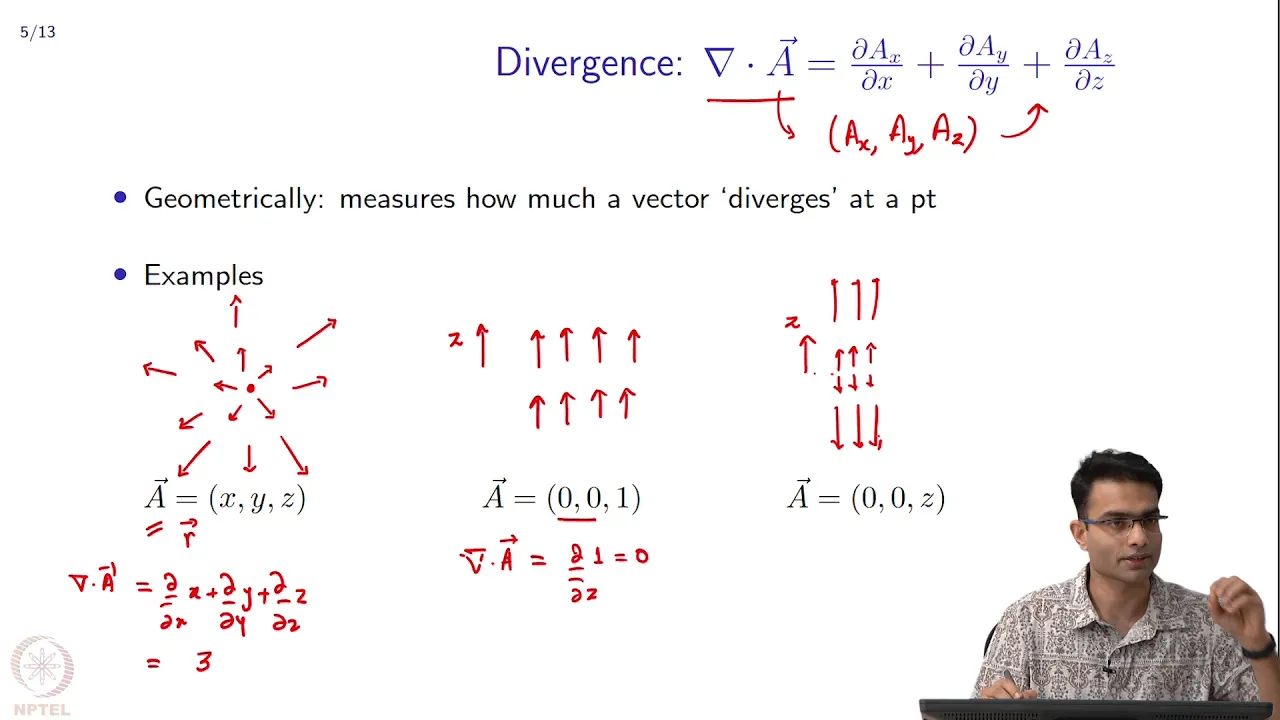
Added:Fundamental concepts of vector calculus, specifically the divergence (div) and curl operators.
The basic integral formulations of Gauss's Law, Faraday's Law, and Ampere's Circuital Law.
Key mathematical theorems linking line, surface, and volume integrals, namely Stokes' Theorem and Gauss's Divergence Theorem.
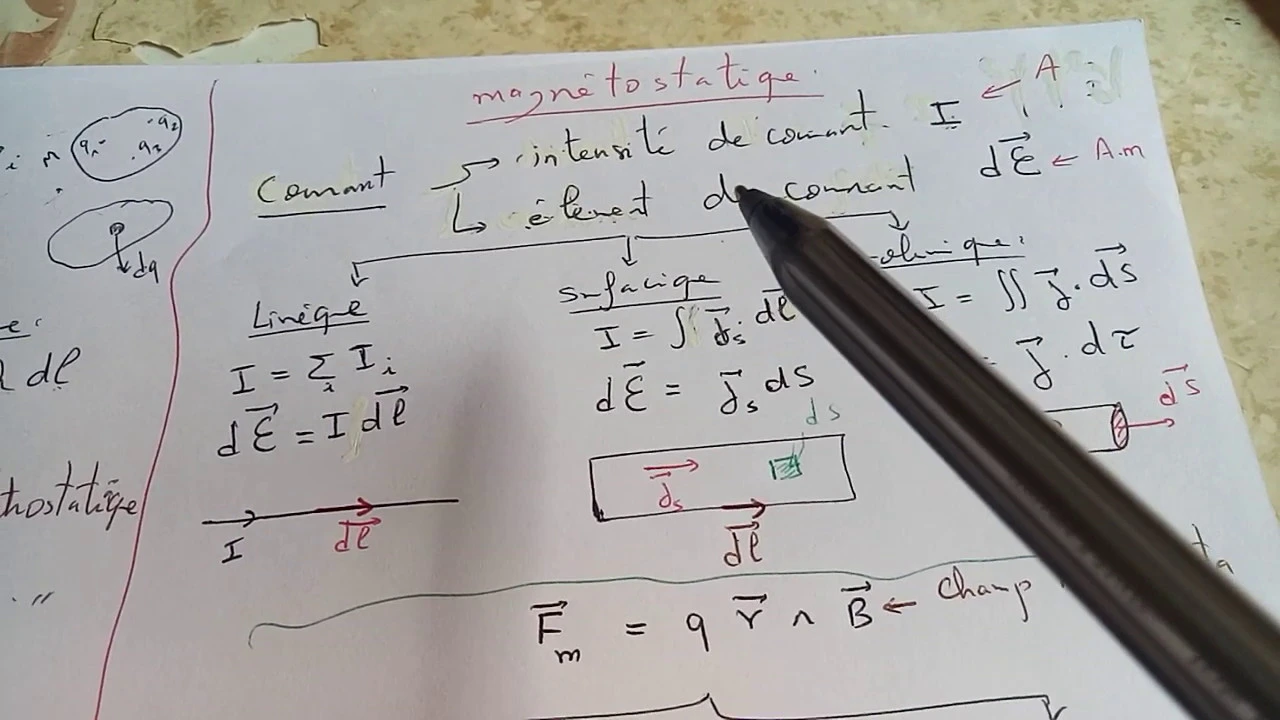
Basic physical concepts of electrostatics and magnetostatics, including electric charge density, current density, and field behaviors.
Derivation of the electromagnetic wave equation in free space and dielectric media using Maxwell's differential equations.
Poynting's Theorem and the calculation of electromagnetic energy density and power flow (Poynting vector).
Application of electromagnetic boundary conditions at the interfaces of different physical media.
Practical engineering applications such as antenna radiation patterns, transmission lines, and wave propagation in waveguides.
257 views10likes24:52Original Release: 2024-05-12
hello students in today's lecture we will be deriving the Maxwell's equations in differential form quickly now where did the Maxwell's equation really begin from see capacitor stores charge and when current flows the charge gets discharged so if this is a capacitor by the process of induction already charges will be present at its outer plates right if I insert a dialectric inside the capacitor the capacity of this capacitor is going to get increased and by the process of induction additional charges will get induced and then there will be a movement of charges here inside charges will also get polarized so in such a situation you will be having inside here free charges and polarized charges so now the charge density will be equal to the sum of your free charges and the polarized charges also the charge density due to polarization will be equal to minus of Divergence P where p is electric polarization because of all these movement of charges the displacement current comes into being so now from GS law we know know that e is equal to Q upon Epsilon if you remember e isal to Q upon Epsilon this we have written it as integral here so integral s e do DS is equal to 1 upon Epson not instead of row DV it will be row plus row P DV which is due to the polarization charges and this will be minus Divergence of P where p is electric polarization so we will put this value here and the equation becomes integral e do DS is equal to 1 upon Epsilon integral row minus Divergence P DV now this Epsilon not get it this side cross multiply it so your equation becomes integral row DV minus integral V Divergence P DV so from now see the problem is this side you are having the surface terms here are the surface terms here are your volume terms you have to similar eyesee them in order to solve it further that time you will require GS Divergence Theorem which will do surface integral to volume integral this is a theorem so this now this surface integral has become volume integral because of gos d Divergence Theorem and we get integral row DV minus Divergence p d v now we will uh what we will do we will bring this term this side and integral DV row DV we will leave it this side so what does this now become on getting this term here we will simplify it and we now get what have what are we going to do next we are just going to get this term this side and leave this term here so this becomes integral V Divergence Epsilon e+ p d v is equal to integral V Row D V where V is volume also the electric displacement Vector D is equal to Epsilon e+ P what is this this is due to the electric charges and this is due to the polarized charges we have taken their sum so this is Epsilon e + p is nothing but the electric displacement Vector which is there because of the sum of electric charges and the polarized charges so the equation becomes integral V Divergence D DV is equal to integral V Row D V and then we get it this side from here we get it here so this becomes integral Divergence D minus row d v is equal to0 now this is true for all volumes hence straight away you can equate it to zero and you get D do D is equal to row Maxwell's first equation or GS law of electrostatics and for free charges that means free means row equal to 0 the equation reduces to D do D = 0 so this is Maxwell's first equation in differential form now we come to Maxwell's second equation which is GS law of magnetostatics in that we don't have to derive anything it is well understood fact of magnetostatics itself so you don't have to derive anything in that equation you just have to explain few things there how see Maxwell's second equation what is the second equation of Maxwell for electromagnetic field Theory it states that Del or Divergence B is equal to zero how did this concept come up see a magnet has North Pole South Pole a magnetic lines of force move out from the North Pole and enter the South Pole like this and inside they are closed continuous curves and if we break a magnet into any number of uh small pieces every small piece is going to have a North and South Pole that means magnetic monopoles do not exist and these magnetic lines of force are a closed continuous curves they are closed continuous curves that's all that is what magnetic lines of force are and number of magnetic lines of force that are entering that exactly number are exiting so the flux change here is zero so the net magnetic field that is the flux number of lines of force passing is zero in integral form I can write it down as B do d d s is equal to Z and no isolated magnetic pole exists and gos law of electrostatic so you just change it into uh volume form so you get integral B do DS is equal to integral Divergence b d v is equal to zero where V is volume enclosed by surface s and then [Music] integral Divergence B DV is zero or D dot b is zero Maxwell's second equation which is true for magnetic fields also now we come to the third equation of Max 12 which is Faraday's law of electromagnetic induction which states that changing elect electric field gives rise to changing magnetic field and changing magnetic field gives rise to changing electric field suppose I have any closed surface and I uh take just a small length of the surface DL then the force all uh the electric force acting will be suppose here and magnetic force also here on this surface suppose the EMF that let a coil C be uh taken as a closed loop of arbitrary shape and it is enclosing a surface s this coil is enclosing a surface s now from the concept of EMF we know that EMF is equal to equal and opposite to the very cause that produces it Faraday law of elect electomagnetic induction so in this case we will take five is what B do a in D or integral form I can write it down as b d s just area and this it has been written like this so your total magnetic fluxes Del f is equal to integral B B dot DS right and uh we also have one formula of uh um electric field which is e is equal to voltage upon length that I can write it down simply as e is equal to this instead of uh EMF uh capital E I have written that small EMF and voltage I take the electric and this so this becomes EMF is equal Al to integral across the curved surface C is equal to e do d l this formula from here this has come or you can even say by definition so integral e do DL is equal to I will equate this EMF and this EMF straight away put the value of five here so this becomes - is d by DT of B do s you can write it down here as minus d by DT of integral B do DS here B do DS DF by DT so this EMF and this EMF that have been integrated so this shows that a changing Electric field gives rise to a changing magnetic field and a changing magnetic field gives rise to a changing electric field the Maxwell's thirdd equation in free space and differential form of Faraday law of electromagnetic induction flux linked with any circuit may change in a number of ways like you can say that the flux that is number of lines that are passing through the Sur surface they can change in many ways it depends from case to case so what we can do is that from Stokes theorem the line integral may be transferred into uh surface integral and we can write this down in another form also a very simpler form which will make it all the more easy for us to understand is that from Stokes theorem the line integral may be transformed into surface integral so it is integral e do DL is equal to Across the surface curl e do DS right and we know from the formula that surface integral a curl a do DS is equal to integral a to do d l right so what we do is now this is one form of uh EMF and one form which we had got was curl e integral do DS is equal to - D B by DT DS what we will do is we are going to just compare these two equations of EMF and and now what we do we get it this side here so this becomes curl e plus d b by d t dot DS is equal to 0 this equation is true for all surfaces therefore the integrant must vanish and we are left with curl e is = to - D B by d t which says that a changing electric field gives rise to changing magnetic field and a changing magnetic field gives rise to a changing electric field this is Maxwell's thirdd equation now last Maxwell's fourth equation Maxwell's fourth equation is nothing but a modified form of ampers circuital law that means which says that suppose you take any small region and uh say the current density here is J and it is enclosing a surface s and this is the path of the current that is Flowing so let the region be taken where there is a steady flow of current that is this current density is not changing it is a steady flow that means it is Flowing constantly so it must change but right now we are taking a steady case so we know from the formula that J is = to I Upon A instead in integral form I can write I is equal to integral SJ do DS right where J is current density from ampere circuital law which we are very familiar with from ampere circuital law we know that integral B do DL is equal to Mu I where mu not is permeability of the media instead of I I can replace this I with this I here and I get the expression as integral B do DL is equal to Mu integral SJ do JS now from St Strokes law what are we going to do we are just going to change it into surface integral so that we can equate both the sides so from Stokes law all these laws have been done in the introductory lecture which you can see B do DL is equal to integral curl B do DS now what will be the uh benefit of this both sides we will have DS so we can simplify it further and putting this value here we get integral curl B do DS is equal to Mu integral s j do DS now both sides there is DS because of Stokes law you get this term this side you get integral s curl B minus mu J dot DS is equal to0 so since surface is arbitrary this integrant must vanish and we are left with curl B is equal to Mu not g now this was a controversial Point what happens is when the charge distribution and electric field are changing with time then the current the density will not change with time for time dependent charge distribution the equation of continuity which we have studied for before which says Divergence of J is del row by DT equal to 0 which we have done earlier should be there since Del R by DT that means charge distribution or the casee where the charge distribution and electric field are changing with time that means they are not zero then there is nothing there here in this term which can include the charge varying Fields so this contradiction arised and it was solved by Maxwell he said that this uh equation needs a bit of modification because this is representing amp law and this is valid only for steady Fields only for the steady Fields it is valid what about uh the change where there is going to be a change it is not valid there it is coming out as D if I take steady Fields into consideration then Del Rob by delt is non zero that means Divergence J is not zero so that becomes contradictory now to include charge varying Fields ampers law was M modified and ampers law for changing Fields Maxwell introduced a term which included charge varying fields and it got the name electric displacement Vector so for including charge varying Fields ampers law is valid for changing fields Maxwell introduced that curl B is equal to Mu Epsilon into d e by d t this is done to include the charge varying fields and then curl B becomes equal to J uh mu not J for the steady case Plus this is the term that has been introduced for charge varying fields and mu Epsilon d e by d t to include the charge varying Fields so the addition of the new term this new term that has been added to include the time varying Fields Divergence taking Divergence both the sides taking Divergence both sides we are just seeing whether the equation is valid or not so Divergence curl B is equal to Divergence mu J plus Divergence mu Epsilon d e by d t right and what we will do is from Math's formula we know that Divergence of curl of a quantity is zero math formula Divergence of curl of a quantity is zero so Divergence of curl of any quantity is zero this is a math formula so we will be using this formula and we will simplify this this becomes equal to Mu Divergence J Plus mu Epsilon d by d t Divergence e e we have taken inside and now since this side we took Divergence of curl of B this quantity becomes Zero by mathematical formula and we are left with mu this mu and mu will get cancelled you will be left with d Divergence J is equal to minus we have brought it this side Epsilon d by d t into Divergence e we are left with this now there is a poison equation in polarization which states the Poison's equation is the Poison's equation gives the value of Divergence e is equal to to row upon Epsilon so for Divergence E from Poison's equation we will put it row upon Epsilon so Divergence J becomes equal to minus del row by d t this Epsilon and this Epsilon will get cancelled this is the wellknown contribution by Maxwell which was added in the field of electromagnetic wave theory now it has included the charge varying fields and your modified ampers law becomes curl B is equal to Mu into J + J D this is steady and this is for the moving or the displacement charges and from uh you can now straight away say that the modified form of Amper circuital law is written as either you write it as curl B is equal to Mu into J + d d by DT and you use the formula B is equal to Mu H and right here curl H is equal to mu and M will get cancelled j+ d d by Del T so this is for the steady ones and this is for the moving ones and this is electric displacement Vector so this was the important contribution of Maxwell in free space in free space your charges Etc will all become zero and you will be left with curl H is equal to d d by d t so this is the modified form of ampere circuital law which was done to include time varying Fields thank you
Up Next
41:39
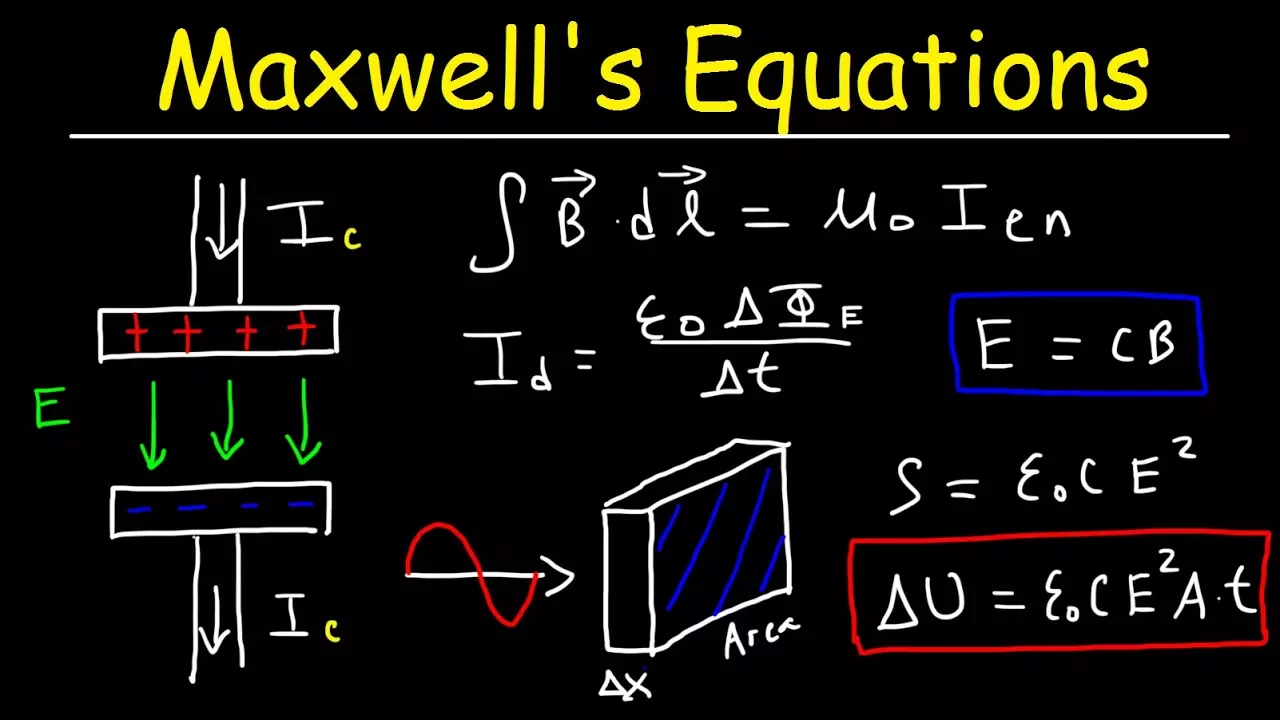
Maxwell's Equations & Electromagnetic Waves Physics Problems
@TheOrganicChemistryTutor
246.3K views•2018-01-10

12:53
21cm Hyperfine Transition in Neutral Hydrogen: Radio Astronomy Basics
@AaronRobertParsons
12.4K views•2011-10-13

32:32
NMR Spin Physics I: Zeeman Effect, Resonance Condition & Larmor Frequency
@nptel-indianinstituteofsci8064
2.3K views•2024-01-17

27:14
Entropy and the Second Law of Thermodynamics Explained
@veritasium
27.5M views•2023-07-01
Related Study Plans & Knowledge Roadmaps
Structured learning paths in Physics
physics
Nuclear Physics (Decay, Fission & Reactors)
01Atomic Structure and the Binding Force
02Radioactive Decay and Half-Life
03Nuclear Fission Mechanics and Chain Reactions
+ 2 more learning modules
12h5 modules
Explore Roadmap
physics
Soft Matter (Polymers, Colloids & Rheology)
01Foundations of Soft Matter & Thermal Forces
02Polymer Physics and Macromolecules
03Colloids, Surfactants, and Self-Assembly
+ 2 more learning modules
38h5 modules
Explore Roadmap
physics
Analytical Mechanics: Lagrangian & Hamiltonian
01Mathematical Foundations: Calculus of Variations
02From Newtonian Mechanics to Constraint Dynamics
03The Principle of Least Action & Lagrangian Mechanics
+ 3 more learning modules
28h6 modules
Explore Roadmap
physics
General Relativity (Spacetime & Cosmology)
01Foundations of Relativity: Special Relativity
02The Geometry of Spacetime: Equivalence Principle & Curvature
03Einstein's Field Equations: The Mathematics of Gravity
+ 2 more learning modules
55h5 modules
Explore Roadmap